Which Is Better: Lee, Wrangler or Levi’s? Why?
If you ask ten denim lovers whether Lee, Wrangler, or Levi’s is the best jeans brand, you will probably get ten different answers—and that is exactly why this question keeps showing up in Google searches. Some people want the most iconic brand. Some want the toughest jeans for daily wear. Others just want a pair that fits well, looks good, and does not make them feel like they overpaid.
The truth is, these three brands became the “big 3” of American denim for different reasons. Levi’s built enormous cultural status from its 19th-century roots and turned jeans into a global fashion language. Lee built its reputation around practical workwear innovation and easy everyday wear. Wrangler carved out a powerful identity in rodeo, ranch work, and Western culture with jeans designed specifically for riding and durability.
Levi’s is usually the best choice for heritage, fashion appeal, and fit variety; Wrangler is often better for rugged durability, Western wear, and riding; Lee is a strong value pick for comfort, practicality, and everyday use. So the better brand depends on your priority: style and legacy, hard-wearing function, or affordable comfort.
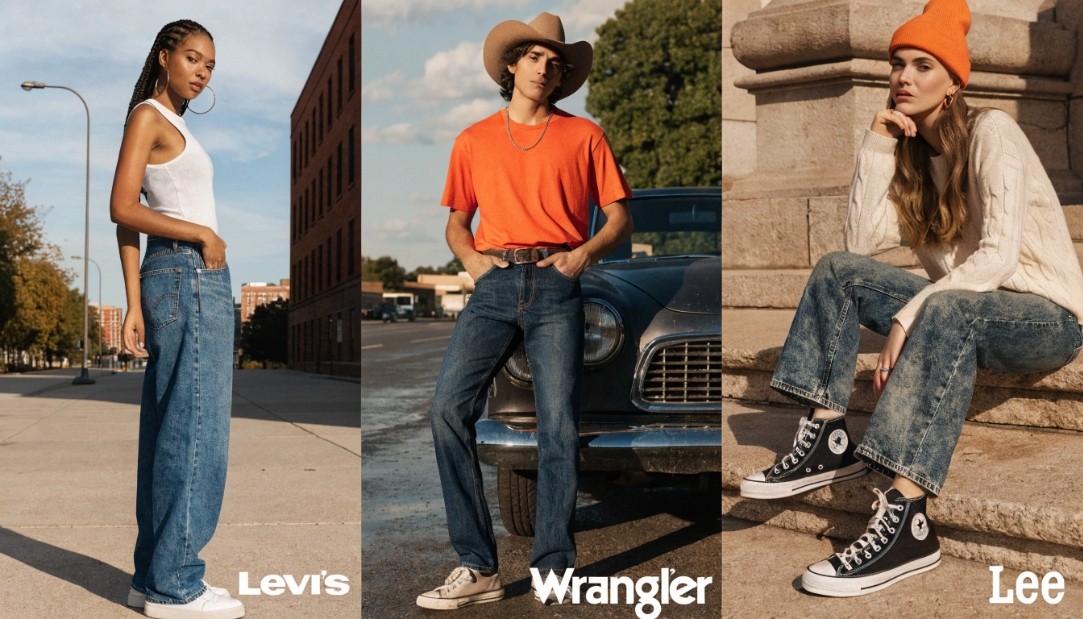
Here is the part many shoppers miss: comparing these brands is not really about naming one universal winner. It is about matching the right denim DNA to the right person. A city creative buying jeans for daily styling may honestly feel Levi’s is unbeatable. A ranch worker or rodeo rider may look at that opinion and laugh, because for them Wrangler solves problems Levi’s never tried to solve.
And a customer who wants dependable jeans at a friendlier price may quietly choose Lee and never feel they gave anything up that truly matters. That tension is what makes this comparison worth reading all the way through—because by the end, you should not just know which brand is “better,” you should know which brand is better for you.
Quick Expert Snapshot
| Brand | Best For | Main Strength | Main Trade-Off |
| Levi’s | Heritage style, mainstream fashion, wide fit selection | Iconic branding, recognizable fits, strong resale and style value | Often pricier for what is sometimes a more style-led purchase |
| Wrangler | Workwear, Western wear, durability, riding | Rugged construction, cowboy-friendly design, strong value | Less fashion-flexible for some urban or trend-driven buyers |
| Lee | Everyday wear, comfort, practical value | Easy fit, approachable pricing, wearable comfort | Less prestige and cultural cachet than Levi’s |
Editorial note: This table is an expert buying summary, not a lab test. Use it as a fast decision tool before you read the deeper breakdown below.
What Are the Main Differences Between Lee, Wrangler, and Levi’s?
The main difference is brand purpose. Levi’s leads with heritage and fashion influence, Wrangler with Western utility and toughness, and Lee with practical comfort and value. All three are authentic denim brands with deep American roots, but they speak to different lifestyles and buying priorities.
Levi’s, Wrangler, and Lee are often grouped together because they each helped shape the history of American denim. Levi Strauss & Co. traces its roots to 1853, and the famous riveted blue jean patent followed in 1873, which is why Levi’s still enjoys unmatched storytelling power in the premium-mass denim space.
Lee’s roots go back to 1889 through H.D. Lee Mercantile, which earned credibility through workwear and later through practical product innovation. Wrangler came later, but from 1947 onward it built an unmistakable identity around Western life, cowboy culture, and performance-oriented jeans.
That is why people call them the big 3 denim brands. Not because they are identical, but because each brand became iconic in a different lane. Levi’s is the most globally symbolic. It is the brand many shoppers think of first when they hear the word “jeans.” Lee is often underrated in global fashion conversations, yet it remains highly relevant because many buyers still care more about wearability than hype. Wrangler has something the others cannot fully copy: deep authenticity in rodeo and Western culture, backed by decades of cowboy adoption and long-standing “Cowboy Cut” identity.
From a customer point of view, the easiest way to understand the difference is this:
Levi’s sells you heritage plus image.
Wrangler sells you function plus toughness.
Lee sells you ease plus value.
That does not mean Levi’s is only fashion, or that Wrangler cannot look stylish, or that Lee is “basic.” It means their brand centers of gravity are different. When Levi’s talks fit, it often talks in fit numbers and style legacy—501, 511, 505, 541—because its catalog has become part of consumer fashion language. Wrangler tends to lead with workwear, boot-ready silhouettes, Western authenticity, and heavier-duty use. Lee tends to communicate in a more straightforward way around relaxed comfort, easy movement, and practical wear.
This matters for SEO-minded shoppers and buyers because the “best” brand depends on how they define value. A fashion-conscious customer may willingly pay more for Levi’s because the logo, fit names, and styling flexibility feel worth it. A ranch worker may never see that premium as rational if Wrangler delivers more function for the task. A casual everyday buyer may find Lee the smartest option because it gives comfort and reliability without asking them to pay for mythology.
So if you are choosing between the three, do not start with brand fame. Start with your real-life use case. That is where the right answer becomes much clearer.
Which Brand Has Better Quality, Durability, and Craftsmanship?
For raw rugged use, Wrangler often feels tougher. For heritage construction and brand-level trust, Levi’s usually wins on perceived craftsmanship. For dependable daily wear at a fairer price, Lee often delivers the best comfort-to-cost value. The better quality depends on how, where, and how often you wear your jeans.
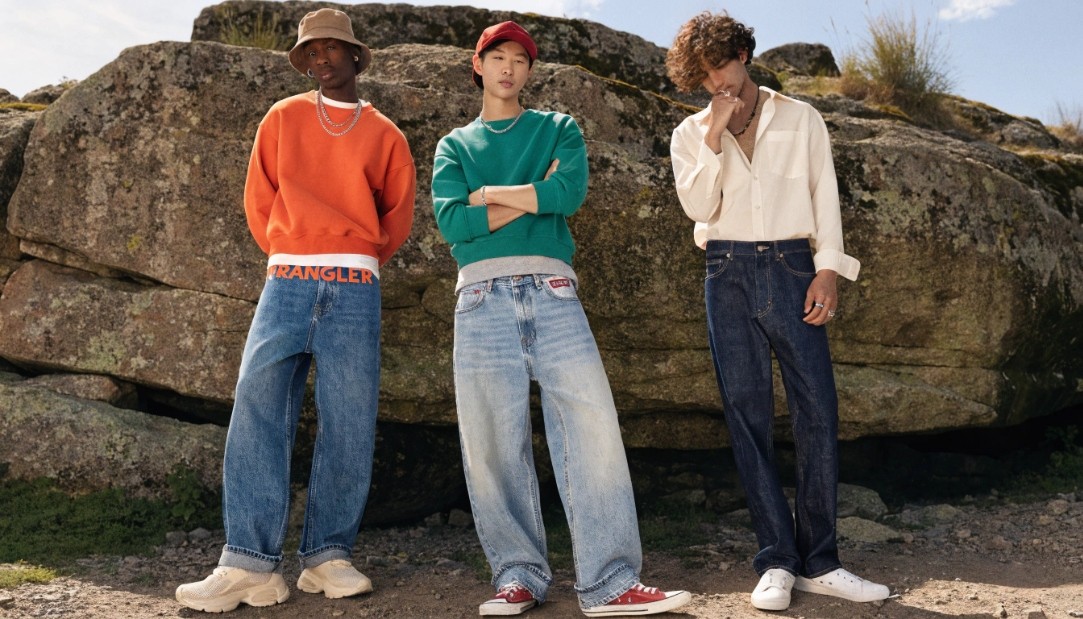
Let’s tackle one of the most searched questions first: Which jeans brand is better, Lee or Levi’s? If by “better” you mean stronger branding, deeper cultural prestige, and broader style influence, Levi’s usually wins. Its heritage story is unusually powerful, and its product naming system gives shoppers a clearer sense of identity and fit continuity.
That matters because craftsmanship is not just stitching—it is also design consistency, product clarity, and trust built over time. Levi’s has spent decades turning jeans into a category language, not just a garment.
But if by “better” you mean everyday usefulness for the money, Lee deserves much more respect than it usually gets. Lee’s workwear roots are real, and the brand’s product messaging still leans heavily into movement, room, comfort, and straightforward wearability. In real life, plenty of buyers do not need a symbolic jean. They need a reliable jean. That is where Lee becomes a very rational choice: lower emotional markup, less fashion pressure, and a friendlier comfort story.
Now let’s answer another common search question: Are Wranglers as good as Levi’s? In many practical scenarios, yes—and for some buyers, they are better. Wrangler’s cowboy and rodeo-oriented lines are known for heavy denim, higher rises, boot-friendly leg openings, and construction details built around hard wear and riding comfort.
Retail descriptions of Wrangler Cowboy Cut jeans repeatedly emphasize heavyweight denim, high rise, fuller seat and thigh, pockets positioned higher, and outseams designed for durability and comfort in the saddle. That is not accidental design. It is product engineering for a specific job.
Where Levi’s usually wins is in balanced craftsmanship plus broader versatility. A pair of Levi’s can often move more easily between casual, smart-casual, and fashion-driven outfits. The brand’s fit guide is also more familiar to the average global shopper, which reduces buying friction. And because Levi’s remains such a strong cultural shorthand for denim, many consumers perceive its products as more “premium” even when another brand may outperform it in a narrower functional category.
This is where critical thinking matters. Consumers often confuse brand prestige with objective performance. A more famous jean is not automatically tougher. A heavier jean is not automatically better styled. A cheaper jean is not automatically lower value. In denim, quality has at least three layers:
1. Material and build quality — fabric weight, seam strength, reinforcement, consistency.
2. Use-case quality — does it perform for the wearer’s daily reality?
3. Emotional quality — does it feel good to own, wear, and be seen in?
Wrangler often scores highest on use-case quality for rugged environments. Levi’s often scores highest on emotional quality and style legitimacy. Lee often scores highest on comfort-adjusted value.
So which brand gives the best balance of quality and durability? For construction under stress, I would lean Wrangler. For all-around long-term brand trust with wider styling range, I would lean Levi’s. For dependable daily wear without overspending, I would lean Lee.
That is why there is no single winner. There are three different definitions of quality, and each brand leads one of them.
Which Fits Better: Lee, Wrangler, or Levi’s?
Levi’s usually offers the widest fit vocabulary, Wrangler often fits best for boot wear, riding, and roomier Western silhouettes, and Lee tends to be easiest for comfort-first everyday wear. The best fit is not about trend alone—it is about body shape, movement needs, and styling goals.
Fit is where this comparison becomes deeply personal. A brand can have a great reputation and still be wrong for your body. That is why a shopper who swears by Levi’s may be sitting next to someone who finds Wrangler far more comfortable, while a third person keeps repurchasing Lee because it just feels easier to wear.
Levi’s has one big advantage in the fit conversation: clarity and range. The brand’s fit guide is well-developed, and iconic fit numbers such as 501, 505, 511, 514, 517, 541, and others help consumers anchor their choices. Some fits are straight and classic, some are tapered, some slimmer, some roomier. That structure makes Levi’s very appealing to shoppers who know what silhouette they want—or want to learn. The brand also offers multiple stretch levels and specialized variations, including classic non-stretch and modern comfort-oriented options.
Wrangler is different. It is not trying to beat Levi’s at fashion taxonomy. It is trying to solve fit in motion. Wrangler’s cowboy-oriented jeans are famous for features like higher rise, fuller seat and thigh, and boot-compatible leg openings. On product listings and retailer descriptions, the same themes repeat: room where movement matters, leg shape that works over boots, and construction details meant to remain comfortable in or out of the saddle. That makes Wrangler especially strong for men who dislike tight rises, need working-room through the upper leg, or wear boots regularly.
Lee’s fit story often gets less attention, but that is partly because it feels more intuitive than performative. Lee’s messaging consistently leans toward comfort, room to move, and relaxed practicality. Its fit guides and product descriptions emphasize ease through the thigh, everyday mobility, and straightforward silhouettes that work for people who simply want jeans to feel good for long hours. For buyers who are not chasing a “denim identity” and just want wearable, low-drama jeans, Lee can be a surprisingly strong winner.
So which fit works best for different body types and style preferences?
If you like a classic straight leg with strong cultural recognition, Levi’s is hard to beat.
If you have athletic thighs, wear boots, ride, work outdoors, or prefer higher rises, Wrangler often makes more sense.
If you prioritize comfort during long daily wear, Lee often feels easiest and least fussy.
There is another layer here too: how you want to look. Levi’s often reads more urban, more universal, more style-adaptable. Wrangler reads more Western, rugged, masculine, and practical. Lee reads more easygoing, accessible, and comfort-centered.
A lot of customers ask, “Which fit is most versatile?” In pure styling terms, Levi’s probably wins. A 501 or similar straight fit can move from sneakers to loafers to boots with minimal friction. But versatility is not always fashion versatility. For a person whose day includes driving, lifting, walking, climbing, or being on horseback, Wrangler may be far more versatile in a real-world sense. And for someone living in denim all week, Lee may be the pair they reach for most often simply because it asks the least from the body.
That is why “which fits better?” is the wrong question unless you finish the sentence. Better for what? Better for whom? Better with what shoes, what movement, what daily rhythm? Once you ask it that way, the answer becomes much more useful.
Which Brand Is More Affordable and Better Value for Money?
Lee is often the easiest value buy, Wrangler is usually excellent value for durability-focused shoppers, and Levi’s often costs more because buyers are paying for heritage, fit recognition, and style cachet as much as fabric and sewing. The best value depends on what you expect from your jeans.
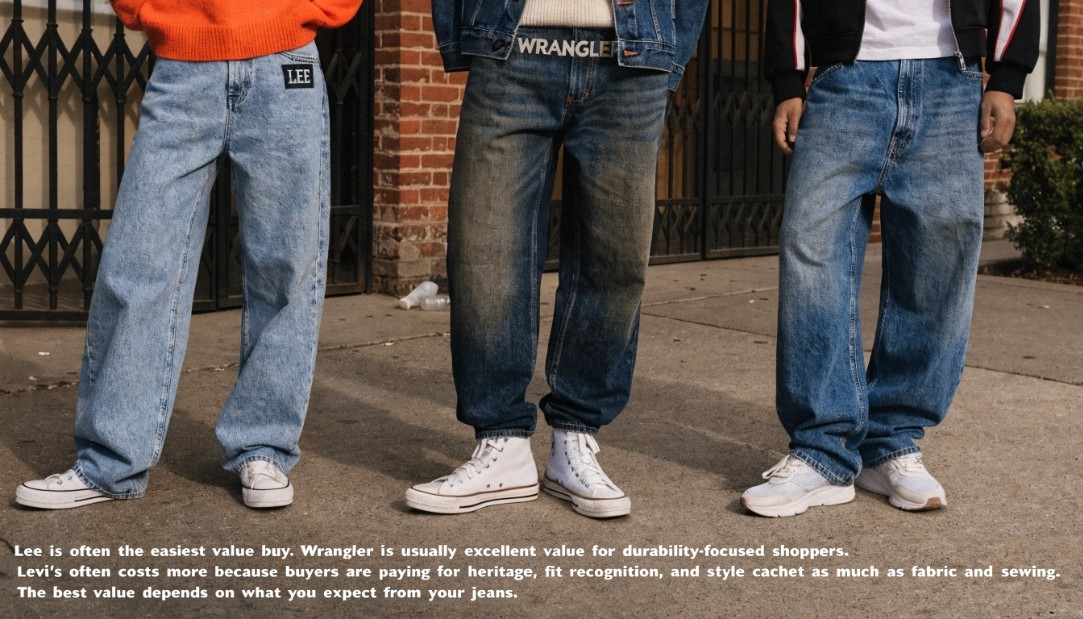
Price conversations around jeans are often messy because people use the word value when they really mean three different things: lowest price, longest wear, or best overall ownership experience. These are not the same thing.
Let’s start with Lee. For many everyday buyers, Lee is the easiest answer to the question, “What should I buy if I want solid jeans without spending for brand mythology?” Lee’s reputation for practical wear and comfort makes it very attractive to cost-conscious shoppers. You are usually not buying into the same degree of fashion symbolism you get with Levi’s, which means the purchase can feel more rational and less emotional. That alone can make Lee seem like a better deal.
Wrangler is also a strong value brand, but in a different way. Its value is often tied to functional payoff. If you need jeans that work hard, pair naturally with boots, and feel purpose-built rather than trend-built, Wrangler can outperform brands that carry more style prestige. In other words, Wrangler may not always be the “cheapest” option in every channel, but it often feels like high value because the design is so honest about what it is trying to do. Heavyweight denim, work-friendly cuts, and decades of cowboy adoption make the brand’s utility story unusually credible.
Now, is Levi’s worth the higher price? Often, yes—but not for every customer. Levi’s has enormous intangible value: brand recognition, fashion relevance, strong fit literacy, and a level of cultural legitimacy that very few apparel brands enjoy. The company itself still frames Levi’s as a global denim-led brand with significant direct-to-consumer ambition, and that kind of positioning reinforces the sense that Levi’s is not just selling pants—it is selling an identity system around denim. For the right customer, that added value is real. For the wrong customer, it is just markup.
Here is the critical distinction:
If you buy jeans mainly for image, styling range, and iconic status, Levi’s can absolutely be worth more.
If you buy jeans for job-site wear, ranch use, riding, or hard daily use, Wrangler can be the smarter value.
If you buy jeans for comfort-first everyday rotation, Lee may deliver the highest satisfaction per dollar.
This is also where many wholesale buyers, boutique owners, and private-label denim clients can learn something useful from legacy brands. Customers rarely buy only “quality.” They buy a story-adjusted quality proposition. Levi’s proves that story can raise price tolerance. Wrangler proves that use-case clarity can build fierce loyalty. Lee proves that comfort and practicality still win huge portions of the market even without maximum hype.
That lesson matters if you are developing your own denim line. A strong product is important, but a strong positioning angle matters just as much. If your customer is a boutique owner serving everyday American consumers, “luxury heritage” may be the wrong angle. If your customer is Western or workwear-focused, “fashion denim” may underperform. If your audience is comfort-seeking online buyers, the winning formula might be stretch, soft hand feel, familiar fits, and honest value messaging.
So which brand is more affordable and better value for money?
If you want the simplest answer:
Best budget-friendly everyday value: Lee
Best utility-driven value: Wrangler
Best brand-and-style value: Levi’s
That is the version that matches how real people actually shop.
Which Brand Should You Choose for Your Style and Needs?
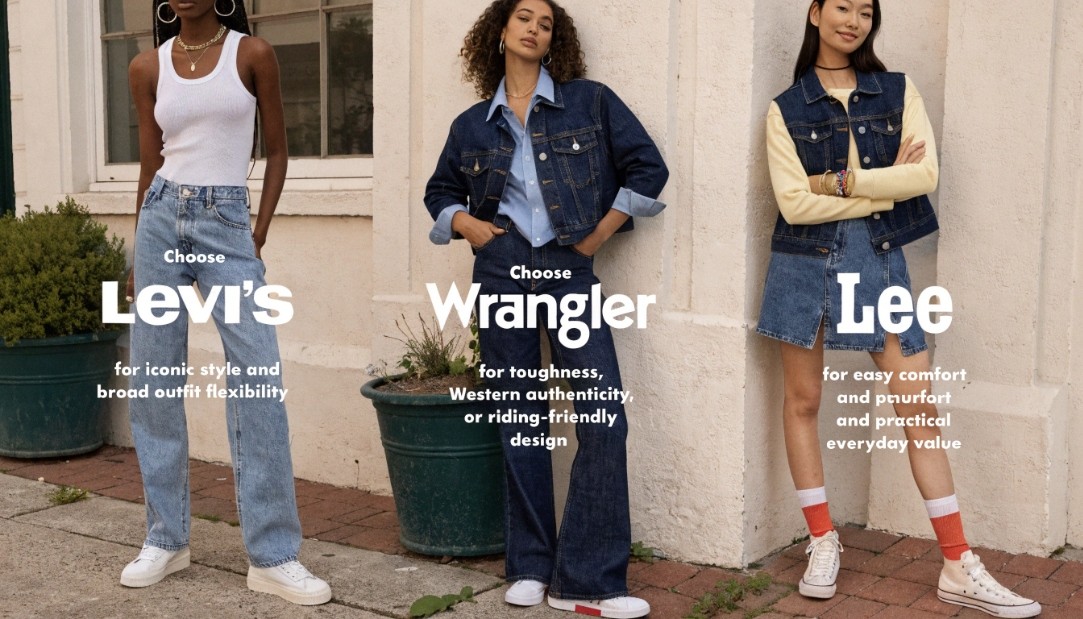
Choose Levi’s if you want iconic style and broad outfit flexibility. Choose Wrangler if you need toughness, Western authenticity, or riding-friendly design. Choose Lee if you want easy comfort and practical everyday value. The best brand is the one that matches your life, not the loudest opinion online.
One of the most searched questions in this topic is: Why do cowboys wear Wranglers instead of Levi’s? The short answer is that Wrangler built jeans specifically around cowboy use. Sources describing Wrangler’s Cowboy Cut repeatedly reference features such as high rise, fuller upper block, seams that lie flatter, and boot-friendly openings.
Wrangler’s long tie to rodeo culture is not a recent marketing trick either; the brand has been associated with Western wear since the late 1940s, and product descriptions today still reinforce its role as an official ProRodeo competition jean. That kind of use-case credibility is extremely hard to fake.
Levi’s, by contrast, became something bigger than a work jean. It evolved into a universal fashion object. From miners and workers to youth culture and mainstream global retail, Levi’s built a rare bridge between utility and cultural symbolism. That is why many buyers who never set foot on a ranch still think of Levi’s first when shopping denim. It is the most broadly legible denim brand in the world.
Lee sits in an interesting middle ground. It may not dominate the style conversation or the cowboy conversation, but it remains deeply relevant for the shopper who wants comfort, familiarity, and no-nonsense buying. In many households, the best pair of jeans is not the one with the strongest story—it is the one that gets worn the most. Lee often wins exactly there.
So, practically speaking, which brand should you choose?
Choose Levi’s if:
You care about brand heritage and cultural recognition.
You want more fit language and style options.
You wear jeans in both casual and style-driven settings.
You are willing to pay more for identity, versatility, and fashion confidence.
Choose Wrangler if:
You wear boots often.
You want jeans for work, ranch use, riding, or rugged daily wear.
You prefer a higher rise, more room through seat and thigh, and tougher feel.
You value function-led authenticity over trend-led image.
Choose Lee if:
You want comfort-first everyday jeans.
You are price-aware but still want a trusted legacy name.
You prefer easy wearability over denim mythology.
You want a practical pair you can rotate often without overthinking it.
And here is the bigger takeaway, especially for buyers, designers, and boutique owners: consumers rarely buy denim in a vacuum. They buy based on lifestyle identity. Some want to look authentic. Some want to feel comfortable. Some want social recognition. Some want something that works all day. These are different emotional and functional purchase triggers.
That insight matters far beyond Lee, Wrangler, and Levi’s. It is exactly why custom denim development is so powerful today. Instead of forcing your customer into a legacy brand’s old formula, you can create a product around what your customer actually wants now: a looser baggy fit, stacked leg, plus-size block, rigid selvedge feel, stretch skinny silhouette, oversized denim jacket, fashion denim shorts, or a boutique-ready capsule with your own label.
So, which is better: Lee, Wrangler, or Levi’s?
My expert answer is simple:
Best for iconic style and broad fashion appeal: Levi’s
Best for tough wear, Western identity, and riding function: Wrangler
Best for practical comfort and affordable everyday use: Lee
The “winner” changes with the wearer. And that is the most honest answer you can give.
Final Verdict
If you only want one sentence, here it is: Levi’s is the strongest all-around heritage-fashion choice, Wrangler is the strongest functional-workwear choice, and Lee is the strongest comfort-value choice.
But if you are reading this as a brand owner, denim startup, online boutique, designer, or private-label buyer, there is an even more valuable lesson inside this comparison: the market is wide enough for all three because customers are not all looking for the same jean.
That is where smart custom manufacturing comes in.
At DiZNEW, we understand that real denim success is not about copying Levi’s, Wrangler, or Lee. It is about learning from what made them win—then building a product line around your customer. If your audience wants plus size jeans, baggy jeans, stacked jeans, straight jeans, selvedge jeans, skinny jeans, jogger jeans, denim jackets, denim shorts, or denim shirts, your product should be engineered around that need from the start. If you want OEM or ODM production, your own logo, your own washes, your own fit blocks, and your own brand identity, that is exactly where a specialized denim manufacturer becomes your competitive advantage.
DiZNEW is a China-based denim factory with 20+ years of experience in integrating development, manufacturing, and sales. We support deep customization for complex denim styles, from design concept and tech pack direction to finished product sampling and bulk production. Whether you are a U.S. small business buyer, premium brand, designer, online boutique owner, or influencer-led store, we can help turn your ideas into real products with a flexible MOQ starting at 30 pieces and scalable production for orders up to 10,000 pieces.
So if you are planning your next denim collection and want to create jeans that fit your market better than off-the-shelf legacy brands, now is the time to ask for a quote.
Send DiZNEW your inquiry today to discuss:
your target customer
your preferred fits and fabric types
your logo or OEM/ODM needs
sample development
small-batch testing or large-volume production
The best jeans brand for your business may not already exist on the shelf.
With the right partner, you can build it.
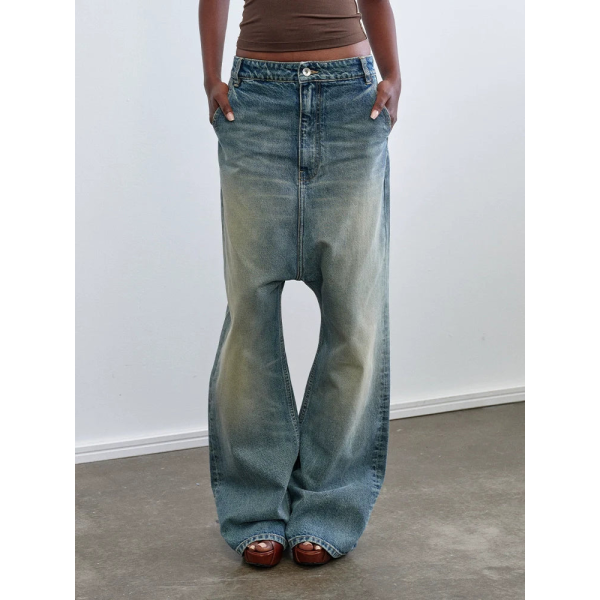
OEM & ODM Drop Crotch Jeans for Women - Tailored denim solutions designed for brands seeking unique styles and quality.
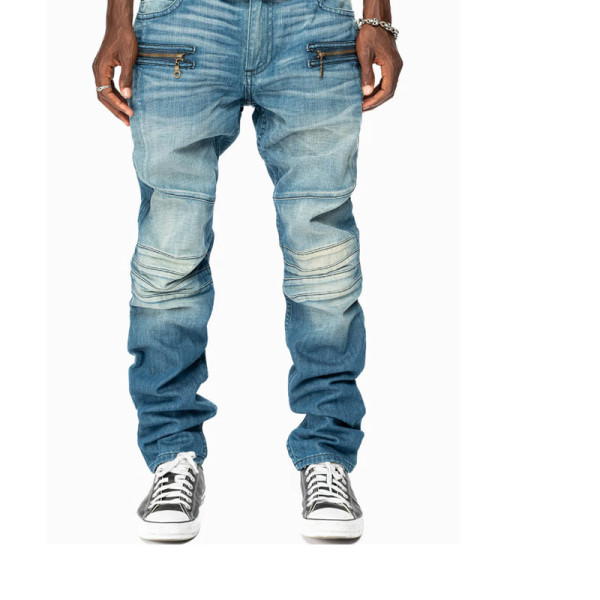
Custom Blue Cycling Jeans: Tailored for performance with OEM & ODM services. Perfect for brands seeking unique denim solutions.
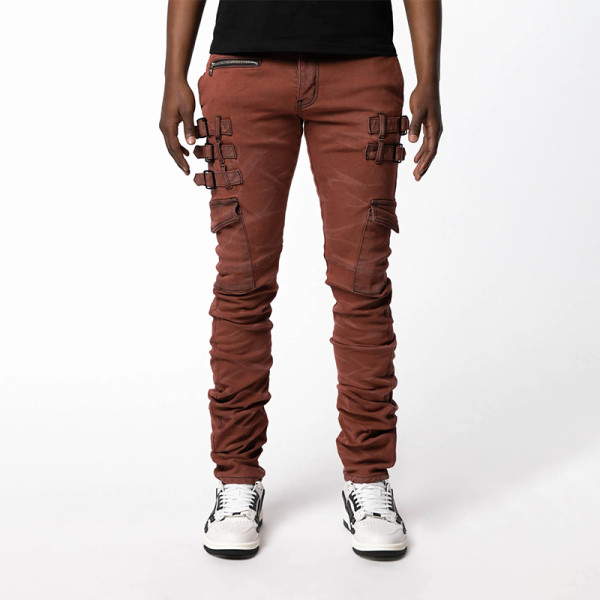
Sleek slim straight denim with subtle raw-edge detailing—crafted for modern upscale boutiques.
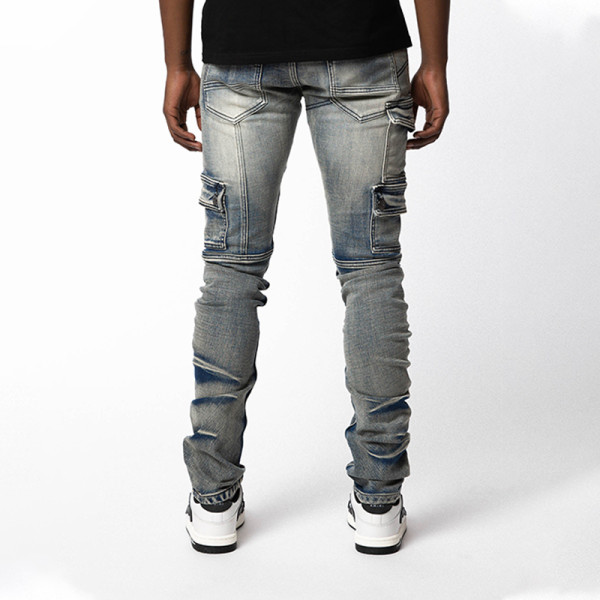
Sculpted arc-leg jeans with multi-zip pockets and washed grunge finish—built for avant-garde designers.