How to fix jeans that are too long without sewing?
You finally find the jeans: the wash is perfect, the waist fits, the rise feels right, and the leg shape gives you exactly the look you wanted. Then you look down. The hem is swallowing your sneakers, dragging on the floor, or bunching so badly that the whole outfit looks messy. This happens all the time, especially with online denim shopping, oversized streetwear fits, baggy jeans, stacked jeans, and boutique denim styles where inseam length is not always designed for every body type.
You can fix jeans that are too long without sewing by cuffing, rolling, folding the hem inward, using iron-on hemming tape, applying fabric glue, or creating controlled stacking. For a temporary fix, use cuffs or fashion tape. For a cleaner semi-permanent fix, use hemming tape or fabric glue. If the jeans are premium, selvedge, heavily washed, or part of a brand collection, custom-length production is often the better solution.
The key is not just “making jeans shorter.” The real goal is keeping the jeans looking intentional. A bad no-sew hem can make expensive denim look cheap. A smart no-sew fix can make long jeans look styled, modern, and wearable. Think of it like this: the hem is the frame of the jeans. If the frame is wrong, even a beautiful denim wash loses impact. Let’s break down how to fix long jeans at home—and when brands, designers, and boutique owners should stop fixing length problems after production and start solving them during custom denim development.
Why Are My Jeans Too Long, and Can I Really Fix Them Without Sewing?
Yes, you can fix jeans that are too long without sewing if the extra length is moderate and the denim is not too thick, stiff, or heavily detailed. Simple fixes include cuffing, inward folding, hemming tape, and fabric glue. However, if the jeans are several inches too long or need consistent sizing for a brand, custom inseam production is more reliable.
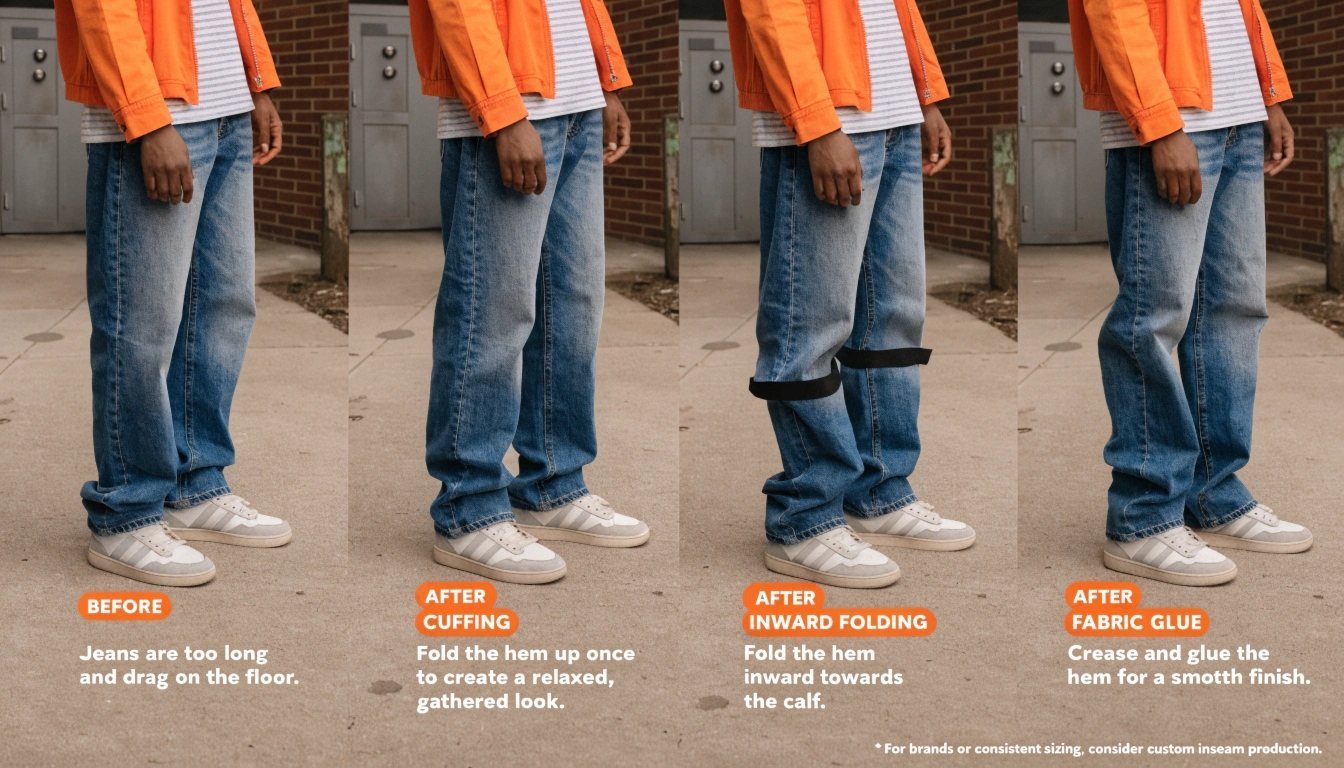
jeans are often too long because most denim brands design around standard inseams instead of real customer body diversity. A 32-inch inseam may work for one person, but on another person it can drag under the heel. Add modern denim trends—baggy jeans, stacked jeans, oversized straight jeans, wide-leg denim—and extra length becomes even more common. Sometimes the length is intentional. Sometimes it is simply poor size planning.
The first thing to understand is that “too long” does not always mean “wrong.” In streetwear, long baggy jeans may be styled with stacking around chunky sneakers. In western or workwear-inspired denim, a little extra break over boots can look natural. In women’s fashion, long straight jeans may work beautifully with heels but look messy with flat sneakers. So before fixing the jeans, decide what look you want: clean, cropped, stacked, cuffed, relaxed, or polished.
How to Fix Jeans If They Are Too Long?
If your jeans are too long, start with the least permanent method first. Try them on with the shoes you actually plan to wear. Stand naturally. Do not pull the jeans up higher than normal, because that gives you a false measurement. Then decide how much length needs to disappear.
If the jeans are only 0.5–1 inch too long, cuffing or inward folding may be enough. If they are 1–2 inches too long, hemming tape can create a cleaner finish. If they are 2–3 inches too long, fabric glue or a wider inward fold may work, but bulk becomes a problem. If they are more than 3 inches too long, no-sew methods usually become less clean because too much fabric is hiding inside the hem.
Here is a simple decision table:
| Problem | Best No-Sew Fix | Best For | Risk Level |
| Slightly long jeans | Single cuff or inward fold | Straight, skinny, slim jeans | Low |
| Dragging hem | Hemming tape | Everyday jeans, medium denim | Medium |
| Long baggy jeans | Controlled stacking or wide cuff | Streetwear, oversized fits | Low to medium |
Need original hem preserved | Inward fold, no-cut method | Washed, distressed, selvedge denim | Medium |
Very long inseam | Custom length or professional alteration | Premium denim, brand collections | Low long-term risk |
What Types of Jeans Can Be Fixed Without Sewing?
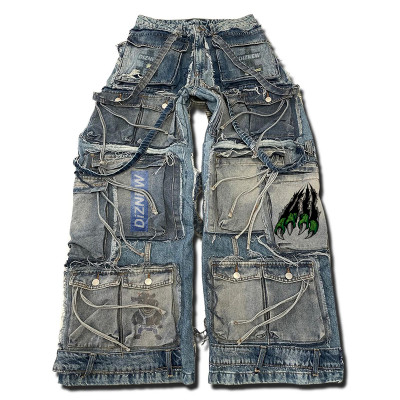
Most jeans can be improved without sewing, but not all jeans respond equally. Straight jeans are usually the easiest because the leg opening is stable and the fabric falls predictably. Skinny jeans can be folded inward, but the tighter leg opening may make the hem bulky. Baggy jeans can be styled with cuffs or stacking, but they need structure so the fabric does not collapse around the shoe. Stacked jeans are a special case because extra length is part of the design. The goal is not to remove all length, but to control the stack.
Selvedge jeans require more care. The hem, edge, and fabric character are part of the value. Many denim lovers prefer keeping the original factory hem because it preserves the fade, edge finish, and authentic look. Original-hem techniques are often recommended for premium, distressed, or washed denim because the factory hem carries important visual details
When Is a No-Sew Fix Enough?
A no-sew fix is enough when you need a practical solution for personal wear. Maybe you bought jeans online. Maybe you need them for a trip tomorrow. Maybe you want to test a new silhouette before cutting anything. In those situations, no-sew fixes are useful, affordable, and fast.
But for brands, online boutiques, designers, and influencer stores, no-sew fixing is not a business strategy. If customers keep saying the jeans are too long, the issue is probably not the customer—it is the size chart, inseam grading, pattern development, or fit testing. That is where a custom denim manufacturer like DiZNEW can help solve the problem before production.
How Can I Shorten Jeans Without Cutting or Sewing?
To shorten jeans without cutting or sewing, fold the extra length inward, press the fold flat, and secure it with temporary fashion tape, iron-on hemming tape, or fabric glue. You can also cuff or roll the jeans for a visible style fix. This method is best when you want to preserve the original hem.
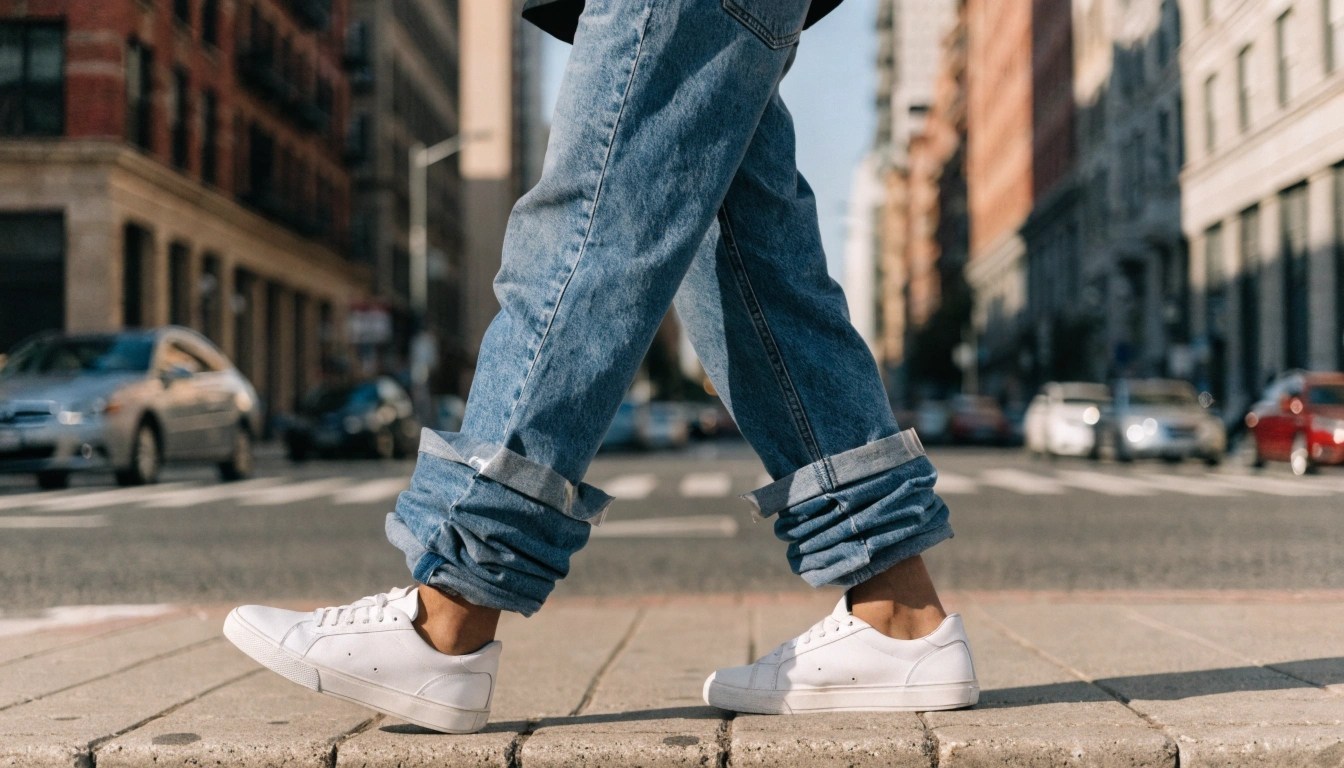
Shortening jeans without cutting is one of the safest ways to fix length because it gives you room to change your mind. This matters more than most people realize. Once you cut denim, you cannot bring back the original hem, original fading, factory distressing, chain-stitch look, or selvedge edge. For cheaper everyday jeans, that may not matter. For premium denim or custom jeans, it matters a lot.
No-cut shortening is also useful when you wear the same jeans with different shoes. A pair of straight jeans may look too long with low-profile sneakers but perfect with boots. A wide-leg jean may need heels one day and chunky sneakers the next. If you cut them to match one shoe, you may lose versatility.
How to Shorten the Length of Jeans Without Cutting?
The cleanest no-cut method is the hidden inward fold.
First, try on the jeans and mark the ideal length. Use chalk, washable fabric marker, or pins. Next, take the jeans off and fold the hem inward to the marked line. Make sure both legs match. Press the fold with an iron to create a sharp crease. Then secure the fold using temporary tape for a short-term fix or hemming tape for a more durable hold.
The goal is to hide the extra fabric inside the leg opening. This works best when the extra length is not extreme. If you fold too much denim inside, the hem can look thick, stiff, or uneven. On skinny jeans, that bulk may feel tight. On baggy jeans, the bulk may be less noticeable, but it can still change the way the fabric stacks.
How Do I Fold Jeans Inward for a Cleaner Look?
A clean inward fold depends on measurement. Do not guess. Denim has weight, and even a small uneven fold can make one leg look longer than the other.
Use this simple process:
Wear the jeans with your target shoes.
Mark where you want the hem to sit.
Take off the jeans and turn them inside out.
Fold the hem upward from the inside.
Measure the fold on both legs.
Press the fold flat with an iron.
Secure it with tape, glue, or temporary adhesive.
Let it cool or dry before wearing.
If the jeans are dark denim, be careful with high heat. Always check the care label. If the jeans have stretch fibers, excessive heat can damage elasticity. If they have special washes, coatings, resin effects, or hand distressing, test on a hidden area first.
How Can I Keep the Original Hem Without Sewing?
Keeping the original hem matters because the hem is not just a line of fabric. It often carries fading, abrasion, puckering, rope effect, wash contrast, and the natural character of the jeans. In many denim styles, especially selvedge jeans, vintage washes, and premium streetwear denim, the hem helps the jeans look authentic.
No-cut methods help preserve that original look. Instead of cutting off the factory hem, you fold the excess inside. If you use hemming tape, place the adhesive inside the fold so it is not visible. If you use temporary tape, remember that it may loosen with movement, moisture, or washing.
For personal use, this is a smart compromise. For commercial denim brands, however, relying on hidden folds is not ideal. Customers expect the right inseam when they receive the product. If your boutique sells baggy jeans, stacked jeans, plus-size jeans, straight jeans, or skinny jeans, you need the inseam and leg opening designed together—not fixed after the jeans are made.
How Do I Hem Jeans Without Sewing Using Hem Tape or Fabric Glue?
To hem jeans without sewing, use iron-on hemming tape or fabric glue inside a folded hem. Hemming tape bonds with heat, while fabric glue bonds as it dries. Hem tape is cleaner for many lightweight to medium denim fabrics, while fabric glue can work on areas where heat is risky. Always test first and follow the product instructions.
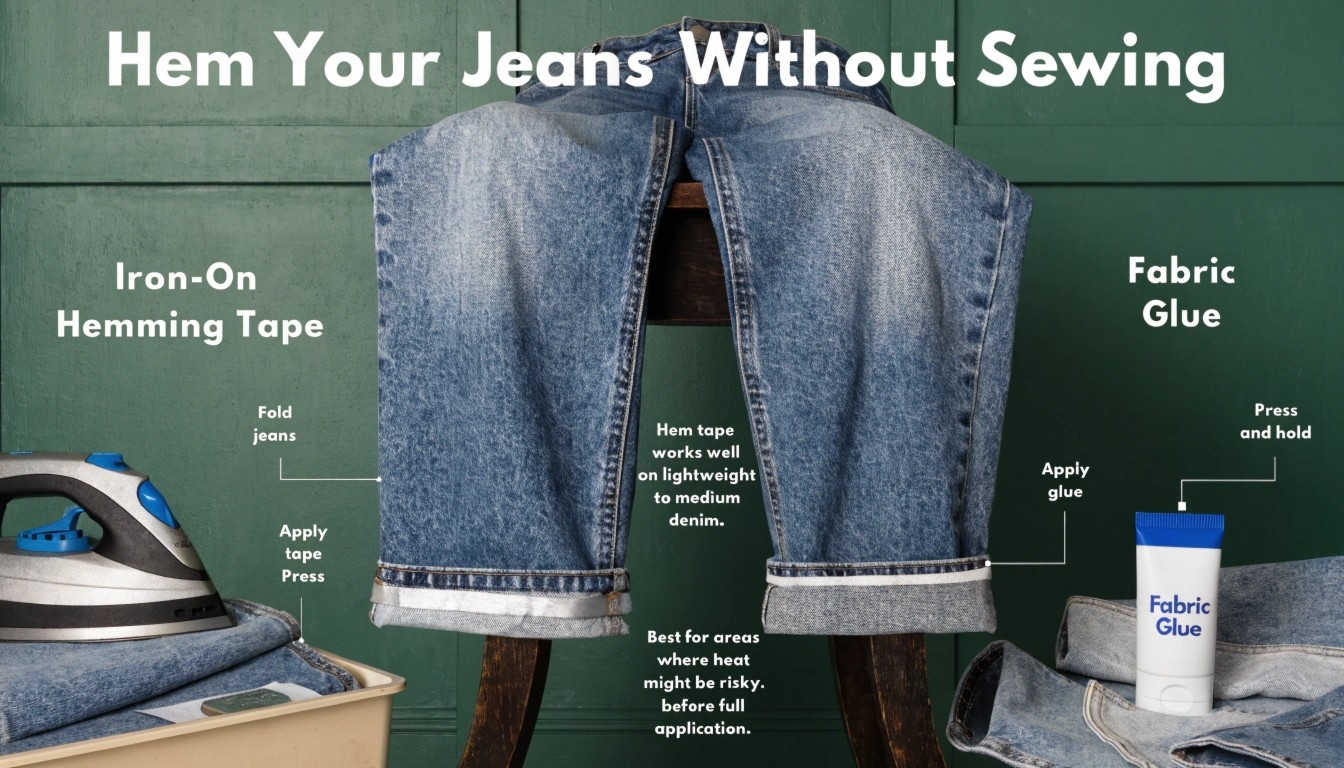
Hemming tape and fabric glue are popular because they feel simple: fold, stick, press, done. But denim is not the same as a thin dress fabric or curtain fabric. Denim is heavier, more textured, and often washed with chemicals, enzymes, stones, resin, softeners, or stretch finishes. These factors affect how well adhesives bond.
Iron-on hemming tape works by melting adhesive between two fabric layers. For example, HeatnBond’s Super Weight hem tape is designed for heavier materials such as denim, heavy cotton, suede, wool, and corduroy, and the brand instructs users to place the tape inside the folded hem and press with firm heat section by section. This is why denim users usually need a heavier bonding tape instead of a lightweight tape meant for thin fabrics.
Fabric glue works differently. It does not require heat, which can be helpful for delicate finishes or stretch denim. Aleene’s Fabric Fusion instructions recommend testing first, prewashing without fabric softener, applying an even coat, pressing the garment together, allowing it to cure, and waiting before washing.
Does Hemming Tape Actually Work?
Yes, hemming tape can work on jeans, but only when the tape matches the denim weight and the application is done correctly. It works best on light to medium denim, straight jeans, slim jeans, and jeans that do not get heavy friction at the hem. It may fail faster on very thick denim, rigid selvedge denim, heavily textured fabric, or jeans that drag against the ground.
The biggest mistake is treating hemming tape like magic. It is not. It needs clean fabric, accurate folding, proper heat, pressure, and cooling time. If the fabric is dusty, oily, heavily softened, or still damp from washing, the bond may be weak. If the iron is too cool, the adhesive may not melt properly. If the iron is too hot, you may damage the denim finish.
How Do I Use Hemming Tape to Shorten Jeans?
Here is a practical no-sew hemming process:
| Step | What to Do | Why It Matters |
| 1 | Wash and dry the jeans first | Removes shrinkage and surface residue |
| 2 | Try jeans on with shoes | Prevents measuring too short or too long |
| 3 | Mark the desired length | Keeps both legs even |
4 | Fold the hem inward | Preserves original outside appearance |
5 | Insert hemming tape | Creates hidden bond |
6 | Press with iron | Activates adhesive |
7 | Let the hem cool | Helps bond set |
8 | Avoid washing immediately | Reduces early bond failure |
For best results, use a pressing cloth between the iron and denim. This protects the fabric surface. Press instead of sliding the iron. Sliding can shift the fold and create an uneven hem. Let the jeans cool completely before trying them on.
Is Fabric Glue Better Than Hemming Tape for Denim?
Fabric glue can be better when you cannot use heat or when the folded area is small and controlled. It can also help reinforce corners or areas where tape does not fully bond. However, glue has its own risks. Too much glue can make the hem stiff. Some glues may leave marks on lighter denim. Uneven glue can create hard spots. If the glue leaks through the fabric, the outside may look stained.
For jeans, fabric glue is usually better as a careful, controlled fix—not a messy shortcut. Apply a thin line, spread evenly, press the fabric together, and use clips or pins to hold the fold while it dries. Do not wear the jeans before the glue has cured. Do not wash too soon.
What Mistakes Should I Avoid When Hemming Jeans Without Sewing?
Avoid cutting first. Cutting should be the last decision, not the first reaction. Avoid measuring barefoot if you plan to wear shoes. Avoid using lightweight tape on heavy denim. Avoid rushing the cooling or drying time. Avoid applying tape over thick side seams without extra pressure, because side seams are often the first place a no-sew hem fails.
Most importantly, avoid thinking that a no-sew hem will perform like a professional sewn hem in every situation. It may look great for casual wear, photos, travel, or quick styling. But for repeated washing, heavy daily wear, or commercial denim production, sewn construction and correct pattern development still win.
How Can I Make Too-Long Jeans Look Stylish Instead of Altered?
Make too-long jeans look stylish by choosing a method that matches the fit. Use clean cuffs for straight jeans, tight inward folds for slim jeans, wide cuffs for baggy jeans, and controlled stacking for streetwear denim. The goal is to make the extra length look intentional, not accidental.
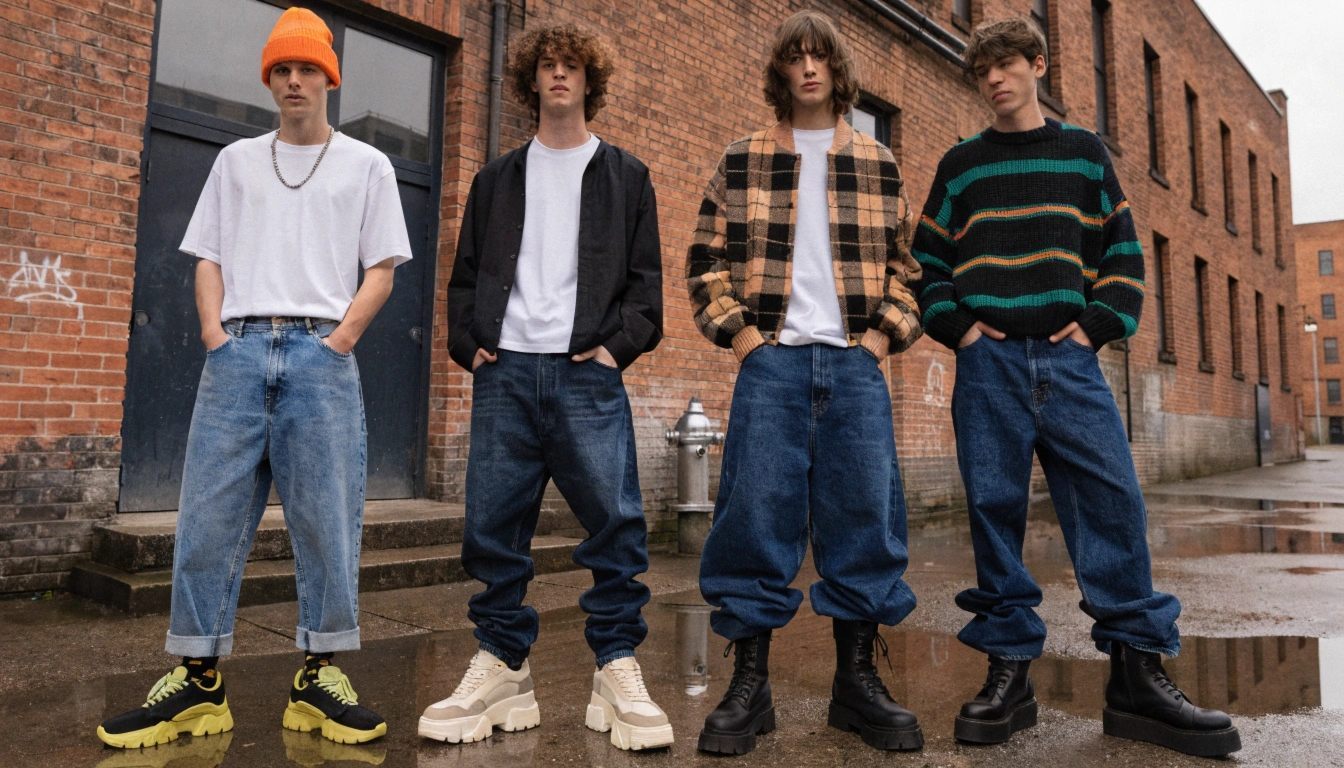
The difference between “too long” and “styled long” is control. When denim drags under the heel, collects dirt, or folds randomly, it looks careless. When the length breaks cleanly over the shoe, stacks evenly, or cuffs with purpose, it looks designed.
This is especially important for modern denim trends. Baggy jeans are not supposed to fit like slim jeans. Stacked jeans are not supposed to end neatly at the ankle. Straight jeans can look better with a slight break. Selvedge jeans often look great with a cuff because the selvedge ID becomes part of the styling. The fix depends on the silhouette.
How to Fix Long Baggy Jeans Without Sewing?
Long baggy jeans are one of the easiest fits to style without sewing because the volume gives you options. A wide cuff can look intentional and workwear-inspired. A double cuff can control the length while showing off sneakers. A hidden inward fold can clean up the bottom while keeping the oversized shape. Controlled stacking can work if the denim has enough structure to sit around the shoe instead of collapsing.
But baggy jeans also have a problem: too much uncontrolled fabric can make the outfit look sloppy. If the hem is dragging, the denim will wear out faster. If the fabric piles unevenly, the legs may look shorter. If the cuff is too small, it can disappear inside the volume of the jean. A wider cuff usually works better for baggy fits.
For streetwear brands and online boutiques, baggy jeans require careful inseam planning. A baggy jean with a 32-inch inseam may look perfect on a 6-foot model but overwhelming on a 5'6" customer. This is why brands should not only choose “S, M, L, XL” sizing. They should develop inseam options, plus-size grading, leg opening balance, and fabric weight based on the target customer.
How Can I Style Long Jeans With Cuffs or Stacks?
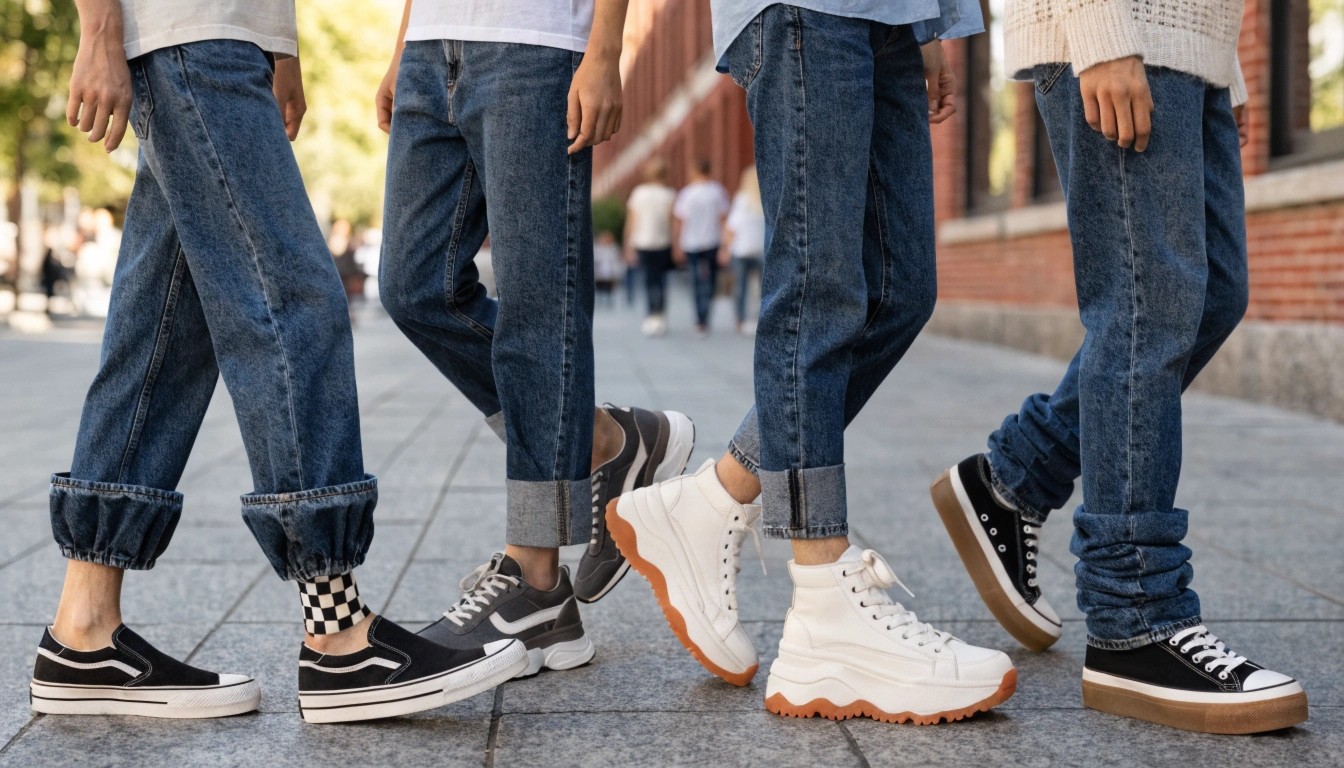
Cuffing is the fastest no-sew fix. A single cuff gives a clean casual look. A double cuff shortens more length and works well with sneakers or boots. A wide cuff feels bold and fits baggy, workwear, or selvedge jeans. A pinroll can taper the opening slightly, but it works better on slim or straight jeans than on very wide jeans.
Stacking is different. Instead of shortening the jeans, you let the extra fabric gather around the shoe. This works best with slim-straight, skinny, or stacked jeans. With baggy jeans, stacking can work, but the denim needs enough weight or structure. If the fabric is too soft, it may puddle rather than stack.
Which Shoes Work Best With Longer Jeans?
Shoes change everything. Chunky sneakers support stacking because they give the denim something to rest on. Boots work well with straight jeans, selvedge jeans, and workwear denim because the shaft controls the break. Low-profile sneakers make jeans look longer, so you may need a cuff or inward fold. Heels can rescue long women’s jeans, but if the jeans only work with heels, they may not be practical for everyday wear.
For a denim brand, this is a product development insight. If your customers are boutique owners selling to sneaker-focused streetwear buyers, the jeans should be tested with sneakers. If your customers sell premium western or workwear denim, test with boots. If your customers sell women’s fashion jeans, test with flats, heels, and platform shoes. Fit is not created in isolation; it is created in real outfits.
When Should I Choose Custom-Length Jeans Instead of DIY Fixes?
Choose custom-length jeans when you need accurate fit, consistent sizing, premium finishing, original hems, brand labels, special washes, or bulk production. DIY no-sew fixes are useful for personal jeans, but custom denim manufacturing is better for designers, boutiques, and brands that need professional quality across multiple pieces.
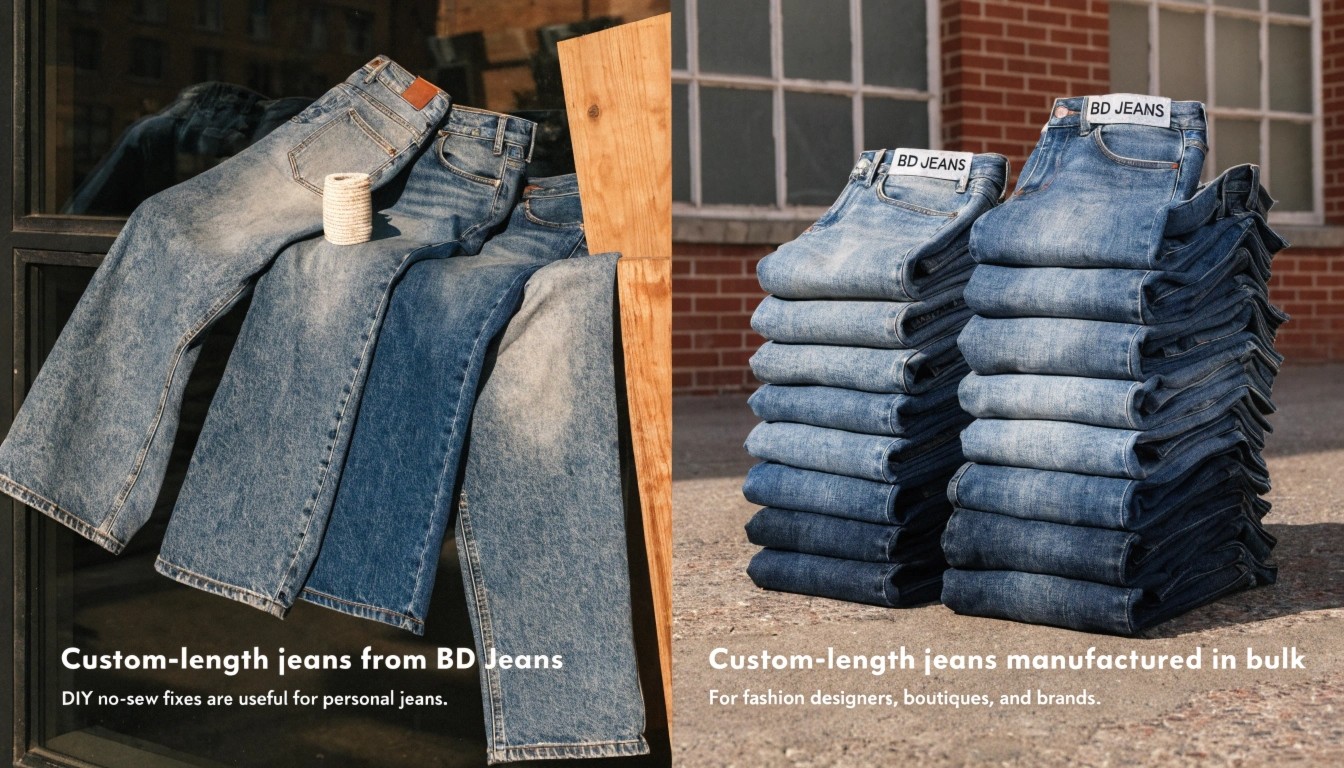
DIY fixes are great for one pair of jeans. They are not enough for a denim business. If you are a designer, boutique owner, online store founder, or influencer brand, length problems become customer experience problems. Returns increase. Reviews suffer. Product photos look different from customer reality. Buyers may love the wash and style but complain that the inseam is unrealistic.
This is where custom denim development becomes powerful. Instead of making one standard length and hoping customers adapt, you build the product around your target customer. You decide the inseam, rise, thigh, knee, leg opening, fabric weight, shrinkage allowance, wash effect, and styling intention before production.
When Are No-Sew Fixes Not the Best Option?
No-sew fixes are not the best option when the jeans are too long by several inches, when the denim is very thick, when the hem has complex distressing, or when the jeans need to survive frequent washing and daily wear. They are also not ideal when the product is being sold under a brand name.
Premium denim deserves better than a hidden adhesive fix. Selvedge denim deserves correct length planning. Stacked jeans need intentional extra length, not random extra fabric. Baggy jeans need proportion, not just size expansion. Plus-size jeans need professional grading so the rise, inseam, hip, thigh, and leg opening work together.
Why Are Custom-Length Jeans Better for Denim Brands and Boutique Stores?
Custom-length jeans help brands deliver a more consistent fit. This matters because customers do not only buy denim for fabric; they buy denim for confidence. They want jeans that match their body, shoes, lifestyle, and style identity.
For boutique stores, custom inseams can become a selling point. Instead of saying “our jeans may run long,” you can say “our jeans are developed with customer-ready inseam options.” That sounds more professional and builds trust.
For designers, custom denim production also protects the design concept. If your sketch shows a clean straight-leg jean that sits on the shoe, the final product should not drag on the floor. If your concept is a stacked jean, the stacking should be balanced and intentional. If your product is a baggy jean, the proportion should feel oversized but not careless.
How Can Custom Denim Manufacturing Solve Length and Fit Problems?
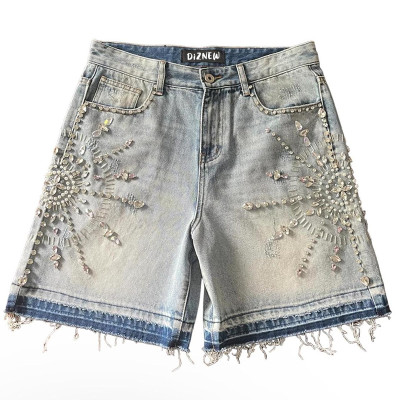
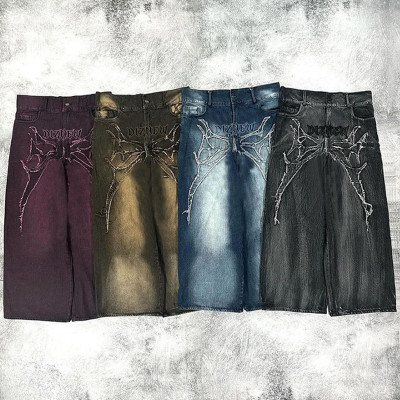
A professional denim manufacturer can solve length problems through pattern development, sample fitting, fabric testing, and production control. At DiZNEW, the process can support custom denim products such as plus-size jeans, baggy jeans, stacked jeans, straight jeans, selvedge jeans, skinny jeans, jogger jeans, denim jackets, denim shorts, and denim shirts.
For brand clients, the advantage is not only “making jeans shorter.” It is building a better product from the beginning. You can customize:
| Custom Area | Why It Matters |
| Inseam length | Prevents jeans from dragging or fitting too short |
| Rise | Controls comfort and body proportion |
| Leg opening | Affects stacking, shoe coverage, and silhouette |
Fabric weight | Changes drape, structure, and durability |
Wash effect | Creates brand identity and vintage character |
Logo and trims | Supports private label, OEM, and ODM branding |
Size grading | Helps serve petite, standard, tall, and plus-size customers |
MOQ planning | Supports small boutique tests and larger production orders |
DiZNEW is especially suitable for designers, online boutique owners, influencer shops, and premium denim brands that want to turn ideas into real products. Whether you start from a sketch, a reference sample, a tech pack, or only a rough concept, the goal is to help you create jeans that look good before the customer ever needs a DIY fix.
Final Thoughts: Fix One Pair at Home, or Build Better Jeans From the Start
Fixing jeans that are too long without sewing is absolutely possible. For personal wear, cuffing, inward folding, hemming tape, fabric glue, and controlled stacking can save a pair of jeans quickly. If you only need a weekend outfit, a no-sew method may be all you need.
But if you are building a denim brand, selling through an online boutique, launching a streetwear collection, or developing custom jeans for your customers, length should not be treated as an afterthought. The best jeans are not “fixed” after production. They are designed with the right inseam, fabric, fit, wash, and customer body type from the beginning.
DiZNEW is a China-based denim development and manufacturing factory with more than 20 years of experience in jeans R&D, manufacturing, and sales. We support custom denim products including plus-size jeans, baggy jeans, stacked jeans, straight jeans, selvedge jeans, skinny jeans, jogger jeans, denim jackets, denim shorts, and denim shirts. We can support low MOQ custom orders starting from 30 pieces and large-volume denim orders up to 10,000 pieces.
Whether you need custom jeans with your own logo, OEM/ODM denim production, complex wash development, or help turning a design sketch into a physical product, DiZNEW can help you build denim that fits your market—not just your model.
Looking to create custom jeans for your boutique, brand, or online store? Contact DiZNEW today to discuss your denim design, fabric choice, wash effect, logo customization, sizing plan, and production quantity.