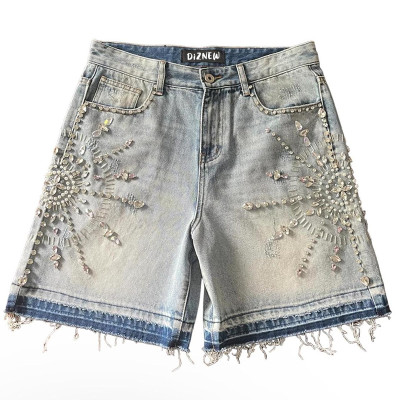
How Are Jeans Distressed in Factory: An Expert Guide
From vintage-inspired fades to heavy whiskers around the knees, distressed jeans have become a wardrobe staple. But how exactly do factories turn a fresh pair of rigid denim into your favorite broken-in look? Whether you buy a mass-market brand or a small-batch designer jean, the behind-the-scenes process blends chemistry, cutting-edge technology, and artisan craftsmanship.
In this guide, you’ll discover the step-by-step methods factories use—stone washing, laser finishing, enzyme treatments, and more—to achieve everything from subtle fades to dramatic rips. You’ll also learn how to spot authentic factory distressing versus DIY knock-offs, and why sustainable enzyme processes are reshaping the industry.
Factories distress jeans using a combination of stone washing, acid or bleach sprays, enzyme washes, sandblasting or laser technology, and hand-sanding/whiskering. Each method targets different areas—knees, thighs, pockets—to create controlled fades, whiskers, and abrasions. Quality control at every stage ensures a consistent look, whether in a 30-piece custom run or a 10,000-piece bulk order.

Intrigued by how a rock tumbler can mimic years of wear in a few hours? Or how a focused laser beam carves perfect fade lines that no hand could replicate? Read on for eye-opening details, real factory anecdotes, and pro tips for both buyers and home DIYers. You might never look at your favorite pair of jeans the same way again.
What Techniques Do Factories Use to Distress Jeans?
Factories use multiple distressing techniques: stone washing for overall softness and light fading; acid or bleach sprays for high-contrast patches; enzyme washes for eco-friendly abrasion; sandblasting or laser finishing for pinpoint precision; and hand sanding/whiskering for artisanal detail. Each process is tailored to the jean’s style, size, and desired level of wear.

1. Stone Washing: The classic. Heavy-duty stones tumble with denim in giant wash machines, eroding indigo and softening fabric. Stone size, wash time, and machine speed determine the fade intensity. Factories calibrate these variables to match the client’s design spec—whether a lightly worn look for straight jeans or a heavy vintage finish for baggy cuts.
2. Acid and Bleach Treatments: For dramatic contrasts, factories spray concentrated bleach solutions onto targeted zones—thighs, seat, seams. The chemicals strip color fast, creating bright white streaks against deep blue. In modern plants, computerized spray arms ensure repeatable patterns across hundreds of pairs, essential for bulk orders of 10,000 units.
3. Enzyme Washing: To address environmental concerns, many high-end brands opt for cellulase enzymes. These bio-catalysts eat away at cellulose fibers, producing softer, faded denim with less water and no harsh chemicals. Enzyme baths operate at controlled temperatures and pH levels, preserving fabric integrity while achieving natural-looking abrasion.
4. Sandblasting vs. Laser Finishing: Sandblasting uses high-pressure silica grit to carve out worn areas. It’s effective but raises health and environmental issues if not properly contained. Laser finishing, in contrast, uses programmed beams to burn precise fade lines and patterns into the fabric—no chemicals, minimal waste. Laser systems can replicate artisan whiskers or even brand logos in seconds.
5. Hand Sanding and Whiskering: Even with advanced machines, nothing matches the human touch for authentic whisker patterns behind the knees. Skilled artisans use sanding blocks, pumice stones, and rotary brushes to distress specific zones. Factories often combine automated pre-fades with final hand-finishing to meet bespoke OEM/ODM design requirements, especially for plus sizes and niche cuts.
How to Fade Jeans Without Bleach and Create Faded Lines
You can fade jeans without bleach by using pumice stones in the wash, salt and vinegar soaks, or by applying targeted enzyme sprays. For precise fade lines, use sandpaper or a soft-wire brush to rub the denim along seams, knees, and pockets, mimicking factory whiskering and whisker patterns.

Fading without bleach is not only safer for fabric but also for your skin and the environment. Here are proven methods:
1. Pumice Stone Wash: Place two or three pumice stones in your washing machine with a cold-water, mild-detergent cycle. The stones mimic stone-washing by physically abrading the denim surface. For a subtler fade, reduce the number of stones and washing time.
2. Salt and Vinegar Soaks: Dissolve 1 cup of sea salt and 1 cup of white vinegar in a bucket of water. Soak your jeans for 2–4 hours, then air-dry. Vinegar helps break down indigo; salt helps set the color—resulting in an even, aged look.
3. Enzyme Sprays: Purchase a commercial cellulase spray. Lightly mist the targeted areas, then tumble dry or air-dry. The enzymes will digest cellulose, creating soft fades in 1–2 cycles.
4. Sandpaper and Wire Brushes: For “whisker” lines behind the knees, fold the jeans to form natural crease lines. Gently rub 200–400 grit sandpaper or a soft-wire brush along the fold until the denim lightens. Practice on an inconspicuous area first to avoid over-distressing.
5. Dye Touch-Ups: If you overshoot and create unwanted holes or splotches, apply indigo dye pens to restore color selectively. Factories often use airbrush dye machines to refine edges and ensure a seamless, professional finish.
What Role Do Sandblasting, Laser Finishing, and Enzymes Play?
Sandblasting and laser finishing bring precision to jean distressing—sandblasting erodes with abrasive grit, while lasers burn micro-patterns. Enzyme treatments offer a sustainable alternative, using cellulase to break down fibers for a soft fade without harmful chemicals or excessive water usage.

The denim industry’s evolution mirrors shifts in technology and consumer values. Sandblasting has been a workhorse for rugged, deep abrasion effects, but its health hazards led many factories to adopt laser systems.
Laser finishing uses high-powered beams guided by CAD files to “engrave” fade details—whiskers, honeycombs, and even brand logos—onto denim surfaces. This method reduces water use by up to 90% compared to traditional washes and eliminates harmful dust.
Enzyme washes, pioneered in the 1990s, align with eco-certifications like Oeko-Tex and GOTS. Cellulase enzymes operate optimally at 50–60°C and neutral pH, digesting cellulose without weakening the warp yarns.
Factories often sequence steps: a gentle enzyme bath for overall soften-fade, followed by a targeted laser finish or hand-sanding for character marks. This hybrid approach satisfies both sustainability mandates and the aesthetic demands of fashion brands.
| Method | Water Use | Chemical Risk | Precision | Environmental Impact |
Stone Washing | High | Low-Med | Low-Med | High |
Bleach Treatment | Medium-High | High | Low-Med | High |
| Enzyme Wash | Low | Minimal | Low | Low |
| Sandblasting | Low | Med-High | Med | High |
| Laser Finishing | Minimal | None | Very High | Low |
For high-end custom orders—whether 30 pieces or 10,000—the optimal distressing recipe balances cost, turnaround time, and brand values. Modern factories, like DiZNEW, integrate real-time monitoring systems to track water consumption, chemical discharge, and energy use, ensuring compliance with US import regulations and sustainability standards.
How to Check If Your Distressed Jeans Are Genuine
To verify authentic factory-distressed jeans, inspect the uniformity and edge quality of fades: professional finishes have crisp, consistent whiskers and fade lines without frayed edges. Check brand-specific details—stitching, rivet logos, leather patches—and compare to official product specs (like Levi’s serial tags).

With counterfeit and DIY-distressed jeans flooding the market, buyers need a keen eye. Start by examining the fade patterns: mass-produced, factory-finishes are nearly identical across pairs in a batch.
Whiskers behind the knees should be sharply defined, not blurred or uneven as in hand-overdone DIY distress. Laser-etched fades often reveal microscopic burn marks—look closely at high-magnification photos or under bright light.
Brand Authentication: Levi’s vs. Knock-offs
Serial Tags and Care Labels: Genuine Levi’s have a specific font, tag placement, and RN number.
Rivets and Buttons: Inspect for precise engraving; counterfeits often have sloppy or missing logos.
Leather Patch: The patch material, stitching density, and embossing depth are tell-tale signs.
Fabric Integrity Tests: Authentic distressed jeans maintain structural integrity. Gently stretch the fabric across a fade line—factory-treated denim will rebound, whereas over-distressed fakes may stretch permanently or tear.
Bulk Order Consistency: If you’re an online boutique owner ordering 100+ pieces, request Pre-Production Samples (PPS). A reputable factory like DiZNEW provides detailed photos: closeups of whiskers, fade percentages, and tensile strength reports. These data sheets ensure your 500-piece order matches the sample.
What Quality Control Ensures Consistent Distressed Finishes?
Quality control in distressed jean production involves multi-point inspections: raw fabric checks, in-process monitoring of wash parameters, post-wash colorfastness tests, tensile strength testing at abrasion zones, and final visual audits against approved samples.
Dive Deeper:

1. Incoming Fabric Inspection: Before distressing begins, 100% of the denim rolls are checked for GSM (grams per square meter), color lot consistency, and weave uniformity. Any deviation triggers a re-dye or fabric swap.
2. In-Process Monitoring: Automated sensors in wash machines record water temperature, pH, enzyme concentration, and drum rotation speed in real time. For bleach and acid sprays, robotic arms log spray volume and nozzle pressure per pair.
3. Post-Wash Testing: After distressing, jeans undergo colorfastness tests (ISO 105-C06 standard) to ensure no excessive dye loss during wear. Tensile strength at high-stress points (knee fades, pocket edges) is measured per ASTM D5034 to confirm durability.
4. Visual Audit and Approval: QC inspectors compare each batch to the Pre-Production Sample and tech pack images. They use magnification tools to verify laser-etched lines, enzyme-washed textures, and hand-sanded pattern accuracy. Any batch falling outside a 3% tolerance on fade depth or pattern placement is reworked or rejected.
5. Packaging Verification: Finally, each pair’s distressing details—rips, patches, frays—are documented with high-resolution photos linked to its barcode. This traceability ensures that whether you order 30 units or 10,000, every jean meets your brand’s exact specifications.
Conclusion & Call to Action
Distressing jeans in a factory setting is both an art and a science—melding chemical processes, advanced machinery, and skilled handwork. At DiZNEW, with over 20 years of expertise, we offer full-cycle custom and OEM/ODM services: from design sketches to finished, quality-certified denim for plus sizes, baggy, skinny, stacked, straight cuts, and more.
Minimum orders start at just 30 pieces, scaling up to 10,000 units with consistent quality control. Ready to bring your unique distressed jean vision to life? Contact DiZNEW today for a detailed quote and sample review—let’s create the next standout denim collection together!
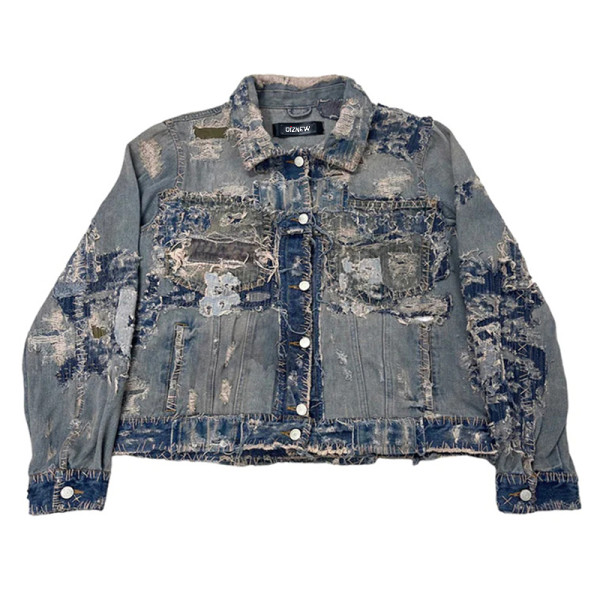
DIY patchwork denim jacket with heavy distressing and raw-edge stitching—bold, artistic, and uniquely handcrafted.

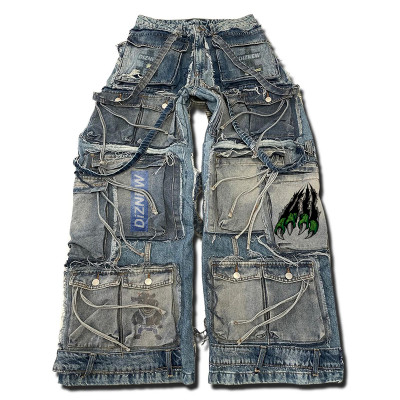
Vintage washed wide-leg jeans with frayed patchwork and distressed fashion details—crafted for boutique and luxury designers.
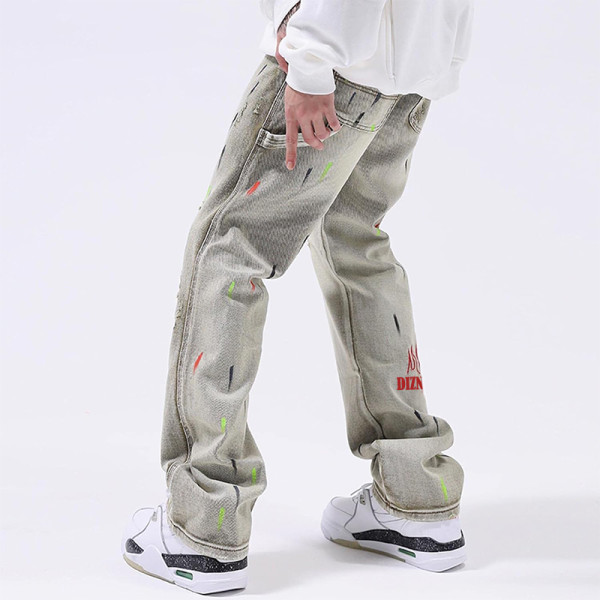
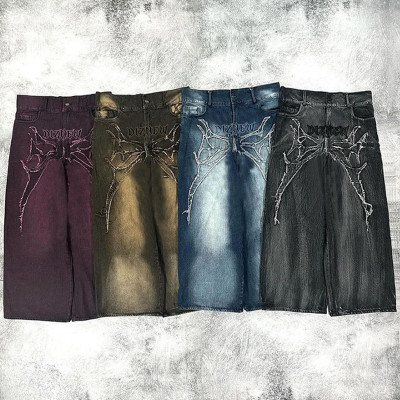
Trendy custom splashed paint washed denim jeans. Perfect for high-street fashion. Low minimum order of 30 pieces. OEM & private label available.
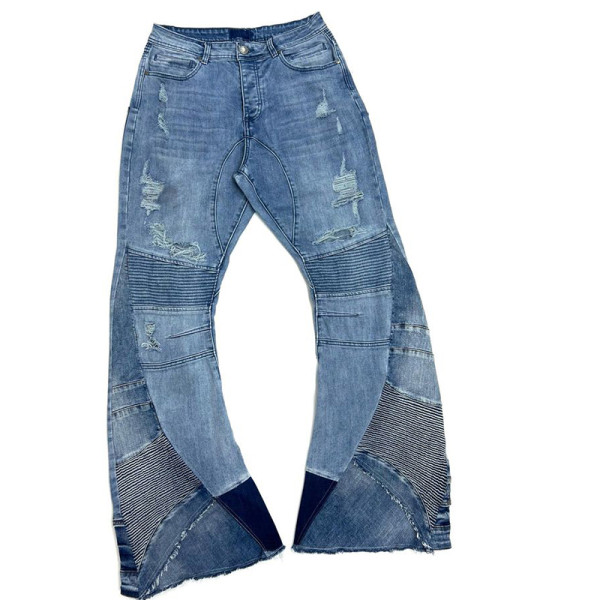
Custom biker flare jeans with moto paneling, distressed details, and bold patchwork. Low MOQ available.