How Do You Know If Your Jeans Are Too Baggy? An Expert Guide
Nothing derails a great outfit faster than a pair of jeans that hang off you like curtains. Whether you’ve fallen in love with the relaxed ’90s silhouette or simply grabbed a size too big, overly baggy jeans can swamp your shape, swallow your style, and leave you feeling frumpy rather than effortlessly cool.
But determining whether you’ve crossed the line from “casually roomy” to “way too loose” isn’t always obvious. With so many fits—boyfriend, baggy, tapered, stacked, jogger—you need clear eyes and a few expert markers to see if your denim is doing you any favors.
You know your jeans are too baggy when the waistband gaps, excessive fabric pools at the ankles, pockets flare open, and the crotch sags below your natural rise. If the leg opening exceeds 10–12 inches for women or 14–16 inches for men, or if the fabric shifts noticeably during walking or sitting, it’s time to reassess your size or tailoring options. Perfectly slouchy denim should drape without drowning your frame.

you pull on your favorite baggy jeans for a casual day out, expecting that lived-in comfort—only to catch your reflection and wonder if your legs have vanished. Stick around, because we’ll dive into the five telltale areas—waist and rise, leg opening, movement, tailoring options, and general fit signs—that separate a flattering baggy style from a baggy blunder. By the end, you’ll know exactly what adjustments to make (or who to call at DiZNEW) to get that perfectly relaxed, statement-making fit.
What Are the Key Indicators That Your Jeans Are Too Baggy?
Your jeans are too baggy when you see gaps at the waistband, sag at the crotch, billowing fabric around thighs and seat, and pockets that flare open. If excess material pools at the hem or shifts dramatically when you walk, that’s another clear signal. A leg opening wider than 10–12 inches for women or 14–16 inches for men usually crosses into unflattering territory. Properly baggy jeans drape evenly without drowning your silhouette.
1. Waist Gapping and Rolling
When you fasten your jeans, test by sliding a finger behind the waistband. More room than a finger’s width means the jeans are probably oversized. Waist gapping also happens when the waistband rolls or dips down at the back—an unmissable sign that the waistband circumference is too large. In a baggy style, the waist should sit comfortably without constant hitching or readjusting.
2. Crotch Sag and Thigh Bulge
A sagging crotch occurs when the rise is too low for your body shape. Baggy jeans are supposed to feel relaxed, not droopy. If your crotch hangs noticeably below your natural rise line, your body is working overtime just to hold the fabric up. Meanwhile, look for excessive folds or “fabric cliffs” along the thighs; these form when there’s too much material and can make your legs appear wider than they are.
3. Pocket Flare and Function Loss
Oversized jeans often render pockets nearly useless. If your front or back pockets billow, flare out, or you can’t comfortably slip your hands in without creating unsightly bulges, the fit is off. Functional yet stylish baggy jeans maintain pocket shape, keeping your phone or wallet secure and hidden.
4. Fabric Pooling at the Ankles
One of the most visual clues: jeans that puddle at the hem. While stacking (intentional bunching) can be a style, uncontrolled pooling that drags on the ground or bunches into massive folds screams too-large. Measure your ideal leg opening (10–12 inches for women, 14–16 inches for men) to keep the hem from overtaking your shoes.
5. Unstable Silhouette
Stand in front of a mirror and move side-to-side. If your jeans shift dramatically, exploring new contours each step, they’re too baggy. Proper baggy jeans should have a consistent drape, gently brushing your legs without forming constant new creases.
How Should the Waist and Rise Feel in a Properly Fitted Pair?
The waistband should sit snugly on your natural waist or hips without digging in or leaving more than a finger’s width of room. A well-fitted rise balances front and back, avoiding both muffin-top bulges and sagging crotch. When you sit, the waist should stay secure and the crotch shouldn’t pull uncomfortably. If you’re ordering sight unseen, measure a favorite pair’s rise and waist circumference to match with a new style or consult DiZNEW’s detailed size chart for custom results.
Your jeans’ rise—distance from the crotch seam to the top of the waistband—is crucial to both comfort and style. Rises vary: low (8–9″), mid (10–11″), and high (12″+). For baggy styles, a mid-rise often hits the sweet spot, providing enough coverage and structure to hold the excess fabric in place. A low-rise may slump into the wrong areas, while a high-rise can create an unwanted “paper bag waist” effect if not correctly proportioned.
When you test-fit jeans, fasten the button or snap, then stand straight and jiggle your hips slightly. The waistband should grip just enough so you don’t feel the urge to hitch them up, but not so tight that you need to unbutton after eating lunch. For on-the-go sizing, compare to a trusted pair: measure that pair’s waist and rise flat on a table, then match those figures when ordering online or consulting with an OEM/ODM partner like DiZNEW.
Balancing front and back rise prevents twisting and uncomfortable pulls. If your back rise is too shallow, you’ll get that downward droop; too deep, and you’ll be pulling at the front waistband constantly. DiZNEW uses 3D body-mapping technology to ensure that the rise contours naturally to an individual’s anatomy, eliminating guesswork for bulk orders or one-off custom pieces.
When buying without trying on, rely on clear measurement breakdowns:
Waist circumference at the top edge
Front rise from crotch seam to top
Back rise from crotch seam to top
Hip width at widest point
Send these numbers to DiZNEW for a precise cut, ensuring your baggy jeans have an intentional looseness rather than an accidental overflow.
What Role Does Leg Opening and Taper Play in Baggy Jeans?
Leg opening width defines your jean’s silhouette: more than 10–12 inches for women or 14–16 inches for men becomes oversized. Tapering the hem or adding cuffs refines an otherwise too-wide pant leg, balancing volume and proportion. You can transform a massively baggy leg with simple alterations—narrowing the bottom by 1–2 inches or adding an elastic jogger cuff. Properly designed baggy styles maintain a straight or softly tapered fall from thigh to ankle.
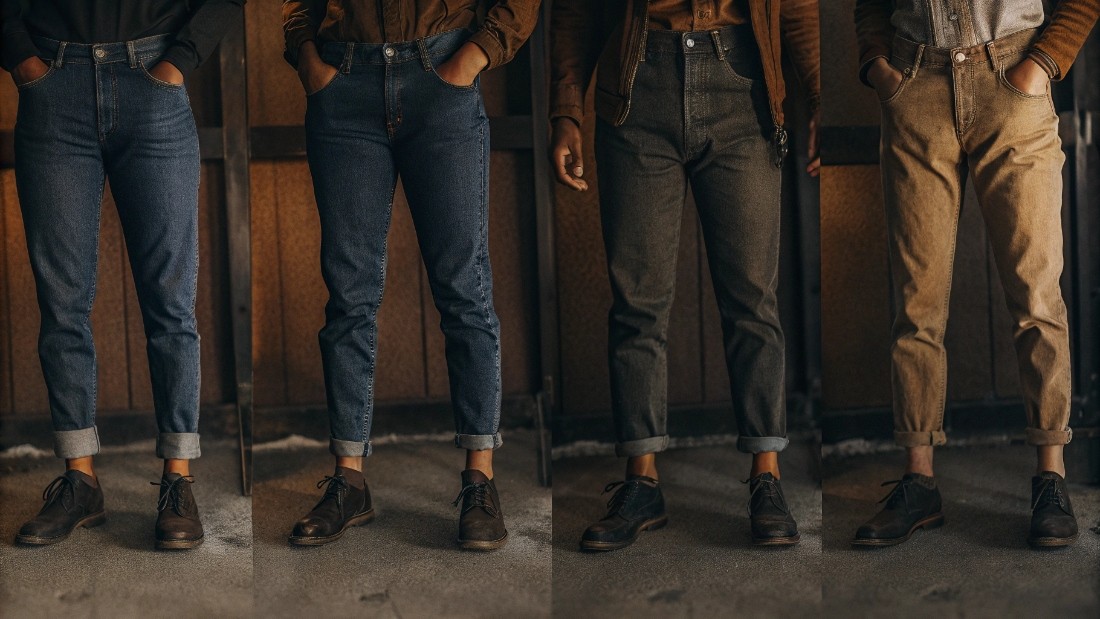
The leg opening dictates that iconic “baggy” look without tipping into shapelessness. In a classic loose-fit jean, the fabric should skim the outer leg line and flirt with your shoe top rather than engulf it. Too big, and you lose the leg’s definition; too tapered, and you kill the relaxed vibe.
1. Proportional Width
Women: 10–12″ hem allows stacking without drowning sandals.
Men: 14–16″ hem balances bulk through the thigh.
Overshoot these, and you risk ending up with parachute-level draping
2. Tapering Techniques
Hemming a wide leg inward by 1–2 inches per side immediately refines the overall silhouette. Many tailors recommend a slight taper from knee down—dropping from a 14″ knee width to a 12″ ankle width for men or 10″ for women—to maintain looseness where it counts but eliminate excessive pooling.
3. Cuffs and Stacking
Intentional stacking concentrates the fabric at the hem in small, controlled folds. If you already have extra material, use a double or triple cuff to lock fabric in place. This hack works especially well with raw-edge or selvedge baggy jeans, showcasing the denim’s interior while keeping volume hidden.
4. Style Variations
Stacked Jeans: Extra length for curated folds, but hem width stays within the 10–16″ range.
Jogger Jeans: Introduce an ankle cuff or elastic band to contain looseness.
Straight vs. Tapered: A straight-leg baggy jean offers consistent width, while a tapered baggy transitions from roomy thigh to narrower ankle.
5. Custom Solutions from DiZNEW
With DiZNEW’s OEM/ODM capabilities, you can specify exact leg opening measurements and tapering profiles. From complex pattern engineering to low minimum orders (30 pieces), they turn design sketches—including multiple hem treatments—into ready-to-wear perfection at scale.
How Can You Use Movement Tests to Assess Bagginess?
Put on your jeans and walk, sit, crouch, and lunge. If fabric bunches wildly at the crotch, pools excessively around your ankles, or shifts so much that the fit feels different every step, they’re too baggy. You want consistent drape—no sudden billows or tension lines. For jogger styles, test ankle cuffs for slippage. Movement tests reveal hidden fit flaws missed by static mirror checks.
Static measurements only tell half the story. The real truth emerges when you move. Here’s how to test:
1. Walking Test
Strut back and forth in front of a full-length mirror. Observe:
Is the crotch sagging farther with each stride?
Do your ankles see new folds accumulating?
Are the side seams twisting?
2. Sitting and Squatting
Sit in a chair, then stand. If the waistband rides down or you experience fabric bunching at your midsection, that’s a sign the rise or waist is off. Squat low enough to test the range of motion. Excess material should compress but not pull uncomfortably or reveal you to anyone behind you!
3. Lunges and Stretches
Lunge forward and sideways, simulating active movements. Baggy jogger jeans should flex with an elastic cuff, while loose straight-leg jeans should offer room without revealing too much or causing the waistband to disconnect.
4. Practical Considerations
When you wear jeans daily—walking city streets, biking, sitting at a desk—they need to feel stable. Overly baggy denim can flip, catch on things, or feel bulky under a coat. Ask yourself: are these jeans supporting my lifestyle, or am I constantly readjusting?
5. DiZNEW’s Tech-Driven Fit
Using 3D fit simulations and real-world wear testing, DiZNEW refines patterns so that production runs—be they 30 or 10,000 pairs—move just as the prototype did. Their quality control catches shifting seams and pulsing pockets before they hit your store cart.
What Tailoring or Customization Options Rescue Overly Baggy Jeans?
If your jeans are too big, consider tapering the legs, taking in the seat, raising the rise, or adding elastic ankle cuffs. Simple alterations can reduce hem width by 2–4 inches, shorten the rise by an inch, or tighten the waistband by 1–2 inches. For precise results, order plus-size, custom, or made-to-measure denim from DiZNEW with your exact measurements, design details, and logo for bulk or small-batch production.
1. Tapering and Hemming
Tapering transforms wide-leg denim into a contemporary loose-tapered style. A good tailor can remove up to 2 inches of width per side without compromising pocket placement. Hemming length also refines stacking—ask for a 1–2 inch shorter inseam to prevent ground-skimming folds.
2. Taking in the Seat
An oversized seat contributes to that parachute effect through the legs. By removing fabric at the center back seam, tailors can raise the crotch and tighten the seat, causing the excess material to lie closer to your natural build. This adjustment stops that drooping crotch and redefines thigh volume.
3. Waistband Adjustments and Rise Alterations
Waistband inserts or elastic bands can shrink a loose waist by up to 2 inches. If the rise is too low and causes sagging, adding 1 inch to the rise via a new waistband or by raising the front and back panels rebalances the silhouette. DiZNEW’s pattern engineers use digital grading to adjust these key areas with precision, ensuring consistency across every pair.
4. Jogger Conversions and Cuff Additions
Turn baggy jeans into jogger jeans by removing the original hem and adding an elastic or rib-knit cuff. This change instantly modernizes the fit and corrals excess leg volume. It’s a popular custom option for streetwear labels and influencers looking to refresh a ready-made pant.
5. When to Go Custom or OEM/ODM
If you find yourself repeatedly altering off-the-rack jeans, it’s greener and more efficient to invest in made-to-measure production. DiZNEW accepts low minimum orders (30 pcs) and scales up to 10,000 pcs, accommodating everything from indie online boutiques to established high-end denim brands. Provide your sketches or tech packs, specify fabric (stretch, rigid, selvedge), trims, and logo placement, and get delivery-ready jeans that fit like they were built for you—because they are.
Conclusion and Call to Action
Finding the perfect baggy jean fit is a balance of art and science—from diagnosing waistband gaps and crotch sag to fine-tuning leg opening and movement performance. Whether you need a small run of 30 pairs for your boutique or a large production of 10,000 for your brand, DiZNEW’s 20+ years of denim R&D, OEM/ODM capabilities, and advanced fitting technologies ensure every pair hits the sweet spot between relaxed ease and polished style.
Ready to upgrade your baggy denim game? Reach out to DiZNEW today with your measurements, design sketches, and customization requests—for plus sizes, selvedge styles, joggers, stacked fits, and beyond. Let’s bring your perfect-fit jeans from concept to closet.

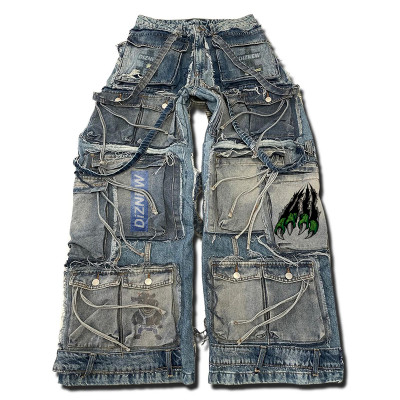
Custom patchwork riveted denim jeans bring a bold, eclectic look, perfect for streetwear lovers seeking unique design solutions
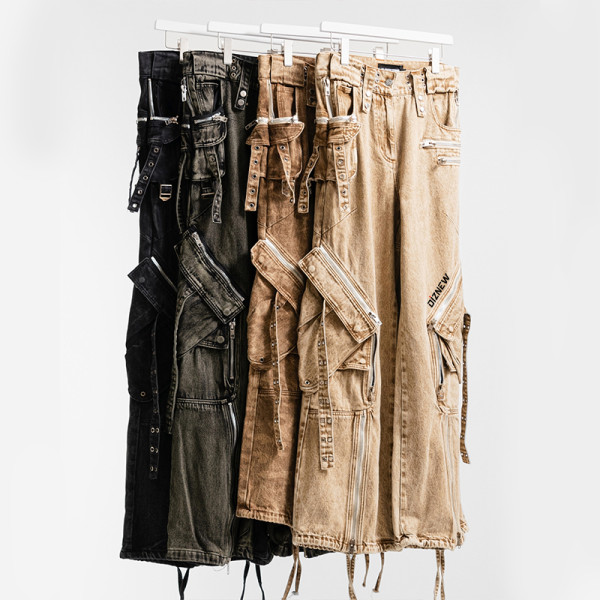
Modern buttons cargo jeans with custom solutions, blending utility and streetwear style for innovative designer aesthetics.
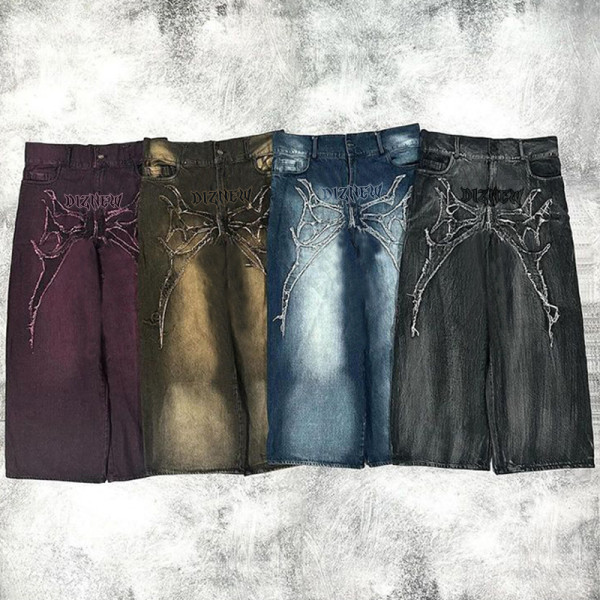
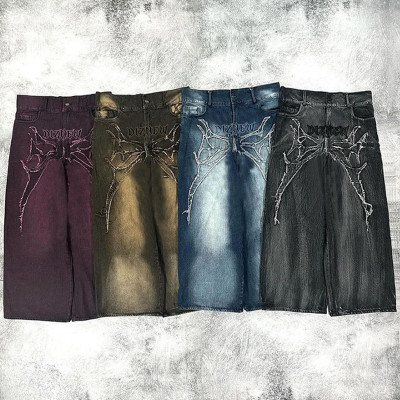
Custom men's gothic embroidered baggy denim jeans with spider web design. Bold streetwear for standout, stylish looks.
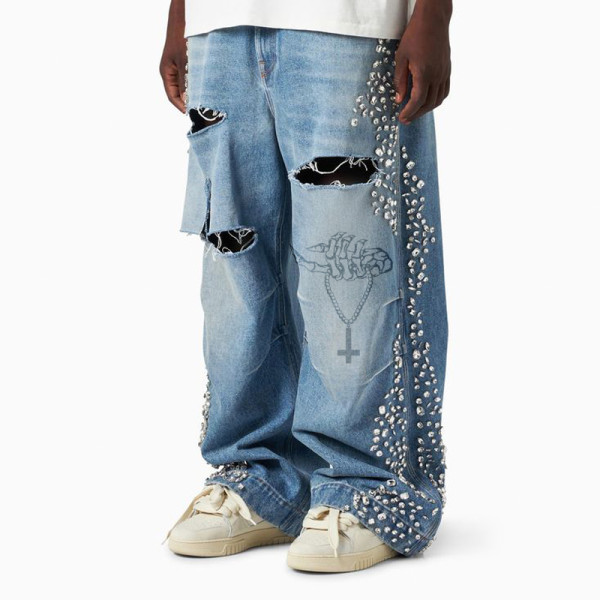
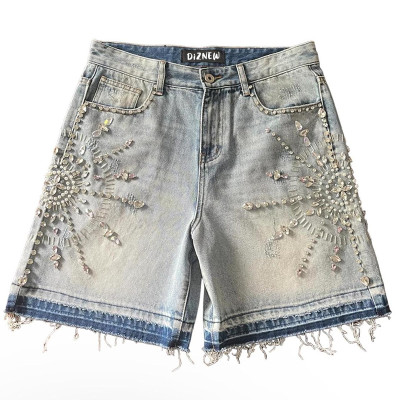
Men's baggy ripped jeans featuring silver studs and an embroidered design, offering a bold streetwear vibe with a distressed look.