why do some zippers bulge out on jeans
A bulging zipper on jeans looks like a small problem, but for customers, it can feel like a big deal. Nobody wants to look down and see the front fly pushing outward, puckering, or creating an awkward bump under a T-shirt. For everyday wearers, it raises an immediate question: “Are these jeans too small, badly made, or just not right for my body?” For denim brands, boutique owners, and online sellers, the issue is even more serious. A zipper bulge can turn into poor product reviews, higher return rates, and lower customer confidence in the fit of the jeans.
A zipper bulges out on jeans when the fly area is under uneven tension or lacks enough structure to stay flat. The most common causes include tight waist or hip fit, poor front-rise balance, weak fabric recovery, incorrect zipper length, bulky fly construction, or uneven sewing tension. In many cases, the zipper itself is not the only problem—the whole front pattern, fabric, and construction must work together.
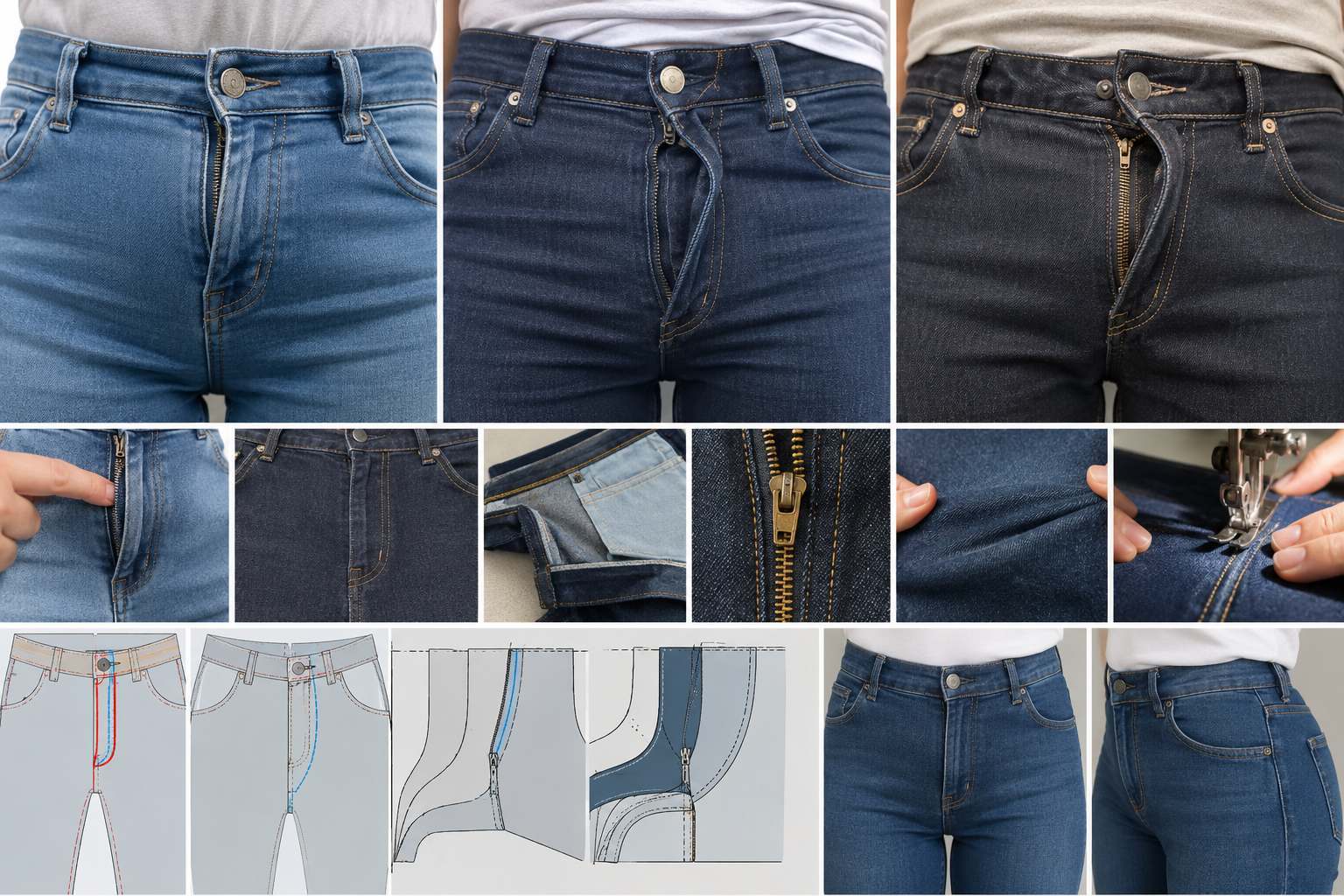
That is why zipper bulge should not be treated as just a “zipper problem.” It is a fit problem, a fabric problem, a pattern problem, and sometimes a manufacturing problem all at once. One pair of skinny jeans may bulge because the fabric is stretched too tightly across the hips. Another pair of plus size jeans may bulge because the front rise is too short. A pair of baggy jeans may show a zipper bump because there is too much loose fabric around the fly. The interesting part is that the same symptom can come from very different causes. So before you blame the zipper, let’s open the fly area—technically speaking—and look at what is really happening inside a pair of jeans.
Why Does My Zipper Bulge Out?
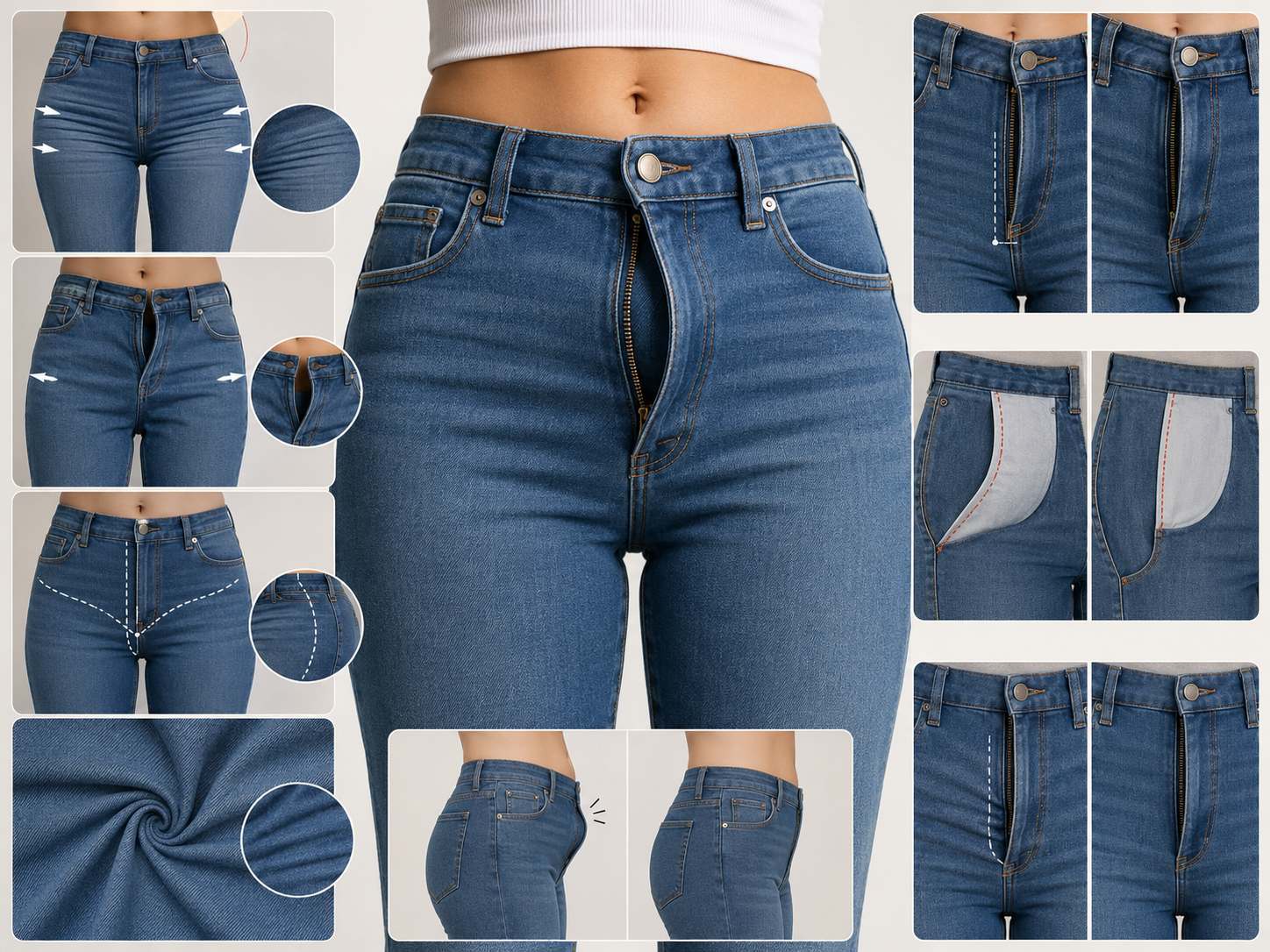
A jeans zipper bulges out when the fly area cannot lie flat against the body. This may happen because the jeans are too tight, too loose, poorly balanced at the front rise, made with fabric that stretches unevenly, or constructed with the wrong zipper length or fly structure. The zipper may look like the problem, but the real cause is often fit, fabric tension, or sewing construction.
Dive Deeper
When customers ask, “Why does my zipper bulge out?” they are usually looking for a simple answer: the jeans are too small. Sometimes that is true, but it is not the whole story. If the waistband, hips, or crotch area is too tight, the body pushes against the fabric and creates horizontal tension across the front fly. The zipper becomes the stiffest part of the front panel, so instead of stretching smoothly like the fabric, it pushes outward. This is especially common in skinny jeans, slim straight jeans, and stretch jeans where the fabric is designed to sit close to the body.
However, jeans can also bulge at the zipper when they are too loose. That may sound strange, but loose fabric can collapse, fold, or create a tent-like shape around the fly. If the front rise has too much extra length or the waistband does not hold the jeans firmly in place, the zipper may not sit close to the body. Instead, the fly panel floats forward, especially when the wearer sits, bends, or walks. This is why a customer may complain that the zipper looks fine when standing still but sticks out when sitting down.
Another major reason is front-rise imbalance. The front rise is the distance and curve from the crotch seam to the waistband at the front of the jeans. If it is too short, the fly area is pulled downward and outward. If it is too long, the extra fabric can bunch and create a visible bump. A well-developed pair of jeans must balance the waist, hip, crotch, and front rise together. You cannot fix a bad front rise simply by changing the zipper.
The fly construction itself also matters. A zipper is not sewn directly into a flat piece of denim without support. It is part of a system: zipper tape, fly facing, fly shield, topstitching, seam allowance, pressing, and sometimes interlining. If one of these parts is too bulky, too soft, or sewn with uneven tension, the fly can twist or pucker. A stiff zipper on lightweight denim may push outward. A weak fly shield on stretch denim may fail to hold the zipper flat. A zipper that is too long for the front rise may curve at the bottom and create a bump near the crotch.
From a brand owner’s perspective, this is why sample fitting is so important. A zipper bulge seen in one sample should never be ignored before bulk production. It may be a warning sign that the pattern needs adjustment, the fabric needs better recovery, or the zipper and fly construction need to be changed. For online boutiques and custom denim brands, small fit issues become big customer-service problems after launch.
Here is a practical way to diagnose the issue:
When customers ask, “Why does my zipper bulge out?” they are usually looking for a simple answer: the jeans are too small. Sometimes that is true, but it is not the whole story. If the waistband, hips, or crotch area is too tight, the body pushes against the fabric and creates horizontal tension across the front fly. The zipper becomes the stiffest part of the front panel, so instead of stretching smoothly like the fabric, it pushes outward. This is especially common in skinny jeans, slim straight jeans, and stretch jeans where the fabric is designed to sit close to the body.
However, jeans can also bulge at the zipper when they are too loose. That may sound strange, but loose fabric can collapse, fold, or create a tent-like shape around the fly. If the front rise has too much extra length or the waistband does not hold the jeans firmly in place, the zipper may not sit close to the body. Instead, the fly panel floats forward, especially when the wearer sits, bends, or walks. This is why a customer may complain that the zipper looks fine when standing still but sticks out when sitting down.
Another major reason is front-rise imbalance. The front rise is the distance and curve from the crotch seam to the waistband at the front of the jeans. If it is too short, the fly area is pulled downward and outward. If it is too long, the extra fabric can bunch and create a visible bump. A well-developed pair of jeans must balance the waist, hip, crotch, and front rise together. You cannot fix a bad front rise simply by changing the zipper.
The fly construction itself also matters. A zipper is not sewn directly into a flat piece of denim without support. It is part of a system: zipper tape, fly facing, fly shield, topstitching, seam allowance, pressing, and sometimes interlining. If one of these parts is too bulky, too soft, or sewn with uneven tension, the fly can twist or pucker. A stiff zipper on lightweight denim may push outward. A weak fly shield on stretch denim may fail to hold the zipper flat. A zipper that is too long for the front rise may curve at the bottom and create a bump near the crotch.
From a brand owner’s perspective, this is why sample fitting is so important. A zipper bulge seen in one sample should never be ignored before bulk production. It may be a warning sign that the pattern needs adjustment, the fabric needs better recovery, or the zipper and fly construction need to be changed. For online boutiques and custom denim brands, small fit issues become big customer-service problems after launch.
Here is a practical way to diagnose the issue:
| What the Customer Sees | Possible Cause | Development Check |
| Zipper sticks out when standing | Tight hip, short front rise, stiff zipper | Check front-rise length and hip tension |
| Zipper bulges when sitting | Poor crotch depth or fly curve | Test seated fitting on real bodies |
Fabric puckers beside zipper | Uneven sewing tension or weak pressing | Check stitch tension and finishing |
Fly area collapses forward | Jeans too loose or fly shield too soft | Adjust waistband fit and fly support |
Zipper creates a hard ridge | Zipper too stiff or too long | Test zipper length and tape flexibility |
In short, zipper bulge is a symptom. The real solution comes from understanding whether the pressure is coming from the body, the pattern, the fabric, or the construction.
What Is the 2 Finger Rule for Jeans?
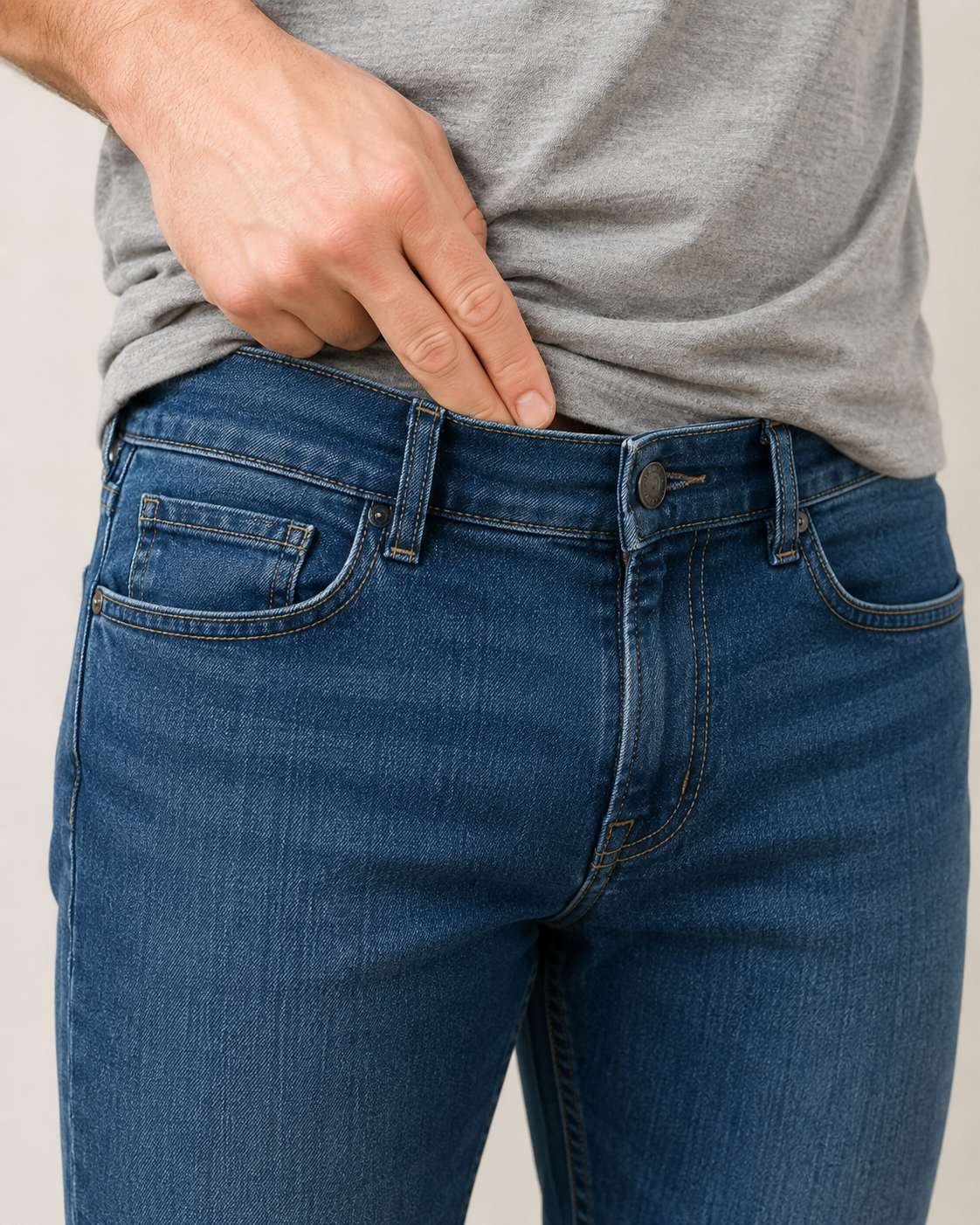
The 2 finger rule means that when your jeans are buttoned, you should usually be able to fit about two fingers comfortably inside the waistband. If you cannot fit two fingers, the jeans may be too tight. If there is too much extra space, they may be too loose. This rule helps check waist comfort, but it does not fully diagnose zipper bulge.
Dive Deeper
The 2 finger rule is one of the simplest fit checks customers use when trying on jeans. It is easy to understand: button the jeans, stand naturally, and slide two fingers between the waistband and your body. If you can do this comfortably, the waistband is probably not squeezing too tightly. If you cannot get two fingers in, the waistband may be too tight. If you can fit a whole hand inside, the waist may be too loose.
This rule matters because waistband pressure directly affects the fly area. When the waist is too tight, the top of the zipper and button area are pulled under stress. This can force the zipper line to curve, twist, or push outward. The body naturally expands when sitting, bending, or eating, so jeans that feel just a little tight while standing may become very tight in movement. That extra pressure often shows up at the zipper because the zipper is less flexible than denim fabric.
On the other hand, a waistband that is too loose can also create zipper problems. If the waistband does not anchor the jeans properly, the front fly may not stay close to the body. The jeans may slide down slightly, creating extra fabric around the front rise. This is common in relaxed straight jeans, baggy jeans, and some plus size jeans if the waist-to-hip ratio is not properly graded. The zipper then appears to bulge, not because it is under too much pressure, but because the fly panel has lost its structure.
Still, the 2 finger rule is only a quick consumer-level test. It does not tell you whether the front rise is correct. It does not tell you whether the crotch depth suits the body shape. It does not measure fabric stretch recovery. It does not reveal whether the zipper is too long, the fly shield is too soft, or the front panel has been cut slightly off-grain. In other words, the rule can tell you whether the waist feels reasonable, but it cannot explain the whole engineering of the jeans.
For denim brands, this is where professional fit development becomes important. A good pair of jeans is not built from waist size alone. It must consider body movement, sitting posture, thigh volume, hip curve, rise preference, and fabric behavior after washing. For example, a high-rise skinny jean needs a different front-rise balance from a low-rise baggy jean. A plus size straight jean needs more careful grading than a standard-size slim jean because the relationship between waist, belly, hip, and front rise changes across sizes.
At DiZNEW, this type of issue is exactly why custom jeans development should involve sample fitting, pattern adjustment, and fabric testing before production. A buyer may send a design sketch and ask for a specific look, but the real product must also work on the body. The zipper must stay flat, the front rise must feel comfortable, and the waistband must hold the jeans without squeezing.
For brands, the 2 finger rule can be used as a simple customer-facing explanation, but the factory-side solution requires more detail. A brand can tell customers to choose the right waist size, but a manufacturer must ask deeper questions: Is the rise correct? Is the fly curve balanced? Does the fabric stretch and recover well? Is the zipper tape compatible with the denim weight? Is the fly shield strong enough for this style?
A good fit rule helps. A good development process solves the problem.
How Can Fabric Type and Jeans Style Make the Zipper Bulge?
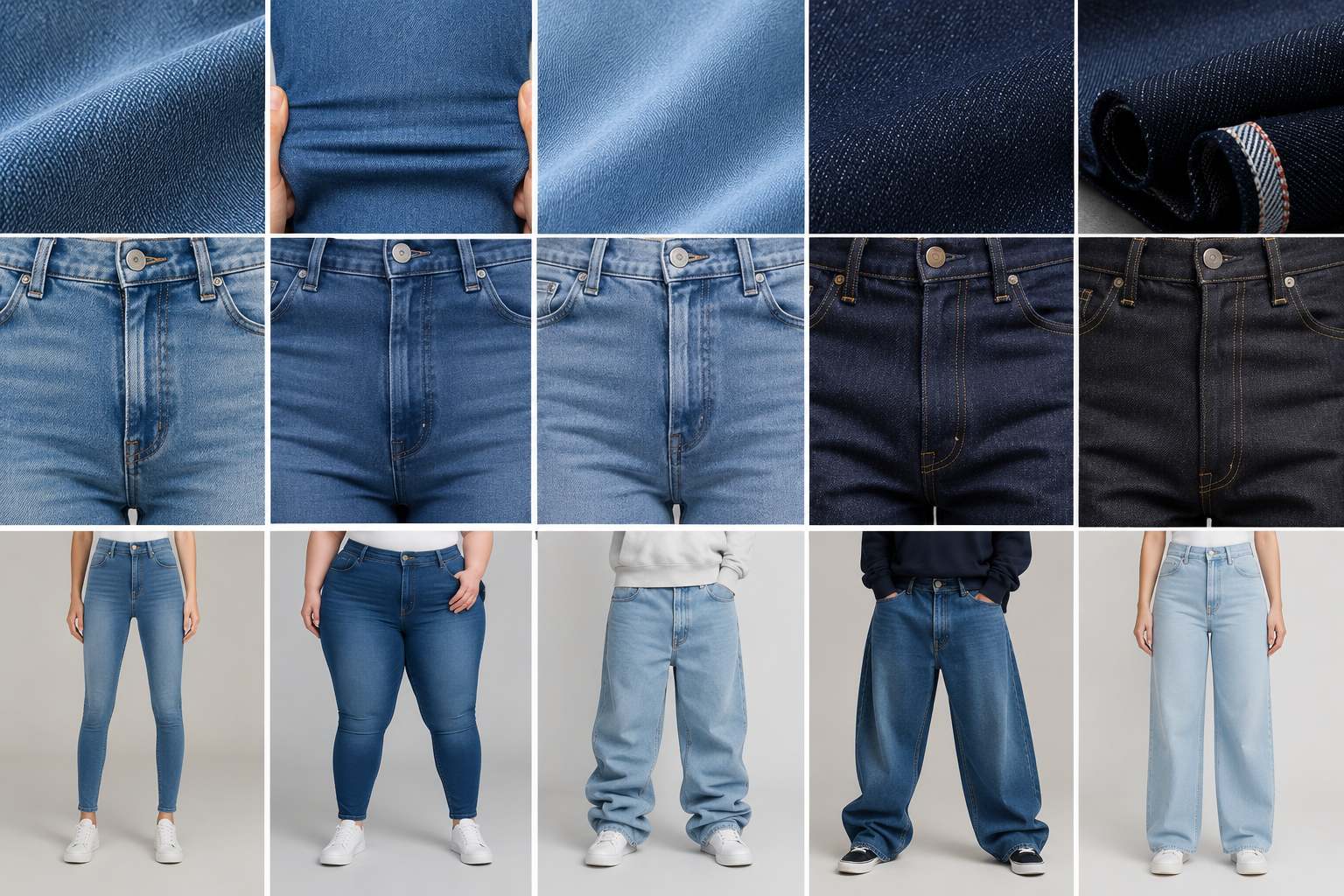
Fabric type affects zipper bulge because denim fabrics stretch, recover, shrink, and hold structure differently. Stretch denim may pull tightly across the fly, lightweight denim may lack support, rigid denim may form hard folds, and heavyweight denim may create bulk. Jeans style also matters: skinny, plus size, stacked, baggy, and high-rise jeans all need different fly and front-rise construction.
Dive Deeper
Denim is not just one fabric. It can be rigid, stretch, lightweight, heavyweight, soft washed, raw, coated, slub, ring-spun, selvedge, or blended with spandex, polyester, viscose, or other fibers. Each fabric behaves differently around the zipper. This is why the same zipper construction may work well on one pair of jeans but fail on another.
Stretch denim is one of the most common causes of zipper bulge because it reacts strongly to body tension. When a customer wears skinny jeans or slim jeans made from stretch denim, the fabric stretches around the hips, belly, and thighs. If the fabric has strong stretch but poor recovery, it may expand during wear and fail to return to its original shape. The fly area then becomes distorted. The zipper tape may not stretch in the same way as the denim, so the difference between flexible fabric and rigid zipper creates puckering or bulging.
Rigid denim has a different challenge. It does not stretch much, so it needs a more accurate pattern. If the front rise is too short or the hip area is too tight, rigid denim will not forgive the mistake. Instead, it creates hard tension lines. In raw or selvedge denim, the fly area can feel stiff at first, and if the zipper length or fly shield is not adjusted properly, the front may look bulky. This does not always mean the jeans are low quality. It may mean the construction is not matched correctly to the fabric weight and style.
Lightweight denim may have the opposite problem. It can be too soft to hold the zipper flat. If the fly facing and fly shield do not have enough structure, the zipper may wave, twist, or show through the fabric. This is often seen in fashion denim, summer denim, and soft washed styles. A buyer may choose lightweight fabric for comfort, but if the fly construction remains too weak, the jeans can look cheap even if the fabric feels nice.
Heavyweight denim creates another issue: bulk. A zipper, fly shield, seam allowance, topstitching, and folded denim layers all meet in a small area. If the denim is thick and the construction is not adjusted, the fly can become too heavy and push outward. This is especially important for selvedge jeans and premium straight jeans where buyers expect a clean, structured front.
Different styles also need different technical thinking. Skinny jeans need excellent stretch recovery and precise tension control. Plus size jeans need more careful front-rise shaping and size grading. Baggy jeans need enough ease without loose fabric collapsing at the fly. Stacked jeans often combine a slim upper block with extra leg length, so the top block must stay clean even while the lower leg stacks. Jogger jeans may need a softer waist and more relaxed crotch, but the fly still needs enough support if it uses a zipper.
Here is a practical comparison:
| Jeans Type | Zipper Bulge Risk | Main Reason | Manufacturing Focus |
Skinny jeans | High | Strong body tension across fly | Stretch recovery and front-rise balance |
Plus size jeans | High | More complex waist, belly, and hip relationship | Accurate grading and fit testing |
Baggy jeans | Medium | Extra fabric may collapse at fly | Proper ease distribution |
Straight jeans | Medium | Fit depends on rise and hip balance | Clean pattern and zipper placement |
Selvedge jeans | Medium to high | Heavy fabric creates stiffness and bulk | Reduced bulk and strong pressing |
| Jogger jeans | Medium | Soft waistband may reduce fly stability | Waist support and fly shield structure |
| Denim shorts | Medium | Short rise and sitting pressure | Crotch depth and zipper length |
| Denim jackets/shirts | Low for zipper fly, but relevant for front closure | Button or zipper placket may wave | Placket structure and fabric control |
For brand owners, fabric selection should never be separated from fit and construction. A design may look beautiful on paper, but if the fabric does not support the fly area, the final product may disappoint customers. That is why DiZNEW helps buyers move from design sketch to real product by checking not only the look, but also the technical behavior of denim fabric, zipper, fly structure, and wash effect.
A strong custom jeans supplier should ask questions before production: What is the denim weight? Does the customer want stretch or rigid fabric? Is the style slim, baggy, stacked, straight, or plus size? Will the jeans be stone washed, enzyme washed, distressed, coated, or garment dyed? Each answer changes how the fly should be built.
The zipper bulge is small, but it often reveals whether the product was truly developed or simply copied.
How to Stop Zipper from Bulging Without Sewing?
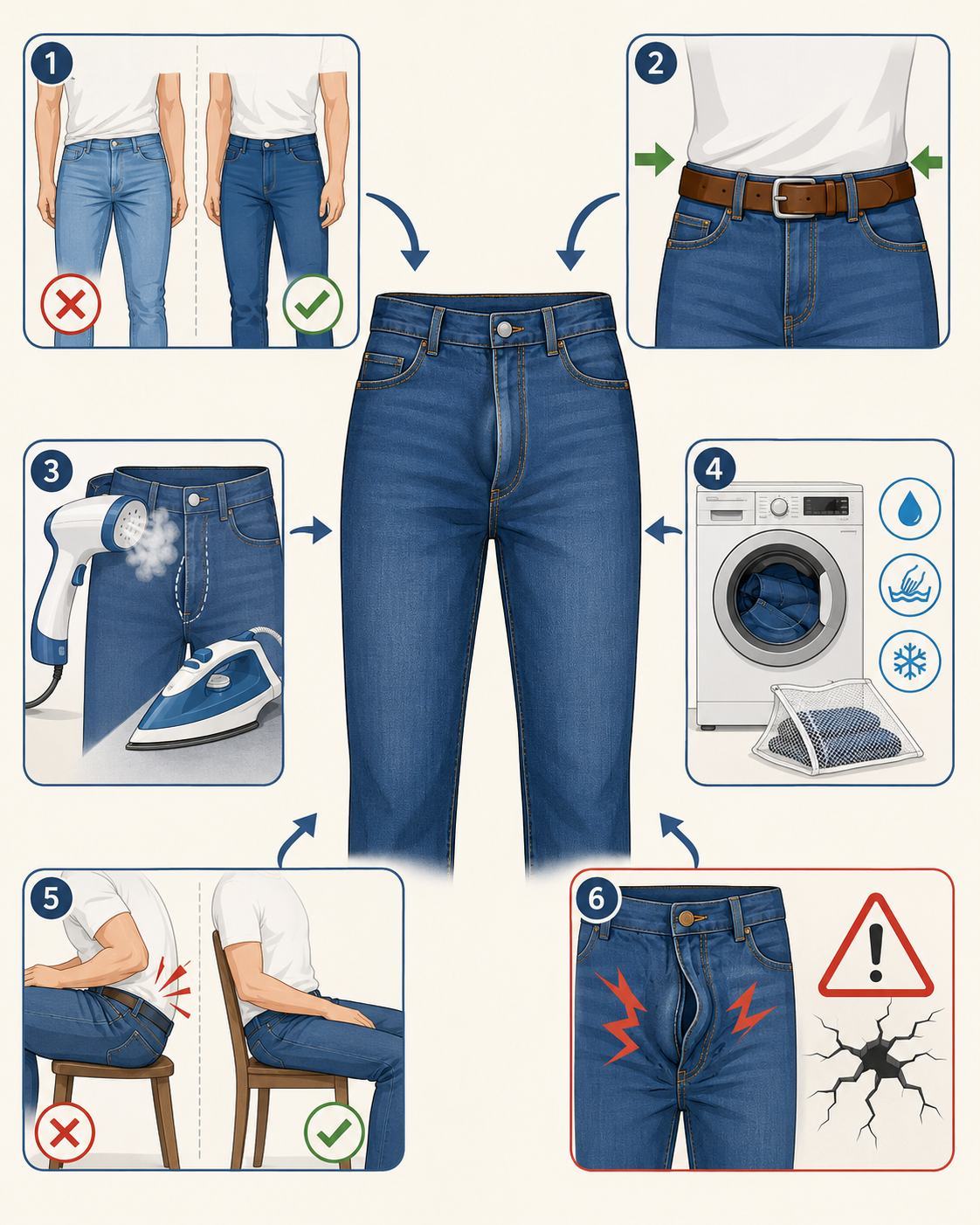
You can reduce zipper bulge without sewing by choosing the right size, using a belt to stabilize the waist, steaming or pressing the fly area, washing the jeans correctly, and avoiding excessive pulling when sitting or bending. These methods may improve the appearance, but they cannot permanently fix serious pattern, fabric, or construction problems.
Dive Deeper
Many consumers search for “how to stop zipper from bulging without sewing” because they want a fast fix. They may have already bought the jeans, removed the tags, or planned to wear them that day. In this situation, the goal is not to rebuild the jeans. The goal is to make the fly area look flatter and feel more comfortable.
The first non-sewing solution is to check whether the jeans are the right size. If the waistband is painfully tight or the zipper is being pulled apart by body pressure, no steaming trick will fully solve the problem. The customer may need a larger size, a different rise, or a style with better stretch recovery. A common mistake is buying jeans based only on waist measurement while ignoring hip, thigh, belly, and rise comfort. If the jeans fit the waist but are too tight at the lower belly or hip, the zipper may still bulge.
A belt can help when the jeans are slightly loose at the waist. If the waistband is not stable, the front fly may shift forward or collapse. A belt holds the waistband closer to the body and reduces movement. This works best when the zipper bulge comes from looseness, not tightness. If the jeans are already too tight, adding a belt may make the pressure worse.
Steaming and pressing can also help, especially if the fly area is puckered from washing, packaging, or poor folding. Use steam carefully, then press the fly area flat with moderate heat according to the care label. This can relax wrinkles and help the zipper tape and denim layers sit more smoothly. However, pressing is only a surface-level fix. If the zipper is too long or the front rise is badly balanced, the bulge will come back when the jeans are worn.
Washing and drying also affect the fly. If jeans have been stretched out from wear, washing may help the denim recover temporarily. But aggressive drying can shrink the fabric unevenly, which may create new tension around the zipper. Customers should follow the care label and avoid extreme heat unless the jeans are designed for it. For stretch denim, repeated high-heat drying may weaken elasticity over time, which can make fit problems worse.
Another useful tip is to test the jeans while moving. Stand, sit, squat slightly, walk, and look at the fly area from the side. If the zipper only bulges when sitting, the issue may be related to front rise, crotch depth, or belly pressure. If it bulges all the time, the problem may be size, fly construction, or zipper stiffness. If it appears only after several hours of wear, the fabric may have poor recovery.
For consumers, non-sewing solutions are useful, but they have limits. For brands, these customer questions are valuable because they reveal what buyers care about after purchase. A customer may not understand technical denim construction, but they know when jeans feel awkward. If many customers ask how to flatten the zipper, the brand should not treat it as a styling complaint. It may be a product development issue.
For e-commerce brands, this is especially important because shoppers cannot try on the jeans before buying. Clear size charts, fit notes, rise descriptions, and fabric stretch information can reduce complaints. But the product itself must still be developed correctly. No size chart can save a zipper that bulges because the pattern or construction is wrong.
Here is a simple consumer-facing troubleshooting guide brands can use:
| Situation | Non-Sewing Fix | Long-Term Answer |
| Waist slightly loose | Wear a belt | Improve waistband grading |
| Fly wrinkled after washing | Steam and press | Improve pressing and packing |
Zipper bulges when sitting | Try a higher or better-balanced rise | Adjust front-rise curve |
Jeans feel tight at lower belly | Size up or choose more stretch | Improve pattern and fabric choice |
| Fly sticks out after hours of wear | Wash to recover shape | Use better stretch recovery fabric |
The real lesson is this: non-sewing fixes can help customers manage the problem, but brands should solve zipper bulge before the jeans reach customers.
How to Get Rid of Zipper Bulge on Jeans During Custom Manufacturing?
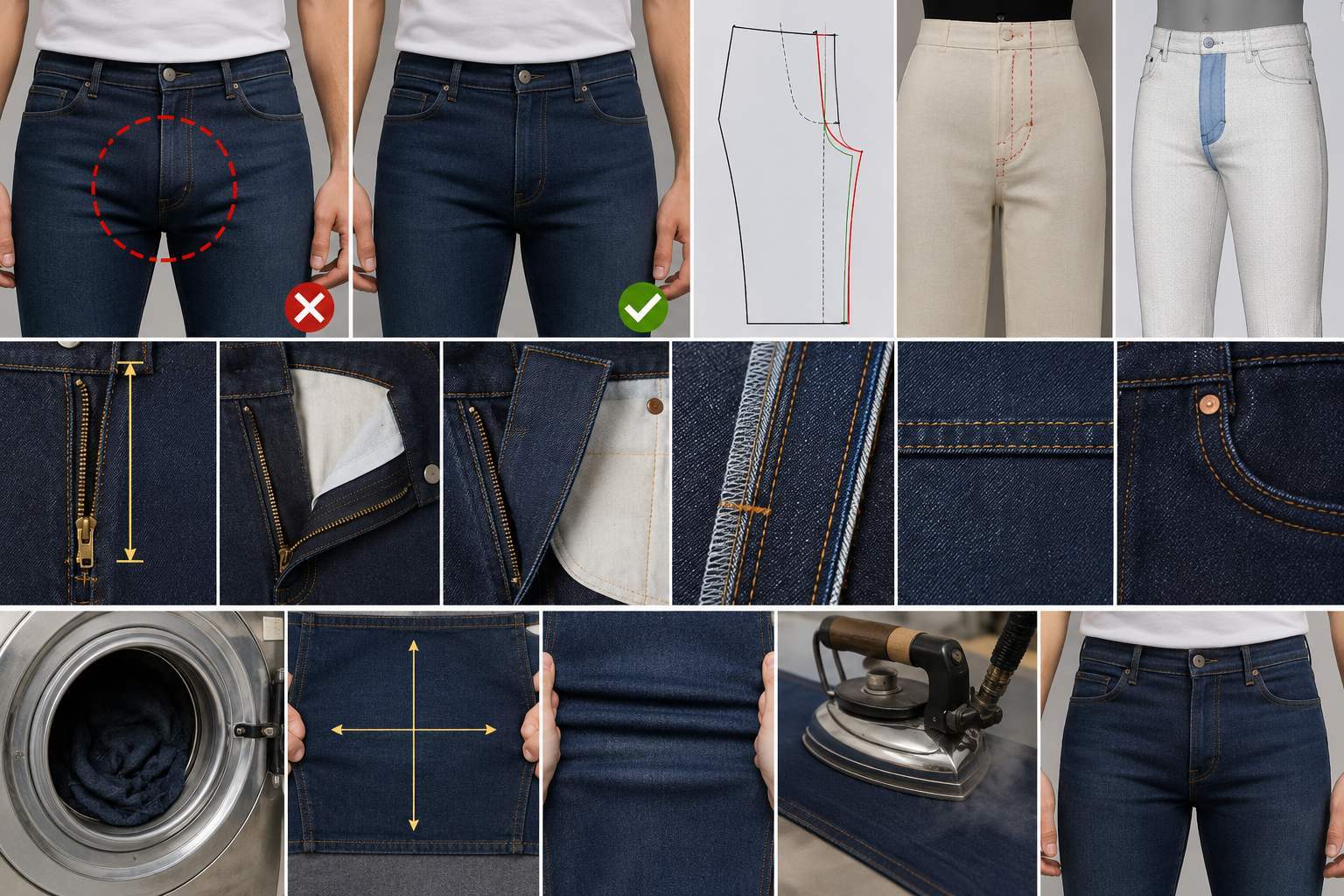
The best way to get rid of zipper bulge is during product development. A manufacturer should adjust the front-rise curve, center-front balance, zipper length, fly shield, seam allowance, topstitching tension, fabric shrinkage, stretch recovery, and pressing process before bulk production. Once thousands of jeans are produced, zipper bulge becomes much harder and more expensive to correct.
Dive Deeper
For denim brands, the most important question is not only “How do customers fix zipper bulge?” The better question is “How do we prevent zipper bulge before production?” This is where professional custom jeans manufacturing makes a real difference.
The first step is pattern development. The front-rise curve must match the intended fit and target customer body shape. A skinny jean, baggy jean, plus size jean, and straight jean cannot use the same front block without adjustment. The pattern must control how fabric wraps around the lower belly, crotch, and hip. If the center-front seam is unbalanced, the zipper will not sit naturally. Even a high-quality zipper can look bad if the pattern is wrong.
The second step is choosing the correct zipper. A zipper should match the denim weight, fly length, and style. If it is too long, it may bend near the bottom. If it is too short, the fly opening may become uncomfortable and pull under stress. If the zipper tape is too stiff for soft denim, it may create a ridge. If it is too weak for heavyweight denim, it may twist or fail to hold shape. For premium jeans, the zipper should not be selected only by price. It should be selected by function, appearance, durability, and compatibility with the fabric.
The third step is fly construction. The fly shield and fly facing must provide enough support without creating unnecessary bulk. This is a delicate balance. Too little structure and the zipper waves. Too much structure and the fly becomes thick and pushes outward. Seam allowance must be controlled. Topstitching must be even. The zipper must be placed straight. The fly should be pressed correctly during finishing. These details may look small, but together they decide whether the front of the jeans looks clean or awkward.
The fourth step is fabric testing. Denim changes after washing, especially in custom jeans with enzyme wash, stone wash, acid wash, whiskers, grinding, distressing, or garment dye. A fly that looks flat before washing may pucker after wash shrinkage. Stretch denim may recover differently after repeated wear. Heavy denim may soften after washing and change the way the zipper sits. That is why a good factory tests shrinkage, stretch, recovery, and wash effect before confirming bulk production.
The fifth step is real fitting. A sample should not only be checked flat on a table. Jeans are made for bodies, not tables. The sample should be worn, buttoned, zipped, walked in, sat in, and photographed from different angles. For plus size jeans, fit testing is even more important because the relationship between waist, belly, hip, and rise can vary widely. For high-end brands, small front-fit problems can weaken the whole product image.
Here is a professional development checklist for preventing zipper bulge:
| Development Area | What to Check | Why It Matters |
| Front-rise curve | Length, shape, crotch depth | Controls how the fly sits on the body |
Center-front balance | Alignment from waistband to crotch | Prevents twisting and pulling |
Zipper length | Correct length for rise and style | Avoids bending or hard bumps |
Zipper tape | Flexibility and strength | Helps match fabric weight |
Fly shield | Width, thickness, structure | Keeps zipper flat and comfortable |
Seam allowance | Bulk control | Prevents thick, raised fly area |
Topstitching | Tension and straightness | Reduces puckering |
| Fabric recovery | Stretch-back performance | Prevents deformation after wear |
Wash shrinkage | Front panel and fly behavior | Avoids post-wash puckering |
| Pressing | Heat, pressure, shape setting | Improves final appearance |
For custom jeans brands, solving zipper bulge is not just a technical improvement. It is a business advantage. Customers judge jeans quickly. They notice fit, comfort, shape, and front appearance. If the zipper area looks clean, the jeans feel more premium. If the fly bulges, customers may assume the jeans are cheap, even if the fabric and wash are expensive.
This is especially important for online boutique owners and influencer-led denim brands. Their customers often buy based on photos, videos, and fit confidence. A clean front fly helps the jeans look better in product photography, try-on videos, mirror selfies, and social media content. For designers, solving the fly area also protects the design idea. A beautiful stacked jean, baggy jean, or custom skinny jean can lose its appeal if the front zipper looks poorly developed.
DiZNEW supports custom jeans development for brands that need more than basic production. With over 20 years of experience in denim research, manufacturing, and sales, DiZNEW works with different denim categories including plus size jeans, baggy jeans, stacked jeans, straight jeans, selvedge jeans, skinny jeans, jogger jeans, denim jackets, denim shorts, and denim shirts. The factory supports small MOQ custom orders starting from 30 pieces and can also handle large-volume orders up to 10,000 pieces.
For buyers who want custom or OEM/ODM jeans with their own logo, the real value is not only sewing. It is turning a design idea into a wearable, sellable, well-fitting product. That means checking the pattern, testing fabric, adjusting the fly, improving the wash, and making sure the final jeans match the customer’s market.
Final Thoughts: A Small Zipper Bulge Can Reveal a Big Denim Development Problem
A zipper bulge may look like a tiny flaw, but in denim, tiny flaws often point to deeper issues. It may show that the waist is too tight, the rise is not balanced, the fabric lacks recovery, the zipper is not suitable, or the fly construction needs improvement. For consumers, the solution may be choosing a better size, using a belt, pressing the fly, or trying a different rise. For brands, the solution must happen earlier—during sample development, fitting, fabric testing, and production planning.
The most successful jeans are not only stylish in photos. They must work on real bodies, in real movement, after real washing, and through real customer expectations. A customer may not know the words “front-rise curve” or “fly shield structure,” but they know when jeans feel comfortable and look clean. That is why professional denim development matters.
If you are a jeans designer, boutique owner, online fashion seller, or high-end denim brand looking to create custom jeans, DiZNEW can help you develop products from design sketch to finished production. Whether you need plus size jeans, baggy jeans, stacked jeans, skinny jeans, selvedge jeans, denim shorts, denim jackets, or private label OEM/ODM jeans, DiZNEW can support small custom orders and large bulk production.
Send your design idea, reference photos, fabric requirement, size range, logo plan, or target market details to DiZNEW for a custom quotation. A better zipper fit starts with better denim development—and the right manufacturing partner can help your jeans look cleaner, fit better, and sell with more confidence.
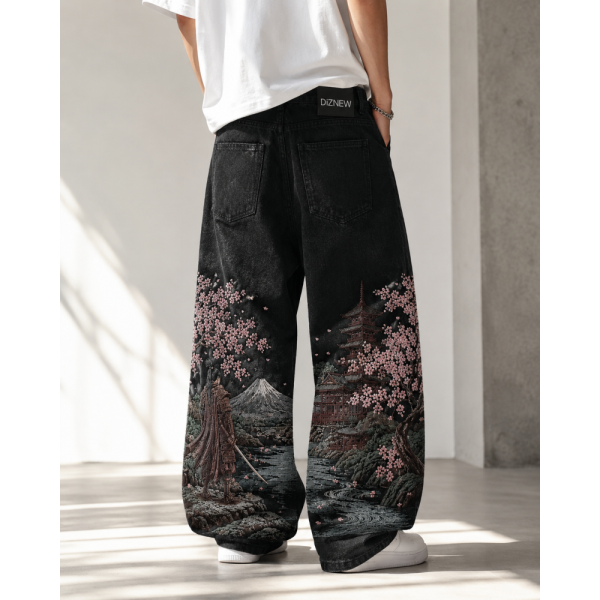
Premium wide-leg denim jeans featuring a vintage washed black finish, detailed Japanese landscape artwork, embroidery-style decoration, and custom brand label options. Designed for streetwear brands, designer labels, and private label collections looking for statement denim with strong visual storytelling.
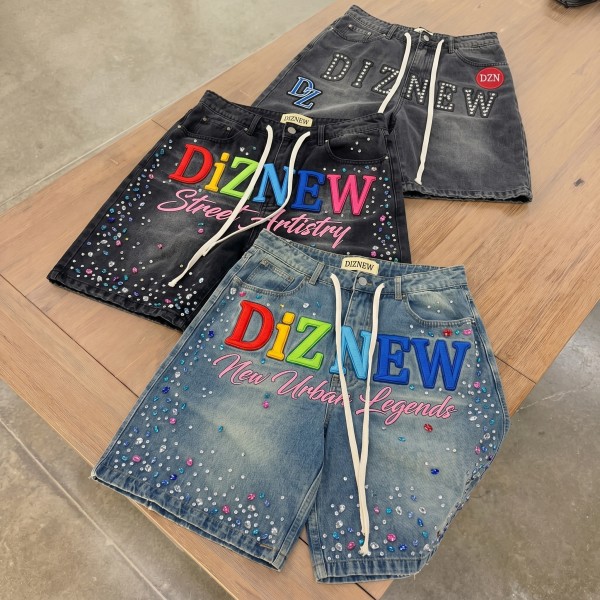
Custom Rhinestone Logo Denim Shorts: Wholesale supply direct. We manufacture premium embroidered baggy jean shorts for brands.
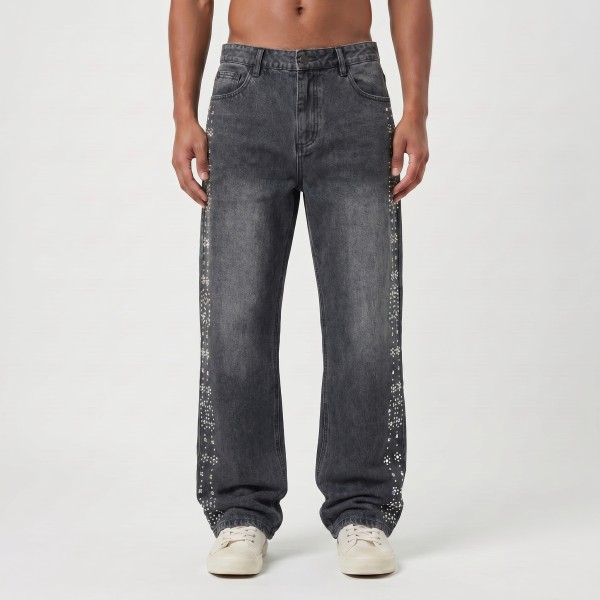
Discover premium DiZNEW denim jeans with decorative studs for a sparkling, stylish look. Order today!
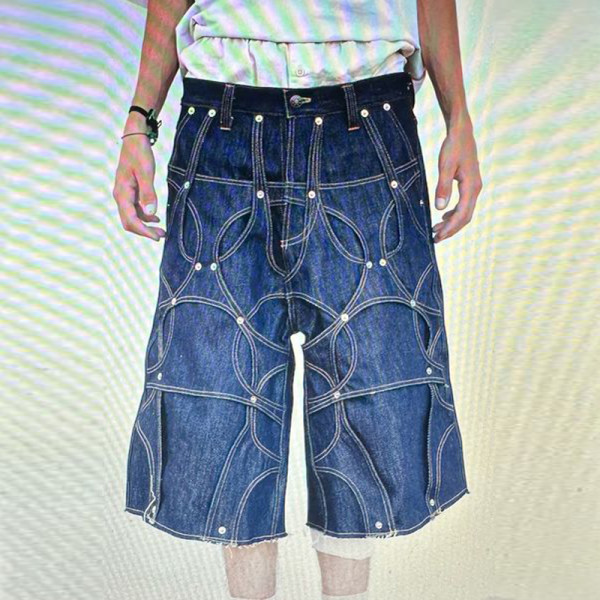
These designer denim shorts for men feature intricate decorative stitching and rivet details, perfect for streetwear fashion. The wide-leg silhouette adds a bold look, ideal for trendsetters.