why do people like denim and jeans
People like denim and jeans because they feel familiar, useful, stylish, and personal all at the same time. A good pair of jeans can be worn to work, school, a coffee shop, a concert, a road trip, a casual office, or a weekend dinner. That is rare in fashion. Many clothes belong to one situation, one season, or one trend cycle. Jeans do not. They move with culture, age with the body, and adapt to different generations. One person loves dark straight jeans because they look polished. Another loves baggy jeans because they feel relaxed and streetwear-ready. Someone else loves selvedge jeans because the fades tell a personal story.
People like denim and jeans because they combine comfort, durability, easy styling, cultural meaning, and personal expression. Jeans are practical enough for daily wear but flexible enough for fashion. Different fits, washes, fabrics, and details allow jeans to feel casual, attractive, rugged, vintage, premium, or streetwear-inspired depending on the wearer’s lifestyle.
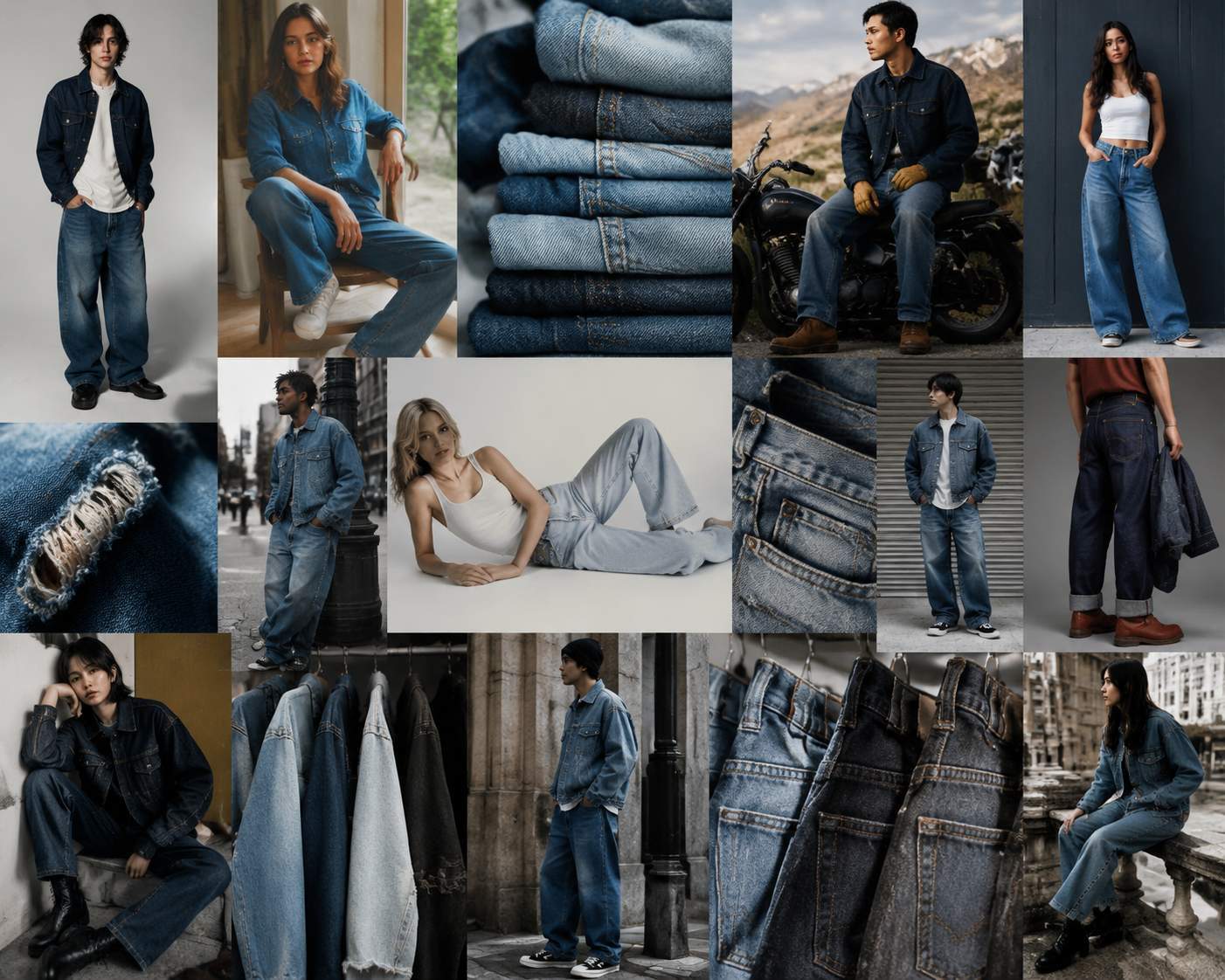
That is why denim has lasted far beyond a single fashion moment. Skinny jeans rise and fall. Baggy jeans come back. Straight jeans become classics again. Low-rise jeans return, then high-rise jeans return too. But the fabric itself keeps winning because people do not only buy jeans for trend. They buy them because jeans solve a daily question: “What can I wear that feels like me?”
Why Are Denim and Jeans So Popular Around the World?
Denim and jeans are popular because they combine everyday function with emotional style. They are durable, easy to match, comfortable in many modern fits, and culturally familiar across countries, ages, and lifestyles. Jeans can feel casual, polished, rebellious, vintage, streetwear, or premium, which makes them one of the most flexible garments in the world.
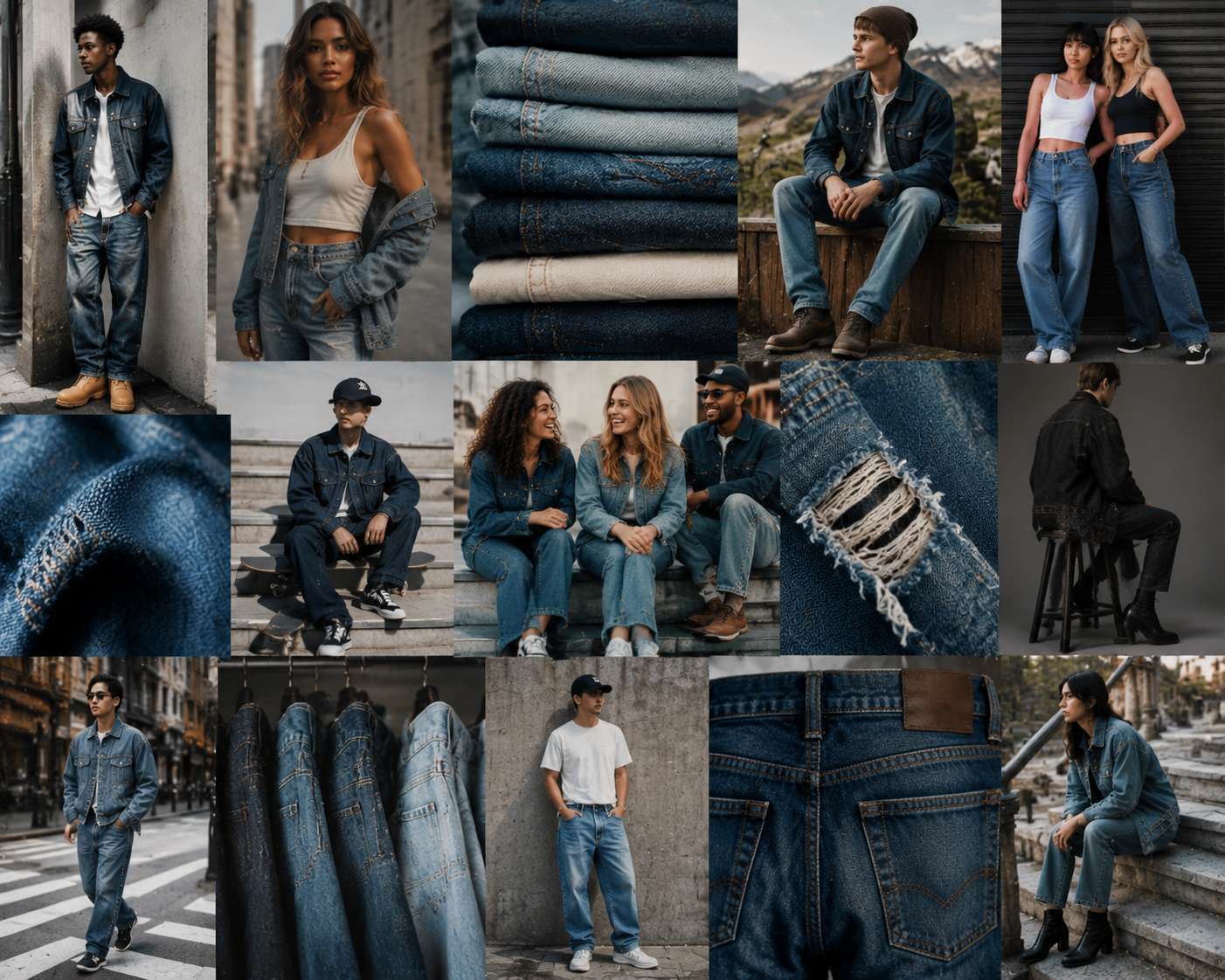
Why are denim jeans so popular?
Denim jeans are popular because they do several jobs at once. They are practical enough for daily wear, strong enough for repeated use, and stylish enough to fit different outfits. A single pair of jeans can work with sneakers, boots, heels, T-shirts, hoodies, shirts, blazers, leather jackets, denim jackets, or oversized streetwear pieces.
This flexibility is the foundation of denim’s popularity. Jeans are not limited to one gender, age group, or social scene. Students wear them. Workers wear them. Designers wear them. Celebrities wear them. Boutique customers wear them. Denim collectors wear them. Streetwear fans wear them. That broad appeal keeps denim relevant even when specific fits change.
Why do people like wearing jeans so much?
People like wearing jeans because jeans feel easy. When someone does not know what to wear, jeans are often the safest answer. They are familiar but not boring. They can be dressed up or down. They do not require complicated styling. They can look casual, clean, rugged, sexy, vintage, minimalist, or premium.
Jeans also become personal over time. The more someone wears a pair, the more it molds to their body and lifestyle. The fabric softens. The color fades. The knees crease. The pockets shape around daily use. This aging process gives denim emotional value that many other garments do not have.
Why are jeans considered a wardrobe essential?
Jeans are considered a wardrobe essential because they match almost everything. A dark straight jean can work for casual business outfits. A light wash jean can feel relaxed and summery. Baggy jeans can create a streetwear look. Skinny jeans can work with boots and clean basics. Selvedge jeans can feel premium and heritage-inspired.
For many people, jeans are the base of a practical wardrobe. They reduce decision fatigue because they create many outfits from one item. This is why jeans fit so naturally into capsule wardrobes, travel wardrobes, and daily dressing.
Why do jeans never really go out of style?
Jeans never really go out of style because denim adapts. The dominant fit may change, but the category remains. At different times, skinny jeans, straight jeans, bootcut jeans, flare jeans, baggy jeans, wide-leg jeans, stacked jeans, low-rise jeans, high-rise jeans, and selvedge jeans all become popular.
This constant reinvention keeps denim alive. Fashion consumers get novelty, while denim keeps its familiar foundation. Brands can update the cut, wash, fabric, trims, pockets, stitching, and styling without losing the core identity of jeans.
Dive Deeper
Denim’s popularity is not only about clothing. It is about trust. People trust jeans because jeans have been part of daily life for generations. Unlike many trend pieces, denim does not feel risky. Even when the silhouette is bold, the fabric still feels familiar.
This is powerful for brands. A customer may hesitate to buy a strange new garment category, but they understand jeans. They know how to wear them. They know what they expect from them. That makes denim one of the most commercially reliable categories in fashion—if the fit, quality, and style are right.
However, denim’s popularity also creates competition. Because everyone sells jeans, brands cannot rely on denim’s popularity alone. A generic pair of jeans may get lost in a crowded market. A better pair of jeans needs a reason to exist. That reason may be a better fit, a unique wash, functional pockets, inclusive sizing, high-recovery stretch, premium selvedge fabric, custom hardware, or a strong streetwear silhouette.
For U.S. boutique owners and online stores, the opportunity is not simply to sell “jeans.” The opportunity is to sell a denim point of view. A boutique may focus on plus size jeans with better grading. A streetwear brand may focus on baggy and stacked jeans. A premium label may focus on selvedge denim and clean straight fits. An influencer-led store may focus on trend-driven washes and bold silhouettes.
The best denim brands understand that jeans are both universal and personal. Universal because almost everyone understands them. Personal because each customer wants a fit, wash, and style that reflects their life. This is why custom denim manufacturing can be so valuable. Instead of buying generic wholesale jeans that many stores already carry, brands can build denim products around their own customers.
DiZNEW helps brands use denim’s global popularity in a more targeted way. With custom fabric, wash, fit, labels, trims, and packaging, a boutique can turn a common garment into a branded product that feels more specific, more useful, and more memorable.
Why Do People Love Denim for Comfort, Fit, and Durability?
People love denim because it can be comfortable, durable, and flattering when designed correctly. Modern jeans use better pattern development, stretch blends, relaxed fits, strong seams, and improved waistbands. Comfort depends on rise, fabric weight, thigh room, waistband shape, inseam, and stretch recovery. Durability comes from denim’s twill weave, strong construction, and workwear history.
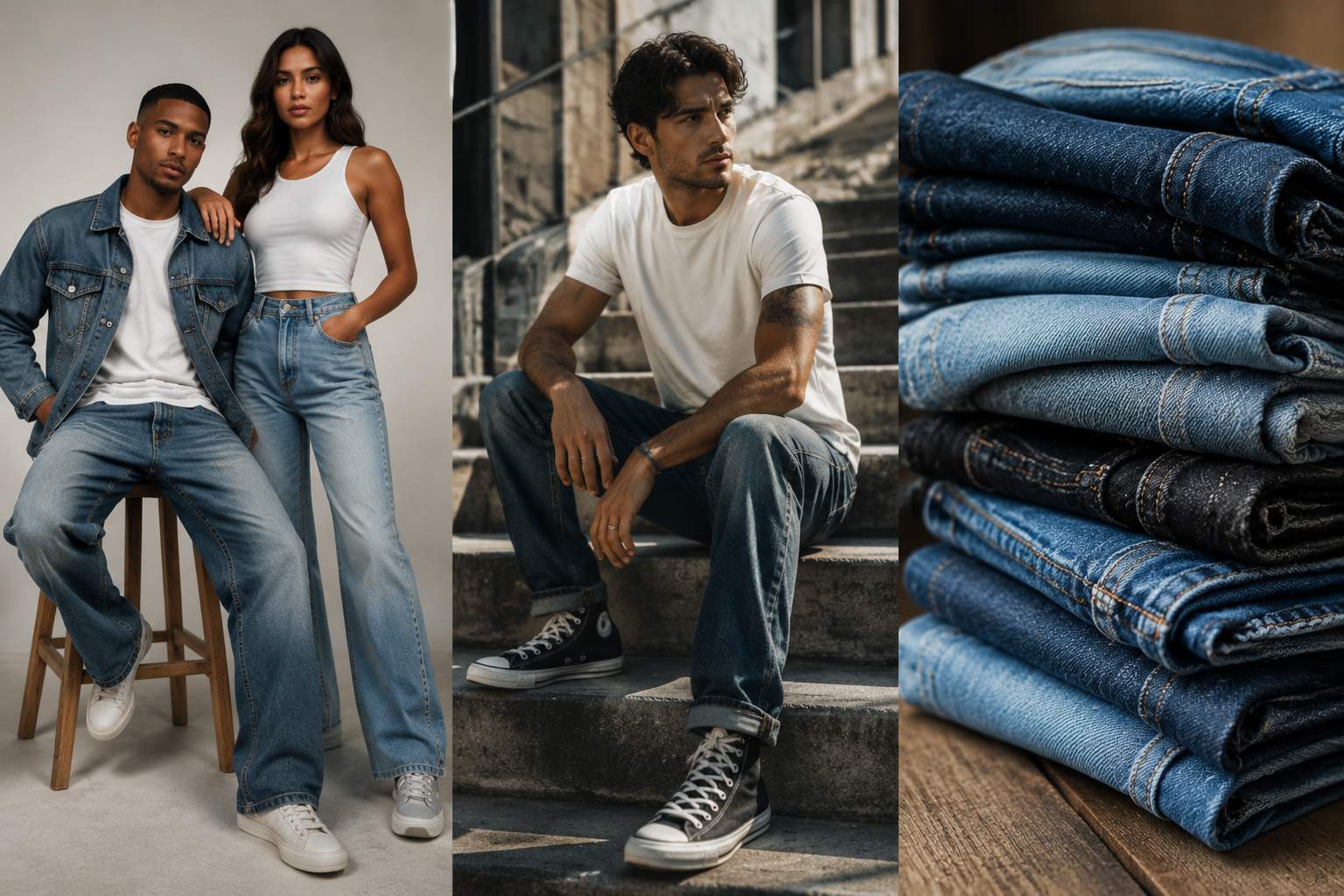
Are jeans comfortable for everyday wear?
Jeans can be very comfortable, but comfort depends on design. Old-school rigid denim can feel stiff at first, while modern stretch denim can feel soft and flexible immediately. Relaxed jeans give more movement room. Skinny jeans need high-recovery stretch. Plus size jeans need better waist-to-hip grading. Baggy jeans need a stable waistband so the extra fabric does not feel heavy.
A comfortable jean is not simply “soft.” It must fit correctly, move correctly, and keep its shape during the day.
What is the 2 finger rule for jeans?
The 2 finger rule is a simple fit test. When jeans are buttoned, the wearer should be able to slide two fingers comfortably between the waistband and the body. If two fingers cannot fit, the waistband may be too tight. If much more space fits easily, the jeans may be too loose.
This rule is useful because it translates fit into a real-life feeling. A good waistband should feel secure without digging into the waist or sliding down.
Why is denim so durable?
Denim is durable because it is usually made with a strong cotton twill weave. The diagonal weave structure helps the fabric handle repeated wear. Jeans also often use reinforced seams, rivets, bartacks, strong waistbands, and heavier fabric options. This durability is connected to denim’s workwear origin.
Durability matters because jeans are worn often. Customers sit, walk, drive, bend, travel, wash, and repeat. A good pair of jeans should survive real life.
Why do people like the way jeans age over time?
People like aging denim because it becomes personal. Fading, whiskers, honeycombs, creases, softened fabric, and worn edges create a record of the wearer’s life. Raw denim and selvedge denim fans especially love this process because no two pairs age exactly the same way.
This is one reason jeans feel emotionally different from many garments. A sweater may simply look old. A good pair of jeans can look better with time.
Dive Deeper
Comfort and durability can seem like opposite goals, but the best denim balances both. A jean that is very durable but uncomfortable will sit in the closet. A jean that is very soft but loses shape quickly will disappoint the customer. Great denim must feel good and last.
This is where fit engineering becomes important. Comfort is not only about adding stretch. If the rise is wrong, the waistband will dig. If the thigh is too tight, the customer cannot sit comfortably. If the calf is too narrow, skinny jeans may bunch at the knee. If the back rise is too short, the jeans may pull when sitting. If the inseam is wrong, the hem may stack awkwardly.
The 2 finger rule is helpful because it shows that fit must be tested on the body, not only on a measurement chart. A size chart may say the waist is correct, but the customer’s body shape, fabric stretch, rise, and waistband construction all affect the feeling. This is especially important for plus size jeans, curvy fits, high-rise jeans, and stretch denim.
Durability also has emotional value. Customers do not want jeans that fail after a few wears. They want seams that hold, belt loops that do not rip, pockets that function, rivets that stay secure, zippers that run smoothly, and fabric that does not lose shape too quickly. Strong construction makes the product feel more trustworthy.
For brands, comfort and durability should become product language. Instead of only saying “premium jeans,” a product page can explain “high-recovery stretch,” “reinforced belt loops,” “functional pockets,” “tested wash shrinkage,” or “structured 100% cotton denim.” These details help customers understand why the jeans are worth buying.
DiZNEW can support this development from the factory side. Depending on the brand’s target customer, DiZNEW can help choose rigid denim, stretch denim, heavyweight denim, selvedge denim, washed denim, or comfort-focused blends. The factory can also adjust rise, thigh room, knee placement, waistband structure, pocket construction, belt loops, labels, and trims to create jeans that feel better in real life.
Why Does Denim Have Such Strong Cultural and Fashion Appeal?
Denim has strong cultural appeal because it moved from workwear into rebellion, youth culture, music, Hollywood, streetwear, luxury fashion, and everyday style. Jeans feel casual but stylish because they sit between utility and self-expression. They can look rugged, attractive, vintage, clean, premium, or rebellious depending on fit, wash, and styling.
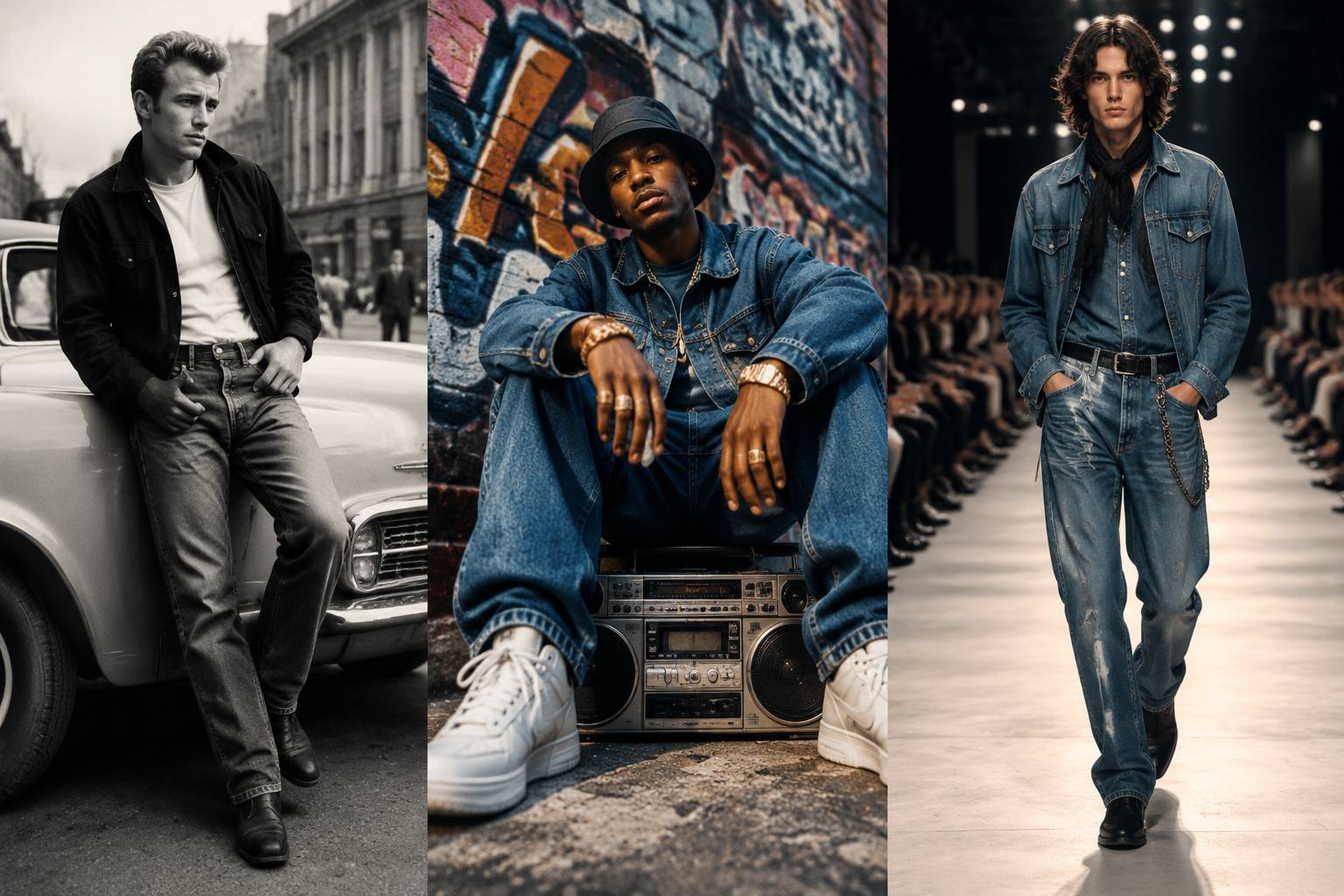
How did jeans go from workwear to fashion?
Jeans began as durable workwear for laborers, miners, cowboys, farmers, and workers who needed strong clothing. Over time, they moved into popular culture through film, music, youth rebellion, and casual fashion. What was once practical work clothing became a symbol of independence, confidence, and personal style.
This workwear origin still gives denim authenticity. Even luxury jeans borrow from details that started as function: rivets, five-pocket construction, heavy fabric, fading, cuffs, and reinforced seams.
Why are jeans so attractive?
Jeans are attractive because the right pair can shape the body, create confidence, and match many different personalities. A high-rise straight jean can lengthen the legs. A dark wash can look polished. A baggy jean can look relaxed and cool. A skinny jean can create a sleek silhouette. A vintage wash can feel effortless and lived-in.
Attractiveness in jeans comes from details: rise, hip shape, pocket placement, leg shape, fabric structure, wash, and proportion. Good jeans do not just cover the body. They frame it.
Why do jeans feel casual but still stylish?
Jeans are stylish because they are flexible. The same pair can look casual with sneakers, polished with a blazer, rugged with boots, or streetwear-focused with an oversized hoodie. Few garments can move across so many style identities.
This is why jeans are loved by both minimal dressers and expressive fashion lovers. They can be quiet or bold depending on the styling.
Why do different generations like different jeans?
Different generations like different jeans because denim reflects cultural identity. Millennials often built wardrobes around skinny jeans. Gen Z often prefers looser fits, baggy jeans, cargo denim, low-rise styling, wide-leg silhouettes, and Y2K references. Older consumers may prefer straight jeans, dark washes, bootcut jeans, or polished comfort fits. Denim collectors may prefer raw denim or selvedge jeans.
No generation owns denim completely. Each generation reinterprets it.
Why are vintage and ’90s denim still popular?
Vintage and ’90s denim remain popular because they feel authentic, relaxed, and less over-designed. Looser fits, rigid cotton, faded washes, and simple styling create a sense of ease. Many customers like vintage denim because it looks personal rather than mass-produced.
For brands, this creates opportunities in custom wash development: faded blue, dirty wash, stone wash, acid wash, worn black, raw indigo, and retro mid-wash denim can all speak to different customer moods.
Dive Deeper
Denim’s cultural power comes from contradiction. It is ordinary and iconic. Practical and emotional. Rugged and sexy. Casual and premium. Old and modern. This is why it works across so many markets.
A pair of jeans can represent rebellion in one context, professionalism in another, and comfort in another. Dark straight jeans with a blazer can feel smart. Light baggy jeans with sneakers can feel youthful. Selvedge jeans with boots can feel heritage. Low-rise loose jeans can feel ’90s. Stacked jeans can feel streetwear. The fabric stays the same category, but the meaning changes.
This cultural flexibility is valuable for boutique brands. It means denim can support many brand identities. A store does not need to compete with everyone. It can choose a denim language. For example, a boutique may focus on clean premium basics. Another may focus on bold streetwear silhouettes. Another may focus on inclusive plus size fits. Another may focus on custom washed denim jackets and shorts.
The question “Why are jeans so attractive?” is also important for product development. Attractive jeans are not only about tightness or trend. They are about proportion. Back pocket placement can lift or flatten the appearance of the seat. A high rise can visually lengthen the legs. A wider leg can balance the hips. A cropped hem can show shoes. A darker wash can feel slimmer and more polished. A structured fabric can create a cleaner silhouette.
This is why factories matter. A good denim factory does not only sew fabric together. It helps control shape, fit, wash, and details. If the back pockets are too low, the jean may look unflattering. If the wash is placed poorly, the body shape may look unbalanced. If the leg opening is wrong, the jeans may not work with the target footwear.
DiZNEW’s custom denim capability allows brands to develop jeans around attractiveness, not just size. The factory can adjust rise, hip curve, back pocket placement, leg shape, wash effect, fabric weight, and trims so the final product supports the brand’s target look.
Why Do Denim Trends Keep Changing but Jeans Stay Popular?
Denim trends change because people want novelty, comfort, identity, and new proportions, but jeans stay popular because denim itself is adaptable. Skinny, straight, baggy, flare, wide-leg, stacked, and selvedge jeans can all exist in the market at the same time. The fabric stays relevant while silhouettes shift across generations and lifestyles.
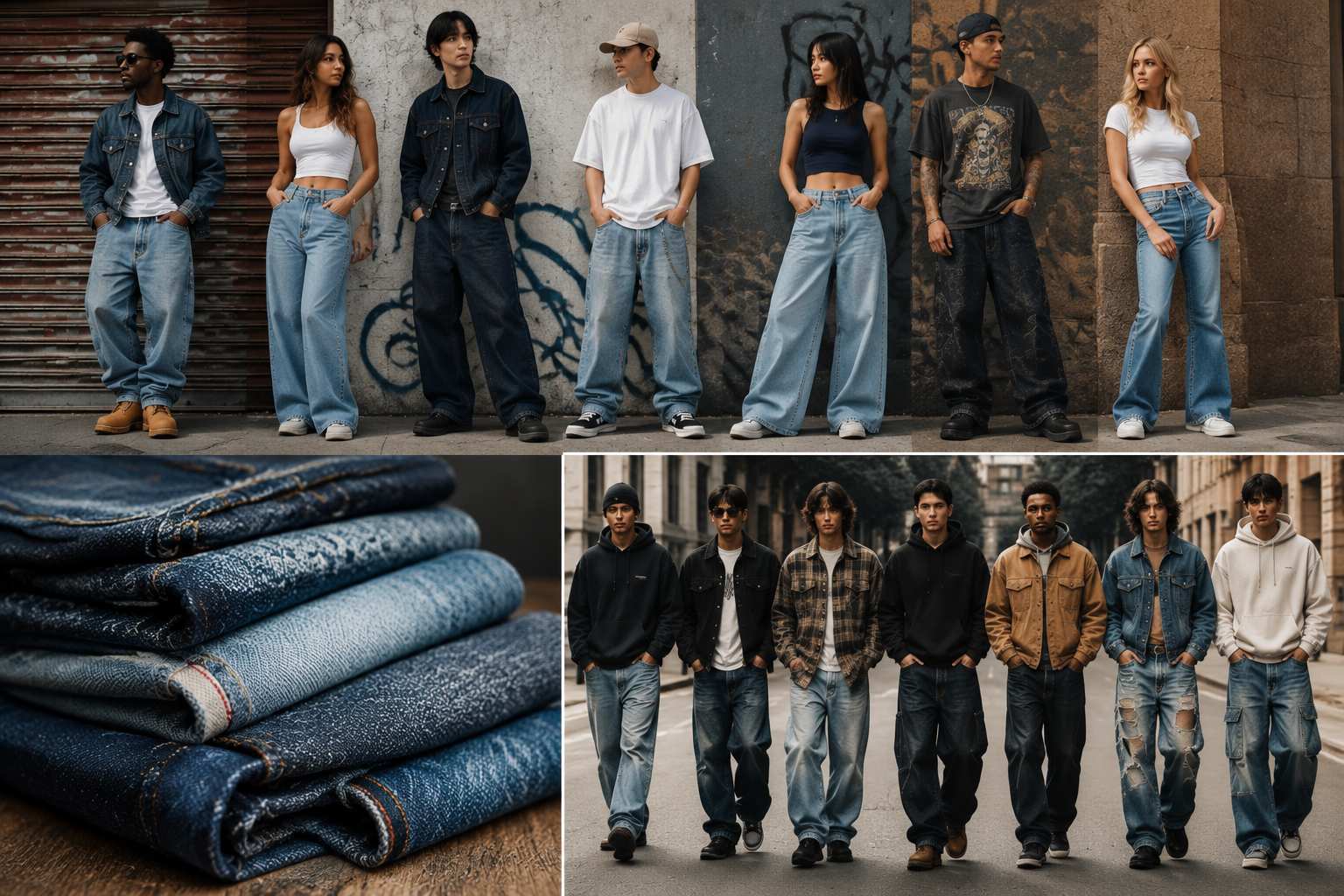
Why do jeans trends change from skinny to baggy to straight?
Jeans trends change because fashion responds to culture. When people want sleek and fitted looks, skinny jeans rise. When they want comfort and relaxed styling, baggy jeans and wide-leg jeans grow. When they want timeless everyday dressing, straight jeans return.
Trends also shift because people get tired of one dominant silhouette. After years of skinny jeans, looser fits feel fresh. After years of oversized fits, cleaner straight or slim styles can feel new again.
Why does Gen Z hate skinny jeans?
Gen Z does not literally hate all skinny jeans. Many younger shoppers simply prefer looser silhouettes because they feel more comfortable, expressive, and current. Baggy jeans, wide-leg jeans, cargo denim, flare jeans, and stacked jeans connect with Y2K nostalgia, streetwear, body inclusivity, and a rejection of the tight millennial-era uniform.
The smarter takeaway is not that skinny jeans are dead. It is that denim customers now expect more choices.
Why are baggy jeans, stacked jeans, and wide-leg jeans popular now?
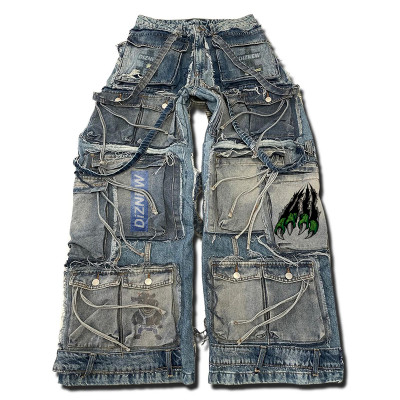
Baggy, stacked, and wide-leg jeans are popular because they offer comfort and attitude. They create strong silhouettes for streetwear photos, allow more movement, and give brands more space for wash effects, embroidery, patchwork, pockets, hardware, and custom details.
For online boutiques and influencer-led stores, these styles are visually strong. They photograph well, feel trend-aware, and allow customers to express identity.
Are skinny jeans still popular?
Skinny jeans are still popular with certain customers, but they are no longer the only default denim fit. They work well for customers who like fitted silhouettes, boots, stretch comfort, clean styling, and polished basics. In 2026 and beyond, skinny jeans can still sell, but brands should not rely only on one fit.
A healthy denim collection includes multiple silhouettes.
Why is sustainable and premium denim becoming more important?
Sustainable and premium denim are becoming more important because customers care about quality, durability, value, and responsible production. Premium denim is not only about a high price. It is about better fit, stronger fabric, better stitching, functional pockets, good washing, reliable trims, and longer wear.
Customers are becoming more aware of waste. A jean that lasts longer and fits better has more value than a cheap jean that quickly loses shape.
Dive Deeper
The denim market is no longer a single-fit market. That is one of the most important lessons for brands. In the past, one dominant fit could define an era. Today, multiple fits can be relevant at the same time because consumers are more fragmented. A Gen Z streetwear customer may want baggy jeans. A millennial professional may want straight jeans. A western customer may want bootcut jeans. A premium buyer may want selvedge denim. A comfort-driven shopper may want jogger jeans. A fashion-forward customer may want stacked jeans.
This creates both opportunity and pressure. Brands have more room to specialize, but they also need clearer product planning. A random collection of jeans will not feel strong. A focused collection built around customer needs will.
The question “Why does Gen Z hate skinny jeans?” is useful because it shows how trends are often emotional. Gen Z is not only choosing looser jeans for comfort. They are also choosing a different identity. Skinny jeans became associated with a previous generation’s styling. Baggy and relaxed jeans feel more open, casual, and expressive. That cultural shift affects buying behavior.
But smart brands should avoid extreme thinking. If they believe “skinny jeans are dead,” they may miss customers who still want them. If they believe “skinny jeans are back, so baggy jeans are over,” they may miss the broader comfort trend. The best strategy is segmentation.
A brand can build:
Skinny jeans for clean fitted styling.
Straight jeans for everyday versatility.
Baggy jeans for streetwear.
Stacked jeans for trend-driven customers.
Plus size jeans for inclusive fit.
Selvedge jeans for premium buyers.
Denim jackets and shirts for full collection styling.
DiZNEW can support this kind of multi-fit denim development. With OEM/ODM customization, brands can test different silhouettes in small quantities, study customer response, and scale the strongest products. This is more strategic than guessing a trend and over-ordering.
How Can Denim Brands Use This Popularity to Create Better Custom Jeans?
Denim brands can use jeans’ popularity by creating products that match real customer needs: comfort, fit, durability, attractive shape, functional pockets, modern washes, inclusive sizing, and strong brand identity. Instead of selling generic wholesale jeans, brands can customize fabric, fit, wash, trims, labels, pockets, and packaging to create more memorable products.
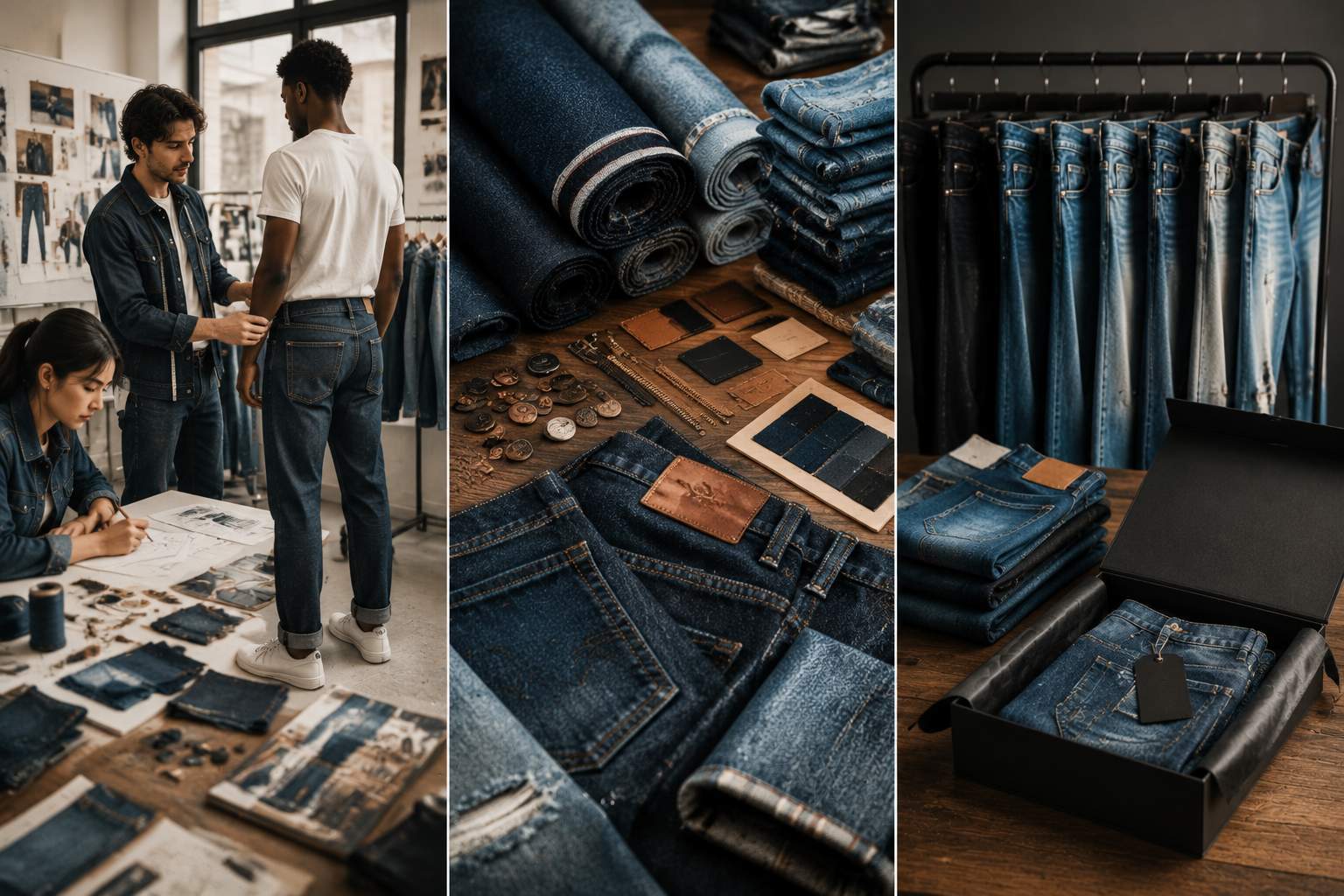
How can brands turn denim popularity into product opportunities?
Brands can turn denim popularity into opportunity by focusing on specific customer groups. Instead of offering generic jeans, a boutique can create a clear denim concept.
Examples:
A streetwear brand can develop baggy jeans and stacked jeans.
A plus size boutique can develop better-fitting plus size denim.
A premium label can develop selvedge straight jeans.
An online boutique can create custom washed denim jackets and shorts.
An influencer brand can launch limited denim drops with custom labels and packaging.
The key is to design for the customer, not just the trend.
Why should boutique owners work with a specialized denim factory?
Boutique owners should work with a specialized denim factory because denim is technical. Fabric behavior, shrinkage, washing, fit, pattern balance, hardware, pocket construction, stitching, and quality control all affect the final product.
A general clothing supplier may handle basic garments, but complex jeans need denim-specific experience. Baggy jeans, stacked jeans, plus size jeans, selvedge jeans, skinny jeans, jogger jeans, denim jackets, denim shorts, and denim shirts all require different development logic.
How can DiZNEW help brands create custom denim products customers love?
DiZNEW can help brands create custom denim from sketches, reference photos, physical samples, AI design images, or tech packs. The factory can support fabric selection, wash development, pattern making, fit adjustment, trims, labels, buttons, rivets, patches, hang tags, packaging, and OEM/ODM private label production.
DiZNEW supports low MOQ custom production starting from 30 pieces and can also handle larger orders up to 10,000 pieces. This helps small brands test ideas and growing brands scale proven products.
How can brands make jeans more attractive through custom design?
Brands can make jeans more attractive by improving proportion and detail. This includes:
Better rise and waistband shape.
Better hip and thigh balance.
Correct knee placement.
Smart inseam length.
Flattering back pocket placement.
Wash effects that shape the leg visually.
Functional pockets that do not add bulk.
Custom stitching, rivets, patches, and labels.
Fabric weight that matches the silhouette.
Attractive jeans are not created by accident. They are developed.
Dive Deeper
The popularity of denim gives brands a strong starting point, but not a guaranteed sale. Customers already like jeans. The challenge is making them like your jeans.
This is where customization matters. Generic wholesale jeans may be easy to buy, but they are hard to differentiate. Many stores may sell the same product with different names. That leads to price competition. Custom denim allows brands to build something more specific: a better fit, a stronger wash, a unique pocket design, a signature patch, a special silhouette, or a consistent brand identity.
For boutique owners, low MOQ is especially important. New brands should not always start with huge inventory. A smarter path is to develop a custom sample, test a small batch, collect customer feedback, and scale the products that perform. DiZNEW’s 30-piece MOQ supports that strategy. A brand can test a baggy jean, stacked jean, plus size jean, denim jacket, or denim short without taking the same risk as a large bulk order.
As the brand grows, consistency becomes the next challenge. Customers may reorder because they loved the first fit. If the second batch does not match, trust suffers. That is why a factory partner must manage fabric standards, wash control, measurements, trims, labels, and quality inspection. Scaling from 30 pieces to 10,000 pieces requires process, not luck.
SEO content can also support denim business growth. Search questions like “Why are denim jeans so popular?” “Why are jeans so attractive?” “What is the 2 finger rule for jeans?” and “Why does Gen Z hate skinny jeans?” are not only blog topics. They reveal what customers care about: comfort, fit, trend identity, attractiveness, and confidence. Brands that answer these questions can attract search traffic and turn education into product inquiries.
DiZNEW can help brands turn those insights into actual products. If customers want comfort, develop better waistbands and stretch recovery. If they want attractiveness, improve pocket placement and wash shaping. If they want Gen Z streetwear, develop baggy and stacked jeans. If they want premium value, develop selvedge denim and strong finishing. If they want practicality, develop functional pockets and durable trims.
Great denim starts with understanding why people love jeans in the first place. Then it turns that understanding into fabric, fit, wash, and construction.
Final Thoughts: People Love Denim Because It Feels Useful, Personal, and Timeless
People like denim and jeans because they are practical, comfortable, durable, attractive, and emotionally familiar. Jeans can be worn across different lifestyles, ages, cultures, and fashion identities. They can look casual, polished, rugged, sexy, vintage, premium, or streetwear-inspired. They age with the wearer, adapt to trends, and continue to feel relevant even as silhouettes change.
That is why denim remains one of the strongest product categories for boutique owners, designers, online stores, influencer brands, and private label fashion businesses. But popularity alone is not enough. To win customers, brands need better denim: better fit, better fabric, better wash, better pockets, better sizing, stronger trims, and a clearer brand story.
DiZNEW is a China-based denim R&D, manufacturing, and sales factory with more than 20 years of experience. We specialize in custom denim products for U.S. small and medium buyers, high-end brand clients, denim designers, online boutique owners, and influencer-led fashion stores.
DiZNEW can customize plus size jeans, baggy jeans, stacked jeans, straight jeans, selvedge jeans, skinny jeans, jogger jeans, denim jackets, denim shorts, denim shirts, and more. Our OEM/ODM services support custom fabric, wash, fit, pattern, labels, buttons, rivets, leather patches, pocket design, hang tags, packaging, and private label production.
If you have a sketch, reference photo, physical sample, AI design image, or tech pack, DiZNEW can help turn your idea into a real denim product. With low MOQ custom production starting from 30 pieces and capacity for larger orders up to 10,000 pieces, DiZNEW gives brands a flexible path to test, improve, and scale.
Ready to create jeans your customers will actually love wearing? Contact DiZNEW today to request a quote, develop your custom sample, and start building your next denim collection.
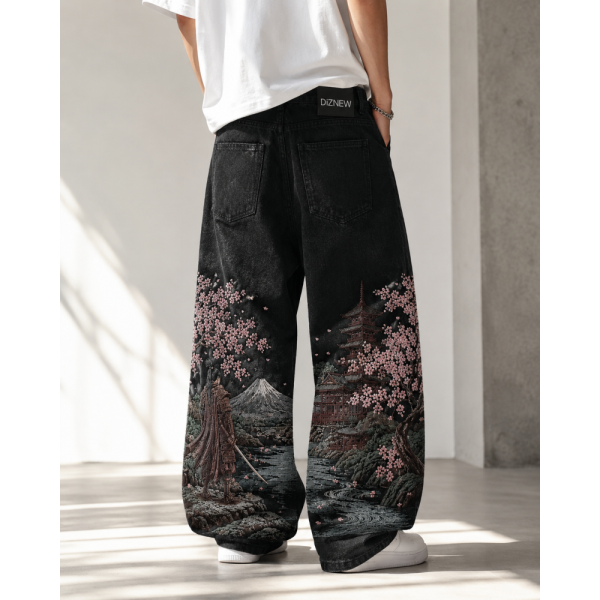
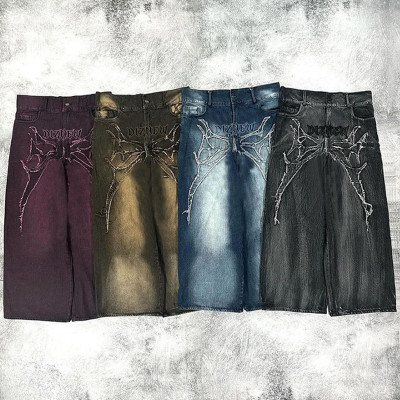
Premium wide-leg denim jeans featuring a vintage washed black finish, detailed Japanese landscape artwork, embroidery-style decoration, and custom brand label options. Designed for streetwear brands, designer labels, and private label collections looking for statement denim with strong visual storytelling.
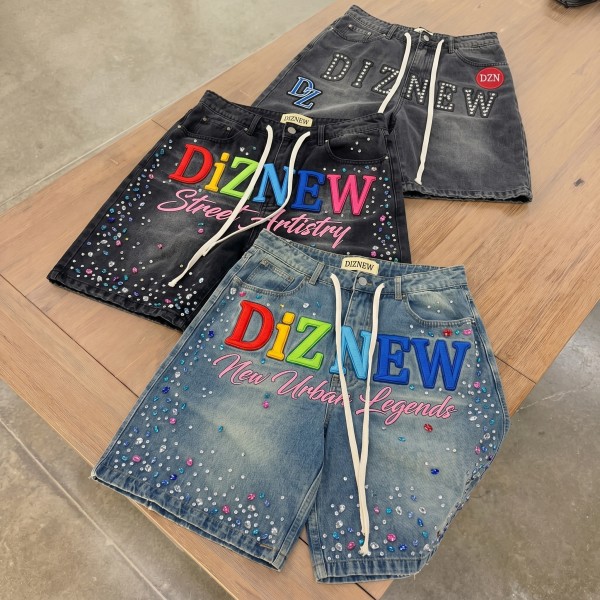
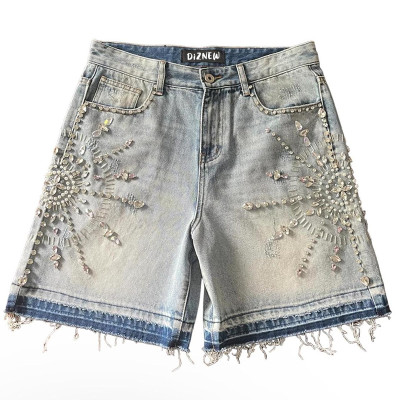
Custom Rhinestone Logo Denim Shorts: Wholesale supply direct. We manufacture premium embroidered baggy jean shorts for brands.
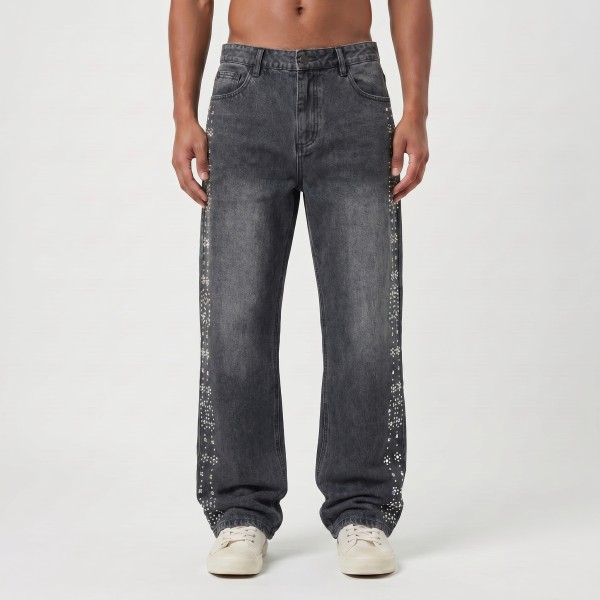
Discover premium DiZNEW denim jeans with decorative studs for a sparkling, stylish look. Order today!
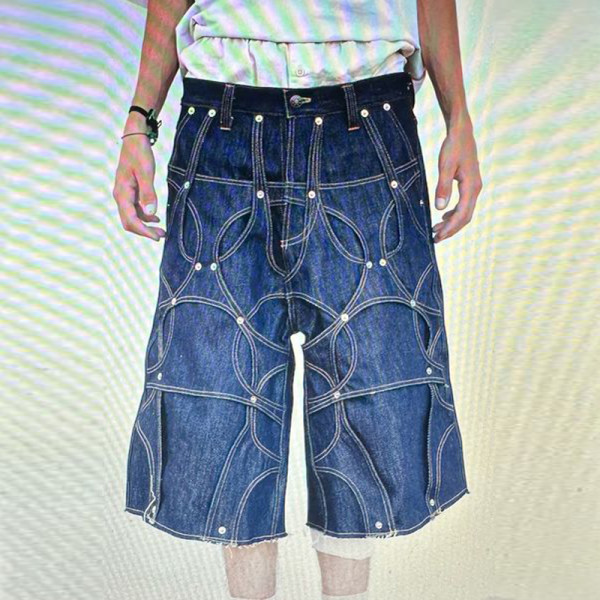
These designer denim shorts for men feature intricate decorative stitching and rivet details, perfect for streetwear fashion. The wide-leg silhouette adds a bold look, ideal for trendsetters.