why do my jeans always sag
Jeans are supposed to feel secure, easy, and reliable. That is why it is so annoying when you have to pull them up every few minutes. Maybe the waistband felt fine in the morning, but by lunch the jeans are sliding down. Maybe the crotch starts to droop after walking. Maybe the seat gets loose after sitting. Or maybe the waist fits, but the jeans still refuse to stay in place. This problem is more common than most people think, and it is not always solved by simply buying a smaller size or wearing a tighter belt.
Jeans usually sag because the waistband, hips, rise, seat, or fabric recovery do not match the wearer’s body and movement. Common causes include a loose waist, wrong rise, stretched-out denim, poor waistband construction, weak stretch recovery, loose seat fit, or jeans that are too large in the hip area. Better fit, fabric, waistband support, and care can reduce sagging.
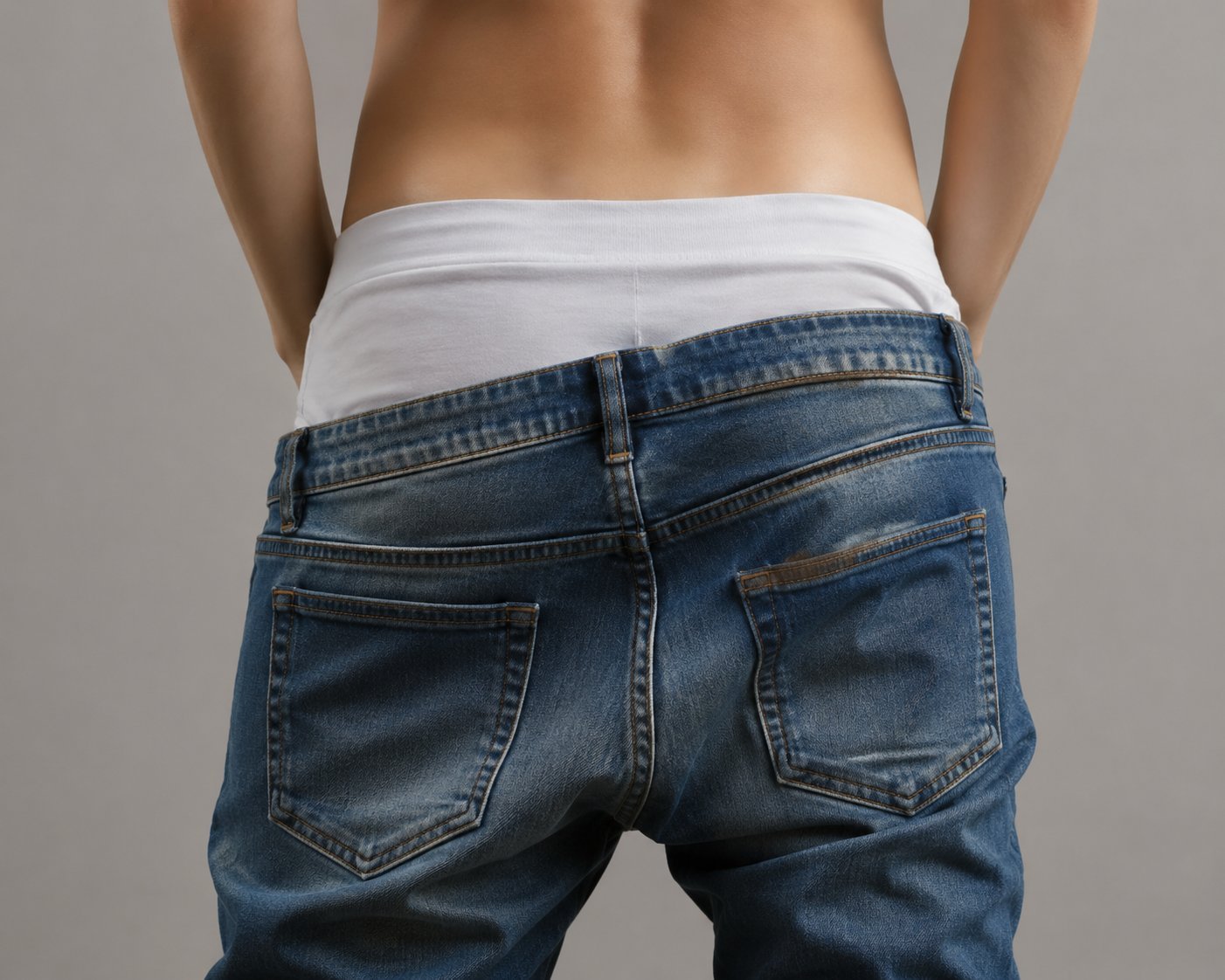
For shoppers, sagging jeans are a daily frustration. For denim brands, they are a product-development warning sign. A pair of jeans can look great in product photos, but if customers constantly pull them up, the fit has failed in real life. The solution is not just “make jeans tighter.” The real solution is smarter denim engineering: better rise balance, stronger waistband support, proper hip and seat fit, high-recovery fabric, correct belt loop placement, and fit testing before bulk production begins.
Why Do My Jeans Always Sag or Fall Down?
Jeans usually sag or fall down when they are not properly anchored at the waist, hips, or seat. The cause may be a loose waistband, wrong rise, stretched-out fabric, poor seat fit, weak recovery, or a body shape that does not match the jean pattern. Sagging can be a sizing issue, but it is often a fit and construction issue.
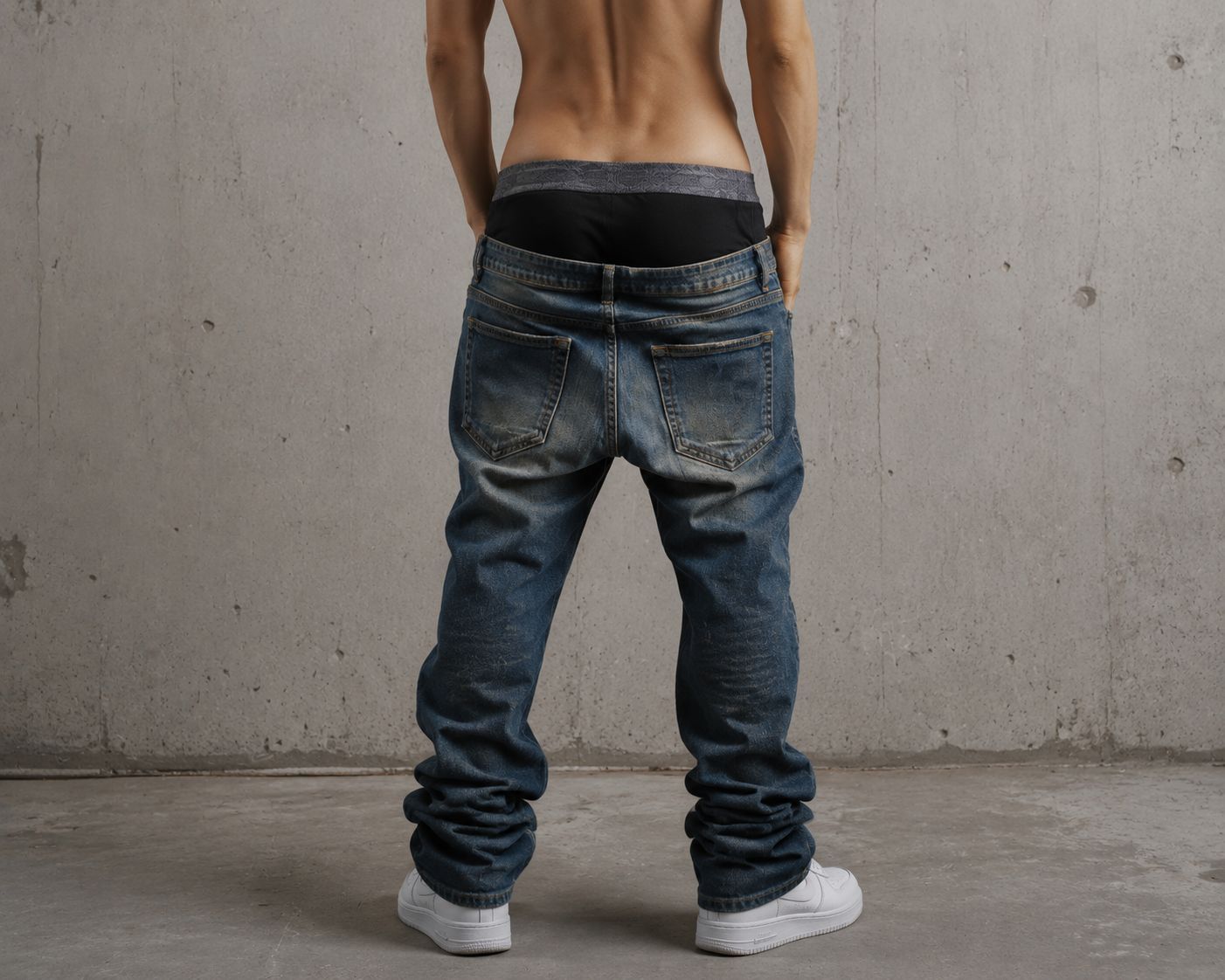
Why do my jeans keep sliding down when I walk?
Jeans slide down when the waistband and upper block do not hold the body securely. Walking creates repeated movement at the waist, hip, crotch, and thigh. If the jeans are too loose in the waist or seat, that motion gradually pulls the jeans lower.
Sometimes the waist size looks correct, but the jeans still slide because the hip or seat area does not provide enough support. This is common for people with narrower hips, flatter seats, or body shapes where the waist and hip measurements do not match the brand’s standard pattern.
Jeans can also slide because the fabric relaxes during wear. Many jeans feel snug after washing, then loosen after a few hours of body heat, sitting, bending, and walking.
Why do I constantly have to pull my pants up?
If you constantly have to pull your pants up, the jeans are not staying anchored. Common reasons include a waistband that is too loose, a rise that does not match your body, stretched-out denim, weak waistband recovery, or too much room in the seat.
This can happen even when the jeans are not obviously oversized. For example, the waist may feel fine while standing, but the seat may collapse when walking. Or the waistband may fit at first, but the fabric relaxes and starts sliding after several hours.
A belt can help, but it cannot fully fix a bad pattern. If the rise is wrong or the seat shape is too loose, the belt may only squeeze the waistband while the rest of the jeans still droop.
Why do jeans sag in the crotch?
Jeans sag in the crotch when the rise is too long, the jeans are worn lower than intended, the seat is too loose, or the fabric stretches out in the upper block. Crotch sagging can also happen when the wearer chooses a relaxed or baggy style, but the design is not properly balanced.
There is a difference between intentional dropped-crotch styling and unwanted crotch droop. In streetwear, baggy jeans and stacked jeans may intentionally sit lower or have more volume. But the design should still look controlled. If the crotch looks messy, collapsed, or uncomfortable, the rise and seat shape may need correction.
Are my jeans too big if they sag?
Possibly, but not always. Jeans that sag may be too big at the waist, hip, or seat. Signs include a waistband gap, loose fabric under the seat, crotch pooling, and jeans falling down during normal movement.
However, sizing down is not always the answer. If you size down, the waist may improve, but the thigh, hip, crotch, or knee may become too tight. That means the real issue is not only size. It may be the wrong fit type, wrong rise, weak fabric recovery, or a pattern that does not match your body.
Is it normal for jeans to loosen during the day?
Yes, some loosening is normal. Denim is a woven fabric, and both cotton fibers and stretch fibers relax with movement. Many jeans feel tighter after washing and looser after several hours of wear.
The problem starts when normal loosening becomes shape collapse. If the waistband gaps, the crotch droops, the seat sags, the knees bag out, or the jeans slide down repeatedly, the product is not performing well.
Dive Deeper
Sagging jeans are often blamed on the customer: “You bought the wrong size,” “Wear a belt,” or “Just size down.” Sometimes that advice helps, but it oversimplifies the problem. Jeans are not held up by the waist alone. They are held up by the relationship between waist, hip, seat, rise, thigh, fabric, and movement.
A customer with narrow hips may struggle with jeans that rely on the hip area for support. A curvy customer may experience waist gapping even when the hip fits. A plus size customer may find that the waist stretches out quickly because the waistband is not engineered well. A streetwear customer may love baggy jeans but dislike when the crotch looks sloppy instead of intentional.
This is why denim fit is technical. A good jean must match the body and the design intention. Skinny jeans need recovery and close body balance. Straight jeans need clean rise and hip control. Baggy jeans need waistband stability. Stacked jeans need inseam planning and controlled volume. Plus size jeans need better grading, not just larger measurements.
For brands, sagging is more than a comfort complaint. It affects reviews, return rates, product photos, and customer trust. If customers constantly pull the jeans up, they will not describe the product as “premium,” even if the wash looks good.
A serious denim brand should test samples while standing, sitting, walking, bending, and wearing the jeans for several hours. The question is not only “Does the sample measure correctly?” The better question is “Does the jean stay in place during real life?”
DiZNEW’s OEM/ODM denim development can help brands solve sagging at the product level through waistband structure, rise correction, seat shape, fabric recovery, belt loop placement, and custom fit testing.
How Do Waist, Hip, Rise, and Body Shape Cause Jeans to Sag?
Waist, hip, rise, and body shape strongly affect whether jeans stay up. Jeans can fall down even when the waist seems correct if the hips, seat, or rise do not match the wearer. Low-rise jeans may slide on some bodies, while waistband gapping, poor seat shape, and weak grading can make jeans shift, droop, or sag.
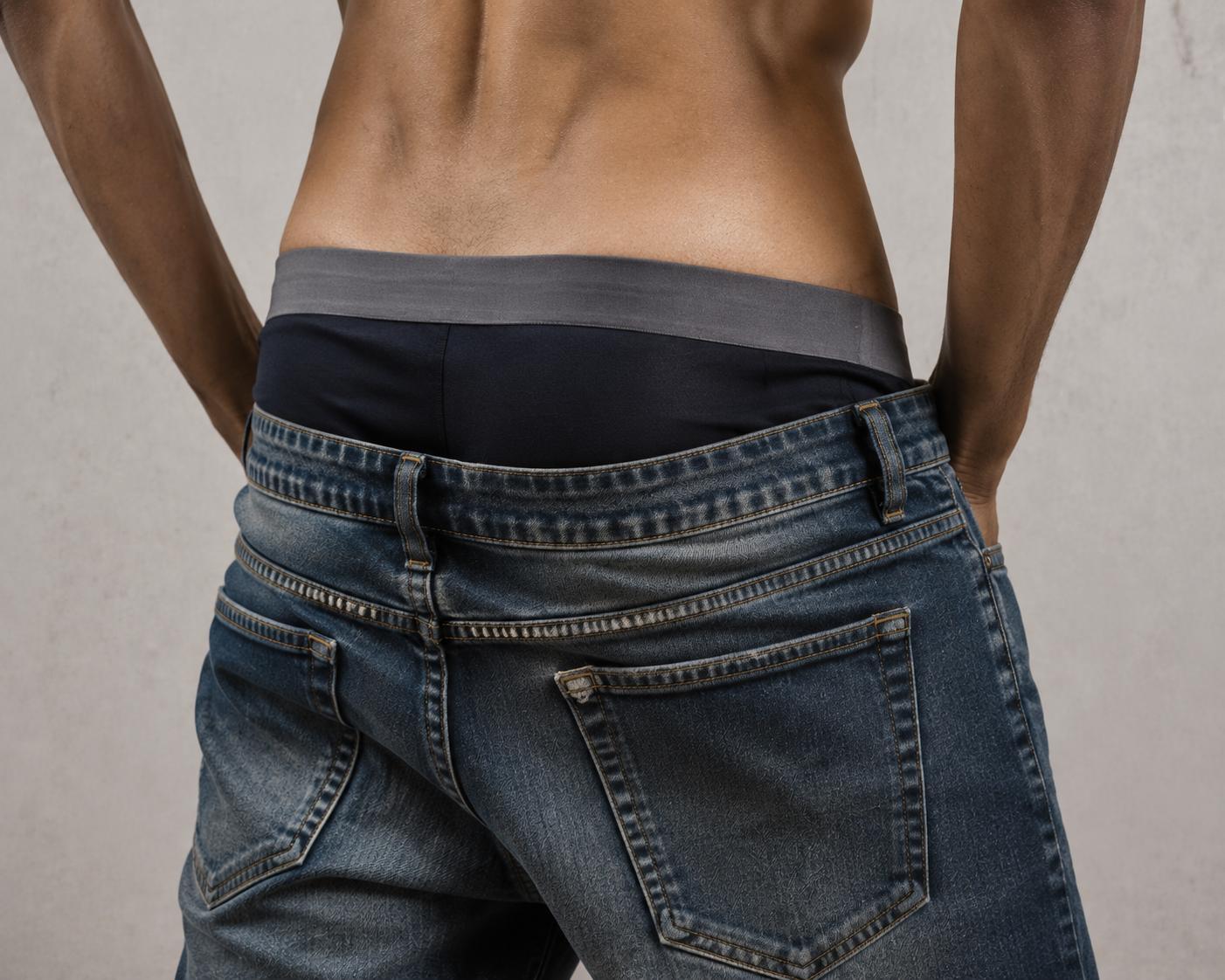
Why do jeans fall down even when they fit my waist?
Jeans fall down even when they fit the waist because the waist measurement is only one part of fit. Jeans also need to work with the hips, seat, rise, and upper thigh.
If the hips are too loose, the jeans may not have enough support. If the seat is too flat or too roomy, the back of the jeans can slide. If the rise is wrong, the waistband may sit in an unstable position. This is why two jeans with the same waist size can feel completely different.
What rise should I choose to stop jeans from sagging?
Rise controls where the waistband sits on the body. Low-rise jeans sit lower on the hips and may slide more easily on some body shapes. Mid-rise jeans often feel balanced for everyday wear. High-rise jeans can feel more secure for customers who want more waist coverage and support.
The best rise depends on body shape and style preference. A high rise is not automatically better for everyone. A mid rise may work better for people who dislike pressure at the natural waist. A low rise can work for specific fashion styling, but it needs strong hip and seat balance to avoid sliding.
What is the 2 finger rule for jeans?
The 2 finger rule is a quick waistband fit test. When the jeans are buttoned, you should be able to slide two fingers comfortably between the waistband and your body. If you cannot fit two fingers, the jeans may be too tight. If much more than two fingers fit easily, the jeans may be too loose and more likely to sag.
This rule is not perfect, but it helps shoppers understand whether the waistband feels secure without digging in or sliding down.
Why does waistband gapping make jeans sag?
Waistband gapping means the waistband does not sit close enough to the body. When there is a gap at the back waist, the jeans can shift during movement. The waistband may open away from the body, the seat may loosen, and the jeans may start sliding.
This is common in curvy jeans, plus size jeans, high-rise jeans, stretch jeans, and relaxed fits. A curved waistband, better back-rise balance, stronger fabric recovery, and improved grading can reduce this problem.
Do plus size jeans need special waistband support?
Yes. Plus size jeans need special attention around waist, hip, seat, rise, thigh, and back curve. Simply enlarging a smaller-size pattern often creates problems such as waistband gapping, crotch droop, tight thighs, loose seats, or uncomfortable pressure.
Better plus size jeans may need a curved waistband, stronger belt loops, better rise balance, high-recovery stretch, deeper seat shaping, and real fit testing on plus size bodies.
Dive Deeper
The reason jeans sag is often hidden in the upper block: waist, hip, seat, rise, and yoke. This area determines whether jeans stay connected to the body. If it is wrong, the leg shape does not matter much because the whole garment will keep shifting.
Many brands still build jeans from standard pattern blocks that do not represent real customer variety. That creates problems. A woman with a small waist and full hips may experience back gapping. A man with a flat seat may feel jeans sliding down even when the waist is correct. A plus size customer may find that the waistband stretches out after a few hours. A streetwear customer may want a loose fit but still needs the jeans to sit intentionally.
The 2 finger rule is useful because it focuses on comfort and security, but it is not a complete fit system. A waistband can pass the 2 finger test and still sag if the seat is wrong. A jean can feel secure at the waist but pull at the crotch if the rise is too short. A high-rise jean can feel supportive on one body and restrictive on another.
For denim brands, this means size charts should not only list waist measurements. They should include hip, rise, inseam, thigh, and leg opening. Product descriptions should explain the intended fit: relaxed, low-rise, high-rise, curvy, slim, baggy, stacked, or straight. Model photos and movement videos can also help customers choose the right style.
Pattern development is the real solution. A good factory can adjust waistband curve, back rise, seat shape, hip measurement, thigh room, and inseam based on the target customer. For plus size jeans, this is especially important. Good plus size denim requires technical grading, not just bigger dimensions.
DiZNEW can help brands develop jeans for specific customer groups: U.S. boutique buyers, streetwear customers, plus size customers, premium denim shoppers, and private label brands. This allows sagging issues to be solved before the product reaches the customer.
How Do Fabric, Stretch, Washing, and Wear Life Make Jeans Sag?
Fabric and wear habits affect how jeans keep their shape. Stretch jeans may sag if they stretch but do not recover. Cotton denim relaxes with body movement. Washing can temporarily tighten jeans, but poor fabric recovery or bad fit will still cause sagging. Jean lifespan depends on fabric quality, construction, care, wear frequency, and stress points.
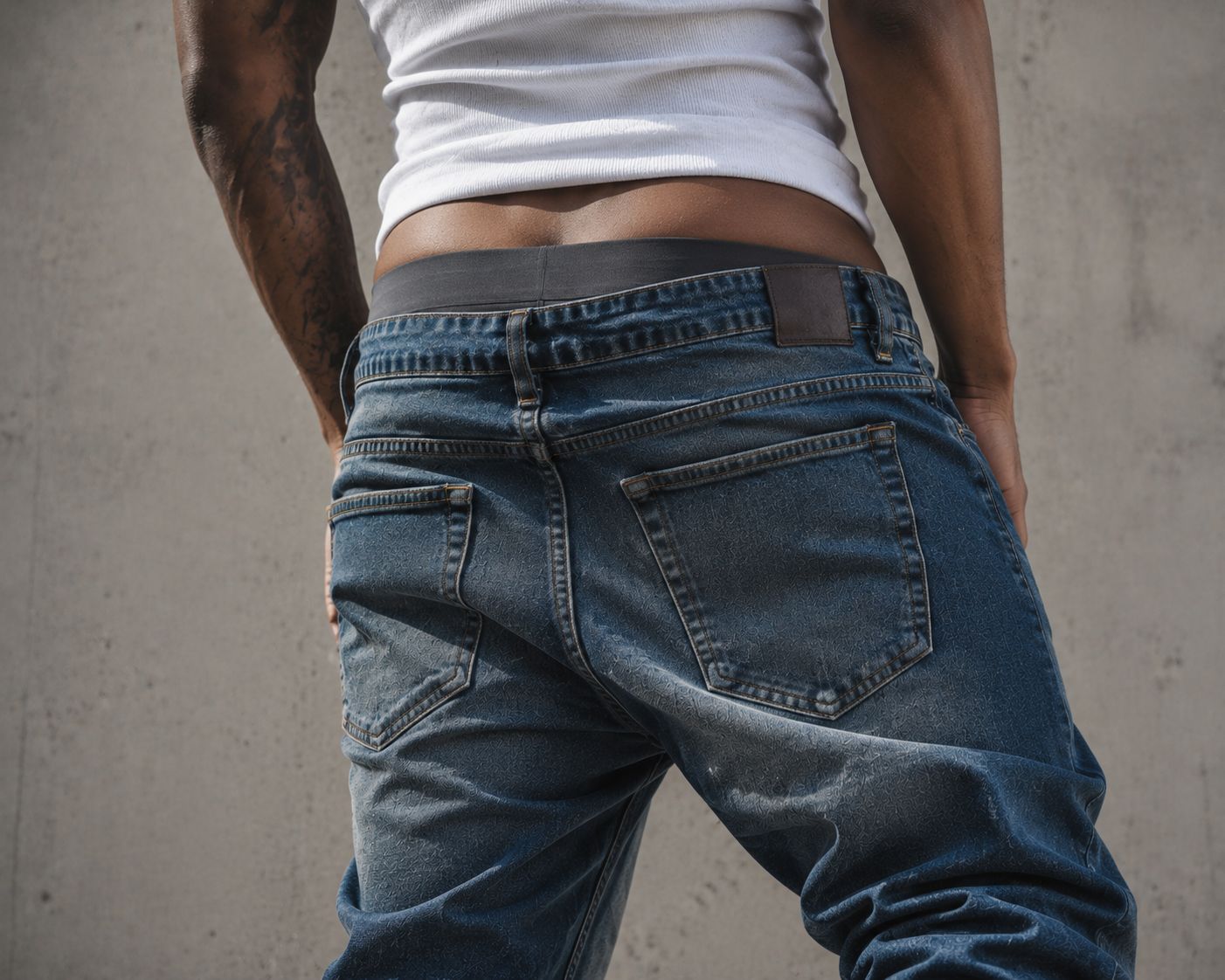
Do stretch jeans sag more than rigid jeans?
Stretch jeans can sag more than rigid jeans if the fabric has poor recovery. Stretch denim often contains elastane, spandex, Lycra, T400, polyester blends, or dual-core yarns. These fibers help the jeans move with the body, but the fabric must also return to shape.
High stretch does not always mean high quality. A very stretchy fabric can feel comfortable in the fitting room but lose shape after a few hours. High-recovery stretch denim is usually better for skinny jeans, slim jeans, plus size jeans, and comfort-focused denim.
Why do jeans sag after washing or wearing?
Jeans often feel tighter after washing because cotton fibers contract. Then they loosen again with body heat and movement. Sitting, walking, driving, squatting, and bending stretch the waistband, seat, crotch, and knees.
Some loosening is normal. But if jeans lose shape too quickly, the fabric may have weak recovery, the waistband may be poorly constructed, or the fit may be wrong.
Can washing or drying shrink saggy jeans?
Washing can temporarily shrink or tighten saggy jeans, especially cotton denim. But it is usually not a permanent fix. If the jeans sag because they are too big, poorly patterned, or made with weak stretch recovery, washing will only help for a short time.
High heat can also damage stretch fibers over time. For stretch jeans, gentle washing and air drying are usually safer. Brands should provide care instructions because customers often damage denim shape through improper washing and drying.
Why do jeans sag in the seat and knees?
The seat and knees are high-stress areas. Sitting stretches the seat. Walking and bending stress the knees. Driving can stretch both the seat and knee areas. Over time, weak fabric may lose shape.
This is why high-quality denim should be tested for recovery. A jean that looks good before wear may not perform well after real movement. Brands should test seat and knee bagging before bulk production.
How long should a pair of jeans last?
A good pair of jeans can last several years with proper care, but lifespan depends on fabric quality, construction, washing habits, wear frequency, and how hard the jeans are worn. Premium heavyweight denim and selvedge denim can last much longer, especially when repaired and cared for properly.
Warning signs that jeans are wearing out include:
Sagging waistband
Baggy knees
Loose seat
Torn belt loops
Crotch wear
Weak seams
Broken zipper
Loss of shape
Thinning fabric
Long-lasting jeans need strong fabric, good stitching, reinforced stress points, stable waistband construction, and proper care.
Dive Deeper
Fabric is one of the biggest reasons jeans sag. Customers often focus on size, but fabric behavior can completely change the fit after wear. A jean can fit perfectly at 9 a.m. and feel loose by 3 p.m. if the fabric relaxes too much.
This is especially important in stretch denim. Stretch makes jeans comfortable, but recovery makes them wearable over time. Without recovery, stretch becomes weakness. The waistband expands. The seat loosens. The knees bag out. The crotch droops. Customers may describe the jeans as “cheap,” even if the design looked good at first.
Rigid denim has a different behavior. It may feel stiff at first, but it often holds structure better. However, 100% cotton denim also relaxes and molds to the body over time. It can crease, soften, and stretch slightly at stress points. The difference is that rigid denim usually ages through wear character, while poor stretch denim may simply lose shape.
Washing is another misunderstood topic. Some consumers try to fix sagging jeans with hot water and high heat. This may temporarily shrink the garment, but it can also damage elasticity, distort the fabric, fade the wash, and shorten the jean’s life. Proper care is part of fit maintenance.
For brands, jean lifespan should be part of product value. Customers are becoming more aware of durability. They do not want jeans that stretch out after a few wears. They want jeans that keep their shape, survive washing, and feel reliable. This is especially true for boutique customers who expect better quality than fast fashion.
DiZNEW can support brands by selecting fabrics based on recovery, weight, shrinkage, stretch level, and target style. A skinny jean may need high-recovery stretch. A straight jean may need structured cotton denim. A baggy jean may need enough weight to hold shape. A plus size jean may need comfort stretch with strong rebound. The right fabric reduces sagging before the customer ever wears the product.
How Can You Stop Jeans From Sagging?
To stop jeans from sagging, choose jeans that fit the waist, hips, seat, rise, and thigh—not just the waist number. Use the 2 finger rule to check waistband fit, choose the right rise, look for better fabric recovery, use a proper belt, wash and air-dry correctly, and consider tailoring for small waist issues.
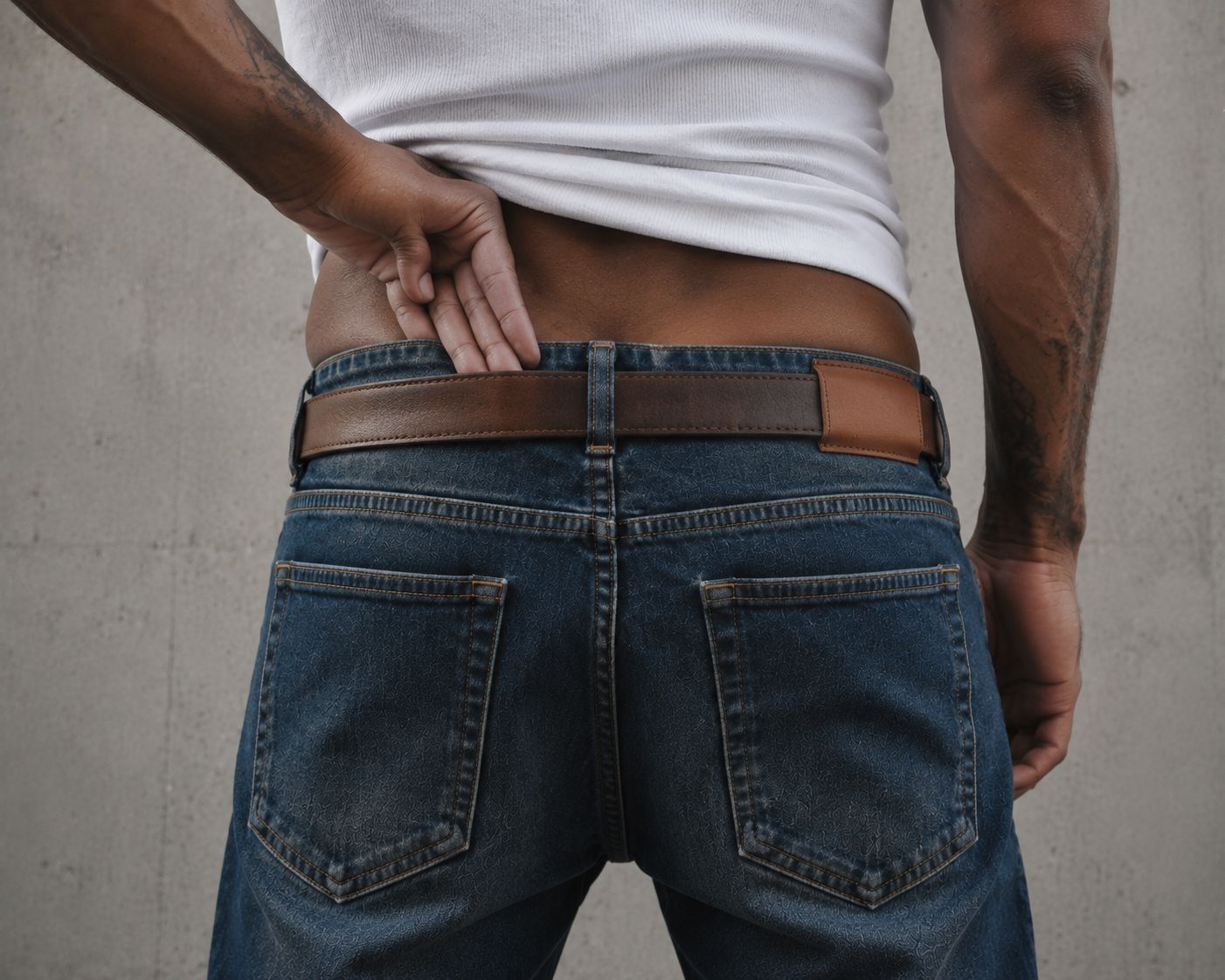
How to stop your jeans from sagging?
To stop jeans from sagging, start with fit. The jeans should feel secure at the waist and supported through the hip and seat. They should not rely entirely on a belt to stay up.
Helpful steps include:
Choose the correct rise for your body.
Use the 2 finger rule at the waistband.
Check whether the hip and seat fit securely.
Look for high-recovery stretch denim.
Avoid jeans that are already loose in the seat.
Use a belt that fits the belt loops.
Wash gently and air dry.
Tailor the waist if it is only slightly loose.
How do I keep my jeans from falling down?
To keep jeans from falling down, check the full upper block: waist, hip, seat, and rise. If the waistband is loose but the hip fits, tailoring may help. If the seat is loose, you may need a different cut. If the rise is wrong, changing size may not solve the problem.
A belt can help, but it should support a good fit, not fight a bad fit.
Should I size down if my jeans sag?
Sizing down may help if the jeans are loose everywhere: waist, hip, and seat. But if only the waist is loose while the thigh or hip already fits, sizing down may create discomfort.
Do not size down blindly. Smaller jeans can cause crotch pulling, tight thighs, knee bunching, waistband digging, and restricted movement. A better solution may be a curvy fit, different rise, better waistband, or custom pattern.
Can a belt fix sagging jeans?
A belt can help, but it cannot fully fix sagging caused by wrong rise, loose seat shape, poor fabric recovery, or bad grading. Belt loops, loop placement, loop strength, and belt width also matter.
For heavier jeans, wider belts, western jeans, and plus size jeans, stronger belt loops or 7-loop waistbands may improve support. But the belt system should be designed with the waistband, not added as an afterthought.
Can tailoring fix jeans that sag?
Tailoring can fix some sagging issues. A tailor may take in the waist, adjust the seat slightly, hem excess length, or taper the leg. However, tailoring cannot fully correct weak stretch recovery, wrong rise, poor grading, or a badly balanced pattern.
If sagging is minor, tailoring can help. If sagging is structural, the better answer is a better jean.
Should I choose straight, baggy, stacked, or skinny jeans instead?
Different bodies and lifestyles work better with different fits. Skinny jeans offer a close fit but need good stretch recovery. Straight jeans provide balance and are often easier to wear. Baggy jeans offer comfort and streetwear attitude, but need stable waist construction. Stacked jeans need longer inseam and controlled fabric volume.
Sagging can even look intentional in relaxed streetwear when the rise, inseam, and waistband are properly designed. The key is control. Intentional volume looks stylish. Uncontrolled sagging looks sloppy.
Dive Deeper
Stopping jeans from sagging starts with understanding the cause. Many people buy a belt or size down without asking why the jeans are sliding in the first place. That can create new problems.
If the waistband is too loose, sizing or tailoring may help. If the seat is too loose, a different fit may be better. If the fabric stretches out, better recovery is needed. If the rise is wrong, a different rise may solve the issue. If the wearer has a curvy body, a curved waistband may reduce gapping. If the customer wears baggy jeans, waistband engineering becomes even more important.
For online brands, this is where education matters. Customers need help choosing the right size and fit. Product pages can explain rise, stretch level, seat fit, inseam, and whether the jean is designed to sit high, mid, low, relaxed, or stacked. A simple fit guide can prevent returns.
For consumers, the 2 finger rule is a good starting point, but it should be combined with movement testing. Button the jeans, fit two fingers at the waist, sit down, walk, bend, and check whether the jeans slide. If the jeans only feel right when standing still, they are not truly right.
For boutique owners, this problem creates a product opportunity. Many customers are tired of jeans that lose shape. A brand can highlight “shape-retention denim,” “secure waistband,” “curve-friendly fit,” “tested for all-day wear,” or “reinforced belt loops.” These claims must be backed by real product development, but when done honestly, they build trust.
DiZNEW can help brands create jeans that solve these real problems. Instead of using generic patterns, buyers can customize the rise, waistband, seat shape, fabric, belt loops, and fit details based on their target customer. This is how a common complaint becomes a stronger product.
How Can Denim Brands Design Jeans That Do Not Sag?
Denim brands can design jeans that do not sag by testing waist, hip, seat, rise, fabric recovery, post-wash shrinkage, waistband gapping, belt loop strength, and movement performance before bulk production. Good pattern development, proper fabric selection, curved waistbands, reinforced stress points, and real fit testing can reduce sagging and improve customer satisfaction.
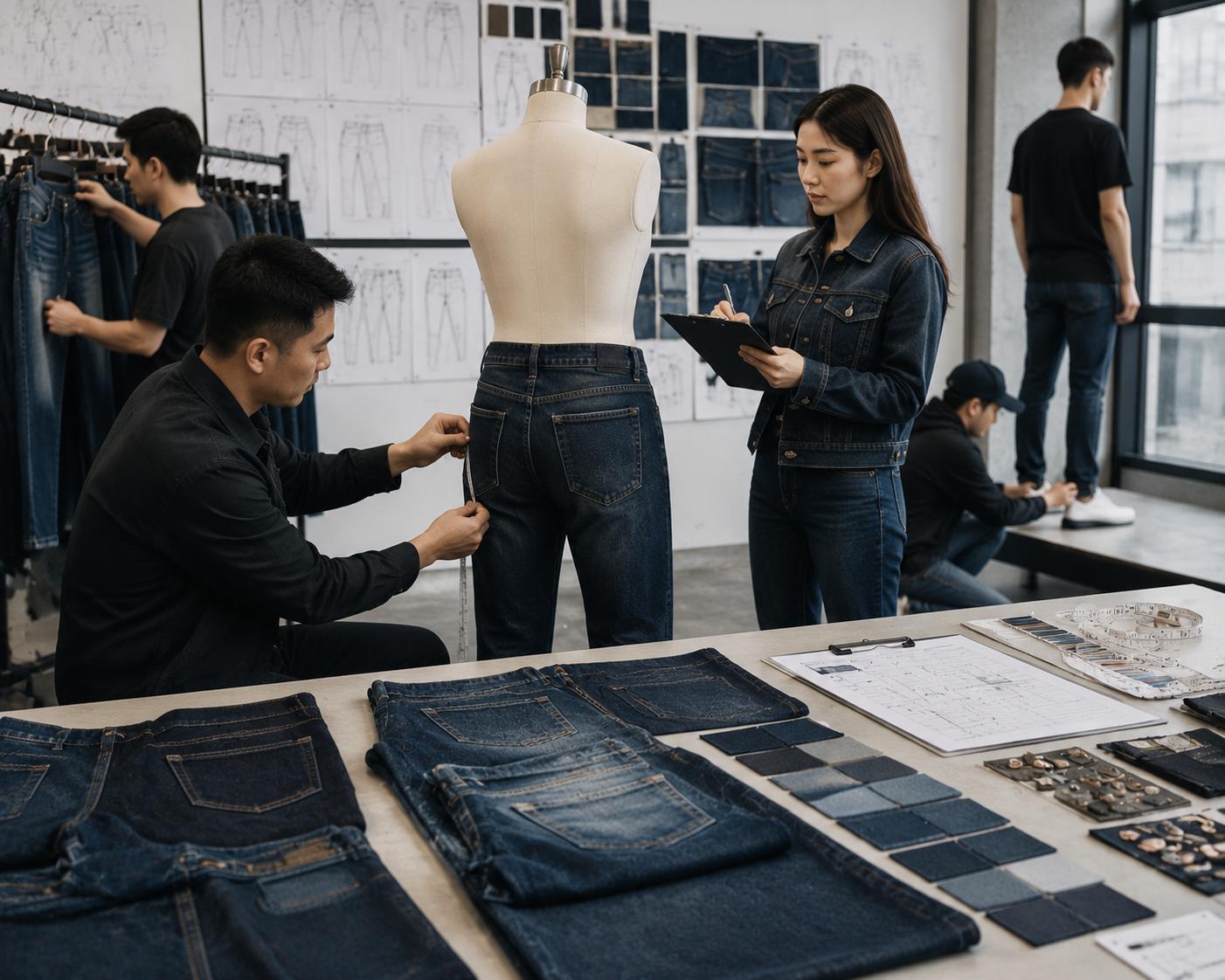
What should brands test before producing jeans in bulk?
Brands should test more than flat measurements. Jeans should be tested on real bodies and through real movement.
Important tests include:
Waist fit
Hip fit
Seat fit
Rise balance
Thigh room
Knee movement
Inseam length
Leg opening
Stretch recovery
Post-wash shrinkage
Fabric growth
Waistband gapping
Belt loop strength
Several-hour wear test
A sample that looks good on a table may fail when someone sits, walks, or wears it all day.
How can pattern development prevent sagging?
Pattern development prevents sagging by balancing the upper block. Good jeans need the right rise, curved waistband, seat shape, hip measurement, yoke shape, thigh room, and leg structure.
Different styles need different patterns. Baggy jeans need volume control. Stacked jeans need inseam planning. Plus size jeans need better grading. Skinny jeans need recovery and knee balance. Straight jeans need clean proportions.
One generic pattern cannot solve every customer’s fit problem.
How can fabric selection prevent jeans from losing shape?
Fabric selection is critical. High-recovery stretch denim works better for skinny, slim, and plus size comfort fits. Structured rigid denim works well for straight, selvedge, workwear, and vintage fits. Heavier denim can support baggy or structured silhouettes, while lighter denim can improve comfort for shirts, shorts, and relaxed summer styles.
Brands should test shrinkage, recovery, and long-term wear before production. A fabric that feels good in the hand may not perform well after hours of movement.
How can brands make jeans last longer for customers?
Brands can make jeans last longer by using better fabric, stronger seams, reinforced crotch construction, durable pocket bags, strong belt loops, stable waistbands, quality zippers, and proper washing standards.
Stress points should be reinforced:
Crotch seams
Belt loops
Pockets
Waistband
Back rise
Fly
Hem
Knee area
Brands should also provide clear care instructions. Good care can extend the life of jeans and reduce customer complaints.
How can DiZNEW help brands develop better-fitting custom jeans?
DiZNEW can help brands improve waistband structure, rise, seat shape, hip curve, inseam, fabric recovery, belt loops, wash shrinkage, labels, trims, and packaging. The factory supports OEM/ODM development from sketches, reference photos, physical samples, AI design images, or tech packs.
DiZNEW can customize plus size jeans, baggy jeans, stacked jeans, straight jeans, selvedge jeans, skinny jeans, jogger jeans, denim jackets, denim shorts, denim shirts, and custom washed denim products.
How can brands turn sagging-fit problems into selling points?
Customer complaints reveal market demand. If people search “why do my jeans always sag?” they are asking for better denim. Brands can turn this into product value by highlighting:
Better waistband support
High-recovery stretch denim
Curve-friendly fit
Tested rise balance
Reinforced belt loops
Shape retention
Movement-tested samples
Longer-lasting construction
These details make product pages more trustworthy and help customers understand why the jeans are different from generic wholesale products.
Dive Deeper
Designing jeans that do not sag requires brands to think like engineers and merchandisers at the same time. A jean has to look good, feel good, photograph well, fit the target customer, survive washing, and keep its shape during wear.
This is not easy, especially in modern denim, where customers want many different silhouettes. A skinny jean should hold close to the body without stretching out. A baggy jean should look relaxed without falling down. A stacked jean should create intentional folds without crotch collapse. A plus size jean should support curves without gapping. A selvedge jean should feel structured and durable. A jogger jean should feel comfortable without losing shape.
Each style needs its own development logic. That is why specialized denim manufacturing matters. A general apparel supplier may understand basic sewing, but denim requires knowledge of fabric behavior, shrinkage, washing, hardware, waistband construction, pattern balance, and quality control.
For boutique owners, better fit can become a major competitive advantage. Many online stores sell jeans that look similar. The difference is how the jeans perform after customers wear them. If your jeans stay up, keep shape, fit comfortably, and last longer, customers notice.
The business benefit is clear. Better-fitting jeans can reduce returns, improve reviews, increase repeat purchases, and support higher pricing. They also give brands better marketing language. Instead of selling only “baggy jeans,” a brand can sell “baggy jeans with a secure waistband and shape-retention denim.” Instead of selling only “plus size jeans,” a brand can sell “plus size jeans with curve-friendly rise and reduced waist gapping.”
DiZNEW helps brands move from idea to production with this kind of detail. With more than 20 years of denim R&D, manufacturing, and sales experience, DiZNEW can help buyers build jeans around real customer problems. A brand can start with 30 pieces to test the market, gather feedback, and then scale successful designs up to larger orders, including 10,000 pieces.
Final Thoughts: Sagging Jeans Are Not Just a Size Problem
Jeans sag for many reasons: loose waistbands, wrong rise, poor hip support, loose seat fit, weak fabric recovery, stretched-out denim, bad grading, or jeans that do not match the wearer’s body shape. Sometimes a belt helps. Sometimes sizing down helps. Sometimes tailoring helps. But when sagging keeps happening, the real problem is often deeper than size.
For consumers, the solution is to choose jeans that fit the waist, hip, seat, and rise—not just the number on the tag. Use the 2 finger rule, test movement, choose better recovery fabric, and care for denim properly. For brands, the solution is better product development: stronger waistbands, smarter patterns, better fabric, improved grading, reinforced belt loops, and real wear testing before bulk production.
DiZNEW is a China-based denim R&D, manufacturing, and sales factory with more than 20 years of experience. We help U.S. small and medium buyers, high-end brand clients, denim designers, online boutique owners, and influencer-led stores create custom denim products under their own logo.
DiZNEW can customize plus size jeans, baggy jeans, stacked jeans, straight jeans, selvedge jeans, skinny jeans, jogger jeans, denim jackets, denim shorts, denim shirts, and more. Our OEM/ODM services support custom fabric, wash, fit, waistband structure, belt loops, labels, buttons, rivets, leather patches, hang tags, packaging, and private label production.
With a low MOQ starting from 30 pieces and production capacity for larger orders up to 10,000 pieces, DiZNEW gives brands a flexible way to test, improve, and scale custom denim products.
Ready to create jeans that stay up, fit better, last longer, and make customers feel more confident? Contact DiZNEW today to request a quote and start your custom denim project.
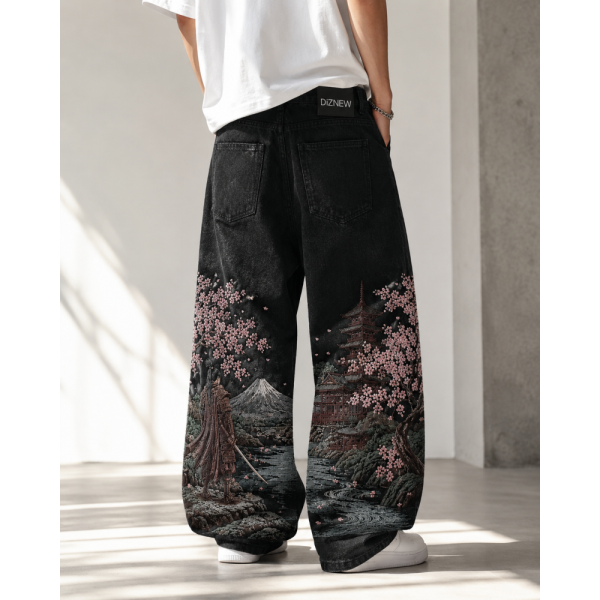
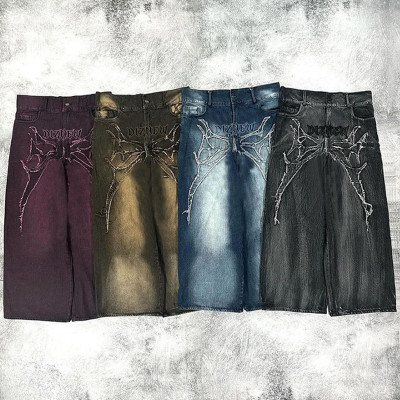
Premium wide-leg denim jeans featuring a vintage washed black finish, detailed Japanese landscape artwork, embroidery-style decoration, and custom brand label options. Designed for streetwear brands, designer labels, and private label collections looking for statement denim with strong visual storytelling.
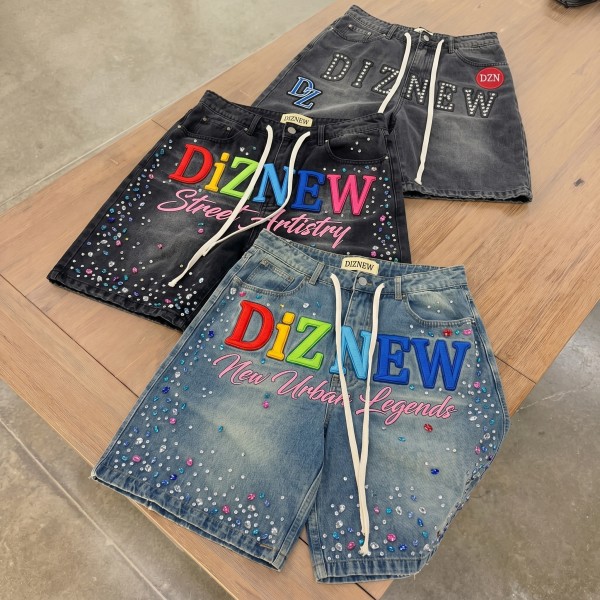
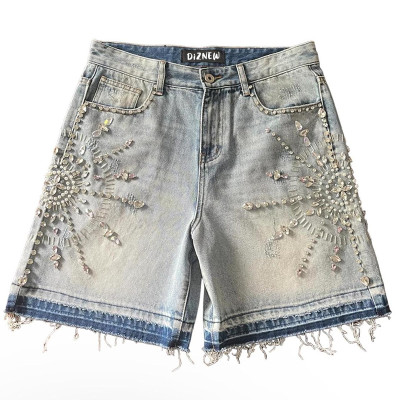
Custom Rhinestone Logo Denim Shorts: Wholesale supply direct. We manufacture premium embroidered baggy jean shorts for brands.
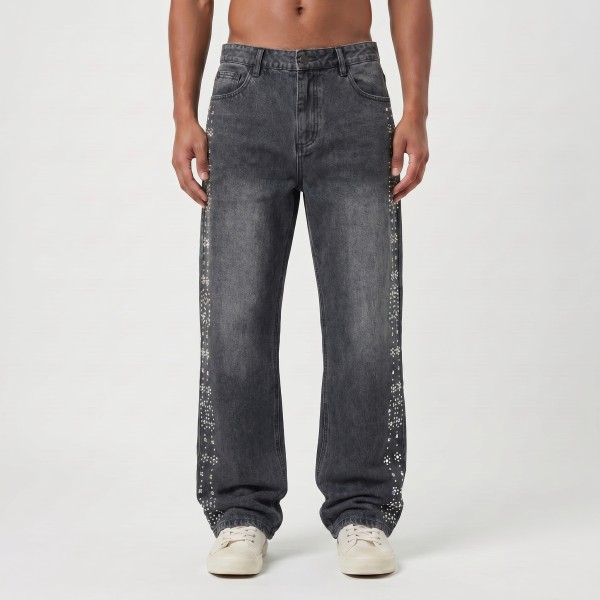
Discover premium DiZNEW denim jeans with decorative studs for a sparkling, stylish look. Order today!
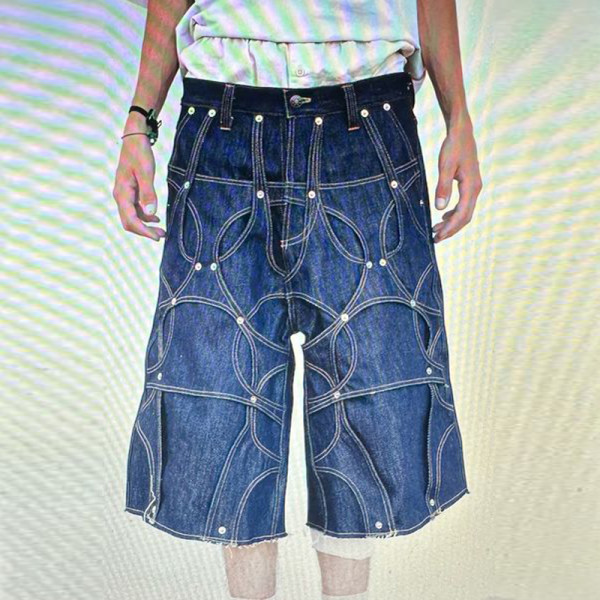
These designer denim shorts for men feature intricate decorative stitching and rivet details, perfect for streetwear fashion. The wide-leg silhouette adds a bold look, ideal for trendsetters.