why do jean sizes vary so much
Buying jeans should be simple: measure your waist, choose the matching number, and check out. In reality, almost everyone who shops for denim has had the opposite experience. A size 32 fits perfectly in one brand but feels painfully tight in another. Two pairs from the same brand can feel different because one is rigid denim and the other is stretch. A woman who normally wears one size may need two different sizes depending on the fit, rise, or wash. This is not always a manufacturing mistake. Denim sizing is influenced by pattern blocks, fabric behavior, garment washing, body shape, grading, brand positioning, and sometimes vanity sizing.
Jean sizes vary because there is no single universal sizing system used by every brand. A size label can represent different body measurements, garment measurements, fits, rises, fabrics, and ease allowances. Stretch denim, rigid denim, washing, shrinkage, body proportions, vanity sizing, and brand-specific pattern blocks can all change how the same labeled size feels. The best way to choose jeans is to compare actual measurements, fit, and fabric—not the size number alone.
For brands, this is more than a fitting-room annoyance. Inconsistent sizing can turn a promising denim collection into returns, bad reviews, and lost repeat customers. The real challenge is not simply making a size 32. It is deciding exactly what “size 32” should mean for your customer—and then making sure every future style follows that logic.
Why Do Jean Sizes Vary So Much Between Brands?
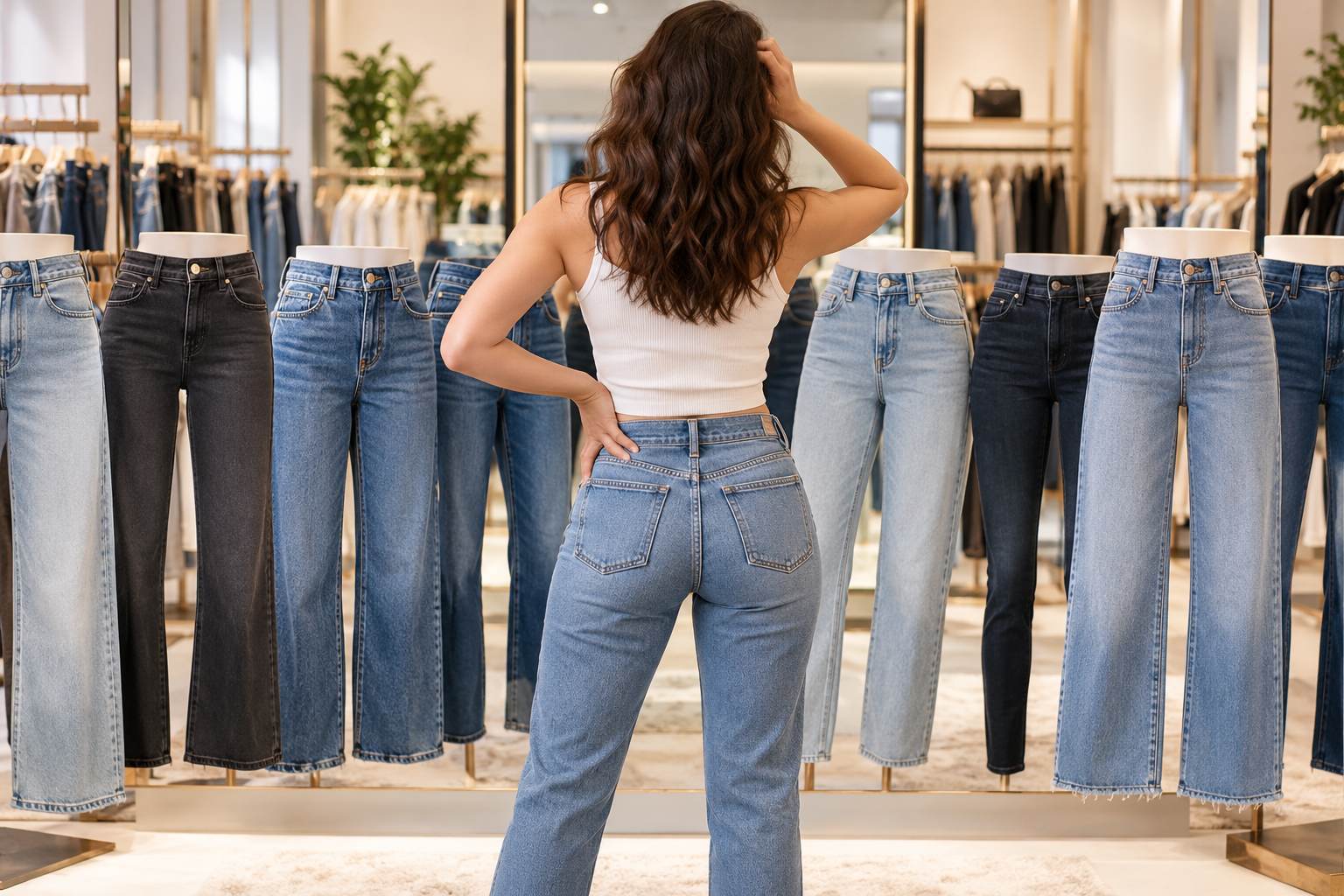
Jean sizes vary between brands because each company can develop its own sizing system, target body shape, fit block, ease allowance, and grading rules. A size number is therefore not a universal measurement. Vanity sizing can add even more variation, particularly in women’s apparel, where research has documented meaningful differences between retailers using the same size labels.
Dive Deeper
The biggest misconception about jean sizing is that the number on the label is an international engineering standard. It usually is not.
A denim brand begins with a target customer and a base pattern. One company may design around a younger, slimmer customer. Another may target mature shoppers who want more room through the waist and hip. A streetwear label may intentionally add significant ease through the seat and thigh, while a fashion brand may prefer a closer silhouette.
That immediately changes what the same labeled size feels like.
Academic research helps explain why the confusion is particularly noticeable in women’s apparel. A study of 54 U.S. apparel retailers and 1,258 body-measurement entries found substantial variation in women’s sizing and evidence consistent with vanity sizing, while finding much less evidence of the same practice in men’s and children’s apparel.
Vanity sizing means the label can be smaller than customers might expect from the garment’s actual dimensions. But it is only part of the problem. Even without vanity sizing, two brands can legitimately create different size charts because they use different fit models and pattern philosophies.
Are 32 Waist Pants Actually 32 Inches?
Not necessarily.
“W32” may refer to the body measurement the brand intends the garment to fit rather than the exact finished waistband circumference. Waist position matters too. Low-rise jeans sit lower on the body, where circumference is often larger than at the natural waist.
Brand charts illustrate this distinction. Levi’s U.S. women’s guide, for example, currently associates jean size 32 with a body waist range of roughly 32–33 inches and hips around 42–43 inches, rather than treating the label as a promise that every finished waistband physically measures exactly 32.00 inches.
That difference between body measurement and garment measurement is critical.
A finished garment may also include ease. A relaxed jean needs room for movement and silhouette. A stretch skinny jean may use less ease because the fabric expands.
So when customers say, “I am always a 32,” they may actually mean, “I usually fit the size labeled 32 in the brands and fits I buy.”
For online denim brands, a clearer approach is to publish both a body-size chart and detailed garment measurements whenever possible.
Why Do Jeans in the Same Size Fit Differently Even Within the Same Brand?
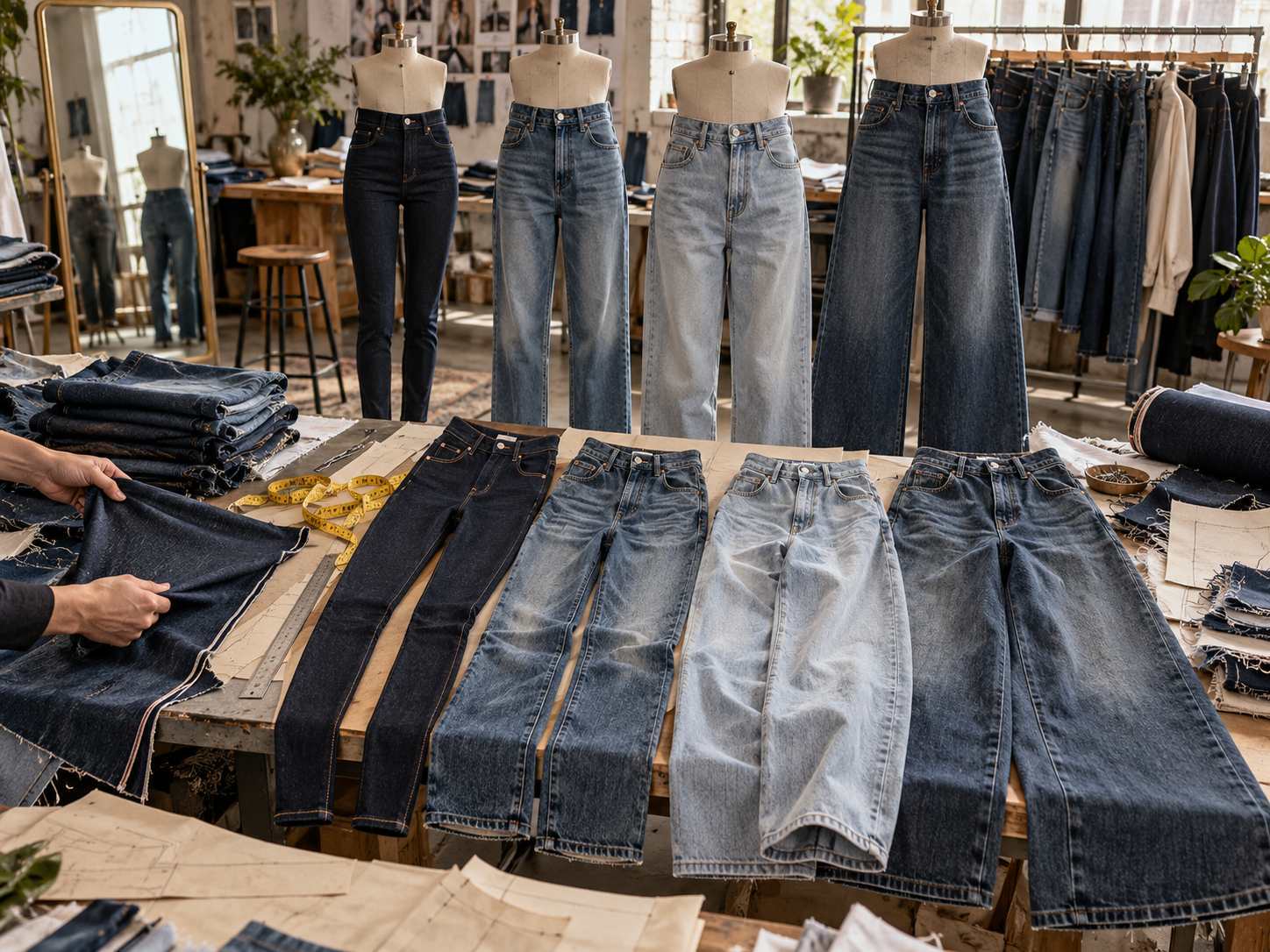
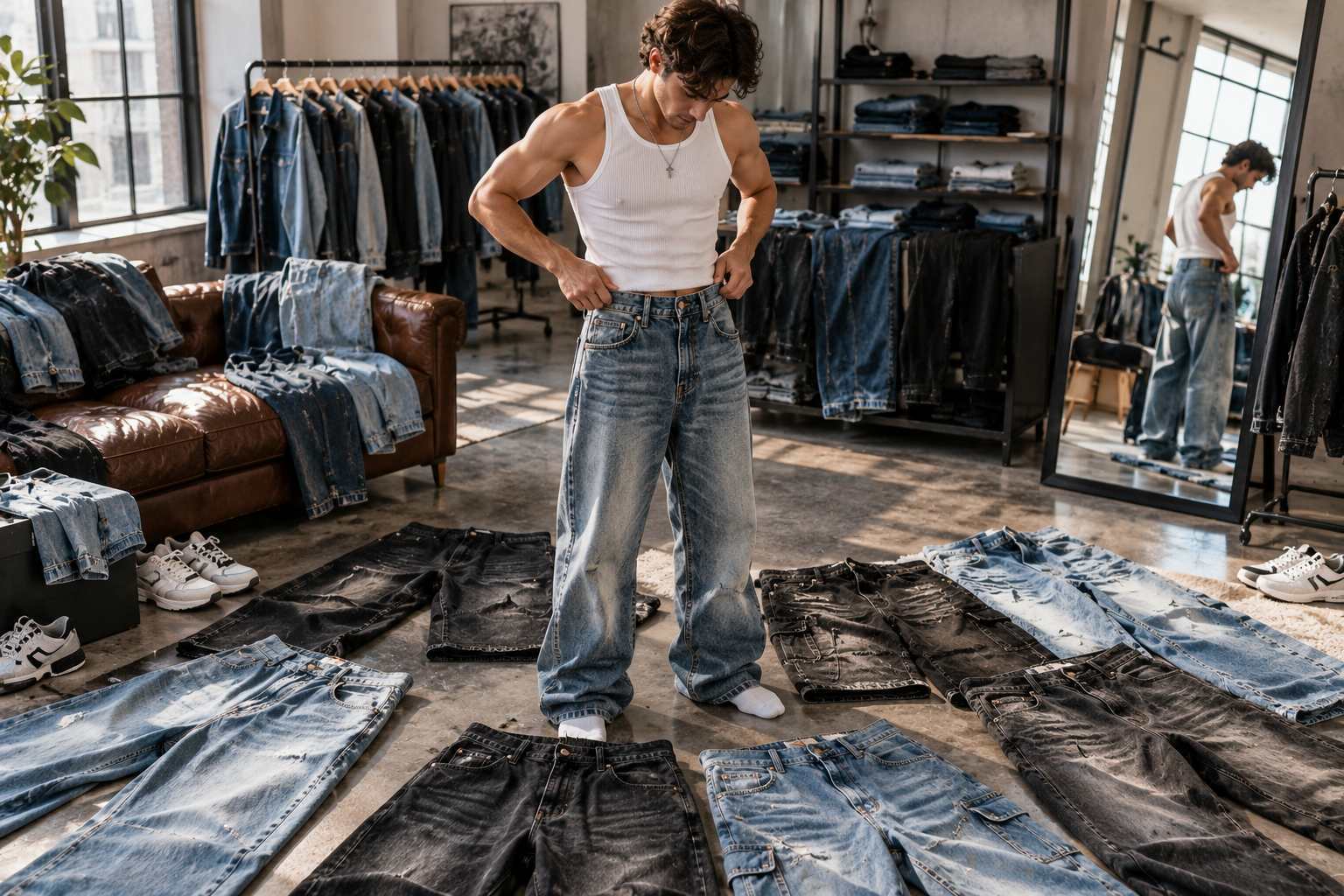
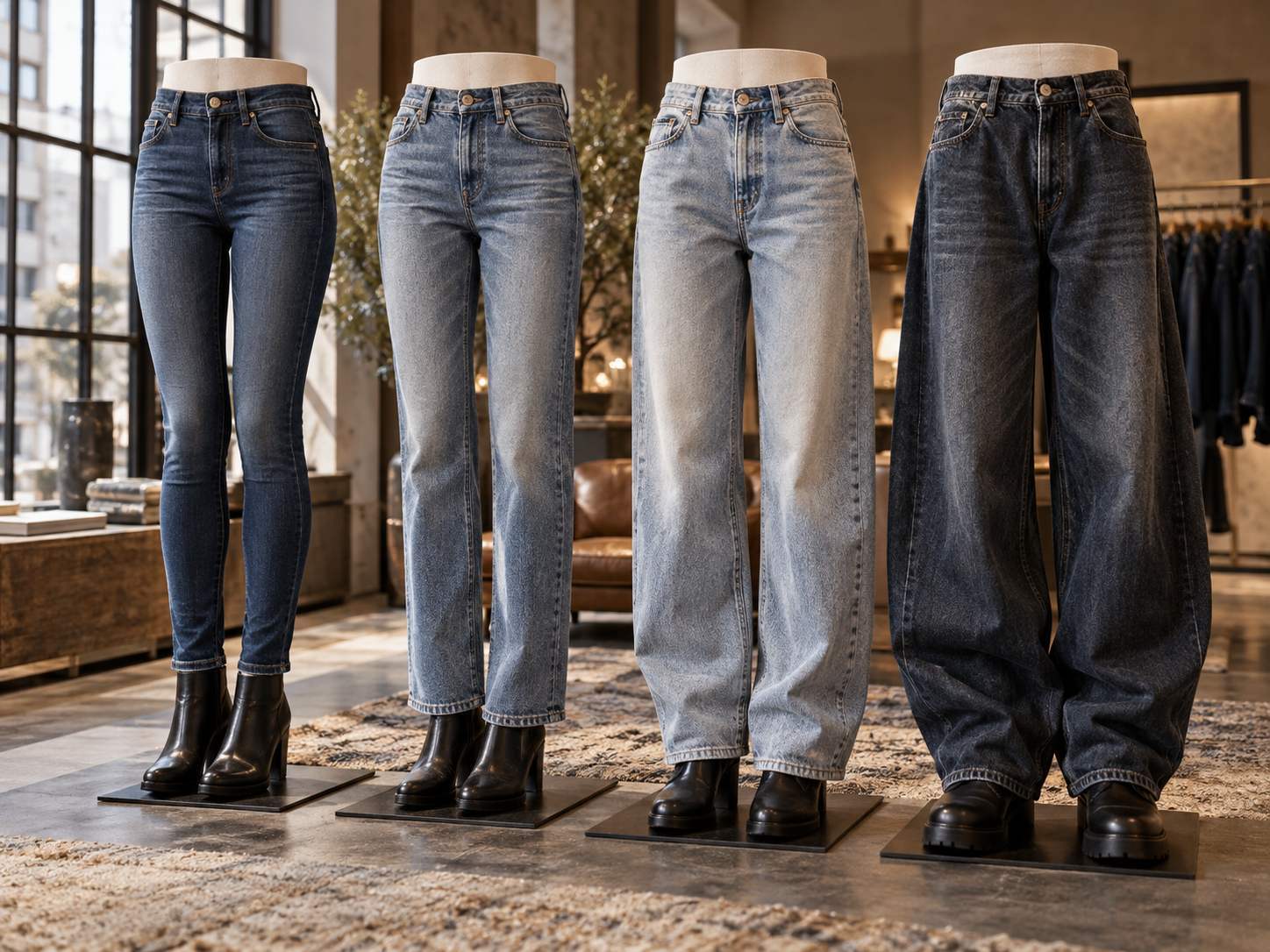
Jeans with the same size label can fit differently because size and fit are not the same thing. Skinny, straight, baggy, and relaxed jeans use different proportions through the rise, hip, thigh, knee, and leg opening. Fabric stretch, garment washing, color processing, and normal production tolerances can create additional differences even when the waistband size is technically correct.
Dive Deeper
Imagine a brand sells five jeans, all labeled size 32:
Skinny
Slim-straight
Straight
Relaxed
Baggy
The waist may be similar, but almost everything below it can change.
A skinny jean needs close thigh and knee measurements. A straight jean maintains more consistent width through the leg. A baggy jean may contain dramatically more seat, thigh, knee, and hem volume. That extra room is called ease, and ease is part of design—not a sizing mistake.
This is also why someone used to baggy jeans may try on a perfectly correct skinny jean and say, “This runs small.”
Fabric creates another layer of variation.
Denim Type Typical Wearing Experience
100% cotton rigid denim Structured, limited initial give
Comfort-stretch denim Moderate flexibility
High-stretch denim Adapts closely to the body
Heavy raw denim Stiff initially, changes through wear
A rigid cotton jean and a high-stretch jean can have similar flat measurements yet feel completely different on the body.
Wash processing matters too. Denim can undergo enzyme washing, stone washing, bleaching, overdyeing, resin finishing, garment dyeing, or multiple drying stages. Those processes can alter shrinkage, hand feel, and fabric relaxation.
That is why a black version and blue version of the “same” jean do not automatically behave identically.
Manufacturing tolerance is another reality brands need to manage. Fabric is flexible, sewing is three-dimensional, and washing introduces additional variability. A professional factory therefore works with agreed measurement tolerances and checks finished garments against specifications instead of pretending textile production can operate like machining steel parts.
Why Does Gen Z Hate Skinny Jeans?
The phrase is exaggerated, but it highlights how fit expectations change.
For several years, younger shoppers moved strongly toward baggy, wide, and relaxed denim. British Vogue reported in 2026 that baggy jeans remain influential, although newer versions are evolving toward cleaner silhouettes somewhere between wide and straight.
At the same time, skinny jeans are re-entering fashion conversation. Vogue reported in September 2026 that skinny, cigarette, and slim shapes are returning after years of looser silhouettes dominating.
That matters for sizing because “comfortable” is partly cultural. A customer accustomed to oversized denim may perceive close-fitting jeans as undersized even when the measurements match the brand’s intended fit.
Brands therefore need both technical consistency and clear fit communication.
How Do Body Shape and Measurements Affect Your Real Jean Size?
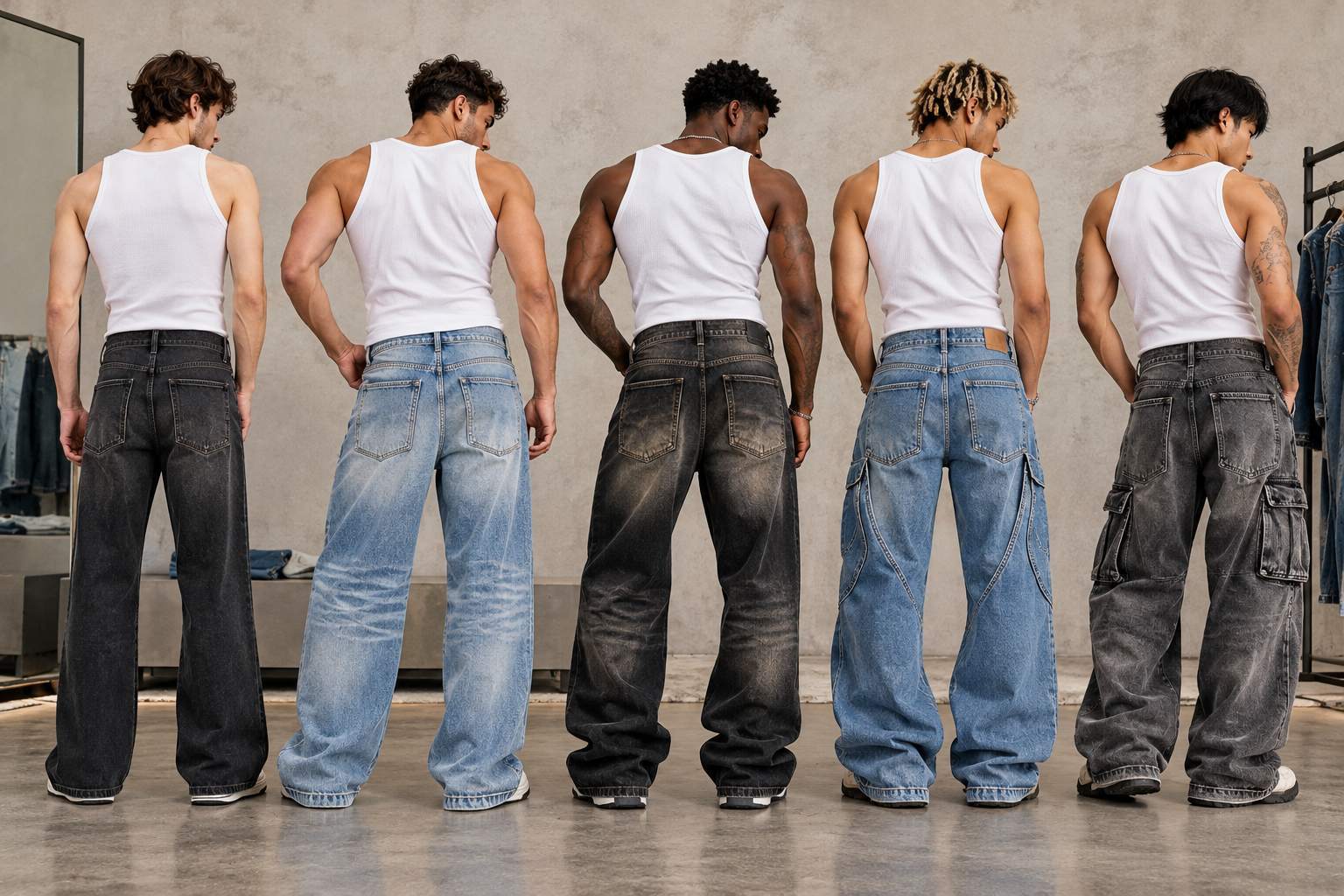
Your real jean size depends on more than waist circumference. Hip, seat, front rise, back rise, thigh, inseam, leg opening, and body proportions all influence fit. Two people with identical waists can need different jeans because one has larger thighs, a fuller seat, or a different waist-to-hip ratio. That is why detailed measurements are more useful than one size number.
Dive Deeper
A jeans pattern has to fit a three-dimensional body, but consumers often shop using one number.
That is the fundamental problem.
Consider two customers who both measure 32 inches around the waist. One has narrow hips and slim thighs. The other has a larger seat and athletic thighs. Giving both customers exactly the same pattern can create two completely different experiences.
The first customer may find the jean comfortable. The second may experience pulling at the crotch, tight thighs, pocket distortion, or waistband movement.
What’s the Average Jean Size for a Woman?
There is no single useful universal “average women’s jean size.”
Country, age, brand, body shape, and sizing system all change the answer. Even U.S. population measurements should not be converted directly into a retail jean size.
For context, current CDC data report an average waist circumference of about 38.5 inches among U.S. adult women aged 20 and older, based on August 2021–August 2023 measurements. That does not mean the average woman wears a size 38 jean: body waist measurements and retail jean labels are different systems.
ASTM itself maintains separate body-measurement standards for misses, petite, plus-size, and other figure types, illustrating why one universal female body block cannot accurately represent everyone.
For brands, the smarter question is not “What size is the average woman?”
It is:
“Who is our target customer, and what are her actual body proportions?”
If customers constantly report that jeans fit their hips but gap at the waist, the issue may be the pattern block. Possible solutions include a more contoured waistband, adjusted yoke, revised back rise, or a dedicated curvy block.
If customers fit the waist but struggle with thigh room, an athletic or fuller-thigh block may be more appropriate.
Customers should not always have to change bodies to fit jeans. Sometimes the jeans need a better pattern.
Is It Better to Buy Jeans Too Big or Too Small?
It is usually better to buy jeans that fit correctly rather than deliberately choosing them too big or too small. Whether you should choose the smaller or larger size when between sizes depends on fabric stretch, recovery, rise, intended silhouette, and expected shrinkage. Rigid raw denim and high-stretch skinny denim behave very differently, so the same sizing rule should not be applied to both.
Dive Deeper
A popular denim myth says, “Always buy jeans tight because they stretch.”
That advice is too simplistic.
Yes, cotton denim can relax with wear, particularly around the waist, seat, knees, and thighs. But how much it changes depends on yarn, weave, fabric weight, finishing, elastane content, and construction.
Stretch denim adds another factor: recovery.
A quality stretch fabric is designed to expand while the customer moves and then recover toward its original dimensions. Poor recovery creates the dreaded baggy knees or loose seat.
Buying high-stretch jeans excessively tight may therefore create unnecessary waistband pressure, strained seams, pocket pulling, and uncomfortable movement rather than a magically perfect fit after two days.
Rigid denim is different. It does not have elastane to immediately accommodate the body. Some rigid jeans soften and relax through wear, but raw or unsanforized products can also shrink significantly after washing.
Levi’s current Shrink-to-Fit guidance demonstrates why generic sizing advice can fail. For customers planning to machine wash and dry certain raw Shrink-to-Fit 501 jeans, Levi’s recommends adding waist and inseam allowance, while customers intending to keep them unwashed can buy true to size.
Same brand. Same general jean category. Different care plan, different sizing decision.
How Should You Choose Between Two Sizes?
Check four things:
Waist: Can you button the jean without excessive pressure?
Seat and crotch: Is there pulling or fabric strain?
Thigh: Can you sit, walk, and bend normally?
Fabric: Is it rigid, comfort stretch, or high stretch?
Then consider the intended silhouette.
A baggy jean is supposed to have extra room. Sizing down until it fits like a straight jean defeats the design. Likewise, sizing up a skinny jean until the seat and thigh become loose changes the product completely.
The best size is not the smallest number you can physically close.
It is the size that delivers the silhouette, mobility, and comfort the designer intended.
How Can Denim Brands Create More Consistent Jean Sizing?
Brands can create more consistent sizing by defining a target customer, base size, fit block, grading rules, fabric behavior, shrinkage standards, and measurement tolerances before bulk production. Each major fit should be tested through a size set and after washing. Consistency does not mean every style has identical measurements; it means customers can predict how the brand’s sizing system behaves.
Dive Deeper
For a denim brand, sizing consistency is one of the strongest drivers of repeat purchasing.
When customers discover that a brand’s W32 straight jean fits them well, they want confidence that the next W32 will make sense too. It does not need to feel identical if the next product is baggy or skinny—but the difference should feel intentional.
That requires a sizing system rather than isolated patterns.
Brands should define:
Target customer body type
Base size
Core waist and hip relationship
Front and back rise
Thigh allowance
Fit-specific ease
Size grading rules
Shrinkage targets
Measurement tolerances
Different silhouettes also need dedicated pattern thinking.
A baggy jean is not simply a straight jean enlarged everywhere. The rise, hip, thigh, knee, inseam, and leg opening have to work together. Plus-size grading also cannot simply add the same amount to every measurement indefinitely because body proportions change across a broader size range.
This is where working with a denim-focused manufacturer becomes valuable.
DiZNEW has more than 20 years of denim development and manufacturing experience and supports designers, boutique owners, streetwear labels, online stores, influencer brands, and established private-label customers.
We can develop custom denim from sketches, tech packs, reference photos, AI-generated concepts, or physical samples, with support covering pattern development, grading, fabric selection, washing, shrinkage control, fit adjustment, hardware, labels, and measurement QC.
Product capabilities include plus size jeans, baggy jeans, stacked jeans, straight jeans, selvedge jeans, skinny jeans, jogger jeans, denim jackets, denim shorts, and denim shirts.
With an MOQ starting from 30 pieces per style and production capability for larger orders up to 10,000 pieces, brands can test new fits at a manageable quantity and scale successful products later.
Sizing should never feel like a lottery to your customer.
If you are developing a denim collection and want more consistent sizing, better fit blocks, professional grading, or custom OEM/ODM jeans under your own brand, contact DiZNEW for a quotation and sample-development plan.