why do all of my jeans stretch at the seams
It usually starts small. The waistband feels a little looser. The side seam looks pulled. The crotch seam starts to wave. The knees bag out. Then one day, your jeans do not feel like the same pair you bought. Many people describe this as “my jeans stretched at the seams,” but what is really happening is a mix of fabric tension, body movement, stretch recovery, washing habits, and pattern balance. Seams are not random lines on jeans. They are high-pressure points where fabric, stitching, body shape, and movement all meet.
Jeans stretch at the seams because seam areas receive repeated tension from sitting, walking, bending, squatting, and body movement. Stretch denim with poor recovery, jeans that are too tight or too loose, weak seam construction, high heat drying, and incorrect patterns can all cause shape loss. Better fabric recovery, correct fit, reinforced seams, gentle washing, and professional denim development help prevent seam stretching.
For customers, stretched seams feel like a quality problem. For denim brands, they are also a product-development signal. When many customers complain about loose waistbands, stretched crotch seams, baggy knees, or visible stretch lines, the issue is not only care—it may be fit engineering, fabric selection, or construction. Let’s break down why this happens and how better denim can solve it.
Why Do My Jeans Stretch at the Seams?
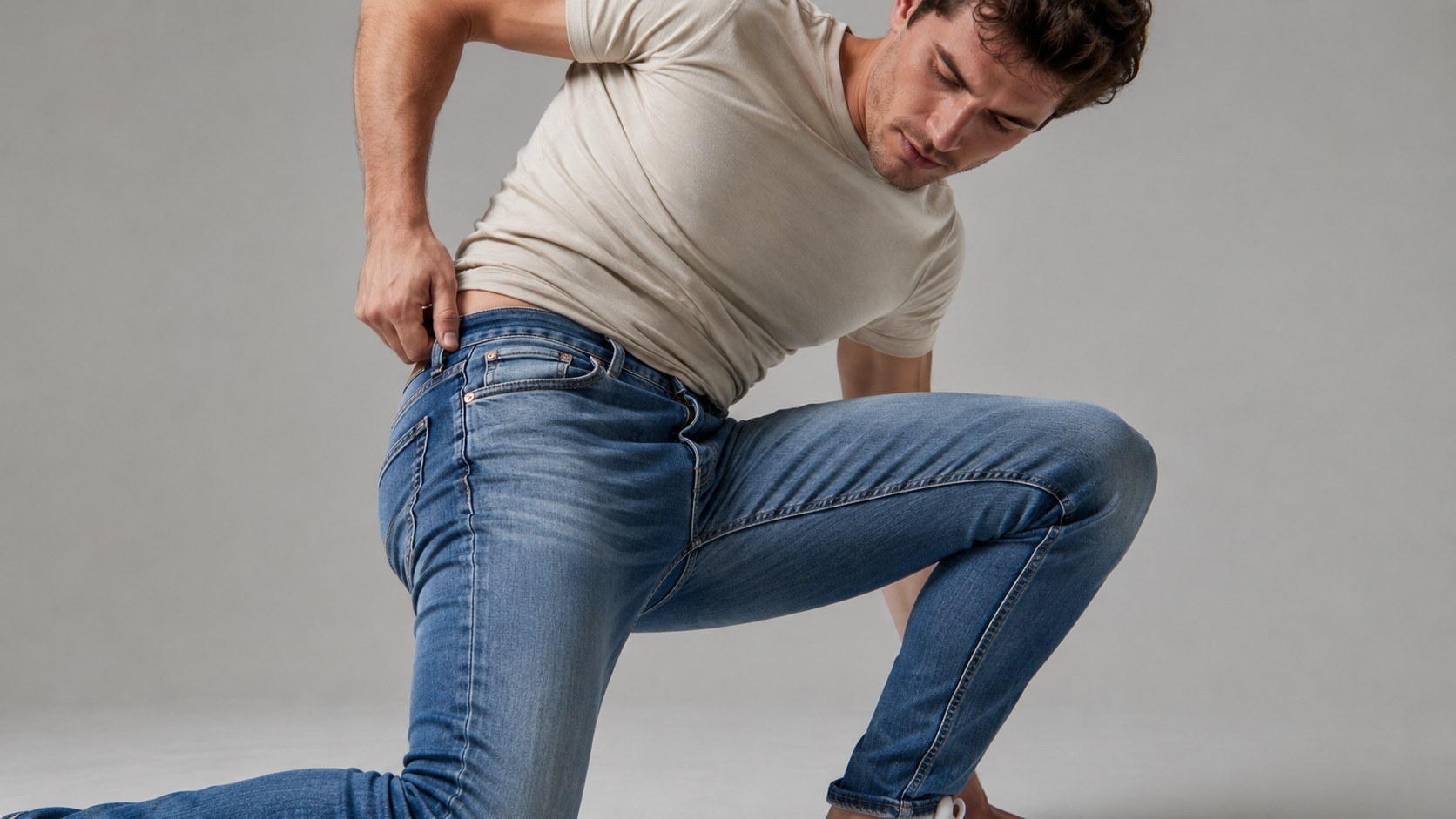
Jeans stretch at the seams because seams sit in high-stress areas where fabric and stitching are repeatedly pulled. Waistbands, crotch seams, inner thighs, side seams, knees, pocket corners, and seat seams stretch most because they move with the body. Normal relaxation is common, but permanent seam distortion often points to poor recovery, wrong fit, weak construction, or harsh care.
Dive Deeper
Seam stretching usually does not happen overnight. A new pair of jeans may feel structured at first, then slowly relax after several wears. Some relaxation is normal, especially in stretch denim. The problem begins when the jeans do not return to shape. That is when the waistband starts to gap, the crotch area looks loose, the side seams twist, or stretch lines become visible.
The waist seam is one of the most common problem areas. If the waistband is not stable enough, it may expand after repeated sitting and standing. If the fabric has stretch but poor recovery, it can loosen and stay loose. This is why a jean can feel perfect in the fitting room but too big after a few days of wear.
Inner thigh and crotch seams face even more pressure. Walking creates friction. Sitting creates horizontal pull. Squatting creates stress through the seat, thigh, and rise. If the jean is too tight in these zones, the seam has to absorb extra tension. If it is too loose, excess fabric can fold and rub, also creating distortion.
Stretch lines on jeans usually appear when fabric is repeatedly pulled beyond its ideal comfort range. Light lines may reduce after gentle washing and proper drying, but permanent fiber distortion may not fully disappear. For brands, this means the better solution is prevention: choose the right fabric, develop the correct pattern, reinforce stress zones, and test the sample on real bodies before bulk production.
How Do Fabric, Stretch, Recovery, and Aging Affect Jeans Stretching?
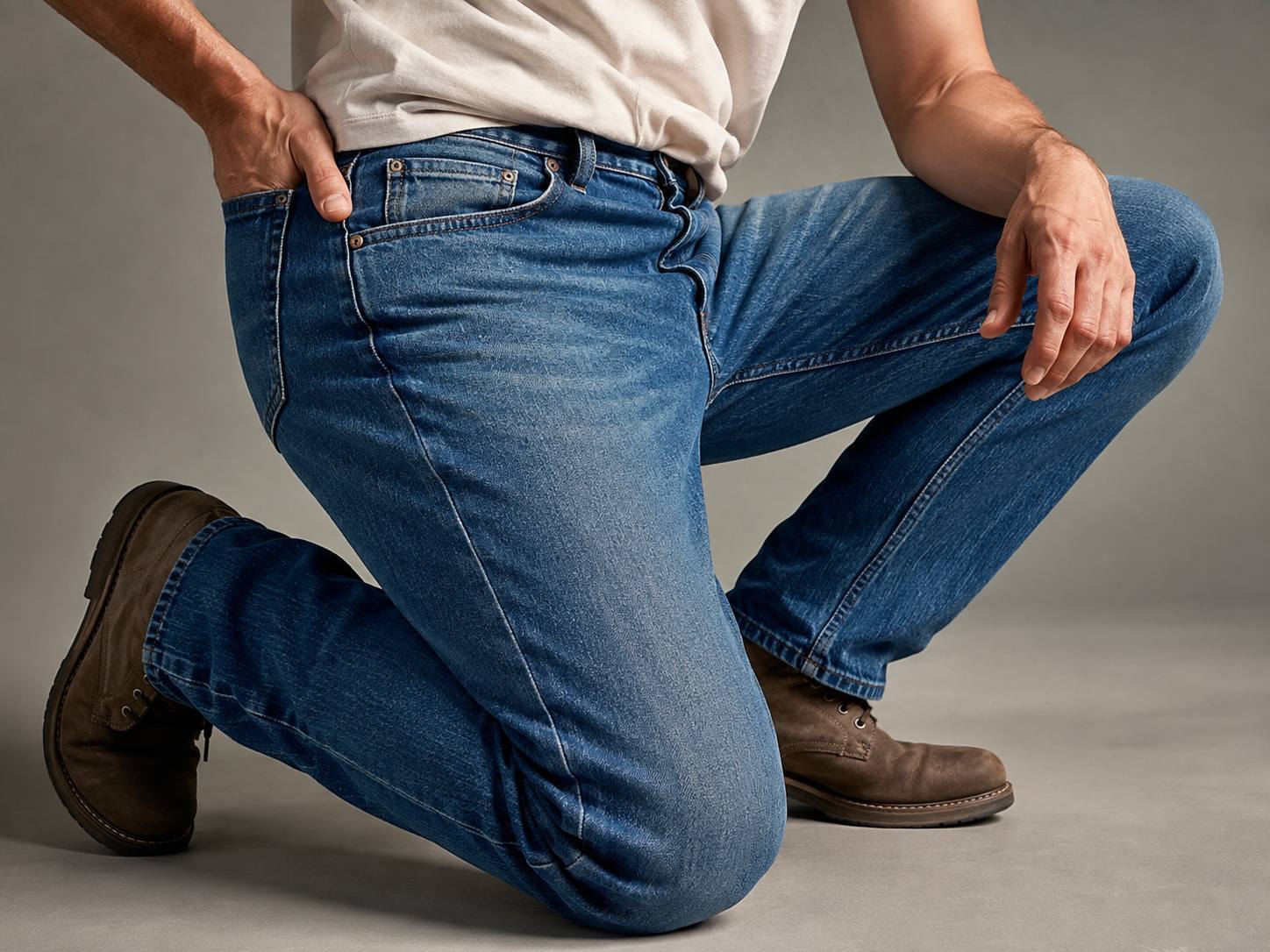
Fabric affects seam stretching because denim does not only stretch—it must also recover. Rigid denim usually keeps structure better, while stretch denim offers comfort but needs strong recovery. New jeans may loosen after wear and tighten slightly after washing. Older jeans often soften and loosen in high-stress areas, especially if stretch fibers weaken.
Dive Deeper
Stretch denim is popular because customers want jeans that move. Skinny jeans, plus size jeans, jogger jeans, and comfort denim often need elastane or similar stretch fibers to feel wearable. The issue is not stretch itself. The issue is low-quality stretch, poor recovery, or a pattern that forces the fabric to work too hard.
Recovery means the ability of fabric to return to its original shape after being stretched. Good recovery helps the waistband stay stable, knees bounce back, and seams remain smooth. Poor recovery creates loose waistbands, sagging seats, baggy knees, and stretched seam lines. This is why two jeans with the same stretch percentage can perform very differently.
Rigid 100% cotton denim usually keeps structure better because it does not depend on elastic fibers. It can be excellent for selvedge jeans, vintage-inspired straight jeans, and premium denim. But rigid denim may feel stiff at first and needs a break-in period. Stretch denim feels comfortable faster, but it must be engineered carefully.
Age also changes denim. New jeans may feel tight at first, then loosen with body heat and movement. Washing may temporarily tighten cotton fibers, but wearing relaxes them again. Over time, jeans usually become softer and looser in high-stress zones. Good denim should age with character, not collapse quickly.
For DiZNEW, fabric selection always depends on the product goal. A skinny jean may need high-recovery stretch. A baggy jean may need structure. A selvedge jean may need rigid cotton. A plus size jean may need both support and comfort. Matching fabric to silhouette is one of the most important steps in custom denim development.
How Do Fit and Pattern Problems Cause Jeans to Stretch at the Seams?
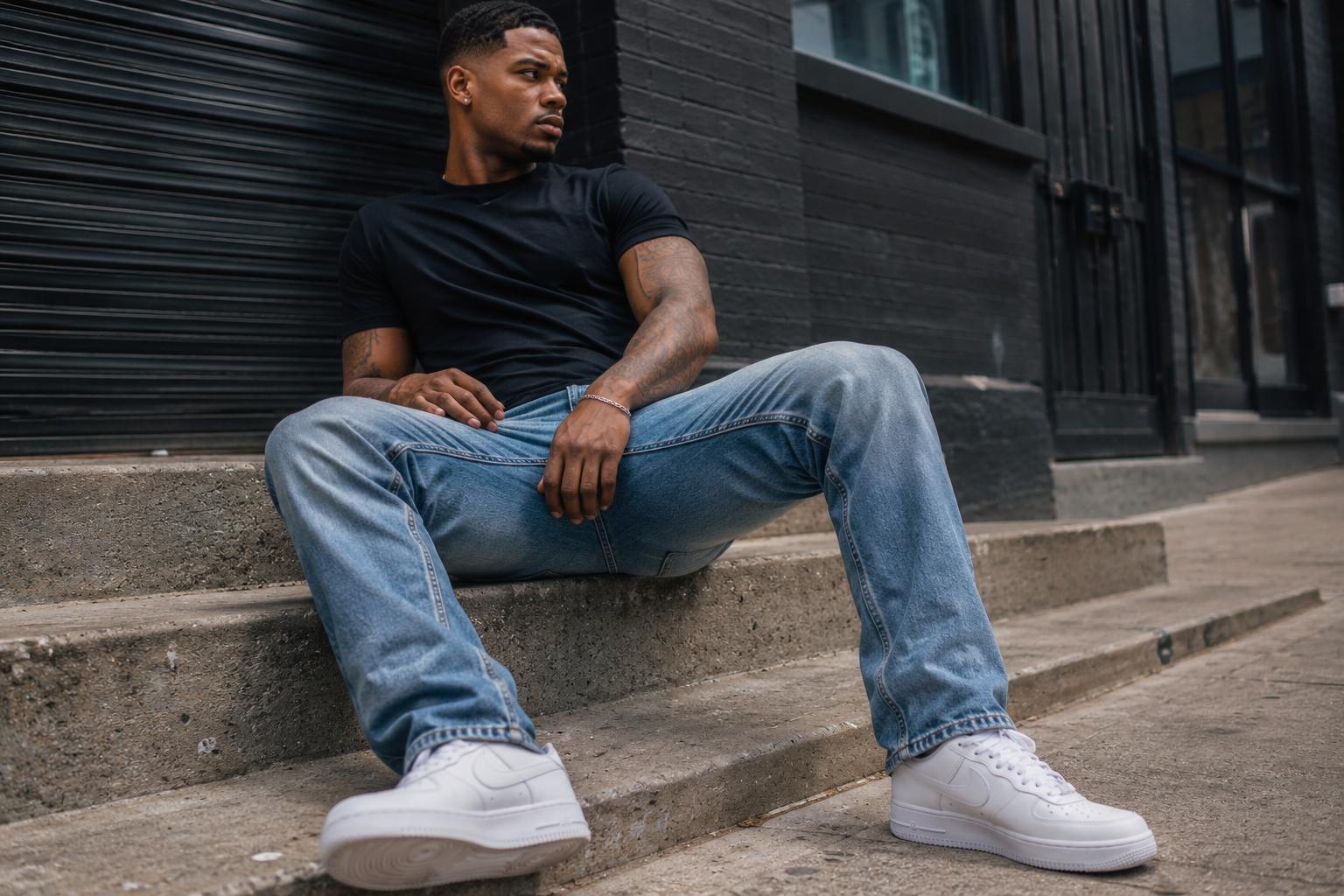
Fit and pattern problems cause seam stretching when the jeans place too much tension or movement in one area. Jeans that are too tight pull seams apart, while jeans that are too loose can fold, rub, and distort. Waist-to-hip ratio, thigh shape, rise, seat curve, knee placement, and inseam all affect how seams behave during wear.
Dive Deeper
Many people blame the fabric when their jeans stretch out, but the fit may be the real problem. If jeans are too tight, the fabric is constantly under pressure. Every movement pulls the seam. This is common in skinny jeans, slim jeans, and jeans that are bought too small because the customer expects them to “stretch out.”
But loose jeans can also stretch at the seams. That sounds strange, but oversized denim needs intentional construction. If baggy jeans are simply made bigger without proper pattern balance, extra fabric can shift, fold, and rub during movement. The seam may not be under tight pressure, but it is still under repeated stress.
Body shape also matters. A customer may fit the waist but have athletic thighs. Another may have a smaller waist and fuller hips. Plus size customers may need more careful grading around the waist, hip, thigh, seat, and crotch. Standard grading cannot solve every body shape because denim fit is three-dimensional.
Better patterns reduce unnecessary pulling. Important areas include rise, hip curve, seat shape, thigh measurement, knee placement, inseam, leg opening, and waistband curve. These details decide whether the jean moves with the body or fights against it.
This is where a specialized denim factory becomes important. DiZNEW can develop patterns from sketches, reference photos, AI images, physical samples, or tech packs. For different products—baggy jeans, stacked jeans, straight jeans, skinny jeans, plus size jeans, selvedge jeans, or jogger jeans—the pattern logic must change. A strong fit reduces seam distortion before it becomes a customer complaint.
How Can I Stop My Jeans From Stretching at the Seams?
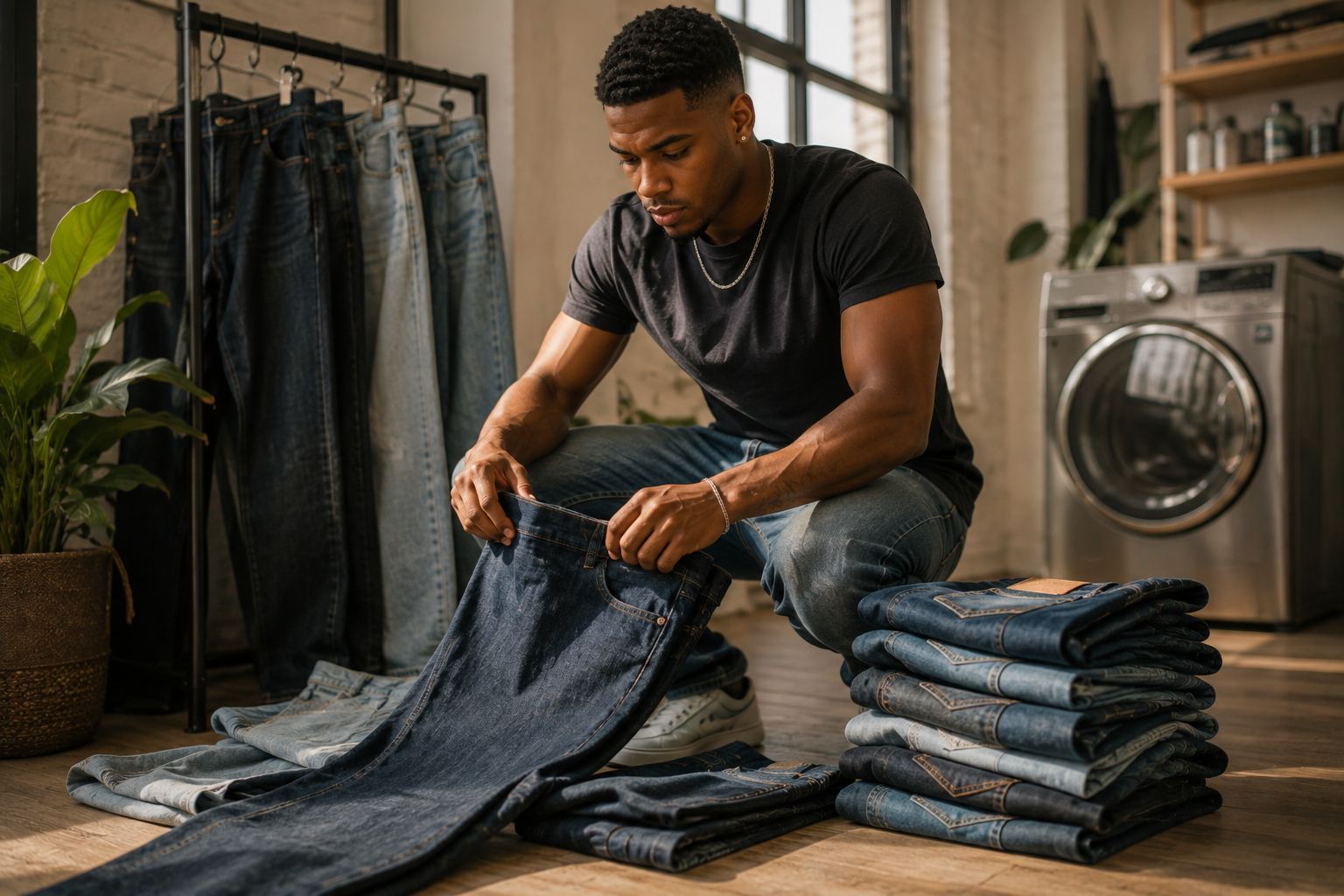
To stop jeans from stretching, choose the correct fit, avoid overstretching tight areas, select denim with better recovery, rotate between pairs, wash gently, avoid high heat drying, and reshape jeans while damp. Tailoring can fix minor fit issues, but it cannot fully repair damaged fabric, weak recovery, or a poor original pattern.
Dive Deeper
The first step is choosing jeans that fit correctly from the beginning. Jeans should feel secure, not painful. If they are extremely tight at the thighs, crotch, hips, or waistband, the seams will likely stretch under pressure. If they are too loose, they may move too much and distort. The best fit depends on the body and the style.
The second step is choosing the right denim. For stretch jeans, look for recovery—not just stretch percentage. A jean with high stretch but poor recovery may feel comfortable at first and then lose shape quickly. For structured denim, rigid cotton or heavier fabric can help, but it must still match the customer’s lifestyle.
Washing care also matters. High heat can affect fabric shape and damage stretch fibers over time. Overwashing can weaken the garment, while rough drying can increase stress. A better routine is simple: wash inside out, use cold water, choose a gentle cycle, avoid high heat, and air dry when possible. Reshaping jeans while damp can also help reduce some visible distortion.
Can tailoring fix stretched seams? Sometimes. A tailor can tighten a waistband, adjust side seams, or reinforce certain areas. But tailoring cannot fully restore fabric that has lost recovery. It also cannot fix a pattern that was wrong from the start. If every pair stretches in the same place, the customer may need a different fit or better fabric.
For brands, customer care content is part of product value. Teaching buyers how to prevent stretching improves satisfaction and reduces returns. But the product itself must still be engineered correctly. Good care cannot save bad construction forever.
How Can Denim Brands Design Jeans That Do Not Stretch Out?
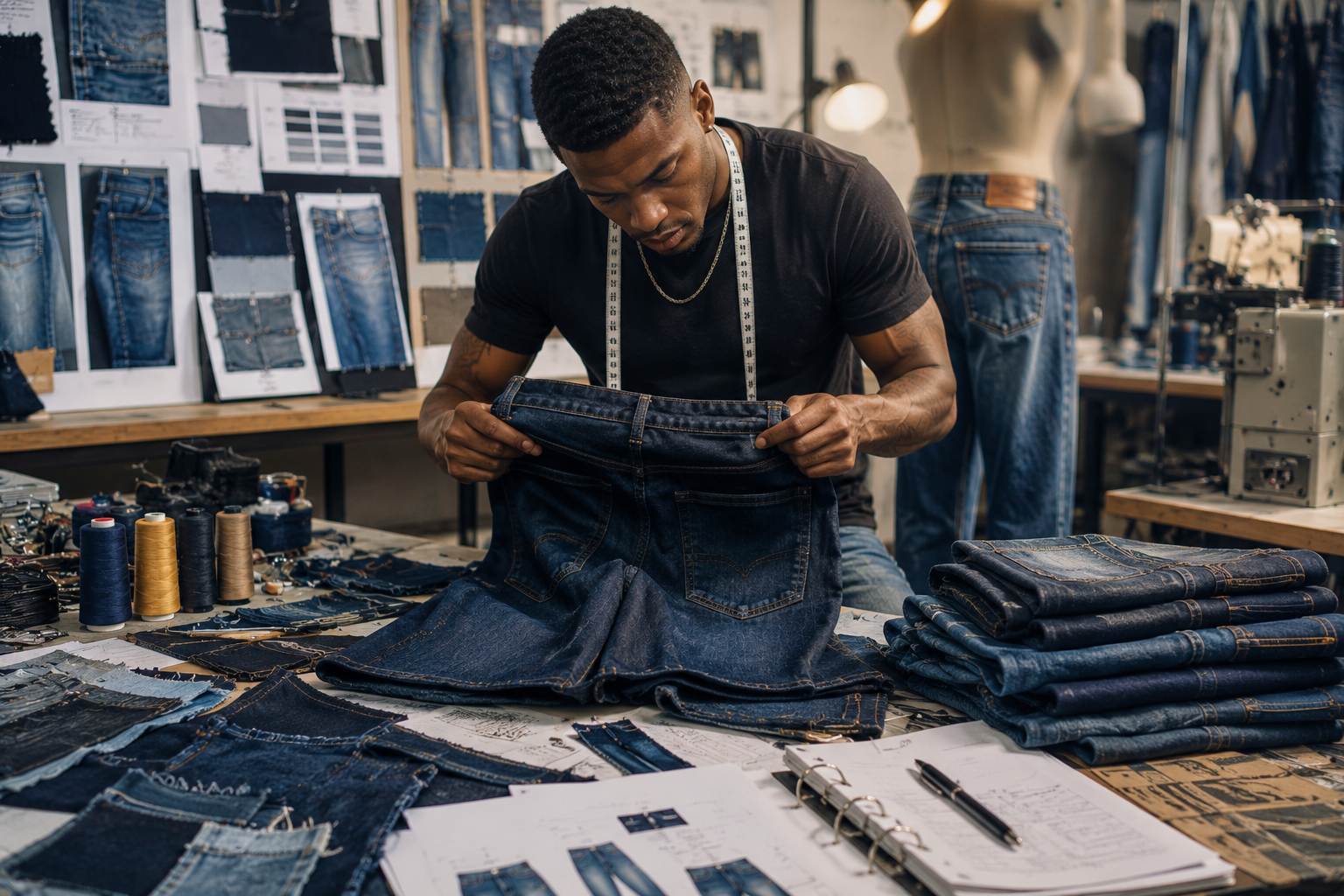
Denim brands can design jeans that hold shape better by testing fabric recovery, seam strength, shrinkage, wash effects, and fit after repeated movement. Strong construction details, correct pattern engineering, stable waistbands, reinforced seams, and fabric matched to the silhouette help reduce seam stretching and improve customer trust.
Dive Deeper
Seam stretching is not just a consumer problem. It is a brand opportunity. When customers complain that their jeans lose shape, they are telling brands what they want: jeans that stay comfortable, hold structure, and look good after repeated wear.
Brands should test more than the first sample photo. They should test how jeans behave after sitting, walking, squatting, bending, washing, and wearing. Samples should be tested on real body types, especially when developing plus size jeans, skinny jeans, baggy jeans, and stacked jeans. Flat measurements are useful, but real movement reveals the truth.
Construction details matter too. Strong bartacks, reinforced crotch seams, stable waistband construction, better thread selection, double stitching, durable pocket construction, proper seam allowance, quality buttons, and secure rivets all contribute to long-term performance. A jean is only as strong as its stress points.
DiZNEW is a China-based denim R&D, manufacturing, and sales factory with more than 20 years of experience. We help brands customize fabric composition, stretch level, recovery performance, fit block, rise, thigh shape, seam reinforcement, wash development, trims, labels, buttons, rivets, leather patches, hang tags, and packaging.
Our product range includes plus size jeans, baggy jeans, stacked jeans, straight jeans, selvedge jeans, skinny jeans, jogger jeans, denim jackets, denim shorts, denim shirts, and more. DiZNEW mainly serves U.S. small and medium buyers, high-end brand clients, denim designers, online boutique owners, and influencer-led stores that need custom or OEM/ODM private label denim.
With MOQ starting from 30 pieces per design and capacity for larger orders up to 10,000 pieces, DiZNEW helps brands test small, improve fit, and scale successful denim products. To create jeans with better shape retention, stronger seams, and deeper customization, contact DiZNEW today to request a quote and start your custom denim project.
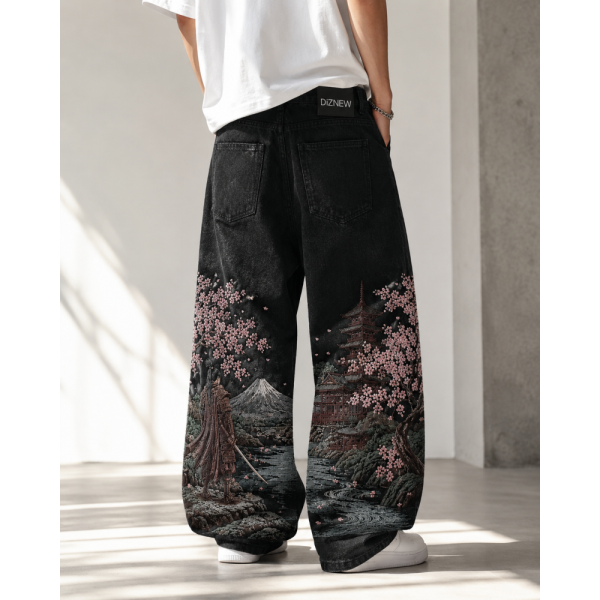
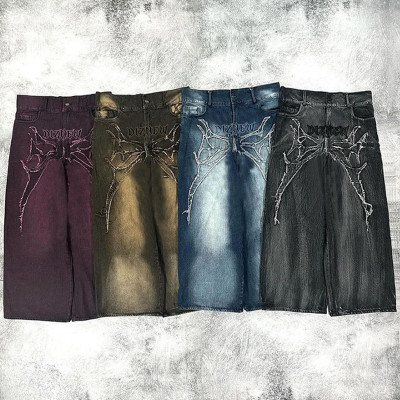
Premium wide-leg denim jeans featuring a vintage washed black finish, detailed Japanese landscape artwork, embroidery-style decoration, and custom brand label options. Designed for streetwear brands, designer labels, and private label collections looking for statement denim with strong visual storytelling.
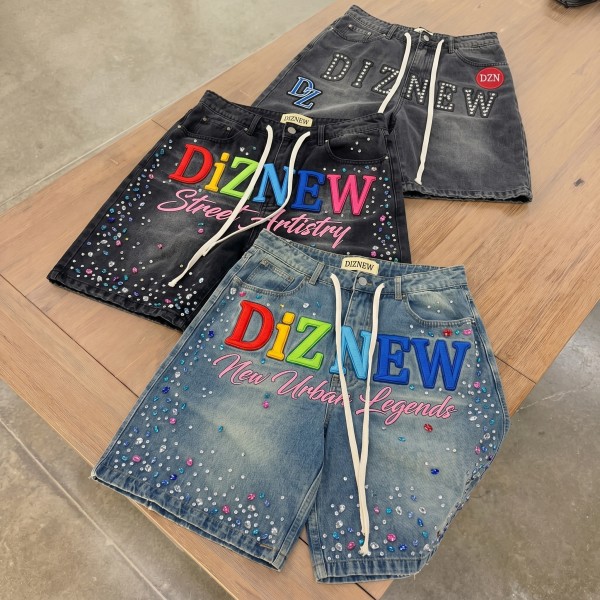
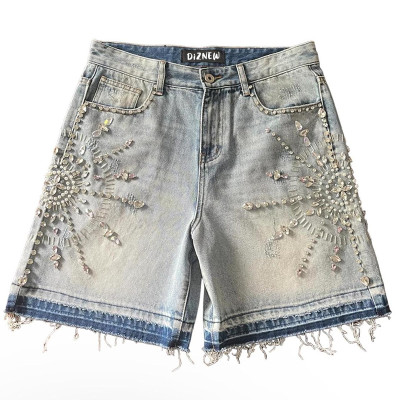
Custom Rhinestone Logo Denim Shorts: Wholesale supply direct. We manufacture premium embroidered baggy jean shorts for brands.
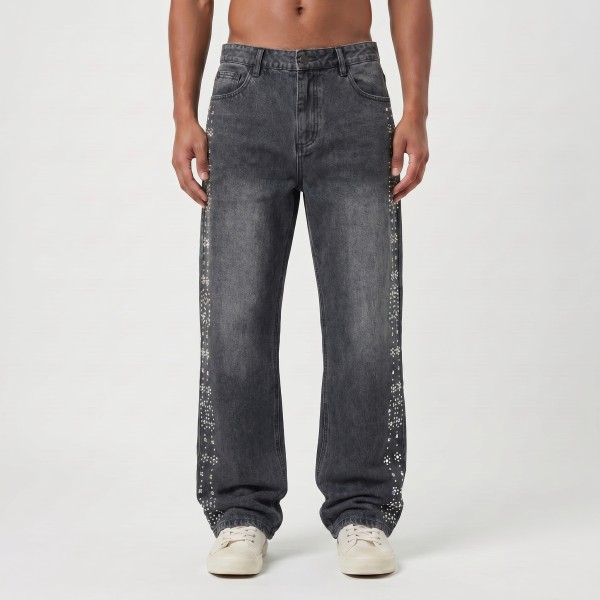
Discover premium DiZNEW denim jeans with decorative studs for a sparkling, stylish look. Order today!
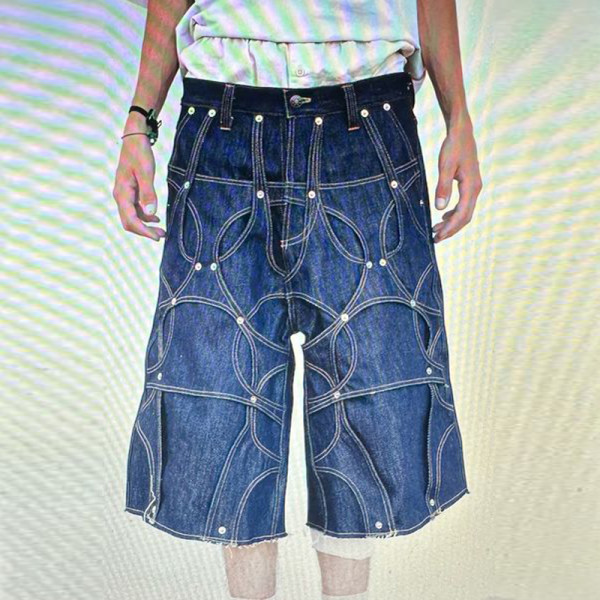
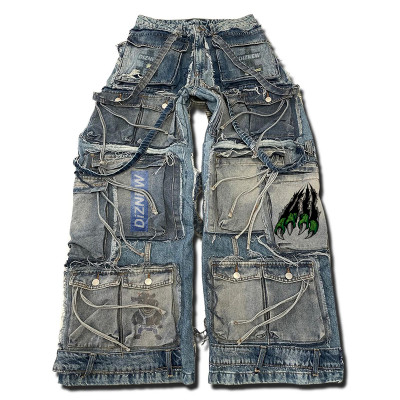
These designer denim shorts for men feature intricate decorative stitching and rivet details, perfect for streetwear fashion. The wide-leg silhouette adds a bold look, ideal for trendsetters.