why do all my jeans wrinkle
Wrinkled jeans are confusing because denim is supposed to look relaxed, but not messy. A few creases behind the knees can look natural. Soft whiskers near the hips can give jeans character. But when every pair wrinkles badly at the crotch, bunches at the ankles, ripples after washing, or looks twisted even after ironing, the problem is usually deeper than “you forgot to fold them.” Jeans wrinkle because denim is a woven fabric that reacts to body movement, moisture, heat, tension, fabric recovery, fit, and construction. In other words, the wrinkle is often a message from the garment.
Jeans wrinkle because denim bends with the body, absorbs water during washing, reacts to heat during drying, and forms creases where fabric is pulled, folded, or compressed. Common causes include poor fit, wrong inseam, tight thighs, loose fabric, weak stretch recovery, uneven shrinkage, high dryer heat, and poor pattern engineering. Better fit, proper washing, air drying, steaming, and stronger denim development can reduce wrinkles.
For shoppers, wrinkled jeans are a styling problem. For denim brands, they are a product-development signal. When customers ask, “Why do all my jeans wrinkle?” they are really asking for cleaner fit, better fabric, smarter wash control, and jeans that look good after real daily wear.
Why Do All My Jeans Wrinkle When I Wear Them?
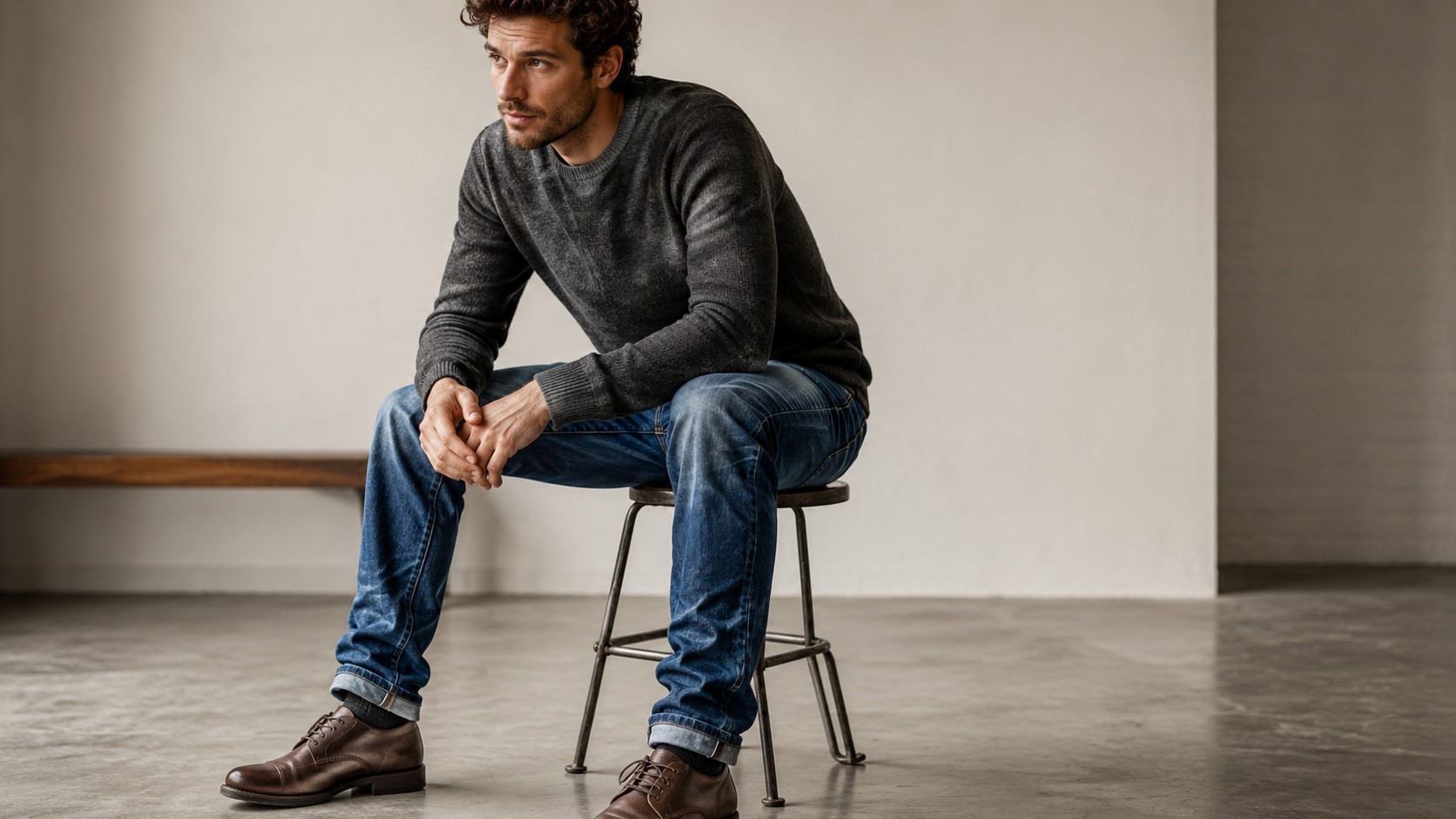
Jeans wrinkle when fabric bends, folds, and compresses with body movement. Normal creases appear at the knees, hips, crotch, thighs, seat, and ankles. Excessive wrinkles may come from tight fit, loose fabric, wrong rise, poor stretch recovery, bad pattern balance, or fabric that cannot return to shape after sitting, walking, or washing.
| Wrinkle Type | Usually Normal? | What It May Mean |
| Light knee creases | Yes | Natural bending from walking and sitting |
| Soft hip whiskers | Yes | Normal denim folding and fading |
No | Rise, crotch curve, or thigh-fit issue | |
Permanent ripples | No | Poor recovery, heat damage, or uneven shrinkage |
Ankle bunching | Sometimes | Inseam too long or intentional stacking |
No | Pattern, cutting, wash, or sewing issue |
Behind-the-knee creases are common in denim culture. Heddels describes honeycombs as fade patterns that form behind the knees, while Denimhunters explains they develop as denim is repeatedly scrunched with friction during wear.
Dive Deeper
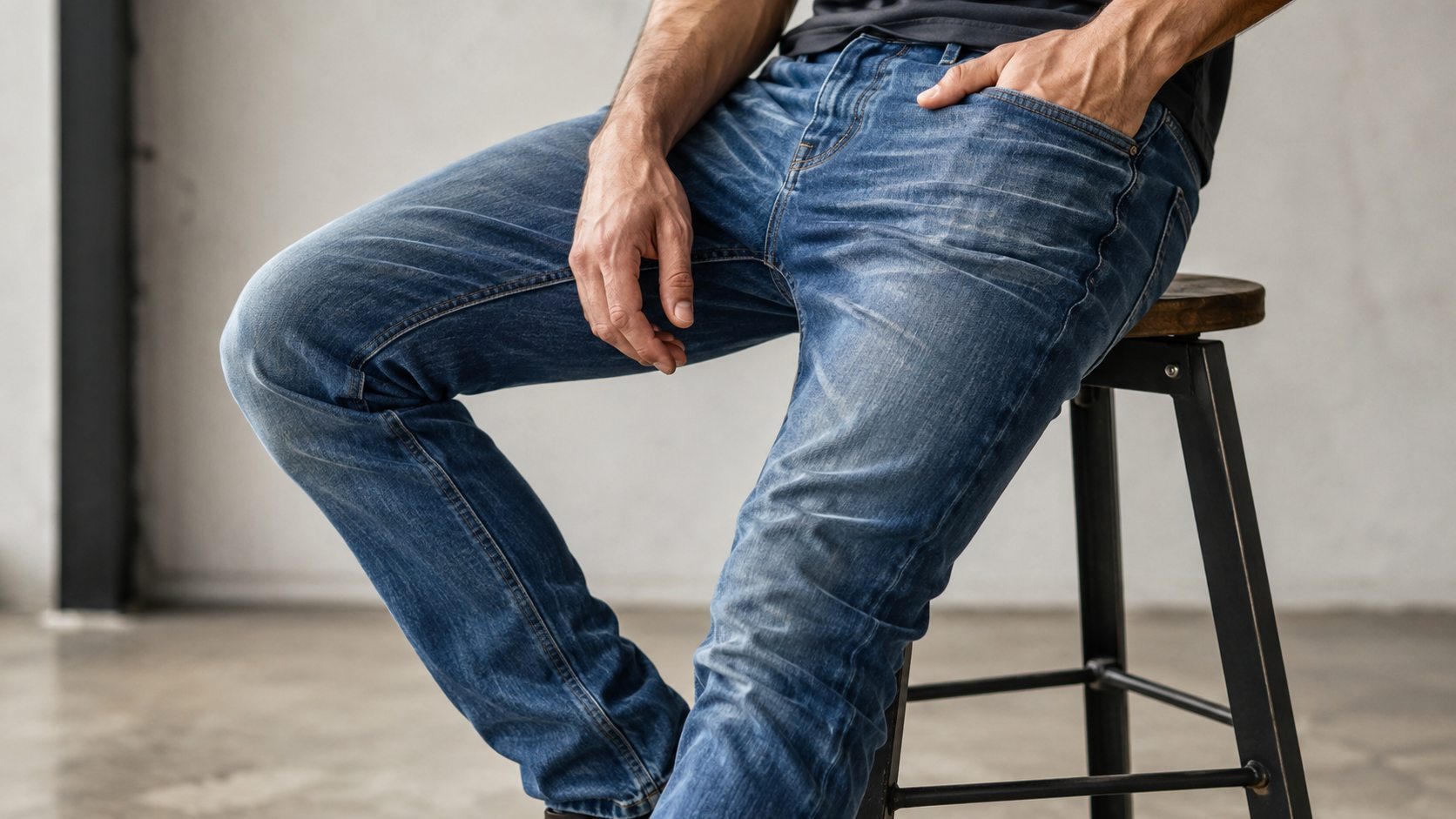
Some wrinkles are part of denim’s personality. A perfectly smooth jean often looks unnatural because denim is not a flat plastic surface; it is a woven cotton-based fabric designed to move. When you sit, the hip and crotch area fold. When you walk, the back of the knees compress. When you wear boots or sneakers, extra fabric may stack at the ankle. These creases are not automatically quality problems.
The issue starts when wrinkles become excessive, permanent, or visually messy. For example, sharp horizontal lines across the crotch often mean the rise is too short, the thigh is too tight, or the crotch curve does not match the body. Diagonal pull lines near the front rise may show tension. Big folds under the seat may mean too much fabric in the wrong place. Baggy knees may point to weak recovery or poor fabric selection.
Wrinkles also depend on the jean style. Skinny jeans show tension lines more easily because the fabric sits close to the body. Baggy jeans wrinkle differently because extra fabric folds and collapses. Stacked jeans intentionally create ankle folds, but those folds should look designed, not random. Plus size jeans require careful grading because the waist, hip, thigh, seat, and rise must work together.
For brands, wrinkles are useful feedback. They show where the garment and the body disagree. A wrinkle is not only a visual defect; it is often a map of fit pressure, fabric collapse, or pattern imbalance. That is why professional denim development should include real-body fitting, movement testing, and post-wash review before bulk production.
How Do Fit, Size, and Body Shape Cause Jeans to Wrinkle?
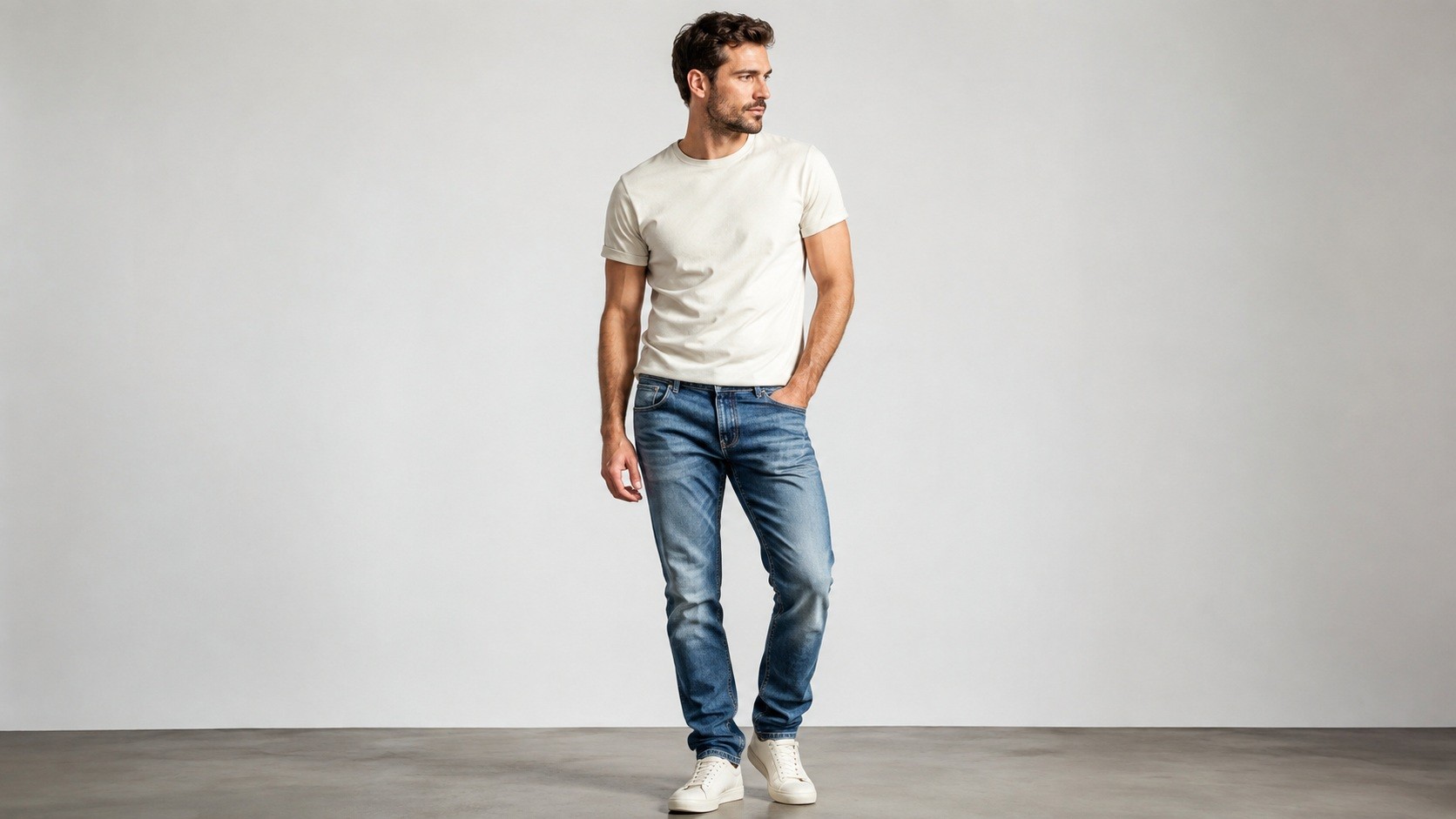
Fit, size, and body shape cause wrinkles when denim is either pulled too tightly or left with too much uncontrolled fabric. Tight jeans create tension wrinkles across the crotch, hips, thighs, and knees. Loose jeans create folding, bunching, and ankle stacking. Height, posture, hip shape, thigh size, and inseam length all affect wrinkle placement.
Fit Problems That Create Wrinkles
| Fit Problem | Common Wrinkle Result |
| Too tight at thighs | Diagonal pull lines and side seam stress |
| Too tight at crotch | Horizontal crotch wrinkles |
Too loose at seat | Folds under the back pocket area |
Inseam too long | Ankle bunching or messy stacking |
Knee placement wrong | Wrinkles above or below the knee |
| Poor plus-size grading | Pulling at waist, hip, thigh, or seat |
Dive Deeper
A common mistake is assuming wrinkles mean the jeans are too big. Sometimes they are. But tight jeans can wrinkle just as much as loose jeans. When jeans are too tight, the fabric is pulled beyond its comfortable range. This creates sharp tension lines, especially at the crotch, thigh, hip, and knee. The wearer may think the jeans “fit” because the waistband closes, but the fabric is telling a different story.
Loose jeans create another type of wrinkle. Extra fabric can collapse around the knees, seat, thighs, and ankles. This is especially common when a baggy jean is made by simply adding width without proper pattern balance. Good baggy jeans need intentional structure: correct rise, thigh shape, knee placement, inseam, leg opening, and fabric weight. Otherwise, the jean looks wrinkled instead of styled.
Ankle wrinkles usually come from inseam and leg opening. If the inseam is too long, fabric stacks on the shoe. In streetwear, stacking can be a design feature. In everyday straight jeans, it may look messy. The difference depends on whether the stack is intentional, balanced, and matched to the shoe and silhouette.
Body shape is also important. Athletic thighs, curvy hips, shorter legs, fuller seats, slim calves, and plus size proportions all change how fabric folds. Standard size charts cannot solve every wrinkle issue because denim fit is three-dimensional. A jean may fit the waist but wrinkle badly at the thighs. Another may fit the thighs but fold under the seat.
For DiZNEW’s custom denim work, this is why fit development matters. Whether the customer wants plus size jeans, baggy jeans, stacked jeans, straight jeans, skinny jeans, selvedge jeans, or jogger jeans, the pattern must be built for the intended body, market, and styling purpose.
How Do Fabric, Stretch, Denim Weight, and Ripples Affect Wrinkles?
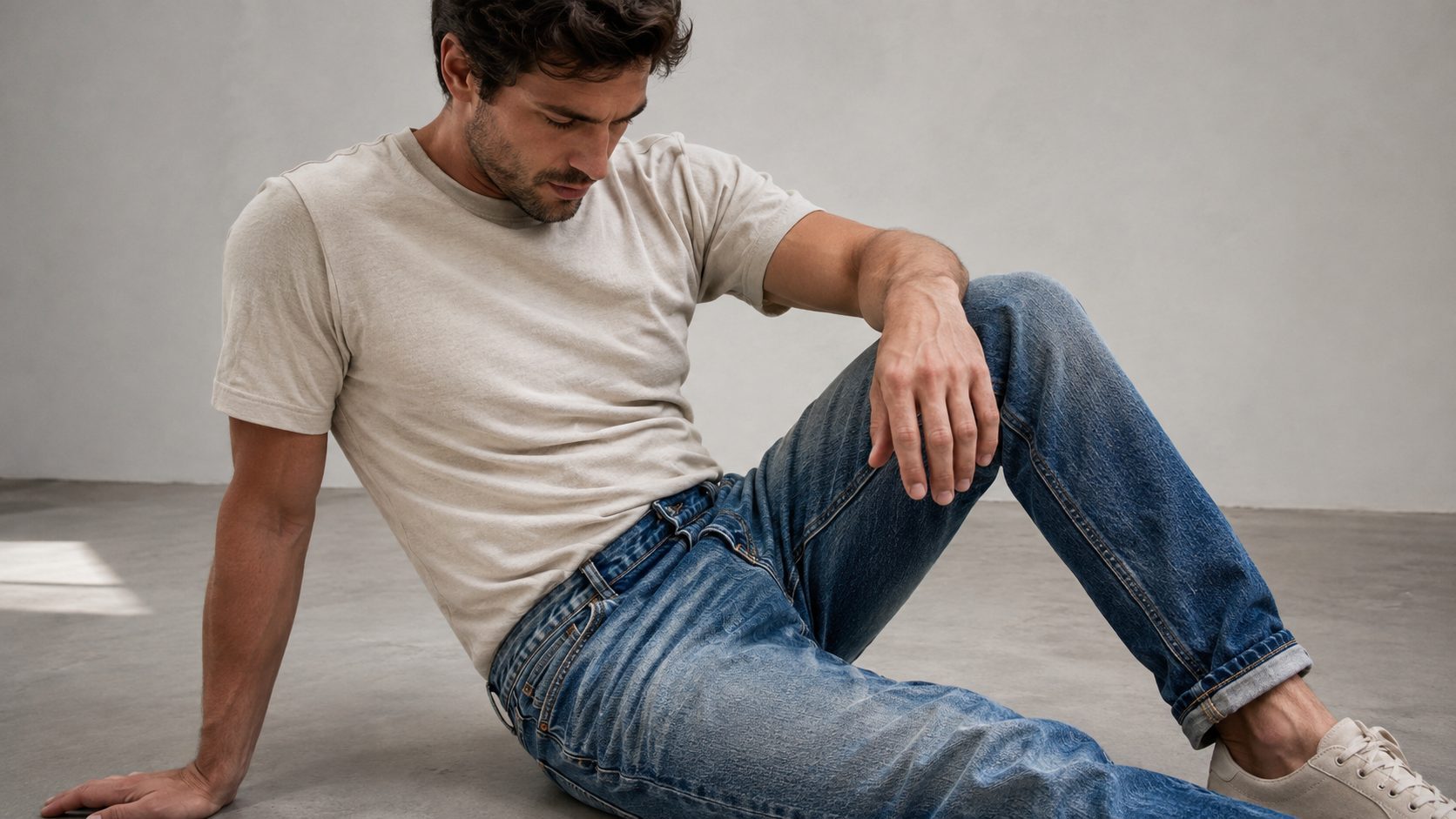
Fabric affects wrinkles because different denim types fold, recover, and age differently. Rigid cotton denim forms stronger natural creases, while stretch denim may ripple if recovery is weak. Lightweight denim can collapse more easily, while heavyweight denim creates sharper folds. Ripples often come from poor recovery, heat damage, uneven shrinkage, or fabric distortion.
Denim Type and Wrinkle Behavior
| Denim Type | Wrinkle Behavior | Best For |
| Rigid 100% Cotton | Strong natural creases | Selvedge, straight, vintage jeans |
| Comfort Stretch | Softer wrinkles, easier movement | Everyday jeans |
| High-Recovery Stretch | Better shape retention | Skinny, slim, plus size jeans |
Heavyweight Denim | Sharp structure, less collapse | Premium and streetwear jeans |
Lightweight Denim | Comfortable but folds easily | Summer jeans, shirts, shorts |
No denim is completely wrinkle-free. The goal is controlled wrinkling: creases that look natural, not distorted.
How to get rid of ripples in jeans?
Ripples in jeans may improve with light steaming, gentle washing, reshaping while damp, and air drying. However, permanent ripples from damaged stretch fibers, uneven shrinkage, poor fabric recovery, or heat distortion may not fully disappear. Prevention is better than correction: choose better recovery denim, avoid high heat, and use patterns that do not overstress the fabric.
Dive Deeper
Fabric recovery is one of the biggest reasons some jeans wrinkle cleanly while others look tired after a few wears. Recovery means the fabric’s ability to return to its original shape after being stretched or bent. Poor recovery creates baggy knees, wavy seams, loose thighs, and ripples around high-movement zones.
Stretch denim is not bad. In fact, it is essential for many customers who want comfort, mobility, plus size fit, skinny jeans, or jogger jeans. The problem is low-quality stretch or poor fabric-to-fit matching. If a stretch jean is too tight, the fabric is constantly pulled. If the recovery is weak, it stays stretched and starts to ripple.
Rigid cotton denim behaves differently. It can form strong creases, especially at the knees and hips, but those creases can become part of the jean’s character. Raw and selvedge denim often develops whiskers and honeycombs through repeated wear. That is not the same as uncontrolled rippling. One is natural aging; the other may be fabric or fit failure.
Denim weight also matters. Lightweight denim feels comfortable but can fold easily, especially in wide or loose silhouettes. Heavy denim holds shape better but may create sharper creases. Medium-weight denim often balances comfort and structure for everyday jeans.
For brands, the fabric must match the style. A baggy streetwear jean may need structure. A skinny jean needs stretch recovery. A denim shirt needs softer lightweight fabric. A selvedge jean needs authentic rigid character. DiZNEW can help brands choose fabric weight, composition, stretch level, wash effect, and construction based on the target customer instead of using one denim for every product.
How Do Washing, Drying, and Care Mistakes Make Jeans Wrinkle?
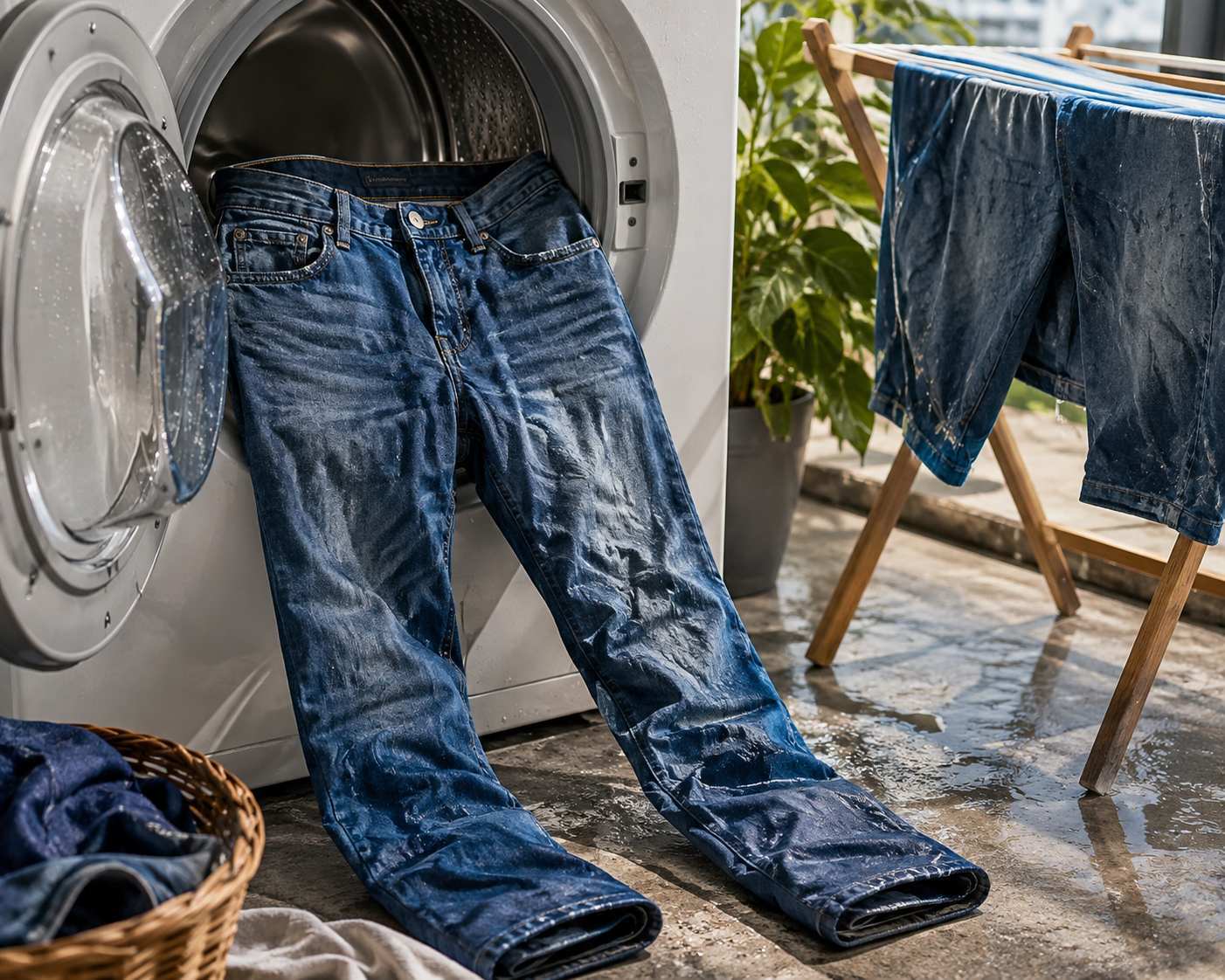
Jeans often wrinkle after washing because water, agitation, spinning, overcrowding, uneven drying, and heat change how cotton fibers relax and settle. High dryer heat and tumbling can set wrinkles, shrink fabric, or damage stretch recovery. To reduce wrinkles, wash inside out with cold water, use gentle cycles, avoid overcrowding, reshape while damp, and air dry when possible.
Why are my jeans always wrinkled after washing?
Jeans wrinkle after washing when fabric is twisted, compressed, spun too aggressively, dried unevenly, or exposed to high heat. A 2026 study on plain woven cotton fabrics found that load mass, rotation speed, rotating frequency, drying temperature, and moisture content are key factors affecting wrinkling during washer-dryer cycles.
How to unwrinkle your jeans fast?
Fast methods include light steaming, hanging jeans in a steamy bathroom, misting with water and smoothing by hand, or using a low-heat iron if the care label allows. Quick fixes work best on surface wrinkles. They may not fix permanent ripples caused by damaged stretch fibers, uneven shrinkage, or poor recovery.
Dive Deeper
Washing can make jeans look worse if the care process is too aggressive. Overcrowding the machine prevents jeans from moving properly, so they twist and crease. High spin speed compresses fabric. High dryer heat can set wrinkles and may affect stretch fibers over time. If jeans are pulled from the dryer late and left in a pile, the wrinkles become even harder to remove.
Levi’s customer-service guidance recommends washing denim inside out with cold water and hanging or laying it flat to air dry. Levi’s Canadian guidance also recommends turning new denim inside out, using cold water, selecting a gentle cycle, and air drying. These care steps are simple, but they matter because denim responds strongly to moisture, heat, and friction.
To stop jeans from wrinkling, customers should also think before washing. Do the jeans really need a full wash, or do they only need spot cleaning and airing out? Are they being dried with heavy towels that crush the fabric? Are they being folded while still damp? Small care mistakes can create big appearance problems.
For brands, care instructions should not be an afterthought. A good product page can explain how to wash, dry, steam, store, and reshape jeans. This reduces complaints and makes the brand feel more professional. However, care advice cannot fully compensate for poor fabric or bad fit. The jean must be engineered well before the customer ever washes it.
How Can Denim Brands Design Jeans That Wrinkle Less and Fit Better?
Brands can design jeans that wrinkle less by testing fabric recovery, shrinkage, wash effect, seam twisting, knee wrinkles, crotch wrinkles, inseam behavior, and post-wash measurements before bulk production. Better pattern development, stable construction, high-recovery denim, controlled washing, correct grading, and real-body fit testing help jeans keep a cleaner look.
Dive Deeper
Wrinkles are not always bad, but uncontrolled wrinkles hurt product value. A customer may forgive natural creases, but they notice messy ripples, strange bunching, twisted seams, or jeans that look old after one wash. For online boutique owners and influencer-led stores, this matters because product photos, customer reviews, and return rates can make or break a denim drop.
Better pattern development is the first solution. Rise, crotch curve, seat shape, thigh room, knee placement, inseam, leg opening, and waistband curve all influence wrinkling. If these areas are wrong, no amount of ironing will make the jean look truly clean.
Construction details also matter. Stable waistbands, proper seam allowance, strong thread, balanced side seams, correct pocket placement, controlled washing, high-recovery stretch fabric, reinforced stress zones, and proper finishing before shipment all help jeans look better for longer.
DiZNEW is a China-based denim R&D, manufacturing, and sales factory with more than 20 years of experience. We help U.S. small and medium buyers, high-end brand clients, denim designers, online boutique owners, and influencer-led shops create custom denim products under their own logo.
DiZNEW can customize fabric, weight, stretch level, recovery, fit block, rise, thigh room, crotch curve, wash, inseam, leg opening, trims, labels, buttons, rivets, leather patches, hang tags, and packaging. Our product range includes plus size jeans, baggy jeans, stacked jeans, straight jeans, selvedge jeans, skinny jeans, jogger jeans, denim jackets, denim shorts, denim shirts, and more.
With MOQ starting from 30 pieces per design and capacity for larger orders up to 10,000 pieces, DiZNEW helps brands test small, improve fit, and scale successful denim products. To create wrinkle-controlled custom jeans with better fit, cleaner construction, and stronger customer appeal, contact DiZNEW today to request a quote and start your custom denim project.
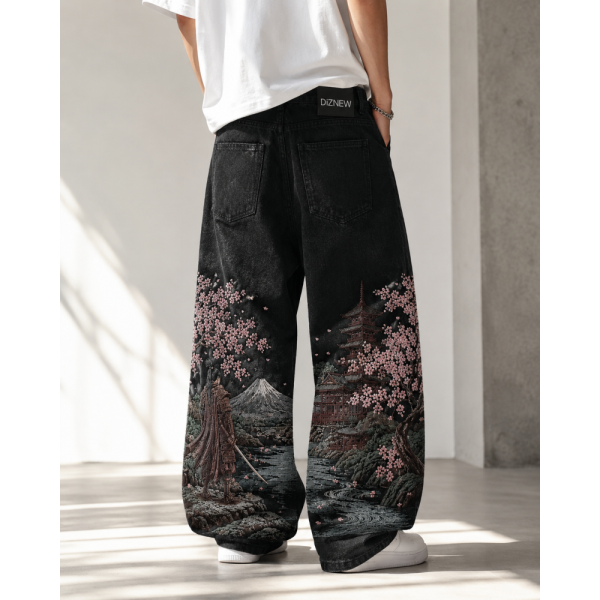
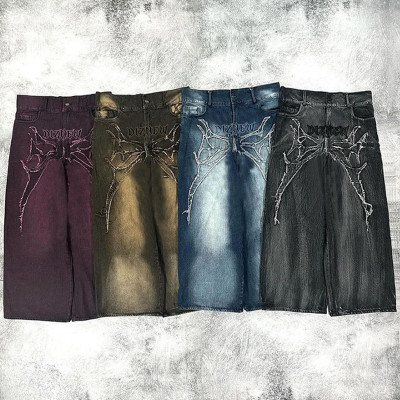
Premium wide-leg denim jeans featuring a vintage washed black finish, detailed Japanese landscape artwork, embroidery-style decoration, and custom brand label options. Designed for streetwear brands, designer labels, and private label collections looking for statement denim with strong visual storytelling.
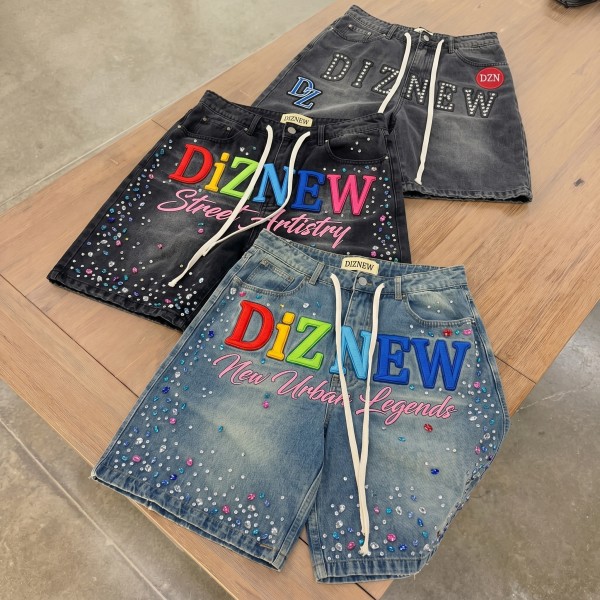
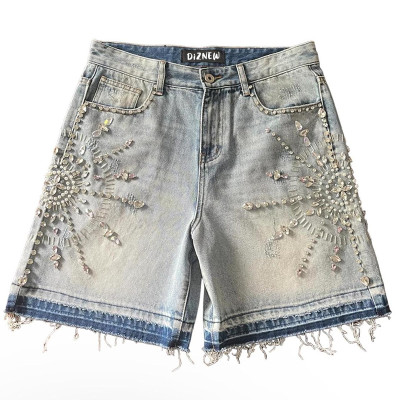
Custom Rhinestone Logo Denim Shorts: Wholesale supply direct. We manufacture premium embroidered baggy jean shorts for brands.
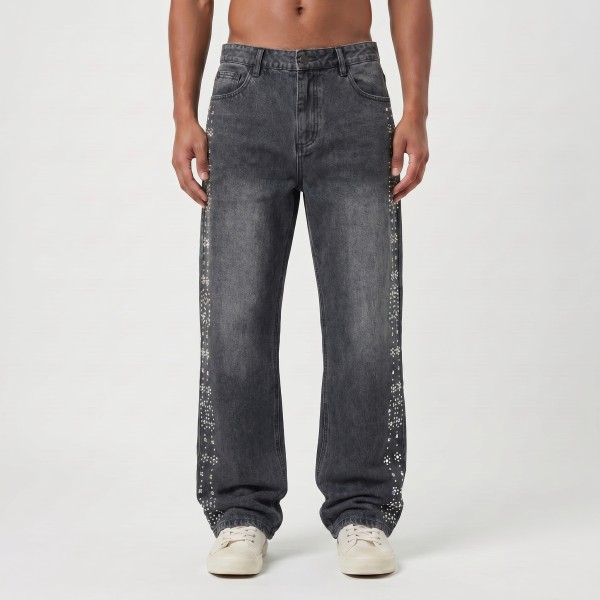
Discover premium DiZNEW denim jeans with decorative studs for a sparkling, stylish look. Order today!
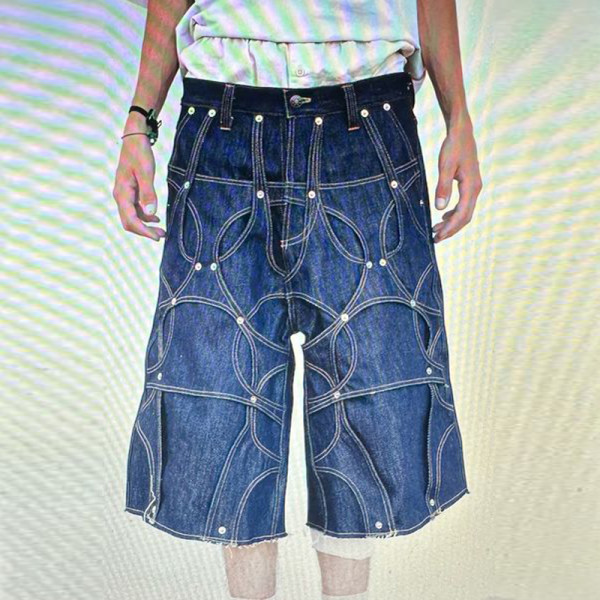
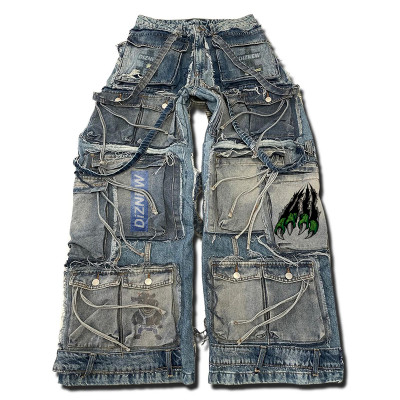
These designer denim shorts for men feature intricate decorative stitching and rivet details, perfect for streetwear fashion. The wide-leg silhouette adds a bold look, ideal for trendsetters.