why did my jeans ripped
Nothing is more frustrating than finding a sudden hole in your favorite jeans. Yesterday they looked fine. Today, the inner thigh is thinning, the crotch seam is splitting, or the knee tears when you sit down. Many shoppers immediately blame the brand, the price, or the fabric, but ripped jeans are not always caused by one simple problem. Jeans are high-stress garments. They move with the body, rub between the thighs, stretch when you sit, twist when you walk, and weaken when washed too harshly. That means a tear often starts long before the hole becomes visible.
Jeans usually rip because of friction, tight fit, weak fabric, poor stretch recovery, repeated washing, or stress in high-movement areas such as the crotch, inner thighs, knees, pockets, and seams. A sudden rip often comes from hidden thinning that has built up over time. Better fit, stronger denim, reinforcement, proper washing, and early repair can help jeans last longer.
For consumers, ripped jeans are annoying. For denim brands, they are a warning sign. When customers search “why did my jeans rip?” they are really asking for better fabric, better fit, stronger seams, and jeans that survive real life. This is where professional denim development matters.
Why Did My Jeans Rip So Easily?
Jeans rip easily when fabric strength, fit, friction, and movement are not balanced. The most common causes are inner-thigh rubbing, tight crotch tension, weak stretch recovery, poor seam reinforcement, overwashing, and high-stress areas wearing thin. A tear may look sudden, but it usually starts as gradual fiber damage before the fabric finally breaks.
Dive Deeper
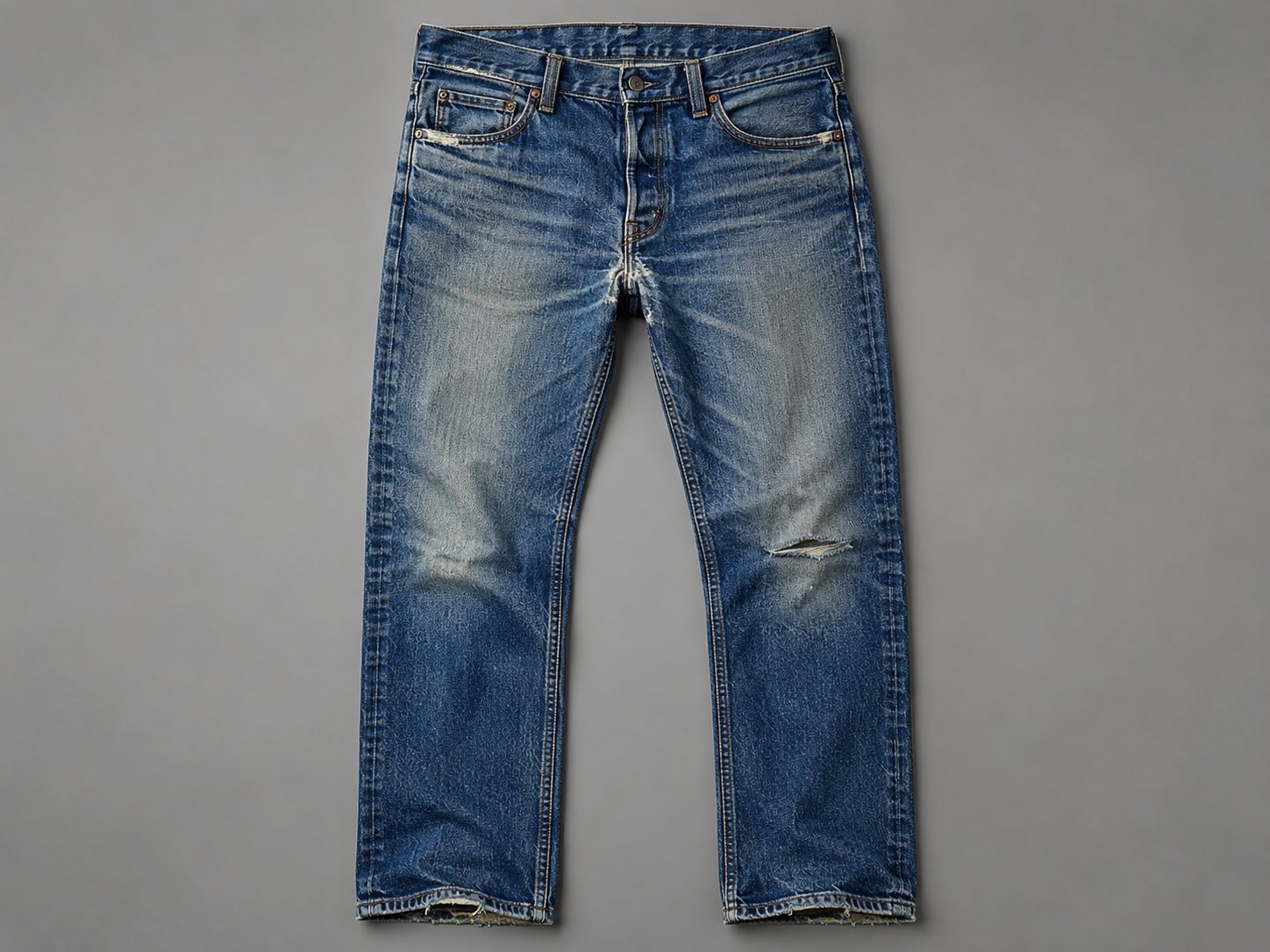
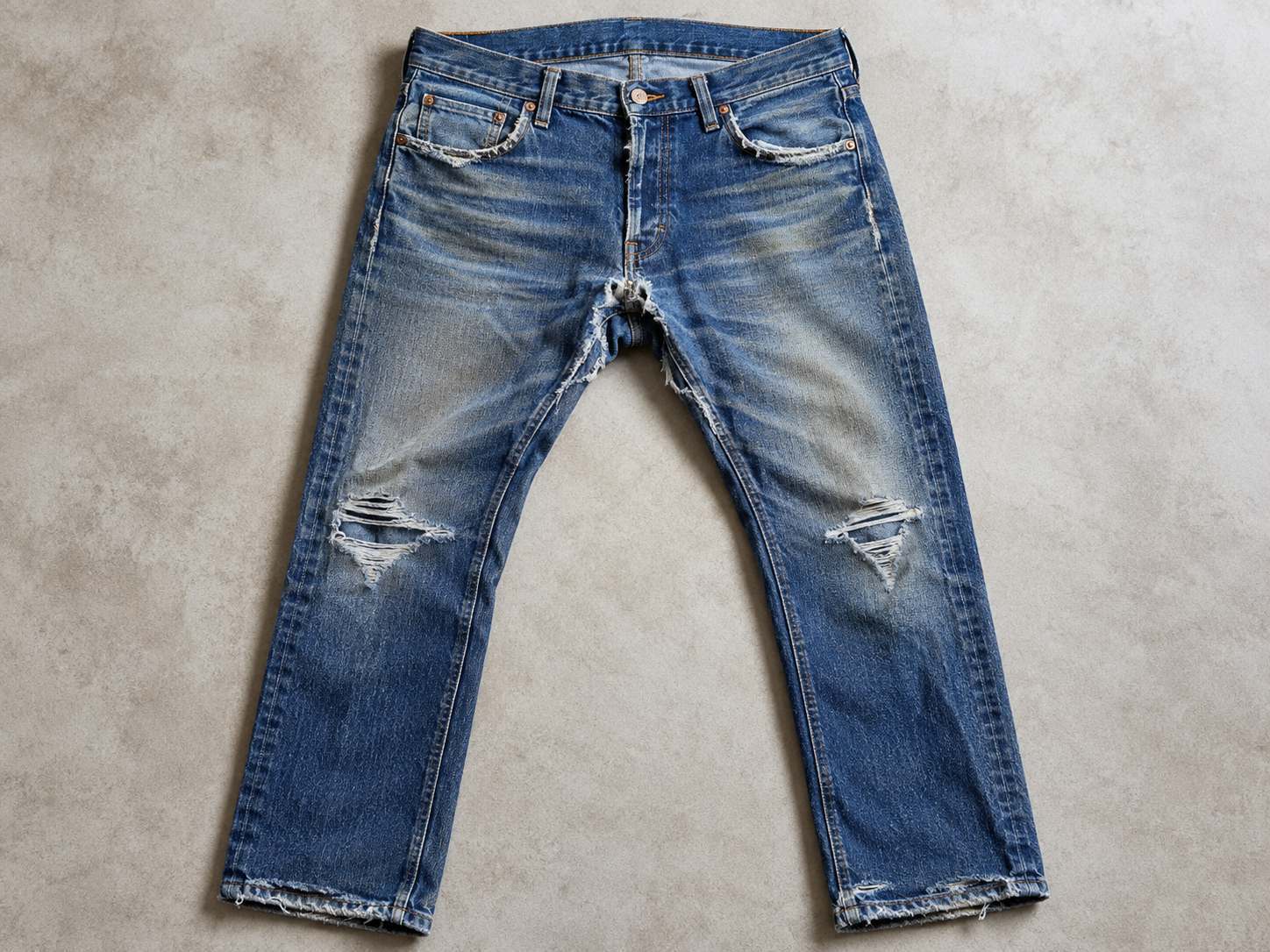
A rip usually feels sudden because the final tear happens in one moment: you sit, squat, get into a car, bend down, or pull the jeans on too quickly. But the fabric was often already damaged. Before a hole appears, denim may show warning signs such as shiny worn spots, thinning inner thighs, loose white threads, weakened pocket corners, stretched crotch seams, or baggy knees.
The crotch and inner thigh are the most common problem areas because they combine friction and movement. Every step rubs fabric against fabric. Sitting pulls the crotch seam. Squatting adds tension to the seat, thigh, and back rise. If the jean is tight, that pressure increases. If the fabric is weak, the fibers break faster. If the stretch does not recover well, the garment loses structure and stress collects in one spot.
This is why a rip is not always a simple “cheap jeans” issue. Even expensive jeans can rip if the fit is wrong. If the thigh is too tight, the rise is too low, or the crotch curve does not match the body, the fabric may be forced to absorb too much stress. On the other hand, low-quality denim can rip even when the fit is decent because the yarn, weave, stretch recovery, or finishing is weak.
For denim brands, this is a product-development lesson. Jeans must be tested in motion, not only measured flat on a table. A sample may look correct when standing, but fail when the wearer sits, walks, cycles, squats, or wears it all day. DiZNEW helps brands identify these risks before bulk production by adjusting fabric, rise, thigh room, crotch shape, seams, and reinforcement details.
How Do Fit, Body Shape, and Movement Cause Jeans to Rip?
Fit, body shape, and movement cause jeans to rip when tension and friction concentrate in one area. Inner-thigh tears often come from rubbing, while crotch rips often come from tight rise, limited thigh room, low-sitting jeans, or repeated sitting and bending. If the same area always rips, the wearer may need a different fit, not just a different size.
Dive Deeper
People often feel embarrassed when jeans rip between the thighs, but it is one of the most normal denim wear problems. Inner-thigh friction happens across many body types: plus size bodies, muscular thighs, athletic builds, close-set thighs, and active lifestyles. The issue is mechanical. Fabric rubs, fibers weaken, and eventually the denim breaks.
The same logic applies when jeans rip while sitting or squatting. Standing fit is not enough. A jean needs enough rise, seat room, thigh room, and crotch balance to move with the body. If the jean only fits in a mirror pose, it may fail in real life. This is especially true for skinny jeans, slim jeans, low-rise jeans, and stretch jeans with poor recovery.
Plus size jeans need even more careful pattern work. Simply enlarging a smaller pattern does not solve the problem. The waist, hip, thigh, seat, crotch curve, back rise, and waistband all need proper grading. Without that, the jean may pull in one area and gap in another, creating stress points that wear out early.
Brands should also understand that different jean styles need different engineering. Skinny jeans need stretch recovery and controlled tension. Baggy jeans need enough structure so loose fabric does not collapse or rub badly. Stacked jeans need longer inseams but still require crotch and thigh balance. Selvedge jeans need strong structure and proper break-in expectations.
This is why DiZNEW does not treat denim as a basic pant. As a custom denim factory, DiZNEW can adjust the pattern for different products: plus size jeans, baggy jeans, stacked jeans, straight jeans, skinny jeans, selvedge jeans, jogger jeans, denim shorts, and more. Better fit means less stress on the fabric and fewer customer complaints about ripping.
How Do Fabric, Stretch, Washing, Care, and Wear Life Affect Denim Durability?
Denim durability depends on fabric weight, yarn quality, weave density, stretch recovery, shrinkage control, washing method, wear frequency, and seam construction. Stretch denim is not automatically weak, but poor recovery can cause sagging and stress. Overwashing, high heat, and rough drying can weaken fibers, while proper care helps jeans last longer before ripping.
How long should jeans last before ripping?
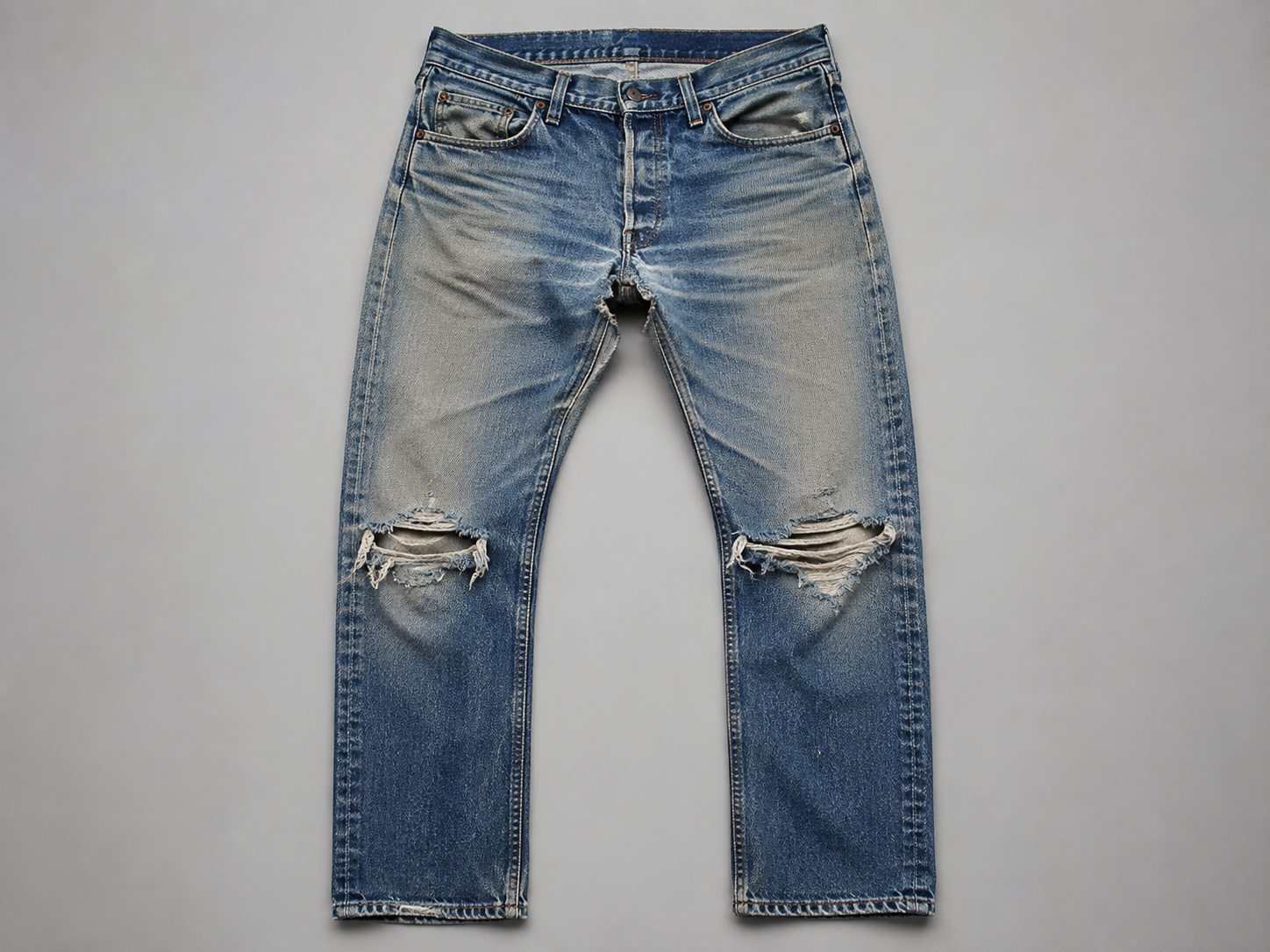
There is no single number for every pair. Jeans worn daily will wear out faster than jeans worn once a week. High-friction areas such as the crotch, inner thighs, knees, pockets, and belt loops often fail first. A good pair of jeans should not rip after only a few normal wears, but even high-quality denim can eventually wear thin under constant friction.
Dive Deeper
A common misunderstanding is that thicker denim always lasts longer. Sometimes it does, but thickness alone is not enough. A heavy denim with poor yarn quality or bad fit can still fail. A lighter denim with strong construction and the right fit may perform better for certain customers. The best fabric depends on the product: workwear jeans need durability, skinny jeans need recovery, plus size jeans need comfort and strength, and selvedge jeans need structure and long-term character.
Stretch denim is also misunderstood. Stretch is not bad. In fact, it can improve comfort and movement. The problem is low-quality stretch that expands but does not recover. When fabric grows too much, the knees bag out, the seat sags, and the crotch area receives more stress. For skinny jeans and plus size comfort denim, high-recovery stretch is critical.
Washing care also matters. Too much washing, rough cycles, high heat, and aggressive drying can shorten denim life. But never washing jeans is not always ideal either. Dirt and grit can increase abrasion, especially in high-friction areas. The best care is balanced: wash when needed, turn jeans inside out, use cold water, avoid harsh heat, and air dry when possible.
For brands, durability must be designed before production. Fabric testing, shrinkage testing, recovery testing, seam strength, and post-wash measurement control all matter. DiZNEW helps buyers select denim based on target use, whether that is lightweight denim shorts, durable baggy jeans, stretch skinny jeans, premium selvedge jeans, or custom washed denim products.
How Can You Stop Jeans From Ripping or Repair Them?
To stop jeans from ripping, choose jeans with enough thigh, seat, and crotch room, avoid overly tight fits, rotate between pairs, wash gently, air dry, and repair thinning areas early. Ripped jeans can often be fixed with patching, darning, machine stitching, iron-on patches, or professional tailoring, especially before the surrounding fabric becomes too weak.
How can you fix ripped jeans?
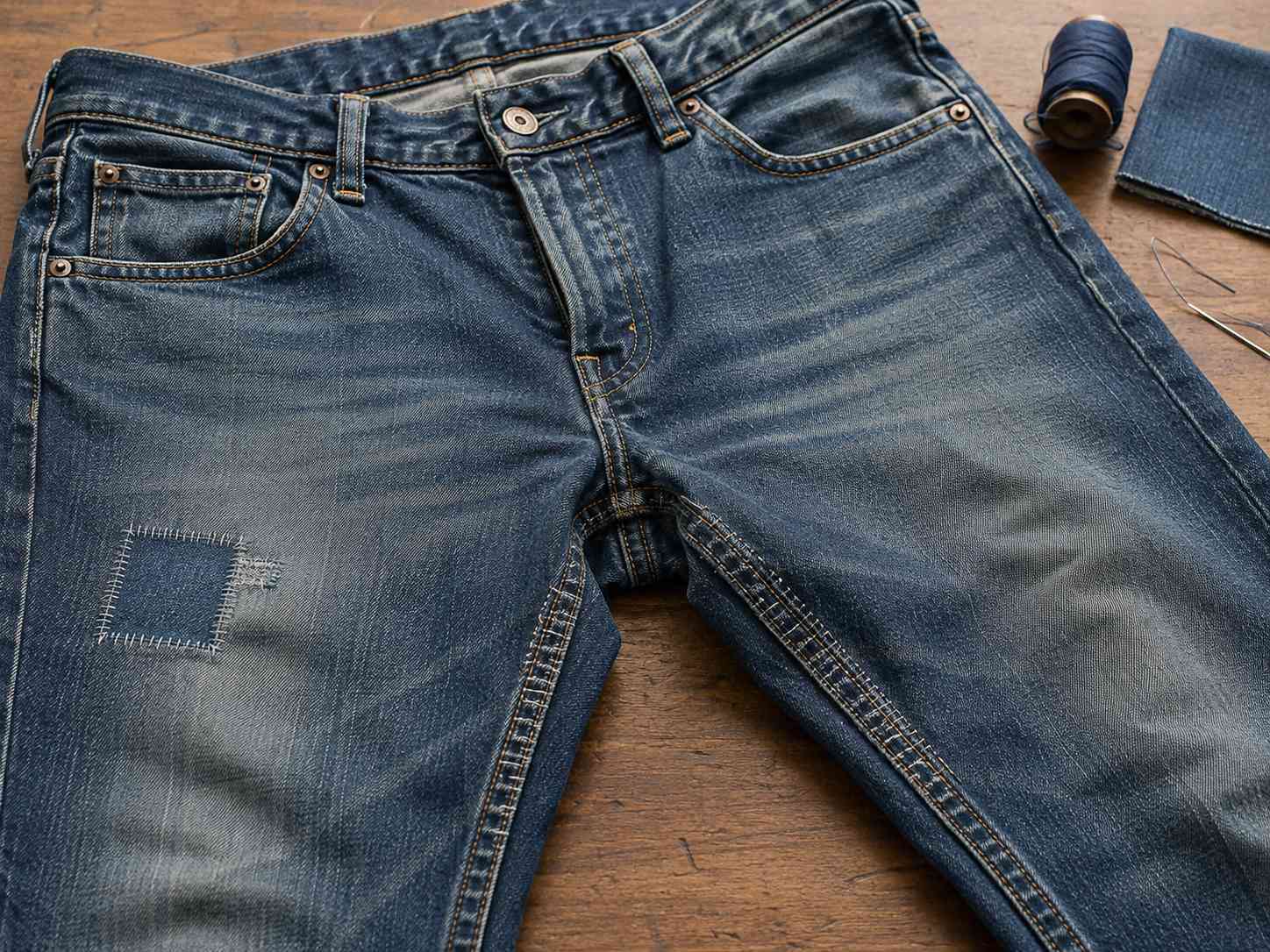
Small rips can often be repaired with hand stitching, machine darning, iron-on patches, or an inside denim patch. Inner-thigh and crotch rips usually need reinforcement from the inside because surface stitching alone may tear again. A tailor can repair many rips, but if the surrounding fabric is very weak or the fit keeps causing friction, replacement may be smarter.
Dive Deeper
The best time to fix ripped jeans is before they become fully ripped. Once denim starts thinning, the fabric is asking for reinforcement. If a customer waits until a large hole forms, the repair becomes more visible, more difficult, and less durable.
For inner-thigh tears, the strongest repair usually involves backing the weak area from the inside and stitching across the damaged zone. For visible fashion repair, contrast stitching, sashiko-style stitching, or patchwork can become a design feature. For invisible repair, color-matched thread and careful darning are better. For premium jeans or favorite pairs, a professional tailor or denim repair shop may be worth it.
However, repair does not solve the root cause if the fit is wrong. If every pair rips in the same place, the customer may need more thigh room, a different rise, stronger fabric, or better recovery. Buying thicker jeans may help, but not if the jeans are still too tight or poorly balanced.
For brands, this creates an opportunity to educate customers. Product pages and blog content can explain how to stop jeans from ripping, how to care for denim, and how to choose the right fit. This builds trust because customers feel the brand understands real wear problems.
DiZNEW can also help brands design jeans that reduce the need for early repair. Options include stronger inner-thigh construction, reinforced crotch seams, durable pocket bags, high-recovery stretch, better bartacks, improved belt loops, and fabric selection based on actual use. For workwear or heavy-use jeans, reinforcement can be built into the design from the beginning.
How Can Denim Brands Design Jeans That Do Not Rip Too Soon?
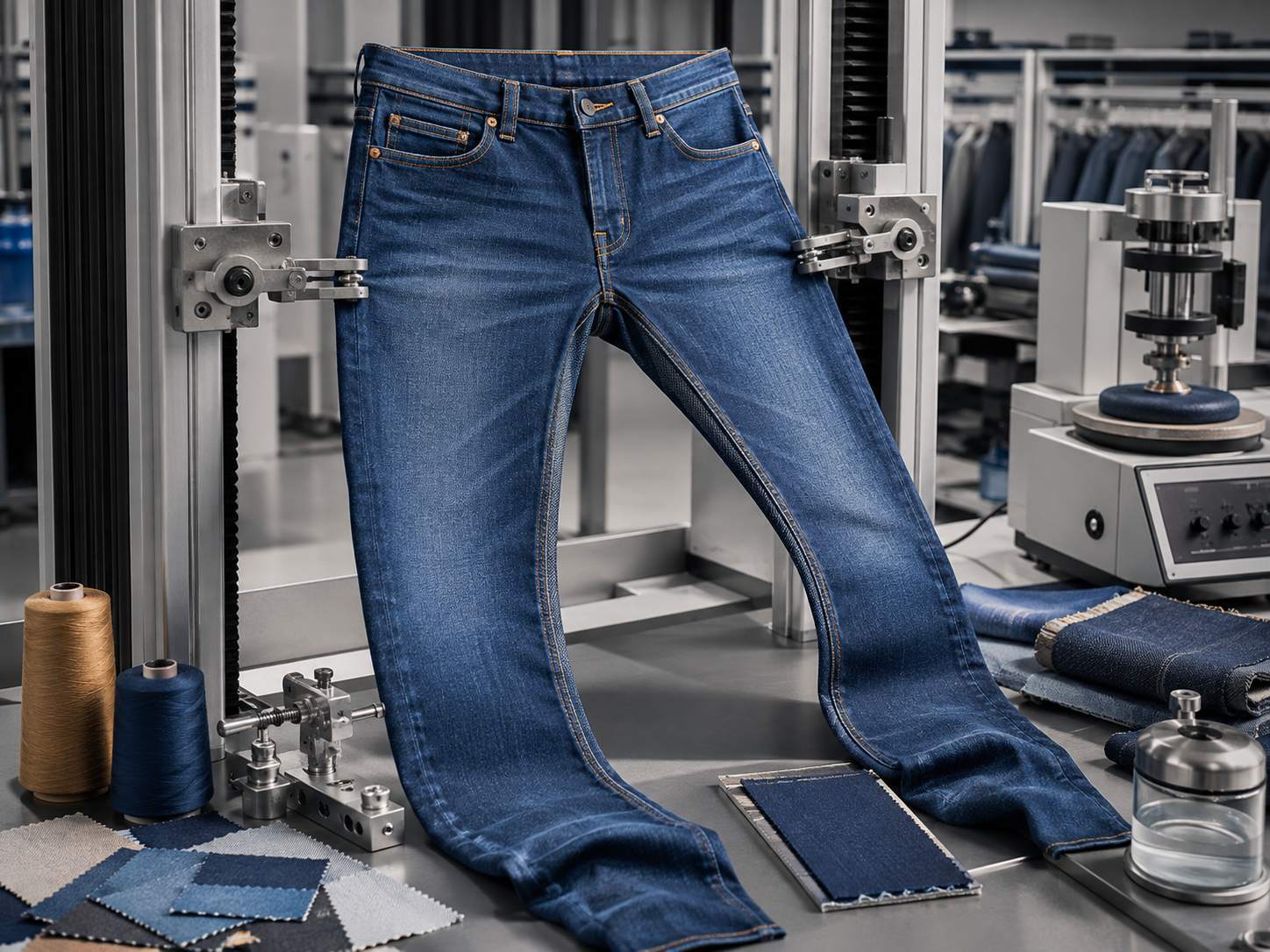
Denim brands can reduce early ripping by testing fabric strength, stretch recovery, shrinkage, seam strength, crotch stress, inner-thigh friction, and long-wear movement before bulk production. Better pattern development, stronger construction, proper fabric selection, reinforced stress points, and clear care instructions help jeans last longer and improve customer satisfaction.
What construction details make jeans more durable?
Durable jeans often include reinforced crotch seams, strong bartacks, secure rivets, durable pocket bags, strong belt loops, double stitching, chain stitching, stable zipper attachment, clean seam allowance, and reinforced inner-thigh options for heavy-use designs.
Dive Deeper
The phrase “my jeans ripped” is not just a complaint. It is market research. Customers are telling brands exactly what they fear: wasting money on jeans that do not last. This is especially important for U.S. boutique owners, online stores, denim designers, and influencer brands because product reviews can quickly affect trust.
A strong denim brand should not only focus on style photos. It should also focus on fabric performance and real movement. Does the jean hold up when sitting? Does the crotch seam stay stable? Does the inner thigh wear too quickly? Does the stretch recover? Does the wash weaken the fabric? Does the waistband stay balanced?
Pattern development is equally important. A skinny jean, baggy jean, stacked jean, plus size jean, and selvedge jean should not share the same logic. Each fit creates different stress points. Brands that understand this can reduce returns, improve reviews, and position their jeans as better-made products.
DiZNEW is a China-based denim R&D, manufacturing, and sales factory with more than 20 years of experience. We help U.S. small and medium buyers, high-end brand clients, denim designers, online boutique owners, and influencer-led stores create custom denim products under their own logo.
DiZNEW can customize plus size jeans, baggy jeans, stacked jeans, straight jeans, selvedge jeans, skinny jeans, jogger jeans, denim jackets, denim shorts, denim shirts, and more. Our OEM/ODM services support custom fabric, wash, fit, crotch shape, thigh room, seam reinforcement, labels, buttons, rivets, leather patches, hang tags, packaging, and private label production.
With MOQ starting from 30 pieces per design and capacity for larger orders up to 10,000 pieces, DiZNEW helps brands test, improve, and scale custom denim. To create jeans that fit better, rip less, and earn stronger customer trust, contact DiZNEW today to request a quote and start your custom denim project.
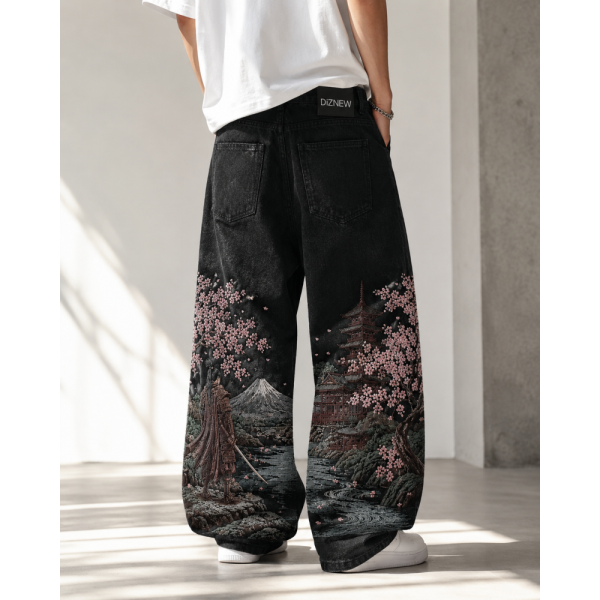
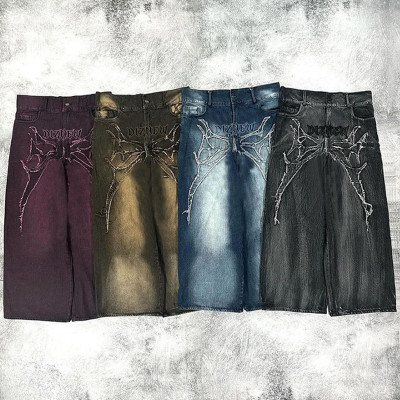
Premium wide-leg denim jeans featuring a vintage washed black finish, detailed Japanese landscape artwork, embroidery-style decoration, and custom brand label options. Designed for streetwear brands, designer labels, and private label collections looking for statement denim with strong visual storytelling.
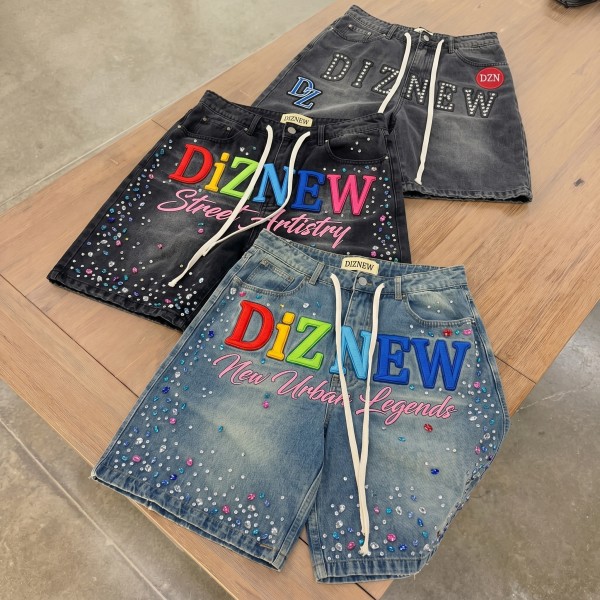
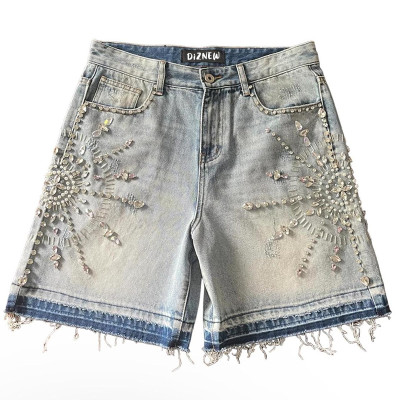
Custom Rhinestone Logo Denim Shorts: Wholesale supply direct. We manufacture premium embroidered baggy jean shorts for brands.
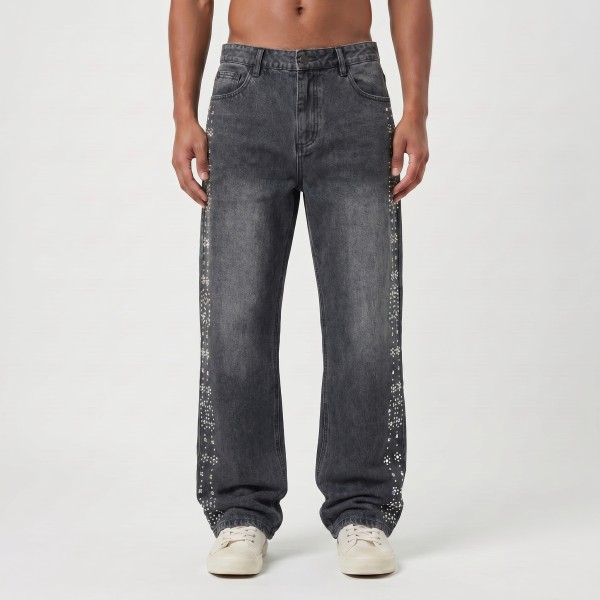
Discover premium DiZNEW denim jeans with decorative studs for a sparkling, stylish look. Order today!
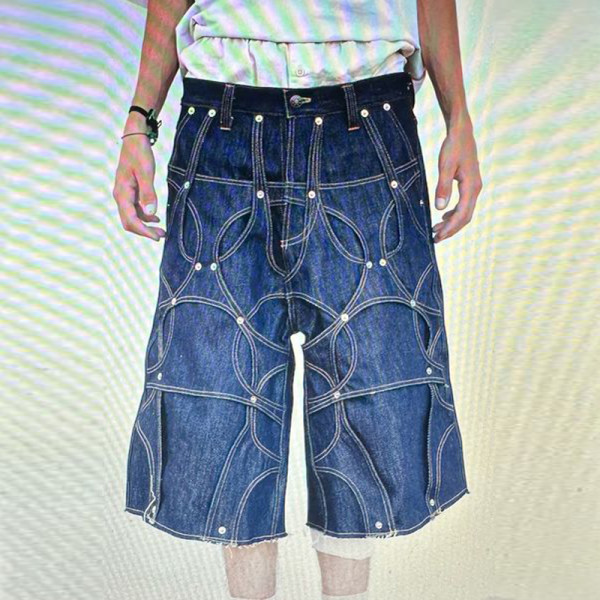
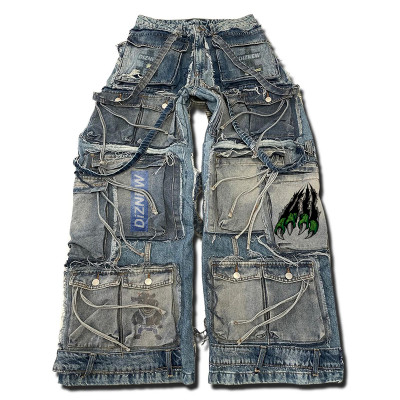
These designer denim shorts for men feature intricate decorative stitching and rivet details, perfect for streetwear fashion. The wide-leg silhouette adds a bold look, ideal for trendsetters.