why cut jeans are fashionable
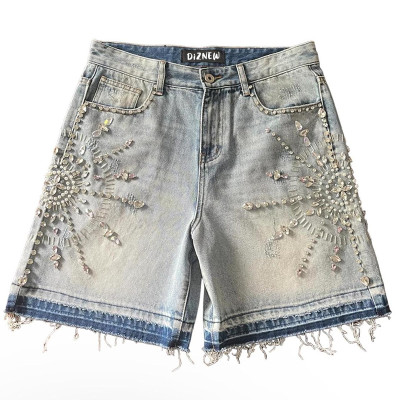
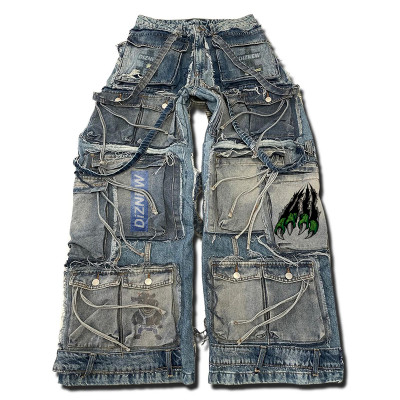
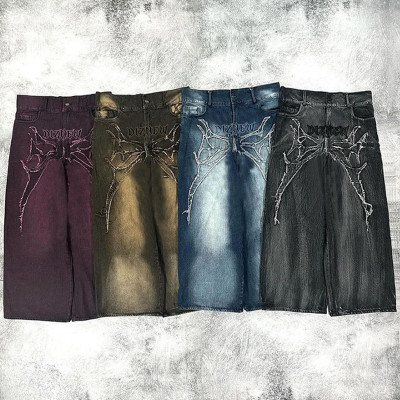
Cut jeans are fashionable because they do something basic denim cannot do: they make the wearer look like they have a point of view. A clean pair of blue jeans is timeless, but a pair of cut-off jeans, cropped jeans, ripped-knee jeans, frayed-hem jeans, or raw-edge bootcut jeans feels more personal. It says, “I did not just buy pants. I chose a look.” That is why cut jeans keep coming back across streetwear, boutique fashion, music culture, festival outfits, vintage styling, and even high-end designer denim. They carry a little attitude, a little rebellion, and a lot of styling flexibility.
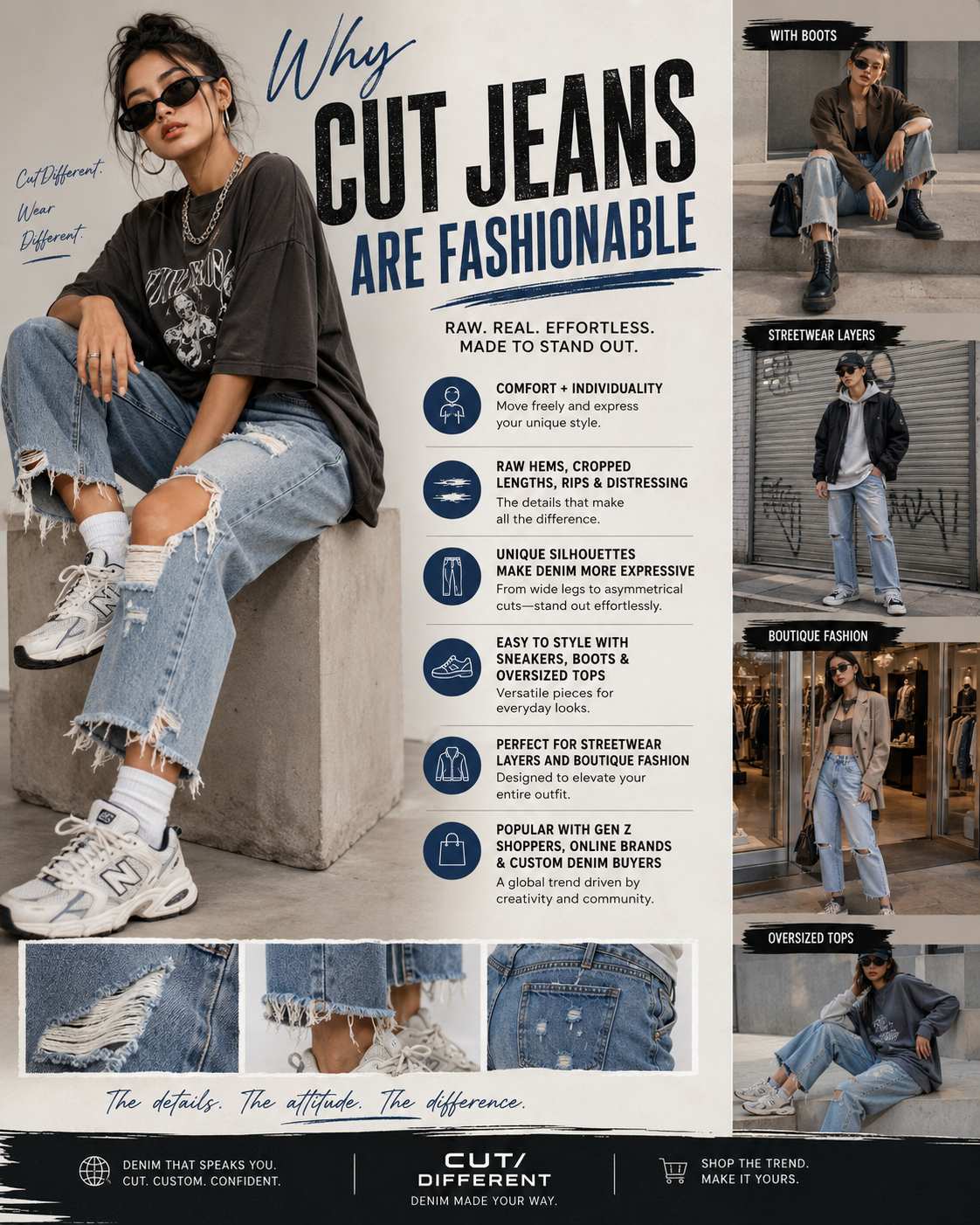
Cut jeans are fashionable because they combine comfort, individuality, and visual detail. Raw hems, cropped lengths, rips, distressing, and unique silhouettes make denim look less ordinary and more expressive. They also work well with sneakers, boots, oversized tops, streetwear layers, and boutique fashion styling, which makes them highly attractive to Gen Z shoppers, online brands, and custom denim buyers.
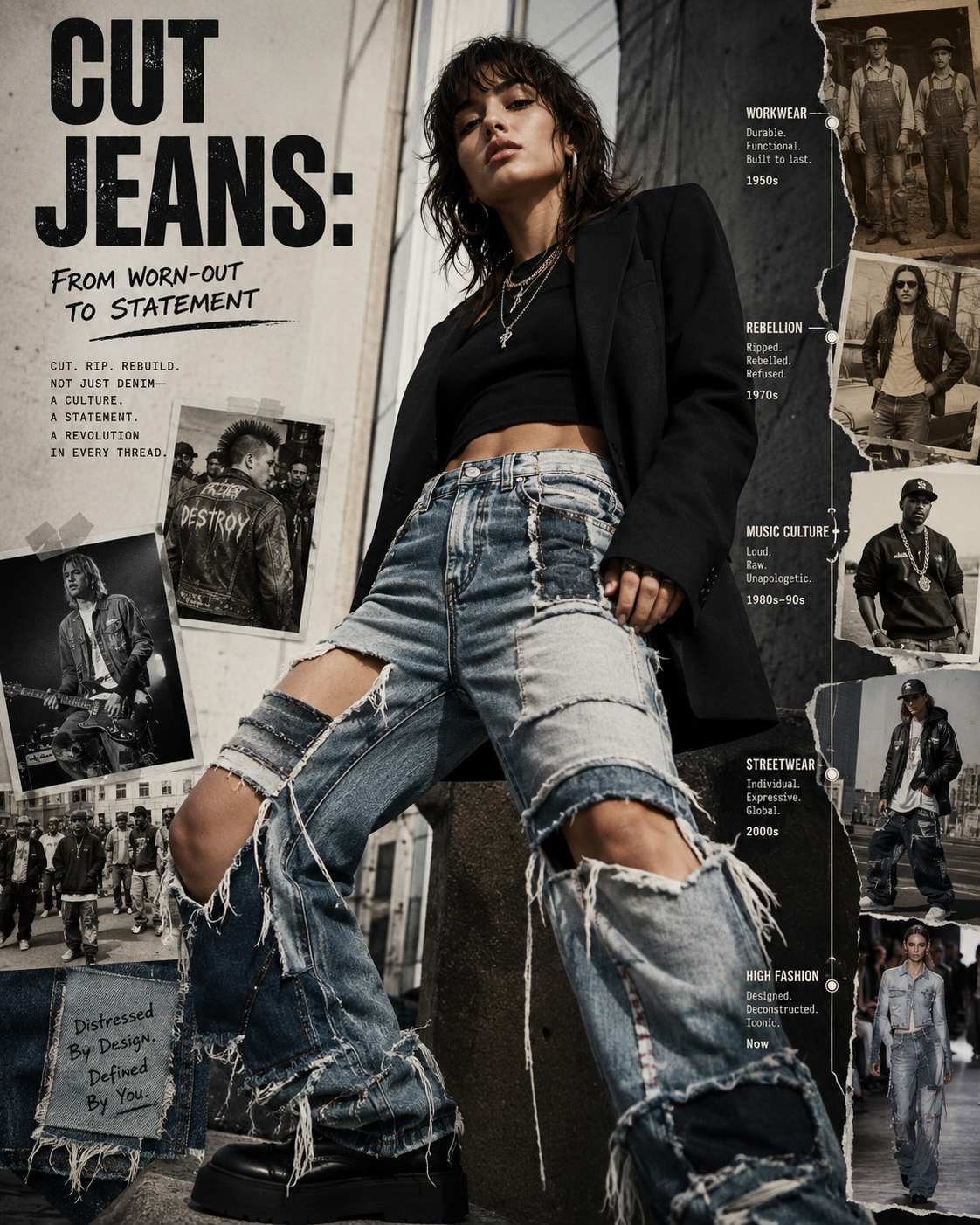
Think about the last time you saw a plain pair of jeans on an online store page. Now imagine the same jeans with a cropped raw hem, a washed vintage blue tone, soft distressing at the knee, and a slightly relaxed leg. Suddenly, the product has a mood. It looks styled before the customer even adds a top or shoes. That is the real power of cut jeans: the design detail does half the storytelling before the customer even tries them on.
What Are Cut Jeans and Why Are They Popular in Modern Denim Fashion?
Cut jeans refer to denim styles with visible cutting, shaping, or altered proportions, such as cut-off jeans, cropped jeans, ripped jeans, distressed jeans, frayed-hem jeans, and different leg cuts like straight, baggy, bootcut, skinny, or stacked jeans. They are popular because they make denim feel more expressive, relaxed, and customizable than basic jeans.
Dive Deeper
The phrase “cut jeans” can mean two things, and this is important for both shoppers and denim brands. First, it can describe jeans that have been physically cut, such as cut-off shorts, cropped hems, raw hems, ripped knees, slashed thighs, or open cut-out details. Second, it can refer to the silhouette or shape of the jeans, such as straight cut, bootcut, skinny cut, baggy cut, stacked cut, wide-leg cut, or jogger cut.
That double meaning is one reason the topic performs well in search. A customer searching “cut jeans” may be looking for styling inspiration, while a buyer searching “best jeans cut for women” may be comparing silhouettes for a new boutique collection. A designer may search “cut-off jeans fashionable” because they want to know whether raw-hem denim shorts or cropped jeans are still worth developing for next season. In other words, “cut jeans” is not just a style term. It is a buying-intent term.
So, are cut-off jeans fashionable? Yes, but the best versions today are more intentional than the DIY cut-offs of the past. A modern cut-off jean is not simply a pair of old jeans chopped at the bottom. It may use controlled fraying, enzyme washing, grinding, whiskering, sanding, or carefully measured inseam lengths to make the product look relaxed without looking cheap. This is where manufacturing quality matters. Two pairs of cut-off jeans can look similar in a photo, but after five washes, one keeps its shape and the other twists, curls, or falls apart.
Cut jeans are also popular because they give consumers a sense of individuality without asking them to dress too loudly. Not everyone wants bright colors, heavy prints, or extreme fashion pieces. But many people are willing to wear a raw hem, a cropped ankle, a ripped knee, or a washed vintage finish. It is expressive, but still wearable.
For online boutiques, this matters a lot. A small design detail can turn a basic denim product into a higher-converting product image. Cropped hems show shoes better. Ripped knees add attitude. Cut-off shorts feel perfect for summer drops. Stacked jeans create a strong streetwear look. Baggy cut jeans look relaxed and youthful. These details help customers imagine outfits faster, which is exactly what boutique owners want.
From a manufacturing point of view, cut jeans are also ideal for customization. Brands can adjust inseam length, leg opening, rise, wash color, distressing position, pocket shape, logo patch, button, rivet, stitch color, and fabric weight. This makes cut jeans one of the most flexible denim categories for custom OEM and ODM production.
| Cut Jeans Type | Main Design Feature | Best Customer Segment | Good For Customization? |
| Cut-off jeans | Raw or shortened hem | Summer buyers, festival shoppers, boutiques | Yes |
| Cropped jeans | Ankle-length or above-ankle fit | Sneaker lovers, fashion boutiques | Yes |
| Ripped jeans | Knee, thigh, or pocket distressing | Streetwear, youth fashion | Yes |
Frayed-hem jeans | Unfinished edge detail | Casual boutique fashion | Yes |
Baggy cut jeans | Loose leg and relaxed volume | Gen Z, streetwear brands | Yes |
Bootcut jeans | Slight flare from knee to hem | Vintage, western, premium casual | Yes |
Stacked jeans | Extra length bunching at ankle | Hip-hop, streetwear, online brands | Yes |
Why Do Cut Jeans Look More Stylish Than Basic Denim?
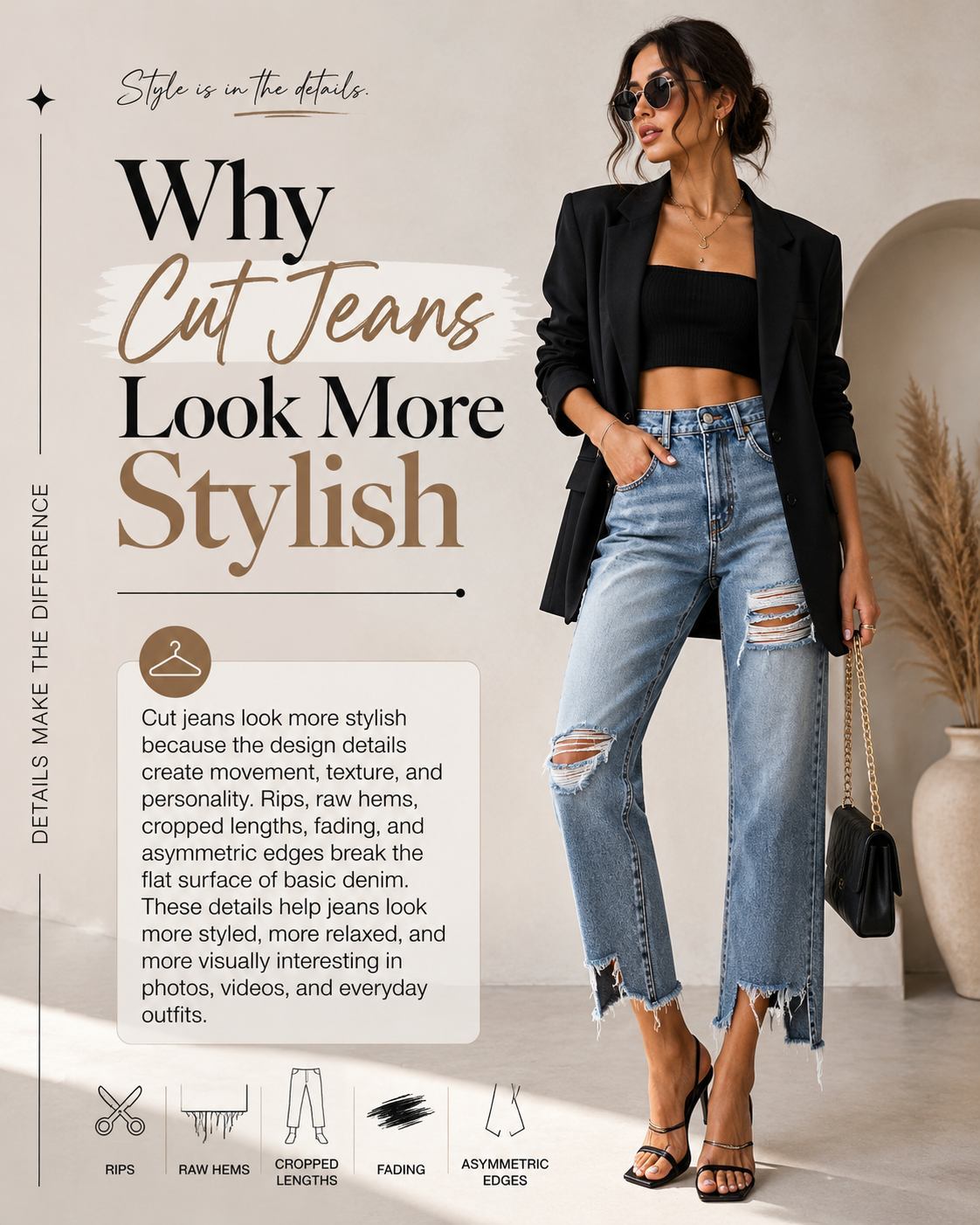
Cut jeans look more stylish because the design details create movement, texture, and personality. Rips, raw hems, cropped lengths, fading, and asymmetric edges break the flat surface of basic denim. These details help jeans look more styled, more relaxed, and more visually interesting in photos, videos, and everyday outfits.
Dive Deeper
Basic denim is useful. Cut denim is emotional. That is the difference. A plain pair of jeans can be comfortable and durable, but cut jeans can tell a story. A raw hem may suggest a laid-back summer look. A cropped straight leg may feel clean, modern, and sneaker-friendly. A heavily washed ripped jean may feel bold, young, and street-ready. A dark bootcut jean with a clean slit or raw edge may feel elevated and vintage-inspired.
Fashion is rarely only about function. Most customers already own jeans. So when they buy another pair, they are often buying a new feeling: more confident, more relaxed, more current, more attractive, or more aligned with a style community. Cut jeans answer that need because they create instant visual difference.
One major reason cropped jeans are so popular is footwear. Customers today often build outfits around sneakers, boots, loafers, sandals, or heels. Cropped jeans make the shoe visible. That is a small detail, but in e-commerce photography and social media videos, it makes a big difference. A full-length jean can hide the shoe and make the outfit look heavy. A cropped jean shows the ankle or footwear line, making the outfit feel lighter and more intentional.
This is why everyone seems to be wearing cropped jeans. They are practical, but they also photograph well. Straight cropped jeans look clean with white sneakers. Cropped bootcut jeans look good with pointed boots. Cropped wide-leg jeans create a relaxed, modern proportion. Cropped skinny jeans, when styled correctly, can still work with boots or ballet flats. The cropped length is not just a trend; it is a styling tool.
Cut details also help denim feel more premium when they are done with control. A ripped knee placed too high can look awkward when the customer sits down. A raw hem cut too short may limit the customer’s styling options. A distressed thigh area that is too aggressive may weaken the garment. But when the details are balanced, cut jeans look intentional rather than damaged.
For brands, the real question is not “Should we add cutting?” The better question is “What kind of cutting fits our customer?” A high-end boutique may need soft distressing, clean raw hems, and premium washes. A streetwear brand may want stacked legs, heavy fading, cargo pockets, and bold knee cuts. A women’s online boutique may need cropped flares, frayed hems, and comfort stretch. A men’s brand may prefer straight cut, baggy cut, or selvedge-inspired raw denim with subtle edge details.
This is where product development becomes more strategic. Cut jeans should never be random. Every detail should support the target buyer, the product price point, and the brand identity.
| Design Detail | What It Adds Visually | Buyer Benefit | Risk If Done Poorly |
| Raw hem | Casual, effortless edge | Easy styling, boutique appeal | Curling, uneven shrinkage |
| Cropped length | Cleaner shoe visibility | Better outfit proportion | Wrong inseam for target market |
| Ripped knee | Youthful street attitude | Strong online visual impact | Weak fabric, bad placement |
Frayed hem | Soft vintage texture | Trendy but wearable | Loose threads after washing |
Stacked length | Streetwear volume | Strong Gen Z appeal | Too much fabric bulk |
Washed fading | Vintage character | Premium worn-in look | Cheap or inconsistent color |
For DiZNEW’s target customers, this is especially important. Many small and medium buyers in the United States do not want another generic denim style. They want something that looks exclusive enough for their boutique, online store, influencer brand, or private label collection. Cut jeans are a strong product category because the design can be customized at many levels without requiring the brand to completely reinvent denim from zero.
How Did Cut Jeans Become a Fashion Statement Instead of Just Casual Wear?
Cut jeans became a fashion statement because distressed and altered denim moved from workwear and rebellion into streetwear, music culture, vintage fashion, and designer collections. What once looked worn-out now looks intentional. Today, cutting, ripping, fraying, washing, and patching are used as creative techniques to make denim feel unique and expressive.
Dive Deeper
Denim started as practical clothing. It was built for work, movement, and durability. But the more people wore denim, the more it collected marks: fades, creases, tears, repairs, stains, and soft worn-in areas. Over time, those marks became part of denim’s beauty. A perfectly new jean looked clean, but a worn jean looked lived-in. It had character.
That is the foundation of cut jeans. The fashion world took natural wear and turned it into design language. Rips became intentional. Frayed hems became stylish. Washed fading became a premium finish. Patchwork became artisanal. A raw edge became a choice instead of a mistake.
In punk and rock culture, ripped jeans represented rebellion. In grunge fashion, they represented anti-polish and authenticity. In hip-hop and streetwear, oversized and stacked denim became part of identity and confidence. In Y2K fashion, low-rise, bootcut, flare, embellished, and distressed jeans became bold style statements. Today, those references are mixed together. A modern cut jean can borrow from all of these histories at once.
But there is a critical point many brands miss: fashion damage is not the same as poor quality. A ripped jean should look broken in the right place but still remain wearable. A frayed hem should look natural but not fall apart too quickly. A vintage wash should look soft and authentic, not dirty or uneven. A cut-out detail should be reinforced if the fabric needs stability. This is the line between cheap denim and professionally developed denim.
The customer may not know the technical language behind denim production, but they can feel the difference. They notice when jeans twist after washing. They notice when the knee rip tears too wide after one wear. They notice when the waistband gaps. They notice when the color bleeds too much. They notice when the stretch fabric loses recovery. Good cut jeans are not just creative; they are engineered.
For brands and designers, this means the manufacturing partner matters. A factory that only copies a photo may not understand the purpose behind the design. But a factory with deep denim experience can help adjust the distressing placement, washing level, fabric composition, shrinkage allowance, sewing reinforcement, and size grading before bulk production. That can save a brand from expensive returns and bad reviews.
Cut jeans became a fashion statement because they balance contradiction. They are imperfect but carefully designed. Casual but premium. Vintage but modern. Relaxed but intentional. That contradiction is exactly why customers keep buying them.
A designer may start with a simple sketch: a cropped baggy jean with raw hem, light wash, double knee distressing, and custom back pocket embroidery. To the customer, it looks effortless. But behind that “effortless” look is a long chain of technical decisions: fabric weight, yarn character, dye depth, wash recipe, hand sanding, grinding position, pocket balance, inseam shrinkage, fit correction, label placement, and final quality inspection. That is why premium cut jeans often cost more than basic denim. The design may look relaxed, but the production is not simple.
Which Jeans Cuts Are Fashionable Now, and Why Are Consumers Choosing Them?
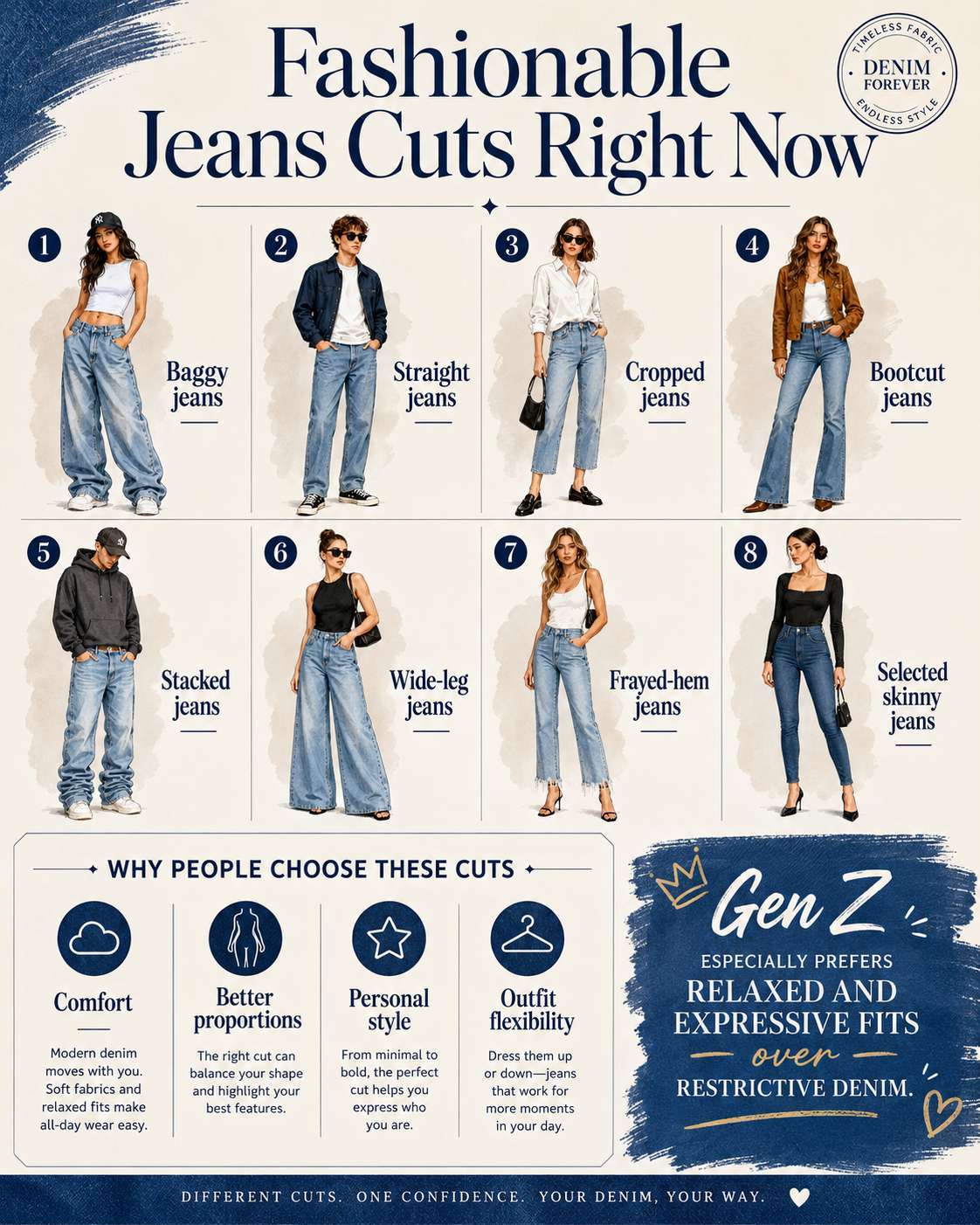
Fashionable jeans cuts now include baggy jeans, straight jeans, cropped jeans, bootcut jeans, stacked jeans, wide-leg jeans, frayed-hem jeans, and selected skinny jeans. Consumers choose them because they want comfort, better proportions, personal style, and more outfit flexibility. Gen Z especially prefers relaxed and expressive fits over restrictive denim.
Dive Deeper
The denim market is not moving in only one direction. That is good news for brands. Some shoppers want relaxed baggy jeans. Some want straight-leg jeans that go with everything. Some want cropped jeans for sneakers. Some want bootcut jeans because they feel vintage and flattering. Some still want skinny jeans because they like a sleek fit. The smartest denim brands do not chase one trend blindly. They build a product mix.
So why does Gen Z hate skinny jeans? The simple answer is: many Gen Z shoppers associate skinny jeans with an older fashion era and less comfort. But the deeper answer is more interesting. Gen Z grew up with social media, thrift culture, gender-fluid styling, oversized streetwear, comfort-first dressing, and constant outfit experimentation. For them, jeans are not just about looking slim. They are about creating shape, attitude, and identity.
Baggy jeans give movement. Wide-leg jeans create drama. Straight jeans feel easy and classic. Bootcut jeans bring back a vintage or western mood. Stacked jeans create a strong streetwear silhouette. Cropped jeans show shoes. Skinny jeans can feel restrictive in comparison, especially if the fabric is stiff or the rise is uncomfortable.
However, saying “skinny jeans are dead” is too simple. In reality, skinny jeans still work for certain customers, especially when updated with better stretch, darker washes, higher-quality recovery, and modern styling. Some customers like skinny jeans for boots, long tops, winter layering, or sleek outfits. The issue is not that skinny jeans have no market. The issue is that they are no longer the only “default cool” jean.
Are bootcut jeans out of style in 2026? No. Bootcut jeans are very relevant again, especially when they are modernized. The old bootcut was sometimes too long, too low, or too plain. The new bootcut can be high-rise, mid-rise, cropped, raw-hem, dark-wash, stretch comfort, western-inspired, or premium casual. It balances the leg, works with boots and heels, and gives customers a flattering alternative to both skinny and wide-leg denim.
For online boutique owners, bootcut jeans can be a smart category because they feel familiar but fresh. A customer may hesitate to try an extreme runway silhouette, but a clean bootcut jean with a good wash and flattering rise is easier to sell. Add a raw hem, subtle distressing, or a custom pocket detail, and the product becomes more boutique-friendly.
Here is a practical way to think about current jeans cuts:
| Jeans Cut | Why Customers Like It | Best Styling Direction | Strong Product Opportunity |
| Baggy jeans | Comfortable, youthful, relaxed | Streetwear, crop tops, oversized jackets | Gen Z collections, unisex denim |
| Straight jeans | Timeless, easy to wear | Sneakers, boots, casual basics | Core boutique product |
| Cropped jeans | Shows footwear, clean proportion | Sneakers, loafers, ankle boots | Spring/summer drops |
Bootcut jeans | Flattering, vintage, balanced | Boots, heels, western style | Premium women’s denim |
Stacked jeans | Strong streetwear identity | Hoodies, graphic tees, sneakers | Men’s streetwear, hip-hop fashion |
Skinny jeans | Sleek, fitted, easy to tuck | Boots, long coats, fitted tops | Updated stretch denim line |
Cut-off shorts | Summer-ready, casual | Tanks, swimwear, festival tops | Seasonal boutique bestseller |
Denim joggers | Comfort and streetwear mix | Sneakers, casual sets | Athleisure denim collections |
The key is matching the cut to the customer’s lifestyle. A boutique serving women aged 25 to 40 may sell cropped straight jeans, bootcut jeans, and frayed-hem styles very well. A streetwear brand may need stacked jeans, baggy jeans, cargo denim, and heavy wash effects. A high-end denim label may focus on selvedge jeans, raw denim, clean straight cuts, and subtle cutting details. A plus-size denim line may need careful hip, thigh, rise, and waistband development so the jeans are not just bigger, but genuinely better fitting.
This is why customization matters. A trend only becomes profitable when it fits the real customer. A brand cannot simply copy a celebrity look and expect it to work for every size range, price point, or sales channel. Fit testing, sample correction, and fabric selection are what turn a trend into a sellable product.
For DiZNEW’s customers—designers, online boutique owners, high-end brands, and custom denim buyers—the opportunity is not just to follow trends. The opportunity is to interpret trends in a way that feels exclusive to the brand. That may mean a 30-piece test order for a new cropped cut-off style, or a 10,000-piece bulk order for a proven straight-leg distressed jean. Both can make sense when the design, fit, and production plan are clear.
How Can Denim Brands Make Cut Jeans Look More Premium and Sell Better?
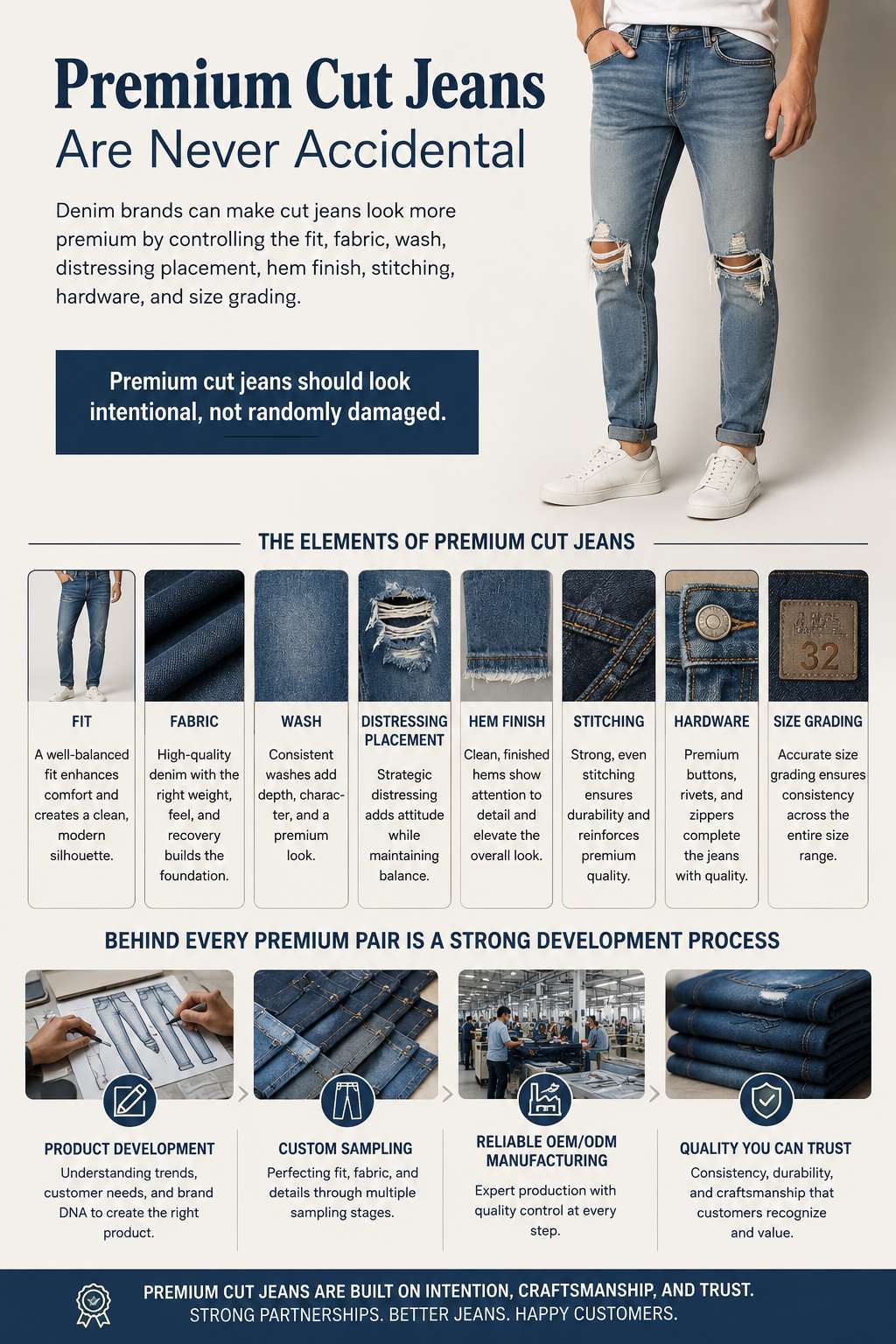
Denim brands can make cut jeans look more premium by controlling the fit, fabric, wash, distressing placement, hem finish, stitching, hardware, and size grading. Premium cut jeans should look intentional, not randomly damaged. Strong product development, custom sampling, and reliable OEM/ODM manufacturing help brands create jeans that customers trust and want to buy.
Dive Deeper
The biggest mistake brands make with cut jeans is assuming that more damage equals more fashion. It does not. Premium cut jeans need balance. Too many rips can reduce durability. Too much washing can weaken fabric. A raw hem without testing can curl badly. A cropped length without size grading can fit one size well and look wrong on the rest. A trendy photo is not enough. The product has to survive real life.
The first factor is fabric. A 100% cotton denim may feel authentic, structured, and vintage, but it may not offer enough comfort for some customers. A cotton-spandex blend may feel easier to wear, but poor stretch recovery can lead to bagging at the knee or seat. Heavier denim can hold shape well, but it may feel too hot or stiff for summer cut-off jeans. Lighter denim is comfortable, but it may not support heavy distressing. Each product needs the right fabric strategy.
The second factor is fit. Cut jeans are very sensitive to proportion. A cropped jean that ends at the wrong place can shorten the leg visually. A bootcut jean with the wrong knee-to-hem flare can look dated. A baggy jean without structure can look sloppy instead of stylish. A stacked jean without the right inseam and leg opening can bunch awkwardly. Good pattern development is not optional.
The third factor is wash. Wash is where denim gets its mood. A light vintage wash feels casual and youthful. A dark rinse feels cleaner and more premium. Acid wash feels bold. Stone wash feels classic. Enzyme wash can soften the hand feel. Whiskering and sanding can add dimension. But wash consistency is critical, especially for bulk orders. Customers expect the product they receive to look like the product photo.
The fourth factor is finishing. Raw hems, frayed edges, ripped knees, and cut-off shorts should be tested. Brands need to know how the garment behaves after washing, wearing, folding, and shipping. This is especially important for e-commerce because returns are expensive. A customer may love the photo but return the jeans if the hem twists, the rip expands too fast, or the fit feels different from the size chart.
For a buyer, the premium question should sound like this:
| Product Development Area | What Buyers Should Check | Why It Matters |
Fabric composition | Cotton content, stretch level, weight | Affects comfort, durability, and price |
Pattern and fit | Rise, hip, thigh, inseam, leg opening | Determines whether customers keep or return |
Wash technique | Color, fading, softness, shrinkage | Creates the visual identity of the jean |
| Distressing placement | Knee, thigh, pocket, hem position | Makes damage look intentional |
| Reinforcement | Bar tacks, backing, seam strength | Prevents fast tearing |
Size grading | XS to plus sizes, men’s or women’s fit | Keeps fit consistent across sizes |
Custom branding | Logo, button, rivet, label, patch | Builds brand identity |
Quality control | Measurement, color, sewing, packaging | Protects customer experience |
This is also where OEM and ODM support becomes valuable. Many designers have a strong idea but need help turning the idea into a real garment. They may have a sketch, reference photo, tech pack, or sample, but they need guidance on what fabric to use, how to adjust the pattern, how to place the distressing, how to control the wash, and how to prepare production.
A good denim factory does more than sew. It helps translate design into manufacturing. For example, if a customer wants a baggy cut jean with large knee holes, the factory should consider how the hole changes when the wearer sits. If the customer wants a cropped bootcut jean, the factory should check the inseam and flare balance across sizes. If the customer wants plus-size jeans, the factory should not simply enlarge a standard pattern; it should adjust the rise, hip curve, thigh comfort, waistband, and stretch recovery.
For online boutique owners, premium does not always mean luxury pricing. Premium means the product looks good, fits well, and makes the customer feel confident. A boutique customer may not know the technical difference between enzyme wash and stone wash, but they know when a jean feels soft, photographs well, and gets compliments.
That is why cut jeans can sell so well when developed correctly. They are visual enough for social media, practical enough for daily wear, and flexible enough for brand customization.
How Can DiZNEW Help You Create Custom Cut Jeans for Your Brand?
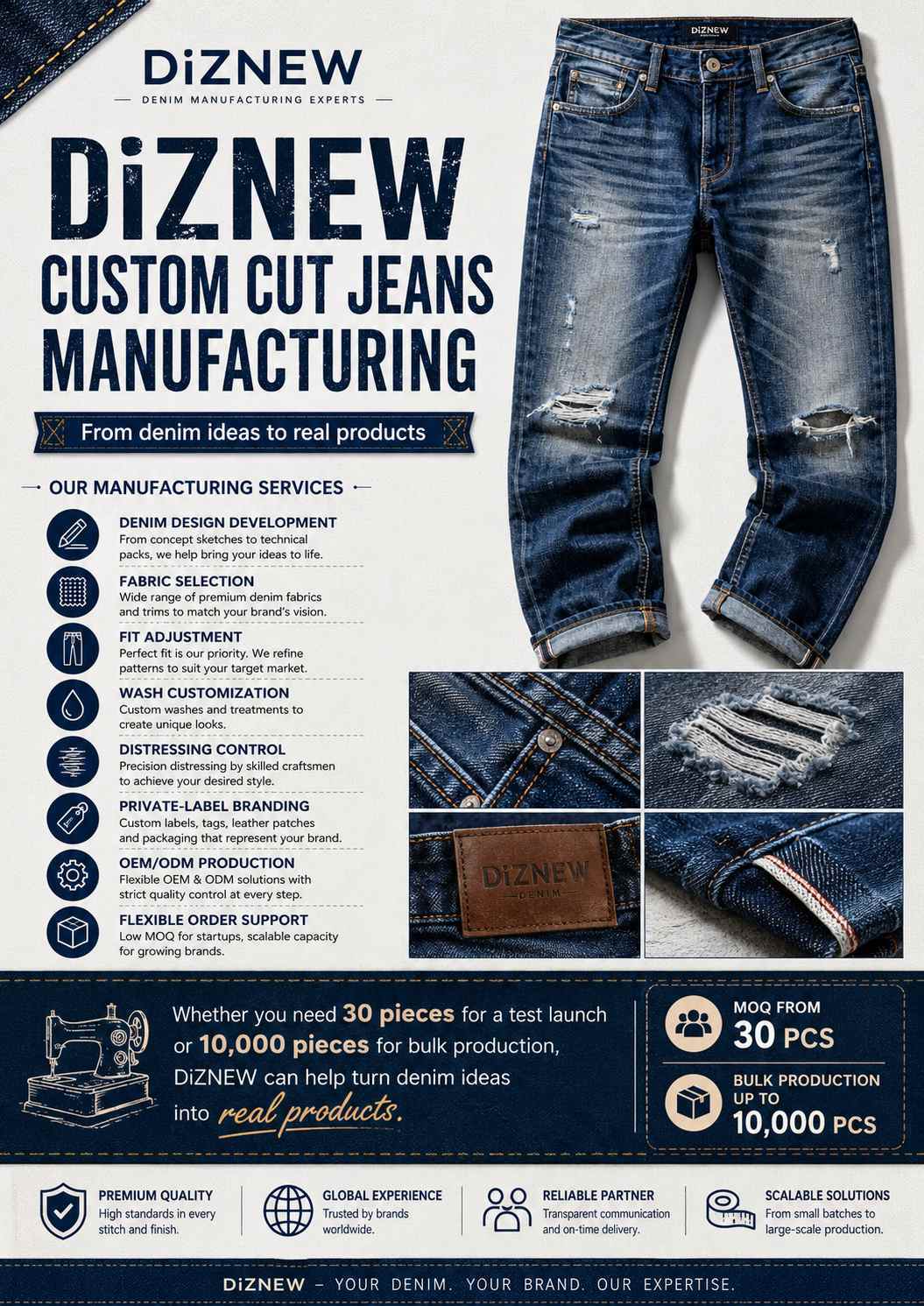
DiZNEW helps brands create custom cut jeans by offering denim design development, fabric selection, fit adjustment, wash customization, distressing control, private-label branding, OEM/ODM production, and flexible order support. Whether you need 30 pieces for a test launch or 10,000 pieces for bulk production, DiZNEW can help turn denim ideas into real products.
Dive Deeper
If you are a denim designer, boutique owner, online seller, influencer brand, or premium fashion label, you probably do not want the same jeans everyone else is selling. You want a product that feels like your brand. Maybe your customer loves baggy jeans with heavy stacking. Maybe she wants cropped straight jeans with a soft vintage wash. Maybe your store needs plus-size distressed jeans that actually fit well. Maybe you want a denim jacket, denim shorts, denim shirt, or full denim collection with your own logo.
This is where DiZNEW can support you.
DiZNEW is a China-based denim jeans development and manufacturing factory with more than 20 years of experience in denim R&D, production, and sales. The company works with many types of denim products, including plus size jeans, baggy jeans, stacked jeans, straight jeans, selvedge jeans, skinny jeans, jogger jeans, denim jackets, denim shorts, denim shirts, and more. For brands that need custom jeans, OEM denim, ODM denim, or private-label jeans with their own logo, DiZNEW can help develop the product from concept to finished garment.
One of the biggest advantages is flexibility. Some brands want to test a new style first, so a lower MOQ can reduce risk. DiZNEW supports custom denim orders starting from 30 pieces, which is helpful for small brands, boutique stores, designers, and online sellers testing a new collection. At the same time, DiZNEW can also handle large-volume orders of 10,000 pieces for brands that already have proven styles and need stable production capacity.
This flexibility matters because denim is not a one-size-fits-all product category. A new boutique may need a small batch of cropped frayed-hem jeans to test customer response. A streetwear label may need stacked jeans with custom hardware and a special wash. A high-end brand may need complex construction, heavy customization, premium fabric, and strict quality control. A plus-size denim buyer may need extended size grading and careful fit correction. These customers have very different needs, but they all need a factory that understands denim deeply.
DiZNEW is especially suitable for complex denim customization. Cut jeans often require more than basic sewing. They may involve hand distressing, washing, sanding, grinding, raw hem finishing, patch design, custom pocket construction, embroidery, logo hardware, or special size development. When those details are not controlled, the product can look cheap or inconsistent. When they are done well, the jeans can become the signature product of a brand.
Here are some custom options brands can discuss with DiZNEW:
| Custom Area | Options You Can Develop |
| Jeans silhouette | Baggy, straight, skinny, bootcut, flare, stacked, jogger, wide-leg |
| Fabric type | Rigid cotton denim, stretch denim, lightweight denim, heavy denim, selvedge-inspired denim |
| Wash effect | Light wash, dark wash, vintage wash, acid wash, black wash, enzyme wash, stone wash |
Cutting details | Raw hem, cropped length, ripped knee, frayed edge, cut-off shorts, distressed thigh |
Branding | Private logo, woven label, leather patch, vegan patch, buttons, rivets, hangtags |
Decoration | Embroidery, print, patchwork, contrast stitching, special pockets |
Size range | Standard sizes, plus sizes, custom grading |
Product category | Jeans, denim jacket, denim shorts, denim shirts, denim sets |
The process can start with a design sketch, reference photo, tech pack, measurement chart, or even a rough idea. DiZNEW can help you discuss fabric, fit, wash, construction, customization details, sampling, and bulk production. This makes it easier for brands to move from inspiration to physical product without getting lost in technical details.
The fashion value of cut jeans is clear: customers want denim that feels personal. The business value is even stronger: cut jeans give brands more room to differentiate. A basic jean competes on price. A custom cut jean competes on identity, fit, detail, and customer emotion.
That is why now is a smart time to develop your own cut jeans collection. Whether you are planning a small boutique drop, a streetwear capsule, a plus-size denim line, or a high-end custom denim project, DiZNEW can help you create jeans that match your brand vision and your customer’s lifestyle.
Conclusion: Cut Jeans Are Fashionable Because They Make Denim Personal
Cut jeans are not fashionable by accident. They are fashionable because they solve a modern style problem: customers want comfort, but they do not want boring clothes. They want everyday jeans, but they also want personality. They want something easy to wear, but still different enough to feel special.
That is why cut-off jeans, cropped jeans, ripped jeans, frayed-hem jeans, baggy jeans, bootcut jeans, stacked jeans, and straight cut jeans continue to matter. Each style gives the customer a different way to express themselves. Some are casual. Some are edgy. Some are vintage. Some are streetwear. Some are polished. The best denim brands understand these differences and turn them into products that fit real customers.
For designers and boutique owners, the opportunity is not just to ask, “What jeans are trending?” The better question is, “What kind of denim does my customer want to be seen in?” Once you know that, cut jeans become a powerful product category for custom development.
If you are ready to create custom cut jeans, cropped jeans, bootcut jeans, baggy jeans, stacked jeans, plus-size jeans, denim jackets, denim shorts, or private-label denim products, you can send your design idea, reference photo, tech pack, or sample request to DiZNEW.
DiZNEW can help you develop custom denim from concept to finished product, with flexible MOQ starting from 30 pieces and production capacity for large orders up to 10,000 pieces. If you want jeans that carry your own logo, your own fit, your own wash, and your own brand identity, now is the right time to start your custom denim project with DiZNEW.