why buy designer jeans
Buying designer jeans sounds simple until you stand in front of two pairs that look almost the same from a distance—one is cheap, one costs several times more. At that moment, the real question is not “Why are these jeans expensive?” The better question is, “What am I actually paying for?” For some shoppers, designer jeans are about confidence. For boutique owners, they are about product value and brand identity. For fashion designers, they are about turning a specific silhouette, wash, fabric, trim, and fit concept into a product people want to wear again and again.
Designer jeans are worth buying when they offer better fabric, more accurate fit, stronger construction, original design, and longer wear life than regular jeans. The value is not only the logo. It is the way the jeans shape the body, hold their form, feel comfortable, and help a customer or fashion brand express a clear style identity.
The interesting part is that denim is one of the most democratic products in fashion. A student, a celebrity, a boutique customer, and a high-end brand buyer may all wear jeans—but they are not always buying the same thing. One person buys a basic pair to cover the body. Another buys a designer pair because the stacked leg sits perfectly over sneakers, the waist does not gap, the wash feels vintage but still clean, and the pocket placement makes the body look better. That is where designer denim becomes more than clothing. It becomes engineering, storytelling, and business strategy stitched into one product.
What Makes Designer Jeans Different from Regular Jeans?
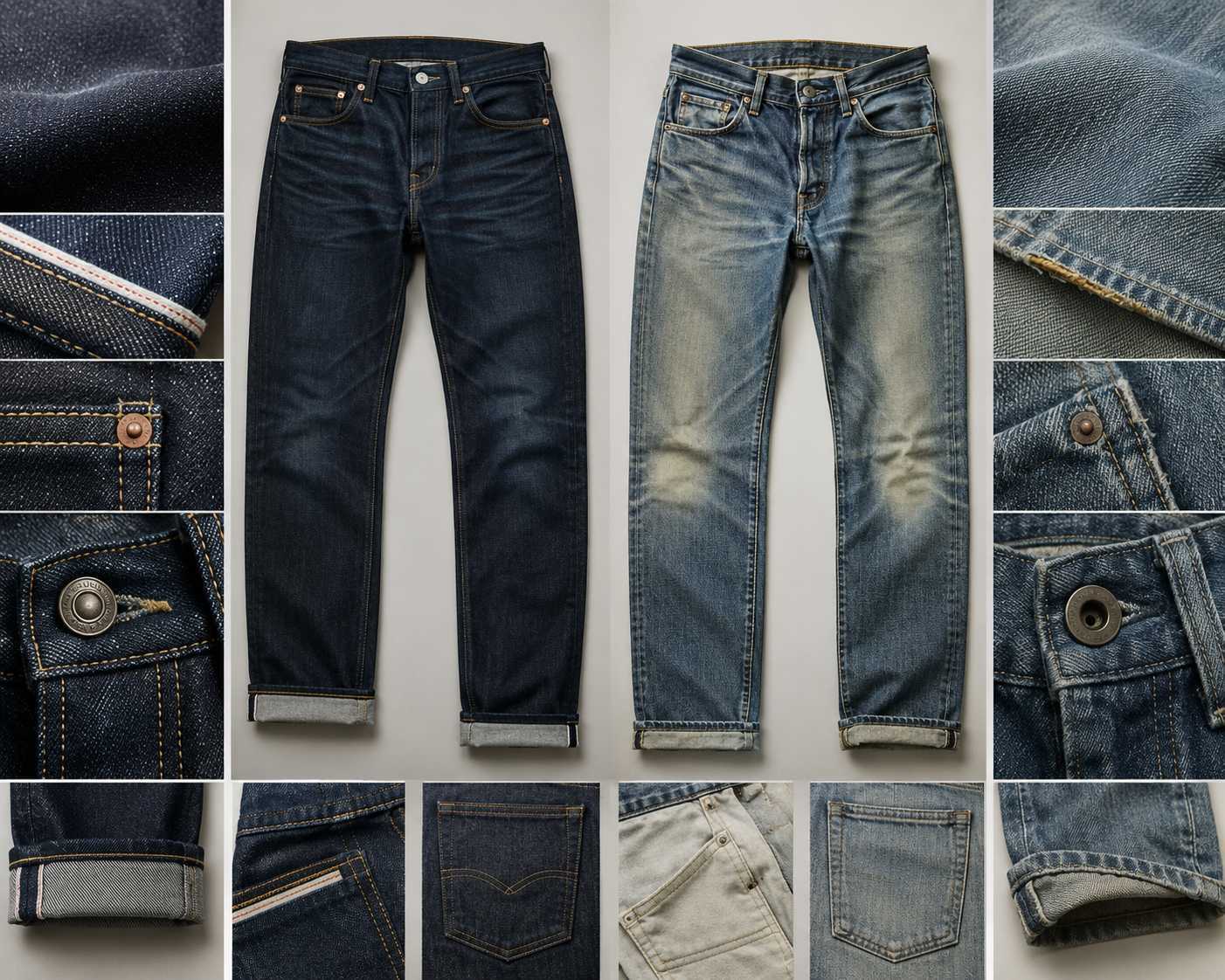
Designer jeans are different from regular jeans because they usually use better denim fabric, more precise pattern making, stronger stitching, improved trims, and more refined washes. They are designed to fit, move, age, and style better, while regular jeans often focus mainly on low cost and basic function.
Dive Deeper
The biggest difference between regular jeans and designer jeans is often invisible at first glance. A customer may see “blue jeans,” but a denim developer sees fabric weight, yarn quality, stretch recovery, shrinkage control, waistband stability, pocket placement, seam tension, washing technique, and finishing consistency. These details decide whether a pair of jeans feels premium or cheap after three wears.
Fabric is the foundation. Basic jeans may use lower-cost denim that looks acceptable on a hanger but loses shape quickly. Designer jeans usually pay more attention to cotton quality, stretch percentage, recovery performance, hand feel, and surface texture. A pair of premium straight jeans should not twist after washing. A pair of skinny jeans should stretch without becoming loose at the knee after a few hours. A pair of baggy jeans should drape with structure instead of collapsing like thin fabric.
Fit is the second major difference. Regular jeans are often built from standard blocks. Designer jeans are developed around a more intentional silhouette. A stacked jean needs extra length, correct leg opening, and fabric weight that creates natural stacking instead of messy bunching. A plus size jean needs careful waist-to-hip balance, rise control, thigh comfort, and back pocket placement. A selvedge jean needs clean construction and fabric behavior that matches the customer’s expectation for rigid denim.
Construction also matters. Good designer jeans usually have stronger seams, cleaner topstitching, better bartacks, stable zippers, durable buttons, and well-attached rivets. These details may not sound exciting, but they affect return rates, reviews, and repeat purchases. For online boutique owners, a beautiful product photo may win the first order, but quality wins the second order.
Here is a simple comparison:
| Detail | Regular Jeans | Designer Jeans |
| Fabric | Basic denim, lower cost | Better yarn, weight, stretch, texture |
| Fit | Standard body block | More precise body shaping |
| Wash | Simple color treatment | More layered fading, whiskers, distressing |
Trims | Generic buttons and labels | Custom hardware, patch, logo, packaging |
Durability | May lose shape faster | Better seam strength and recovery |
Brand Value | Price-driven | Style-driven and identity-driven |
For brands, this difference becomes even more important. A boutique customer does not only ask, “Is this denim?” They ask, “Does this feel like something I cannot find everywhere else?” That is why designer denim depends on product development, not just fabric sourcing. A factory like DiZNEW, with more than 20 years of jeans R&D and manufacturing experience, can help brands develop plus size jeans, baggy jeans, stacked jeans, straight jeans, skinny jeans, jogger jeans, denim jackets, denim shorts, and denim shirts with private-label customization. The goal is not simply to make jeans. The goal is to make jeans that customers remember.
What Is the Point of Buying Designer Clothes, Especially Designer Jeans?
The point of buying designer clothes is to get better design, fit, craftsmanship, originality, and emotional value. For designer jeans, the benefit is especially practical: they are worn often, styled easily, and can become a signature product for customers or boutique brands.
Dive Deeper
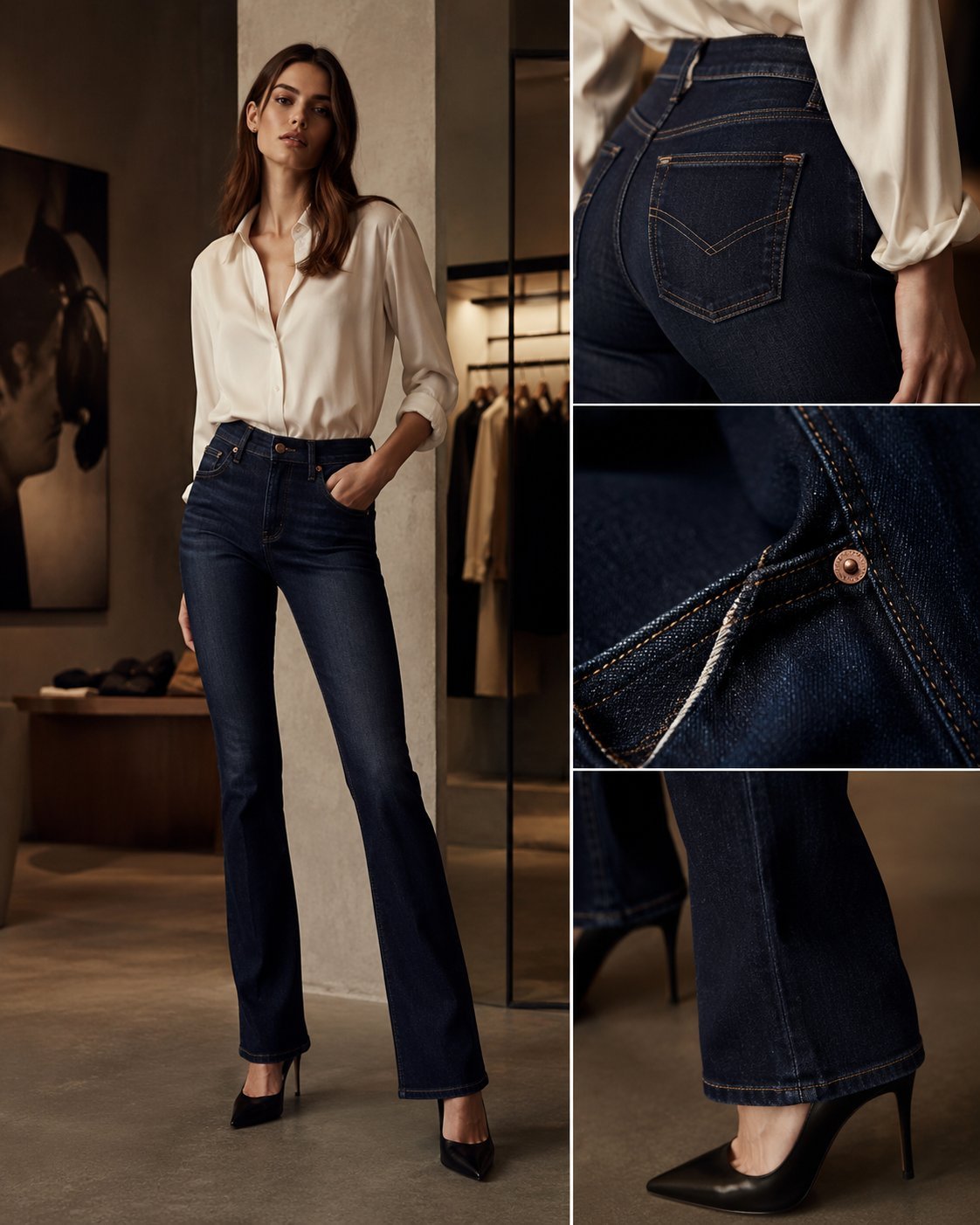
Designer clothing is sometimes criticized as “paying for a name.” In some cases, that criticism is fair. A logo alone does not make a product better. But strong designer clothing usually delivers value in four areas: product quality, design originality, identity, and experience. Designer jeans are one of the best examples because they are not hidden in a closet for special occasions. They are worn to work, dinners, travel, shopping, dates, streetwear shoots, and casual weekends.
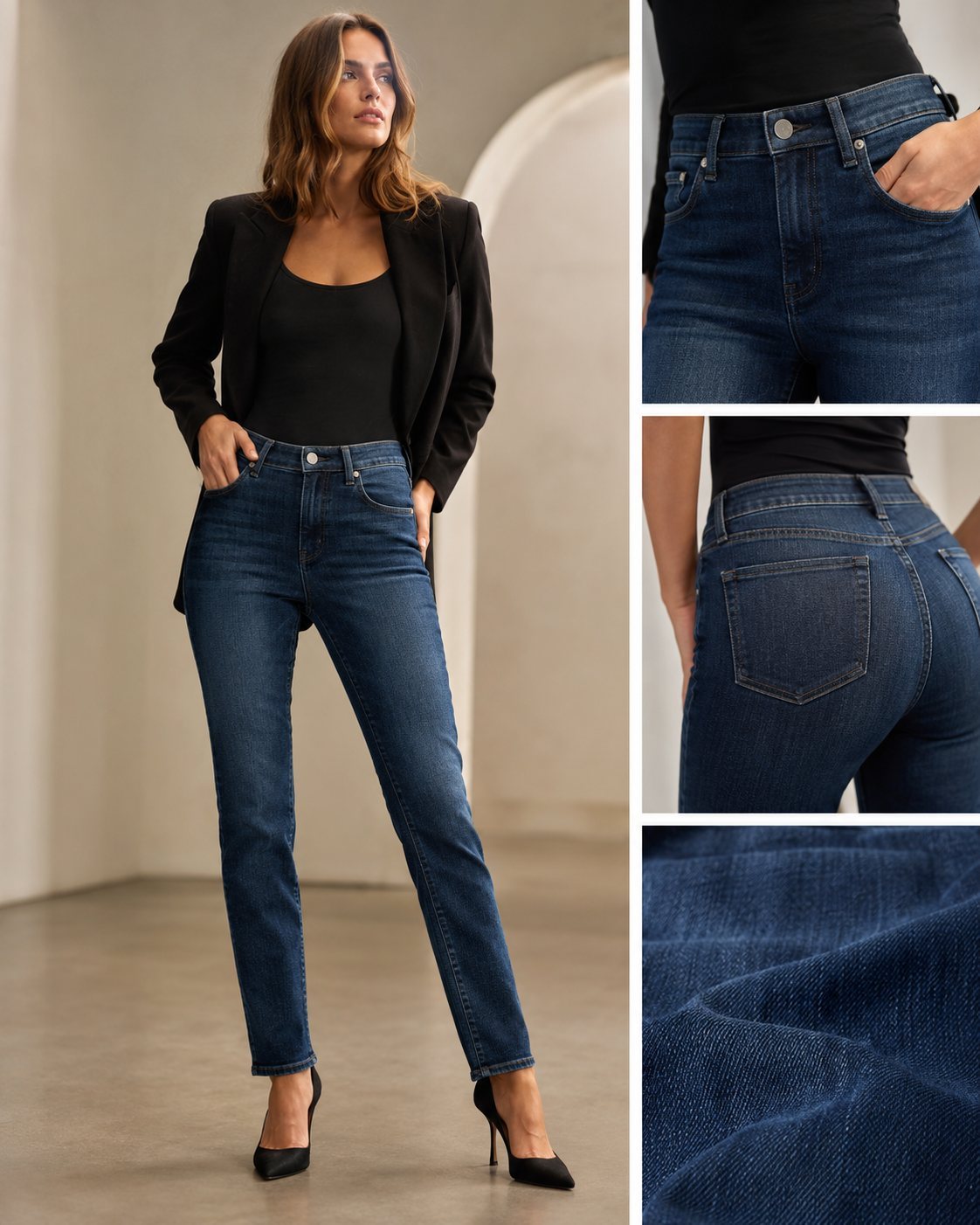
From a customer’s point of view, the point of designer jeans is confidence. A well-cut pair can make the legs look longer, the waist look cleaner, and the overall outfit feel more expensive without trying too hard. Many people do not wear complicated fashion every day, but they do wear jeans. That means one great pair can carry many outfits. A black fitted top and premium straight jeans. A white tee and baggy vintage-wash denim. A cropped jacket and stacked jeans over sneakers. The jeans become the base of the look.
From a boutique owner’s point of view, the point is product differentiation. Online fashion is crowded. Many stores sell similar tops, similar basics, similar fast-fashion shapes. Denim gives a boutique a chance to create something more ownable. A unique wash, unusual pocket, custom embroidery, flare shape, rhinestone detail, distressed panel, coated finish, or logo patch can turn a basic category into a signature product.
For fashion designers, designer jeans are a canvas. Denim accepts cutting, washing, grinding, spraying, tinting, patchwork, embroidery, printing, laser effects, hand distressing, and hardware decoration. That makes jeans one of the most flexible products for OEM and ODM development. A designer can start with a sketch and build a real product around target customer, price range, fit, fabric, and brand story.
The point of buying designer clothes is not always luxury. Sometimes it is control. A brand wants control over silhouette. A boutique wants control over exclusivity. A customer wants control over how they look and feel. That is why custom denim manufacturing is powerful. Instead of buying generic wholesale jeans that competitors may also sell, a buyer can create private-label denim with their own logo, size range, wash, trims, and packaging.
This is especially valuable for U.S. small and medium fashion buyers, online boutique owners, designer brands, and influencer-led stores. They may not need 100,000 pieces. They may need 30 pieces to test a style, 300 pieces to launch a small collection, or 10,000 pieces when a product becomes a bestseller. A flexible manufacturer can support both small MOQ testing and larger production without forcing a brand to guess the market too early.
In that sense, designer jeans are not only a product. They are a business tool. They help a brand say, “This is our taste. This is our customer. This is why our jeans are different.”
Are Designer Jeans Worth It for Fit, Comfort, and Body Shape?
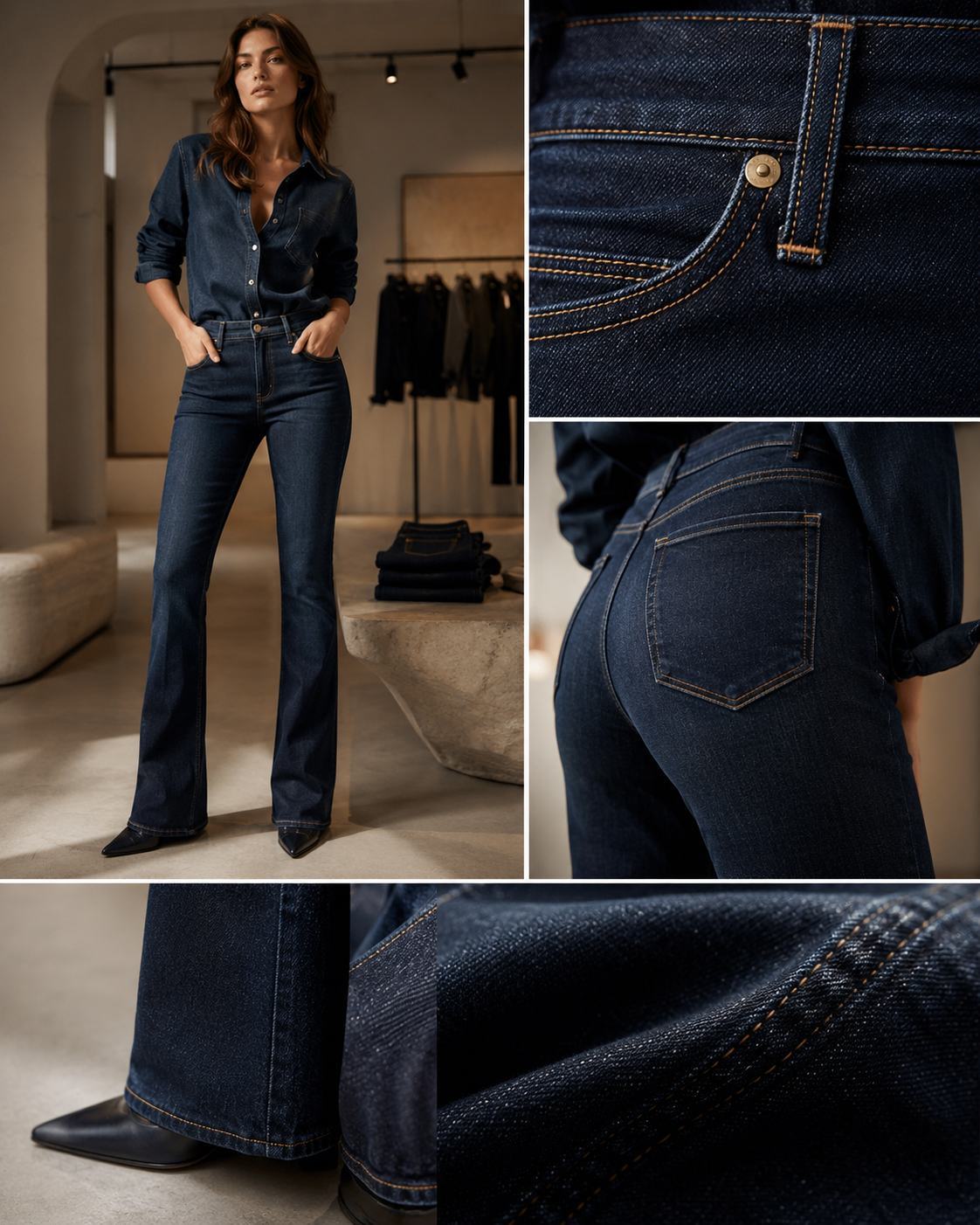
Designer jeans are often worth it for fit and comfort because they are usually developed with better pattern balance, waistband control, rise adjustment, hip shaping, and fabric performance. A better fit can improve body proportion, reduce discomfort, and make the jeans easier to wear all day.
Dive Deeper
Fit is where designer jeans either win or fail. A pair of jeans can have great fabric and a beautiful wash, but if the waist gaps, the crotch pulls, the thigh feels tight, or the leg opening sits awkwardly over shoes, customers will not love it. Denim is close to the body, so small measurement mistakes become big comfort problems.
This is why the popular question “What is the 2 finger rule for jeans?” matters. The two-finger rule means that after buttoning the jeans, you should be able to slide about two fingers between your waist and the waistband. If you cannot fit two fingers, the waist may be too tight. If you can fit much more, the jeans may be too loose. It is a quick check for comfort, especially when customers are trying jeans in-store or judging whether the waistband has enough ease.
But the two-finger rule is not perfect. It only checks the waist. Great jeans also need the right rise, hip curve, seat depth, thigh width, knee position, inseam, and leg opening. A waistband may pass the two-finger test but still create pulling at the front crotch. A plus size customer may need more back rise and hip room, not just a larger waist. A stacked jean may need a narrower leg opening to create stacking, while a baggy jean may need extra volume but still require a stable waistband.
For brands, fit should be developed by target customer, not by guesswork. A boutique selling to curvy women needs different blocks than a streetwear brand selling oversized men’s baggy jeans. A high-end brand developing selvedge denim may want shrinkage testing and rigid fabric behavior. A fashion influencer launching stacked jeans may care about how the jean falls over sneakers in photos and videos.
Here is a fit development table that brands can use:
| Fit Area | Why It Matters | What to Adjust in Custom Jeans |
| Waistband | Prevents slipping or pinching | Waist measurement, waistband curve, stretch |
| Rise | Controls comfort and body proportion | Front rise, back rise, crotch depth |
| Hip/Seat | Reduces pulling and flattening | Hip curve, seat angle, back yoke |
Thigh | Affects movement | Thigh width, fabric stretch, seam position |
Inseam | Controls length and stacking | Regular, tall, cropped, stacked length |
Leg Opening | Changes silhouette | Skinny, straight, bootcut, baggy, jogger cuff |
Pocket Placement | Shapes the back view | Pocket size, angle, height, spacing |
Comfort is not only softness. A very soft jean can feel nice at first but lose structure quickly. A good designer jean balances comfort and shape retention. For skinny jeans, stretch recovery matters. For straight jeans, fabric stability matters. For baggy jeans, the denim must have enough body to hold the silhouette. For jogger jeans, waist and cuff comfort become key. For denim jackets and denim shirts, shoulder mobility and washing shrinkage are critical.
The best designer jeans do not make customers think about fit all day. They simply work. They sit at the waist. They move when the customer sits. They make sneakers, boots, heels, and casual tops look better. That kind of fit requires development, sample correction, and manufacturing experience.
For DiZNEW’s target customers—designers, online boutique owners, influencer shops, and premium brand buyers—fit can be the difference between a one-time sale and a long-term denim line. When customers comment, “These jeans fit better than anything else I own,” the brand earns trust. That trust is what makes designer jeans worth it.
What Jeans Not to Wear After 40, and How Can Designer Jeans Create a More Modern Look?
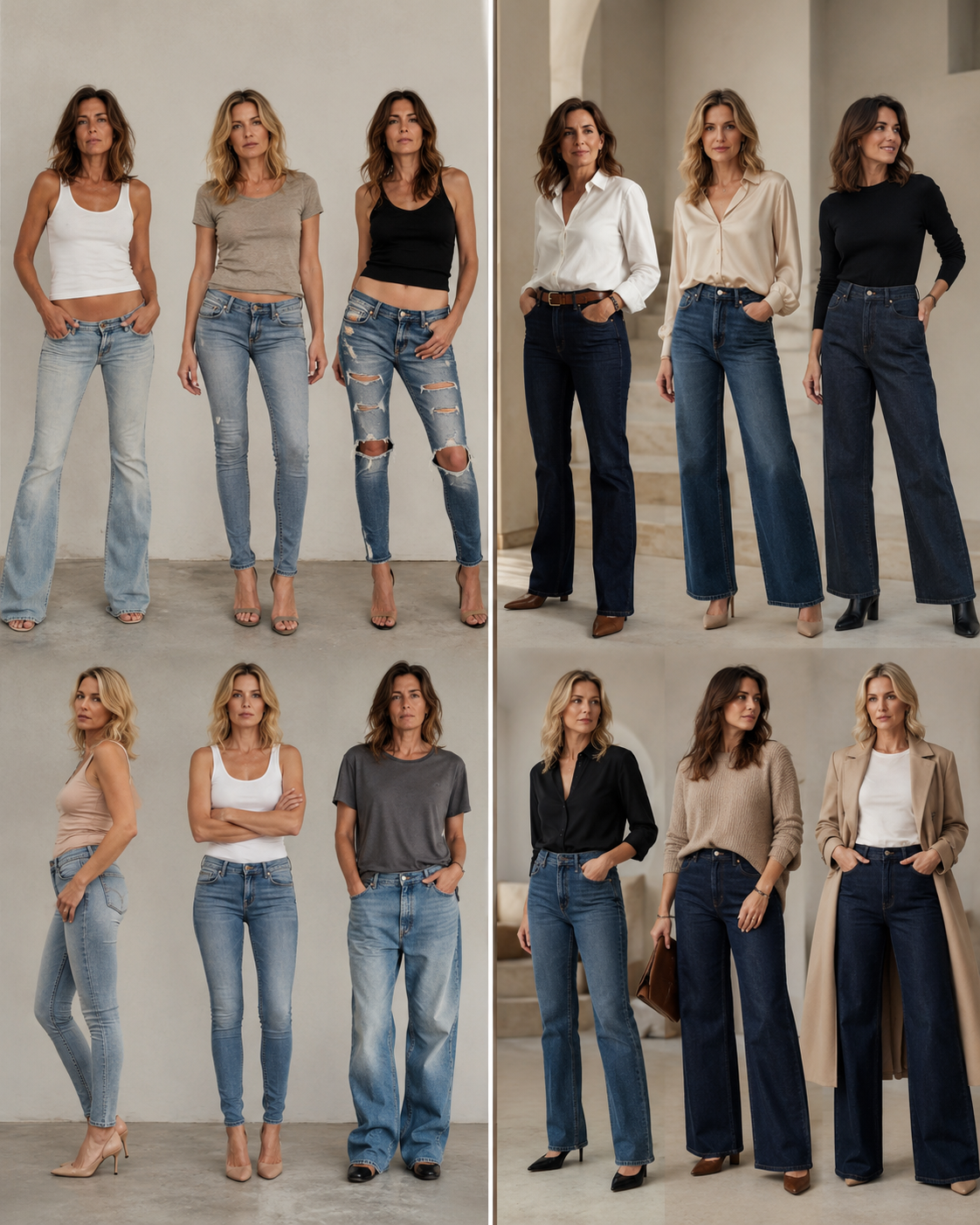
After 40, the jeans to avoid are not based on age alone, but on poor fit, cheap fabric, uncomfortable low rises, overly tight cuts, messy distressing, and outdated proportions. Better choices include straight jeans, dark wash jeans, relaxed fits, wide-leg jeans, high-rise styles, and clean custom denim.
Dive Deeper
The question “What jeans not to wear after 40?” is popular because many customers want style guidance without feeling judged. The honest answer is simple: there is no age where someone must stop wearing a certain jean. Style should not disappear at 40. But proportion, quality, and confidence become more important as customers get older and become more selective.
The jeans to avoid after 40 are usually jeans that fight the body instead of supporting it. Very low-rise jeans can feel uncomfortable and create awkward proportions. Ultra-tight skinny jeans in thin fabric may look dated if they do not balance the outfit. Cheap-looking heavy distressing can feel less polished, especially for customers who want casual but elevated style. Poorly placed fading can draw attention to areas customers may not want highlighted. Too much stretch can create sagging at the knee and seat.
A better approach is not “dress younger” or “dress older.” The better approach is “dress sharper.” Straight jeans are a strong option because they work for many body types and feel modern without being extreme. Dark wash jeans look polished and can move from casual to smart casual. Relaxed jeans give comfort without looking sloppy when the leg line and fabric weight are controlled. Wide-leg jeans can look elegant when the rise and inseam are right. Clean baggy jeans can work beautifully for streetwear-inspired customers if the waist, hip, and shoe break are intentional.
Designer jeans help because they treat maturity as a fit and styling challenge, not a limitation. A woman over 40 may still wear light-wash denim, but she may prefer a cleaner wash and better fabric. A man over 40 may still wear distressed jeans, but the distressing should look designed, not random. A boutique serving customers from 35 to 55 may need jeans that feel stylish but not childish. That market is valuable because these customers often care about quality and are willing to pay for it.
For brands, this search question can become a smart content and product strategy. Instead of writing an article that makes customers feel insecure, write one that helps them choose better. Recommend jeans by lifestyle: office casual, weekend relaxed, travel comfort, dinner outfit, streetwear, or everyday premium basics. Show how fit matters more than age. Use real product photos on different body types. Offer size guidance. Explain rise, inseam, stretch, and fabric weight.
Designer jeans can create a more modern look by removing the small problems that make jeans feel outdated. A higher back rise prevents pulling. A cleaner wash looks more expensive. A better leg shape updates the outfit. A custom waistband improves comfort. A darker indigo or black wash creates a more refined look. Even small details—matte hardware, tonal stitching, leather patch, minimalist branding—can make jeans feel mature and premium.
This is a strong opportunity for boutique buyers. Many stores chase only younger trends, but customers over 40 also buy fashion online. They want jeans that fit real lives: school runs, work, travel, dinners, vacations, casual Fridays, and weekend plans. A custom denim line can serve this customer with straight jeans, relaxed jeans, high-rise styles, dark washes, plus sizes, and clean premium finishes.
The key message is this: after 40, do not stop wearing jeans. Stop wearing jeans that do nothing for you.
The question “What jeans not to wear after 40?” is popular because many customers want style guidance without feeling judged. The honest answer is simple: there is no age where someone must stop wearing a certain jean. Style should not disappear at 40. But proportion, quality, and confidence become more important as customers get older and become more selective.
The jeans to avoid after 40 are usually jeans that fight the body instead of supporting it. Very low-rise jeans can feel uncomfortable and create awkward proportions. Ultra-tight skinny jeans in thin fabric may look dated if they do not balance the outfit. Cheap-looking heavy distressing can feel less polished, especially for customers who want casual but elevated style. Poorly placed fading can draw attention to areas customers may not want highlighted. Too much stretch can create sagging at the knee and seat.
A better approach is not “dress younger” or “dress older.” The better approach is “dress sharper.” Straight jeans are a strong option because they work for many body types and feel modern without being extreme. Dark wash jeans look polished and can move from casual to smart casual. Relaxed jeans give comfort without looking sloppy when the leg line and fabric weight are controlled. Wide-leg jeans can look elegant when the rise and inseam are right. Clean baggy jeans can work beautifully for streetwear-inspired customers if the waist, hip, and shoe break are intentional.
Designer jeans help because they treat maturity as a fit and styling challenge, not a limitation. A woman over 40 may still wear light-wash denim, but she may prefer a cleaner wash and better fabric. A man over 40 may still wear distressed jeans, but the distressing should look designed, not random. A boutique serving customers from 35 to 55 may need jeans that feel stylish but not childish. That market is valuable because these customers often care about quality and are willing to pay for it.
For brands, this search question can become a smart content and product strategy. Instead of writing an article that makes customers feel insecure, write one that helps them choose better. Recommend jeans by lifestyle: office casual, weekend relaxed, travel comfort, dinner outfit, streetwear, or everyday premium basics. Show how fit matters more than age. Use real product photos on different body types. Offer size guidance. Explain rise, inseam, stretch, and fabric weight.
Designer jeans can create a more modern look by removing the small problems that make jeans feel outdated. A higher back rise prevents pulling. A cleaner wash looks more expensive. A better leg shape updates the outfit. A custom waistband improves comfort. A darker indigo or black wash creates a more refined look. Even small details—matte hardware, tonal stitching, leather patch, minimalist branding—can make jeans feel mature and premium.
This is a strong opportunity for boutique buyers. Many stores chase only younger trends, but customers over 40 also buy fashion online. They want jeans that fit real lives: school runs, work, travel, dinners, vacations, casual Fridays, and weekend plans. A custom denim line can serve this customer with straight jeans, relaxed jeans, high-rise styles, dark washes, plus sizes, and clean premium finishes.
The key message is this: after 40, do not stop wearing jeans. Stop wearing jeans that do nothing for you.
Why Are Some Designer Jeans So Expensive?
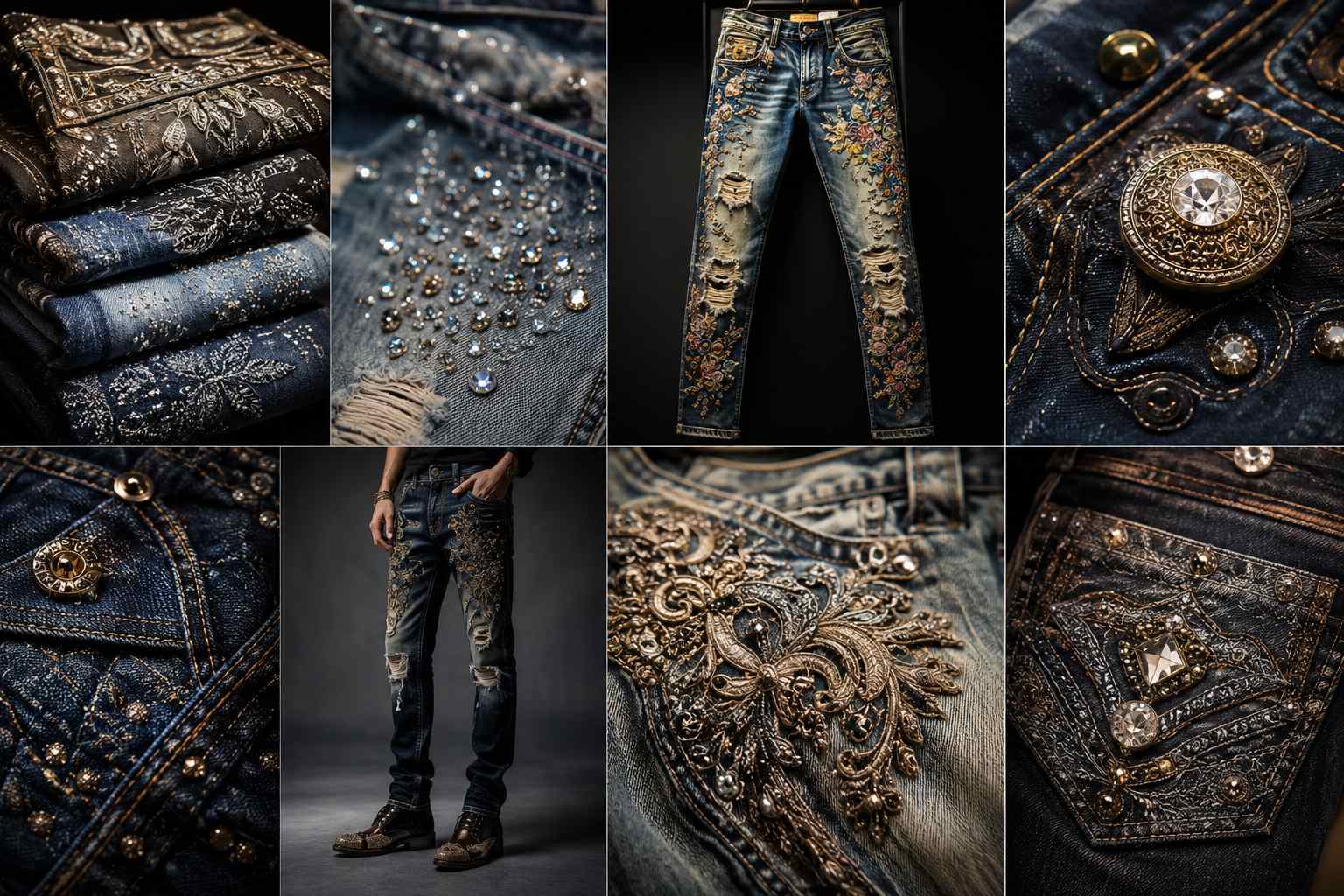
Some designer jeans are expensive because of premium fabric, complex washing, handmade details, limited production, luxury trims, brand value, and difficult construction. The price may also rise when jeans include rare decoration such as crystals, diamonds, embroidery, special hardware, or collectible design history.
Dive Deeper
Designer jeans can range from affordable premium denim to extreme luxury pieces. A $120 pair, a $400 pair, a $1,000 pair, and a $10,000 pair are not priced for the same reason. Understanding the difference helps customers and brand buyers make smarter decisions.
At the practical level, price comes from fabric, labor, development, washing, trims, and quality control. Better denim costs more. A complex wash costs more than a simple rinse. Hand distressing costs more than machine-only finishing. Embroidery, rhinestones, patchwork, coating, custom buttons, branded rivets, leather patches, and special packaging all add cost. If a style requires multiple sampling rounds to perfect the fit, that development time also has value.
At the brand level, price includes identity. Customers are not just buying cotton and thread. They are buying a look, a story, and the feeling of belonging to a certain fashion world. This is why two pairs with similar material cost may sell at very different prices. One is a product. The other is a brand experience.
The hot question “What is the name of the jeans that cost $10,000?” is often connected to luxury denim examples such as Escada’s Swarovski crystal-encrusted jeans, which have been reported as selling for $10,000. Other extreme denim examples include Gucci Genius jeans, famous for luxury embellishment and high pricing, and Secret Circus diamond jeans, often discussed as one of the most extravagant diamond-decorated jeans concepts. These examples are not normal everyday denim. They are conversation pieces.
For most boutique buyers, the lesson is not “make $10,000 jeans.” The real lesson is that customers pay more when jeans feel special. A brand does not need diamonds to create value. It can create value through fit, wash, story, rarity, and detail.
Here is a practical cost-value breakdown:
| Price Driver | Low-Cost Jeans | Premium/Designer Jeans | Luxury Collectible Jeans |
| Fabric | Basic denim | Better cotton, stretch, selvedge, specialty fabric | Rare or luxury material combinations |
| Wash | Simple rinse or enzyme Layered wash, whiskers, | Layered wash, whiskers, tint, hand sanding | Artistic or highly decorative finish |
| Details | Generic trims | Custom logo, hardware, patch, embroidery | Crystals, diamonds, gold, handmade art |
Production | Large standard runs | Small or controlled batches | Limited edition or one-off |
Fit Development | Basic sizing | Multiple sample corrections | Couture-level customization |
Customer Value | Low price | Better wear, style, identity | Status, collectibility, publicity |
The danger is assuming expensive always means better. It does not. Some designer jeans are overpriced because the logo carries the price while the product itself is average. Smart customers and smart boutique buyers should look beyond branding. Check fabric recovery. Look at seam quality. Test the wash. Review measurement consistency. Ask whether the style solves a real customer need.
This is where OEM/ODM manufacturing becomes useful. A brand can choose where to invest. Maybe the customer does not need expensive fabric, but they do need a unique stacked fit. Maybe the brand wants a clean straight jean but with premium wash and custom logo hardware. Maybe a boutique wants plus size jeans with better hip comfort and stronger stretch recovery. The best designer denim is not always the most expensive. It is the most intentional.
DiZNEW helps brands control that intention. With experience in complex denim customization, small MOQ production starting from 30 pieces, and capacity for large orders up to 10,000 pieces, brands can develop premium jeans that match their market instead of copying someone else’s price point.
Do Designer Jeans Last Longer Than Cheap Jeans?
Designer jeans can last longer than cheap jeans when they use stronger denim, better stitching, stable trims, controlled shrinkage, and higher-quality finishing. However, longevity also depends on fabric type, washing method, wearing habits, and garment care.
Dive Deeper
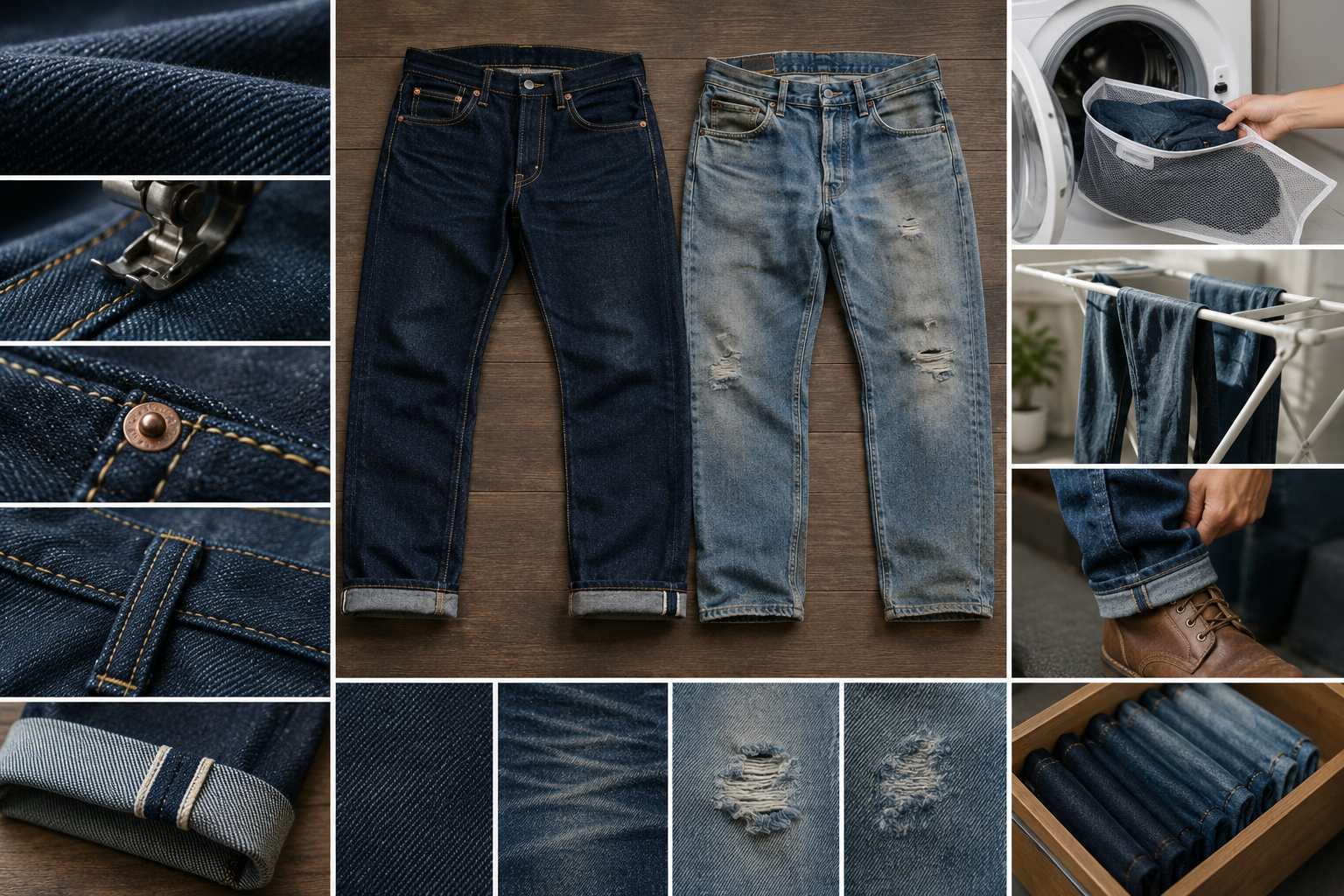
The idea that “designer jeans last longer” is generally true when the product is well made, but it is not automatic. A luxury label does not guarantee durability. A heavily distressed designer jean may be intentionally fragile in certain areas. A very soft stretch jean may feel amazing but need careful recovery testing. A raw selvedge jean may last for years but require specific care. So the better question is not “Do designer jeans last longer?” It is “What construction choices make jeans last longer?”
Fabric weight is one factor. Heavier denim can be more durable, but it is not always better for every style. A summer denim short needs comfort and breathability. A stacked jean may need medium-to-heavy fabric to create structure. A skinny jean needs stretch and recovery. A denim jacket needs shoulder mobility. Durability depends on matching the fabric to the style.
Stitching is another major factor. Cheap jeans may use weaker thread, poor seam tension, and fewer reinforcements. Better jeans usually reinforce stress points such as pocket corners, crotch seams, belt loops, fly, and side seams. Bartacks, rivets, and correct seam allowance help the garment survive real wear.
Wash quality also affects lifespan. Denim washing is not just about color. It changes the fabric surface, hand feel, shrinkage, and strength. Aggressive washing can create a cool vintage look, but if it is not controlled, it may weaken the fabric too much. A professional factory must balance design effect with garment durability. This is especially important for distressed jeans, ripped jeans, and heavy enzyme washes.
Customer care matters too. Jeans do not need to be washed after every wear unless they are dirty. Overwashing fades color and weakens fibers faster. Turning jeans inside out, washing cold, avoiding harsh dryers, and air drying can help preserve shape and color. For stretch jeans, high heat can damage elasticity. For dark denim, gentle washing helps keep the color richer.
For brands, durability is not only a quality issue; it is a reputation issue. Online reviews often mention whether jeans stretch out, shrink, rip, fade too fast, or lose shape. A customer who buys cheap jeans expects less. A customer who buys designer jeans expects more. That expectation must be built into product development.
A simple durability checklist for custom jeans:
Quality Test | Why It Matters |
| Shrinkage test | Prevents size complaints after washing |
Colorfastness test | Reduces dye transfer and uneven fading |
| Seam strength test | Helps prevent ripping at stress points |
| Stretch recovery test | Prevents baggy knees and loose waist |
Hardware test | Ensures buttons, rivets, and zippers stay secure |
| Measurement check | Keeps sizing consistent across production |
Who Should Buy Designer Jeans or Custom Denim?
Designer jeans or custom denim are best for customers who want better fit and style, and for fashion businesses that need unique products. Designers, online boutiques, influencer brands, and premium labels can use custom jeans to build stronger brand identity and offer products competitors cannot easily copy.
Dive Deeper
Not everyone needs designer jeans. If a customer only wants the cheapest possible pair for occasional use, basic jeans may be enough. But if fit, comfort, image, durability, and uniqueness matter, designer jeans make more sense. The same logic applies to fashion businesses. If a store only competes on price, generic wholesale jeans may work for a short time. But if a brand wants loyal customers, stronger margins, and recognizable style, custom denim is a smarter path.
Fashion designers should consider custom denim when they have a clear idea that existing wholesale styles cannot satisfy. Maybe the designer wants a dramatic stacked jean with a special knee shape. Maybe they want a denim jacket with curved seams and embroidery. Maybe they want a selvedge-inspired straight jean with modern pocket placement. A good manufacturer helps translate creative ideas into workable patterns, samples, trims, and production.
Online boutique owners should consider custom jeans because denim can become a best-selling anchor category. Tops and dresses often follow seasonal trends, but jeans can sell year-round. A boutique that develops a signature fit—such as high-rise straight jeans, plus size baggy jeans, or premium stacked jeans—can build repeat customer demand. Private-label denim also makes price comparison harder because competitors cannot sell the exact same product.
Influencer brands and online celebrity stores should consider custom denim because jeans perform well visually. Denim shows shape, attitude, movement, and lifestyle in photos and videos. A unique wash or silhouette can become instantly recognizable on TikTok, Instagram, and online boutique campaigns. For these brands, design details matter: waistband logo, back pocket embroidery, special rivets, long inseam, dramatic stacking, or rhinestone wash effects.
High-end brands should consider custom denim when they need consistent quality, complex development, and production control. Premium customers notice details. They care about hand feel, stitching, hardware, packaging, and fit consistency. A factory experienced in complex denim customization can support the development process from design sketch to physical sample to bulk production.
Here is who benefits most:
| Buyer Type | Main Need | Best Custom Denim Direction |
| Fashion Designer | Original product idea | Sketch-to-sample development |
| Online Boutique | Unique styles and better margins | Private-label jeans with custom logo |
Influencer Store | Viral, photo-friendly products | Stacked, baggy, rhinestone, distressed jeans |
Premium Brand | Quality and consistency | OEM/ODM production with strict QC |
Plus Size Brand | Better fit for real bodies | Custom blocks, rise, hip, thigh control |
| Streetwear Brand | Strong silhouette | Baggy, stacked, cargo denim, coated wash |
The most important point is that custom denim does not need to begin with huge quantities. Many buyers are afraid to start because they think custom manufacturing requires very large orders. DiZNEW supports small MOQ starting from 30 pieces, which helps brands test styles before scaling. When a product performs well, DiZNEW can also support larger orders up to 10,000 pieces, making it suitable for both early-stage boutiques and growing denim brands.
Custom denim is not only about putting a logo on jeans. It can include fabric selection, fit development, washing, distressing, embroidery, printing, patchwork, hardware, labels, packaging, sizing, and production planning. The best result happens when the brand understands its customer and the factory understands denim.
For a boutique, the goal may be a pair of jeans customers want to reorder in every wash. For a designer, the goal may be bringing a sketch to life. For an influencer brand, the goal may be a viral silhouette. For a premium label, the goal may be consistent quality across seasons. DiZNEW’s role is to help turn those goals into real products.
Final Thoughts: Why Buy Designer Jeans from a Custom Denim Manufacturer?
Designer jeans are worth buying when they do something ordinary jeans cannot do. They fit better. They look more intentional. They carry a stronger brand message. They last longer when properly developed. They help customers feel more confident and help fashion businesses sell something more valuable than another basic pair of jeans.
For consumers, designer jeans can be a wardrobe upgrade. For boutique owners, designers, and online fashion brands, designer jeans can be a business opportunity. Denim is familiar, but the right custom denim product can still feel fresh, personal, and highly profitable.
If you are building a denim collection and want jeans that reflect your own brand identity, DiZNEW can help you develop custom jeans from idea to finished product. With more than 20 years of experience in denim R&D, manufacturing, and sales, DiZNEW supports plus size jeans, baggy jeans, stacked jeans, straight jeans, selvedge jeans, skinny jeans, jogger jeans, denim jackets, denim shorts, denim shirts, and more.
Whether you are a fashion designer, online boutique owner, influencer store, high-end brand, or private-label buyer, DiZNEW can support OEM/ODM denim customization, logo development, complex washes, special silhouettes, sample making, small MOQ testing from 30 pieces, and bulk production up to 10,000 pieces.
Ready to create jeans your customers cannot find anywhere else? Contact DiZNEW today to request a quote, share your design idea, and start developing your custom designer jeans collection.
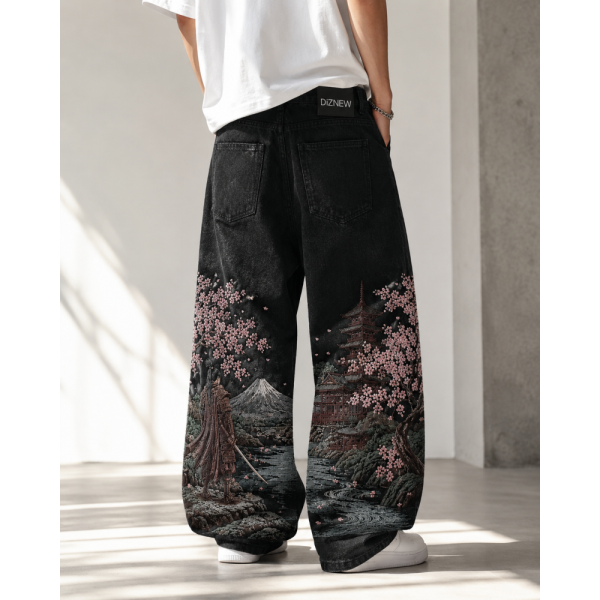
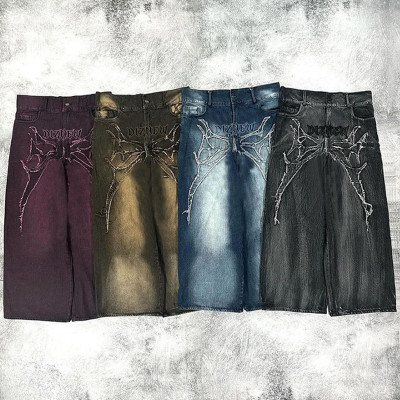
Premium wide-leg denim jeans featuring a vintage washed black finish, detailed Japanese landscape artwork, embroidery-style decoration, and custom brand label options. Designed for streetwear brands, designer labels, and private label collections looking for statement denim with strong visual storytelling.
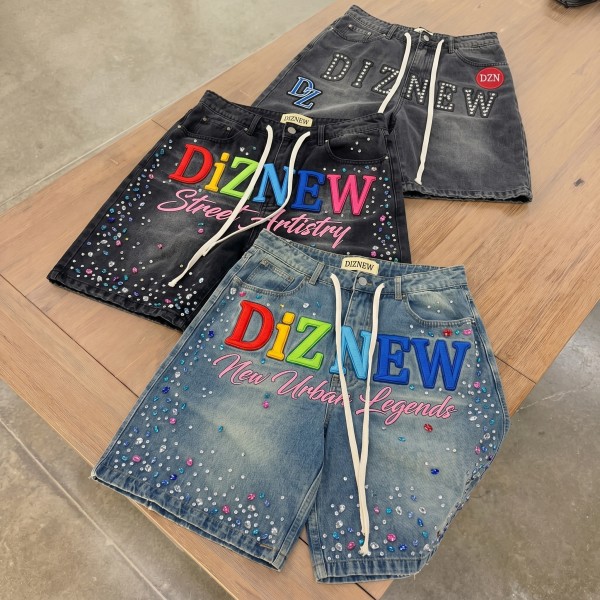
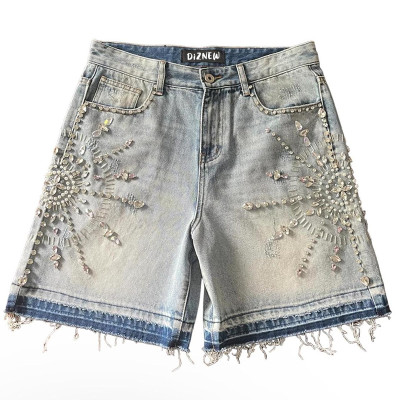
Custom Rhinestone Logo Denim Shorts: Wholesale supply direct. We manufacture premium embroidered baggy jean shorts for brands.
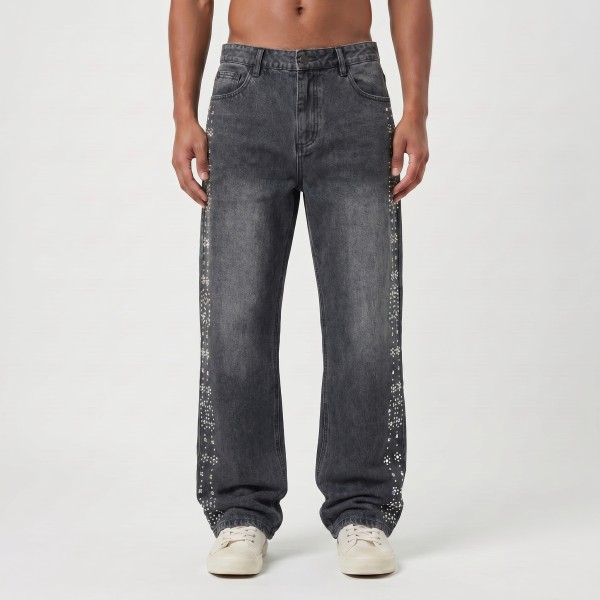
Discover premium DiZNEW denim jeans with decorative studs for a sparkling, stylish look. Order today!
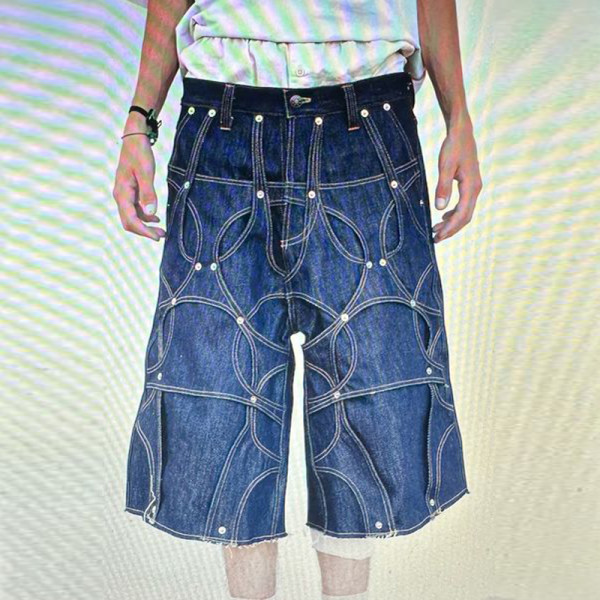
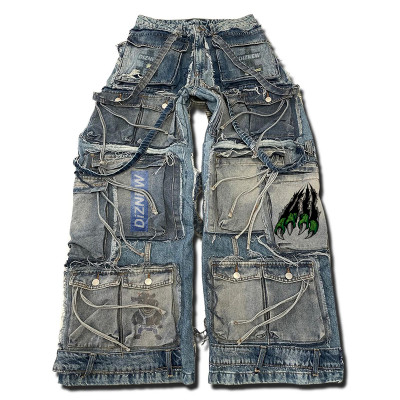
These designer denim shorts for men feature intricate decorative stitching and rivet details, perfect for streetwear fashion. The wide-leg silhouette adds a bold look, ideal for trendsetters.