how to dye patterns on jeans
Pattern dyeing can turn an ordinary pair of jeans into a product customers remember. A cloudy ice-dyed leg creates a very different mood from a clean screen-printed logo, while a bleached flame pattern will age differently from a fiber-reactive print. The visual idea may begin with artwork, yet the final result depends on fabric composition, indigo depth, garment construction, dye chemistry, washing, and production control.
To dye patterns on jeans, first identify the denim fiber content and desired visual effect. Prewash the garment, choose a dye compatible with the fiber, and apply it through tie-dyeing, stenciling, printing, resist dyeing, dipping, or direct application. After the color develops, rinse away loose dye, complete the required fixation process, wash the jeans separately, and test colorfastness before regular wear or bulk production.
One detail often changes the whole outcome. Cotton denim may accept a new color well while its polyester stitching stays almost unchanged. A bright design may lose contrast over dark indigo. An attractive sample may become inconsistent when the same method is used on 1,000 garments. Good pattern dyeing therefore begins before anyone opens the dye container. It starts with the fabric specification, artwork, wash sequence, and an honest decision about how much variation the design can tolerate.
What Is the Best Way to Dye Patterns on Jeans?
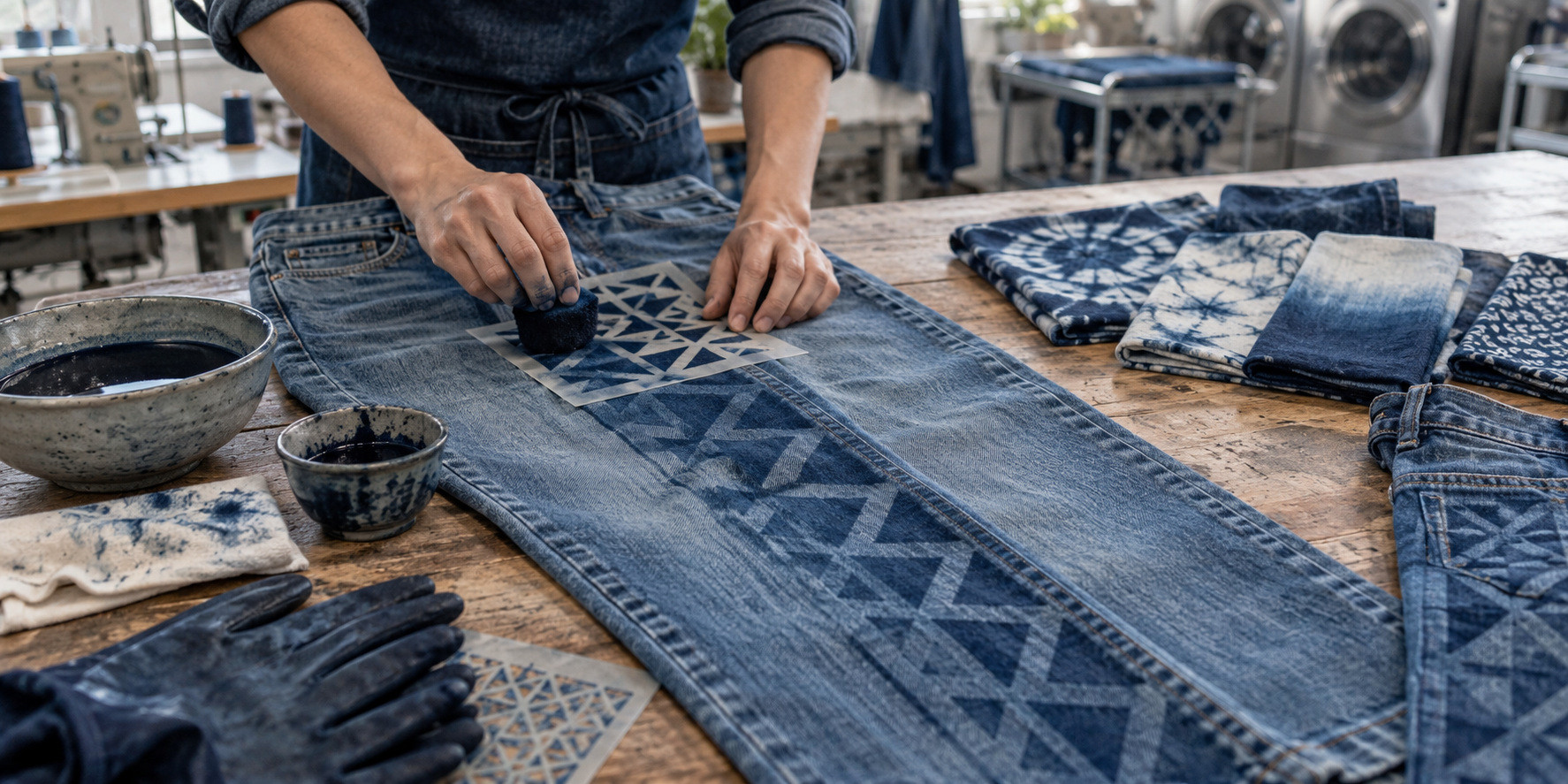
The best method matches the dye to the fiber and the application process to the artwork. Fiber-reactive dyes are a strong choice for cotton denim, while synthetic-rich denim requires dyes designed for polyester. Tie-dyeing and ice dyeing suit organic patterns. Stencils, screen printing, and direct application provide greater control over logos, lettering, and repeated graphics.
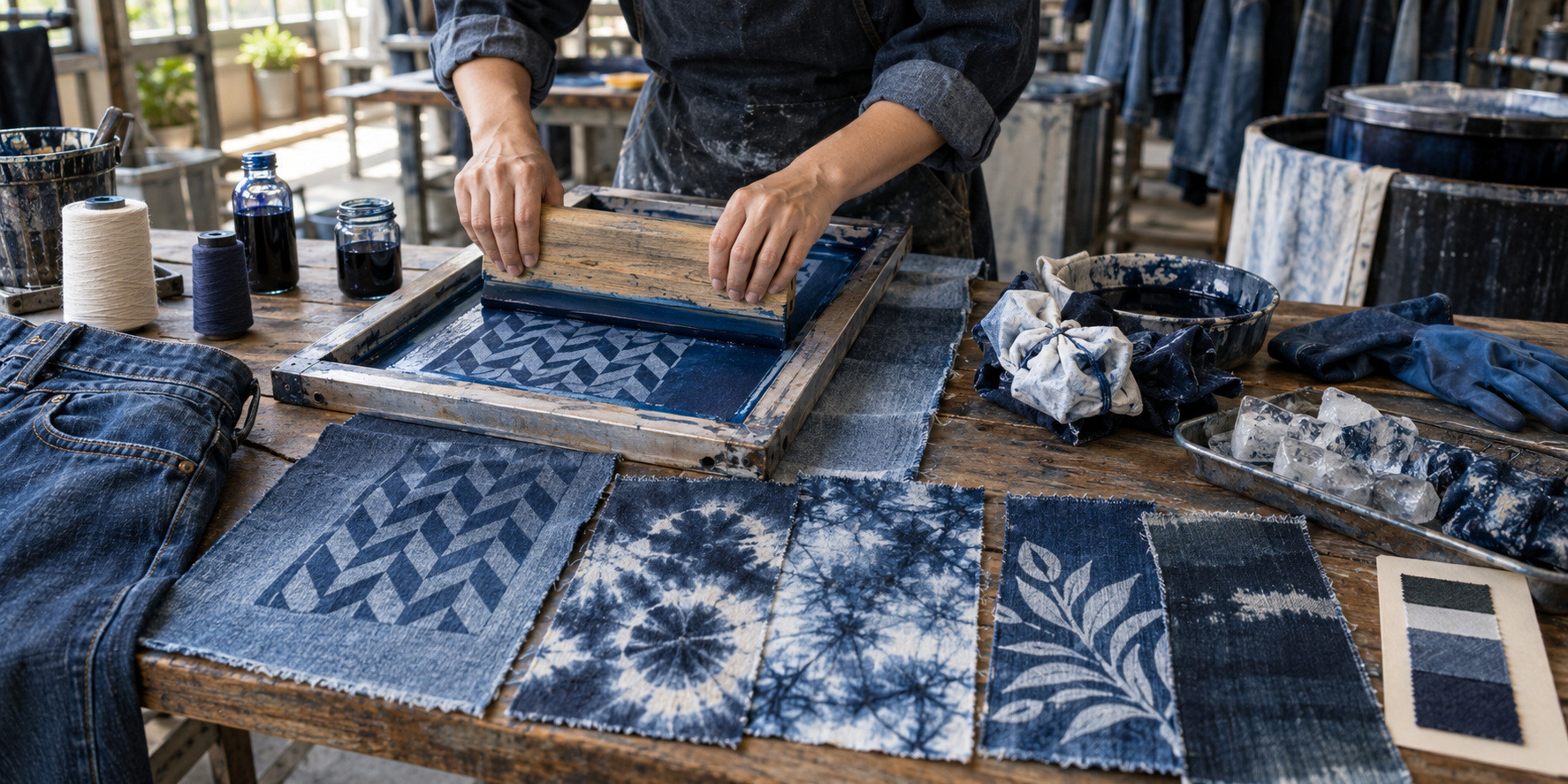
Most jeans use cotton-rich denim, which makes fiber-reactive dye a practical choice for vivid and washable patterns. This dye chemically bonds with cellulose fibers and is commonly used with soda ash. It works well for tie-dyeing, Shibori, direct painting, immersion dyeing, screen printing, and ombré effects. Jacquard identifies Procion MX as a fiber-reactive dye intended for cotton and other plant-based fibers, with applications that include printing, tie-dyeing, and ice dyeing. Jacquard Procion MX product guidance
The existing color of the jeans matters. White or ecru denim offers the cleanest base for bright shades. Light-wash blue denim adds an indigo undertone, so yellow may appear greener and pale pink may become muted. Dark blue or black jeans need a high-contrast print, discharge process, controlled color removal, or an opaque pigment system. Adding pale dye over dark indigo rarely produces a clear pale design.
What Dye Works Best on Denim?
| Denim composition | Suitable color system | Typical use | Main consideration |
| 100% cotton | Fiber-reactive dye | Tie-dye, direct dyeing, Shibori, ice dyeing | Strong washfastness when properly fixed |
Cotton-rich stretch denim | Fiber-reactive dye or garment dye | Fashion washes and organic patterns | Elastane can react poorly to excessive heat or harsh chemicals |
Polyester-rich denim | Disperse dye | Synthetic fashion denim | Usually requires high heat |
Dark indigo denim | Discharge, pigment print, or opaque ink | Logos and high-contrast artwork | Test strength loss and shade change |
| Finished garments | Pigment or screen-printing system | Controlled graphics and repeated designs | Hand feel and curing conditions must be approved |
Does Rit Fabric Dye Work on Jeans?
Rit recommends prewashing jeans without fabric softener, using enough hot water for free movement, and adding salt when dyeing cotton. Its official jeans guide states that garments may stay in the bath from 10 minutes to one hour and will look darker when wet. Rit guide to dyeing jeans
Fiber content still decides the result. Rit All-Purpose Dye is designed for cotton and certain other fibers. Rit DyeMore is intended for synthetic materials. A cotton-polyester blend may develop a heathered or uneven shade because its fibers respond differently. Brands developing products for sale should complete wash, rubbing, perspiration, and shade tests instead of treating a successful home-dye result as production approval.
What Techniques Can You Use to Create Dyed Patterns on Jeans?
Jeans can be patterned through tie-dyeing, Shibori, ice dyeing, dip dyeing, stencil application, screen printing, discharge, pigment printing, and laser-assisted finishing. Free-form methods create natural variation, while printing and laser methods give brands more control over the position, dimensions, and repeatability of a design.
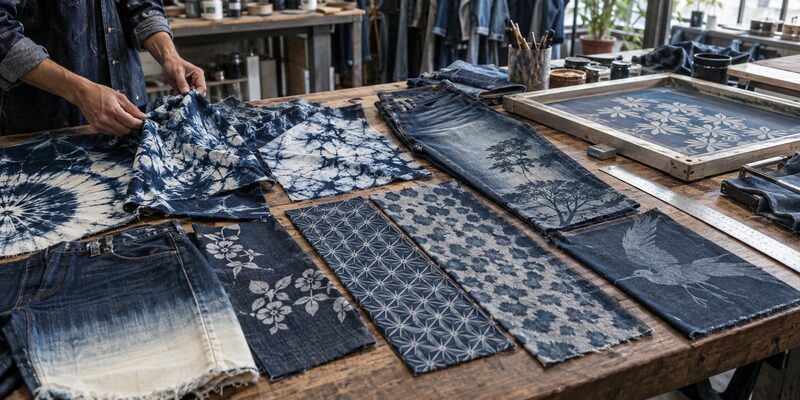
Tie-dyeing uses folds, ties, pleats, or compressed sections to control where dye reaches the denim. It works well for spirals, stripes, circular marks, clouds, and irregular streetwear effects. Denim is heavier than a T-shirt, so dye needs enough time and liquid to penetrate folded layers. Thick seams, waistbands, pockets, and multiple fabric layers may remain lighter.
Shibori uses deliberate folding, binding, clamping, or stitching to produce repeated resist patterns. Ice dyeing places dye powder over ice above prepared denim. As the ice melts, individual dye components travel at different rates and can create crystalline color separation. Dip dyeing and ombré processes gradually change the immersion depth or concentration, producing a controlled color transition from the hem upward.
Reverse dyeing removes part of the existing color with a discharge agent. It can create lightning marks, flames, lettering, or cloudy vintage effects on dark jeans. Chlorine bleach can weaken cotton, damage elastane, yellow the fabric, and continue reacting if neutralization and rinsing are incomplete. A factory should develop the chemical concentration, exposure time, neutralization, and final wash as one controlled recipe.
How Do You Print Designs onto Jeans?
Screen printing is usually the practical choice for repeatable logos and bold graphics. The factory separates the artwork by color, prepares screens, selects an ink or pigment compatible with denim, prints the design, and cures it under controlled conditions. High-density, puff, cracked, rubberized, and distressed finishes can change the surface effect.
Direct-to-garment printing can reproduce detailed multicolor artwork, although denim texture, dark indigo, seams, and garment thickness may limit the result. Heat-transfer printing provides sharp graphics for selected applications, but the transfer film can affect hand feel and durability. Sublimation works mainly on polyester and performs poorly on ordinary cotton denim.
Laser finishing offers accurate placement for faded artwork, whiskers, tonal logos, and repeated surface patterns. It removes or alters indigo at the fabric surface instead of adding a new colored layer. Brands can combine laser work with tinting, spraying, hand brushing, embroidery, or pigment printing to build a more complex finish.
How Do You Prepare Jeans Before Dyeing a Pattern?
Prepare jeans by confirming fiber content, removing stains and fabric finishes, prewashing the garment, and testing the dye on the actual denim. Mark the artwork position after accounting for shrinkage. Protect trims and labels where necessary, and check how the cotton fabric, polyester thread, elastane, pockets, and seams react to the selected process.
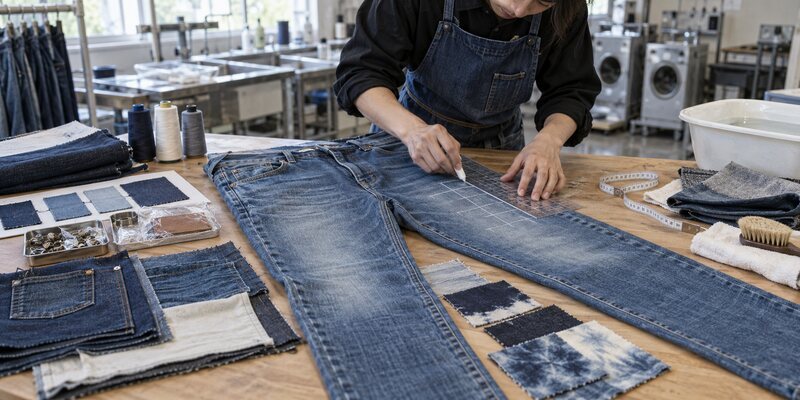
Start with the care label or fabric specification. A jean described as “stretch denim” may contain cotton, polyester, viscose, elastomultiester, or elastane. Each component affects dye absorption, temperature tolerance, and final shade. Heavy 14-ounce rigid cotton denim behaves differently from a lightweight stretch jegging fabric, even when both products are sold as jeans.
Prewashing removes dirt, oil, softener, resin, starch, and surface finishes that can block dye. Visible stains should be treated first because oil and dirt often create pale or irregular areas. Avoid fabric softener. It may leave a coating that interferes with wetting and absorption. Wetting the jeans evenly before immersion also helps reduce spotting.
A brand should test the complete planned sequence. Dyeing before garment washing can provide strong color, but later enzyme, stone, bleach, or softener treatments may change the pattern. Applying a design after the final wash offers more predictable placement and shade, although the curing process must still suit the finished garment.
How to Dye Stitching on Jeans?
Most jeans use polyester sewing thread because it offers reliable strength during sewing and washing. A dye selected for cotton may color the denim while leaving the stitching close to its original shade. This effect can be attractive when contrast stitching is intentional. It becomes a defect when the design specification calls for a fully tonal garment.
Dyeing polyester thread generally requires a disperse dye and high processing temperature. That heat can affect elastane recovery, garment measurements, leather patches, coatings, prints, and certain trims. For custom production, selecting the correct thread color before sewing is often more controllable than trying to recolor it afterward.
Pockets and labels also need attention. Pocketing fabric may use a different fiber blend. Leather patches, woven labels, metal finishes, TPU buttons, zippers, and adhesives can respond unpredictably to heat and chemicals. The sample should include the same production trims planned for the final order.
How Do You Make Dyed Patterns on Jeans Permanent?
Permanent results require the correct dye-fiber combination, accurate fixation, thorough rinsing, controlled washing, and suitable curing. Soda ash commonly fixes fiber-reactive dye on cotton. Printed pigments may require heat curing or a binder. Finished jeans should be tested for laundering, dry and wet rubbing, perspiration, shade change, shrinkage, and appearance after washing.
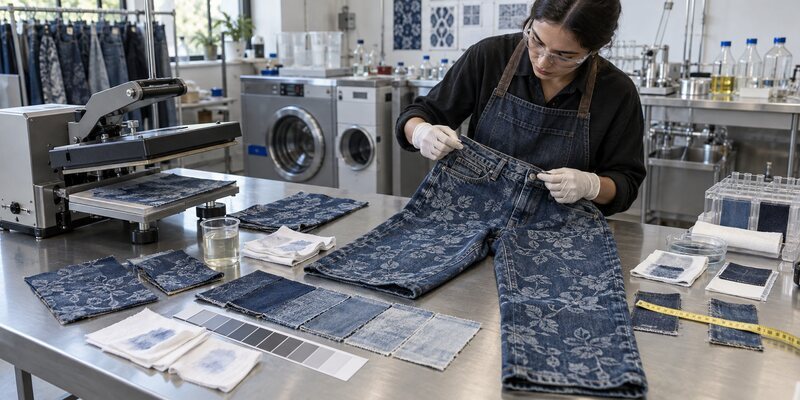
Fixation depends on the color system. Fiber-reactive dyes generally need an alkaline environment, often created with soda ash, so the dye can bond with cotton. All-purpose and direct dyes may use salt to improve dye uptake and a separate fixative to reduce bleeding. Pigment printing places colored particles on the surface with a binder, then uses curing to secure that layer.
Rinsing removes hydrolyzed and unattached dye. Begin with the process recommended for the selected dye, then continue until loose color has been removed. Washing the garment too gently may leave unfixed dye on the surface. That color can transfer to a customer’s shirt, shoes, furniture, or washing machine.
Color bleeding and crocking are different problems. Bleeding occurs when color moves into water. Crocking occurs when color transfers through rubbing. Dark indigo denim naturally presents a higher rubbing risk, and a second pattern dye can add another source of loose color.
| Quality check | What it evaluates | Why buyers should care |
| Laundering colorfastness | Shade loss and staining during washing | Predicts how the design will change at home |
Dry crocking | Color transfer during dry rubbing | Relevant to shoes, bags, and upholstery |
Wet crocking | Transfer from damp fabric | Important for dark indigo and saturated patterns |
| Perspiration resistance | Shade change and staining from sweat | Relevant to waistbands and close-fitting areas |
| Dimensional stability | Shrinkage and twisting | Protects fit and pattern placement |
Appearance after washing | Cracking, peeling, migration, and distortion | Shows whether the approved effect survives use |
A durable pattern still changes with wear. Denim bends at the knee, rubs at pocket edges, and fades along raised seams. Product development should define acceptable aging. A clean geometric logo may require tight limits. A handcrafted tie-dye design can allow wider variation while maintaining approved color families, placement zones, and overall contrast.
For bulk orders, the factory should keep an approved physical sample, dye recipe, process time, temperature record, chemical ratio, curing setting, and acceptable shade range. A pilot run can reveal problems before full production. This step is particularly useful for mixed washes, dark shades, large printed areas, and designs crossing side seams or pocket openings.
How Are Custom Dyed-Pattern Jeans Produced by a Manufacturer?
A manufacturer converts the buyer’s artwork into a production method, develops the denim and wash combination, makes a sample, and records the approved process. Bulk production then follows controlled dye recipes, placement guides, curing settings, and inspection standards. Buyers should supply artwork, garment measurements, fabric preferences, target colors, quantities, size range, labels, packaging, and expected performance.
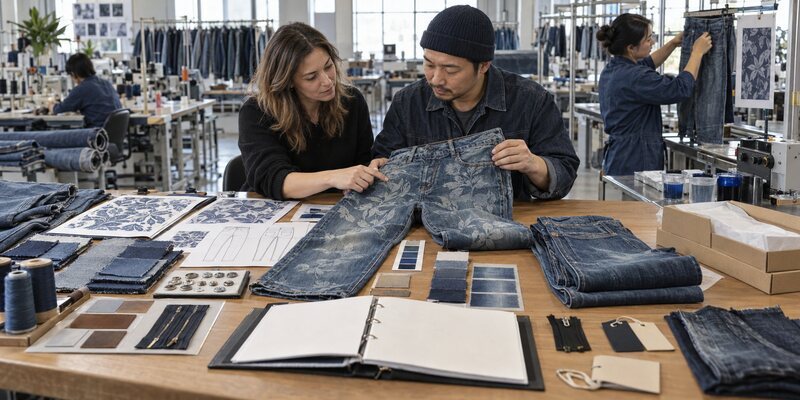
Development begins with the intended retail product. A one-of-a-kind gallery jean allows large differences between garments. A 500-piece online collection needs customers to receive products that resemble the photographed sample. A 10,000-piece program requires stable materials, measurable tolerances, scalable equipment, and inspection at several production stages.
The buyer’s tech pack should include vector artwork where possible, Pantone or approved physical color references, pattern dimensions, placement measurements, denim composition, fabric weight, wash reference, size range, trim details, and packaging requirements. The artwork should also show how it behaves across sizes. A fixed 30-centimeter graphic may look balanced on size 30 and crowded on a much smaller garment.
The factory then selects a workable process. A soft-edged cloud pattern may use hand spraying or tie-dyeing. A sharp two-color logo may use screen printing. A tonal repeated graphic may suit laser finishing. A photographic image could require digital printing, subject to fabric and color limitations. Combining methods may deliver the desired effect, although every added process increases cost, lead time, and production risk.
Sampling should use the intended production fabric and trims. After approval, the team records measurable standards and produces a pilot quantity. Inspectors compare bulk garments with the approved sample under consistent lighting. They check shade, placement, hand feel, garment measurements, leg twist, seam puckering, damage, and color transfer. AQL inspection can evaluate workmanship, while laboratory tests address performance that visual inspection cannot confirm.
DiZNEW supports custom dyed-pattern jeans from the first sketch through sampling and bulk production. With more than 20 years of denim development and manufacturing experience, the company can produce baggy, stacked, straight, skinny, jogger, plus-size, and selvedge jeans, along with denim jackets, shorts, and shirts. Custom options include washing, distressing, laser patterns, embroidery, printing, patchwork, private labels, and branded trims.
Orders can start from 30 pieces for suitable designs and scale to 10,000 pieces or more. The exact minimum depends on fabric availability, color, wash process, artwork, trims, and size breakdown.
If you are developing custom patterned jeans, send DiZNEW your artwork, reference images, target quantity, size range, preferred denim, and expected delivery date. Our team can review the design, recommend a scalable dyeing or printing method, and help turn your concept into a production-ready sample for OEM, ODM, or private-label manufacturing.
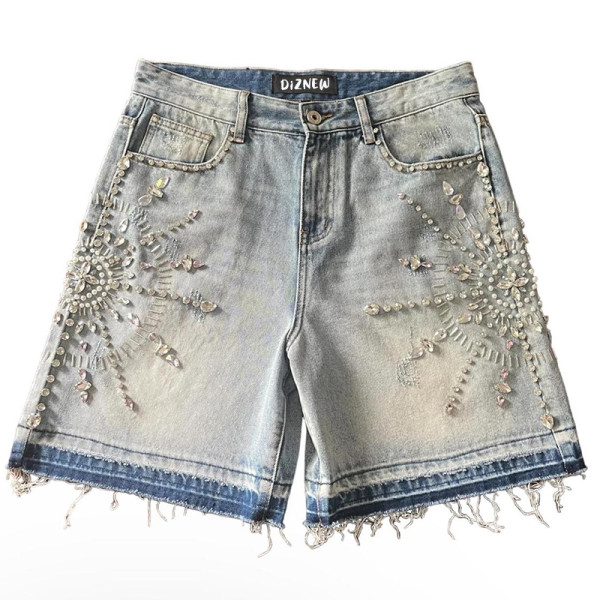
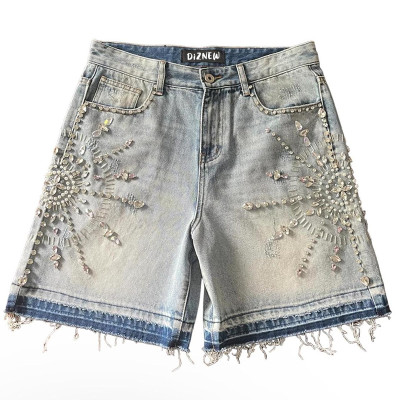
Custom Blue denim shorts with crystal detailing, blending luxury and street style. Stand out with this personalized denim design.
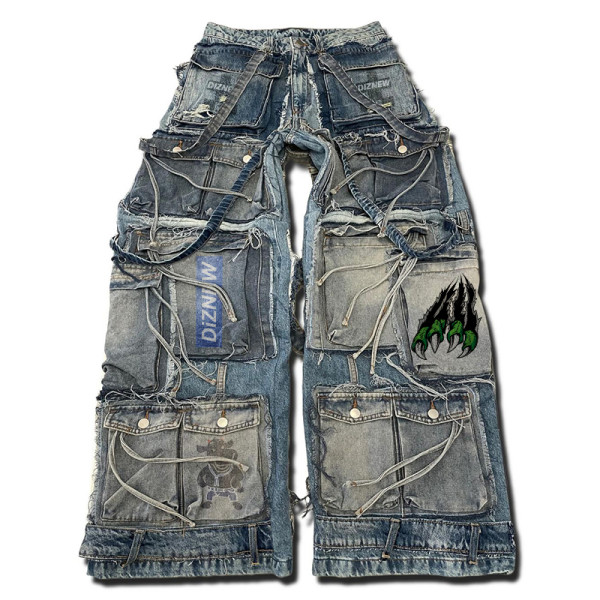
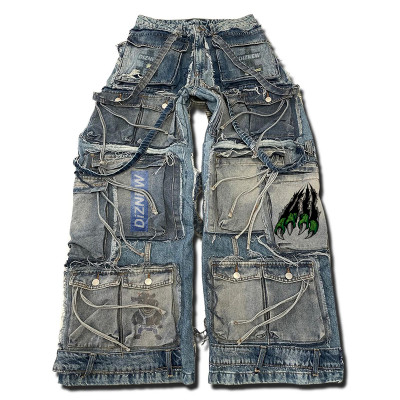
Washed denim cargo jeans with raw edge detail and oversized pockets for a bold streetwear look.
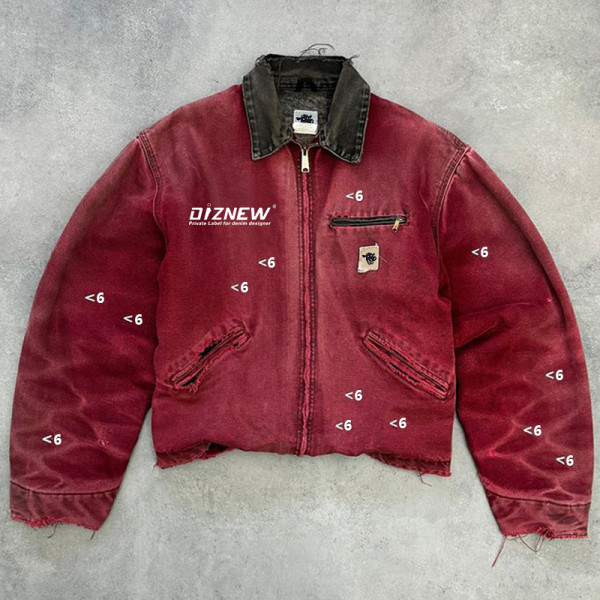
Discover this unique washed red canvas jacket featuring distressed details and vintage workwear aesthetics, perfect for bold fashion statements.
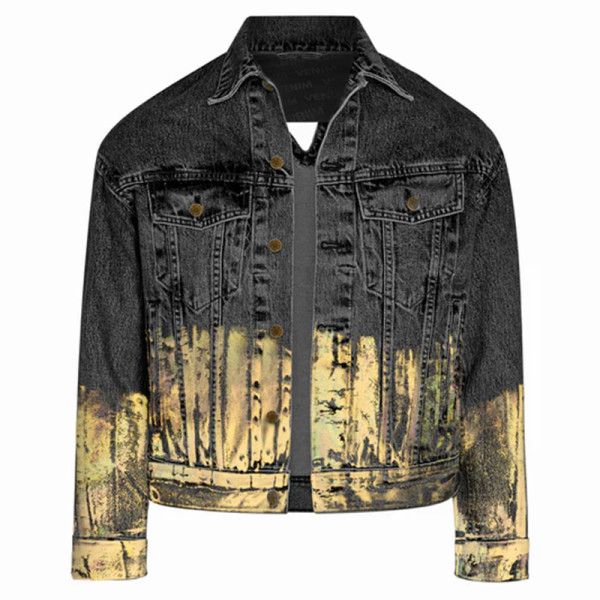
Elevate your wardrobe with this Gold Holographic Foil Black Denim Jacket, blending edgy design and premium craftsmanship.