Why You Love Your Jeans – The Science of Comfort and Style
People do not love jeans only because they are easy to wear. They love jeans because denim quietly becomes part of their daily identity. A good pair of jeans remembers your shape, your lifestyle, your confidence, your workdays, your weekends, your first dates, your travel photos, and sometimes even your brand story. That is why denim is different from many other fashion products. A T-shirt may be replaced without much thought, but a favorite pair of jeans is often repaired, rewashed, restyled, and kept for years.
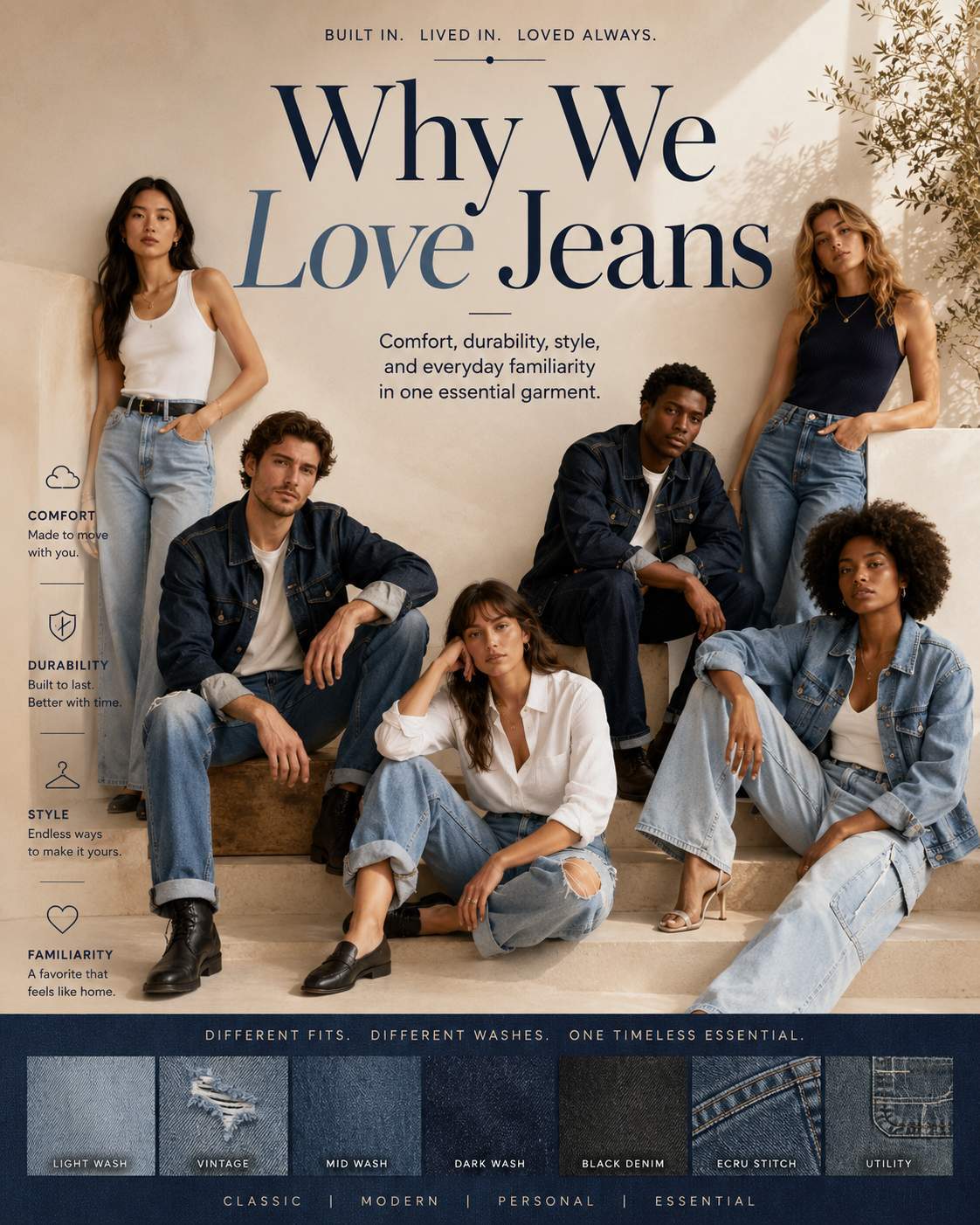
We love jeans because they combine comfort, durability, personal style, and emotional familiarity in one everyday garment. Jeans can be casual or elevated, classic or trend-driven, affordable or collectible. The best jeans fit the body well, move with the wearer, and express personality through fabric, wash, cut, and details.
And that is also why jeans are powerful products for designers, boutique owners, and online fashion brands. When customers say, “I love these jeans,” they are not only talking about cotton, stitching, and hardware. They are talking about how the jeans make them feel. Maybe the waistband feels right. Maybe the wash looks expensive. Maybe the stacked hem sits perfectly over sneakers. Maybe the baggy fit gives them the confidence they wanted. Or maybe the jeans were custom-made for a brand that finally understood its customers. That small emotional moment is where ordinary denim becomes a product people come back to buy again.
Why Do I Love Jeans So Much?
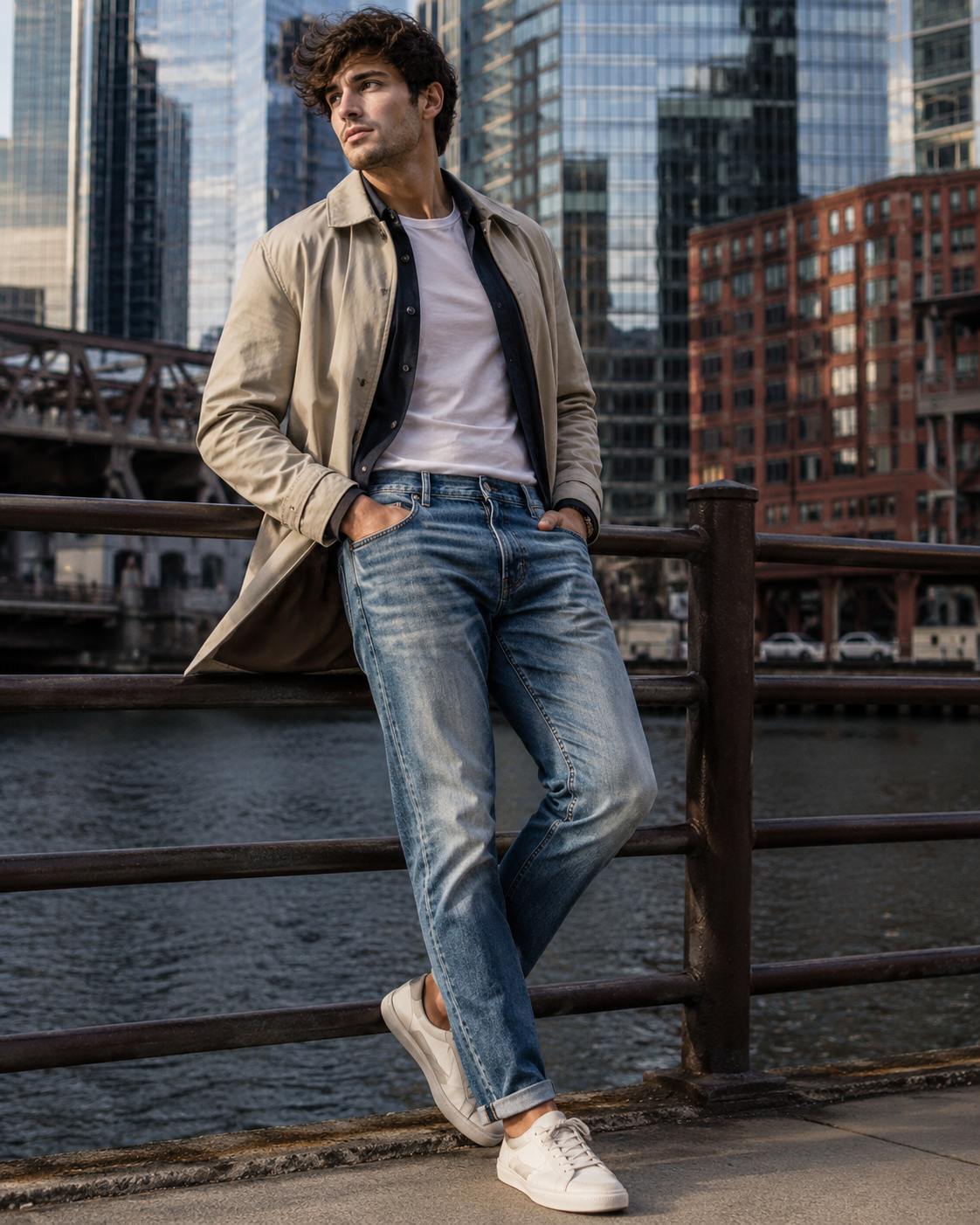
You love jeans because they are practical, comfortable, versatile, and personal. A great pair of jeans works across many situations, from casual streetwear to polished everyday outfits. More importantly, jeans carry memory and identity: the fit, wash, fading, and shape can make the wearer feel confident, relaxed, and recognizable.
Dive Deeper
The real reason people love jeans is that denim solves several fashion problems at once. It is strong enough for daily wear, flexible enough for different outfits, and familiar enough to feel safe. Unlike many trend items, jeans rarely feel disconnected from real life. You can wear them to work in a creative office, to a coffee shop, to a concert, to a weekend market, or on a casual date. With the right wash and styling, the same pair can move from streetwear to smart casual.
This versatility is one reason denim keeps returning in fashion cycles. Vogue’s 2026 denim trend coverage describes the category as moving across a wide range of silhouettes, from skin-tight skinny jeans to classic straight cuts and very wide-leg styles. That tells us something important: denim is not controlled by one single trend anymore. Customers want choice, and different body types, lifestyles, and style communities want different denim shapes.
For fashion brands, this is a huge opportunity. A boutique owner does not have to sell “just jeans.” They can sell a feeling: relaxed confidence through baggy jeans, clean maturity through straight jeans, high-street edge through stacked jeans, premium authenticity through selvedge jeans, or body confidence through plus size jeans. When denim is designed with a clear customer in mind, it becomes easier to build loyalty.
There is also an emotional side. Denim changes with time. It softens, fades, stretches, creases, and becomes more personal after repeated wear. That aging process makes jeans feel more intimate than many other garments. The customer is not only buying a finished product; they are buying something that will become more “theirs” with every wear.
From a manufacturing point of view, this is why details matter. Fabric weight, wash technique, waistband construction, pocket placement, stitching tension, and shrinkage control all influence whether customers will love or abandon a pair of jeans. A buyer may not know the technical language, but they instantly feel the result. If the jeans twist after washing, dig into the waist, flatten the hips, or lose shape after a few wears, the emotional connection breaks.
For brands working with DiZNEW, this is the core question: what kind of denim love do your customers want to feel? Do they want a dramatic stacked streetwear look? A premium selvedge jean that feels collectible? A comfortable plus size jean with better waist-to-hip balance? A denim jacket that carries their logo identity? Once that feeling is clear, product development becomes much more strategic.
What Makes a Pair of Jeans Fit Perfectly?
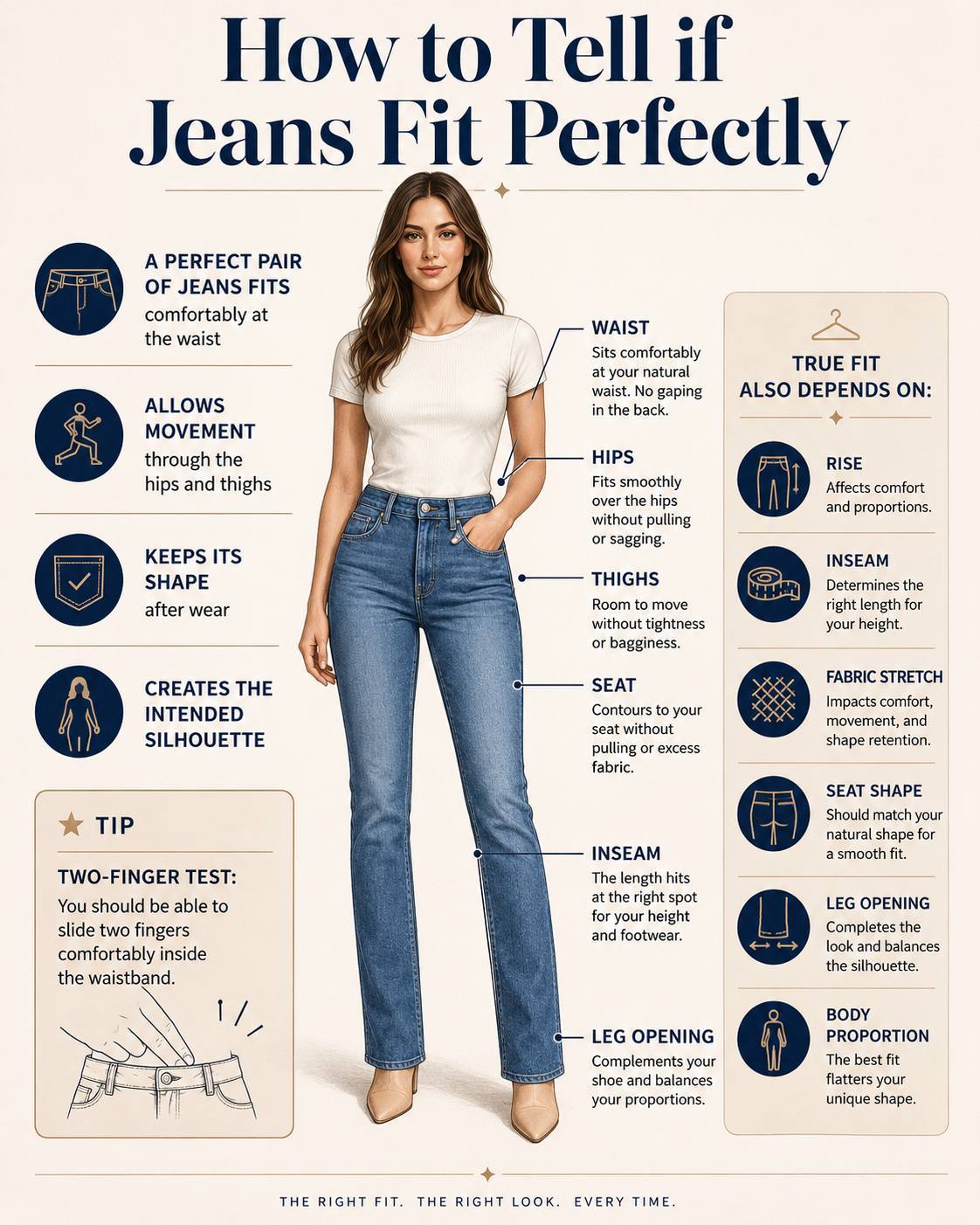
A perfect pair of jeans fits comfortably at the waist, allows movement through the hips and thighs, keeps its shape after wear, and creates the intended silhouette. The two-finger test can help check waistband comfort, but true fit also depends on rise, inseam, fabric stretch, seat shape, leg opening, and body proportion.
Dive Deeper
The “perfect fit” is not the same for every customer. For skinny jeans, the goal may be a close, body-hugging silhouette without painful compression. For baggy jeans, the goal may be room, drape, and streetwear attitude without looking shapeless. For stacked jeans, the lower leg needs enough length and structure to create intentional stacking over shoes. For plus size jeans, the pattern must respect real body curves instead of simply grading up a smaller size.
One popular fit check is the two-finger test. The idea is simple: when wearing jeans, you should be able to slide two fingers between the waistband and your body. If you cannot fit two fingers, the jeans may be too tight; if there is too much space, they may be too loose. Several fashion fit guides describe this as a quick way to judge waistband comfort.
However, the two-finger test is only a starting point. A waistband can pass the test but still fail in real life. For example, high-rise jeans may feel fine when standing but dig into the stomach when sitting. Low-rise jeans may feel comfortable at the waist but slide down while walking. Stretch denim may feel perfect in the fitting room but become loose after several hours if recovery is poor. Rigid denim may feel tight at first but become excellent after break-in.
That is why professional jeans development must look beyond waist measurement. A strong fit review should include the following areas:
| Fit Area | Why It Matters | Common Customer Complaint If Wrong |
| Waistband | Controls comfort and security | Too tight, gapping, sliding down |
Rise | Changes comfort and body proportion | Cuts into stomach or feels too low |
Hip and seat | Shapes the back view | Flattening, pulling, sagging |
Thigh room | Affects movement | Too tight when walking or sitting |
Inseam | Controls length and styling | Too short, dragging, poor stacking |
| Leg opening | Defines silhouette | Not balanced with shoes or body type |
| Fabric recovery | Keeps shape after wear | Bagging at knees or waist |
For online boutique owners, fit consistency is especially important because customers cannot try products before buying. If a customer orders a medium baggy jean and receives a waist that feels like a small, they may not only return the item; they may lose trust in the brand. This is why size charts, sample fitting, shrinkage testing, and production quality control matter so much in custom denim manufacturing.
DiZNEW’s advantage is especially relevant here because the company works with many denim categories: plus size jeans, baggy jeans, stacked jeans, straight jeans, selvedge jeans, skinny jeans, jogger jeans, denim jackets, denim shorts, and denim shirts. Each category requires different pattern logic. A jogger jean needs comfort and elastic structure. A selvedge jean needs premium fabric handling. A stacked jean needs length control. A denim jacket needs shoulder and sleeve balance.
For designers, the best question is not simply “What size should we make?” The better question is: “What body type, wearing habit, and style attitude are we designing for?” When that answer is clear, jeans fit better, sell better, and earn better reviews.t
How Do Different Jeans Styles Show Personality?
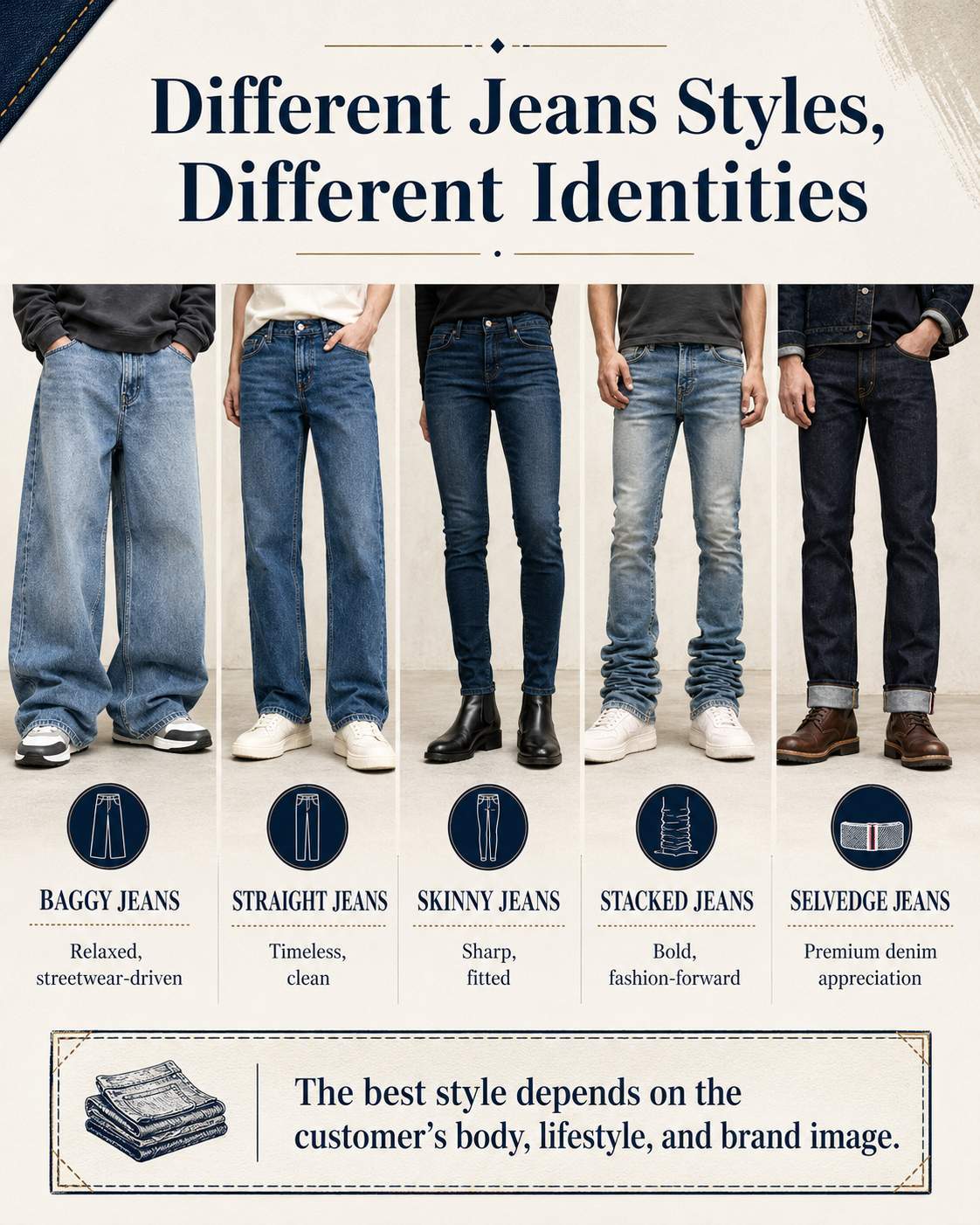
Different jeans styles express different identities. Baggy jeans feel relaxed and streetwear-driven; straight jeans look timeless and clean; skinny jeans create a sharp fitted look; stacked jeans feel bold and fashion-forward; selvedge jeans show premium denim appreciation. The best style depends on the customer’s body, lifestyle, and brand image.
Dive Deeper
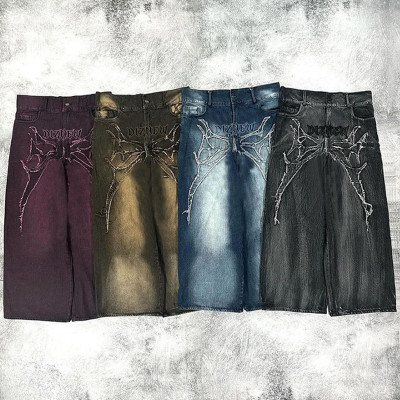
Jeans are never just jeans. The cut tells a story before the customer says a word. A pair of wide baggy jeans with heavy whiskering and a long inseam suggests a completely different personality from a dark straight-leg selvedge jean with minimal fading. One feels young, oversized, and expressive. The other feels mature, premium, and controlled.
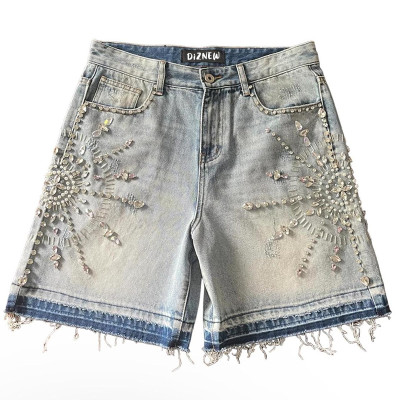
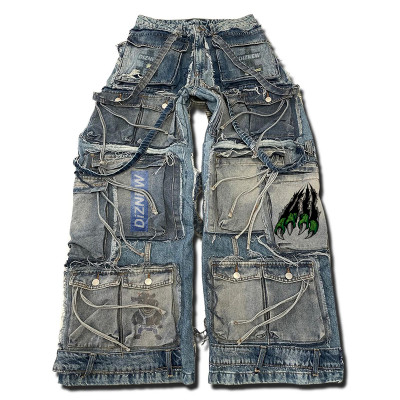
This is why designers and boutique owners should not choose denim styles only because they are trending. They should choose styles because those styles match their customer community. A streetwear boutique may need stacked jeans, baggy jeans, carpenter jeans, and washed black denim. A minimalist premium brand may need straight jeans, relaxed slim jeans, raw denim, or selvedge jeans. An influencer-led online shop may need dramatic washes, embroidery, rhinestone details, contrast stitching, or custom pocket logos.
The question “Are skinny jeans out of style in 2026?” is a good example of why trend thinking must be more flexible. According to Vogue’s 2026 denim trend report, denim is not moving in only one direction. The report highlights a wide range of silhouettes, including skinny jeans, straight cuts, and very wide-leg jeans. In other words, skinny jeans are not completely “out”; they are part of a broader denim wardrobe where multiple fits can coexist.
That is important for brands because not every customer wants the same fashion answer. Some customers still love skinny jeans because they are easy to tuck into boots, style with oversized tops, or wear for a sleek silhouette. Others prefer straight jeans because they feel less trend-dependent. Many younger customers love baggy and stacked jeans because they photograph well and match sneaker culture.
There is also a genderless and body-inclusive shift in denim styling. Baggy jeans, relaxed straight jeans, and wide-leg jeans can work across different body types when the pattern is well developed. Plus size jeans are no longer just basic dark-wash pants; customers want the same trend options as everyone else, including distressed denim, cargo details, stacked hems, and premium washes.
For custom brands, style personality can be built through small but powerful details:
| Customer Style Direction | Recommended Denim Products | Useful Custom Details |
| Streetwear | Baggy jeans, stacked jeans, denim jackets | Heavy wash, long inseam, custom logo patch |
Premium classic | Straight jeans, selvedge jeans | Dark rinse, contrast stitching, leather patch |
Trend boutique | Skinny jeans, flare jeans, embroidered jeans | Rhinestones, embroidery, special wash |
Size-inclusive fashion | Plus size jeans, relaxed jeans | Curve-friendly pattern, stretch recovery |
| Summer collection | Denim shorts, denim shirts | Light wash, soft fabric, raw hem |
| Influencer brand | Statement jeans, matching denim sets | Custom trims, bold pocket design, branding |
The deeper truth is that denim customers often buy identity before they buy fabric. They want to see themselves in the product. They want jeans that say, “This is my style.” That is why OEM and ODM development can be so valuable. Instead of buying generic wholesale jeans, a brand can build a style language: one wash palette, one logo system, one fit identity, one recognizable denim attitude.
DiZNEW can help brands translate that personality into actual products. A design sketch, reference photo, or mood board can become a real sample through fabric selection, pattern development, washing, trimming, and fitting. That process is where creative vision becomes commercial denim.
What Jeans Should You Not Wear After 40?
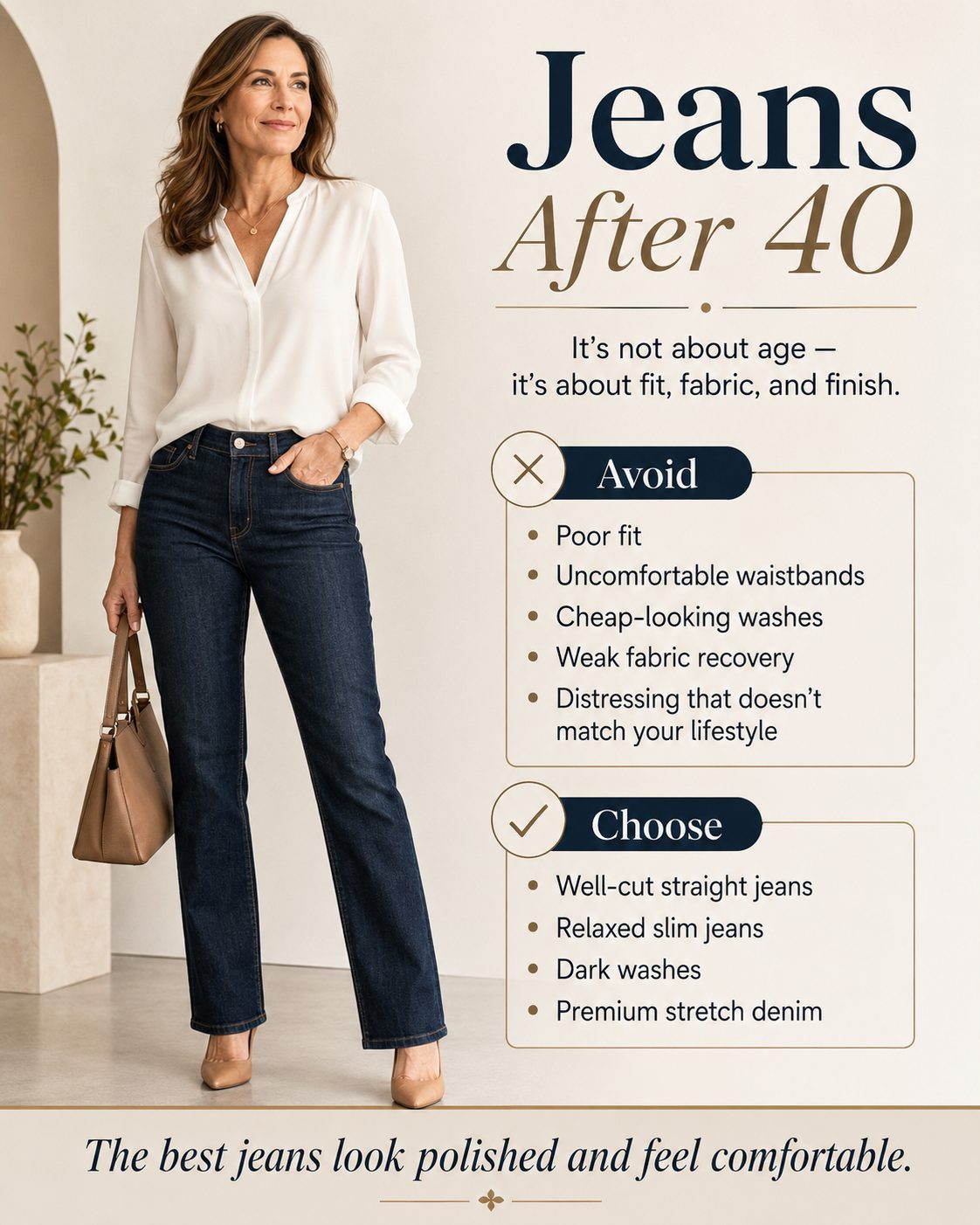
After 40, you do not need to stop wearing any specific jeans style. Instead, avoid jeans with poor fit, uncomfortable waistbands, cheap-looking washes, weak fabric recovery, or distressing that does not match your lifestyle. Well-cut straight jeans, relaxed slim jeans, dark washes, and premium stretch denim often look polished and feel comfortable.
Dive Deeper
The question “What jeans not to wear after 40?” can be misleading if it is answered with strict fashion rules. Style should not expire at a certain age. A confident 45-year-old can wear skinny jeans, baggy jeans, ripped jeans, or wide-leg jeans if the fit, fabric, and styling feel intentional. The real issue is not age. The real issue is quality, proportion, and comfort.
That said, customers over 40 often become more selective. They may care less about chasing every micro-trend and more about jeans that make them look polished without feeling restricted. They may want a waistband that supports rather than squeezes. They may prefer denim that moves with them but does not stretch out after one day. They may want a wash that feels premium instead of overly artificial.
So instead of saying, “Do not wear skinny jeans after 40,” a better recommendation is: avoid skinny jeans that are too tight, too low-rise, or made from thin fabric that loses shape quickly. Instead of saying, “Do not wear ripped jeans,” say: avoid distressing that feels random, poorly placed, or disconnected from the customer’s lifestyle. Instead of saying, “Do not wear baggy jeans,” say: choose a relaxed jean with good structure, not a pair that collapses around the body.
This customer group can be extremely valuable for denim brands because they often care about quality and repeat purchase. They may be willing to pay more for comfort, reliable sizing, better fabric, and a more refined wash. For boutique owners, this means there is space to design mature denim without making it boring.
Strong options for this market include:
| Better Denim Choice | Why It Works for Mature Customers |
| Straight jeans | Timeless, easy to style, balanced silhouette |
| Relaxed slim jeans | Comfortable but still clean-looking |
Dark-wash jeans | Polished and versatile |
| Premium stretch denim | Better movement and recovery |
Mid-rise or high-rise jeans | More support and coverage |
Soft structured denim | Comfortable without looking loose |
Minimal distressing | Modern but not overly trend-driven |
However, designers should be careful not to reduce customers over 40 to one conservative style. Many women and men over 40 are highly fashion-aware. They follow trends, shop online, travel, use social media, and care about self-expression. Some want premium straight jeans. Some want edgy black stacked jeans. Some want a denim jacket with embroidery. Some want plus size jeans that finally feel modern instead of basic.
From a product development angle, the best denim for this customer often has three features: a flattering fit, a premium hand feel, and a wash that looks intentional. Pocket placement is also critical. Back pockets that are too low can make the seat look heavy. A waistband that gaps at the back can make customers feel uncomfortable. Poor recovery can make jeans look tired after a few wears.
DiZNEW can support brands targeting this segment by developing jeans that balance trend and wearability. For example, a boutique could create a dark straight jean with soft stretch denim, clean back pockets, subtle logo hardware, and inclusive sizing. Another brand could create a relaxed baggy jean for mature streetwear customers, using heavier fabric and a more controlled leg shape. The point is not to design “older” jeans. The point is to design better jeans.
What Jeans Cost $100,000—and Why Does Denim Have Such High Value?
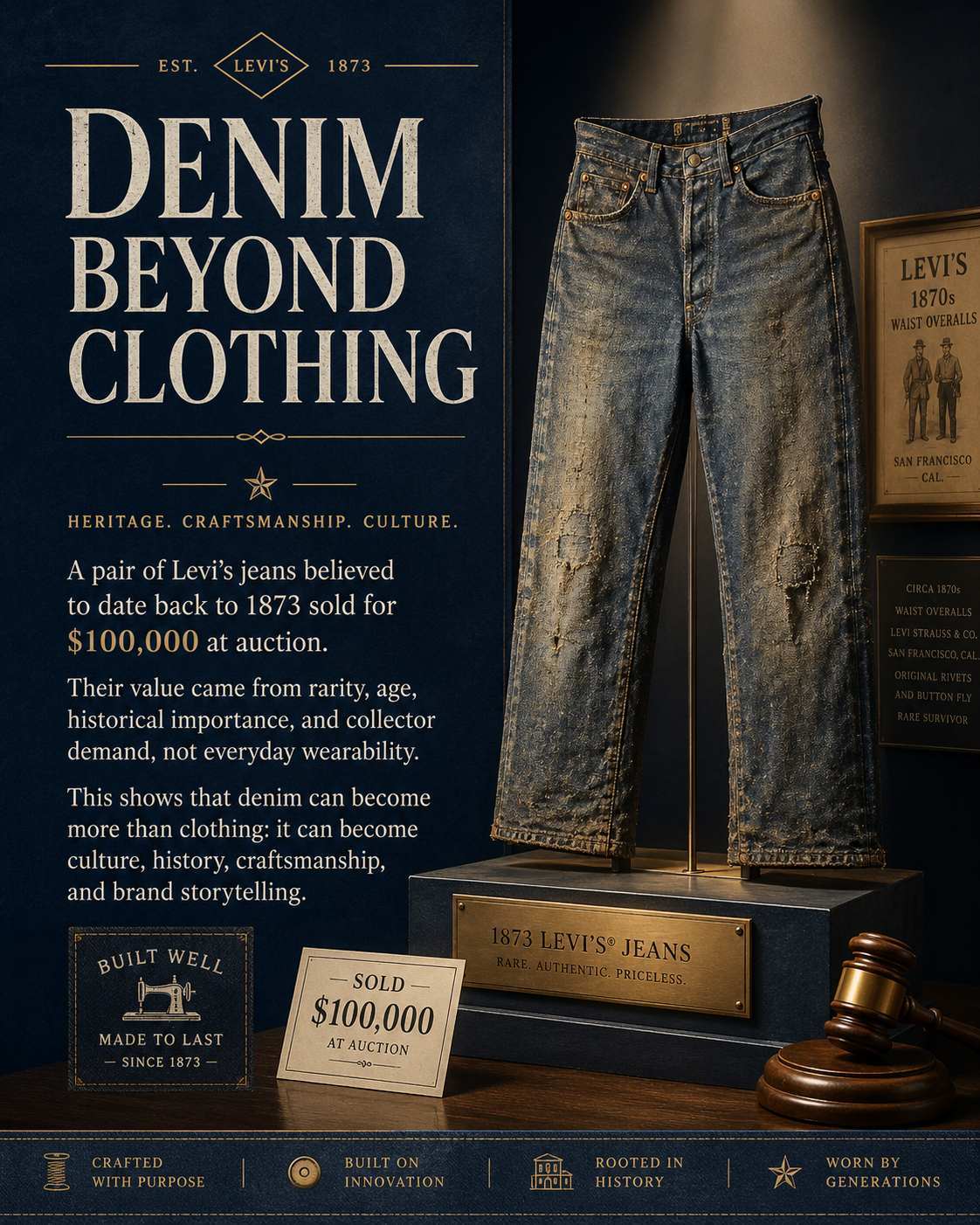
A pair of Levi’s jeans believed to date back to 1873 sold for $100,000 at auction. Their value came from rarity, age, historical importance, and collector demand, not everyday wearability. This shows that denim can become more than clothing: it can become culture, history, craftsmanship, and brand storytelling.
Dive Deeper
The question “What jeans cost $100,000?” sounds unbelievable at first. But a pair of Levi’s jeans, believed to have been made in 1873 and described as possibly among the oldest known jeans, sold for $100,000 at the Durango Vintage Festivus auction. The jeans were reportedly found in a Nevada mine and were in rough condition, yet their age and rarity made them highly valuable.
Artnet also reported on the sale and noted an important detail: the jeans were attributed to Levi’s and dated to 1873, but had not been authenticated by Levi’s. That distinction matters because collectible denim value depends heavily on provenance, authenticity, and documentation.
So why would anyone pay so much for old jeans? Because denim is not only a garment category. It is a historical object. It is connected to labor, mining, the American West, youth culture, rebellion, music, luxury fashion, and everyday life. A rare pair of jeans can carry a story that is bigger than the product itself.
Modern denim brands can learn a lot from this. Your jeans do not need to cost $100,000, but they do need a reason to matter. In a crowded fashion market, customers are surrounded by cheap denim. If your brand wants stronger margins and better loyalty, the product needs value beyond “blue pants.” That value can come from fabric quality, fit innovation, wash development, limited production, custom details, brand identity, or storytelling.
For example, selvedge jeans often appeal to customers who care about textile heritage and durability. Stacked jeans appeal to customers who care about streetwear silhouette and footwear styling. Plus size custom jeans appeal to customers who feel ignored by standard sizing. Denim jackets with custom embroidery appeal to brands that want recognizable visual identity.
Value in denim can be built through five layers:
| Value Layer | What It Means in Denim Manufacturing |
| Material value | Better cotton, stretch blend, selvedge fabric, heavier weight |
| Fit value | More accurate pattern, better grading, body-specific design |
| Wash value | Authentic fading, hand sanding, whiskering, enzyme wash |
Detail value | Custom buttons, rivets, patches, embroidery, pocket design |
Story value | Brand concept, limited drop, customer identity, origin story |
This is where custom manufacturing becomes a strategic tool. A boutique that buys generic jeans is mainly competing on price and marketing. A boutique that develops its own denim can compete on identity. The product can have a signature fit, a recognizable wash, a private-label logo, custom trims, and a story that customers remember.
For DiZNEW’s target customers—designers, online boutique owners, influencer shops, and high-end brand clients—this matters deeply. Many small and medium buyers do not want to look like every other shop. They want jeans that feel exclusive but are still commercially realistic. With a low MOQ starting from 30 pieces and the ability to handle large orders up to 10,000 pieces, DiZNEW can support both testing and scaling.
The lesson from $100,000 jeans is not that every brand should chase luxury collectors. The lesson is that denim becomes valuable when it carries meaning. Better fabric, better construction, better fit, and better storytelling can turn jeans from inventory into a brand asset.
Why Are Custom Jeans Becoming the Future of Denim Brands?
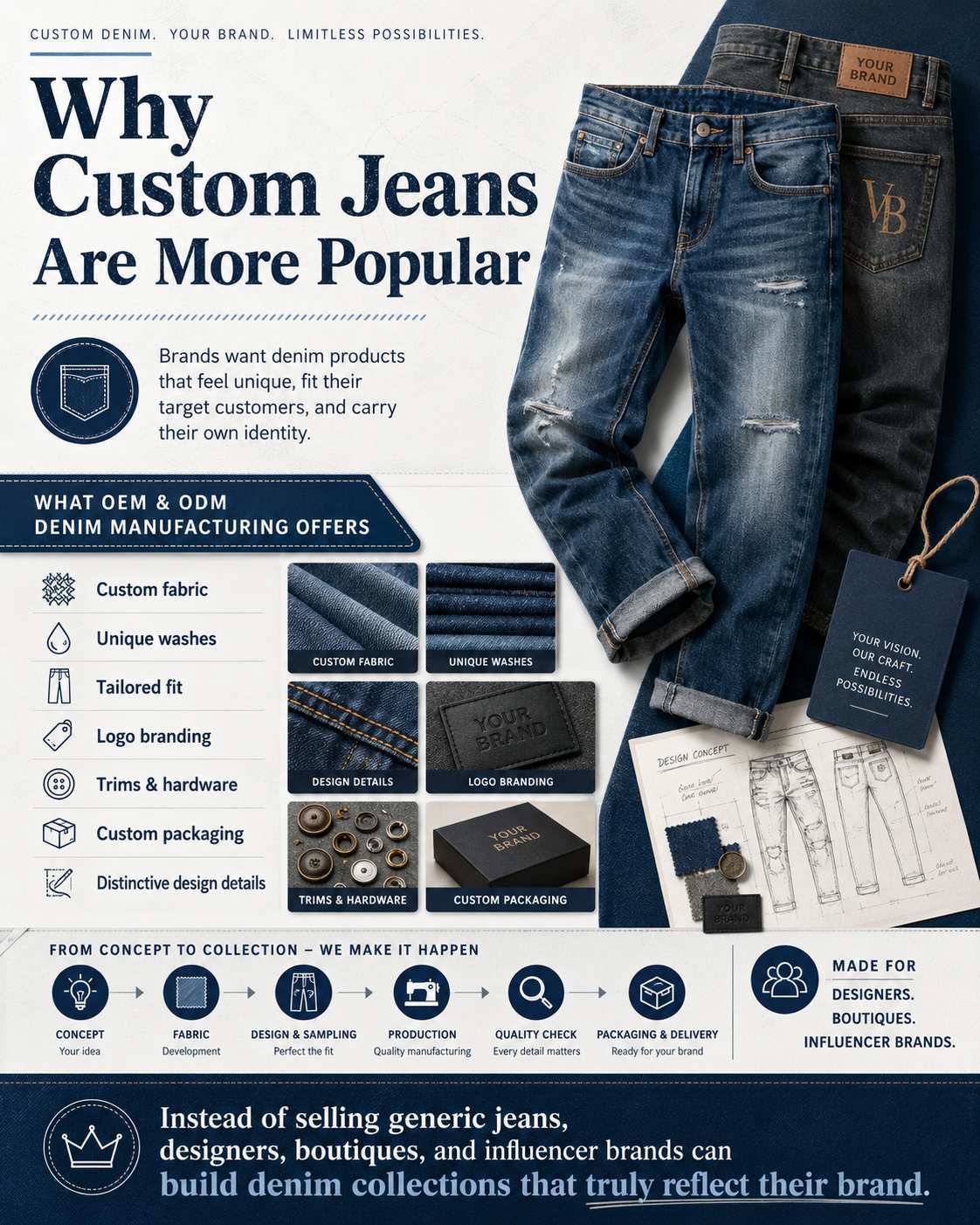
Custom jeans are becoming more popular because brands want products that feel unique, fit their target customers, and carry their own identity. OEM and ODM denim manufacturing allows designers, boutiques, and influencer brands to customize fabric, wash, fit, logo, trims, packaging, and details instead of selling generic jeans.
Dive Deeper
The denim market is crowded, but customer expectations are becoming more specific. Shoppers no longer want only basic blue jeans. They want jeans that match their lifestyle, body type, social media aesthetic, and personal values. Some want oversized baggy jeans. Some want premium straight jeans. Some want stretch plus size jeans. Some want stacked jeans with extra-long inseams. Some want denim shorts for summer drops. Some want denim jackets and shirts that complete a full collection.
This is why custom denim is so important for modern fashion brands. When every online store can access similar wholesale products, uniqueness becomes a competitive advantage. A custom jean gives a brand more control over fit, fabric, wash, and visual identity. It also gives customers a stronger reason to remember the brand.
Google’s own guidance for content quality emphasizes helpful, reliable, people-first content rather than content made only to manipulate rankings. The same thinking applies to denim products. Brands should not create jeans only because a trend keyword is popular. They should create jeans that genuinely solve customer needs: better fit, more comfort, stronger style identity, more inclusive sizing, or better quality.
A successful custom jeans project usually begins with clear product positioning. Before sampling, a brand should answer:
| Question | Why It Matters |
Who is the target customer? | Fit and style depend on age, body type, lifestyle, and fashion taste |
| What is the core silhouette? | Skinny, straight, baggy, stacked, jogger, flare, or shorts all need different patterns |
What price level is the brand targeting? | Fabric, trims, wash, and packaging must match the retail price |
| What makes the product different? | Custom details help avoid generic competition |
| What quantity is needed? | Low MOQ helps test; larger orders support scale |
For many online boutiques and influencer brands, the biggest challenge is turning an idea into a product. They may have a reference photo, a sketch, or a mood board, but they need a manufacturer that understands denim construction. This includes fabric sourcing, pattern making, sample development, washing techniques, logo application, size grading, production control, and packaging.
DiZNEW’s 20-plus years of experience in jeans research, development, manufacturing, and sales gives it a practical advantage in this process. The company is not limited to simple denim basics. It can support complex denim styles and deep customization, including plus size jeans, baggy jeans, stacked jeans, straight jeans, selvedge jeans, skinny jeans, jogger jeans, denim jackets, denim shorts, and denim shirts.
Low MOQ is especially useful for smaller buyers. A 30-piece starting quantity allows a boutique to test a new fit, wash, or collection without taking on the risk of thousands of units. At the same time, the ability to accept large orders up to 10,000 pieces means successful products can be scaled when demand grows. That flexibility is important because many modern fashion brands grow through drops, social media testing, and fast customer feedback.
Custom jeans also help with brand consistency. A boutique can create a full denim line using the same logo patch, button style, rivet finish, wash direction, and packaging language. Over time, customers begin to recognize the brand’s denim identity. That recognition can lead to stronger repeat purchases.
The future of denim is not only about which silhouette is trending. It is about who understands the customer best. Brands that can combine trend awareness, technical fit, quality manufacturing, and emotional storytelling will have a stronger chance of winning.
How Can You Create Jeans Your Customers Will Truly Love?
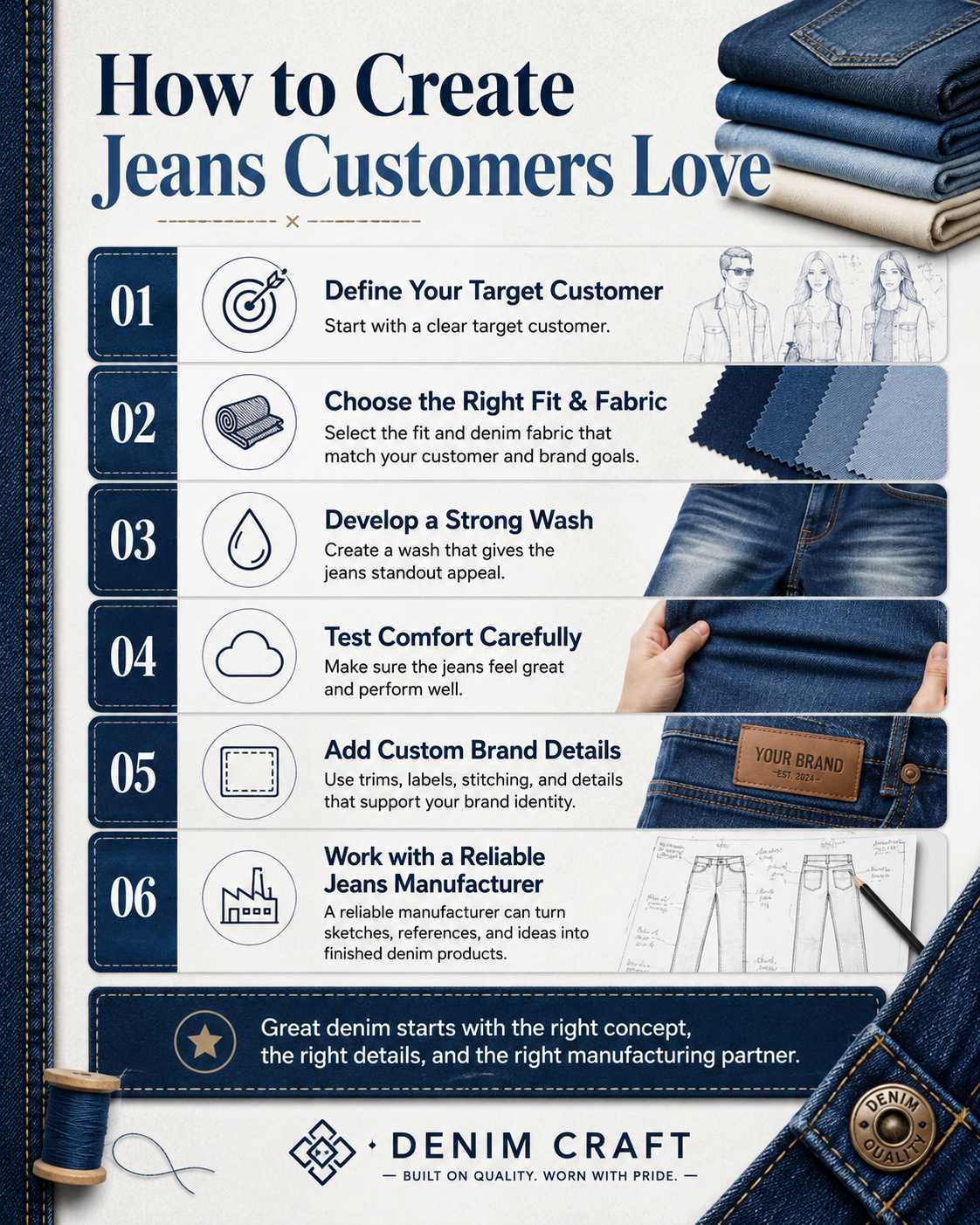
To create jeans customers love, start with a clear target customer, choose the right fit and fabric, develop a strong wash, test comfort carefully, and add custom details that support your brand identity. A reliable jeans manufacturer can help turn sketches, references, and ideas into finished denim products.
Dive Deeper
If you are a designer or boutique owner, the goal is not just to create jeans that look good in product photos. The goal is to create jeans that customers want to wear again and again. That requires both creativity and technical discipline.
Start with the customer. Are they looking for curve-friendly plus size jeans? Are they sneaker-focused customers who want stacked hems? Are they premium denim lovers who care about selvedge fabric? Are they online boutique shoppers who want trendy baggy jeans? Are they mature customers who want comfort and polish? Each audience needs a different product solution.
Then choose the silhouette. The silhouette controls the emotional first impression. A straight jean says timeless. A baggy jean says relaxed. A skinny jean says sharp. A stacked jean says bold. A jogger jean says comfort. A denim jacket says layering and lifestyle. Once the silhouette is chosen, the pattern must support it properly.
Next comes fabric. Fabric is not only a cost decision. It determines comfort, drape, stretch, wash effect, and perceived quality. A heavy rigid denim may work beautifully for selvedge jeans but may not be ideal for a plus size stretch skinny jean. A soft stretch denim may be excellent for comfort but must have good recovery to avoid bagging. Fabric selection should match the product promise.
Wash development is another key step. Many customers judge jeans by the wash before they even touch the product. Light blue, vintage black, dark indigo, acid wash, dirty wash, whiskering, hand sanding, enzyme wash, and distressed effects all create different emotions. For premium denim, the wash should look intentional, not random. For streetwear denim, the wash may be more dramatic. For mature everyday denim, the wash may need to be cleaner and more refined.
Custom details turn the product into a brand asset. These may include:
Custom waistband patch
Logo buttons and rivets
Embroidery
Pocket stitching
Special labels
Branded hangtags
Custom packaging
Unique distressing placement
Special inseam or stacked length
Private-label size system
Finally, test the sample carefully. Look at the jeans on a real body. Check the waist when sitting. Check the thigh when walking. Check the back pocket placement. Check shrinkage after washing. Check whether the fabric recovers after wear. Check whether the final product still matches the original brand concept.
This process is where an experienced denim factory can save brands time, money, and frustration. DiZNEW can help customers move from idea to sample to production by supporting design realization, fabric selection, pattern development, washing, logo customization, OEM/ODM production, and bulk order fulfillment.
For brands selling to the U.S. market, this is especially valuable. American customers often care deeply about fit, comfort, size inclusivity, and style identity. If your jeans look good but fit poorly, returns increase. If your jeans fit well but look generic, customers may not remember your brand. The best denim products do both: they fit the customer’s body and fit the brand’s story.
Final Thoughts: Why Customers Love Jeans—and Why Your Brand Should Build Better Ones
People love jeans because denim feels real. It is not fragile, distant, or overly formal. It lives with the wearer. It works in daily life. It carries style, comfort, memory, and confidence. That is why the right pair of jeans can become a customer’s favorite product—and why the right denim collection can become the foundation of a fashion brand.
For designers, boutique owners, online stores, and influencer brands, the opportunity is clear: do not sell ordinary jeans if your customers are looking for identity. Build jeans with a point of view. Choose the right fit. Develop the right wash. Add meaningful custom details. Think about comfort, body shape, lifestyle, and brand story from the beginning.
DiZNEW is a China-based jeans R&D, manufacturing, and sales factory with more than 20 years of denim experience. We support custom jeans, OEM, and ODM production for U.S. small and medium buyers, premium brands, designers, online boutiques, and influencer shops. Our product range includes plus size jeans, baggy jeans, stacked jeans, straight jeans, selvedge jeans, skinny jeans, jogger jeans, denim jackets, denim shorts, denim shirts, and more.
Whether you want to test a small custom order starting from 30 pieces or scale a successful denim product up to 10,000 pieces, DiZNEW can help turn your design idea into real, wearable, sellable denim.