Why Do Blue Collar Workers Wear Jeans?
Walk past a construction site, an auto repair shop, a warehouse loading dock, a ranch, or a small fabrication workshop, and you will notice something familiar: jeans are everywhere. They may be dusty, faded, oil-marked, patched at the knees, or stretched from years of movement, but they are still doing the job.
That is the quiet power of denim. Jeans are not just casual pants that happened to become popular; they were born from work. Long before denim became a fashion statement, it was a practical answer to a real problem: workers needed pants that could survive friction, bending, dirt, tools, weather, and long hours.
Blue collar workers wear jeans because denim is durable, affordable, comfortable, and practical for physical labor. Jeans resist abrasion better than many lightweight cotton pants, hide dirt well, and offer easy movement when properly fitted. Historically, riveted jeans became popular among miners, farmers, railroad workers, and tradespeople because reinforced pockets and seams helped prevent tearing during demanding work.
But the real reason jeans stayed popular is deeper than durability. Jeans tell a story about work, identity, toughness, and usefulness. A carpenter pulling a tape measure from a worn back pocket, a mechanic wiping grease on faded denim, or a designer turning workwear into premium streetwear—all of them are connected by the same fabric language.
In this guide, we will look at why blue collar workers wear jeans, how jeans should fit, when denim is safe or not safe for work, and why modern buyers—from boutique owners to denim brands—still build collections around workwear-inspired jeans.
Why Did Jeans Become the Classic Uniform for Blue Collar Workers?
Jeans became the classic uniform for blue collar workers because they were originally designed to solve workwear problems. Riveted denim pants reinforced high-stress areas such as pockets and seams, making them more durable for miners, farmers, railroad workers, and laborers. Over time, jeans became associated with strength, independence, and working-class practicality.
Why do blue collars wear jeans?
Blue collar workers wear jeans because jeans sit at the intersection of three things every worker cares about: toughness, comfort, and cost. A good pair of jeans can handle kneeling, squatting, climbing, carrying tools, brushing against rough surfaces, and repeated washing. Compared with dress pants or lightweight casual trousers, denim has a denser structure and a more rugged hand feel, which makes it suitable for physically demanding environments.
There is also a psychological reason. Jeans look honest. They do not feel fragile or overly formal. A worker can wear them into a workshop, a truck, a warehouse, or a client’s property without looking out of place. For many trades, jeans communicate “ready to work” in a way that softer or more polished pants do not.
How did denim move from miners, railroad workers, and farmers into everyday workwear?
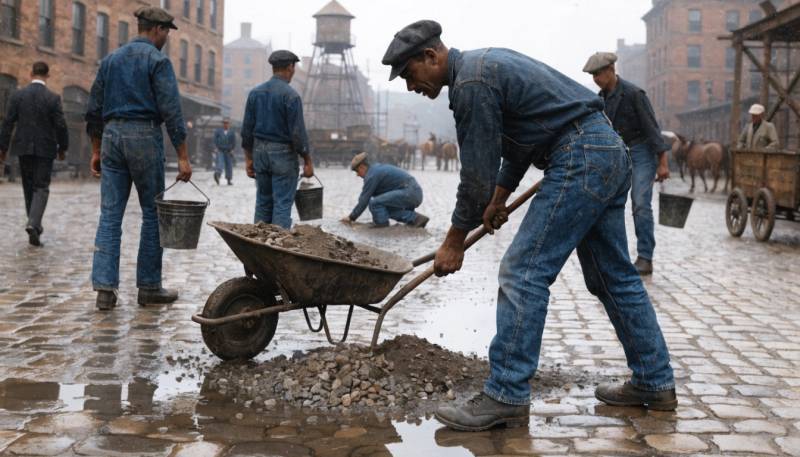
Denim’s journey began with labor. In the late nineteenth century, workers needed clothing that could take abuse. Levi Strauss and Jacob Davis received a patent in 1873 for riveted work pants, reinforcing pocket openings and other stress points to reduce tearing. This innovation helped define the modern blue jean and gave denim its workwear reputation.
From mining camps and farms to railroads and factories, jeans spread because they were practical. They were not delicate. They did not require special care. They could be patched, washed, worn hard, and worn again. That reliability made jeans part of the blue collar wardrobe long before they became a global fashion product.
Why were riveted denim pants so important for early laborers?
The rivet seems like a small detail, but it changed everything. Early work pants often failed at stress points: pocket corners, seams, and areas where workers carried tools or heavy objects. Metal rivets helped strengthen those points. For laborers who could not afford to replace clothing frequently, durability was not a luxury—it was economic protection.
This is still relevant today. Modern workwear-inspired jeans often use bar tacks, reinforced stitching, double-layer pockets, stronger thread, and heavier denim to solve the same old problem: stress. Whether the customer is a construction worker or a fashion buyer looking for authentic workwear details, reinforced construction remains a key selling point.
What made blue jeans a symbol of hard work, durability, and working-class identity?
Jeans became symbolic because they aged with the worker. Fading, whiskers, creases, and worn knees were not defects; they were proof of use. Unlike polished clothing that hides labor, denim records it. That is one reason vintage workwear has such strong cultural value today.
For blue collar workers, jeans represented independence and practicality. For fashion, they later represented authenticity. This is why designer brands, streetwear labels, and boutique denim stores still borrow from workwear. The “real worker” image gives denim emotional depth.
The workwear DNA behind jeans
To understand why jeans became the unofficial uniform of blue collar workers, we need to look beyond fabric and into lifestyle. Blue collar jobs usually involve movement, friction, tools, dirt, and unpredictable environments. Workers do not want clothing that demands attention. They want clothing that disappears into the workday.
That is exactly what jeans do. A good pair of jeans does not need to be babied. You can sit on concrete, brush against wood, load boxes, climb ladders, or work under a vehicle. Denim may fade, but fading often improves its character. This is different from many synthetic or polished fabrics, where visible wear looks like damage. On jeans, wear can look natural, even desirable.
There is also a class and culture element. Jeans have historically been linked to people who build, repair, move, and make things. That identity is powerful. In American culture especially, blue jeans became tied to ideas of ruggedness, practicality, masculinity, rebellion, and independence. But today, that story has expanded. Women in trades, designers, artists, warehouse teams, farmers, and boutique owners all use denim in different ways.
From a product development perspective, this history matters. When a brand creates workwear-inspired jeans, customers are not only buying pants. They are buying credibility. Details such as rivets, contrast stitching, carpenter loops, tool pockets, heavier denim, deep indigo washes, and relaxed silhouettes all signal authenticity.
For custom denim brands, this is a major opportunity. A boutique does not need to copy old workwear exactly. It can reinterpret it. For example, a brand may create a baggy jean with carpenter details for streetwear customers, a straight-leg selvedge jean for premium buyers, or a stretch work jean for people who need both durability and comfort. The best denim products understand the original blue collar function, then adapt it for the modern customer.
What Makes Jeans Practical for Construction, Factory, and Trade Workers?
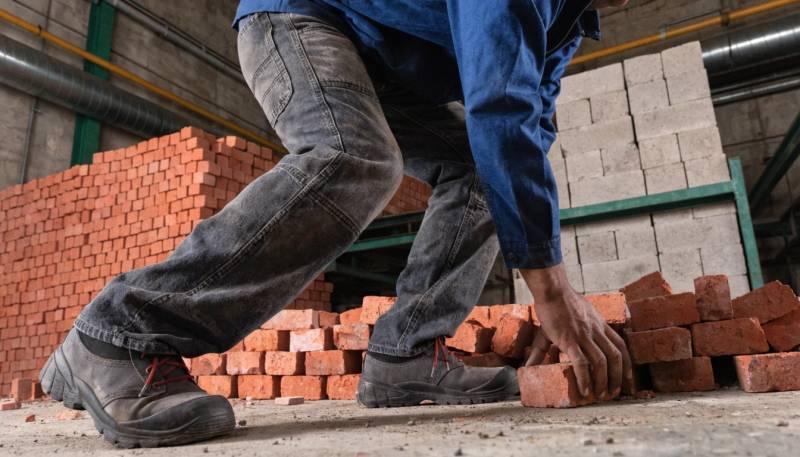
Jeans are practical for construction, factory, and trade workers because denim offers abrasion resistance, structure, easy care, and long-term value. Properly designed jeans can support bending, kneeling, lifting, and climbing while protecting the legs from everyday scrapes and dirt. Details such as strong seams, reinforced pockets, and functional fits improve work performance.
Why is denim more durable than regular cotton pants?
Denim is usually made with a twill weave, which creates a diagonal rib pattern and gives the fabric strength. While denim is still cotton-based in many cases, its weave and weight make it more rugged than many plain-woven cotton pants. Heavier denim can resist friction better, especially in areas such as thighs, knees, seat, and pocket openings.
The durability also depends on the yarn, fabric weight, finishing, wash process, and sewing quality. A poorly made jean can fail quickly, even if the fabric looks heavy. A well-made jean uses balanced fabric, strong thread, secure stitching, and proper pattern engineering.
How do jeans resist abrasion, tearing, and repeated washing?
Denim resists abrasion because its surface is compact and structured. When workers kneel, slide, or brush against rough materials, the fabric can tolerate friction better than many lightweight fabrics. Jeans also handle repeated washing well, especially when designed with shrinkage control, colorfastness management, and reinforced construction.
However, not all jeans are equal. Fashion jeans made with very light fabric or heavy distressing may not be suitable for work. Rips, grinding, and chemical washes can weaken fabric. For workwear customers, durability should be planned from the beginning, not added as an afterthought.
Why do workers prefer jeans for kneeling, bending, lifting, and climbing?
Movement is one of the biggest reasons workers choose jeans. A worker may bend hundreds of times in one day. The jeans need enough room in the thigh, knee, crotch, and seat. If jeans are too tight, they restrict movement and may split at the crotch or back rise. If they are too loose, they may catch on tools or equipment.
That is why straight fit, relaxed fit, carpenter fit, jogger jeans, and stretch denim are all popular in different workwear settings. The right fit depends on the job. A warehouse worker may prefer stretch straight jeans. A carpenter may prefer relaxed jeans with tool pockets. A mechanic may prefer darker jeans with room at the knee.
Which denim details matter most for workwear: fabric weight, stitching, pockets, rivets, and reinforced areas?
For workwear jeans, details are not decoration. They are performance features. Important details include:
| Workwear Detail | Why It Matters | Best For |
Heavy denim fabric | Improves abrasion resistance | Construction, repair, outdoor work |
| Reinforced pockets | Reduces tearing from tools and phones | Carpenters, electricians, mechanics |
| Bar tacks | Strengthens stress points | Daily heavy use |
| Double stitching | Improves seam strength | Workwear and premium denim |
Relaxed thigh | Supports bending and kneeling | Trades, warehouse, factory work |
Stretch fiber | Adds comfort and mobility | Long shifts, active jobs |
Dark indigo wash | Hides dirt and stains better | Mechanics, installers, labor crews |
Dive Deeper: Practicality is not just toughness
A common mistake in denim buying is assuming that “heavier” always means “better.” Heavy denim can be durable, but if the fit is poor, the worker will not wear it. If the crotch is too tight, the knees are too narrow, or the waistband digs into the body, the jeans fail in real life even if the fabric passes lab tests.
True workwear practicality is a balance of durability, mobility, breathability, and cost. A 14 oz rigid denim may look authentic, but it may feel too stiff for someone bending all day. A 10–12 oz stretch denim may be more comfortable and still durable enough for many indoor trade jobs. For outdoor or high-friction work, heavier denim with reinforced panels may be better.
Another practical issue is pocket design. Workers carry more than wallets today. They carry phones, measuring tools, knives, pens, keys, gloves, and sometimes small devices. A shallow pocket or weak pocket bag can become a daily frustration. For custom denim development, pocket depth, pocket fabric, pocket placement, and pocket opening angle should be considered carefully.
Washing and finishing also matter. A deep indigo jean may look premium, but if it bleeds too much, customers may complain. A heavily washed jean may feel soft, but the fabric may lose strength. A workwear jean needs the right balance: comfortable enough from the first wear, but not over-processed to the point of weakness.
This is where OEM and ODM development becomes valuable. For brands serving blue collar workers, online boutiques, or workwear-inspired fashion customers, the best product is not a generic five-pocket jean. It is a jean designed around a specific user. Is the customer a carpenter, a mechanic, a streetwear buyer, a plus-size customer, or a premium selvedge denim enthusiast? Each customer needs a different fabric, fit, wash, and detail package.
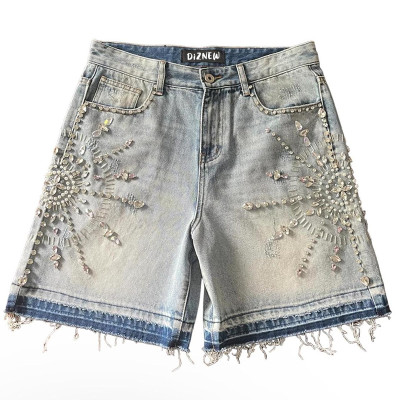
DiZNEW’s strength in complex denim customization is especially relevant here. With over 20 years of denim development and manufacturing experience, a factory that can handle different fits—plus size jeans, baggy jeans, stacked jeans, straight jeans, selvedge jeans, skinny jeans, jogger jeans, denim jackets, denim shorts, and denim shirts—can help brands build jeans that are not only stylish but also practical.
Are Jeans Comfortable Enough for Long Workdays?
Jeans can be comfortable enough for long workdays when they fit correctly and use the right fabric.Workers usually need room at the waist, seat, thigh, knee, and crotch for bending and lifting. Stretch denim, relaxed fits, straight fits, and properly tested waist comfort can reduce pressure during long shifts.

What is the 2 finger rule for jeans?
The 2 finger rule for jeans is a simple fit test: after buttoning the waistband, you should be able to slide two fingers comfortably between your waist and the jeans. If you cannot fit two fingers, the waist may be too tight. If you can fit more than two or three fingers easily, the jeans may be too loose.
This rule is especially useful for work jeans because workers need to bend, squat, sit, and move. A waistband that feels fine while standing may become uncomfortable during physical labor.
What is the 2 finger test for jeans?
The 2 finger test is basically the same idea as the 2 finger rule. It checks waistband comfort and fit. For workwear, the test should be done while standing, sitting, and bending. A good work jean should stay secure without cutting into the stomach or sliding down during movement.
For online brands, this is also a useful customer education tool. Adding fit guidance to product pages can reduce returns and improve buyer confidence.
How should work jeans fit around the waist, hips, thighs, and knees?
Work jeans should fit securely at the waist, allow enough room at the hips and seat, provide mobility through the thigh, and leave space around the knees for bending. The crotch area should not pull or create pressure lines. The back rise should provide coverage when squatting.
A good fit is not always a slim fit. In fact, many workers prefer straight, relaxed, loose, or baggy fits because they allow easier movement. For plus-size workwear customers, pattern engineering becomes even more important. Simply enlarging a smaller pattern does not create a comfortable plus-size jean. The rise, thigh, hip curve, knee position, and waistband shape all need proper adjustment.
Why do relaxed fit, straight fit, baggy jeans, and stretch denim improve comfort for workers?
Relaxed and straight fits improve comfort by giving the body more room to move. Baggy jeans can work well for streetwear-inspired workwear, though very loose jeans may be risky around machinery if they can catch on equipment. Stretch denim improves flexibility, especially for workers who squat, climb, drive, or sit for long hours.
The best comfort often comes from combining fit and fabric. For example:
| Fit Type | Comfort Benefit | Ideal Customer |
| Straight jeans | Balanced room and clean look | Workwear, casual, boutique basics |
| Relaxed jeans | More thigh and seat space | Trade workers, plus-size customers |
| Baggy jeans | Fashion-forward comfort | Streetwear and Gen Z buyers |
Jogger jeans | Flexible ankle and sporty comfort | Active lifestyle customers |
Stacked jeans | Trend-focused leg shape | Boutique and influencer brands |
Stretch skinny jeans | Close fit with mobility | Fashion customers, not heavy-duty work |
Why are darker blue jeans useful for hiding stains, dust, and daily wear?
SDark blue jeans are popular among workers because they hide dirt, dust, grease, and stains better than light washes. A dark indigo or black denim can look cleaner for longer, which matters when workers move between job sites, client meetings, and public spaces.
Dark jeans also give brands more flexibility. They can be sold as workwear, smart casual wear, or premium denim depending on the cut and finish.
Dive Deeper: Comfort is a product strategy, not a small detail
Comfort is where many jeans win or lose the customer. A buyer may love the look of a jean online, but if it pinches, slips, twists, or restricts movement, it will not become a repeat purchase. For blue collar workers, comfort is even more important because discomfort is multiplied by hours of labor.
The 2 finger rule is a useful starting point, but it is not enough by itself. Jeans must be tested in real movement. Can the wearer squat without the waistband pulling down? Can they sit in a truck without stomach pressure? Can they kneel without the knee area feeling tight? Can they carry a phone in the front pocket without discomfort? These are practical questions that matter more than a flat size chart.
This is especially important for brands selling online. Denim has a high fit sensitivity. Customers often hesitate because they worry about waist size, thigh room, shrinkage, and stretch recovery. A strong product page should explain fit clearly: rise, thigh measurement, inseam, leg opening, stretch level, and recommended body type. For example, a “relaxed straight work jean” should not be described the same way as a “stacked skinny fashion jean.”
Comfort also changes by generation. Younger buyers, especially Gen Z, have pushed denim toward looser silhouettes. Many prefer baggy, straight, carpenter, stacked, and wide-leg jeans because these fits feel more relaxed and expressive than tight skinny jeans. But this does not mean skinny jeans are dead. It means fit preference has become more segmented. Some customers want loose comfort. Some want a clean straight fit. Some still want stretch skinny jeans for a sharp silhouette.
For manufacturers and denim brands, the smartest approach is not to chase only one trend. It is to build a fit architecture. A strong denim collection may include straight jeans as the core, baggy jeans for trend buyers, stacked jeans for boutique streetwear, plus-size jeans for inclusive sizing, and stretch denim for comfort-focused customers.
This is where DiZNEW’s low MOQ and customization flexibility become useful. With a minimum order quantity starting from 30 pieces and the ability to support large orders up to 10,000 pieces, brands can test new fits in small batches before scaling successful products.
Are Jeans Safe for Blue Collar Work?
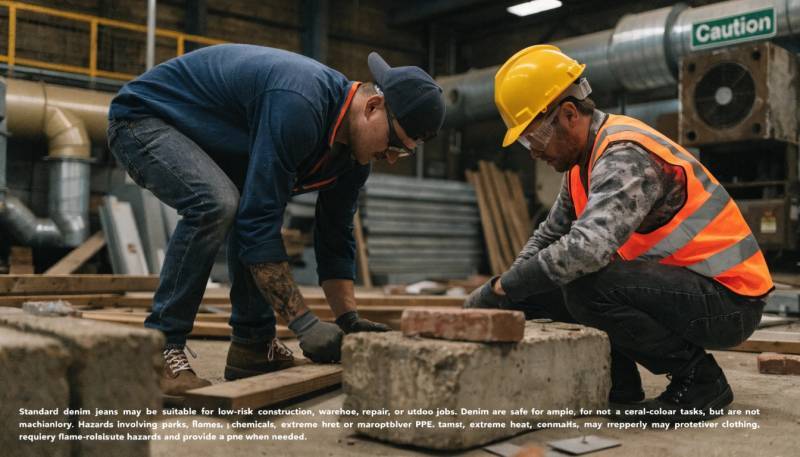
Jeans are safe for many general blue collar tasks, but they are not a replacement for required PPE. Standard denim may be suitable for low-risk construction, warehouse, repair, or outdoor jobs, but hazardous environments involving sparks, flames, chemicals, extreme heat, or machinery may require flame-resistant clothing, protective coveralls, or properly fitted PPE. OSHA requires employers to assess workplace hazards and provide suitable PPE when needed.
When are regular jeans suitable for work?
Regular jeans may be suitable for general labor, light construction, warehouse work, delivery, repair tasks, farming, gardening, and casual trade environments where there are no special hazards requiring protective clothing. In these settings, jeans provide basic coverage, durability, and comfort.
However, the exact job matters. A painter, carpenter, warehouse worker, and welder do not face the same risks. Workwear should always match the work environment.
When should workers choose reinforced jeans, flame-resistant jeans, or PPE work pants?
Workers should choose specialized workwear when the job involves high-risk hazards. Welding, electrical work, chemical exposure, fire risk, road work, and industrial environments may require protective clothing beyond regular denim. OSHA construction PPE guidance emphasizes that PPE requirements depend on hazards and applicable standards.
Flame-resistant jeans, reinforced knee jeans, high-visibility garments, cut-resistant materials, or protective coveralls may be necessary depending on the job.
Why can wet weather, extreme heat, sparks, chemicals, or high-risk job sites require specialized workwear?
Cotton denim absorbs moisture, which can become uncomfortable in wet environments. Standard denim can also burn, absorb chemicals, or become unsafe near sparks and flames. Around moving machinery, overly loose jeans may create a snagging risk.
This is why safety cannot be judged by style alone. A jean may look rugged but still be wrong for the job. Protective clothing should be selected based on hazards, comfort, fit, and reliability. NIOSH notes that protective clothing should be part of a broader PPE program, including hazard assessment and training.
How can better denim construction improve safety, durability, and movement on the job?
Better denim construction can improve everyday safety by reducing fabric failure, improving coverage, and supporting movement. Reinforced knees can help workers who kneel often. Strong pocket bags can prevent tools from tearing through fabric. A proper rise can prevent exposure when bending. A stable waistband can keep jeans in place.
Fit also matters for safety. PPE and protective clothing must fit properly to work correctly. Recent OSHA-related construction PPE discussions have emphasized proper fit, especially because poorly fitting equipment can reduce protection.
Denim is useful, but safety has limits
It is tempting to say jeans are “work pants,” so they are automatically safe. That is not true. Jeans are practical clothing, not universal protection. The difference matters.
For many workers, jeans are enough for everyday durability. If the job involves carrying boxes, driving, installing fixtures, doing light carpentry, or working in a dry warehouse, a good pair of jeans may be perfectly reasonable. But if the job involves welding sparks, electrical arc risks, corrosive chemicals, road visibility hazards, or heavy machinery, regular denim may not meet safety requirements.
This is where brands must be careful with marketing. Calling a jean “workwear style” is not the same as calling it certified protective clothing. If a product is not flame-resistant, it should not be promoted as flame-resistant. If it is not tested for industrial hazards, it should not imply protection beyond normal clothing coverage.
That does not reduce the value of denim. It simply means denim product development should be honest and specific. A brand can create “workwear-inspired fashion jeans” for boutique customers. It can create “durable utility jeans” for general labor. It can create “reinforced denim pants” for customers who want stronger knees and pockets. But certified safety garments require proper material selection, testing, labeling, and compliance.
Fit is another under-discussed safety issue. Jeans that are too tight can restrict movement, causing discomfort and distraction. Jeans that are too loose may catch on objects or drag near boots. A waistband that slips may force workers to adjust clothing repeatedly. These small issues can become real problems during a long shift.
For denim brands, safety-conscious design can include a gusseted crotch, reinforced knees, ergonomic patterning, secure pockets, stronger seams, and carefully selected fabric weight. For plus-size workwear, proper grading is essential because workers of every body type deserve clothing that fits, protects, and moves well.
DiZNEW can support brands that want to develop more functional denim by helping translate design drawings, reference samples, or technical ideas into physical products. Whether the goal is a rugged straight-leg jean, a reinforced baggy jean, a utility denim jacket, or a workwear-inspired collection, the key is matching the product to the real customer use case.
Why Are Jeans Still Popular Among Modern Blue Collar Workers?
Jeans remain popular among modern blue collar workers because they combine utility, affordability, identity, and style. They are durable enough for many jobs, comfortable when properly fitted, and acceptable in both work and casual settings. At the same time, workwear denim has influenced modern streetwear, boutique fashion, and premium denim design.
Why do jeans balance cost, durability, and professional appearance?
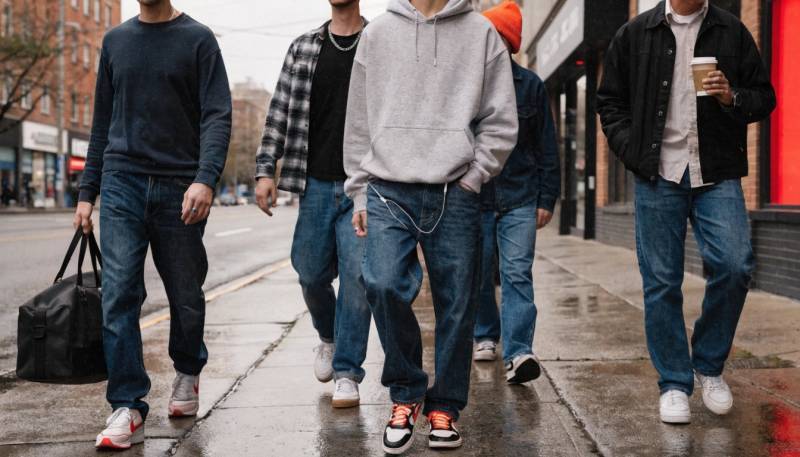
Jeans are a strong value product. A worker can wear them repeatedly, wash them often, and use them across different settings. Dark straight jeans may look clean enough for meeting customers, while relaxed jeans may work better on site. This balance makes jeans more versatile than many specialized pants.
For small businesses, uniforms, or brand collections, jeans also offer broad customer appeal. They are familiar, easy to style, and available in many fits and washes.
Why does Gen Z hate skinny jeans?
Gen Z does not universally hate skinny jeans, but many younger consumers moved away from tight skinny fits because they prefer comfort, looser silhouettes, and more expressive styling. Baggy jeans, wide-leg jeans, carpenter jeans, stacked jeans, and straight jeans align better with streetwear, vintage, skate, and Y2K-inspired fashion. Trend reporting in recent years has repeatedly highlighted the shift from skinny dominance toward looser denim silhouettes.
The real lesson is not that skinny jeans are gone. It is that denim customers now expect choice. Some buyers want baggy. Some want straight. Some want stacked. Some still want skinny, especially with stretch and modern styling.
How did blue-collar jeans influence modern streetwear, baggy jeans, stacked jeans, and workwear fashion?
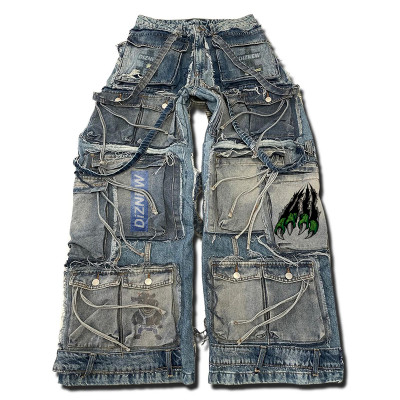
Modern streetwear borrows heavily from blue collar clothing. Carpenter pockets, hammer loops, double knees, relaxed fits, faded washes, contrast stitching, and heavy denim all come from functional workwear. What was once practical is now aesthetic.
Baggy jeans connect to workwear because they offer movement and presence. Stacked jeans connect to streetwear because they create visual drama around sneakers. Straight jeans connect to classic workwear because they are clean, balanced, and timeless.
Why do designers, boutique owners, and online fashion brands still use workwear-inspired denim?
Designers and boutique owners use workwear-inspired denim because it feels authentic. Customers are tired of clothing that looks good online but feels empty in real life. Workwear details give jeans a story, and stories sell.
For online boutique owners, denim is also a repeat-purchase category. A customer who loves one fit may return for new washes, colors, distressing, embroidery, patches, or logo customization.
How can brands customize jeans for blue-collar function and modern fashion demand?
Brands can customize jeans by adjusting fabric, fit, wash, stitching, trims, logo placement, pocket design, labels, embroidery, distressing, and packaging. For workwear-inspired fashion, brands may combine functional details with trend-driven silhouettes.
Examples include:
| Customer Type | Recommended Denim Product | Customization Idea |
| Blue collar workers | Straight or relaxed work jeans | Reinforced pockets, dark wash, strong seams |
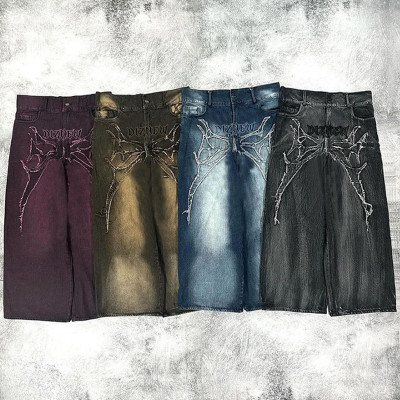
| Streetwear buyers | Baggy jeans or stacked jeans | Heavy wash, distressing, logo patch |
| Premium brands | Selvedge jeans | Custom hardware, leather patch, clean finishing |
Plus-size customers | Relaxed plus-size jeans | Comfort waistband, improved rise and thigh fit |
Online boutiques | Trend denim collections | Small-batch washes, embroidery, private label |
Designers | Concept-to-product denim | Pattern development from sketches |
Jeans are no longer one product—they are a denim ecosystem
The modern denim market is more complex than ever. In the past, a brand could sell one basic blue jean and reach a wide audience. Today, customers are segmented by lifestyle, age, body type, style identity, and use case.
A blue collar worker may want durability and comfort. A Gen Z streetwear buyer may want oversized shape and stacking. A premium denim customer may want selvedge fabric and clean construction. A plus-size customer may want better fit and confidence. A boutique owner may want a unique wash that competitors do not have. A designer may want to turn a drawing into a real garment.
This is why jeans remain powerful. They are flexible. Denim can be rugged, luxury, vintage, sexy, oversized, minimalist, western, streetwear, or uniform-like. Few garments can move across so many markets.
The shift away from skinny jeans among younger buyers is a good example. Gen Z’s preference for baggy and relaxed denim is not only about fashion. It is also about comfort, self-expression, and rejection of overly restrictive silhouettes. But fashion moves in cycles. Skinny jeans have not disappeared; they are being reinterpreted through new styling, stretch fabrics, and niche trends. Vogue and other fashion publications have continued discussing skinny jeans as a returning or evolving silhouette, proving that denim trends rarely die completely.
For brands, the opportunity is not to choose one fit forever. The opportunity is to build flexible supply. A denim brand may test 30 pieces of a new stacked jean, 50 pieces of a baggy carpenter jean, 100 pieces of a plus-size straight jean, then scale the best seller to thousands of units. This is exactly why flexible MOQ and production capacity matter.
A factory like DiZNEW is valuable because denim development is technical. A good jean requires pattern skill, fabric knowledge, washing control, sewing quality, trim sourcing, logo customization, and communication between design and production. If the factory understands complex denim styles, the brand can move faster from idea to sample to finished product.
Conclusion: Why Jeans Still Work—and How Your Brand Can Build Better Ones
Blue collar workers wear jeans because jeans solve real problems. They are durable, affordable, easy to wear, easy to wash, and comfortable when properly designed. Their history is rooted in labor, but their future is much bigger than the job site. Today, the same denim DNA that served miners, farmers, railroad workers, and tradespeople also inspires boutique fashion, streetwear, premium denim, plus-size collections, and custom private-label brands.
The best jeans are not created by accident. They are built through smart decisions: the right fabric weight, the right fit, the right pocket structure, the right wash, the right stitching, and the right customer positioning. A blue collar worker needs performance. A boutique customer needs style. A designer needs accurate product realization. A high-end brand needs quality consistency. A growing online store needs flexible MOQ and reliable delivery.
DiZNEW is a China-based jeans development, manufacturing, and sales factory with more than 20 years of experience in denim customization. We support a wide range of denim products, including plus size jeans, baggy jeans, stacked jeans, straight jeans, selvedge jeans, skinny jeans, jogger jeans, denim jackets, denim shorts, and denim shirts. We can support small custom orders starting from 30 pieces, as well as large production orders up to 10,000 pieces.
Whether you are a denim designer, online boutique owner, influencer store, high-end brand, or buyer looking for custom jeans, OEM jeans, ODM denim products, or private-label jeans with your own logo, DiZNEW can help turn your design idea into a real product.
Ready to develop your own custom denim collection? Contact DiZNEW today to discuss fabric, fit, wash, logo, sample development, MOQ, and bulk production.
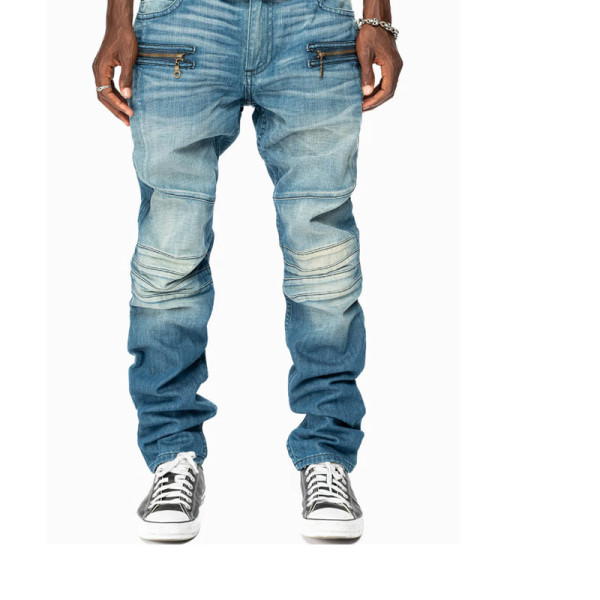
Custom Blue Cycling Jeans: Tailored for performance with OEM & ODM services. Perfect for brands seeking unique denim solutions.
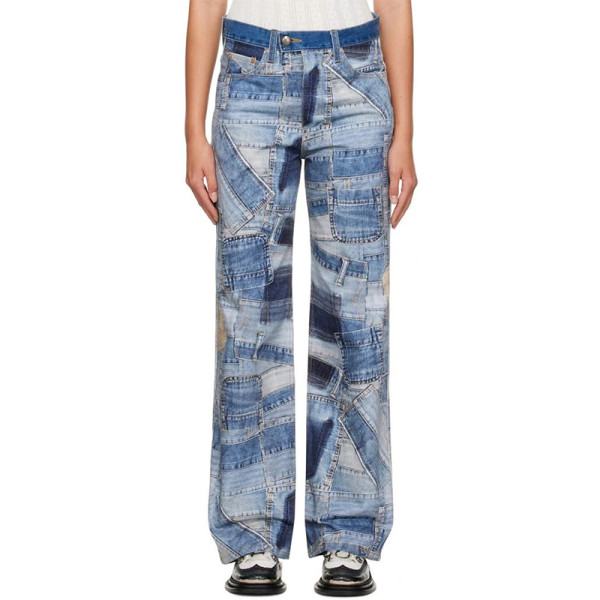
Elevate your collection with our OEM/ODM Custom Digital Printing Blue Patchwork Jeans, perfect for brands seeking unique styles in bulk.
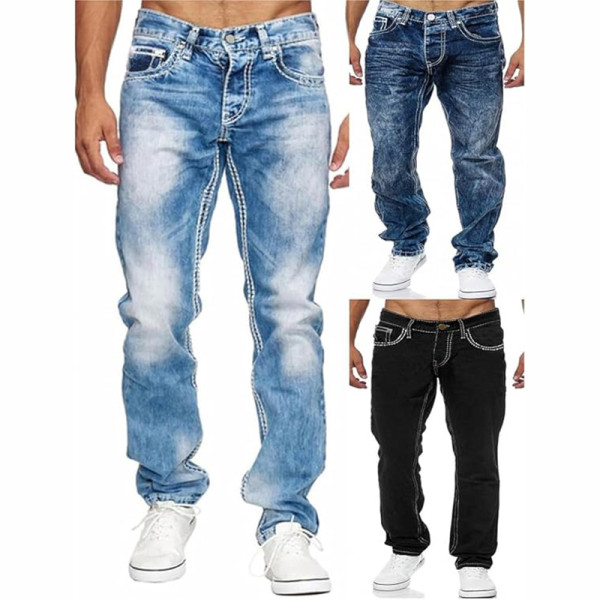
Classic straight jeans with bold contrast stitching in light blue, dark blue, and black — made for standout collections.
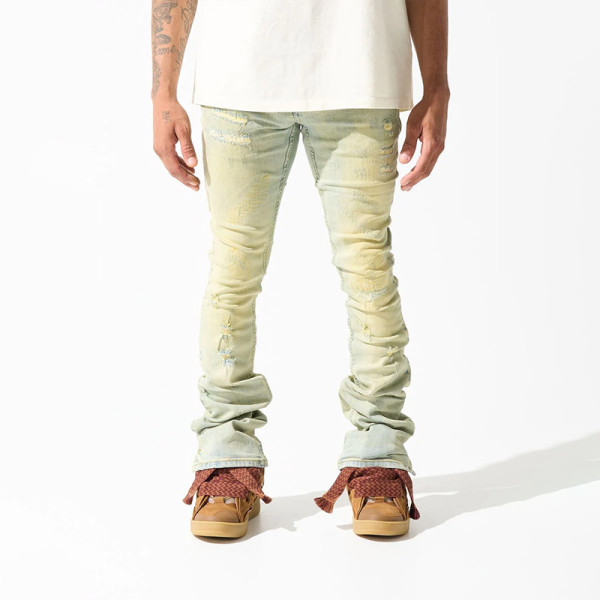
Skinny stacked jeans with distressed detailing and yellow-tinted bleach wash — bold choice for trendsetters.