Why Are Jeans Waxed? – Aesthetic & Durability Boost
Waxed jeans sit in that interesting space between rugged workwear, fashion attitude, and practical everyday clothing. At first glance, they look like regular denim with a darker, sharper, slightly leather-like finish. But once someone touches them, wears them, or sees how they break in, the difference becomes obvious. Waxed denim has texture. It has depth. It catches light differently. It can make a simple pair of black jeans feel more premium, more structured, and more intentional. That is why designers, boutique owners, and private label denim brands keep coming back to it when they want jeans that feel more special than basic five-pocket denim.
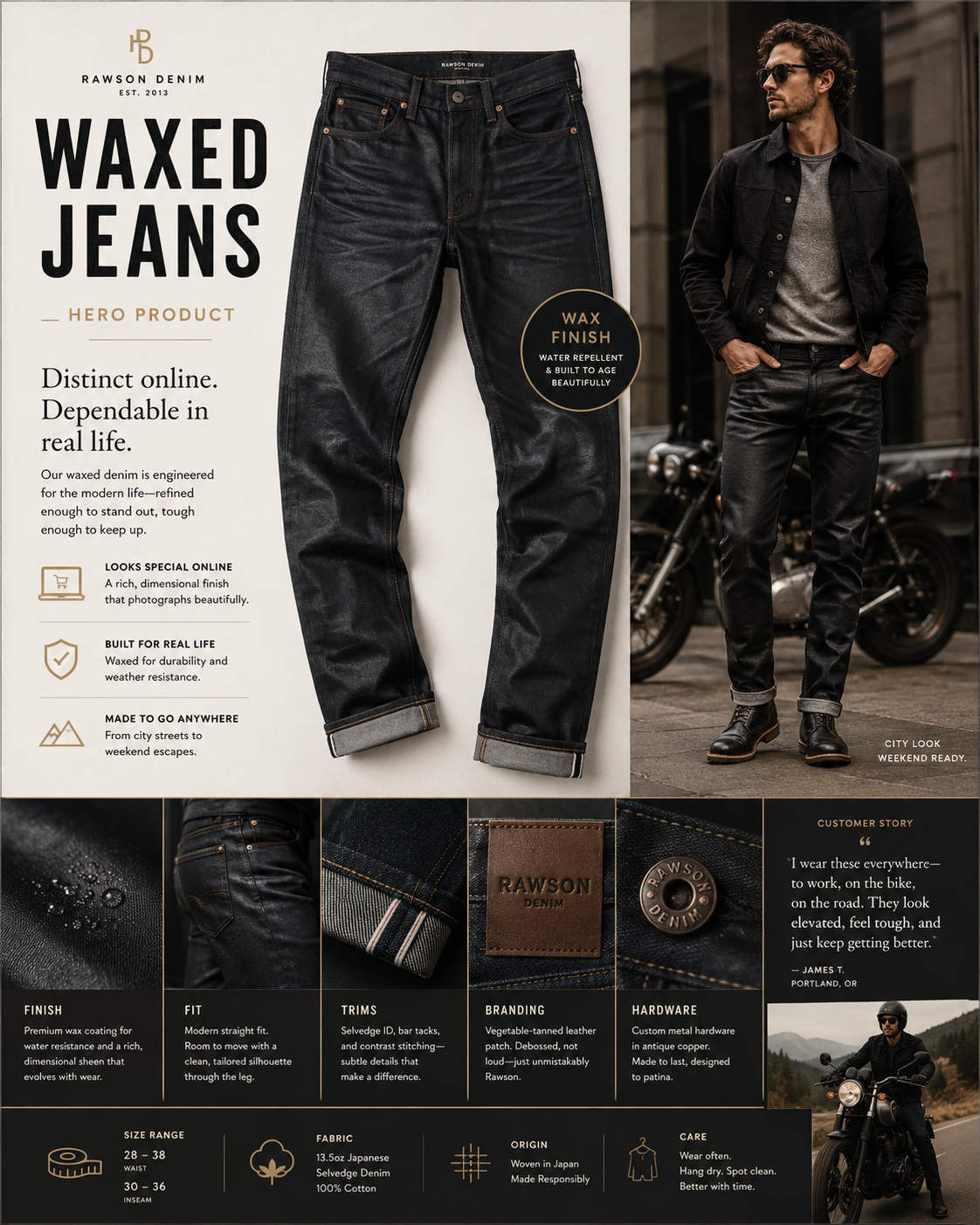
Waxed jeans are jeans treated with wax or a wax-like coating to create a subtle sheen, improve light water resistance, add structure, and build a unique worn-in patina over time. The point of waxed jeans is not only protection; it is also style, texture, and product differentiation. For fashion brands, waxed denim turns a familiar jeans silhouette into a higher-value statement piece.
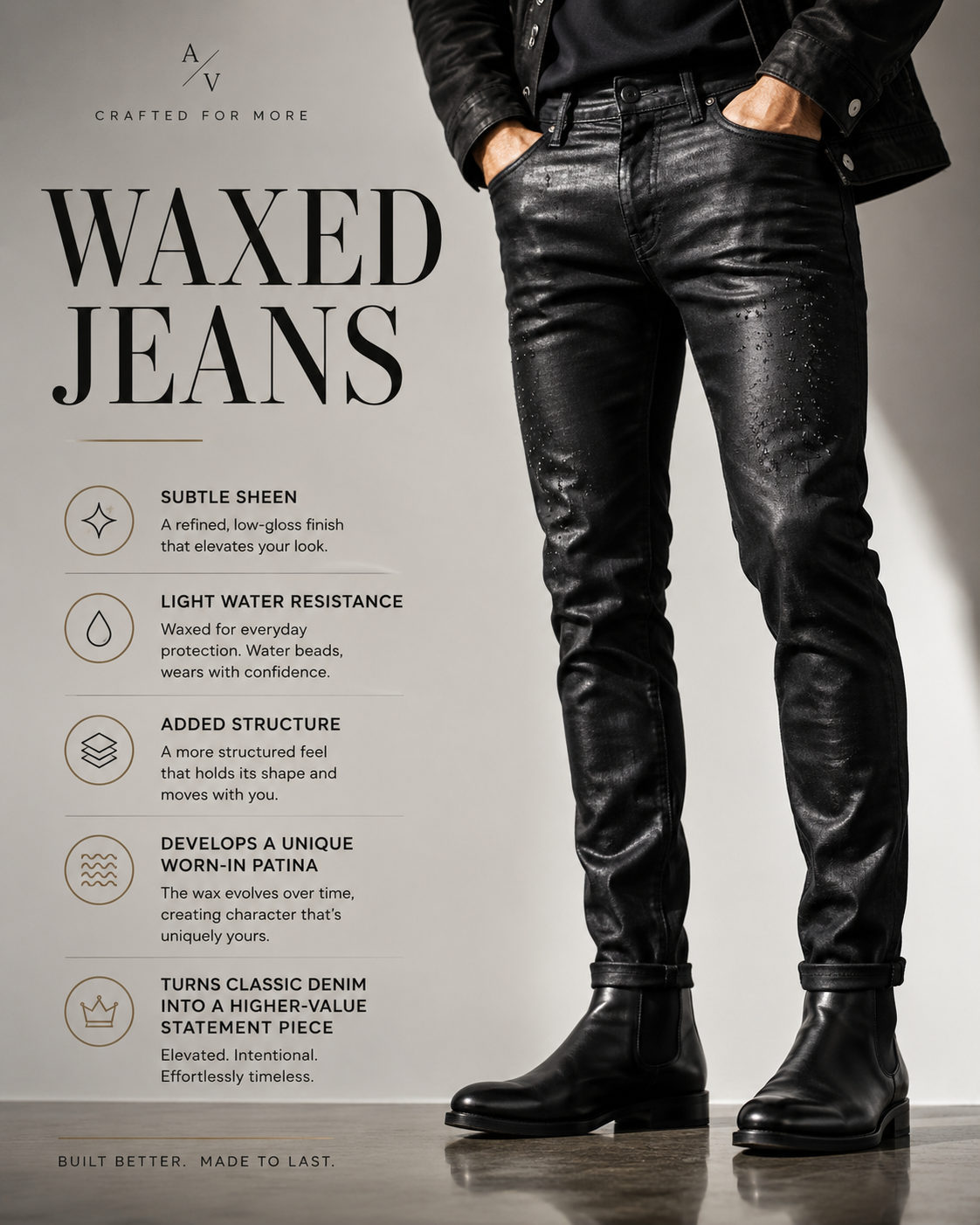
Think of a customer walking into a boutique and seeing two pairs of black jeans on the same rack. One is a normal washed black jean. The other has a clean coated surface, a richer hand feel, and a slight shine that looks almost like leather but still wears like denim. The second pair tells a stronger story before the customer even tries it on. That story is exactly why waxed jeans matter.
What Are Waxed Jeans and Why Do People Wax Denim?
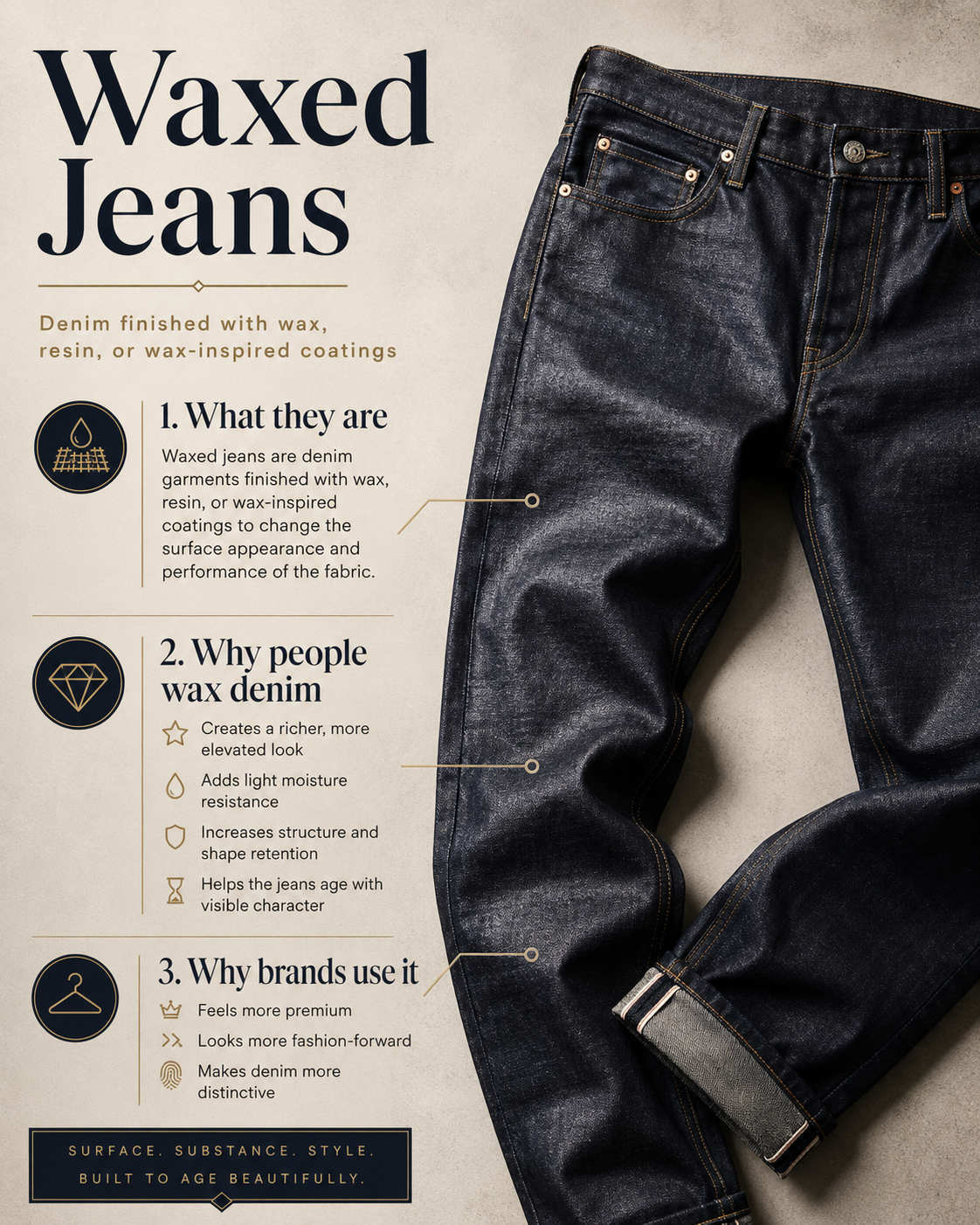
Waxed jeans are denim garments finished with wax, resin, or wax-inspired coatings to change the surface appearance and performance of the fabric. People wax denim to create a richer look, add light moisture resistance, increase structure, and help the jeans age with visible character. For brands, waxing is a way to make denim feel more premium, more fashion-forward, and more distinctive.
Dive Deeper
At its simplest, waxed denim is denim with a treated surface. The base fabric can be cotton denim, stretch denim, black denim, indigo denim, or even colored denim. After weaving, dyeing, and basic finishing, a wax or coating treatment is added to the fabric or garment. This treatment can be subtle and matte, or it can be darker, shinier, and more leather-like depending on the brand’s design direction.
The real purpose of waxing denim is not just to make jeans look shiny. That is only the most visible part. A wax finish changes the way the fabric behaves. It can make jeans feel slightly firmer at first. It can add surface tension. It can give black jeans more depth and make creases show more clearly. Over time, the wax may soften, fade, crack slightly, or polish in high-friction areas such as the thighs, knees, back pockets, and waistband. This is part of the appeal.
From a customer’s point of view, waxed jeans feel like denim with attitude. They are not as formal as leather pants, not as basic as regular jeans, and not as technical as outdoor gear. They live somewhere in the middle. That makes them useful for brands selling streetwear, nightlife outfits, motorcycle-inspired looks, premium casualwear, boutique fashion, and high-end private label denim.
From a manufacturing point of view, waxing is also a way to create differentiation without completely changing the jeans pattern. A brand can use the same basic straight jeans block, skinny jeans block, stacked jeans block, or baggy jeans block, and then create a completely different product mood by changing the fabric finish. This is especially useful for designers and boutique owners who want a strong visual identity but do not want to develop a totally new silhouette from scratch.
For example, a pair of regular black skinny jeans may feel common in a crowded online store. But a waxed black skinny jean with matte hardware, tonal stitching, a slightly extended inseam, and a stacked hem can feel like a premium fashion item. The difference is not only the wax. It is the way the wax interacts with the fit, trims, wash, stitching, logo placement, and styling.
Here is a simple way to understand the design value:
| Denim Finish | Main Look | Customer Perception | Best For |
| Regular washed denim | Soft, casual, familiar | Everyday basic | Mass-market jeans |
| Raw denim | Dark, stiff, authentic | Heritage, long-term fading | Denim enthusiasts |
| Waxed denim | Sleek, structured, slightly shiny | Premium, edgy, fashion-forward | Boutique and streetwear brands |
Heavy coated denim | Strong shine, leather-like surface | Bold, statement fashion | High-impact collections |
Vintage washed denim | Worn, faded, broken-in | Relaxed, nostalgic | Casual lifestyle brands |
This is why the question “What’s the point of waxed jeans?” has a stronger answer than “they look cool.” The real point is that waxed jeans help a brand create a product with more story, more shelf presence, and more perceived value. For a designer, they are a tool. For a customer, they are an easy way to dress up denim without leaving denim comfort behind. For a buyer, they can become a profitable hero product when the fit, finish, and target audience are aligned.
Are Waxed Jeans Waterproof, Water-Resistant, or Just Stylish?
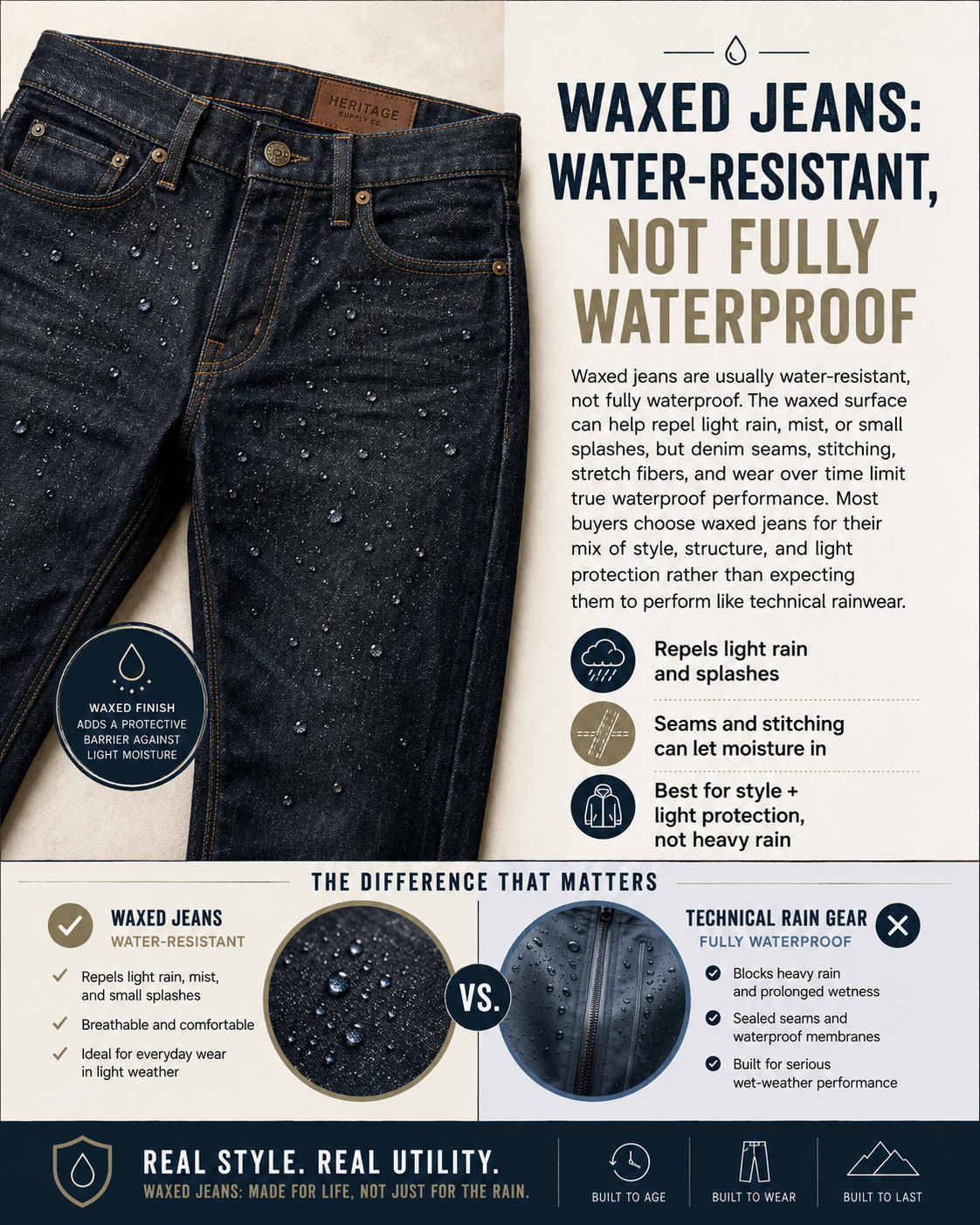
Waxed jeans are usually water-resistant, not fully waterproof. The waxed surface can help repel light rain, mist, or small splashes, but denim seams, stitching, stretch fibers, and wear over time limit true waterproof performance. Most buyers choose waxed jeans for their mix of style, structure, and light protection rather than expecting them to perform like technical rainwear.
Dive Deeper
One of the most common misunderstandings about waxed jeans is the word “waterproof.” Many customers see the word “waxed” and imagine the jeans can handle heavy rain like a rain jacket. That is not usually accurate. Waxed denim can resist moisture better than untreated cotton denim, but it is still denim. It has seams. It has pockets. It moves with the body. The coating can wear down. If the jeans are stretch denim, the elastic fibers and fabric movement can also affect how the surface finish performs over time.
So the better phrase is “water-resistant.” Waxed jeans may help water bead up for a short period, especially when the finish is fresh. They may protect the wearer from light drizzle during a city commute or a short walk outdoors. But if a customer sits in heavy rain, rides a motorcycle through a storm, or washes the jeans aggressively, the wax finish will not behave like a laminated waterproof textile.
This is important for brands because product language matters. Overselling waxed jeans as waterproof can create disappointed customers. Describing them as water-resistant, weather-inspired, coated, protective, or lightly moisture-repellent is more accurate and more trustworthy. Good product descriptions protect both the buyer and the brand.
Waxed jeans are also stylish in a way regular denim is not. The surface gives the garment more shadow and highlight. On black jeans, it can make the fabric look deeper and more luxurious. On dark indigo jeans, it can create a rugged heritage effect. On stacked jeans, the wax can highlight the folds at the ankle. On baggy jeans, it can add structure so the silhouette looks intentional instead of sloppy. On denim jackets, wax can make a familiar outerwear piece look more expensive and more seasonal.
The fit question matters here too. Many shoppers search for “What is the 2 finger test for jeans?” because they want a simple way to know if jeans fit correctly. The two-finger test means that after buttoning the jeans, the wearer should be able to slide about two fingers between the waist and the waistband. If there is no room, the jeans are too tight. If there is too much room, they may need a belt or a smaller size.
For waxed jeans, this test is useful but not perfect. Waxed denim can feel firmer at first than regular washed denim. A customer may think the jeans are too tight because the surface feels structured, when the actual waist measurement is correct. That is why brands should consider fit testing not only at the waist, but also at the hips, thighs, knees, seat, and calf depending on the silhouette.
A skinny waxed jean needs enough stretch and recovery so the coating does not crack too aggressively. A baggy waxed jean needs enough fabric weight to hold shape without becoming stiff and uncomfortable. A stacked waxed jean needs the right inseam and leg opening so the stacks form naturally over sneakers or boots. A straight waxed jean needs balance: clean enough for premium retail, but comfortable enough for repeat wear.
Here is a practical fit checklist for waxed denim development:
| Fit Area | What to Check | Why It Matters for Waxed Jeans |
| Waist | Two-finger comfort test | Prevents returns caused by tight or loose waist fit |
Hip and seat | Sitting and walking comfort | Waxed fabric may feel firmer than regular denim |
Thigh | Mobility and stress lines | Too much pressure can damage coating faster |
Knee | Bend and recovery | Important for skinny, jogger, and stacked jeans |
| Hem | Shoe interaction | Critical for stacked jeans and streetwear styling |
| Rise | Comfort and target customer preference | Low, mid, and high rise all change the final look |
The key point is this: waxed jeans are not just waterproof pants and not just shiny pants. They are fashion denim with functional influence. Their value comes from the combination of surface protection, visual impact, fit, and customer emotion. When done well, they make a customer feel more dressed, more confident, and more styled without giving up the familiarity of jeans.
What Are the Main Benefits of Waxed Jeans for Fashion Brands and Designers?
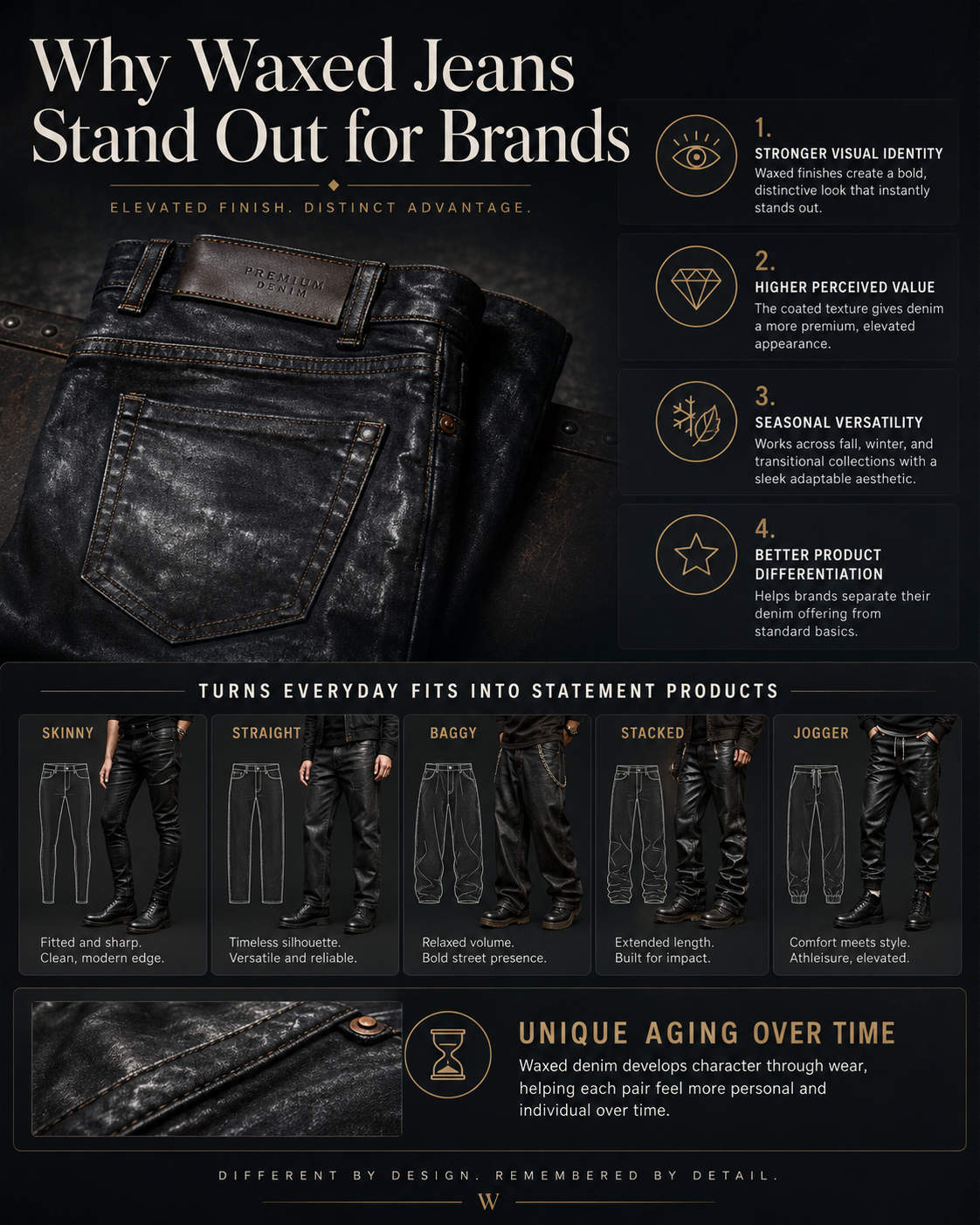
The main benefits of waxed jeans for brands are stronger visual identity, higher perceived value, seasonal versatility, and better product differentiation. Waxed denim can turn common silhouettes like skinny, straight, baggy, stacked, or jogger jeans into statement products. It also gives designers a surface that ages uniquely, helping each pair feel more personal after wear.
Dive Deeper
For fashion brands, the biggest challenge is rarely “Can we make jeans?” The harder question is “Why should a customer buy our jeans instead of someone else’s?” Waxed denim helps answer that question because it gives the garment an immediate visual hook. A waxed jean looks different in photos, feels different in the hand, and creates a stronger impression in product videos. That matters in online fashion, where customers often make decisions in seconds.
One benefit is premium perception. Customers often associate smooth, dark, structured surfaces with luxury. Waxed denim can borrow some of the visual language of leather without the same cost, weight, or care concerns. This makes it useful for brands that want an elevated look but still want the comfort and production flexibility of denim.
Another benefit is versatility. Waxed jeans can be styled up or down. A boutique customer can wear black waxed skinny jeans with boots and a blazer at night, or with a hoodie and sneakers during the day. A streetwear customer can wear waxed stacked jeans with oversized tops and high-impact footwear. A designer can use waxed baggy jeans to create a modern runway-inspired silhouette that still feels wearable.
A third benefit is aging. Regular jeans fade. Raw jeans fade dramatically. Waxed jeans develop surface character. The coating may soften where the body moves. Creases may become more visible. High-friction areas may become matte, polished, or slightly worn. This creates a garment that changes with the wearer. Customers who enjoy personal style often like this because their jeans do not remain flat and lifeless.
For designers, waxed denim also opens up more creative combinations. Wax can be paired with distressing, whiskers, 3D creases, stacking, cargo pockets, paneling, embroidery, leather patches, metal trims, custom buttons, tonal stitching, contrast stitching, or private label branding. But it must be controlled. Too many design elements can make waxed jeans look overdone. The best product development often starts with one clear idea: sleek luxury, rugged biker, dark streetwear, coated boutique denim, or weathered vintage.
The target customer should guide the finish. A high-end boutique may prefer subtle matte black waxed denim with clean hardware and minimal branding. A streetwear brand may prefer heavier coating, longer inseam, stacked legs, and bold pocket details. A designer brand may want irregular hand-applied effects, special panels, or experimental silhouettes. A Western-inspired brand may use waxed dark indigo with stronger structure and antique metal trims.
Here are examples of waxed denim product directions:
| Brand Direction | Recommended Style | Finish Direction | Customer Appeal |
| Premium boutique | Straight jeans or skinny jeans | Matte black wax, clean surface | Elegant, easy to style |
| Streetwear | Stacked jeans or baggy jeans | Dark coated wax, strong texture | Bold, trend-driven |
| Designer collection | Panel jeans or flare jeans | Irregular wax, custom wash | Unique, editorial |
Men’s rugged fashion | Slim straight or jogger jeans | Dark indigo wax, antique trims | Masculine, practical |
Women’s fashion | Skinny, flare, or denim jacket | Soft shine, stretch comfort | Sleek and versatile |
Plus size denim | Straight or relaxed fit | Flexible waxed stretch denim | Comfortable but polished |
For B2B buyers, the commercial benefit is clear: waxed denim can help build a higher-margin product. Basic jeans often compete mainly on price. Waxed jeans compete on look, feel, and story. That gives the brand more room to explain value. Product pages can talk about the finish, the break-in process, the styling options, the custom trims, and the limited production concept.
However, brands should also be realistic. Waxed denim is not ideal for every customer or every market. In very hot climates, some customers may find heavy wax finishes less comfortable. In mass-market basics, the added care requirements may create confusion. In low-price retail, inconsistent coating can cause quality complaints. This is why factory experience matters. Waxed denim production needs testing for hand feel, crocking, washing behavior, coating stability, size shrinkage, and packaging marks.
DiZNEW’s value is especially relevant here because complex denim customization is not only about making a sample that looks good once. It is about making a product that can be repeated in 30 pieces, 300 pieces, 3,000 pieces, or 10,000 pieces while keeping the finish, fit, and brand details consistent. For designers and boutique owners, that consistency can be the difference between a strong launch and a costly return problem.
What Is the Difference Between Waxed Denim, Coated Denim, Raw Denim, and Regular Jeans?
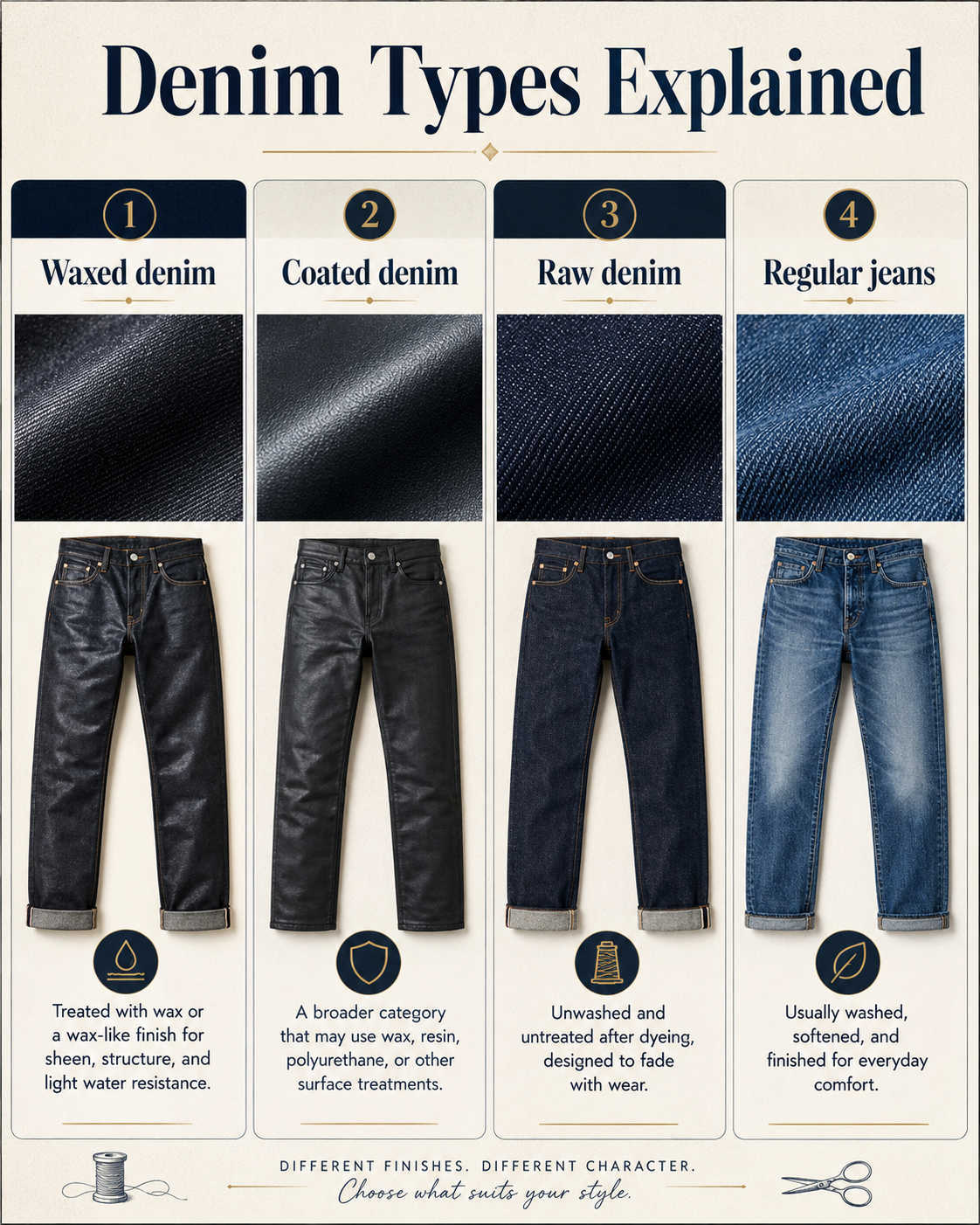
Waxed denim is treated with wax or wax-like finish for sheen, structure, and light water resistance. Coated denim is a broader category that may use wax, resin, polyurethane, or other surface treatments. Raw denim is unwashed and untreated after dyeing, designed to fade with wear. Regular jeans are usually washed, softened, and finished for everyday comfort.
Dive Deeper
Understanding denim categories helps buyers make smarter product decisions. Many people use “waxed denim” and “coated denim” as if they mean the same thing. Sometimes they overlap, but they are not always identical. Waxed denim usually refers to denim treated with wax or wax-inspired finishing. Coated denim is broader. It can include wax, resin, pigment coating, film coating, polyurethane coating, varnish-like finishes, or other surface treatments that create shine, texture, protection, or color effects.
Raw denim is different. Raw denim is usually unwashed denim that keeps its original dark color and firm hand after dyeing. Its main selling point is natural fading. The wearer creates whiskers, honeycombs, wallet fades, and personal wear marks over months or years. Waxed denim also ages, but the aging is more about the surface coating, creases, shine, and patina rather than only indigo fading.
Regular jeans are the broadest everyday category. They can be stone washed, enzyme washed, bleached, distressed, whiskered, garment dyed, or softened. They are usually made for comfort and easy care. A regular washed jean may be easier for a first-time customer to understand, but it may not create the same premium statement as waxed denim.
The question “Can you unwax waxed jeans?” often appears because some customers buy waxed jeans and later decide the shine is too strong, or the finish changes after wear. In practical terms, wax can fade, wear down, or be reduced over time through washing, heat, friction, or cleaning methods. But completely “unwaxing” jeans in a controlled way is difficult. Aggressive attempts may damage the color, texture, shrinkage, or garment shape. For consumers, it is usually better to let waxed jeans age naturally. For brands, it is better to choose the right wax level before production.
This is why sampling is so important. A buyer may say, “I want waxed jeans,” but that can mean many different things. Do they want light matte wax? Heavy shine? Leather-like coating? Slight water resistance? A soft hand feel? A rigid fashion look? A distressed wax effect? A clean black boutique style? Each direction requires different fabric selection, coating formula, finishing process, and quality control.
Here is a comparison for product development:
| Denim Type | Surface Feel | Main Selling Point | Care Level | Best Buyer Use |
| Regular washed denim | Soft, familiar | Everyday comfort | Easy | Basic jeans programs |
| Raw denim | Rigid, untreated | Authentic fading | Medium to high | Heritage denim brands |
Waxed denim | Smooth, structured, slightly coated | Patina, style, light resistance | Medium | Premium fashion and streetwear |
Coated denim | Can be glossy, matte, heavy, or technical | Strong visual effect | Medium to high | Statement collections |
Stretch waxed denim | Coated but flexible | Sleek look with comfort | Medium | Skinny, women’s, plus size |
| Heavy waxed denim | Firm and rugged | Structure and bold character | Higher | Men’s fashion, outerwear, jackets |
The best choice depends on the brand’s customer. A designer selling to fashion-forward buyers may choose a dramatic coated black stacked jean. A boutique selling to women who want night-out jeans may choose stretch waxed skinny jeans with a smooth surface. A men’s brand may choose dark indigo waxed straight jeans with antique trims. A high-end label may want selvedge waxed denim with minimal branding and clean construction.
There is also a sustainability and quality conversation. Coatings and finishes can add complexity to denim production. Buyers should ask about fabric composition, coating durability, colorfastness, restricted substances, and care labeling. A responsible supplier should be able to guide the buyer through realistic options instead of simply saying yes to every idea. The goal is not to make the shiniest jean. The goal is to make a jean that sells, wears well, matches the brand’s price point, and does not create avoidable complaints.
For DiZNEW customers, this is where development experience matters. With more than 20 years in jeans research, manufacturing, and sales, DiZNEW can support different denim categories including plus size jeans, baggy jeans, stacked jeans, straight jeans, selvedge jeans, skinny jeans, jogger jeans, denim jackets, denim shorts, and denim shirts. Waxed denim can be integrated into many of these categories, but the right product route should be selected based on the customer’s brand identity, target retail price, order quantity, and expected finish.
How Should You Wash, Care for, and Customize Waxed Jeans?
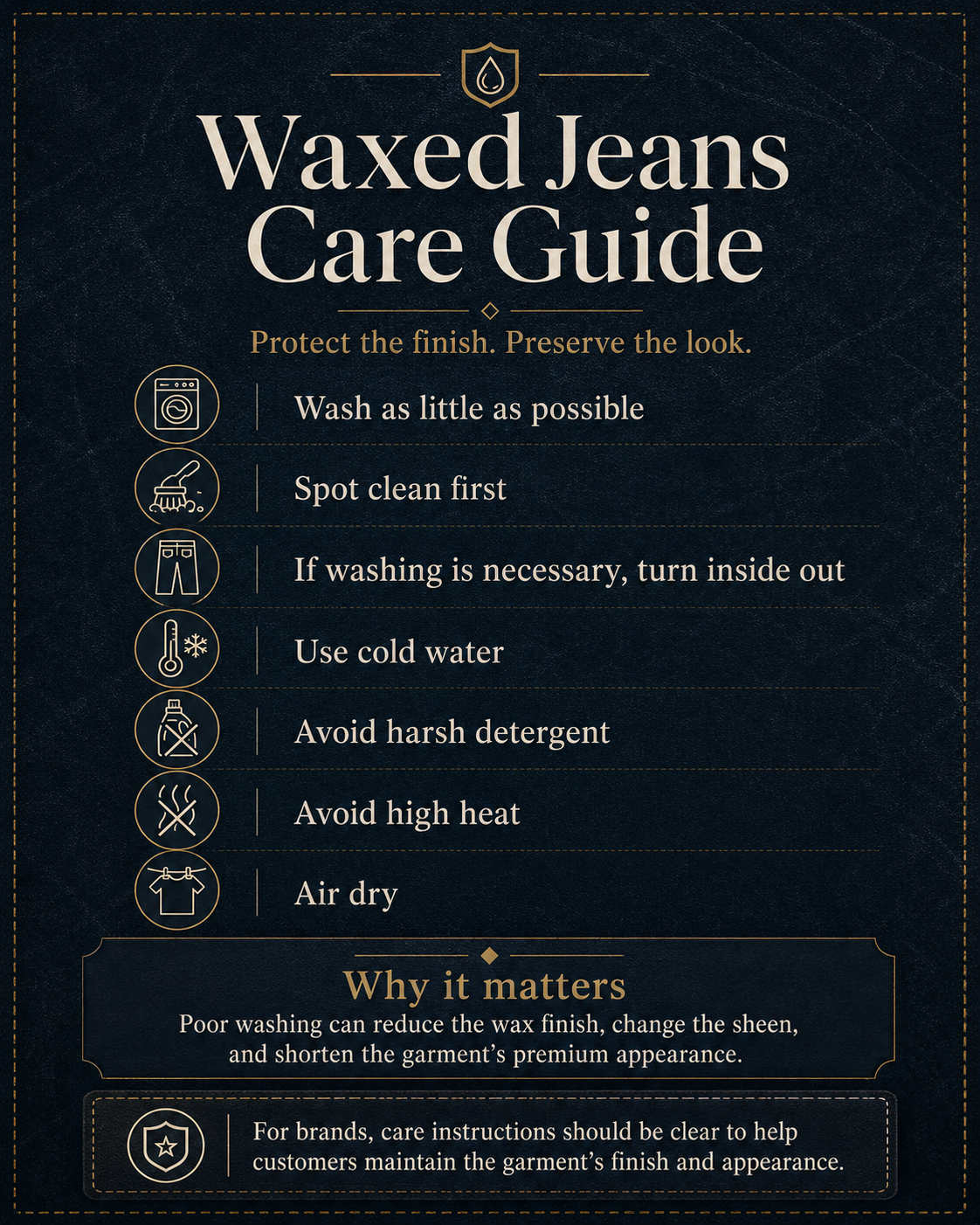
You are supposed to wash waxed jeans as little as possible. Spot clean first, turn them inside out if washing is necessary, use cold water, avoid harsh detergent, avoid high heat, and air dry. For brands, care instructions should be clear because poor washing can reduce the wax finish, change the sheen, and shorten the garment’s premium appearance.
Dive Deeper
Care is one of the biggest differences between waxed jeans and regular jeans. Regular jeans can usually handle repeated machine washing. They may fade, shrink, or soften, but most consumers expect that. Waxed jeans require more care because the surface finish is part of the product’s value. If the customer washes too often, uses hot water, applies strong detergent, tumble dries, or irons directly on the surface, the wax finish can weaken or change faster than expected.
The most practical advice is simple: wash less, spot clean more. If there is a small stain, use a damp cloth and gently clean the area. If the jeans smell but are not dirty, air them out. If a full wash is truly needed, turn the jeans inside out, use cold water, choose a gentle cycle or hand wash, and air dry away from direct high heat. This does not mean waxed jeans are too delicate to wear. It means they should be treated like a fashion finish, not like gym clothes.
For brands, the care label and product page need to educate customers. A waxed jean should not be sold with vague instructions like “machine wash normal” unless the finish has been tested for that. Better wording may include:
| Care Situation | Recommended Instruction |
| Small stain | Spot clean with a damp cloth |
| Light odor | Air out before washing |
Full wash needed | Cold wash inside out, gentle cycle |
Drying | Air dry, avoid tumble drying |
Ironing | Avoid direct heat on waxed surface |
Long-term wear | Expect natural fading, softening, and patina |
Can waxed jeans be rewaxed? In some cases, yes, especially for heavier waxed cotton or heritage-style garments. But fashion denim is not always designed for easy rewaxing at home. The original factory finish may be more controlled than what a customer can reproduce. Rewaxing can change color, shine, hand feel, and even sizing if heat is used incorrectly. For most fashion customers, natural aging is part of the appeal.
Can waxed jeans be unwaxed? As mentioned earlier, the wax can wear down, but intentionally removing it is risky. Washing repeatedly may reduce the surface effect, but it can also make the jeans look uneven. Heat may soften wax, but it can also create marks. Chemicals may strip finish, but they can damage dye and fibers. Brands should not encourage customers to unwax jeans unless the garment was specifically designed for that process.
Customization is where waxed denim becomes especially exciting for buyers. A brand does not have to copy what already exists in the market. It can build a waxed denim product around its customer’s lifestyle. Here are some practical directions:
| Custom Product Idea | Best Customer Group | Key Development Notes |
| Black waxed skinny jeans | Boutique shoppers, nightlife fashion | Use stretch denim, test coating recovery |
Waxed stacked jeans | Streetwear buyers, online stores | Longer inseam, controlled leg opening |
Waxed baggy jeans | Gen Z fashion, influencer shops | Fabric weight must support silhouette |
Waxed straight jeans | Premium casual brands | Balance comfort and structure |
Waxed denim jacket | Outerwear, capsule collections | Test sleeve movement and surface cracking |
Waxed plus size jeans | Inclusive fashion brands | Prioritize comfort, stretch, and waist fit |
| Waxed jogger jeans | Urban casualwear | Test waistband, cuffs, and coating flexibility |
| Waxed denim shorts | Summer streetwear | Choose lighter wax and softer hand feel |
For OEM and ODM buyers, the best development process starts with a clear product brief. The buyer should define the target customer, gender, size range, expected retail price, fit reference, fabric preference, color, wax level, hardware, logo placement, label requirements, packaging, and order quantity. A good factory can then advise what is practical and what needs testing.
At DiZNEW, this is especially important because many clients are designers, online boutique owners, influencer stores, and high-end brand buyers who need more than a simple stock product. They may come with a sketch, a sample photo, a tech pack, or even just an idea. The factory’s role is to help turn that idea into a real pair of jeans that can be sampled, fitted, adjusted, and produced.
For small brands, the minimum order quantity can be a major concern. DiZNEW supports custom denim orders starting from 30 pieces, which helps new designers and boutique sellers test a product without taking huge inventory risk. For established brands, DiZNEW can also handle large production orders up to 10,000 pieces, making it suitable for both small capsule drops and larger OEM/ODM programs.
The best waxed jeans are not created by coating random denim and hoping it sells. They are built through fit testing, fabric selection, finish development, sample adjustment, and quality control. That is why working with an experienced denim manufacturer matters.
How Can Brands Use Waxed Jeans to Build a Stronger Custom Denim Collection?
Brands can use waxed jeans as a hero product in a custom denim collection by pairing the right finish with the right fit, size range, trims, branding, and customer story. The goal is to design jeans that look special online, feel reliable in real life, and clearly match the lifestyle of the target buyer.
Dive Deeper
Waxed jeans work best when they are not treated as a random trend. They should be part of a larger brand story. A boutique brand may position them as “day-to-night denim.” A streetwear label may position them as “stacked coated denim.” A premium men’s brand may call them “weathered waxed straight jeans.” An influencer store may style them with corset tops, oversized jackets, or statement boots. The product itself is important, but the story around the product is what helps it sell.
For online boutique owners, photos and videos matter. Waxed jeans often perform well visually because the surface catches light. But lighting must be controlled. Too much direct light can make the finish look overly shiny. Too little light can make it look like normal black denim. A good product shoot should show front, back, side, close-up texture, stretch movement, and styling on different body types if possible.
For designers, waxed denim offers a way to create depth without adding too many decorations. Sometimes a clean waxed surface is stronger than heavy embroidery or excessive distressing. A black waxed straight jean with premium hardware, a custom leather patch, and a perfect fit can feel more expensive than a heavily decorated jean with no clear design direction.
For plus size jeans, waxed denim must be handled carefully. The finish should not make the garment feel restrictive. Stretch, recovery, rise, thigh comfort, and waistband construction are critical. Plus size customers want style, but they also need comfort and confidence. A waxed plus size straight jean or relaxed jean can be a strong product if the pattern is developed properly.
For stacked jeans, the factory must control inseam length, leg opening, fabric weight, and wax behavior. The stacks should look intentional, not messy. The wax should highlight the folds without making the jeans too stiff to wear. For baggy jeans, the challenge is different. The fabric must have enough body to hold shape, but not so much stiffness that the jeans feel heavy or uncomfortable.
For denim jackets, waxing can create a strong outerwear look. However, jackets have different stress points than jeans. The elbows, shoulders, cuffs, and front placket move differently. The coating must be tested for cracking, transfer, and comfort. A waxed denim jacket can be a great companion product to waxed jeans, but the finish should be adjusted for upper-body movement.
A strong custom waxed denim collection may include:
| Collection Piece | Why It Works |
| Waxed black stacked jeans | Strong streetwear appeal and high visual impact |
| Waxed straight jeans | Easier fit for broader customers |
| Waxed denim jacket | Builds a complete outfit story |
Waxed skinny jeans | Good for sleek, nightlife, and boutique fashion |
Waxed baggy jeans | Matches current oversized and relaxed trends |
Waxed denim shorts | Adds seasonal variety |
Waxed plus size jeans | Supports inclusive sizing and a wider customer base |
The buyer should also think about price positioning. Waxed jeans should usually not be treated as the cheapest product in a denim line. The finish gives them a reason to sit at a higher price point, especially when paired with custom labels, branded buttons, quality zippers, custom packaging, and controlled sizing. Even a small brand can make the product feel more premium by paying attention to these details.
At the same time, buyers should avoid making the product too complicated at the first order. A smart first waxed denim order might focus on one strong fit, one proven fabric, one color, and one finish level. After customer feedback, the brand can expand into other silhouettes. This reduces risk and helps the buyer learn what the audience actually wants.
DiZNEW is well positioned for this kind of development because the company supports both custom and OEM/ODM production. Whether a buyer needs plus size jeans, baggy jeans, stacked jeans, straight jeans, selvedge jeans, skinny jeans, jogger jeans, denim jackets, denim shorts, or denim shirts, the product can be developed around the brand’s own logo and design direction.
For designers with sketches, DiZNEW can help translate the drawing into pattern, fabric choice, sample development, fit correction, and production. For online boutique owners, DiZNEW can help create small-batch custom jeans that feel different from ordinary wholesale products. For high-end brands, DiZNEW can support deeper customization, more complex construction, and larger production runs.
Final Thoughts: Are Waxed Jeans Worth It for Your Brand?
Waxed jeans are worth it when the product has a clear customer, a strong fit, a controlled finish, and honest care instructions. They are not just regular jeans with shine added on top. They are a design tool that can help a brand create stronger visual identity, higher perceived value, and a more memorable customer experience.
For shoppers, waxed jeans offer something easy to understand: they look sharper than basic denim, feel more styled than ordinary jeans, and age with personality. For fashion brands, they offer something even more valuable: differentiation. In a market full of basic blue jeans and black jeans, waxed denim gives buyers a reason to stop scrolling.
The most successful waxed jeans are not always the loudest. Sometimes they are the cleanest. A well-fitted black waxed straight jean can become a boutique bestseller. A waxed stacked jean can become a streetwear signature. A waxed denim jacket can anchor a whole capsule collection. A waxed plus size jean can help a brand serve customers who want fashion-forward denim in more inclusive sizing.
The key is working with a denim manufacturer that understands both design and production. Wax level, fabric weight, stretch, shrinkage, pattern, coating stability, care label, logo placement, and bulk consistency all matter. A beautiful sample is only the first step. A sellable product needs repeatable quality.
If you are a designer, online boutique owner, influencer store, or fashion brand looking to develop waxed jeans or other custom denim products, DiZNEW can help turn your idea into a real product. With more than 20 years of experience in jeans R&D, manufacturing, and sales, DiZNEW supports custom denim production for small test orders starting from 30 pieces and large OEM/ODM orders up to 10,000 pieces.
You can customize fabric, fit, wash, wax level, trims, logo, labels, packaging, and full denim styles including plus size jeans, baggy jeans, stacked jeans, straight jeans, selvedge jeans, skinny jeans, jogger jeans, denim jackets, denim shorts, and denim shirts.
Send DiZNEW your design idea, reference photo, tech pack, or target product direction, and our denim team can help you develop waxed jeans that fit your market, your customer, and your brand.
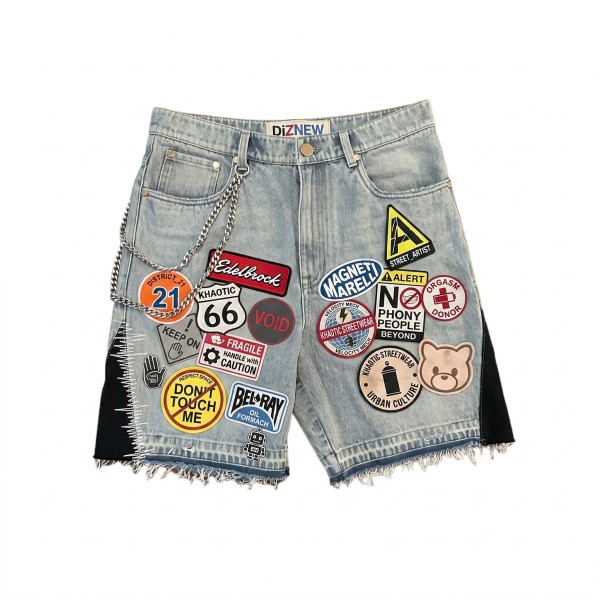
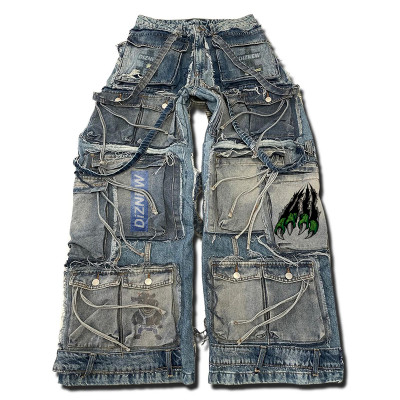
Streetwear-inspired custom denim shorts with utility pockets, distressed wash, and fringe hem for bold collections.
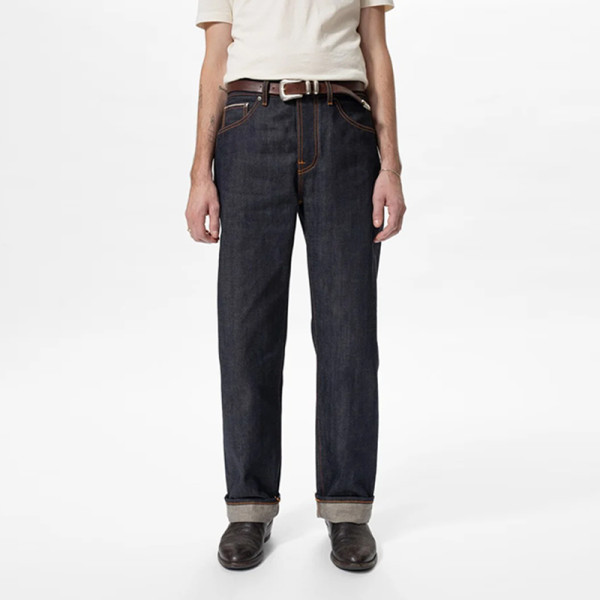
Premium raw selvedge denim jeans with a straight fit. Durable, unwashed, and customizable for classic or modern styles.
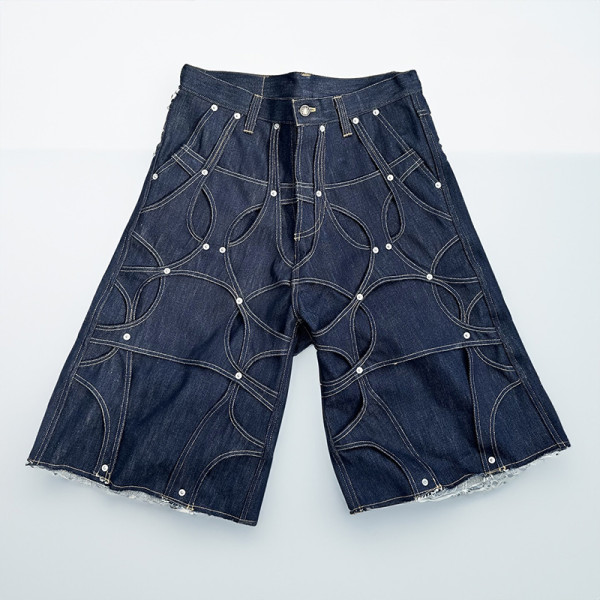
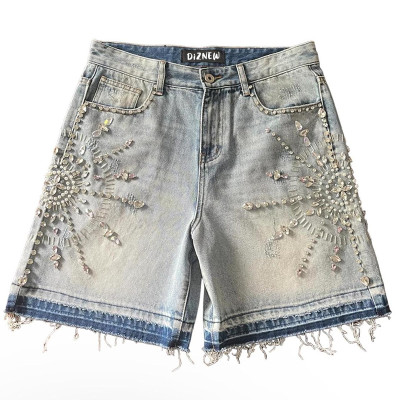
These designer denim shorts for men feature intricate decorative stitching and rivet details, perfect for streetwear fashion. The wide-leg silhouette adds a bold look, ideal for trendsetters.
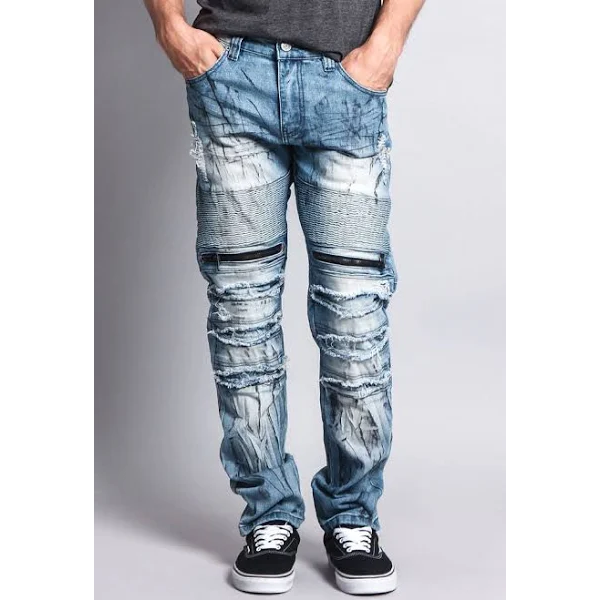
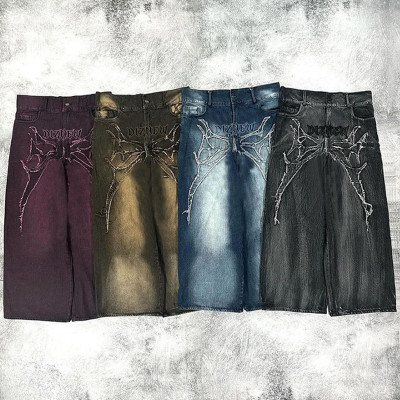
OEM & ODM Drop Crotch Jeans for Women - Tailored denim solutions designed for brands seeking unique styles and quality.