Where do stores get their clothes from?
Most shoppers see a finished pair of jeans hanging on a rack and think the store “made” it. In reality, most clothing stores are not factories. They are curators, buyers, brand builders, marketers, and inventory managers. The real journey usually starts much earlier: with a wholesaler’s catalog, a manufacturer’s sample room, a sourcing agent’s supplier list, a trade show booth, or a private label factory that can turn a sketch into a sellable garment. For boutique owners, denim designers, and online fashion sellers, understanding where stores get their clothes from is not just interesting—it can decide whether a brand makes money or gets buried under slow-moving inventory.
Stores usually get their clothes from wholesale vendors, clothing manufacturers, private label factories, trade shows, distributors, online wholesale marketplaces, and direct OEM/ODM suppliers. Small boutiques often buy ready-made wholesale styles first, while growing brands work directly with factories to create custom clothing, add their own labels, control quality, improve margins, and build a more unique brand identity.
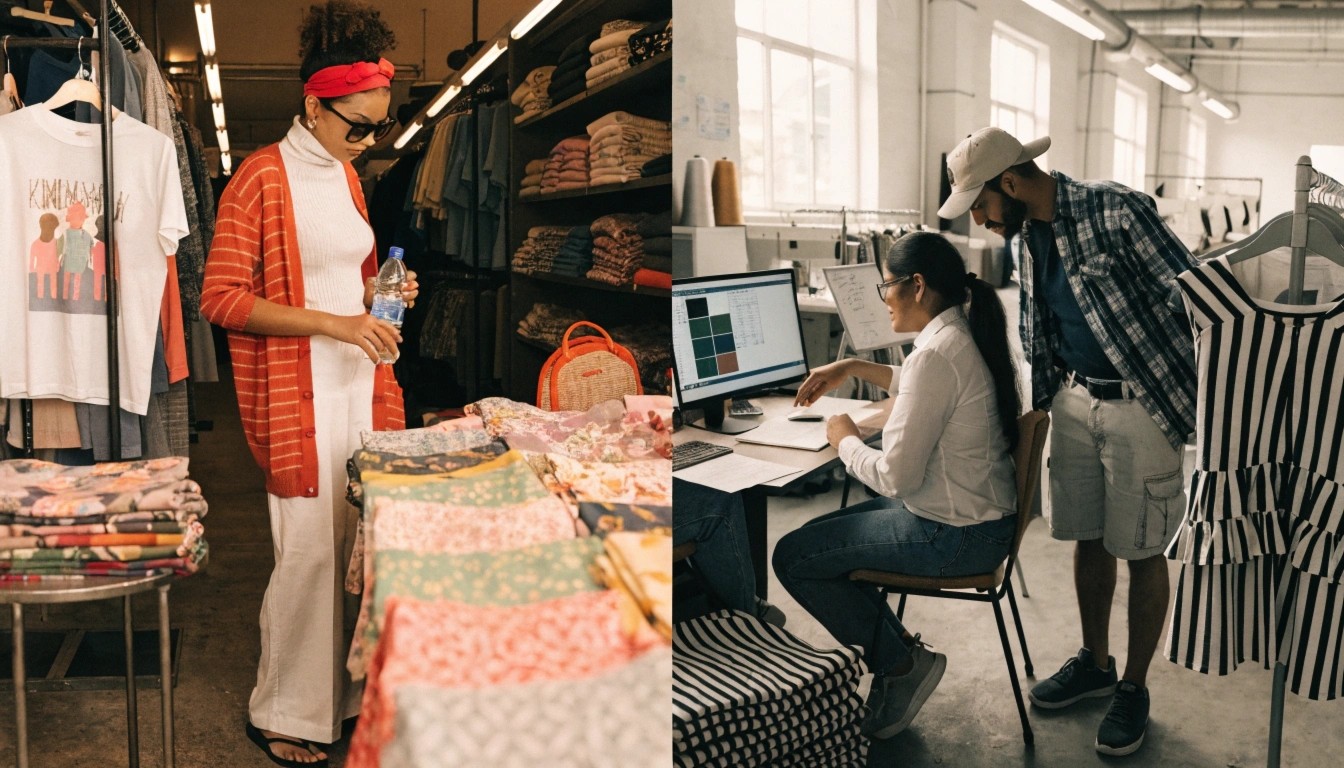
Here is the part most new store owners learn the hard way: buying clothes is easy; sourcing the right clothes is the real business. One boutique can buy the same trending jeans as 200 other sellers and compete only on price. Another boutique can work with a denim manufacturer, adjust the fit, choose a better wash, add branded labels, and sell a product customers remember. That difference is where sourcing becomes strategy.
Where Do Clothing Stores Usually Get Their Clothes From?
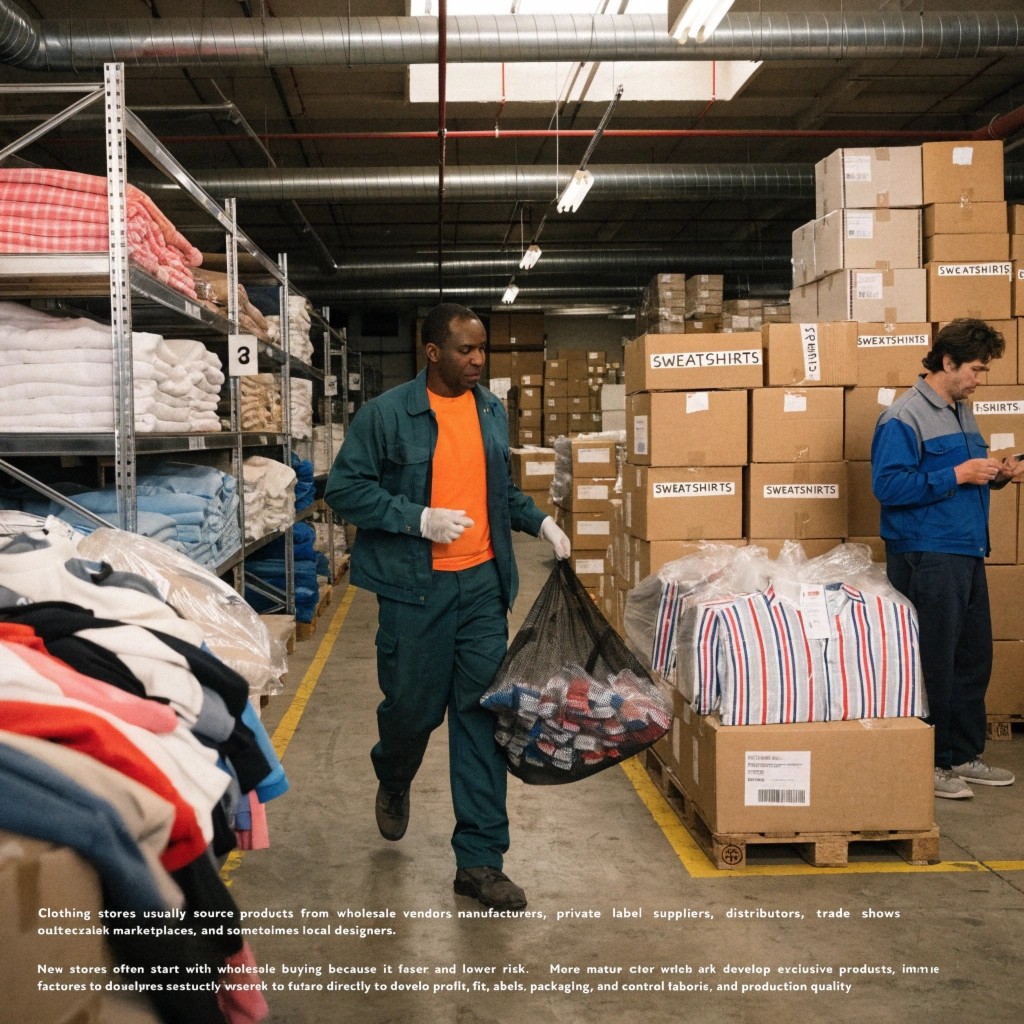
Clothing stores usually source products from wholesale vendors, manufacturers, private label suppliers, distributors, trade shows, online wholesale marketplaces, and sometimes local designers. New stores often start with wholesale buying because it is faster and lower risk. More mature brands usually work directly with factories to develop exclusive products, improve profit margins, and control fabric, fit, labels, packaging, and production quality.
Where do retailers get their clothes from?
Retailers get clothes from several different sourcing channels. A small online boutique may buy from FashionGo-style wholesale platforms, local market vendors, or Instagram suppliers. A larger retailer may have a global sourcing team that identifies factories, negotiates costs, checks compliance, and manages production timelines. Target, for example, says its global sourcing team identifies, evaluates, and partners with suppliers and vendors around the world, especially for its owned brands.
The most common clothing sourcing channels include:
| Sourcing Channel | Best For | Main Advantage | Main Risk |
| Wholesale vendors | New boutiques | Fast buying, low complexity | Many stores may sell the same styles |
| Online wholesale marketplaces | Online sellers | Easy browsing and small orders | Quality can vary widely |
| Trade shows | Boutique buyers and retailers | See samples in person | Travel and buying costs |
Direct manufacturers | Growing brands | Better control and margins | Requires product development knowledge |
Private label factories | Brand owners | Custom label and brand identity | Need sampling and QC |
OEM/ODM suppliers | Designers and advanced brands | Custom design development | Requires clear communication |
Closeout/liquidation suppliers | Discount retailers | Low prices | Inconsistent stock and sizing |
Shopify’s wholesale clothing vendor guidance also reflects what many boutique owners search for today: they compare vendors by minimum order quantities, shipping terms, returns, and reliability before buying.
What are the main clothing sourcing channels for stores?
For most stores, sourcing falls into two big categories: buying existing products or creating custom products.
Buying existing products means the store selects ready-made styles from a wholesaler or distributor. This is common for new boutiques because it saves time. You do not need to create patterns, choose fabrics, develop samples, or manage production. You simply select a style, order available sizes and colors, and start selling.
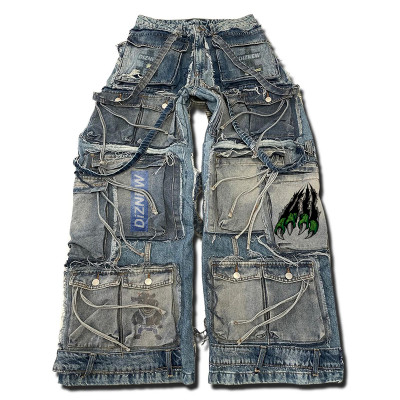
Creating custom products is different. The store works with a manufacturer to develop a product under its own brand. This may include custom fabric, wash, fit, zipper, button, rivet, leather patch, embroidery, woven label, hang tag, poly bag, and carton mark. For denim stores, this is where real differentiation happens.
Why do different stores choose different sourcing models?
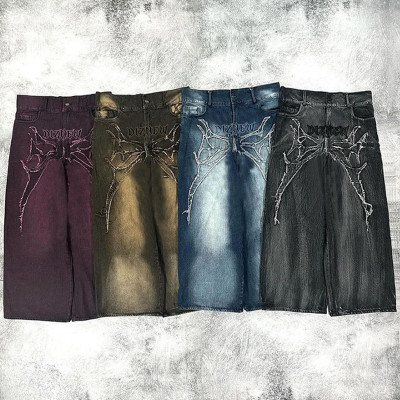
A boutique selling trendy weekend outfits may care most about speed. A premium denim brand may care more about fit consistency, wash quality, and long-term reorder stability. A TikTok boutique may need small-batch trend testing, while a high-end streetwear label may need complex stacked jeans with custom distressing, heavy GSM denim, special trims, and branded packaging.
That is why there is no single “best” place to get clothes. The best sourcing channel depends on the buyer’s business model.
A beginner boutique owner may ask, “Can I buy 20 to 50 pieces and test the market?” A denim designer may ask, “Can this factory make my exact silhouette from a sketch?” A growing online store may ask, “Can this supplier handle 1,000 pieces now and 10,000 pieces later?” These are very different sourcing questions.
From a business perspective, the biggest mistake is choosing a supplier only because the price looks low. Cheap inventory is not cheap if the fit is wrong, the wash looks different from the sample, the fabric shrinks too much, or the store cannot reorder the same style after it sells out.
For denim, this problem becomes even more serious. Jeans are technical products. A basic T-shirt may tolerate small variations, but jeans involve fabric weight, stretch recovery, waist measurement, inseam, hip curve, rise, pocket placement, wash shrinkage, hardware, stitching tension, and finishing. One small mistake can turn a good design into a return problem.
That is why many serious denim boutiques eventually move away from random wholesale buying and toward factory-direct sourcing. The goal is not just to “get clothes.” The goal is to build a product line customers can recognize, trust, and reorder.
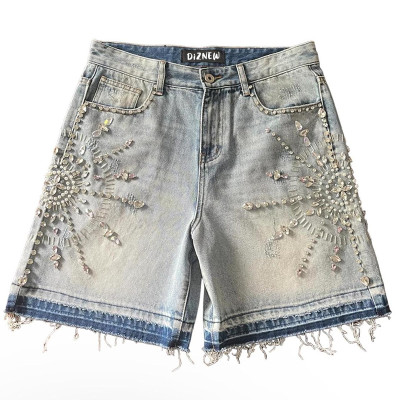
For brands targeting the U.S. boutique market, a specialized denim factory such as DiZNEW can be a practical bridge between small-batch testing and scalable custom production. With a 30-piece MOQ, stores can test plus size jeans, baggy jeans, stacked jeans, straight jeans, selvedge jeans, skinny jeans, jogger jeans, denim jackets, denim shorts, or denim shirts before committing to larger runs. When a style proves itself, production can scale toward much larger quantities, including 10,000-piece orders.
Do Boutiques Buy Clothes Wholesale or Work Directly With Manufacturers?
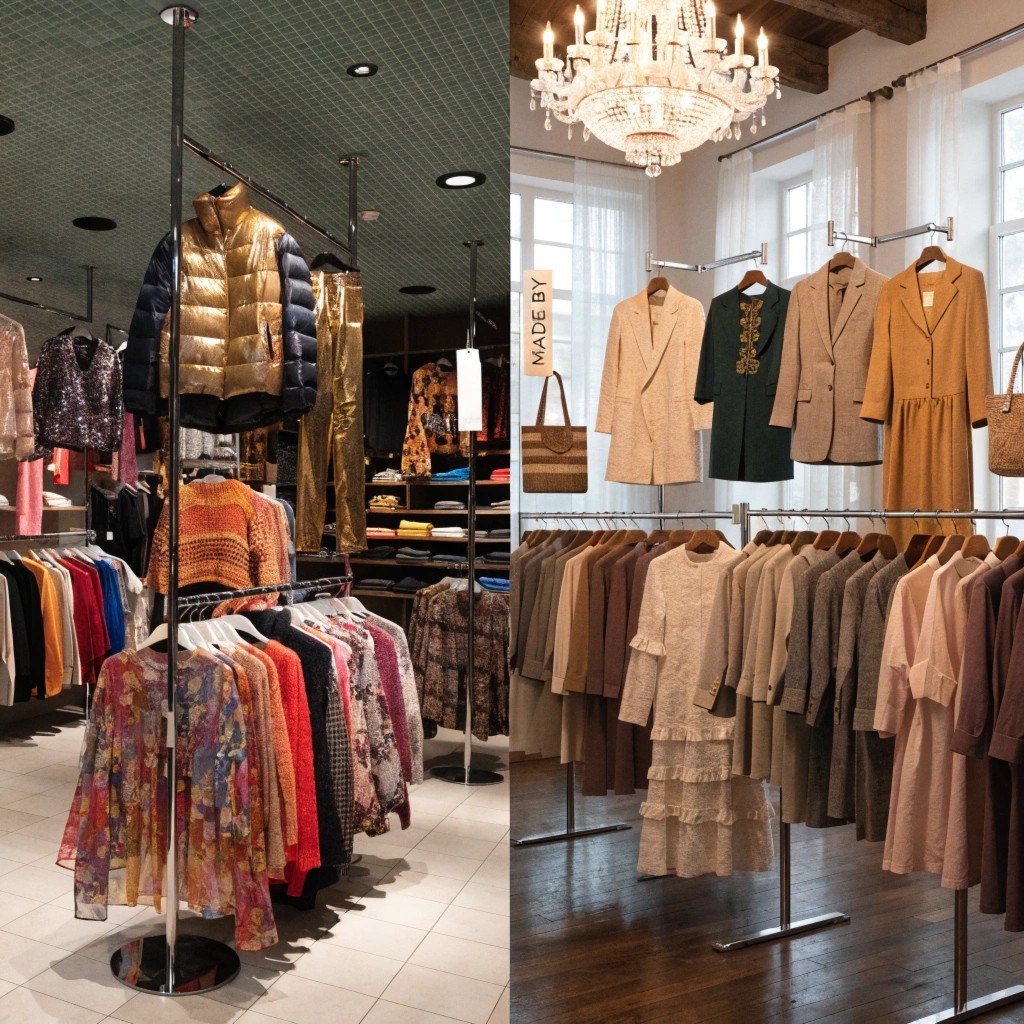
Boutiques do both. New boutiques often buy wholesale clothing because it is fast, simple, and requires less product development experience. Established boutiques and brand-focused stores often work directly with manufacturers to create private label or custom clothing. Wholesale is better for testing trends quickly, while direct manufacturing is better for exclusivity, brand control, better margins, and long-term growth.
Should new boutiques buy wholesale first?
For many new boutique owners, wholesale is the easiest first step. You can browse products, check size packs, place a small order, and launch quickly. You do not need to understand pattern making, fabric shrinkage, sample approval, or production inspection.
This model works well when the goal is speed. For example, if western-inspired denim skirts are trending this month, a boutique can buy wholesale and list them immediately. If cargo jeans are trending on TikTok, the owner can test the look before spending money on custom development.
But wholesale has a downside: everyone else can buy the same thing.
A customer may see the same jeans on five Instagram boutiques with five different brand names. When that happens, the store loses pricing power. Customers compare price, shipping speed, and discount codes instead of brand value. This is why many boutiques hit a ceiling with wholesale-only sourcing.
When should boutiques work directly with clothing manufacturers?
A boutique should consider direct manufacturing when it wants to control fit, fabric, design details, labels, or product exclusivity. This is especially important for denim stores because fit and wash are central to customer satisfaction.
For example, a boutique owner may notice that wholesale jeans sell well, but customers keep asking for a longer inseam, deeper back pockets, a curvier hip shape, a heavier fabric, or a better stacked-leg effect. A wholesaler may not adjust those details. A manufacturer can.
Working directly with a factory also helps stores build stronger brand identity. Instead of reselling generic jeans, the store can create its own signature fit: maybe a high-rise stacked flare, a plus size baggy jean with better waist-to-hip grading, or a straight-leg selvedge jean with custom leather patches.
What is the 3-3-3 rule for clothes?
The 3-3-3 rule is usually described as a simple capsule wardrobe formula: choose three tops, three bottoms, and three shoes or layers that can mix and match into many outfits. Recent fashion coverage often frames it as a practical way to simplify dressing and create more outfits from fewer pieces.
For store owners, the lesson is bigger than personal wardrobe planning. The 3-3-3 rule teaches a retail principle: a focused collection can be more powerful than a crowded one.
A boutique does not need 80 random styles to look professional. It may need a tight drop where every piece works together. Imagine a denim-focused collection built around:
Capsule Role | Example Product |
| Hero bottom 1 | Baggy jeans |
| Hero bottom 2 | Stacked jeans |
| Hero bottom 3 | Straight jeans |
| Layer 1 | Denim jacket |
Layer 2 | Denim shirt |
Layer 3 | Cropped denim vest |
Styling top 1 | Ribbed tank |
Styling top 2 | Oversized tee |
Styling top 3 | Fitted bodysuit |
This kind of buying logic helps stores avoid overstock. Instead of purchasing whatever looks trendy, the owner builds a collection that can be styled, photographed, bundled, and marketed together.
The 3-3-3 idea also helps boutiques think like merchandisers. A store should ask: Can this new jean work with three tops we already sell? Can this denim jacket create multiple outfits? Can one product support social media styling, email campaigns, and repeat purchases?
This is where custom denim becomes powerful. A boutique can develop a small but sharp denim capsule instead of buying scattered wholesale products. For example, one DiZNEW client could start with 30 pieces of a custom baggy jean, 30 pieces of a denim jacket, and 30 pieces of denim shorts. If the wash, trims, and branding are consistent, the whole drop feels intentional.
In retail, customers rarely buy isolated products. They buy a look, a mood, a lifestyle, and the confidence that the item fits their identity. Wholesale can help a store start, but custom manufacturing helps a store become memorable.
How Do Online Boutique Owners Find Reliable Clothing Suppliers?
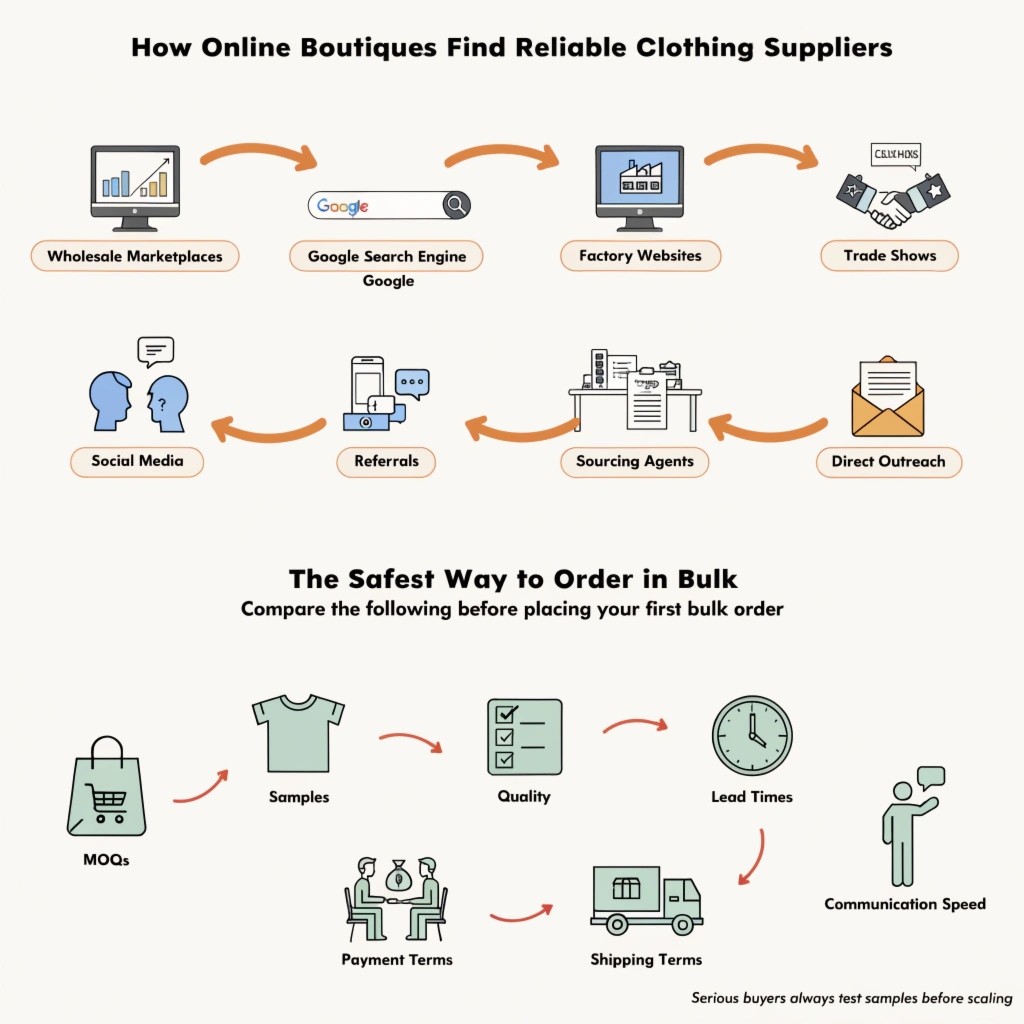
Online boutique owners find reliable clothing suppliers through wholesale marketplaces, Google search, factory websites, trade shows, social media, referrals, sourcing agents, and direct manufacturer outreach. The safest approach is to compare MOQs, samples, quality, lead times, payment terms, shipping terms, and communication speed before placing a bulk order. Serious buyers should always test samples before scaling.
Where can online boutique owners search for clothing suppliers?
Online boutique owners usually start with what is easy to access: Google, wholesale marketplaces, TikTok, Instagram, and supplier directories. Some search “wholesale clothing vendors,” “private label clothing manufacturers,” “custom jeans manufacturer,” or “low MOQ denim factory.”
Shopify’s vendor-related content shows why these searches are popular: boutique owners want reliable suppliers, clear MOQs, shipping terms, returns, and evaluation tips before they risk inventory money.
But search results are only the beginning. A supplier can have a beautiful website and still deliver inconsistent quality. A supplier can offer a low price and still create problems with sizing, fabric, color, or shipping. That is why supplier research should always include a practical vetting process.
A boutique owner should ask:
| Supplier Check | Why It Matters |
| Can they provide samples? | Confirms real product quality |
| What is the MOQ? | Determines startup budget |
| Can they customize labels? | Supports brand identity |
Can they make your design? | Shows technical capability |
What fabrics do they offer? | Impacts comfort and price |
What is the production lead time? | Affects launch schedule |
Can they scale production? | Supports growth |
How do they handle defects? | Protects your reputation |
Where does TJ Maxx get merchandise from?
TJ Maxx is a good example of a different sourcing model: off-price retail. TJX, the parent company of TJ Maxx, explains that when a designer or manufacturer overproduces, or when other stores overbuy, TJX can negotiate prices and pass savings to customers. It also says new merchandise arrives in stores several times a week.
This does not mean every boutique should copy TJ Maxx. Off-price buying works because TJX has huge purchasing power, strong vendor relationships, and a business model built around changing inventory. TJX’s 2025 annual report says annual sales surpassed $60 billion, which shows the scale behind its buying machine.
For smaller boutiques, closeout buying can be tempting because the prices look attractive. A boutique may find discounted jeans from canceled orders, overstock lots, or seasonal leftovers. That can work for flash sales or bargain sections. But it can also create problems.
Closeout inventory is often inconsistent. Sizes may be broken. Reorders may be impossible. The same wash may never come back. Labels may not match the boutique’s brand positioning. If the store is trying to build a premium denim identity, too much random closeout inventory can confuse customers.
The smarter lesson from TJ Maxx is not “buy leftovers.” The lesson is: know your sourcing model and make it part of your customer promise.
TJ Maxx customers expect surprise, discounts, and changing racks. A premium online denim boutique’s customers may expect consistent fit, curated drops, branded packaging, and the ability to buy the same jean again. Those two models require different suppliers.
How can boutique owners avoid unreliable suppliers?
The best protection is a sample-first process. Never place a large production order only from photos. Product photos can hide weak fabric, poor stitching, bad fit, chemical smell, uneven washing, loose buttons, crooked labels, or inconsistent sizing.
For denim products, boutique owners should check the sample like a buyer, not like a casual shopper. Look at the inside seams. Pull the belt loops. Check zipper smoothness. Measure the waist, hip, thigh, rise, and inseam. Wash the sample and measure shrinkage. Try it on different body types if possible.
Communication is another sign. A reliable supplier should be able to explain fabric options, MOQ, lead time, label customization, sample cost, bulk pricing, packing method, and quality control steps. If a supplier avoids details, gives vague answers, or pushes for payment too quickly, that is a warning sign.
A strong clothing supplier is not just a seller. It should behave like a production partner. For denim boutiques, this means the factory should understand how different fabrics behave after washing, how stretch denim recovers, how plus size grading should be handled, and how complex styles such as stacked jeans or distressed baggy jeans require extra development attention.
DiZNEW’s value for online boutique owners is that it focuses specifically on denim customization. Instead of forcing buyers into only ready-made wholesale styles, it can support design-to-product development, low MOQ testing, private label customization, and large-volume OEM/ODM production. That is especially useful for U.S. boutique owners who want a supplier that can handle both creativity and scale.
Can Stores Get Custom Clothes Made With Their Own Logo?
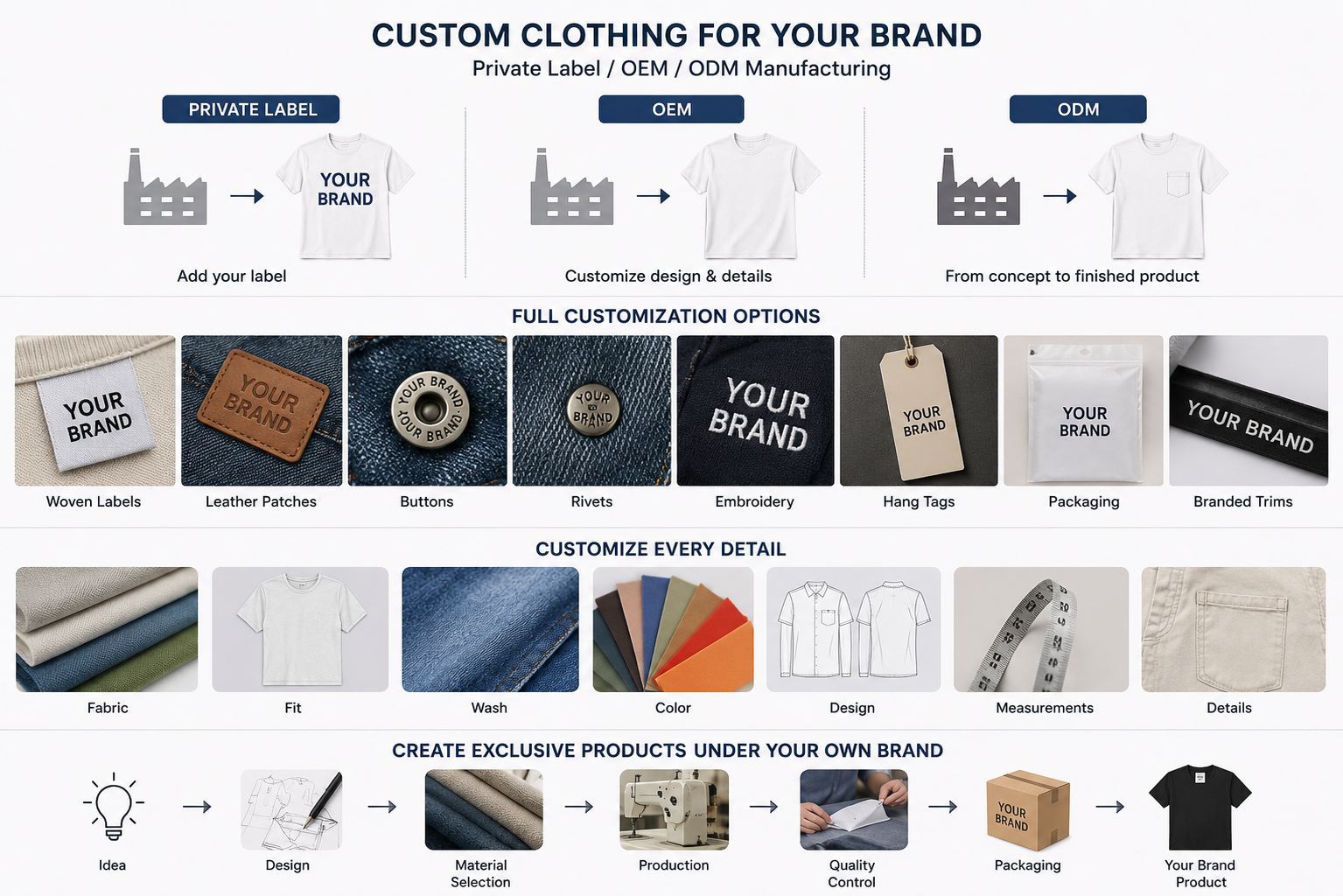
Yes, stores can get custom clothes made with their own logo through private label, OEM, or ODM manufacturing. A factory can add custom woven labels, leather patches, buttons, rivets, embroidery, hang tags, packaging, and branded trims. Stores can also customize fabric, fit, wash, color, measurements, and design details to create exclusive products under their own brand name.
What does private label clothing mean for stores?
Private label clothing means a product is made by a manufacturer but sold under the store’s own brand name. The store may not physically own a factory, but the final product looks and feels like its own brand.
For basic private label, a store may choose an existing style and add custom labels or packaging. For deeper private label, the store customizes the design, fabric, fit, wash, hardware, stitching, trims, and branding.
In denim, private label can include:
| Custom Element | Examples |
| Brand label | Woven neck label, waistband label |
| Denim patch | PU patch, genuine leather patch, jacron patch |
| Hardware | Branded button, rivet, zipper puller |
Wash | Enzyme wash, stone wash, acid wash, vintage wash |
Fit | Baggy, skinny, straight, stacked, flare, jogger |
Decoration | Distressing, whiskers, grinding, embroidery |
Packaging | Hang tag, poly bag, carton mark |
Size system | U.S. sizing, plus size grading, custom measurements |
This is why private label is attractive to online boutiques. It turns a store from a reseller into a brand.
What is the difference between OEM and ODM clothing production?
OEM means the buyer provides the design, and the factory manufactures it. ODM means the factory helps develop or modify the design. In simple terms, OEM is more buyer-led; ODM is more factory-assisted.
For example, if a designer already has a tech pack for a stacked jean, including measurements, fabric, pocket shape, wash effect, and trims, that is closer to OEM. If a boutique owner only has a reference photo and says, “I want something like this, but with a higher rise, better stretch, and my own logo,” that is closer to ODM.
Both models can work. The right choice depends on how much product development experience the buyer has.
Where does Target get their clothing from?
Target gets clothing through a mix of owned brands, national brands, designer partnerships, vendors, and global suppliers. Its 2024 annual report says Target’s assortment includes “only-at-Target” owned brands, national brands, partnerships with designers, and small independent brands.Target also lists apparel-related owned brands such as A New Day, All in Motion, Goodfellow & Co, Cat & Jack, Universal Thread, Wild Fable, and more.
The key lesson for smaller stores is not that they need to be Target. The lesson is that strong retailers often build a mix: some products are sourced from outside brands, while others are developed as owned or exclusive products.
Target also publicly states that it works to ensure suppliers manufacture products under ethical standards, comply with laws, and share its commitments. That matters because modern sourcing is not only about price. Customers increasingly care about reliability, accountability, and product quality.
For boutique owners, this translates into a simple question: does your supplier help protect your brand reputation?
A cheap supplier that creates sizing issues, delayed orders, or poor-quality products can damage customer trust. A stronger supplier may cost more per piece but reduce returns, improve reviews, and support repeat business.
How can a store turn a design idea into a real clothing product?
The process usually starts with an idea. That idea may be a sketch, a reference photo, a physical sample, a mood board, or a tech pack. A good factory then helps translate the idea into production language.
For denim, the process often looks like this:
1.Design discussion: Define style, fit, target customer, price range, and market.
2.Fabric selection: Choose denim weight, stretch, color, composition, and hand feel.
3.Trim selection: Decide button, rivet, zipper, patch, label, and packaging.
4.Pattern and sample: Create the first sample based on measurements and design.
5.Fitting and correction: Adjust waist, hip, rise, inseam, leg shape, pocket, and wash.
6.Pre-production sample: Confirm final version before bulk.
7.Bulk production: Cut, sew, wash, finish, inspect, pack, and ship.
The most important part is communication. A boutique owner may say, “I want a baggy fit,” but “baggy” can mean many things. Is it oversized from hip to hem? Is it relaxed only at the thigh? Does it stack at the ankle? Is it low-rise streetwear or high-rise women’s boutique style?
A professional denim factory asks the right questions before cutting fabric. That is where experience matters.
DiZNEW is especially relevant for stores that want complex denim customization. Many general clothing suppliers can make simple garments, but denim requires special washing knowledge, fit adjustment, and hardware handling. If a store wants custom stacked jeans, plus size jeans, selvedge jeans, denim jackets, or a full denim capsule with its own logo, working with a denim-focused factory is usually safer than working with a general apparel supplier.
What Is the Best Way for Denim Stores to Source Jeans?
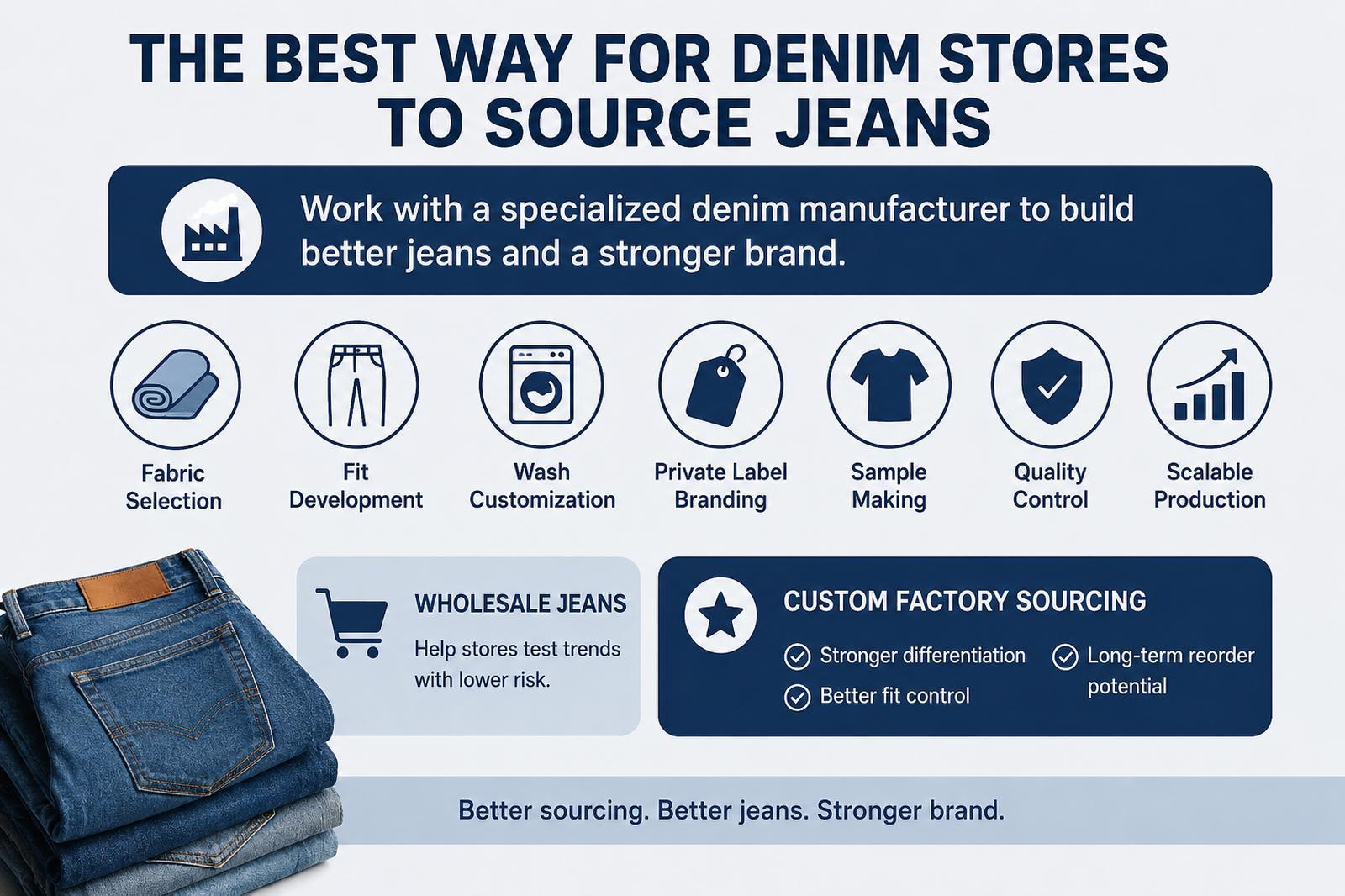
The best way for denim stores to source jeans is to work with a specialized denim manufacturer that can support fabric selection, fit development, wash customization, private label branding, sample making, quality control, and scalable production. Wholesale jeans can help stores test trends, but custom factory sourcing gives denim brands stronger differentiation, better fit control, and long-term reorder potential.
Why should denim stores work with specialized jeans manufacturers?
Denim looks simple from the outside, but it is one of the most technical clothing categories. A pair of jeans is shaped not only by sewing but also by fabric behavior, washing, finishing, shrinkage, hardware, and fit balance.
For example, two jeans can have the same measurements before washing but fit differently after production. A heavy non-stretch denim may shrink and soften differently than stretch denim. A stone wash may change the hand feel. A distressed knee may look cool in a photo but tear too easily if the fabric and reinforcement are wrong. A stacked jean may fail if the inseam, leg opening, and fabric stiffness are not planned together.
This is why denim stores should not treat jeans like simple wholesale products. Jeans are fit products. If customers love the fit, they come back. If they hate the fit, they return the order and leave a bad review.
A specialized jeans manufacturer understands:
| Denim Factor | Why It Matters |
| Fabric weight | Controls structure, drape, and seasonality |
| Stretch recovery | Affects comfort and shape retention |
| Wash shrinkage | Changes final measurements |
Rise and hip curve | Impacts body fit |
Pocket placement | Affects visual shape |
Stitching tension | Impacts durability |
Hardware quality | Affects perceived value |
Size grading | Essential for plus sizes |
Finishing | Creates premium look and feel |
What denim products can stores source from a custom jeans factory?
A denim store can source much more than basic five-pocket jeans. With the right factory, a store can build an entire denim category.
DiZNEW can support custom denim products such as:
Plus size jeans
Baggy jeans
Stacked jeans
Straight jeans
Selvedge jeans
Skinny jeans
Jogger jeans
Denim jackets
Denim shorts
Denim shirts
Custom washed jeans
Logo denim products
OEM/ODM denim collections
This matters because denim buyers are not all looking for the same fit. Some customers want curve-friendly plus size jeans. Some want oversized streetwear baggy jeans. Some want premium selvedge denim. Some want skinny jeans with stretch. Some want stacked jeans with an exaggerated leg length. Some want a matching jacket and jean set.
A strong denim supplier gives stores room to build a real product line instead of chasing whatever the wholesaler has available this week.
How can small denim boutiques start with low MOQ production?
MOQ is one of the biggest barriers for small brands. Many factories prefer large orders because setup takes time. But new boutique owners often cannot safely order 500 or 1,000 pieces of an untested style.
That is why a 30-piece MOQ can be powerful. It lets a store test a new denim concept without taking a huge inventory risk.
A small boutique might start like this:
| Test Drop | Quantity | Purpose |
| Custom stacked jeans | 30 pcs | Test streetwear demand |
| Plus size baggy jeans | 30 pcs | Test fit and size response |
| Denim jacket | 30 pcs | Test matching set potential |
Denim shorts | 30 pcs | Test seasonal demand |
This model is customer-centered because it lets the market speak. Instead of guessing, the boutique can launch a small drop, collect feedback, review return reasons, check size sell-through, and improve the next order.
For online stores, small-batch denim also creates urgency. “Limited drop” marketing feels natural when the quantity is truly limited. Customers are more likely to act when they know a style may sell out.
But low MOQ should not mean low standards. Even a 30-piece order needs clear measurements, confirmed fabric, approved sample, consistent labeling, and proper inspection. A small batch still carries the store’s name.
How can growing denim brands scale from small orders to 10,000-piece bulk production?
Scaling is not just ordering more pieces. Scaling means creating a repeatable product system.
A denim brand should document everything that works: fabric code, wash recipe, pattern, measurement chart, shrinkage tolerance, label placement, button style, rivet color, thread color, packaging method, and inspection standard. Without documentation, the second order may not match the first.
A practical scaling path may look like this:
| Stage | Quantity | Main Goal |
| Sample | 1–3 pcs | Confirm design and fit |
| Test order | 30–100 pcs | Validate market demand |
| Reorder | 100–500 pcs | Improve size ratio and sell-through |
Growth order | 500–2,000 pcs | Build stable inventory |
Bulk order | 5,000–10,000 pcs | Scale proven styles |
This is where a factory’s capacity matters. Some suppliers can handle small orders but fail when quantity grows. Others can produce bulk orders but refuse small test runs. For boutique owners, the ideal partner can support both: small MOQ at the beginning and larger production when the brand grows.
DiZNEW’s advantage is exactly in this bridge. It can support small custom denim orders starting from 30 pieces, while also accepting large-volume orders up to 10,000 pieces. That gives designers, online boutique owners, and high-end custom denim brands a more flexible path: test first, improve, then scale.
Another key factor is complexity. Many factories prefer simple jeans because they are easier to produce. But fashion-driven denim brands often need harder styles: stacked legs, special washes, irregular distressing, contrast stitching, custom patches, plus size grading, flare shapes, cargo pockets, embroidery, or special fabric combinations.
For these products, the cheapest factory is rarely the best choice. The best choice is the factory that can understand the design, prevent production problems, and deliver consistent bulk quality.
Final Thoughts: Stores Do Not Just “Get Clothes”—They Build Supply Chains
So, where do stores get their clothes from? They get them from many places: wholesalers, factories, private label suppliers, distributors, trade shows, online platforms, closeout sellers, and global sourcing networks. But the more important question is: which sourcing model fits your store’s future?
If you are just starting, wholesale buying may help you test products quickly. If you are building a real fashion brand, private label and custom manufacturing can give you stronger control. If you are in denim, working with a specialized jeans factory can make the difference between selling generic products and building a memorable denim line.
For boutique owners, designers, online fashion stores, and influencer-led shops, denim is still one of the strongest categories because customers always need jeans—but they do not need another average pair. They want better fit, better fabric, better washes, better styling, and a brand story they can connect with.
DiZNEW is a China-based denim R&D, manufacturing, and sales factory with more than 20 years of experience. We help clients customize plus size jeans, baggy jeans, stacked jeans, straight jeans, selvedge jeans, skinny jeans, jogger jeans, denim jackets, denim shorts, denim shirts, and other denim products. Whether you have a sketch, a reference photo, a tech pack, or only an idea, DiZNEW can help turn your concept into a real product with your own logo, label, wash, fit, and packaging.
We support low MOQ custom orders starting from 30 pieces and can also handle larger production needs up to 10,000 pieces. That makes us a practical partner for U.S. boutique owners, denim designers, online stores, high-end brands, and growing private label businesses.
Ready to create your own custom denim collection? Contact DiZNEW today to request a quote, develop samples, and start building jeans your customers cannot find anywhere else.