What should I look for in a denim overalls manufacturer?
Denim overalls look simple at first glance: a bib, two straps, a pair of pants, and a few pockets. But for brands, boutique owners, and online stores, they are one of the more technical denim products to source correctly. Unlike regular jeans, overalls must fit the upper body and lower body at the same time. The bib height, strap length, buckle strength, side opening, waist, hip, rise, thigh, inseam, and leg opening all have to work together. If one part is wrong, the whole garment can feel uncomfortable, childish, too bulky, or poorly made.
When choosing a denim overalls manufacturer, look for denim-specific experience, strong pattern-making ability, reliable fabric sourcing, durable hardware, custom sample development, flexible MOQ, wash control, and strict quality inspection. A good manufacturer should understand bib fit, strap balance, pocket function, shrinkage, stitching, rivets, buckles, and OEM/ODM private label customization for workwear, fashion, streetwear, and boutique markets.
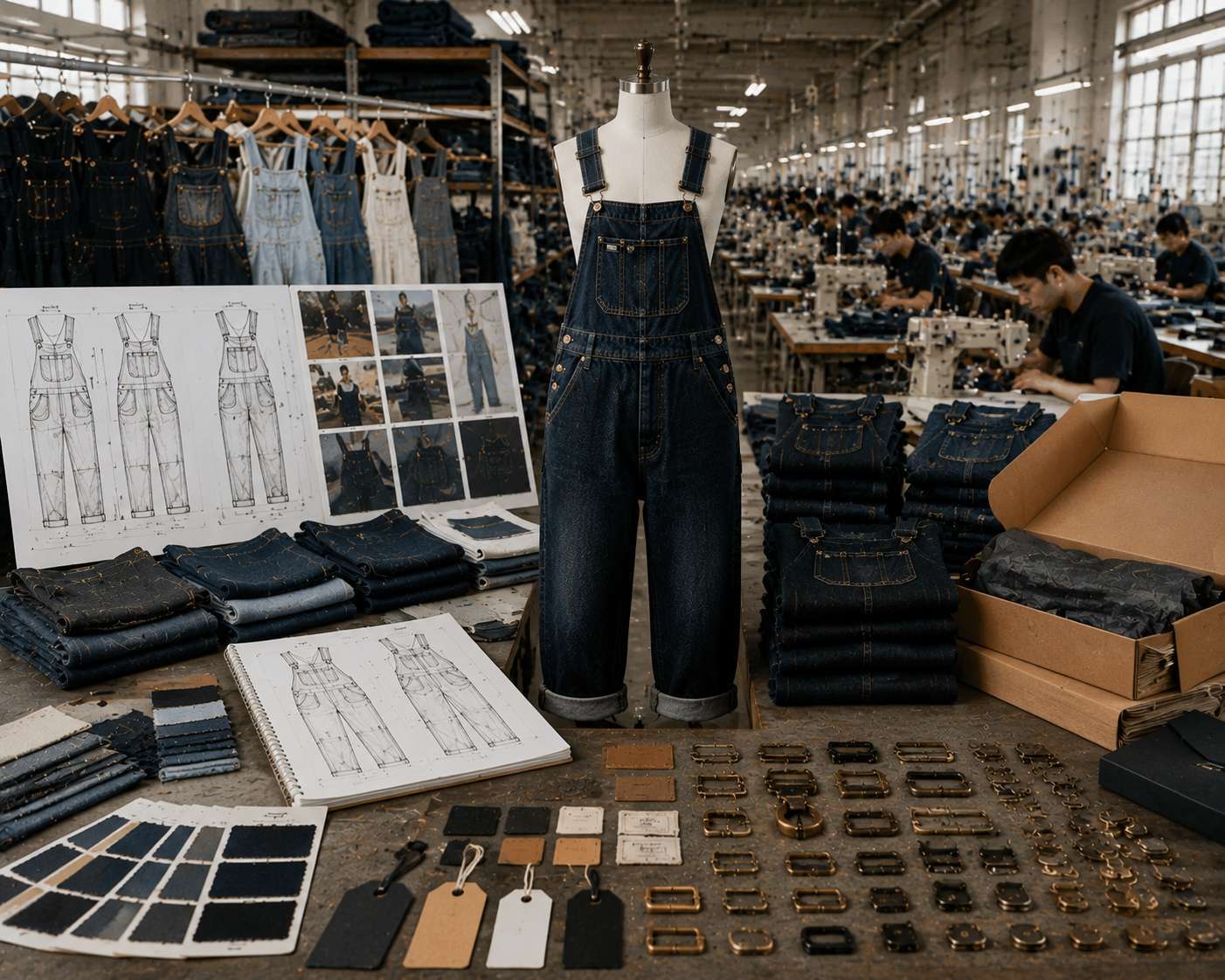
For buyers, the real question is not only “Can this factory sew overalls?” The better question is: “Can this factory help me create denim overalls customers actually want to wear?” A strong manufacturer should help you avoid common problems such as weak straps, poor bib shape, cheap buckles, bad shrinkage, uncomfortable crotch fit, uneven wash, and generic styling. In this guide, we will break down what to check before choosing a denim overalls supplier, how to judge quality, how overalls should fit, and how DiZNEW can help brands develop custom denim overalls from idea to bulk production.
What Makes a Good Denim Overalls Manufacturer?
A good denim overalls manufacturer should combine denim expertise, strong pattern development, fabric sourcing, hardware control, wash development, sample correction, MOQ flexibility, and quality inspection. Denim overalls are more complex than basic jeans because they include bib panels, adjustable straps, buckles, side buttons, pockets, full-body fit, shrinkage control, and stronger stress-point construction.
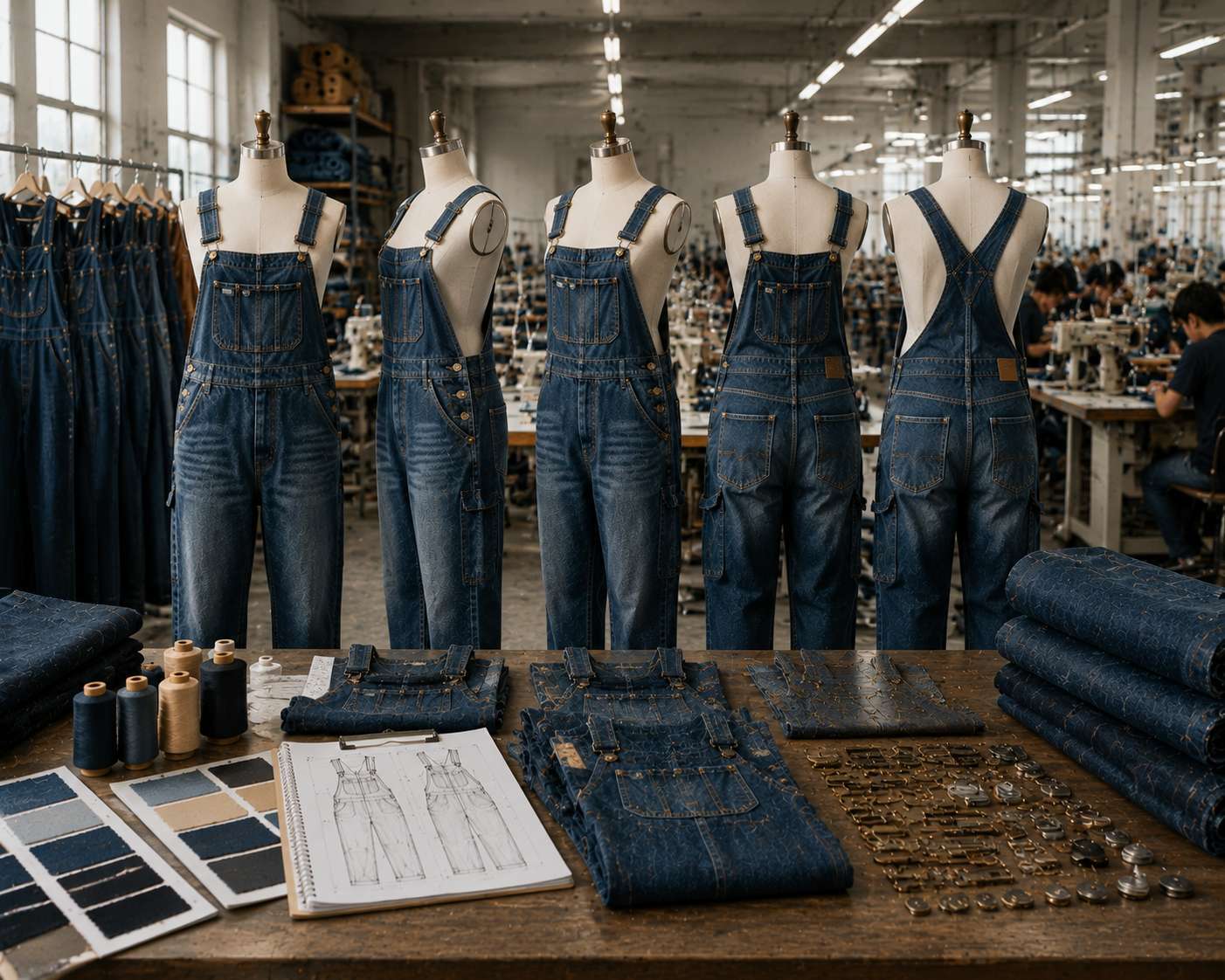
What should I look for in a denim overalls manufacturer?
You should look for a manufacturer that understands denim as a technical fabric, not just a fashion material. Denim overalls require knowledge of fabric weight, shrinkage, washing, stitching, rivets, bartacks, buckles, straps, and fit balance.
A reliable supplier should be able to answer practical questions: What denim weight works best for my target customer? Can the straps handle repeated pulling? Will the bib shrink after washing? Can the side buttons be customized? Can the factory make both workwear overalls and fashion overalls? Can it produce a small test order before larger bulk production?
The right manufacturer should also support OEM/ODM customization. That means the factory can help you develop your own fabric, wash, fit, logo hardware, labels, patches, hang tags, packaging, and private label details.
What is the best brand of overalls?
There is no single “best” brand of overalls for every customer. The best brand depends on the market. Workwear customers may value durability, reinforced seams, and utility pockets. Fashion customers may care more about silhouette, wash, drape, and styling. Streetwear customers may prefer baggy fits, heavy denim, cargo pockets, and custom patches. Mature lifestyle customers may want cleaner washes, comfortable straps, and a polished fit.
Well-known brands can still be useful benchmarks. Carhartt emphasizes durable workwear construction, with its official denim bib overalls described as having washed midweight denim, triple-stitched seams, and a generous cut for climbing, crawling, and bending. Dickies positions its bib overalls around job-tested durability, comfort, utility, adjustable straps, and built-in torso protection. Levi’s offers women’s denim overalls and jumpsuits in classic and modern fits, which is useful for studying fashion-market positioning.
For private label buyers, the goal is not to copy famous brands. The goal is to understand why they sell: fit, function, fabric, quality, and identity. Then you can work with a custom manufacturer to create your own version.
Why are denim overalls harder to manufacture than regular jeans?
Denim overalls are harder to manufacture because they combine jeans construction with upper-body pattern control. Regular jeans mainly need waist, hip, rise, thigh, inseam, and leg opening balance. Overalls add bib height, strap length, buckle placement, side opening, chest pocket layout, and layering space.
If the straps are too short, the garment pulls upward. If the straps are too long, the bib drops and looks sloppy. If the bib is too narrow, the style may look awkward. If the side opening is too tight, the wearer struggles to get in and out. If the rise is wrong, the crotch feels uncomfortable when sitting or squatting.
This is why buyers should avoid treating denim overalls like a simple add-on product. They require real pattern-making experience.
Should I choose a jeans factory or a general apparel factory for overalls?
A jeans factory is usually better for denim overalls because denim is a specialized category. Denim fabric behaves differently after washing. Heavy fabric needs stronger machines. Rivets, bartacks, buckles, side buttons, and straps must be attached correctly. Wash development can change the garment’s measurements and hand feel.
A general apparel factory may be able to sew lightweight jumpsuits, but denim overalls require heavier construction knowledge. A specialized denim factory understands shrinkage, seam strength, pocket reinforcement, hardware, and wash control.
Dive Deeper
A good denim overalls manufacturer is not just a production vendor. It should be a development partner. This matters because many buyers do not start with a perfect tech pack. Some start with a sketch. Some start with a reference photo. Some send an old sample. Some use an AI-generated design image. Others know they want “baggy black denim overalls with cargo pockets,” but they need help turning that idea into measurements, fabric, trims, and samples.
This is where a true denim factory creates value. A strong factory can look at the design and explain what is realistic, what needs correction, and what may cause production problems. For example, a buyer may request very heavy denim for a wide-leg overall, but the factory may suggest a more balanced fabric weight so the garment does not feel too stiff. A buyer may want oversized straps, but the factory may recommend stronger buckles and reinforced bartacks to support the design. A buyer may want a dirty vintage wash, but the factory must control shrinkage and color consistency across the bib, legs, straps, and pockets.
The “best brand of overalls” question is also important from a B2B perspective. Retail brands should study strong market examples, but they should not compete by imitation alone. A boutique brand can win by creating something more specific: plus size denim overalls with better strap adjustability, streetwear overalls with cargo pockets and custom patches, women’s wide-leg overalls with a cleaner bib shape, or workwear-inspired overalls with fashion washes and branded hardware.
The manufacturer you choose should understand your target customer. A U.S. streetwear buyer does not need the same overall as a gardening workwear customer. A 50-year-old lifestyle customer may not want the same silhouette as a Gen Z TikTok fashion customer. A plus size customer needs different pattern logic from a slim fashion model.
DiZNEW is suitable for this kind of development because it specializes in denim products, including jeans, denim jackets, denim shorts, denim shirts, and custom denim categories. For denim overalls, that experience matters because the factory already understands waistband construction, denim shrinkage, wash effects, rivets, bartacks, labels, pockets, and fit correction.
What Fabric, Hardware, and Construction Details Matter in Denim Overalls?
Fabric, hardware, and construction determine whether denim overalls feel premium, durable, and wearable. Buyers should check denim quality, fabric weight, hand feel, shrinkage, stretch recovery, buckles, buttons, rivets, snaps, bartacks, pocket reinforcement, seam strength, wash consistency, and stress-point construction before approving bulk production.
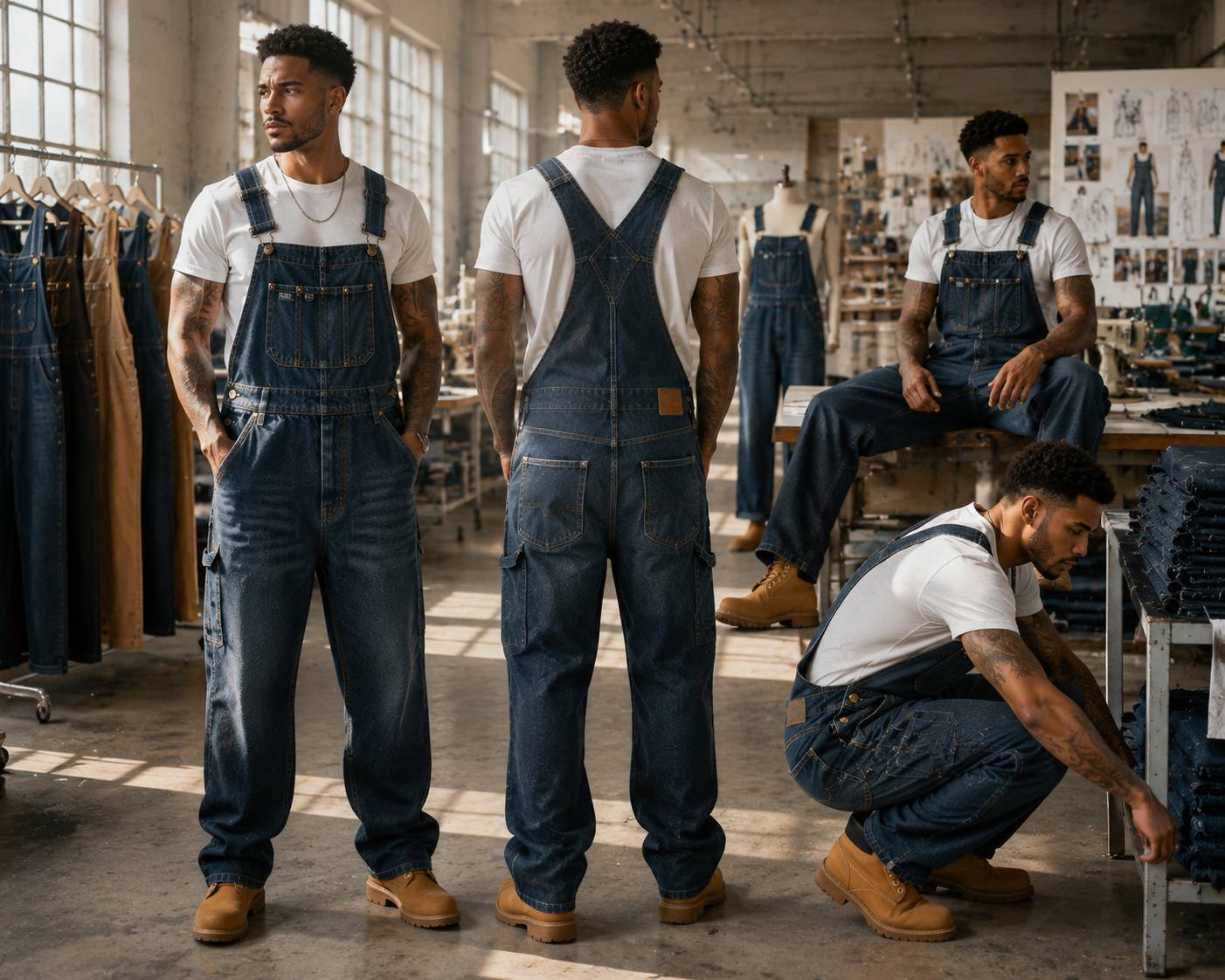
How to know if denim is good quality?
Good denim quality is judged by fabric density, yarn quality, weave structure, fabric weight, hand feel, colorfastness, shrinkage control, stretch recovery, stitching, and garment construction. Heavy denim is not always better. The fabric must match the product purpose.
For example, workwear overalls may need heavier, more durable denim. Fashion overalls may need softer drape and comfort. Streetwear overalls may need enough structure to hold a baggy silhouette. Stretch denim should recover well after movement, while rigid denim should hold shape and age naturally. Denim-quality guidance commonly highlights fabric weight, stitching, stretch content, hardware, and finishing details as important signs of better jeans.
What hardware should good denim overalls use?
Good denim overalls need strong hardware because straps and side openings experience repeated stress. Important hardware includes buckles, sliders, side buttons, rivets, snaps, zippers, adjustable straps, metal trims, and logo buttons.
Hardware should resist rust, bending, cracking, and color fading. A cheap buckle can ruin the whole product because overalls depend on strap function. Custom logo hardware can also increase perceived brand value.
What stitching and reinforcement should overalls have?
Denim overalls need reinforcement at high-stress points. Key areas include straps, bib corners, chest pockets, side openings, crotch seam, hip pockets, hammer loops, cargo pockets, and hems.
Useful construction details include:
Bartacks at stress points
Double stitching
Chain stitching
Reinforced pocket corners
Strong crotch seam
Durable pocket bags
Tight button and rivet attachment
Clean inside seam finishing
Workwear overalls need stronger reinforcement than purely fashion overalls, but even fashion overalls should not feel weak.
How does wash development affect denim overalls?
Wash development changes color, hand feel, shrinkage, measurements, and surface texture. Denim overalls may use stone wash, enzyme wash, acid wash, dirty wash, black wash, light wash, vintage wash, raw denim, or distressed effects.
Overalls are larger and more complex than jeans, so wash consistency matters. The bib, legs, straps, pockets, and seams should look balanced. A poor wash can create uneven color, excessive shrinkage, twisted seams, or weak fabric.
Dive Deeper
Many buyers judge denim quality by touch alone. They pick up a sample and think, “This feels thick, so it must be good.” But denim quality is more complicated than thickness. A fabric can be heavy but stiff, uncomfortable, poorly dyed, or unstable after washing. Another fabric can be lighter but stronger, softer, and better suited to the target customer.
For denim overalls, the fabric has to support the whole garment. Unlike jeans, overalls have a bib and straps. If the fabric is too heavy, the product may feel tiring to wear. If it is too light, the bib may collapse and the straps may twist. If the denim shrinks too much after washing, the bib height, inseam, and strap length may change. That is why fabric testing is critical before bulk production.
Hardware is just as important. Overalls are functional garments, even when they are fashionable. The wearer adjusts the straps, opens the side buttons, puts items in the pockets, sits, bends, and moves. Weak buckles, loose buttons, poor rivets, and fragile stitching will quickly become customer complaints.
Construction also tells buyers whether a manufacturer understands denim. Look inside the sample. Are the seams clean? Are the pocket bags strong? Are bartacks placed at stress points? Are the straps reinforced? Is the crotch seam stable? Are the bib corners secure? Are the side buttons aligned? A good-looking outside can hide weak internal construction.
Wash development is another major risk. Denim products often change during washing. Measurements can shrink. Colors can shift. Fabric can soften. Damage can appear. For overalls, this is especially important because the garment has more panels than jeans. If shrinkage is not controlled, the final fit may be different from the approved sample.
For private label buyers, quality should become part of the brand story. Instead of simply saying “premium denim overalls,” the product page can mention reinforced straps, durable hardware, high-quality denim, functional pockets, custom wash, and movement-tested fit. These details help customers understand why the product is worth buying.
DiZNEW can support buyers with fabric selection, wash development, hardware customization, stitching reinforcement, labels, patches, and packaging. This helps brands create overalls that look good, feel reliable, and carry a stronger retail value.
How Should Denim Overalls Fit Different Customers and Markets?
Denim overalls should feel secure but not restrictive. A good fit balances bib height, strap length, chest coverage, side opening, waist, hip, rise, seat, thigh, inseam, and leg opening. The wearer should be able to sit, walk, bend, squat, and layer tops comfortably. Fit should match the market: workwear, streetwear, fashion, plus size, or mature lifestyle customers.
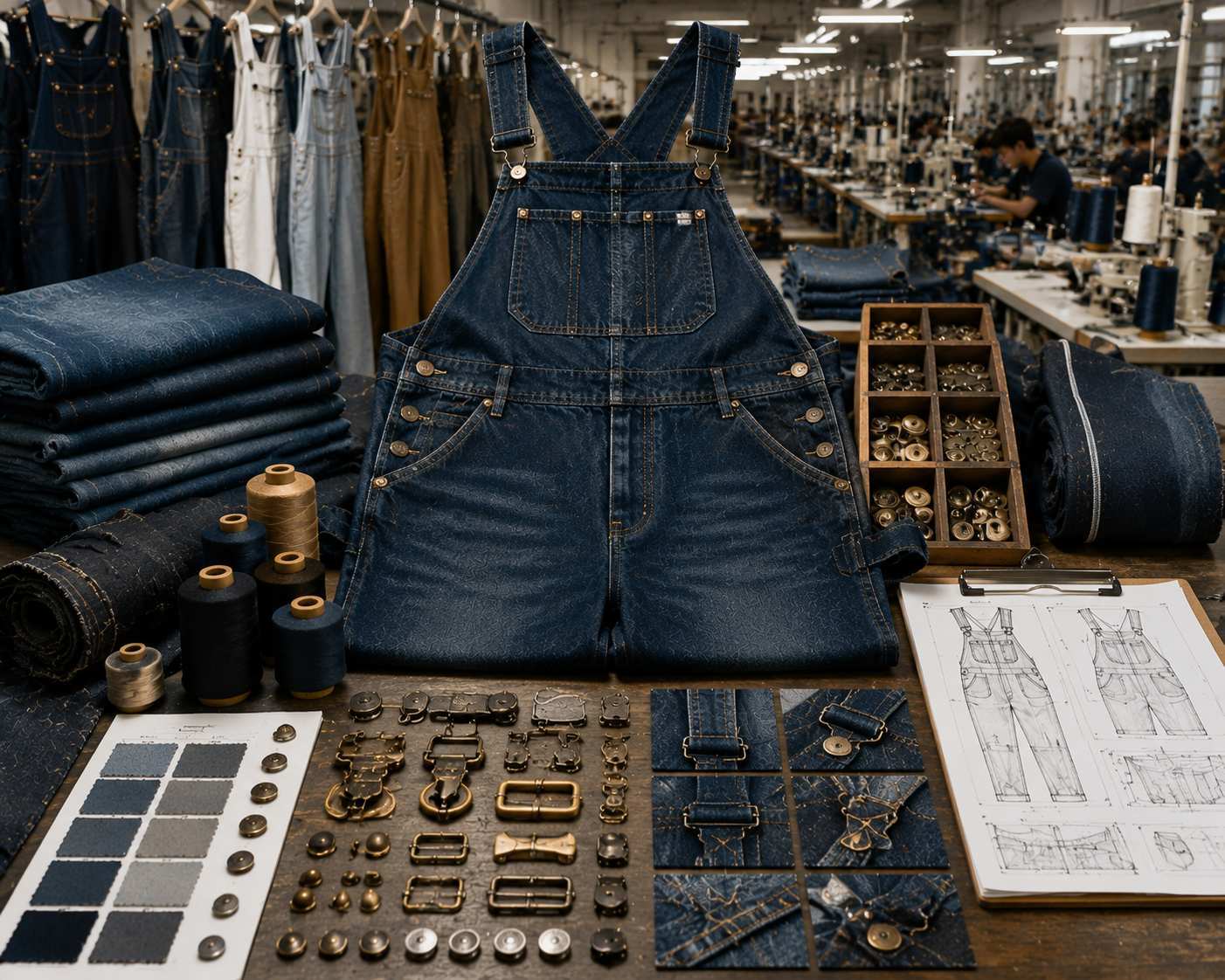
How should denim overalls fit?
Denim overalls should fit comfortably through the upper and lower body. The bib should sit at the right height without pulling at the shoulders. The straps should adjust easily. The waist and hip should allow movement without looking shapeless. The rise should feel comfortable when sitting. The thigh should have enough room to walk and bend. The inseam and leg opening should match the intended style.
For workwear, the fit may be looser. For fashion overalls, the fit may be cleaner and more shaped. For streetwear, the fit may be oversized or wide-leg. For plus size customers, the fit should consider strap length, rise balance, hip curve, thigh room, and side opening comfort.
What is the difference between workwear overalls and fashion overalls?
Workwear overalls prioritize durability, protection, utility pockets, reinforced seams, and movement. They are designed for function. Fashion overalls prioritize silhouette, wash, styling, trend fit, and visual details.
Streetwear overalls may mix both worlds. They may use wide legs, cargo pockets, heavy denim, vintage washes, patches, and logo hardware. Boutique overalls may focus on comfort, flattering proportions, softer fabric, and branded packaging.
The same garment category can serve different customers, but the design logic must change.
Can denim overalls be customized for men, women, and plus size customers?
Yes. Men’s overalls may need a roomier seat, stronger hardware, longer rise, and workwear or streetwear styling. Women’s overalls may need better bib proportion, waist shaping, hip curve, pocket placement, and fashion silhouette. Plus size overalls need careful grading, strap adjustability, thigh comfort, side opening ease, and movement testing.
This is why one standard pattern is not enough. Different markets need different body blocks and sample corrections.
Should a 50 year old wear overalls?
Yes, a 50-year-old can wear overalls if the fit, fabric, wash, and styling feel intentional. Overalls do not have to look childish or overly rugged. Mature customers may prefer clean washes, structured denim, straight or wide-leg silhouettes, comfortable straps, and polished styling.
Vogue’s overalls styling guide notes that overalls, originally functional garments made from denim or heavy canvas, can be styled in modern ways through contrast, structured fabric, and thoughtful pairing. A 50-year-old customer might wear denim overalls with a fitted knit, crisp shirt, simple tee, blazer, boots, loafers, or clean sneakers.
What denim overall styles are popular for boutiques and online stores?
Popular denim overall directions include:
Classic blue denim bib overalls
Black denim overalls
Baggy streetwear overalls
Utility cargo overalls
Distressed denim overalls
Vintage washed overalls
Short denim overalls
Wide-leg denim overalls
Denim jumpsuits
Women’s fashion overalls
Plus size denim overalls
Private label logo overalls
Vogue’s Spring 2026 denim trend coverage shows denim remains highly active across many cuts, washes, and creative runway interpretations, from straight-leg and skinny updates to ultra-wide-leg silhouettes, distressed effects, deep rinses, and alternative denim colors. That trend diversity supports more customized denim overall collections.
Dive Deeper
Fit is where many denim overalls succeed or fail. A buyer may choose a good fabric and attractive wash, but if the fit is wrong, customers will not wear the product. Overalls are unforgiving because the entire garment is connected. A small error in strap length can affect bib height. A wrong rise can affect comfort when sitting. A poorly shaped hip can make the garment look bulky. A narrow side opening can make the overall difficult to put on.
This is why overalls should be fit-tested in movement. The model or fit tester should sit, walk, bend, squat, raise arms, and layer a T-shirt or hoodie underneath. Overalls that only look good standing still may fail in real life.
The question “Should a 50 year old wear overalls?” is useful for brands because it shows that customers are thinking about age, confidence, and styling. The right answer is not to create strict fashion rules. The better answer is to design overalls for different lifestyles. A mature customer may want a clean dark wash and straight-leg silhouette. A Gen Z customer may want oversized black denim with cargo pockets. A plus size customer may want better strap length and thigh comfort. A streetwear customer may want stacked legs and custom hardware.
This means brands should not treat “overalls” as one product. They should treat it as a category with multiple customer segments.
For example:
A workwear-inspired brand can develop durable denim bib overalls with reinforced seams and tool pockets.
A women’s boutique can develop wide-leg overalls with a flattering bib and soft vintage wash.
A streetwear label can develop baggy cargo overalls with black wash, patches, and oversized pockets.
A plus size brand can develop comfortable overalls with improved grading and adjustable straps.
A premium denim brand can develop selvedge-inspired overalls with clean finishing and branded trims.
DiZNEW can help buyers choose the right direction by adjusting the pattern, fabric, wash, hardware, labels, and packaging based on the target market. This makes the product more customer-focused and less generic.
What Should Buyers Check Before Placing a Denim Overalls Order?
Before placing a denim overalls order, buyers should check the manufacturer’s fabric options, sample ability, MOQ, fit development, hardware quality, wash control, tech pack requirements, inspection process, and bulk production reliability. Sampling is essential because overalls have complex full-body fit and many stress points that must be tested before mass production.
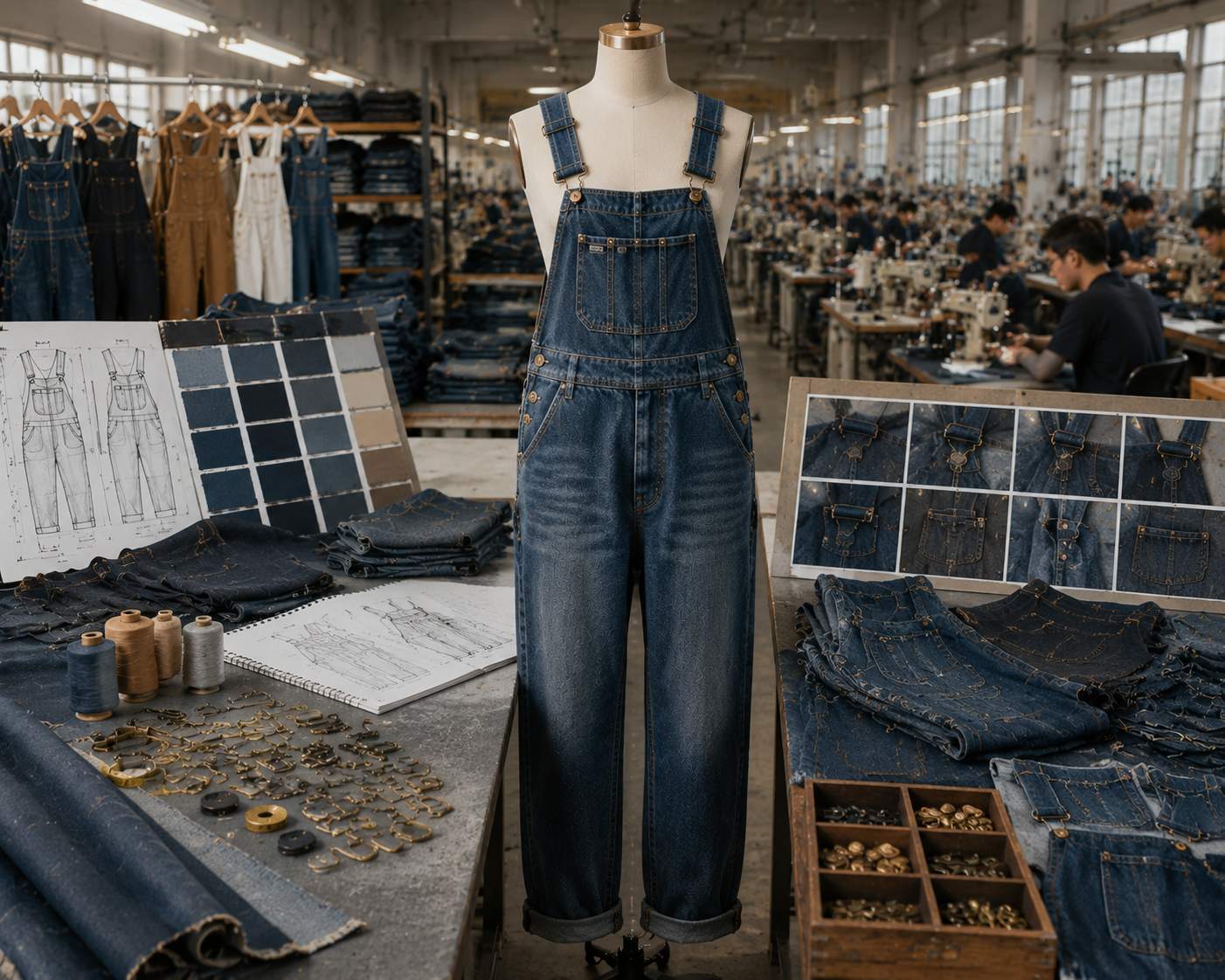
What questions should I ask a denim overalls manufacturer?
Ask practical, specific questions:
What denim fabrics can you source?
Can you make custom bib shapes, straps, buckles, and pockets?
Can you develop samples from sketches, reference photos, physical samples, AI images, or tech packs?
What is your MOQ?
What is your sample lead time?
Can you customize logo labels, buttons, rivets, patches, hang tags, and packaging?
How do you inspect quality before shipment?
How do you control shrinkage after washing?
Can you support plus size grading?
Can you produce both small test orders and larger bulk orders?
A good manufacturer should answer clearly and confidently.
What should be included in a denim overalls tech pack?
A denim overalls tech pack should include:
Front and back flat sketches
Bib shape and measurements
Strap length and buckle type
Waist, hip, rise, seat, thigh, inseam, and leg opening
Fabric composition and weight
Wash reference
Pocket design and placement
Button, rivet, zipper, snap, and hardware details
Label, patch, and logo placement
Size range and grading rules
Tolerance standards
Packaging requirements
The more complete the tech pack, the fewer misunderstandings during development.
Why is sampling important before bulk overalls production?
Sampling is important because overalls must be tested as a full-body garment. A sample lets the buyer check bib height, strap comfort, side opening, rise, crotch fit, leg shape, pocket function, shrinkage, hardware, and wash effect.
The first sample may not be perfect. That is normal. The purpose of sampling is to correct problems before bulk production. A pre-production sample should become the final standard for mass production.
How can buyers check denim overalls quality before ordering bulk?
Buyers should inspect the sample carefully:
Check fabric hand feel, thickness, stretch recovery, and shrinkage.
Pull-test straps, buckles, side buttons, rivets, and snaps.
Check bartacks at stress points.
Inspect inside seams, pocket bags, bib corners, crotch seam, and hem finishing.
Fit-test while sitting, walking, bending, and layering.
Compare the sample against the tech pack.
Confirm wash color and measurement tolerance.
This process reduces bulk risk.
How can buyers avoid poor-quality denim overall suppliers?
Avoid suppliers that cannot explain fabric, shrinkage, hardware, washing, pattern, or quality control. Be careful with suppliers that offer very low prices but cannot provide clear samples, fabric details, or inspection standards.
A weak supplier may produce overalls that look acceptable in photos but fail in real use. Common problems include cheap buckles, loose rivets, weak straps, poor wash consistency, twisted seams, bad shrinkage, uncomfortable crotch fit, and uneven sizing.
Dive Deeper
B2B sourcing is not only about finding the lowest price. It is about controlling risk. A cheap denim overalls supplier can become expensive if the bulk order has defects, sizing problems, poor wash results, or customer returns.
This is especially important for online boutiques. Customers cannot touch the product before buying, so product quality must match the photos and description. If the overalls arrive with weak straps or poor fit, customers may leave bad reviews. If the garment shrinks after washing, they may not reorder. If the hardware rusts or breaks, the brand loses trust.
Sampling is the buyer’s protection. A sample shows what the supplier can really do. It also gives both sides a physical standard for bulk production. Buyers should not approve a denim overall sample only by looking at the front photo. They should check inside construction, measurement accuracy, wash stability, hardware strength, pocket placement, and movement comfort.
Tech packs also protect both sides. Many production mistakes happen because the buyer and factory imagine different details. For example, “wide-leg overalls” may mean one thing to a streetwear buyer and another thing to a women’s boutique buyer. “Vintage wash” may mean light blue, dirty wash, stone wash, or faded black. “Custom hardware” may mean logo buttons, antique brass buckles, matte black snaps, or branded rivets. Clear documentation reduces confusion.
A good manufacturer will also communicate limitations honestly. For example, some wash effects may change fabric strength. Some heavy denim may not work for a soft fashion silhouette. Some buckle designs may not support thicker straps. Some oversized fits need pattern balance to avoid looking sloppy. This type of feedback is valuable because it helps the buyer avoid mistakes before production.
DiZNEW supports buyers through sample development, fabric selection, wash testing, pattern adjustment, trim customization, and quality inspection. For small brands, this is especially useful because they may not have a large technical design team. A factory with denim development experience can help turn ideas into production-ready products.
How Can DiZNEW Help Brands Develop Custom Denim Overalls?
DiZNEW can help brands develop custom denim overalls from sketches, reference photos, AI images, physical samples, or tech packs. The factory supports pattern making, fabric selection, wash development, sample correction, hardware, labels, patches, hang tags, packaging, and OEM/ODM private label production with low MOQ starting from 30 pieces per design.
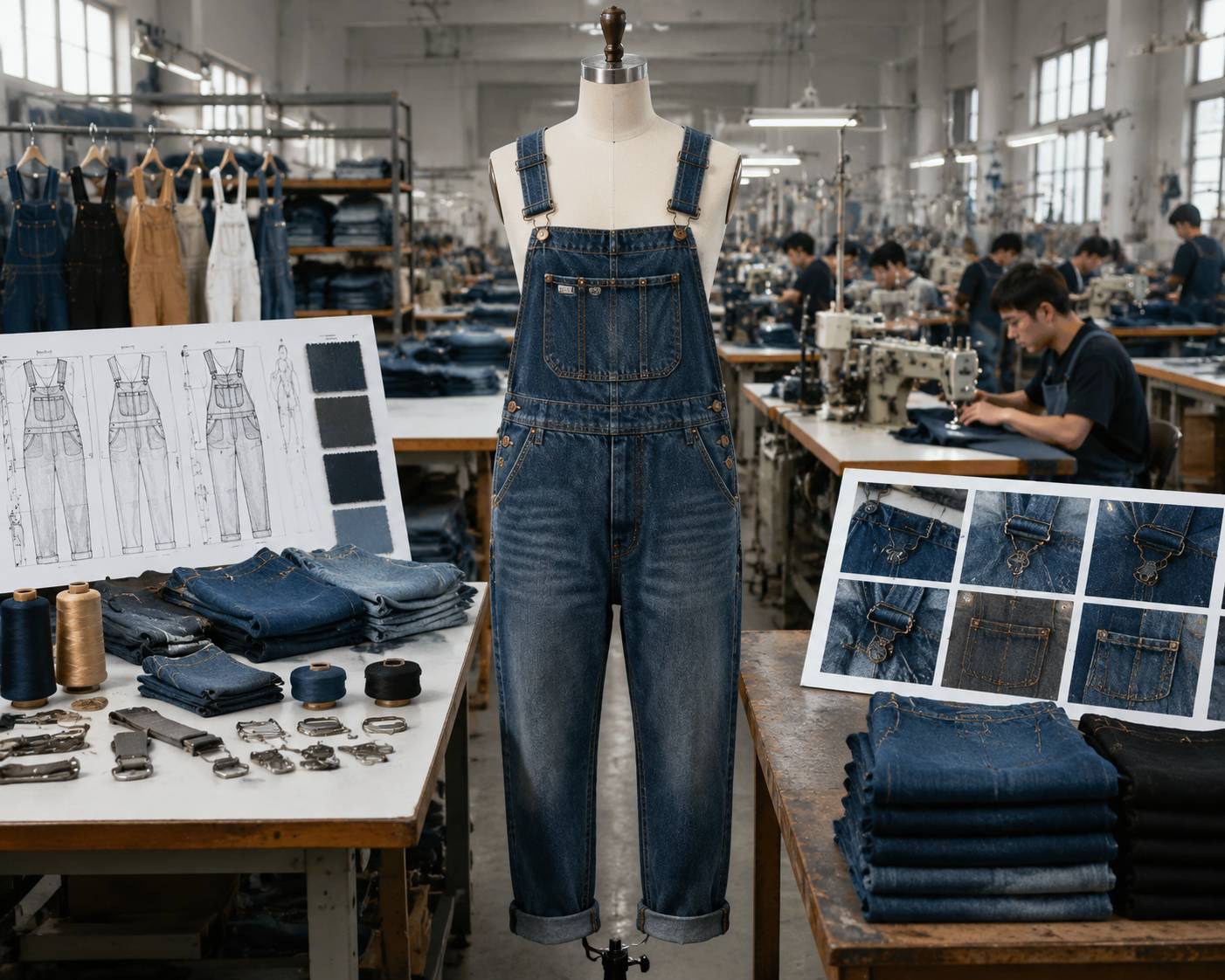
Can DiZNEW make custom denim overalls from a sketch or reference photo?
Yes. DiZNEW can develop denim overalls from a sketch, reference photo, physical sample, AI design image, or full tech pack. This is helpful for designers, boutique owners, online stores, and private label brands that have a product idea but need a factory to turn it into a real garment.
DiZNEW can support pattern making, fabric selection, wash development, sample correction, trims, labels, hardware, and packaging. This makes the development process easier for buyers who want custom denim but do not have a large production team.
What custom options can DiZNEW offer for denim overalls?
DiZNEW can customize:
Fabric weight and composition
100% cotton denim or stretch denim
Bib shape and size
Adjustable straps and buckles
Side buttons or zipper opening
Pocket number, depth, and placement
Cargo pockets or utility pockets
Wide-leg, straight-leg, slim, or baggy fit
Plus size grading
Wash effect and distressing
Embroidery, patches, printing, or logo detail
Buttons, rivets, snaps, and hardware color
Woven labels, leather patches, hang tags, and packaging
These options help brands create products that feel different from generic wholesale overalls.
Why is DiZNEW suitable for small brands and growing brands?
DiZNEW is suitable for small and growing brands because it supports low MOQ custom production starting from 30 pieces per design. This helps boutique owners and online stores test a style before committing to larger inventory.
At the same time, DiZNEW can also handle larger orders up to 10,000 pieces. This gives brands a flexible path: test small, improve the product, then scale successful designs.
What other denim products can DiZNEW manufacture besides overalls?
DiZNEW can manufacture a wide range of denim products, including:
Plus size jeans
Baggy jeans
Stacked jeans
Straight jeans
Selvedge jeans
Skinny jeans
Jogger jeans
Denim jackets
Denim shorts
Denim shirts
Custom washed denim products
OEM/ODM private label denim collections
This allows brands to build a complete denim collection, not just one product.
How can brands start a custom denim overalls project with DiZNEW?
To start a custom denim overalls project, brands can prepare a sketch, reference photo, physical sample, AI image, or tech pack. They should also share the target market, quantity, size range, fabric preference, wash effect, logo requirements, packaging needs, and expected retail positioning.
From there, DiZNEW can help with quotation, sampling, fit correction, material selection, trim development, and production planning.
Dive Deeper
For many boutique brands, denim overalls can be a smart product because they sit between fashion, utility, nostalgia, and lifestyle dressing. They are more distinctive than basic jeans but still familiar enough for customers to understand. A strong overall design can become a hero item in a collection.
However, overalls are also risky if developed poorly. A generic supplier may offer a basic pattern, but the result may not match the brand’s audience. The bib may be too high. The straps may feel cheap. The wash may look flat. The leg shape may feel outdated. The size grading may not work for plus size customers. The product may look like children’s clothing instead of adult fashion.
Custom development helps solve this. A brand can decide exactly what customer it wants to serve. For a streetwear customer, DiZNEW can develop black baggy denim overalls with cargo pockets, matte hardware, and custom patches. For a women’s boutique, DiZNEW can develop wide-leg denim overalls with a flattering bib, vintage wash, and soft hand feel. For a plus size brand, DiZNEW can improve strap length, side opening, rise, thigh comfort, and grading. For a workwear-inspired brand, DiZNEW can reinforce stress points, use stronger denim, and add utility pockets.
This flexibility is important because the denim market is not one-size-fits-all. Vogue’s 2026 denim trend coverage shows that denim continues to move across different silhouettes, washes, and style identities. Brands that develop focused products for specific customers will usually have a stronger story than brands selling generic denim.
DiZNEW’s low MOQ also reduces risk. A buyer can test a new denim overall style with 30 pieces, collect feedback, adjust the pattern or wash, and then reorder larger quantities. This is especially useful for online boutiques, influencer stores, and new private label brands that need flexibility.
The final benefit is brand identity. Custom labels, buttons, rivets, leather patches, hang tags, and packaging make the product feel like your own brand, not just another wholesale item. In a crowded denim market, those details matter.
Final Thoughts: The Best Denim Overalls Manufacturer Helps You Build a Better Product, Not Just a Cheaper One
Choosing a denim overalls manufacturer is not only about price. Overalls are a complex denim product that requires fabric knowledge, pattern skill, hardware strength, wash control, fit testing, and quality inspection. A good manufacturer should understand how to balance bib height, strap length, waist, hip, rise, thigh, inseam, pockets, buckles, and full-body movement.
Buyers should study strong market brands, but they should not simply copy them. The best private label opportunity is to create denim overalls that match your own target customer. That may mean rugged workwear overalls, fashion wide-leg overalls, plus size overalls, baggy streetwear overalls, vintage washed overalls, black denim overalls, shortalls, or premium logo-customized overalls.
DiZNEW is a China-based denim R&D, manufacturing, and sales factory with more than 20 years of experience. We help U.S. small and medium buyers, high-end brand clients, denim designers, online boutique owners, and influencer-led stores develop custom denim products under their own logo.
DiZNEW can customize denim overalls, plus size jeans, baggy jeans, stacked jeans, straight jeans, selvedge jeans, skinny jeans, jogger jeans, denim jackets, denim shorts, denim shirts, and more. Our OEM/ODM services support custom fabric, wash, fit, bib shape, straps, buckles, side buttons, pockets, labels, rivets, patches, hang tags, packaging, and private label production.
With a low MOQ starting from 30 pieces per design and capacity for larger orders up to 10,000 pieces, DiZNEW gives brands a flexible path to test, improve, and scale custom denim products.
If you are looking for a denim overalls manufacturer that can help turn your sketch, reference photo, physical sample, AI design image, or tech pack into a real product, contact DiZNEW today to request a quote and start your custom denim overalls project.
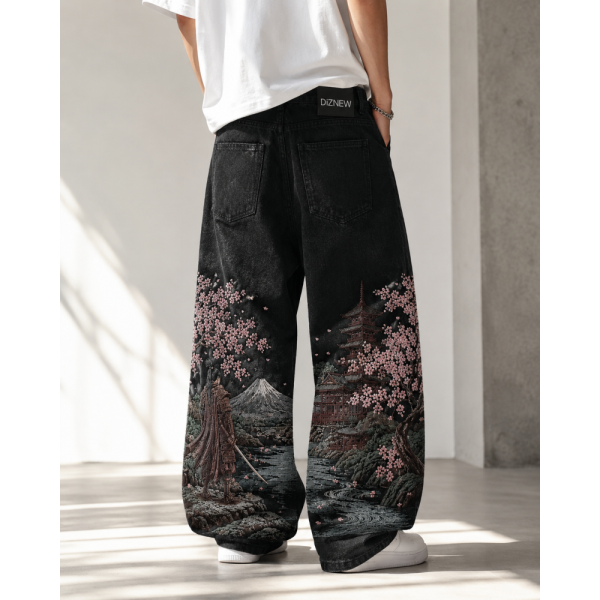
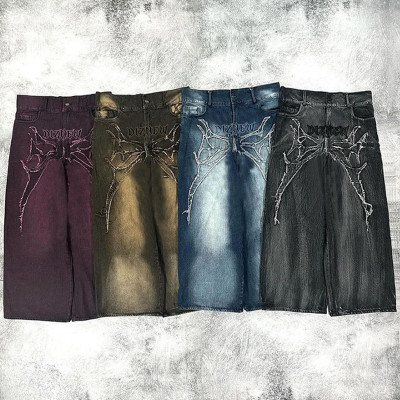
Premium wide-leg denim jeans featuring a vintage washed black finish, detailed Japanese landscape artwork, embroidery-style decoration, and custom brand label options. Designed for streetwear brands, designer labels, and private label collections looking for statement denim with strong visual storytelling.
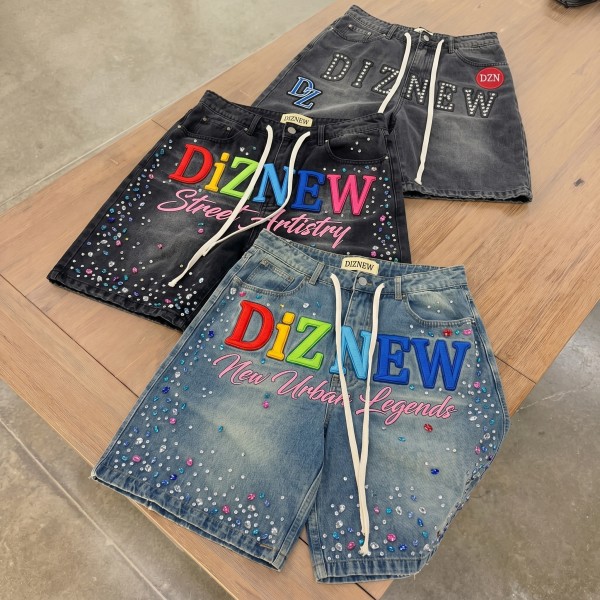
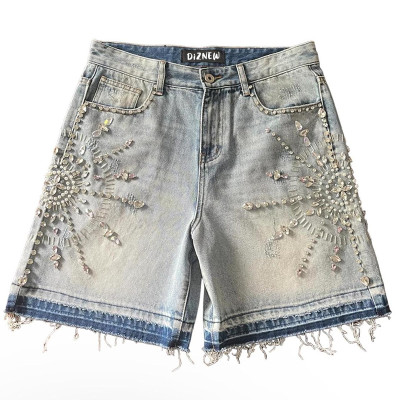
Custom Rhinestone Logo Denim Shorts: Wholesale supply direct. We manufacture premium embroidered baggy jean shorts for brands.
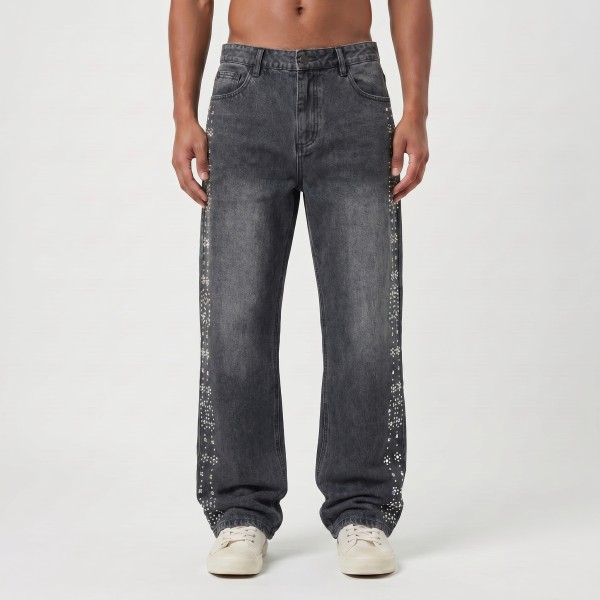
Discover premium DiZNEW denim jeans with decorative studs for a sparkling, stylish look. Order today!
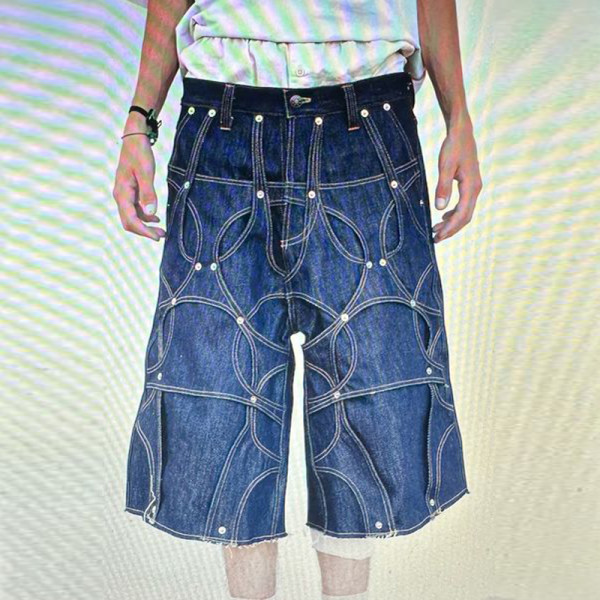
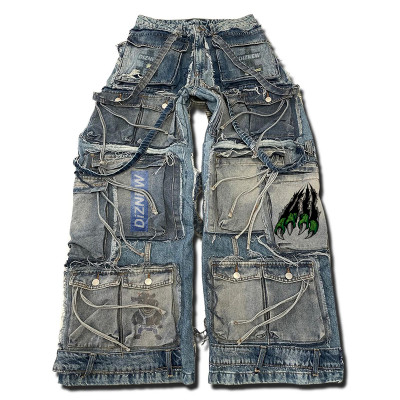
These designer denim shorts for men feature intricate decorative stitching and rivet details, perfect for streetwear fashion. The wide-leg silhouette adds a bold look, ideal for trendsetters.