What Is the Difference Between Jeans and Denim?
Walk into any boutique, showroom, or online fashion store and you will hear people say “denim” and “jeans” as if they mean exactly the same thing. A customer says, “I want a denim,” when they really mean a pair of jeans. A designer says, “I’m building a jeans collection,” but the real decision starts with fabric: rigid denim, stretch denim, washed denim, selvedge denim, colored denim, or lightweight denim. For everyday shoppers, the difference may seem small. For designers, boutique owners, and private-label brands, the difference can decide the final fit, comfort, cost, wash effect, durability, and customer reviews.
Denim is the fabric; jeans are the finished garment. Denim is usually a strong cotton twill fabric, often dyed with indigo, while jeans are pants commonly made from denim. In simple terms, denim is the material used to make jeans, jackets, shorts, shirts, and other clothing. Jeans are only one product category made from denim.
That simple answer is useful, but it is not enough if you are creating a custom jeans line. Two jeans can both be “denim jeans” and still feel completely different: one stiff and premium, another soft and stretchy; one made for streetwear, another made for plus-size comfort; one designed for boutique drops, another for 10,000-piece production. The real story begins when fabric, pattern, wash, fit, and brand identity come together.
What Is Denim, and What Is It Made Of?
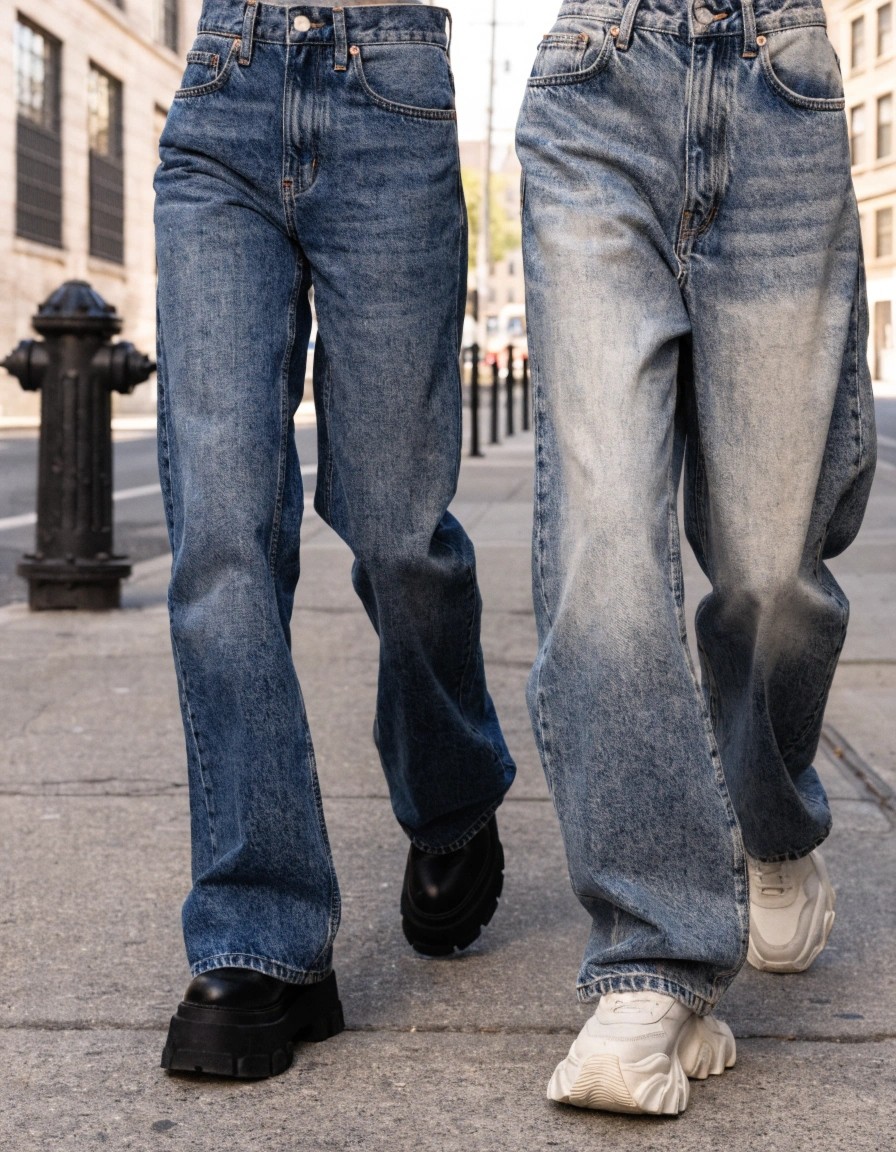
Denim is a durable woven fabric, traditionally made from cotton yarns in a diagonal twill weave. Classic denim often uses indigo-dyed warp yarns and lighter weft yarns, creating the familiar blue face and lighter inside. Modern denim may also include spandex, polyester, recycled cotton, or other fibers to improve stretch, softness, durability, and comfort.
What is denim fabric?
Denim is not a style of pants. It is a fabric construction. The most recognizable denim is blue, sturdy, slightly textured, and able to fade beautifully over time. Technically, denim is usually a twill fabric, which means the yarns are woven in a way that creates diagonal ribs on the surface. That diagonal structure gives denim its strength, shape retention, and signature look.
Traditional denim has a colored outside and a lighter inside. This happens because the warp yarns, which run lengthwise, are usually dyed, while the weft yarns, which run across the fabric, are often left white or lighter. This is why a pair of blue jeans usually looks blue on the outside but pale on the inside. It is also why denim fades in such a special way: the surface dye gradually wears away, revealing lighter yarns underneath.
What materials are commonly used to make denim?
Classic denim is made mainly from cotton. Cotton gives denim breathability, comfort, and the natural ability to soften with wear. However, modern denim is rarely limited to 100% cotton. Many brands now use cotton blended with spandex for stretch, polyester for strength, viscose or Tencel-style fibers for softness, or recycled fibers for sustainability-focused collections.
For custom jeans buyers, this matters a lot. A 100% cotton rigid denim may look more premium and vintage, but it can feel stiff at first. A stretch denim with 1–3% elastane may be better for skinny jeans, plus-size jeans, women’s fitted jeans, and comfort-focused boutique products. A heavier denim may work well for structured baggy jeans or streetwear silhouettes, while a lighter denim may be better for summer jeans, denim shirts, jogger jeans, or relaxed shorts.
Why is cotton twill weave important in denim?
The twill weave is one of the reasons denim became famous as workwear before becoming fashion. Compared with many plain-weave fabrics, twill can feel denser, stronger, and more resistant to wear. The diagonal texture also helps denim develop character. After washing, sanding, whiskering, grinding, laser treatment, or hand distressing, twill denim shows depth and contrast.
For designers, this means denim is not just a blank fabric. It reacts. It fades. It creases. It changes after washing. A factory with strong denim development experience must understand how a fabric will behave after cutting, sewing, washing, drying, and finishing. A beautiful sketch can fail if the wrong denim is chosen. On the other hand, the right denim can turn a simple five-pocket jean into a premium product.
What are the common types of denim fabric?
Here is a simple buyer-focused comparison:
| Denim Type | Best For | Buyer Notes |
| 100% Cotton Rigid Denim | Vintage jeans, selvedge jeans, baggy jeans, premium straight jeans | Strong structure, authentic fades, less stretch |
| Stretch Denim | Skinny jeans, plus-size jeans, women’s jeans, comfort fits | Better movement and recovery |
| Selvedge Denim | Premium collections, heritage brands | Higher perceived value, cleaner edge, often higher cost |
Lightweight Denim | Shirts, summer jeans, jogger jeans, shorts | Softer, easier to wear in warm weather |
Heavyweight Denim | Streetwear jeans, workwear, structured baggy fits | Durable, bold shape, may need longer break-in |
Washed Denim | Ready-to-wear fashion jeans | Softer hand feel and finished look |
Raw Denim | Denim enthusiasts, premium niche brands | Unwashed, stiff, develops personal fades |
How do raw denim, washed denim, stretch denim, and selvedge denim differ?
Raw denim is denim that has not gone through heavy washing after weaving. It is darker, stiffer, and more personal because it fades based on the wearer’s lifestyle. Washed denim is already processed to create softness, color effects, whiskers, fading, distressing, or vintage character. Stretch denim contains elastic fibers, making it better for fitted styles and comfort. Selvedge denim is made with a self-finished edge, often associated with premium heritage jeans.
For a brand owner, the question is not “Which denim is the best?” The better question is: “Which denim matches my customer, price point, fit, and brand story?”
What Are Jeans, and Why Are They Different from Denim?
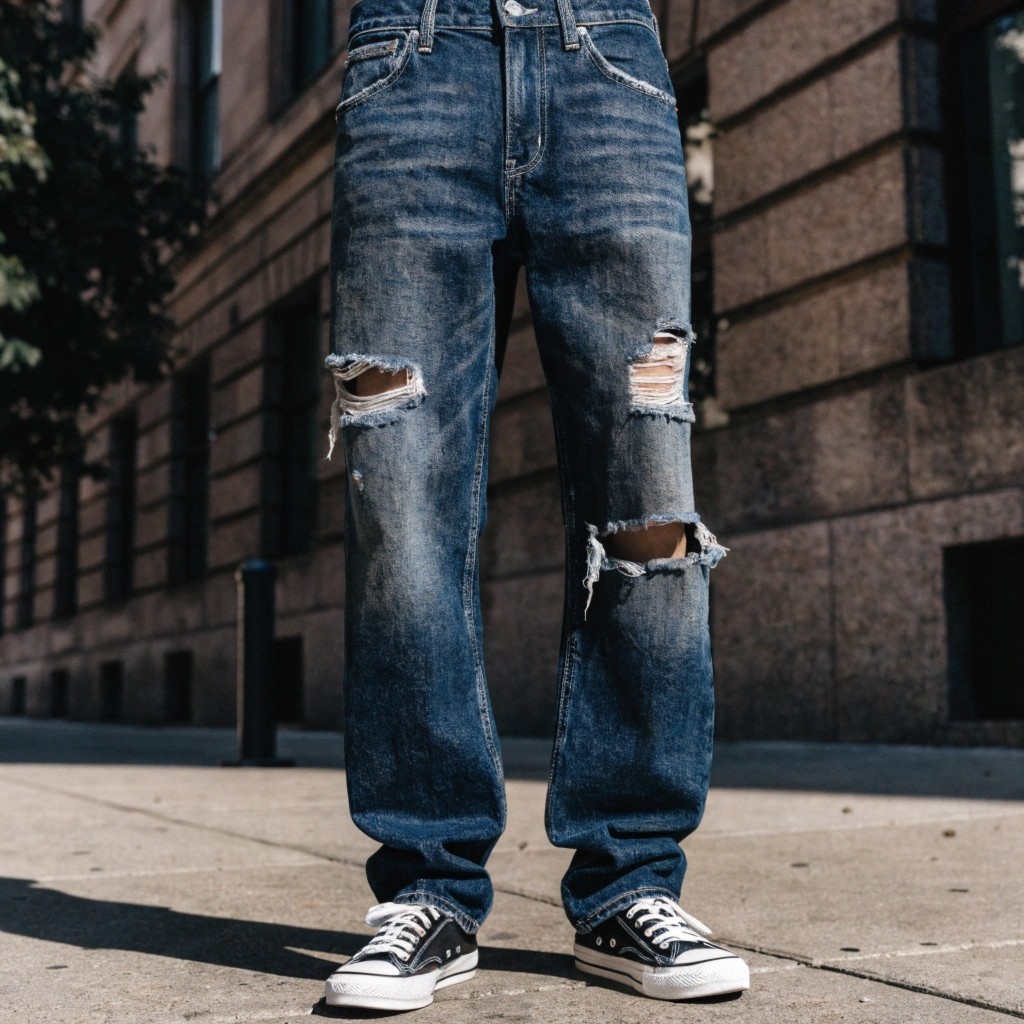
Jeans are trousers, usually casual pants, commonly made from denim. Denim is the fabric, while jeans are the finished clothing item. A pair of jeans may include pockets, waistband, belt loops, zipper or button fly, rivets, stitching, wash effects, trims, and brand labels. Dictionaries commonly define jeans as informal trousers made from denim.
What are jeans?
Jeans are a garment category. Most people think of five-pocket blue jeans: front pockets, back pockets, coin pocket, waistband, belt loops, fly, and strong stitching. But in modern fashion, jeans are much broader than classic blue pants. They can be baggy jeans, stacked jeans, flare jeans, skinny jeans, straight jeans, carpenter jeans, cargo jeans, jogger jeans, low-rise jeans, high-waisted jeans, plus-size jeans, or selvedge jeans.
Jeans are not defined only by fabric. They are defined by garment construction. A jeans factory must consider pattern shape, rise, inseam, thigh width, knee width, leg opening, pocket placement, waistband curve, seam strength, washing shrinkage, and finishing. This is why custom jeans manufacturing is much more complex than simply cutting denim fabric and sewing it together.
Is denim the same as jeans?
No, denim is not the same as jeans. Denim is the material. Jeans are a product made from that material. This is the most common confusion in search intent because people use the words casually in daily life. When someone says “I bought denim,” they may mean jeans. When a fashion buyer says “denim category,” they may mean jeans, jackets, shorts, skirts, shirts, and other denim garments.
For an OEM/ODM order, this difference becomes practical. If you tell a factory, “I want denim,” the factory still needs to know what product you want. Is it a pair of stacked jeans? A cropped denim jacket? A denim shirt? A pair of distressed shorts? A plus-size stretch jean? A baggy streetwear jean with embroidery and custom patches? The fabric is only the starting point.
Are jeans a fabric or a finished garment?
Jeans are a finished garment. The finished jeans include many decisions beyond fabric:
| Jeans Component | Why It Matters |
| Fabric | Controls hand feel, stretch, weight, fade, cost |
| Pattern | Controls fit, comfort, silhouette, size consistency |
| Stitching | Affects durability and visual identity |
Wash | Creates softness, color, vintage effect, distressing |
Trims | Buttons, rivets, zippers, labels, patches |
Branding | Logo embroidery, leather patch, woven label, hangtag |
Packaging | Retail presentation and customer experience |
This is why two brands can use similar denim fabric but produce totally different jeans. One brand may focus on clean dark-wash straight jeans for premium boutiques. Another may use the same fabric base for heavy whiskering, rips, stacked hems, contrast stitching, and streetwear graphics.
Are all jeans made from denim?
Most jeans are made from denim, but not every jean-like pant uses traditional denim. Some fashion pants are made from twill, canvas, knit denim, coated fabrics, or stretch woven fabrics that look like jeans. However, in the customer’s mind, “jeans” usually means denim pants.
This matters when building a product page. If your product is made from real denim, say it clearly. If it is stretch denim, lightweight denim, or selvedge denim, say that too. Specific fabric language helps SEO and helps customers make confident buying decisions.
Can denim be used for products other than jeans?
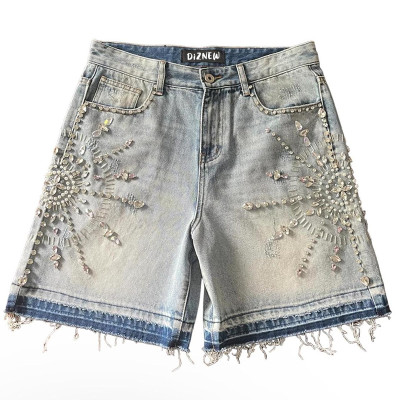
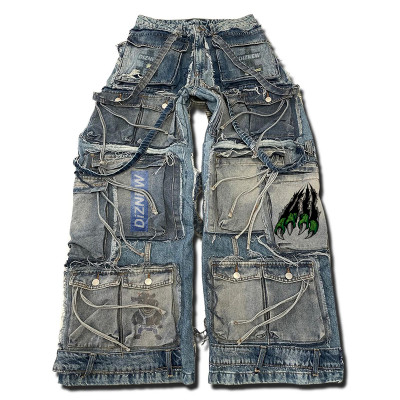
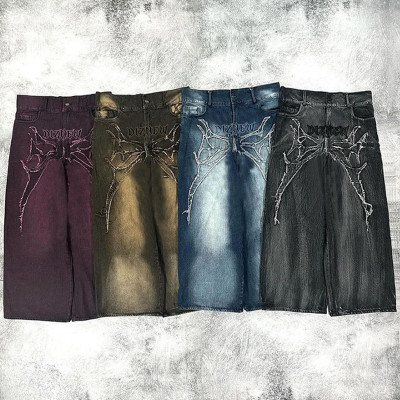
Absolutely. Denim can be used for jackets, shorts, shirts, skirts, vests, dresses, bags, hoodies, and hybrid streetwear pieces. DiZNEW’s own sample references show the wide design range possible with denim and denim-inspired garments, including graphic denim jeans, gradient flared jeans with zipper details, and denim hoodie styles with bold front graphics.
For boutique owners, this opens a bigger opportunity. You do not have to launch only one pair of jeans. You can build a capsule collection: baggy jeans plus a cropped denim jacket, stacked jeans plus a graphic denim shirt, denim shorts plus a matching vest, or premium selvedge jeans plus a raw denim jacket.
What Is the Main Difference Between Denim and Jeans?
The main difference is that denim is a textile and jeans are a garment. Denim describes the woven fabric, while jeans describe pants made from that fabric. Denim can become many products, but jeans are specifically trousers. So denim is about material performance; jeans are about fit, construction, style, and finished product experience.
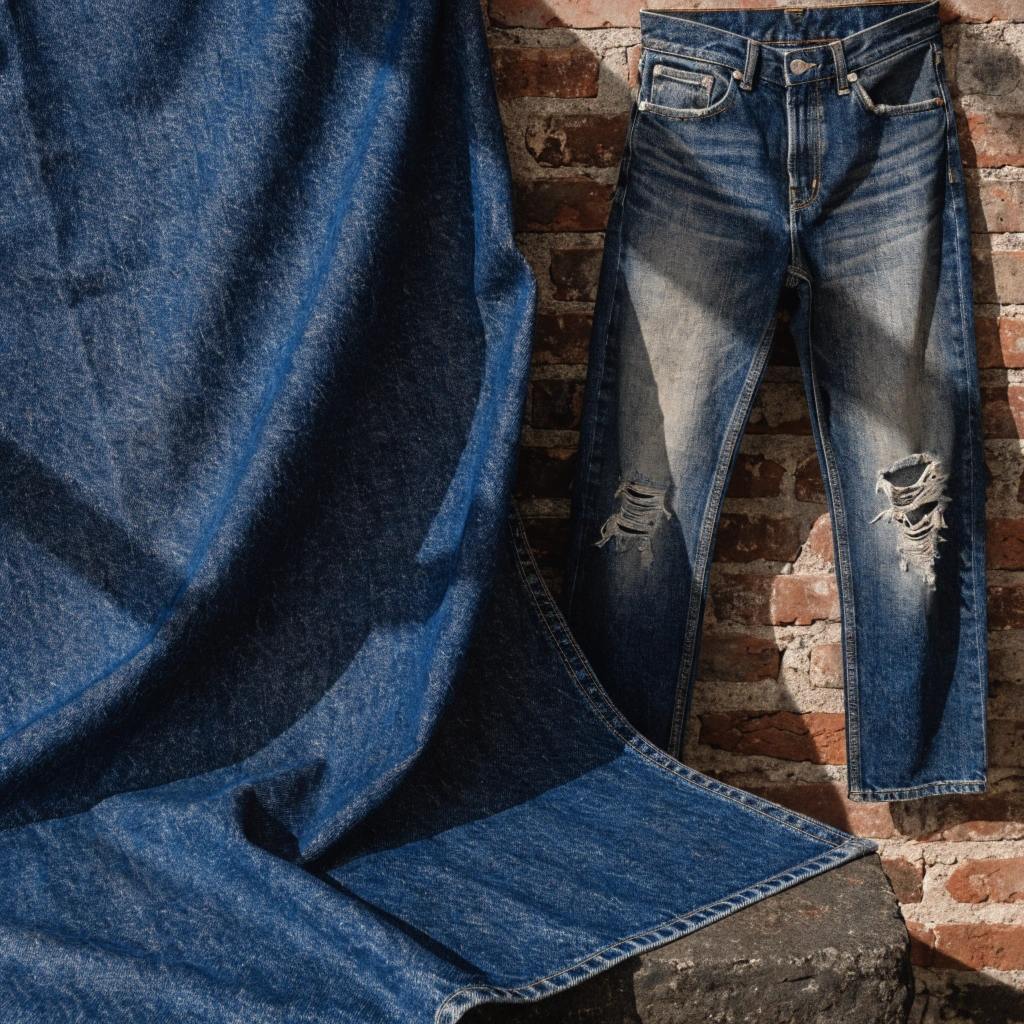
Is denim the material while jeans are the product?
Yes. This is the cleanest way to explain it: denim is the ingredient, jeans are the recipe outcome. But for apparel brands, the difference goes deeper. Denim affects what is possible. Jeans reveal whether those possibilities were executed well.
Think about cooking. Flour can become bread, noodles, cake, or pastry. Denim works the same way. One denim fabric can become straight jeans, baggy jeans, shorts, jackets, or shirts. But the final product depends on design and production decisions. If the pattern is wrong, even high-quality denim can produce uncomfortable jeans. If the wash is too aggressive, a premium fabric can lose strength. If the waistband is poorly graded, plus-size jeans may fit in the hip but gap at the back waist.
Is denim better than jeans?
This question is popular because the wording sounds like a comparison, but technically it compares two different things. Denim is not “better” than jeans because denim is the fabric and jeans are the finished pants. A better question is: “What type of denim is better for my jeans?”
For example, rigid cotton denim may be better for a heritage straight-leg jean. Stretch denim may be better for skinny jeans or plus-size jeans. Heavy denim may be better for structured baggy streetwear jeans. Lightweight denim may be better for summer shorts or denim shirts. Selvedge denim may be better for premium buyers who care about craftsmanship and fabric story.
Why do people often confuse denim and jeans?
People confuse the two because jeans are the most famous denim product. For many shoppers, denim entered their life through jeans first. They did not learn denim as a textile; they learned it as a pair of pants. Fashion marketing also uses the word “denim” broadly. A store may say “shop denim” and show jeans, jackets, shorts, and shirts all together.
From an SEO point of view, this confusion is useful. A strong article should answer both the simple definition and the buyer’s deeper question. Someone searching “difference between jeans and denim” may be a student, a shopper, a designer, or a boutique owner preparing a private-label order. A good page should serve all of them, then guide commercial readers toward better sourcing decisions.
How do fabric structure, garment design, washing, fit, and finishing create the final jeans?
The final jeans are the result of five layers:
| Layer | Key Question | Example |
| Denim Fabric | What is the weight, stretch, color, and weave? | 12 oz rigid cotton denim |
| Pattern | What silhouette and size range? | Baggy fit, stacked inseam, plus-size grading |
| Sewing | How strong and clean is construction? | Double stitching, bartacks, reinforced pockets |
Washing | What look and hand feel? | Stone wash, acid wash, enzyme wash, whiskers |
Finishing | What branding and details? | Logo patch, embroidery, rhinestones, custom buttons |
This is why jeans development requires communication. A designer’s reference photo may show the look, but the factory still needs technical details to make the product repeatable.
How does the same denim fabric become different jeans styles?
A 12 oz blue denim could become a relaxed straight jean with a clean dark rinse. It could also become a distressed stacked jean with extra-long inseam and heavy whiskering. It could become a baggy jean with carpenter pockets, a flare jean with gradient wash, or a skinny jean if the fabric includes enough stretch.
For custom buyers, this is good news. You do not always need a completely new fabric to create a new product. Sometimes, changing the wash, fit, pocket design, seam detail, logo placement, or trims can create a fresh style while controlling development cost.
How Does the Difference Between Denim and Jeans Matter for Custom Manufacturing?
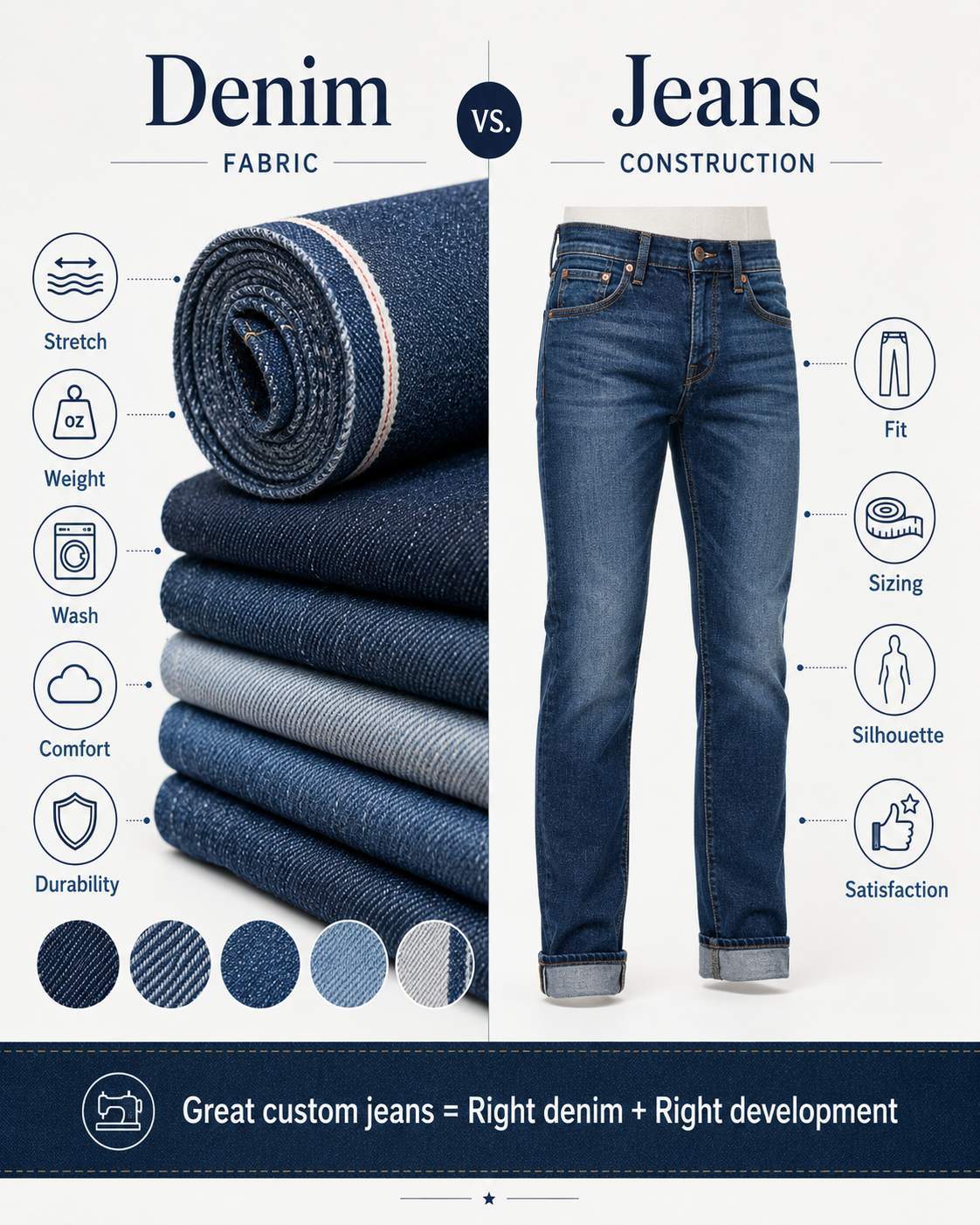
For custom manufacturing, understanding denim versus jeans helps buyers make smarter product decisions. Denim choice affects stretch, weight, wash, comfort, and durability. Jeans construction affects fit, sizing, silhouette, and customer satisfaction. A successful custom jeans project requires both: the right denim fabric and the right garment development process.
Why should buyers choose denim fabric before confirming jeans style?
Many new brand owners start with style: “I want baggy jeans,” “I want stacked jeans,” or “I want skinny jeans.” That is natural, but fabric should be discussed early. The wrong denim can fight against the design.
For example, if you want a dramatic stacked jean, the fabric needs enough body to create stacking around the ankle without collapsing too softly. If you want skinny jeans, rigid denim may feel uncomfortable unless the pattern is designed very carefully. If you want plus-size jeans, stretch recovery becomes important because the jeans must move with the body without bagging out after a few wears. If you want premium selvedge jeans, the fabric width, cutting direction, and seam placement may affect both cost and appearance.
How do denim weight, stretch, color, and wash affect the finished jeans?
Denim weight is usually measured in ounces. Lighter denim feels softer and more breathable. Midweight denim is versatile for many jeans. Heavy denim feels more structured and durable but can be less comfortable at first. Stretch affects movement and recovery. Color affects brand mood. Wash affects the final hand feel and appearance.
A dark rinse straight jean can look clean, premium, and office-friendly. A light-wash baggy jean can feel casual, youthful, and streetwear-driven. A dirty vintage wash can add attitude. A black coated denim can feel sharper and more fashion-forward. A heavily distressed denim short can target summer festival or online boutique customers.
Can jeans cause lower back pain?
Jeans themselves do not automatically cause lower back pain, but overly tight or restrictive pants may affect movement and posture for some people. A study on tight pants found that restrictive pants could influence trunk flexion and pelvic tilting, suggesting a possible relationship between tight lower-body garments and musculoskeletal discomfort that deserves further study.
For brands, this does not mean “never make skinny jeans.” It means comfort engineering matters. Customers may love a fitted look, but they do not want pinching, waistband pressure, limited sitting comfort, or fabric that restricts daily movement. This is especially important for women’s jeans, plus-size jeans, high-rise jeans, and online boutique products where return rates can be strongly affected by fit.
How can fit, waistband design, stretch level, and pattern making improve jeans comfort?
Comfort comes from several small decisions working together. A curved waistband can reduce back gaping. A proper rise can prevent pressure when sitting. Stretch denim can improve movement, but too much stretch may reduce structure. Good recovery helps jeans keep shape after wear. Correct grading makes sure larger sizes are not just “scaled up” versions of small sizes.
For plus-size jeans, the pattern must respect real body curves. For baggy jeans, comfort is not only about making everything wider; the crotch curve, thigh shape, and leg opening still need balance. For stacked jeans, the extra inseam should create the desired visual effect without making the wearer feel like the pants are simply too long. For jogger jeans, the waistband and cuff construction must support movement while keeping a denim look.
What information should buyers provide to an OEM/ODM custom jeans manufacturer?
A good custom jeans inquiry should include:
| Information | Why It Helps |
| Target style | Baggy, skinny, stacked, straight, flare, jogger, shorts |
| Reference images or sketches | Shows design direction clearly |
| Fabric preference | Rigid, stretch, selvedge, lightweight, heavy |
Size range | Helps pattern and grading planning |
Wash effect | Dark rinse, vintage wash, acid wash, distressed |
Logo details | Patch, embroidery, print, button, rivet, label |
Quantity | Helps pricing and production planning |
Target market | Boutique, streetwear, premium, plus-size, men’s, women’s |
Budget range | Helps recommend realistic fabric and process options |
DiZNEW is especially suitable for buyers who need more than basic jeans. If your design includes unusual washes, graphics, patches, embroidery, distressing, special silhouettes, or custom logo details, an experienced denim factory can help translate your idea into a product that can actually be produced.
How Should You Choose the Right Denim for Your Jeans Brand?
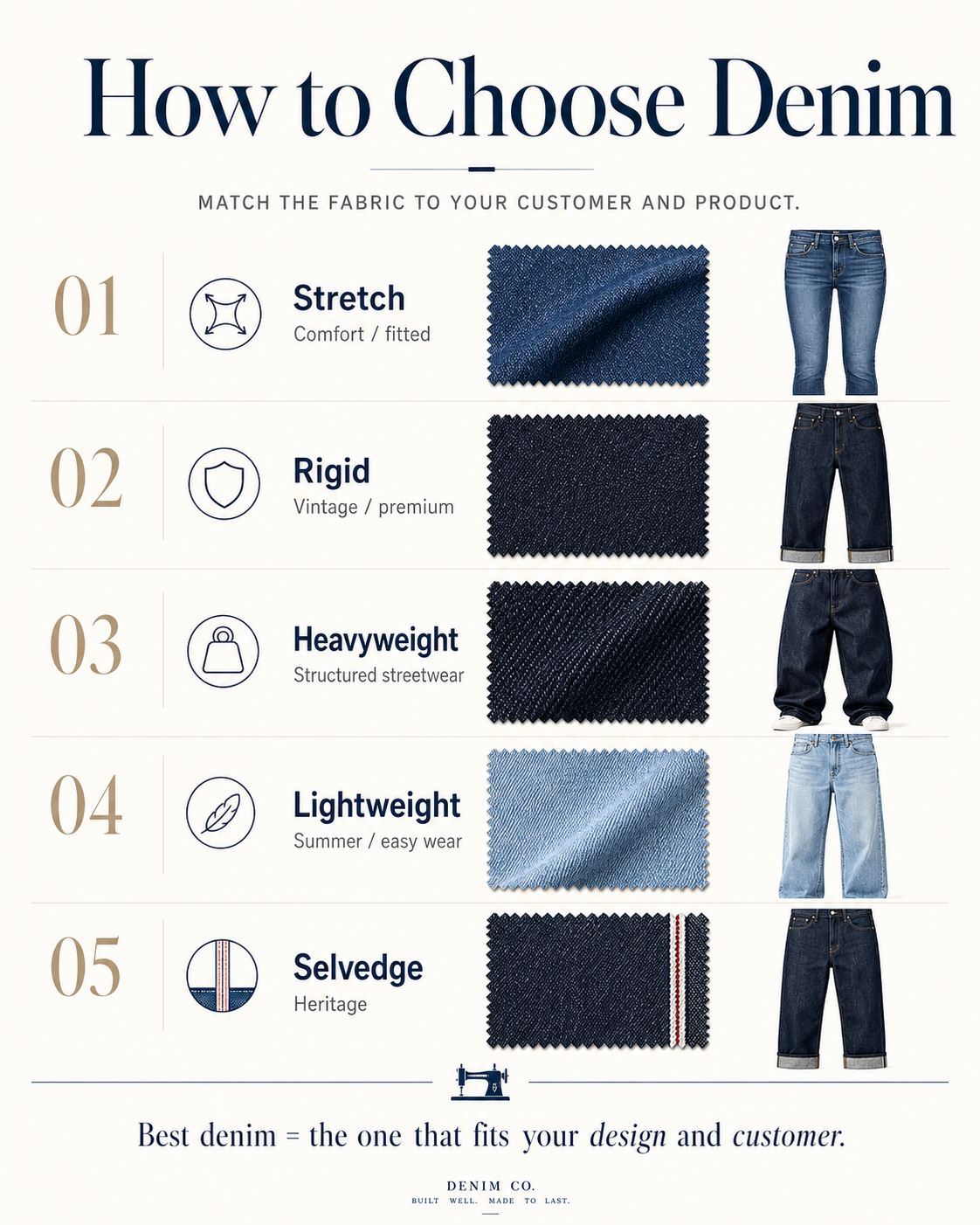
Choose denim based on your customer, fit, price point, and brand identity. Use stretch denim for comfort-focused or fitted jeans, rigid denim for vintage and premium looks, heavyweight denim for structured streetwear, lightweight denim for summer products, and selvedge denim for heritage collections. The best denim is the one that supports your final jeans design and customer expectations.
What jeans are trending in 2026?
In 2026, jeans trends are not moving in only one direction. Vogue reports that denim trends range from skinny jeans returning to classic straight cuts and very wide-leg silhouettes. Other trend reports point to dark indigo rinses, clean washes, tailored silhouettes, low-rise updates, light washes, drawstring jeans, barrel-leg shapes, and colored denim as important directions for 2026.
For boutique owners, this is actually helpful. It means you do not need to chase one single trend. You can build around your audience. A streetwear boutique may focus on baggy, stacked, carpenter, or graphic jeans. A premium minimalist brand may choose dark straight-leg or slim cigarette-style denim. A women’s online boutique may test flare, barrel, light wash, or soft stretch denim. A high-end denim label may invest in selvedge, raw denim, or clean indigo.
| 2026 Trend Direction | Best Product Opportunity | Customization Ideas |
| Wide-leg and baggy jeans | Streetwear, Gen Z boutiques | Oversized pockets, fading, embroidery |
| Skinny/slim return | Fitted women’s jeans, sleek styling | Stretch denim, dark wash, clean stitching |
| Straight-leg classics | Premium everyday collections | Rinse wash, selvedge edge, leather patch |
Light-wash denim | Spring/summer drops | Soft hand feel, vintage wash, distressing |
Dark indigo rinse | High-end minimalist brands | Clean finish, contrast stitching |
Drawstring/jogger denim | Comfort and casualwear | Elastic waist, adjustable cord, soft denim |
Colored denim | Fashion-forward boutiques | Pink, grey, black, khaki, garment dye |
Barrel or curved-leg jeans | Trend-led online stores | Sculpted pattern, cropped length |
Which denim is better for baggy jeans, straight jeans, skinny jeans, stacked jeans, and plus-size jeans?
For baggy jeans, mid-to-heavyweight denim usually works well because it holds volume. Too-soft denim may collapse and lose the intended silhouette. For straight jeans, both rigid and comfort-stretch denim can work, depending on whether your brand wants a vintage or modern feel. For skinny jeans, stretch denim is usually the safer choice because customers expect movement. For stacked jeans, fabric weight and inseam planning are important. For plus-size jeans, stretch recovery, waistband shape, and grading quality are critical.
The key is not copying a trend blindly. A buyer may send a photo of a celebrity wearing oversized jeans, but the factory must adapt the design to the buyer’s market, size range, and target price. A 30-piece boutique order and a 10,000-piece bulk order may require different development strategies, fabric sourcing plans, and production controls.
Should your brand choose rigid denim, stretch denim, heavy denim, or lightweight denim?
Choose rigid denim if your customers love authentic vintage jeans, strong fades, and a structured feel. Choose stretch denim if comfort, body-hugging fit, or size inclusivity is important. Choose heavy denim if your style needs shape and durability. Choose lightweight denim if the product is for warm weather, shirts, shorts, joggers, or soft casualwear.
For online boutiques, comfort often drives reviews. Customers may buy because of the photo, but they keep the jeans because of the fit. That is why fabric testing and sample fitting matter. A beautiful product photo may create the first sale, but comfort creates repeat customers.
How can custom denim manufacturers help turn sketches or reference photos into real jeans?
A professional custom denim manufacturer can help with fabric recommendation, pattern development, sample making, wash testing, logo placement, trim sourcing, size grading, and production quality control. This is especially valuable when a buyer has a creative idea but not a complete tech pack.
For example, a designer may send a sketch of stacked jeans with flame embroidery and a vintage wash. The factory needs to decide embroidery position, fabric stability, shrinkage allowance, thread color, wash sequence, and whether the embroidery should be done before or after washing. A boutique owner may send a reference photo of baggy jeans and ask for their own logo. The factory needs to adjust pocket shape, leg opening, rise, inseam, and label details so the product becomes original rather than a direct copy.
What questions should you ask before starting a small-batch or bulk custom jeans order?
Before placing an order, ask:
1.What denim fabric options match my target style?
2.Can the factory make samples based on sketches or reference photos?
3.What is the MOQ for custom jeans?
4.Can the factory support both small test orders and large production?
5.What wash effects are possible?
6.Can I customize logo buttons, rivets, patches, labels, and packaging?
7.How does the factory control size consistency?
8.Can they handle complex denim styles, not just basic jeans?
9.What information is needed for accurate pricing?
10.How long does sampling and production usually take?
For a brand, the right factory is not just a supplier. It is a development partner. This is especially true for denim because fabric, fit, wash, and finishing all interact.
Final Thoughts: Denim Is the Fabric, Jeans Are the Business Opportunity
The difference between denim and jeans sounds simple at first: denim is the fabric, jeans are the pants. But for designers, boutique owners, online stores, and private-label brands, that difference opens a much bigger conversation. Denim decides the foundation. Jeans decide the customer experience. The fabric affects stretch, weight, color, wash, and durability. The finished jeans determine fit, comfort, style, brand value, and whether customers come back for a second order.
If you are building a jeans brand, do not start only with the question, “What jeans should I make?” Start with better questions: Who is my customer? What fit do they love? Do they care more about comfort, streetwear attitude, premium fabric, plus-size fit, or trend-led design? Should the product be rigid, stretchy, lightweight, heavy, raw, washed, selvedge, distressed, or graphic? Once those answers are clear, your denim choice and jeans development process become much stronger.
DiZNEW is a China-based denim jeans R&D and manufacturing factory with more than 20 years of experience, supporting custom jeans, OEM, and ODM production for U.S. boutique buyers, designers, online stores, influencer brands, and premium denim labels. We can develop many denim product categories, including plus-size jeans, baggy jeans, stacked jeans, straight jeans, selvedge jeans, skinny jeans, jogger jeans, denim jackets, denim shorts, and denim shirts.
Whether you want to start with a small custom order from 30 pieces or plan a larger production run up to 10,000 pieces, DiZNEW can help turn your design sketch, reference photo, tech pack, or brand concept into real denim products with your own logo, wash, fit, trims, and finishing details.
Ready to create your own custom jeans collection? Contact DiZNEW today to discuss your fabric, fit, logo, quantity, and design ideas.
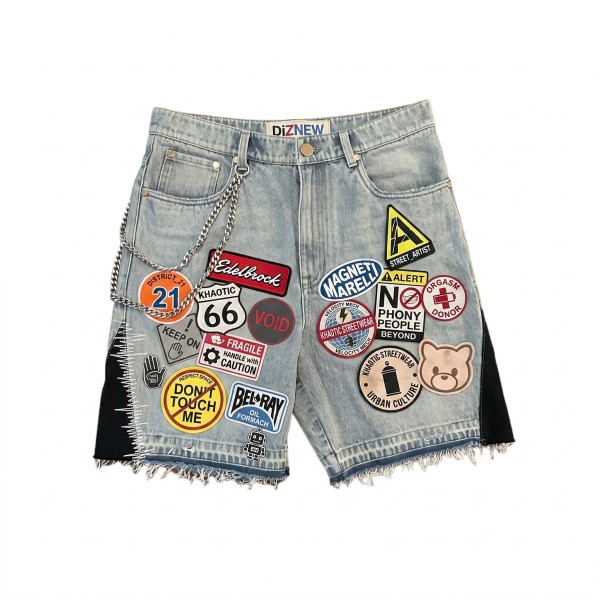
Streetwear-inspired custom denim shorts with utility pockets, distressed wash, and fringe hem for bold collections.
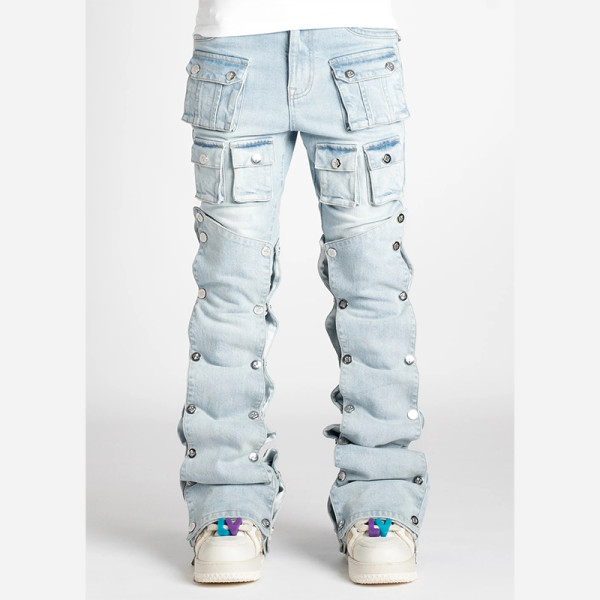
Custom high-street bubble cargo jeans with pleats, metal buttons, and multi-pocket design. Supports small-batch production.
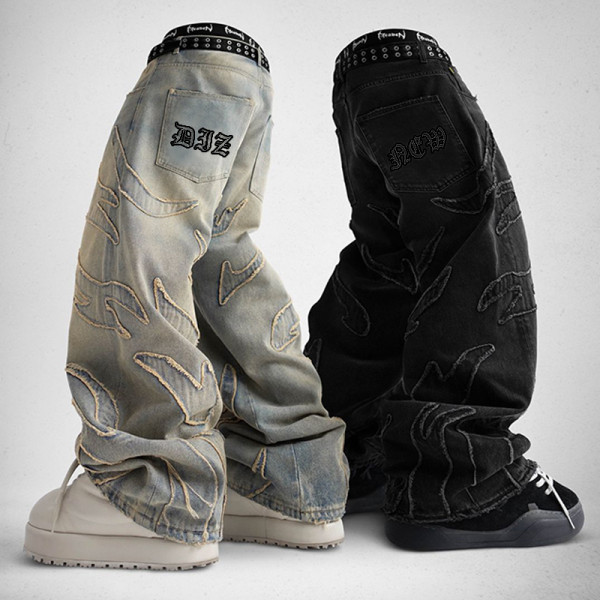
Vintage washed oversized jeans with bold embroidered patches, ideal for custom streetwear and bulk orders. Stylish and durable.
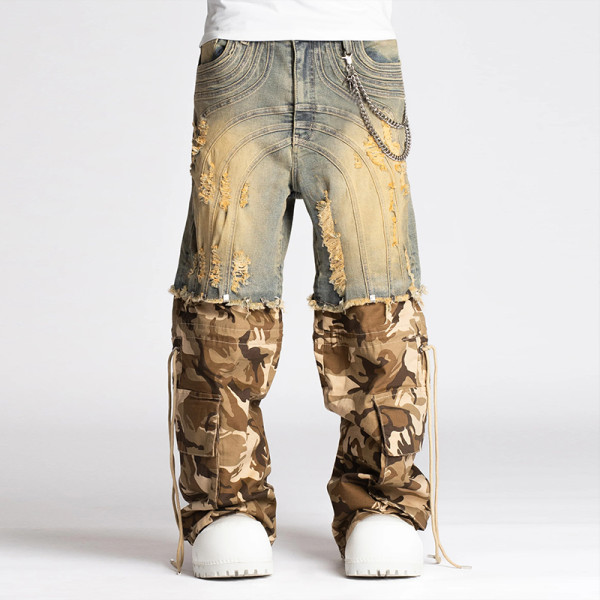
Denim shorts with camo patchwork bottoms and detachable zippers for a custom, versatile streetwear look. Perfect for men’s fashion.