Straight-Leg vs Skinny Jeans: What's the Difference?
A pair of blue jeans can spend Monday on a construction site and Saturday in a boutique window. Few garments move so easily between practical work, everyday comfort, and expensive fashion. That flexibility raises an interesting question: how did trousers developed to survive hard use become something people buy to express who they are?
The familiar story usually starts with Levi Strauss and California miners. The fuller version includes a tailor named Jacob Davis, older textile traditions, women challenging clothing conventions, and generations of wearers changing denim’s meaning. For designers and boutique owners, this history explains why such a familiar product still offers room for original ideas.
Modern riveted blue jeans began with Jacob Davis and Levi Strauss, who received a U.S. patent on May 20, 1873, for reinforcing work trousers with metal rivets. Denim and work pants existed earlier. Jeans gradually entered American closets through Western imagery, Hollywood, women’s adoption, youth culture, and casual dressing. Later, designer fashion and streetwear expanded their appeal through new fits, washes, and ways to express identity.
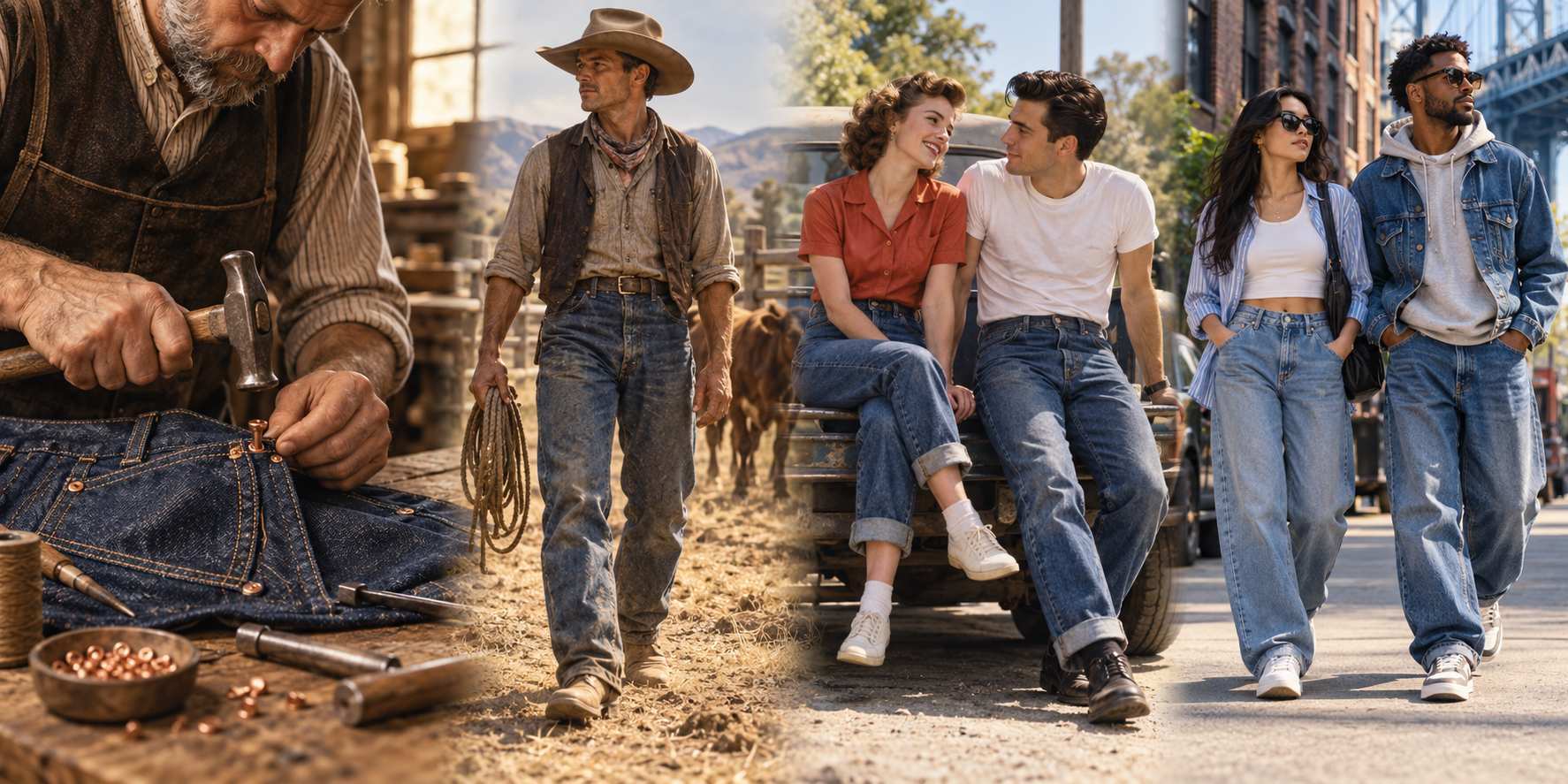
For a designer, these different meanings are useful. A heritage-inspired straight jean and an embroidered baggy jean can serve entirely different customers, even when both start with blue cotton cloth. The challenge is choosing which parts of denim’s story support your own collection.
Before denim became a fashion statement, a pocket needed to stop tearing. Understanding how that small problem led to an enduring garment reveals useful lessons for anyone turning a denim sketch into a product.
Who Invented Blue Jeans, and When Did Their Story Begin?
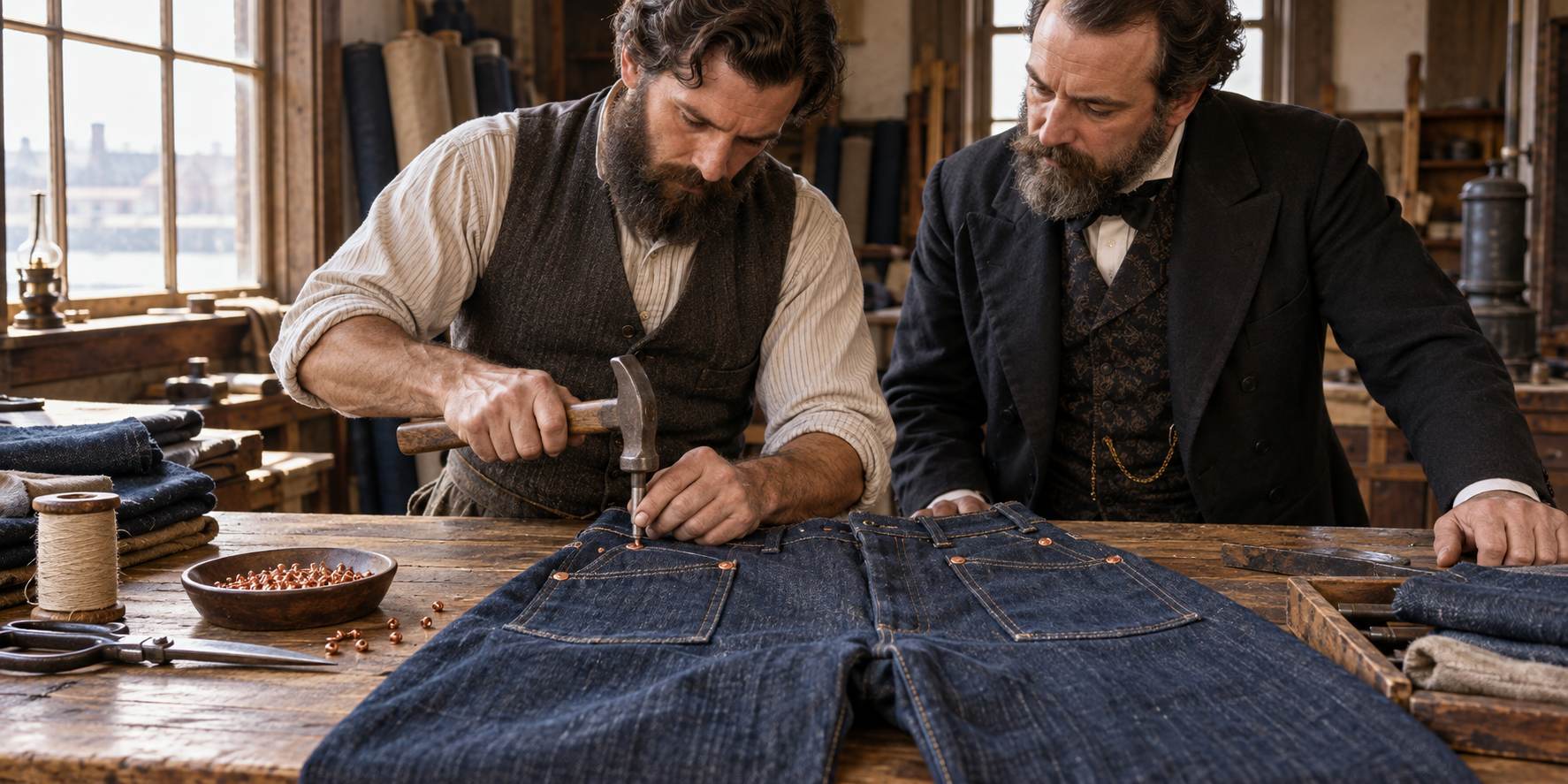
Jacob Davis and Levi Strauss jointly pioneered the patented riveted work trousers that became modern blue jeans. Their patent was granted on May 20, 1873. Davis developed the reinforcement idea; Strauss helped finance and commercialize it. Earlier denim trousers already existed, so the milestone concerns riveted garment construction rather than the invention of denim fabric.
How Did Blue Jeans Begin?
Blue jeans began with a practical construction problem. Work trousers could fail around pockets and fastening areas even when the main fabric remained usable. Smithsonian’s account describes Davis experimenting with metal fasteners to strengthen trousers for customers in Nevada. Early riveted garments included cotton duck, a canvas fabric, as well as denim. smithsonianmag.com This makes the origin more interesting than a simple story about choosing blue cloth. For a modern denim brand, the same approach starts with understanding how customers wear the product: carrying a phone, sitting for hours, bending at work, or moving through a crowded city.
Did Levi Strauss Invent Blue Jeans Alone?
Strauss deserves recognition, but Davis deserves equal visibility. Davis was the tailor who understood the construction problem and developed the riveting solution. Strauss supplied fabric and provided the business backing needed to protect and expand the idea. Davis later supervised production. smithsonianmag.com Their partnership offers a useful model for contemporary product development. Clear communication between the designer and manufacturer helps preserve the concept while making the garment practical to produce.
What Did the 1873 Blue Jeans Patent Actually Protect?
The patent addressed reinforcing vulnerable areas with rivets. It did not invent cotton, indigo, trousers, or the twill weave. levistrauss.com That distinction helps separate a meaningful construction advance from a broader origin myth. It also suggests a sensible way to assess modern product claims. Buyers should evaluate the whole garment: seam construction, pocket attachment, fabric performance, and how the finished sample behaves in use. A recognizable heritage detail earns its place when it supports the intended product.
Who Were the First Americans to Wear Blue Jeans?
Early wearers belonged largely to working communities. Miners, farmers, loggers, and cowboys were among the groups adopting durable denim work trousers. ASU FIDM Museum There is no need to invent a single “first American” wearer to answer the question. The important point is that adoption grew around practical needs. Today, the intended wearer remains the right starting point for development. A fashion customer may prioritize drape and softness, while someone seeking sturdy everyday jeans may prefer more structure. The strongest specification reflects that difference.
What Is the Oldest Brand of Jeans?
Levi’s is widely recognized as the oldest continuing brand associated with the original patented riveted blue jeans. Levi Strauss & Co. was founded in 1853; its riveted jeans followed in 1873. Calling them “1853 blue jeans” confuses company history with product history. levistrauss.com Heritage can establish credibility, but it cannot replace product evaluation. A young label can still build excellent jeans through careful material selection, fit development, and consistent manufacturing.
Where Did Denim Come From, and Why Are Jeans Blue?
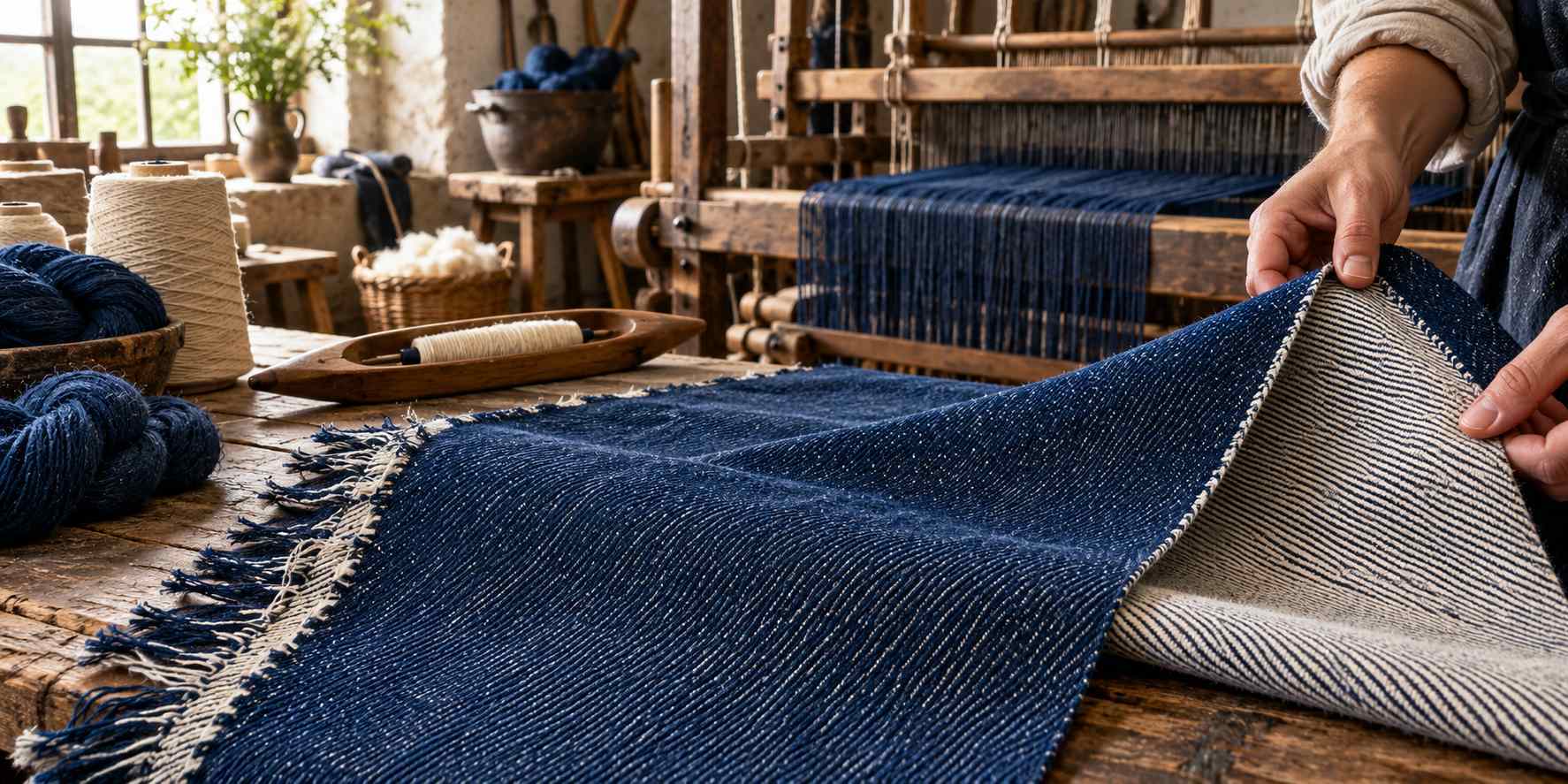
Denim developed through textile traditions that predate modern riveted jeans. Its name is commonly linked to Nîmes, while “jeans” is associated with Genoa, although the fabric history is more complicated than those names suggest. Traditional blue denim typically combines indigo-dyed warp yarns with undyed weft yarns, creating a blue face and a lighter reverse.
What Is the Connection Between Denim, Nîmes, and Genoa?
The popular explanation connects “denim” with “serge de Nîmes” and “jeans” with Genoa. However, Levi Strauss & Co.’s historical research questions a straightforward relationship between early wool-and-silk serge and later cotton denim. Textile names also traveled between trading centers and manufacturing regions. levistrauss.com The safest account treats these names as clues to a complicated textile history. For brands, this matters when writing product descriptions. Accurate storytelling makes the product easier to trust.
What Is the Difference Between Denim and Jeans?
Denim is a fabric; jeans are a garment category. Denim can become jackets, shorts, shirts, skirts, or bags as well as trousers. Traditional denim uses a twill structure, which produces its familiar diagonal pattern. ASU FIDM Museum In development conversations, distinguishing fabric from garment prevents confusion. Buyers should describe the end product, intended silhouette, desired feel, and expected use. A fabric that looks excellent as a swatch may behave differently after sewing and washing.
Why Is Indigo Associated with Traditional Blue Jeans?
Indigo gives traditional denim its characteristic blue color. During dyeing, indigo is converted into a soluble form so it can be applied to yarn, then oxidation restores its blue, insoluble form. Repeated applications build shade. CottonWorks™ This explains why “blue” is only the beginning of a color specification. Supply a physical reference where possible and review the finished garment under consistent lighting. Two fabrics that look similar before washing may produce noticeably different results afterward.
Why Do Blue Jeans Fade with Wear and Washing?
Indigo often concentrates around the outer layers of cotton yarn, leaving a lighter core. Wear and finishing expose lighter areas, helping create denim’s distinctive fading. CottonWorks™ For brands, the practical question is how that appearance should develop. A customer buying dark jeans may expect color retention; another may welcome visible aging. Communicate the intended behavior and evaluate the finished sample accordingly. Avoid promising that jeans will “never fade” simply because the initial shade is deep. The fabric, finish, care routine, and wear pattern all influence the result.
| Development choice | Question to resolve before sampling |
| Fabric composition | Should the garment feel rigid, flexible, or soft? |
Fabric weight | How much structure suits the silhouette and climate? |
| Starting shade | What blue should the approved finished garment show? |
| Wash direction | Should contrast be subtle or clearly visible? |
Finished performance | What shrinkage and color-transfer limits are required? |
How Did Blue Jeans Move from Workwear into Everyday American Life?
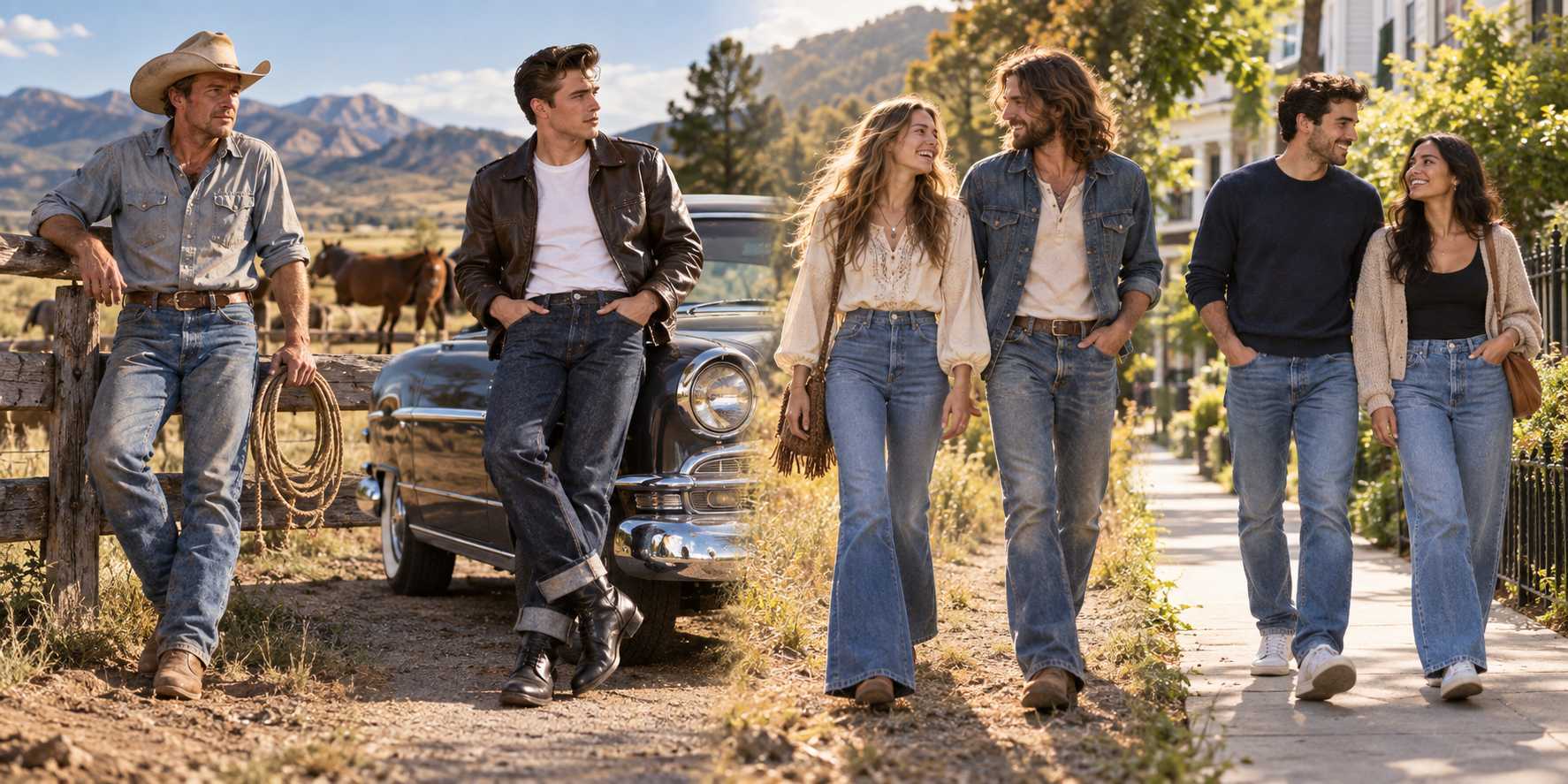
Blue jeans became everyday American clothing through a gradual cultural shift. Western imagery made them symbols of independence, Hollywood connected them with youthful rebellion, and women adopted them for practical freedom. Counterculture and increasingly casual dressing widened their acceptance. Their usefulness supported the transition, while different communities gave the same garment new meanings
How Did Cowboys and Western Movies Shape the Image of Jeans?
Western films and advertising helped move denim beyond its identity as ordinary labor clothing. Levi Strauss & Co.’s history describes the influence of cowboy imagery and visitors to Western dude ranches, who brought jeans home after their trips. levistrauss.com The lesson for a contemporary brand is that context changes how a familiar product is understood. A straight jean photographed with work boots tells a different story from the same silhouette styled with a refined shirt. Product development and presentation should support the same customer promise.
Why Did Hollywood Rebels Make Jeans Appealing to Teenagers?
In the 1950s, screen images of young rebels helped make jeans appealing beyond working communities. Marlon Brando and James Dean became influential references in this shift. levistrauss.com Denim offered a visible way to step outside formal expectations. Yet it would oversimplify the story to credit film stars with the entire transformation. For brands today, an appealing image may attract attention, but a disappointing fit can undermine the purchase. The garment must deliver something useful after the customer leaves the screen.
How Did Women Help Expand the Market for Denim?
Women helped make jeans relevant to a wider range of lives. Levi Strauss & Co. introduced Lady Levi’s in 1934, and its history also describes women wearing men’s jeans for work and outdoor activities. levistrauss.com For modern brands, the development lesson is concrete: changing the label does not solve fit. Waist-to-hip proportions, rise, thigh room, and size grading need attention. Customers with different body proportions may need different pattern blocks, even when they want the same overall silhouette. A broader size range deserves real fit development.
What Role Did the 1960s Counterculture Play in Making Jeans Mainstream?
During the 1960s, jeans became associated with counterculture and social expression; decorated denim and bell-bottom silhouettes expanded their visual possibilities. ASU FIDM Museum PBS also places denim within civil rights, rock music, and other movements that reshaped American life. PBS These histories show why jeans cannot be explained through fashion alone. Wearers helped redefine the product. For a designer, that suggests leaving room for the customer’s own styling rather than expecting every pair to communicate an identical message.
How Did Blue Jeans Evolve into Designer Denim and Streetwear?
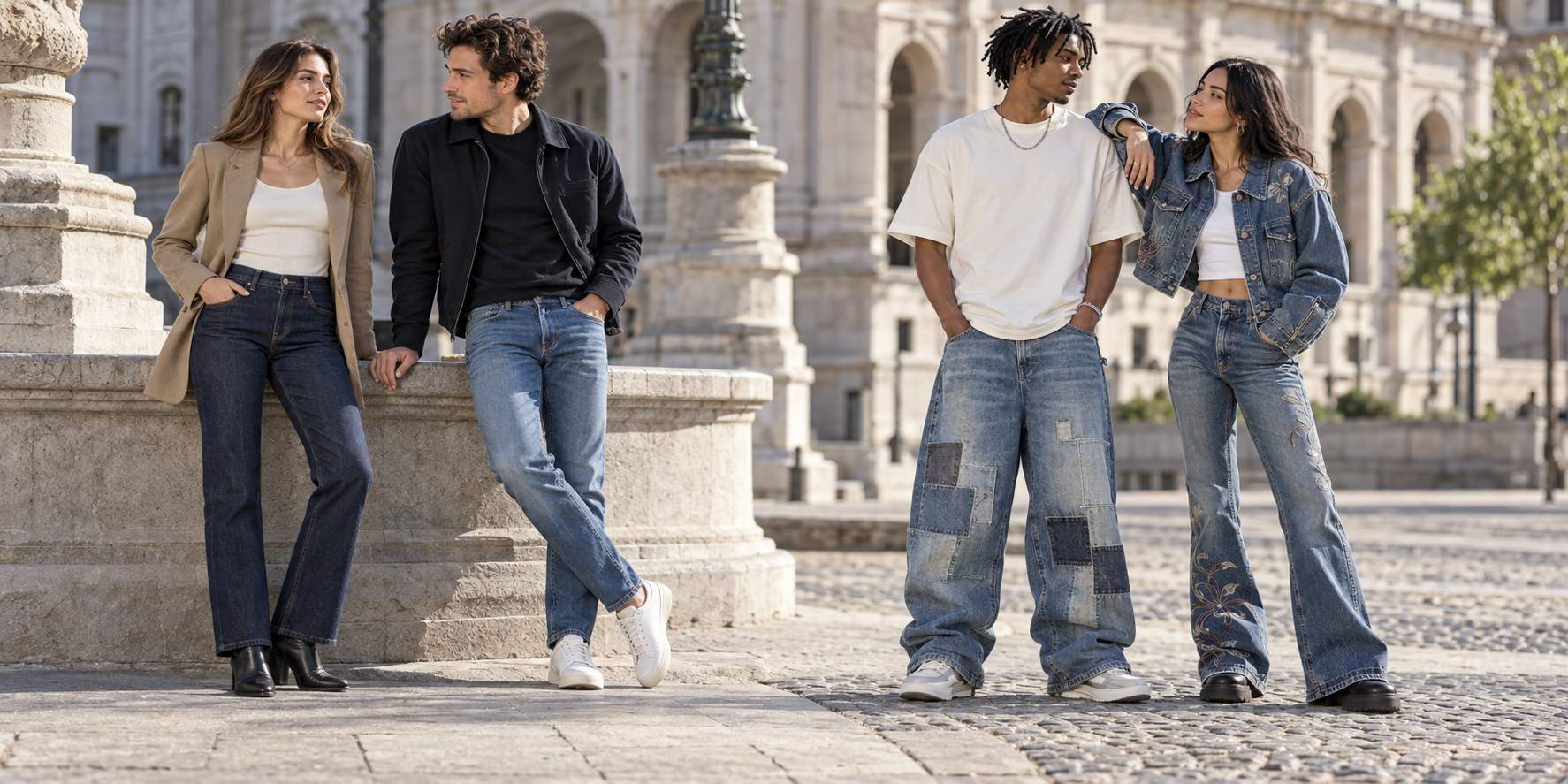
Jeans entered designer fashion as brands emphasized fit, image, and differentiation. Later, streetwear expanded their expressive possibilities through proportion, styling, and customization. Denim could serve as familiar everyday clothing or a distinctive statement piece. For today’s brands, commercial success depends on matching those design choices with a clear customer and reliable product execution. ASU FIDM Museum
When Did Jeans Become a Designer Fashion Product?
Designer denim gained prominence in the 1970s and 1980s, with names such as Gloria Vanderbilt and Calvin Klein helping establish jeans as fashion purchases. ASU FIDM Museum Customers were paying for a particular fit and image as well as the garment’s practical function. This shift gives today’s buyers a useful question: what makes your product worth choosing? A convincing answer might be an exceptional silhouette, a distinctive wash, or well-executed decoration. A high price or large logo alone leaves that question unanswered.
How Did Bell-Bottom, Straight-Leg, Skinny, and Baggy Jeans Develop Different Identities?
Different cuts create different relationships between the body, the garment, and the shoes. Bell-bottoms emphasize the lower leg; straight jeans create a more continuous line; skinny jeans follow the body closely; baggy jeans provide more volume. Their cultural associations add another layer, but a style name is still an incomplete specification. Start with measurements and a fit reference. For stacked jeans, also specify how excess length should gather over the intended footwear.
How Did Hip-Hop and Streetwear Expand Denim’s Creative Possibilities?
Hip-hop belongs to denim’s wider cultural history, as PBS’s documentary makes clear. PBS For contemporary streetwear development, proportion and styling deserve as much attention as decoration. Buyers should decide which element leads the product. Otherwise, a sample can become crowded with competing ideas. Consider how the jeans will appear in a full outfit and in an online product photograph, where the customer must quickly understand their shape.
Why Have Washes, Distressing, Embroidery, and Custom Details Become So Important?
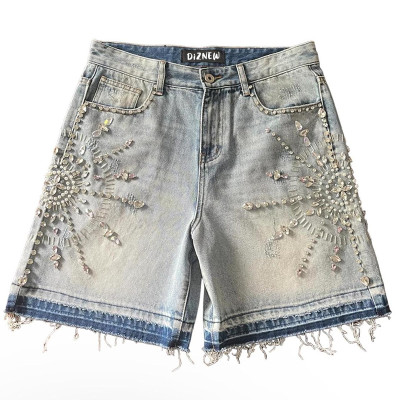
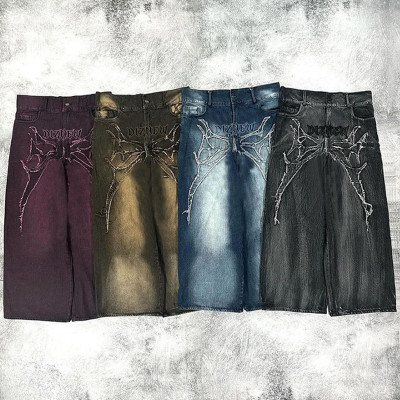
These details let brands distinguish products built from a familiar garment format. Their commercial value depends on execution. Buyers should request clear placement dimensions, review decoration after the intended wash, and inspect vulnerable areas around distressing. An embroidery design that looks balanced on one sample may need adjustment across sizes. A washed effect should also have an agreed appearance range so production can be assessed consistently. Choose a few details that strengthen the concept and develop them carefully.
| Desired product direction | Development priority |
Heritage-inspired straight jeans | Proportions, fabric character, restrained detailing |
| Baggy streetwear jeans | Volume, drape, pocket scale, shoe relationship |
| Stacked jeans | Inseam, leg opening, intended stacking behavior |
| Embroidered statement denim | Artwork scale, placement, stitch quality |
Heavily distressed jeans | Placement, appearance, remaining garment strength |
Why Do Blue Jeans Remain a Wardrobe Staple, and What Can Today’s Brands Learn?
Blue jeans remain relevant because they combine practical wear with adaptable styling and personal expression. Brands can reinterpret the same garment through different fabrics, proportions, and finishes. Today’s opportunity is to understand a specific customer, develop a convincing product, and reproduce the approved result consistently. Denim’s history supplies inspiration; thoughtful development makes that inspiration useful.

How Do Durability, Versatility, and Personal Expression Keep Jeans Relevant?
Jeans can work across many ordinary situations, and customers can build different outfits around the same pair. For a brand, that creates both an opportunity and a challenge. Your product must offer a reason to try something new while satisfying basic expectations. Evaluate comfort, pocket usability, appearance after care, and fit alongside the design. Avoid assuming that heavier fabric automatically means better quality. Its value depends on the garment and the person wearing it.
Which Country Does Not Allow Blue Jeans?
North Korea is commonly cited in reports about restrictions on blue jeans and Western fashion. In March 2024, NK News documented state television blurring a British presenter’s jeans. That is evidence of censorship, but it does not establish every detail of a universal legal ban or its current enforcement. nknews.org The broader connection to denim history is its cultural symbolism: clothing that seems ordinary in one setting can carry political meaning in another. Claims about restrictions should retain that distinction rather than turn a complex situation into a trivia answer.
Why Can Multiple Denim Fits Coexist in the Same Market?
Customers have different bodies, wardrobes, and reasons for buying. This makes customer definition more useful than chasing a single supposed winning fit. Boutique owners can build a collection around complementary needs, then use customer feedback to refine it. Review returns and fit comments alongside sales. If several customers mention a tight thigh or loose waistband, the pattern may need attention even when the style sells well.
How Can Designers Reinterpret Heritage Details for Their Own Customers?
Choose the part of denim history that supports your concept. Workwear pockets may suit a utility collection; visible fading may suit a worn-in mood; a clean dark wash may support a more polished wardrobe. Translate that direction into original proportions and details. A historical reference becomes more valuable when it helps you make a clear decision about fabric, construction, or silhouette. Keep the story close to what the finished product actually delivers.
How Can a Custom Denim Manufacturer Turn a Design Concept into a Finished Product?
A useful development brief includes artwork or sketches, measurements, fabric preferences, wash references, quantities, size range, branding, target price, and delivery expectations. The manufacturer can then assess feasibility, develop patterns, produce samples, and document approvals before bulk production. DiZNEW is a Chinese denim development and manufacturing factory with more than 20 years of experience. Its OEM/ODM services support independent designers, boutique owners, influencer-led stores, and established brands, including complex denim customization. Orders can start at 30 pieces and scale to 10,000 pieces or more, subject to the design and materials. Confirm the minimum for each style and color when requesting a quote.
Ready to develop your own denim collection? Send DiZNEW your sketch, original artwork, or reference images, together with your preferred fabric, wash, quantities, and size range. Whether you are planning baggy, straight, skinny, stacked, plus-size, jogger, or selvedge jeans—or denim jackets, shorts, and shirts—request a customization consultation and quotation. Start with a clear concept and an approved sample, then build a product your customers will want to wear again.
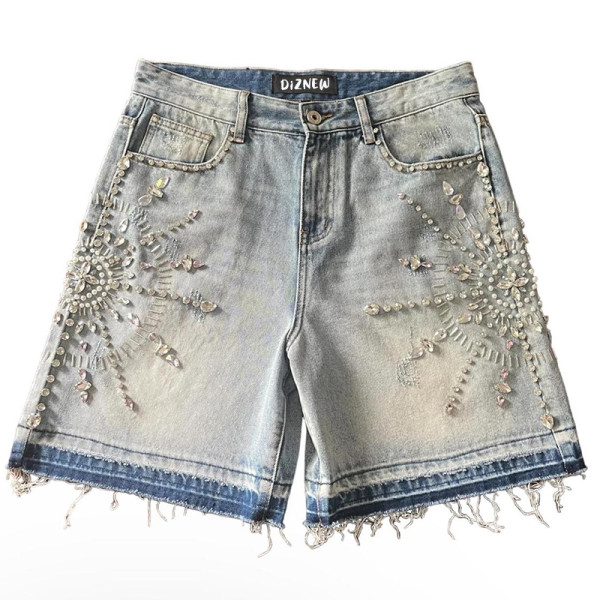
Custom Blue denim shorts with crystal detailing, blending luxury and street style. Stand out with this personalized denim design.
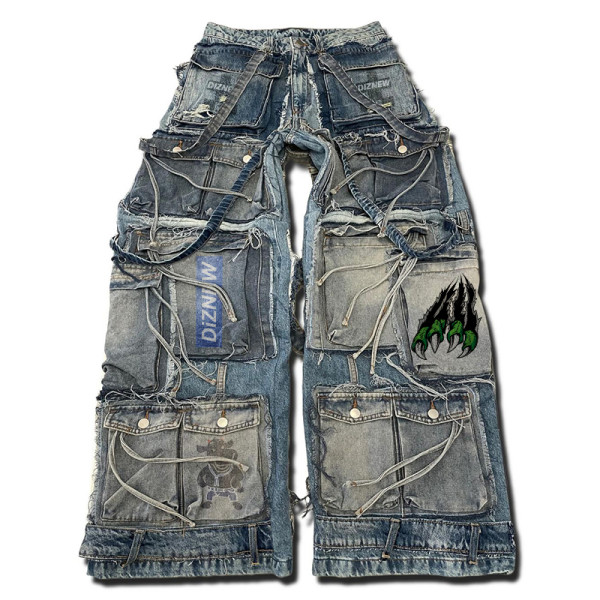
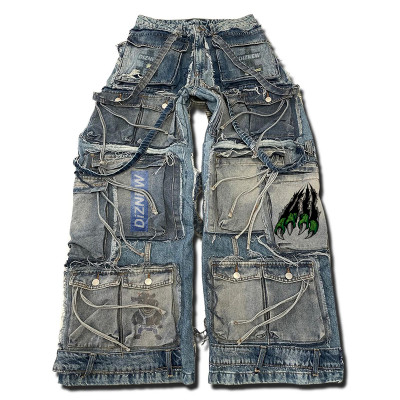
Washed denim cargo jeans with raw edge detail and oversized pockets for a bold streetwear look.
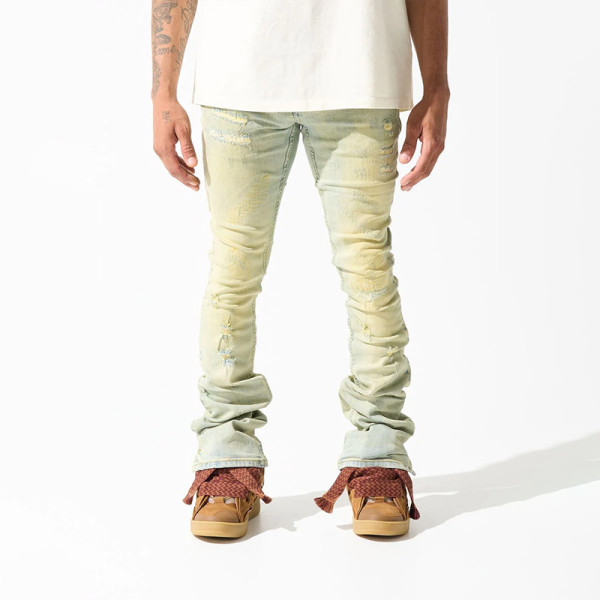
Skinny stacked jeans with distressed detailing and yellow-tinted bleach wash — bold choice for trendsetters.
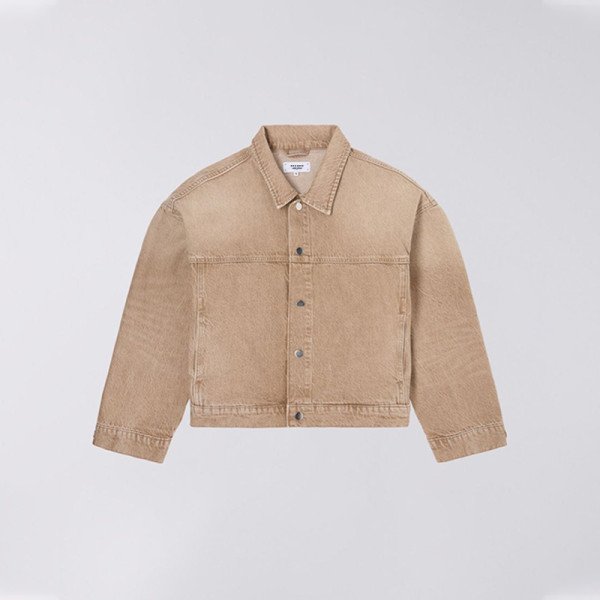
Brown blank cropped denim jacket with a minimalist design—perfect for boutique owners and luxury fashion customization.