Is a jean business good for a startup?
Starting a jean business sounds exciting because denim is one of the few fashion categories that almost everyone understands. Jeans are worn by students, office workers, streetwear fans, boutique shoppers, designers, influencers, and premium denim collectors. But denim is also one of the hardest apparel categories to launch. A T-shirt brand can survive with simple sizing and basic fabric. A jeans startup must solve fit, fabric, wash, shrinkage, hardware, pockets, waistband comfort, returns, and inventory risk all at once.
A jean business can be good for a startup if the brand has a clear niche, reliable denim manufacturer, low-risk production plan, strong fit, and visible product differentiation. Denim has large repeat demand, but it is technical and competitive. Startups should test small batches, avoid generic jeans, control inventory, and build products around real customer problems.
That is why the best question is not only “Is jeans business profitable?” The better question is: “Can my startup create jeans that customers cannot easily find elsewhere?” If the answer is yes—better plus size fit, better baggy jeans, better stacked jeans, cleaner business casual denim, or stronger private label branding—then denim can become a powerful startup opportunity.
Is a Jean Business Good for a Startup in Today’s Fashion Market?
A jean business can be good for a startup because denim is an evergreen category with broad demand. However, profit depends on niche positioning, product quality, fit accuracy, production cost, marketing cost, return rate, and inventory control. Jeans are not easy, but that difficulty can become an advantage for startups that solve real customer pain points.
Is jeans business profitable?
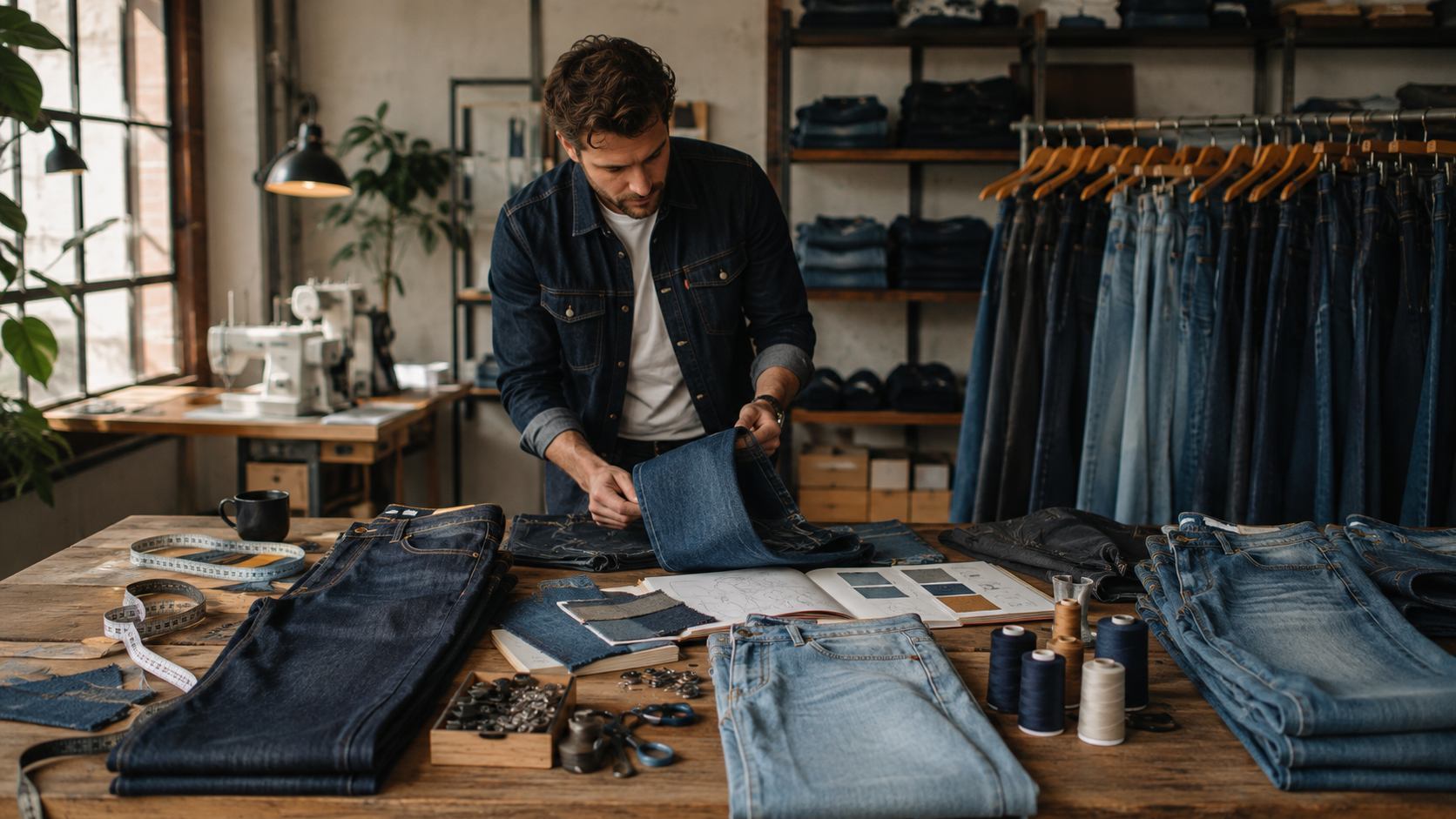
Yes, a jeans business can be profitable, but not automatically. Denim has strong market potential: Grand View Research estimates the global denim jeans market at USD 91.2 billion in 2025 and projects it to grow from USD 96.1 billion in 2026 to USD 146.3 billion by 2033. That market size proves demand exists, but it does not guarantee success for every startup.
Profit comes from the difference between production cost, retail price, marketing cost, shipping, returns, and repeat purchases. A brand selling generic jeans with poor fit may lose money through returns and discounts. A brand with a clear niche, strong product photos, better fit, and loyal customers has a stronger chance.
Is denim still a good market for startups?
Denim is still a good market because jeans are not a temporary trend. They appear in casualwear, streetwear, boutique fashion, premium fashion, workwear-inspired clothing, and business casual wardrobes. The opportunity is especially strong for startups that choose a specific customer: plus size shoppers, Gen Z streetwear buyers, online boutique customers, influencer-led drops, premium straight-leg customers, or business casual denim buyers.
Why do some jeans startups succeed while others fail?
Successful jeans startups usually have a clear customer, a focused first collection, reliable production, strong visuals, and a product reason to exist. Weak startups often fail because they sell generic products, order too much inventory, ignore fit testing, choose poor fabric, or try to target everyone.
McKinsey’s 2026 fashion-industry outlook emphasizes that fashion leaders face a challenging environment where agility, inventory control, and stronger capabilities matter more than ever. For a jeans startup, that means testing demand before scaling is not optional—it is survival.
Dive Deeper
Denim is attractive for startups because it has repeat demand. Customers do not buy jeans once in their life. They buy different fits, washes, colors, and styles for different occasions. One customer may own straight jeans for daily wear, black jeans for nights out, baggy jeans for streetwear, and dark denim for office-casual outfits.
But denim is not a “quick money” category. The product is technical. A poor waistband creates returns. A bad wash changes measurements. Weak stretch recovery creates sagging. Poor grading hurts plus size customers. Bad pocket placement changes the body shape. A great-looking sample can still fail after washing or wearing.
This is where startups need to think strategically. Instead of launching ten random styles, a new brand should start with one to three focused products. For example, a brand could launch baggy streetwear jeans with custom patches, plus size straight jeans with better waist control, or dark wash business casual jeans for everyday professionals.
The best denim startups do not simply sell “jeans.” They sell a solution: better fit, better identity, better comfort, better durability, or better style. DiZNEW can support this strategy through small-batch custom production, allowing startups to test products before committing to large inventory.
How Much Money Should a Startup Invest in a Jeans Business?
A startup should invest enough to develop a strong sample, test the market, and build a focused first collection—but should avoid over-ordering before demand is proven. Denim investment includes sampling, fabric, wash, trims, labels, packaging, photography, ads, shipping, returns, and inventory. Low MOQ production helps reduce risk.
Is it worth investing in jeans?
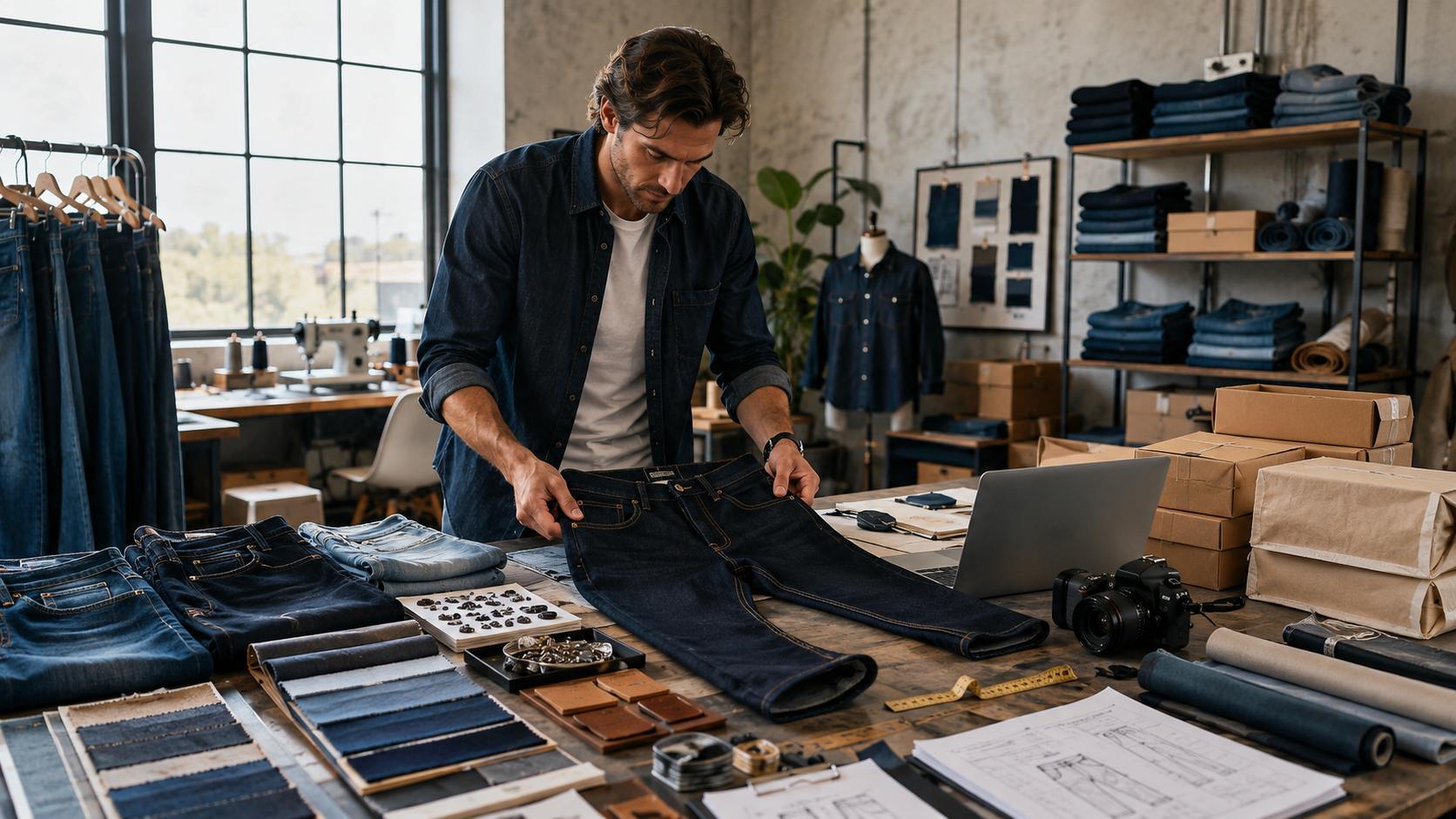
Yes, jeans can be worth investing in when the product has clear differentiation. Customers may pay more for jeans if they understand the value: better fit, stronger denim, good stretch recovery, durable seams, clean wash, custom labels, and long-term wear.
But price alone does not create value. A startup should invest in the right sample and product development before investing in a large bulk order. A cheaper jean that customers return is more expensive than a slightly higher-cost jean that customers reorder.
How much does it cost to start a jeans business?
Startup cost depends on complexity. A basic private label jean costs less to develop than a fully custom stacked jean with special wash, embroidery, logo rivets, leather patch, and custom packaging. Costs may include design, tech pack, sample development, fabric sourcing, wash testing, trims, labels, photos, website, ads, logistics, and returns.
The mistake many startups make is budgeting only for production. In denim, sampling and correction are part of the real cost.
How many jeans should a startup order first?
A startup should order enough to test demand, not enough to fill a warehouse. Small-batch production helps brands learn which size, wash, and fit customers actually buy. DiZNEW’s MOQ starting from 30 pieces per design is useful because it allows startups to test custom denim without taking large inventory risk.
Dive Deeper
Inventory is one of the biggest risks in fashion. If a startup orders too many jeans in the wrong fit or wash, cash becomes trapped in dead stock. Discounts may recover some money, but they can also damage brand value. In denim, this risk is higher because jeans have more size variation than simpler products.
A smart startup can reduce risk by building a “test, improve, scale” model. First, choose a focused niche. Second, create a strong sample. Third, produce a small batch. Fourth, collect fit feedback, reviews, return reasons, and customer photos. Fifth, reorder only what works.
Private label and fully custom jeans both have value. Private label is faster when the brand wants selected customization, such as labels, patches, buttons, wash, or packaging. Fully custom jeans are better when the brand needs a unique fit, special pattern, original wash, or deeper brand identity. The right choice depends on budget, timeline, and positioning.
For startups, the safest first collection is usually small and clear: one core fit, one signature wash, one strong brand detail, and one upsell product. For example, baggy jeans plus denim shorts, or straight jeans plus a denim jacket. DiZNEW can support both small test batches and larger orders up to 10,000 pieces when the style proves successful.
What Denim Niche Should a Startup Choose to Make Jeans Easier to Sell?
A startup should choose a denim niche based on customer demand, brand identity, price point, and sales channel. Strong niches include plus size jeans, baggy jeans, stacked jeans, straight jeans, selvedge jeans, business casual denim, custom washed jeans, denim shorts, denim jackets, and influencer-led denim drops. A focused niche is easier to market than a broad collection.
What type of jeans are best for a startup brand?
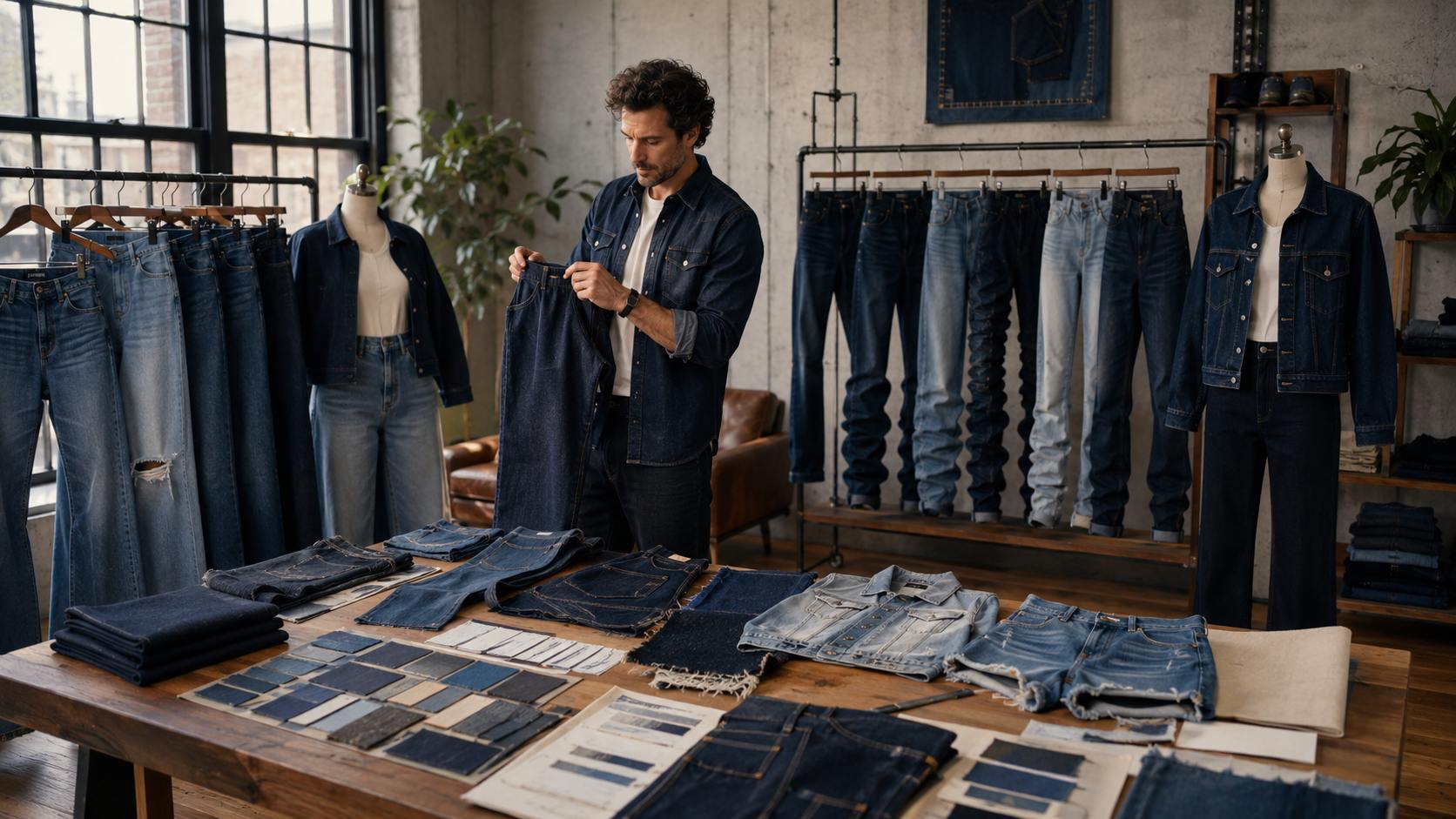
The best type depends on the customer. Baggy jeans and stacked jeans are strong for streetwear, TikTok shops, and influencer-led brands. Straight jeans are safer for everyday boutiques because they are versatile and easier to style. Selvedge or dark wash straight jeans can work for premium customers. Plus size jeans can be powerful when the brand solves real fit problems.
Is plus size denim a good niche for startups?
Yes. Plus size denim can be a strong niche because many customers still struggle with waist gaps, tight thighs, poor rise balance, and weak stretch recovery. However, plus size jeans require professional grading and real fit testing. Simply enlarging a smaller pattern is not enough.
Should a denim startup follow trends or build timeless products?
A startup usually needs both. One reliable core style creates repeat sales. One trend-driven style creates attention. For example, a brand could sell timeless dark wash straight jeans and also launch baggy cargo jeans or stacked jeans as a limited drop.
Dive Deeper
Choosing a denim niche is really choosing a customer. A startup that says “we sell jeans for everyone” usually has weak positioning. A startup that says “we make better-fitting plus size denim for boutique customers” or “we make custom stacked jeans for streetwear brands” is easier to understand.
Trends can help a startup get attention, but trends alone are risky. Baggy jeans may be popular, but not every baggy jean sells. The product still needs the right fabric, rise, inseam, wash, pocket placement, and waistband support. Straight jeans may be timeless, but they still need a reason to stand out: better fit, better denim, cleaner wash, or stronger brand story.
Business casual denim is another useful angle. Many customers want jeans that are comfortable but still polished enough for modern offices. That creates opportunities for dark wash straight jeans, black jeans, non-distressed denim, premium slim-straight jeans, and structured selvedge-style jeans.
The best niche should match the brand’s channel. TikTok and influencer shops may sell bold, visual styles like stacked jeans, baggy jeans, and distressed denim. Boutique stores may prefer wearable straight jeans, plus size denim, and matching denim sets. Premium brands may focus on selvedge denim, darker washes, and clean construction.
DiZNEW can help startups develop products for these niches instead of forcing every brand into one generic wholesale pattern.
Can Jeans Be Considered Business Professional or Business Casual?
Jeans are usually not considered traditional business professional clothing, but they can work in many business casual or smart casual settings when clean, dark, well-fitted, non-distressed, and styled with polished pieces. Workplace acceptance depends on company dress code, industry, country, role, and styling. This creates opportunity for office-friendly denim products.
Can jeans be considered business professional?
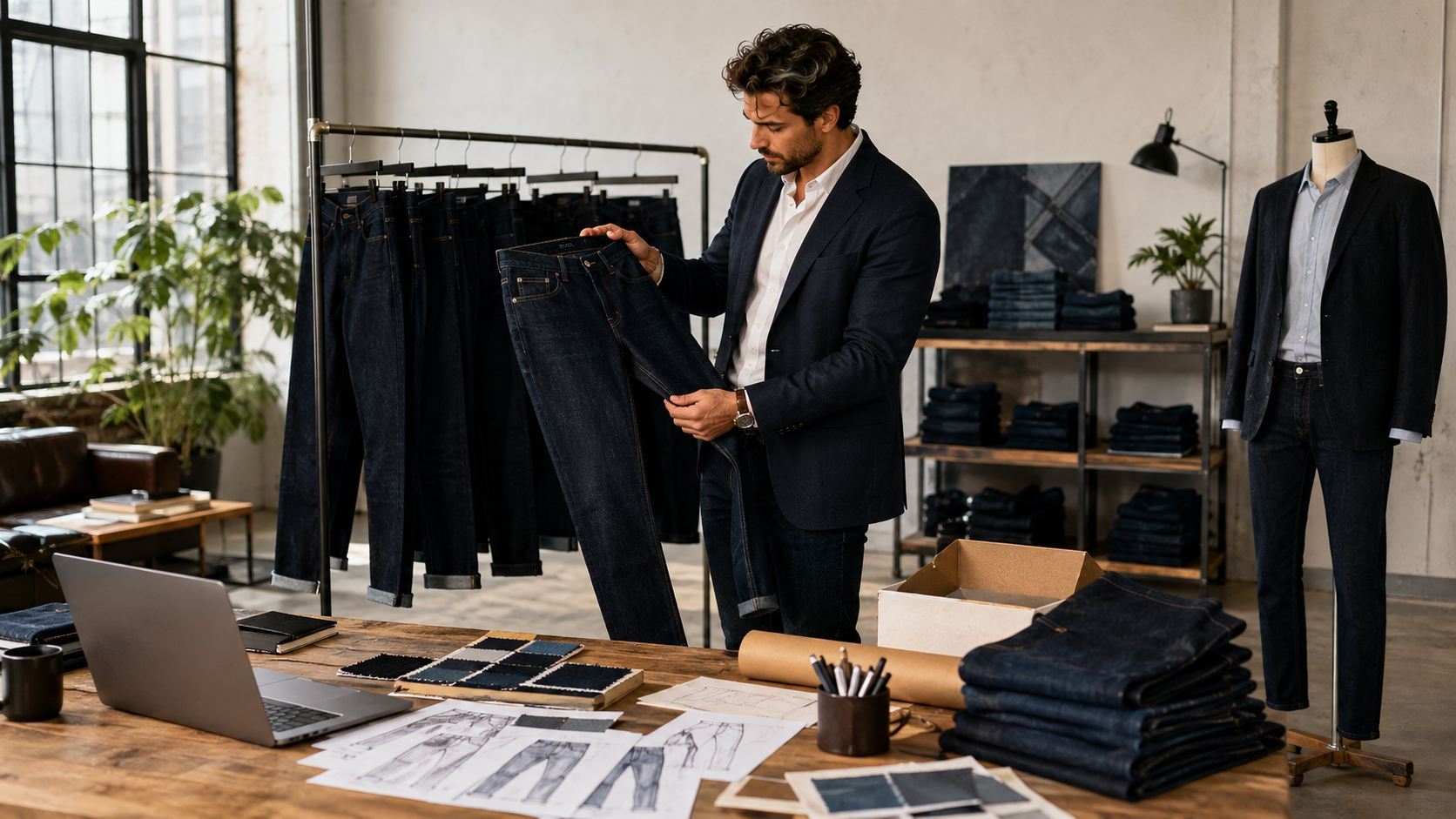
In traditional business professional settings, jeans are usually not the standard. Business professional often means suits, dress trousers, formal shirts, blazers, and polished shoes. Indeed notes that business formal is recommended for interviews, professional events, and client presentations, while business casual depends on workplace expectations.
However, jeans can work in business casual offices. Glamour’s business casual denim guidance describes jeans as part of professional dress when styled with polished workwear pieces such as blazers, dress shirts, and button-downs.
Why are jeans not considered professional in some workplaces?
Jeans are not considered professional in some workplaces because they come from workwear and casualwear traditions. Distressed jeans, ripped jeans, baggy streetwear jeans, low-rise jeans, and heavily faded jeans may look too relaxed for formal settings.
That does not mean all jeans are unprofessional. It means the wash, fit, and styling must match the occasion.
What jeans work best for business casual customers?
Good business casual jeans usually have:
Dark wash or black denim
Straight or slim-straight fit
No distressing
Clean stitching
Proper inseam
Structured fabric
Minimal hardware
Good shape retention
Comfortable but polished fit
Dive Deeper
Business casual denim is a useful startup niche because it connects comfort with polish. Many modern customers do not want stiff office trousers every day, but they still want to look put together. This creates a product gap: jeans that feel like denim but present like a clean wardrobe essential.
For startups, this niche requires discipline. A business casual jean should not be too distressed, too baggy, too low-rise, too flashy, or too thin. The value is in the details: dark wash, clean fit, stable waistband, good fabric recovery, minimal trims, and polished product photos.
This is different from streetwear denim, where bold washes, oversized pockets, stacked legs, and patches may be selling points. Neither direction is wrong. They simply serve different customers.
A startup could build a collection around “office-friendly denim” with dark straight jeans, black slim-straight jeans, and a clean denim jacket. Product pages could show styling with shirts, blazers, loafers, boots, and simple knitwear. That helps customers understand when and how to wear the product.
DiZNEW can help brands develop this category through custom fabric weight, dark wash control, fit adjustment, waistband support, pocket placement, trims, and private label packaging. For business casual denim, the goal is not loud design. The goal is confidence, comfort, and repeat wear.
Why Should a Jeans Startup Work With a Specialized Denim Manufacturer Like DiZNEW?
A jeans startup should work with a specialized denim manufacturer because denim requires technical knowledge in fabric, fit, shrinkage, wash, pattern balance, seams, rivets, buttons, pockets, waistband support, and quality inspection. The right factory helps reduce risk, improve samples, control quality, support low MOQ testing, and scale successful products.
Why is choosing the right jeans manufacturer important?
The manufacturer affects nearly everything: sample success, fabric quality, fit, wash, MOQ, delivery, and customer reviews. A general apparel supplier may handle simple garments, but jeans require denim-specific experience. Poor manufacturing can lead to high returns, bad reviews, and lost startup cash.
What should startups ask a jeans manufacturer?
Startups should ask:
What is your MOQ?
Can you develop from sketches, photos, AI images, samples, or tech packs?
What fabrics and washes can you source?
Can you customize labels, buttons, rivets, leather patches, hang tags, and packaging?
Can you handle plus size grading?
How do you inspect quality?
Can you support both small orders and large production?
How can DiZNEW help startups launch private label jeans?
DiZNEW can help startups create OEM/ODM jeans under their own logo. Custom options include fabric, wash, fit, waistband, pocket design, buttons, rivets, patches, labels, hang tags, and packaging. DiZNEW can produce plus size jeans, baggy jeans, stacked jeans, straight jeans, selvedge jeans, skinny jeans, jogger jeans, denim jackets, denim shorts, and denim shirts.
Dive Deeper
A jean business can be good for a startup, but only when the startup treats denim seriously. The product must be planned, sampled, tested, improved, and positioned. A random wholesale jean with a logo label is rarely enough to build a strong brand.
The right factory gives a startup more than production capacity. It gives technical feedback. If the rise is wrong, the factory can help adjust it. If the wash shrinks too much, the factory can test it. If the thigh is too tight, the pattern can be changed. If the brand wants a high-end look, trims and packaging can be upgraded.
DiZNEW is a China-based denim R&D, manufacturing, and sales factory with more than 20 years of experience. We mainly serve U.S. small and medium buyers, high-end brand clients, denim designers, online boutique owners, and influencer-led shops that need custom or OEM/ODM denim products under their own logo.
With MOQ starting from 30 pieces per design and capacity for larger orders up to 10,000 pieces, DiZNEW gives startups a flexible path: start small, test the market, improve the product, and scale successful jeans. To develop custom jeans, brands can send a sketch, reference photo, physical sample, AI image, or tech pack.
If you are ready to launch a profitable, customer-focused denim brand, contact DiZNEW today to request a quote, develop your first sample, and start building jeans your customers will actually want to buy.
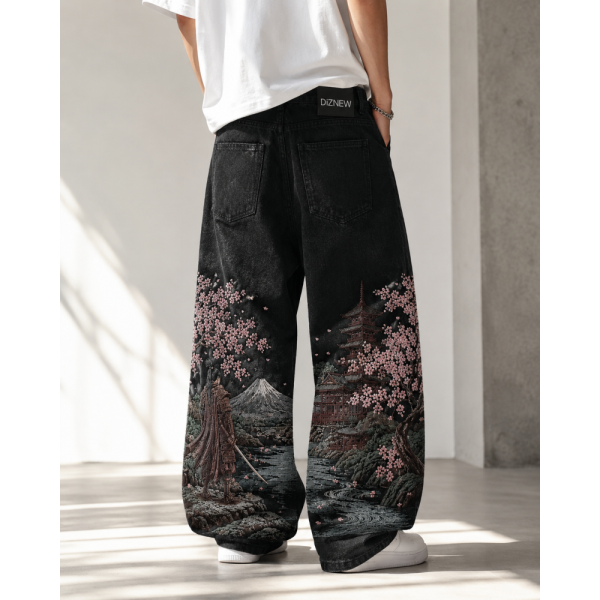
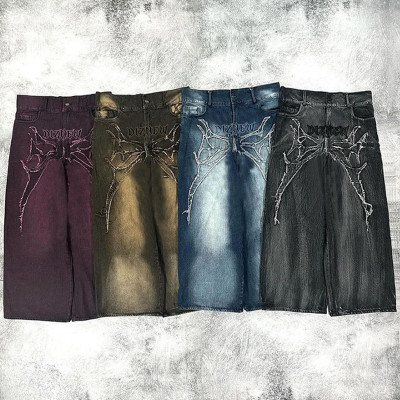
Premium wide-leg denim jeans featuring a vintage washed black finish, detailed Japanese landscape artwork, embroidery-style decoration, and custom brand label options. Designed for streetwear brands, designer labels, and private label collections looking for statement denim with strong visual storytelling.
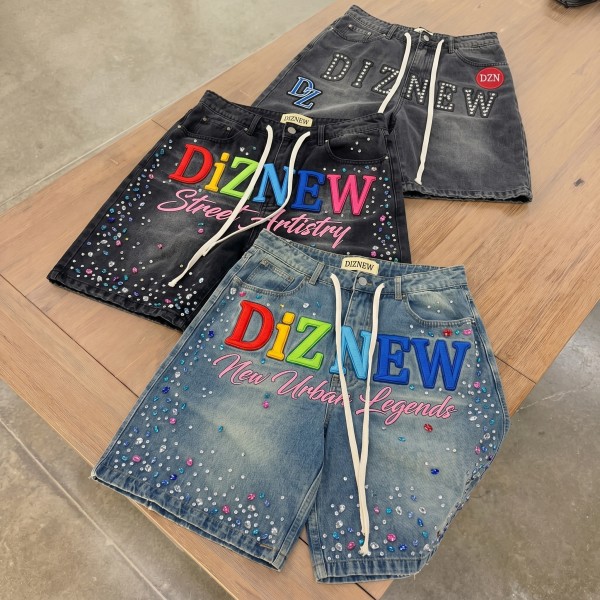
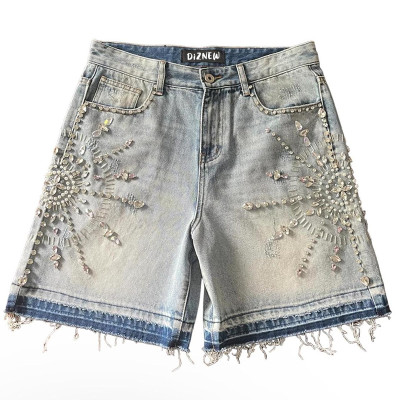
Custom Rhinestone Logo Denim Shorts: Wholesale supply direct. We manufacture premium embroidered baggy jean shorts for brands.
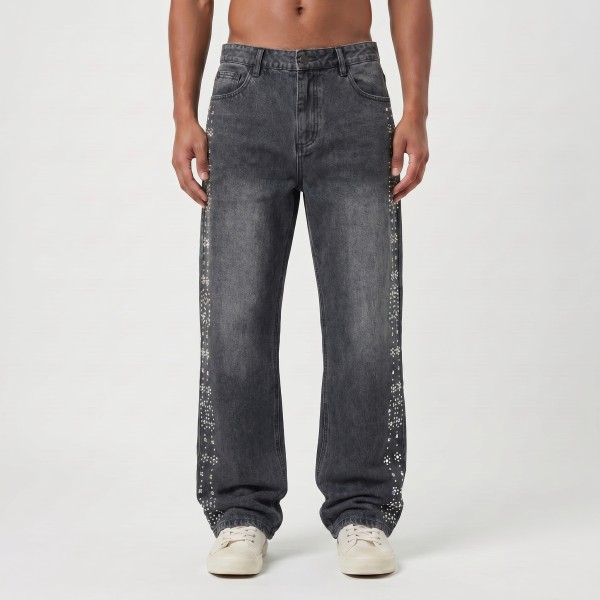
Discover premium DiZNEW denim jeans with decorative studs for a sparkling, stylish look. Order today!
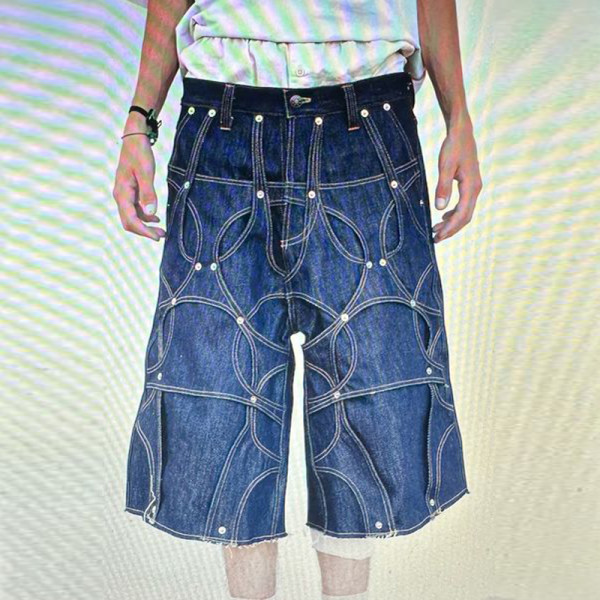
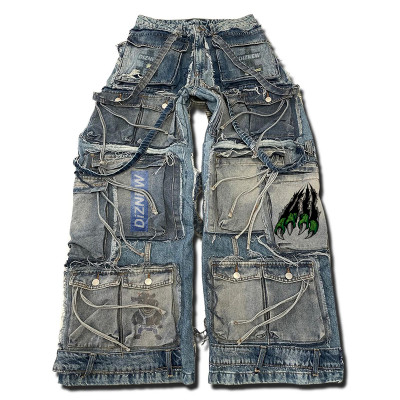
These designer denim shorts for men feature intricate decorative stitching and rivet details, perfect for streetwear fashion. The wide-leg silhouette adds a bold look, ideal for trendsetters.