Is Newport Jeans a Good Brand?
Buying jeans looks simple until you actually start comparing brands. One pair feels soft but loses shape after two washes. Another looks great online but fits strangely around the thigh. A third has the perfect wash, but the stitching, zipper, or pocket construction feels cheap. That is why many shoppers search questions like “Is Newport jeans a good brand?”, “Is Newport a luxury brand?”
“What are the highest quality jeans brands?”, and “What are the big 3 jeans brands?” They are not just looking for a yes-or-no answer. They want to know whether Newport is worth their money, how it compares with famous denim names, and whether there are better options for everyday wear, boutique resale, or private-label denim development.
Newport Jeans can be a reasonable budget denim choice for casual daily wear, especially when buyers want affordable skinny, stretch, or basic jeans. However, Newport is generally not positioned as a luxury or premium denim brand. For buyers who care about advanced washes, custom fit, private labels, high-end fabrics, or long-term brand building, custom denim manufacturing is usually a stronger option.
A normal shopper may judge Newport by price and comfort, but a denim professional looks deeper. We look at fabric weight, stretch recovery, seam strength, wash stability, pattern balance, trims, size consistency, and whether the product can support a real fashion business. So instead of giving a quick opinion, let’s walk through Newport jeans like a denim buyer, a boutique owner, and a manufacturer would.
What Is Newport Jeans, and Is It a Real Denim Brand?
Newport Jeans appears mainly as an affordable denim label sold through online marketplaces, especially in casual men’s and women’s jeans categories. It is a real commercial jeans name, but it is not widely known as a global heritage, luxury, or premium denim brand. Buyers should judge Newport as a value-focused denim option rather than compare it directly with high-end selvedge or designer jeans.
What Is the History of Newport Jeans?
The history of Newport jeans is not as well documented as Levi’s, Wrangler, Lee, Diesel, G-Star RAW, or Japanese selvedge labels. Public marketplace listings show Newport jeans available in online retail environments, with products such as stretchable jeans, distressed jeans, skinny fits, and casual denim styles. Myntra, for example, lists Newport jeans for men and women and describes them in a practical shopping context rather than as a luxury or heritage denim house.
That matters because denim history is often part of brand value. Levi’s can point to 1873 and the birth of riveted blue jeans through Levi Strauss and Jacob Davis. Wrangler can point to its Western wear roots and 1947 cowboy jeans identity. Lee can point to a long workwear-to-fashion journey dating back to 1889. Newport, by comparison, does not appear to have the same globally recognized archive, manufacturing mythology, or cultural influence.
This does not automatically make Newport “bad.” Many affordable jeans brands do not have legendary histories, yet they still serve a useful purpose. They help customers buy wearable jeans at accessible prices. The issue is expectation. If a buyer expects Newport to behave like a premium Japanese selvedge brand, they may be disappointed. If they expect a basic pair for daily outfits, the value equation becomes more reasonable.
Is Newport a Recognized Denim Brand?
Newport is recognizable in certain online shopping contexts, but it is not a top-tier global denim name. On marketplaces such as Flipkart, Newport-related jeans listings appear in low-price ranges alongside other budget denim products. Some listings show heavy discounts and prices far below premium denim categories, which supports the view that Newport is positioned toward affordability rather than luxury craftsmanship.
Recognition also depends on geography. A brand may be familiar to buyers in one country or one e-commerce channel but almost unknown in another market. For example, American boutique owners, high-end streetwear brands, and denim designers may be more familiar with Levi’s, Wrangler, Lee, AG Jeans, 7 For All Mankind, Evisu, Momotaro, Iron Heart, or Naked & Famous than Newport.
For customers, this means Newport may be fine if the goal is simply to buy jeans. But for fashion entrepreneurs, brand recognition matters differently. If you run an online boutique, your customer is not only buying fabric; they are buying identity. The jeans need a fit story, a wash story, a lifestyle story, and maybe even a limited-edition or custom-label story. In that context, a standard off-the-shelf budget brand may not create enough differentiation.
Is Newport a Luxury Brand?
No, Newport should not be considered a luxury denim brand based on its visible market positioning. Luxury denim usually involves premium fabrics, advanced finishing, consistent fit engineering, higher-grade trims, brand storytelling, controlled distribution, and often a much higher retail price. Newport’s marketplace presence suggests a more affordable, mass-market jeans option.
Luxury denim is not only about price. It is about the whole product system. A luxury or premium pair of jeans may use Japanese selvedge denim, long-staple cotton, rope dyeing, custom hardware, chain-stitch hems, reinforced bartacks, hand-finished washes, laser distressing, ozone washing, or special resin effects. It may go through multiple rounds of sample correction before bulk production. The packaging, labeling, and brand presentation also support a higher perceived value.
Newport, from the public information available, seems closer to a practical jeans purchase than a luxury fashion investment. That can be a strength for budget shoppers, but it also creates a ceiling. If your target customer is looking for statement denim, designer-level fit, stacked jeans, baggy streetwear jeans, selvedge denim, custom plus-size jeans, or private-label denim with your own logo, Newport is probably not the most strategic reference point.
How Should Buyers Think About “Good” in Denim?
The word “good” is tricky in the jeans industry. A $20 pair of jeans and a $250 pair of jeans are not playing the same game. The $20 pair may be “good” if it fits decently, survives regular wear, and looks clean with sneakers and a T-shirt. The $250 pair may be judged by fabric origin, construction details, wash complexity, fading potential, and brand prestige.
For everyday consumers, “good” often means comfortable, affordable, easy to wash, and easy to style. For boutique owners, “good” means something else: sell-through rate, low return rate, reliable sizing, customer reviews, repeat orders, and enough uniqueness to stand out in a crowded market. For designers, “good” may mean the manufacturer can translate a sketch into a real sample, adjust the rise and thigh shape, develop a special wash, and add private-label trims.
This is where Newport needs to be placed in the right category. It appears to be a budget-friendly jeans option, not a technical denim development partner and not a premium heritage label. That does not make it useless. It simply means the buyer should not expect everything from one brand.
A useful way to judge any jeans brand is to ask five questions:
| Evaluation Point | What to Check | Why It Matters |
| Fabric | Cotton content, stretch percentage, weight, hand feel | Determines comfort, durability, and shape retention |
Fit | Waist, rise, hip, thigh, knee, leg opening, inseam | Controls comfort and return rate |
| Construction | Seams, bartacks, zipper, button, pockets, belt loops | Shows whether the jeans can handle daily wear |
Wash | Color depth, fading, whiskers, distressing, shrinkage | Creates visual value and brand personality |
| Brand Position | Budget, mid-range, premium, luxury, custom | Helps buyers set realistic expectations |
A brand can be good in one category and weak in another. Newport may satisfy the first-time budget buyer. But if your goal is to build a recognizable denim product line, you need to think beyond existing ready-made labels. You need product development, fit control, fabric choice, wash design, and branding freedom.
Are Newport Jeans Good Quality for the Price?
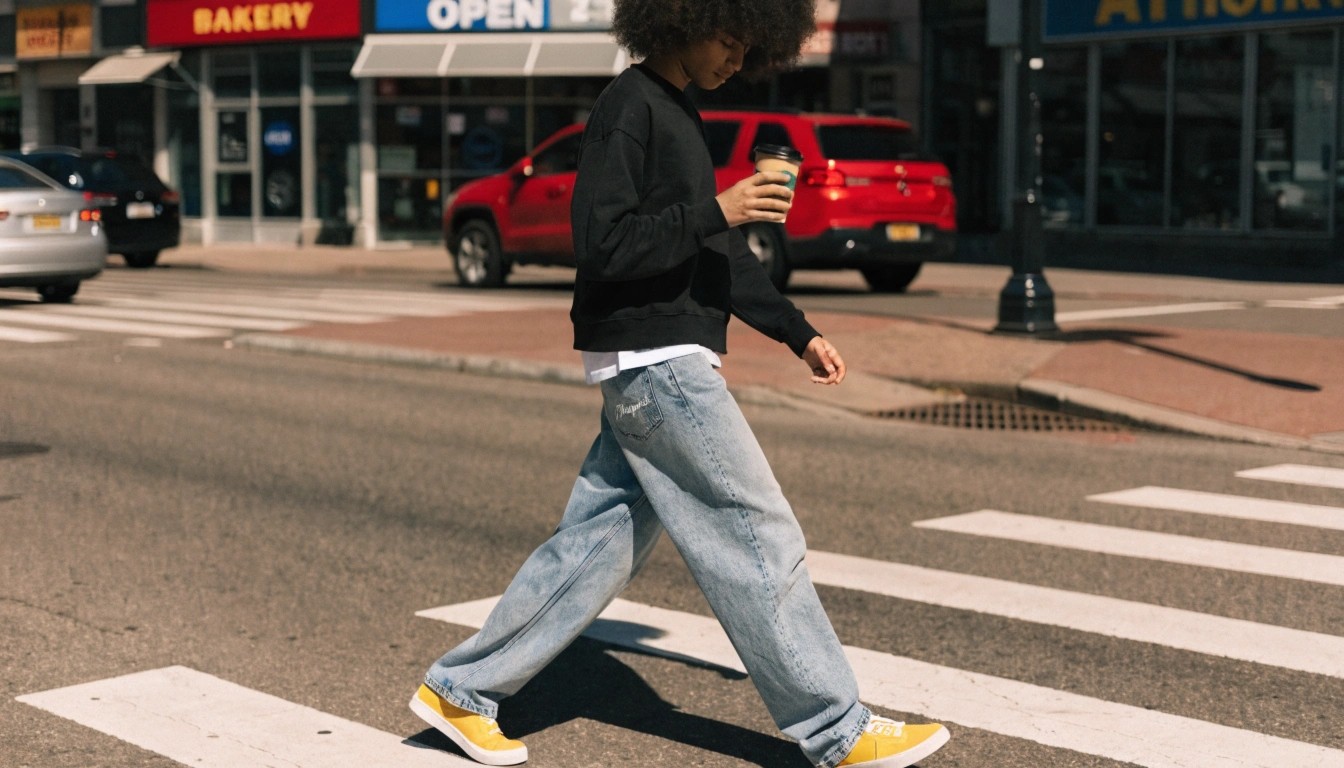
Newport jeans may offer acceptable quality for budget-conscious shoppers, especially for casual wear and basic fashion use. However, because the brand appears in affordable online retail channels, buyers should not expect premium denim fabric, luxury finishing, or highly engineered fits. The best way to judge Newport is by price-to-use value rather than luxury-level craftsmanship.
What Materials Are Usually Used in Newport Jeans?
Most budget jeans on the market use cotton blended with elastane, polyester, or other stretch fibers. The goal is comfort, lower cost, and easier fitting across different body types. Newport jeans listings commonly emphasize casual denim styles such as stretchable jeans and distressed jeans, which suggests the brand is designed for everyday fashion shoppers rather than raw denim collectors.
Material is one of the first things denim professionals check. A basic stretch denim may feel comfortable in the fitting room, but the real test comes after repeated wearing and washing. Does the knee bag out? Does the waistband stretch too much? Does the fabric twist after laundry? Does the color fade unevenly? Does the fabric feel thin after a few months?
For budget jeans, these risks are normal. Lower-cost denim often uses lighter fabric, simpler finishing, and less expensive trims. Again, this does not mean the jeans are poor; it means they are built for a certain price range.
How Good Are Newport Jeans in Stitching, Wash, and Construction?
Construction quality is where the difference between budget jeans and premium jeans becomes more visible. Look closely at the waistband, crotch seam, side seam, pocket opening, fly zipper, belt loops, and hem. A stronger pair of jeans usually has clean seam tension, dense bartacks, secure rivets, smooth zipper movement, and symmetrical pocket placement.
For Newport, public marketplace information is not detailed enough to confirm factory-level specifications such as stitch count, fabric weight, shrinkage rate, or wash process. That is why buyers should inspect real product photos and customer reviews carefully. On budget marketplace listings, prices can be attractive, but the quality may vary by style, seller, batch, or production run.
A practical tip: if you buy Newport jeans, do not only judge the front photo. Zoom into the pockets, hem, button, zipper, and back yoke. Check whether the wash looks natural or flat. Read reviews that mention fit after washing, not just first impressions.
Are Newport Jeans Worth Buying for Daily Wear?
For casual daily wear, Newport jeans can be worth considering if the price is low and the fit works for your body. They may be suitable for students, office casual outfits, weekend looks, or shoppers who need affordable jeans without expecting designer-level construction.
However, “daily wear” has different meanings. If someone wears jeans once a week, a budget pair may last long enough. If someone wears jeans five days a week, rides a motorcycle, works in a physical environment, or needs the jeans to hold shape through many washes, quality expectations should be higher.
For business buyers, daily wear also means customer satisfaction. If you are buying jeans to resell under your boutique, inconsistent sizing can lead to returns. Poor stretch recovery can lead to bad reviews. Weak stitching can hurt your brand reputation. That is why many serious denim businesses eventually move from buying existing generic jeans to developing custom jeans with a manufacturer.
Price Is Not the Same as Value
A cheap pair of jeans is not always a good deal, and an expensive pair is not always worth the money. The better question is: what value does the product give for its intended use?
For example, imagine two jeans. Pair A costs $15 and lasts 20 wears before it loses shape. Pair B costs $60 and lasts 120 wears while keeping its fit. Pair A is cheaper at checkout, but Pair B may be better value per wear. This simple logic is important for both consumers and boutique sellers.
In denim manufacturing, price is influenced by many hidden factors:
| Cost Factor | Budget Jeans | Premium or Custom Jeans |
| Fabric | Basic cotton or stretch denim | Higher-grade cotton, selvedge, special weave, heavier weight |
| Pattern | Standard block pattern | Fit-developed pattern by waist, hip, thigh, rise, and leg shape |
Washing | Simple enzyme or basic rinse | Stone wash, acid wash, whiskers, hand sanding, laser, ozone, resin |
Trims | Generic buttons, rivets, labels | Custom logo hardware, leather patch, woven label, hangtag |
QC | Basic inspection | More detailed measurement, shrinkage, color, and seam checking |
| Brand Value | Low differentiation | Strong identity, better storytelling, higher retail price |
This is why Newport can be “good for the price” but still not the best choice for a denim business. A consumer may be happy because the jeans are affordable. A boutique owner may not be happy because the product lacks uniqueness and may compete directly with cheaper marketplace sellers.
If your goal is to build a denim line, the jeans should not only be wearable. They should be memorable. The customer should feel, “I can only get this wash, this fit, this stacked leg, this embroidery, this pocket shape, or this logo detail from this brand.” That is hard to achieve with an existing budget brand.
A custom manufacturer like DiZNEW can help solve that problem. Instead of accepting a fixed product, you can develop the jeans around your customer. Want plus-size jeans with a better hip-to-waist ratio? Want baggy jeans with a streetwear silhouette? Want stacked jeans with a long inseam and controlled leg opening? Want selvedge jeans with a premium story? Those decisions create value beyond the basic price tag.
How Do Newport Jeans Fit: Slim, Skinny, Straight, or Relaxed?
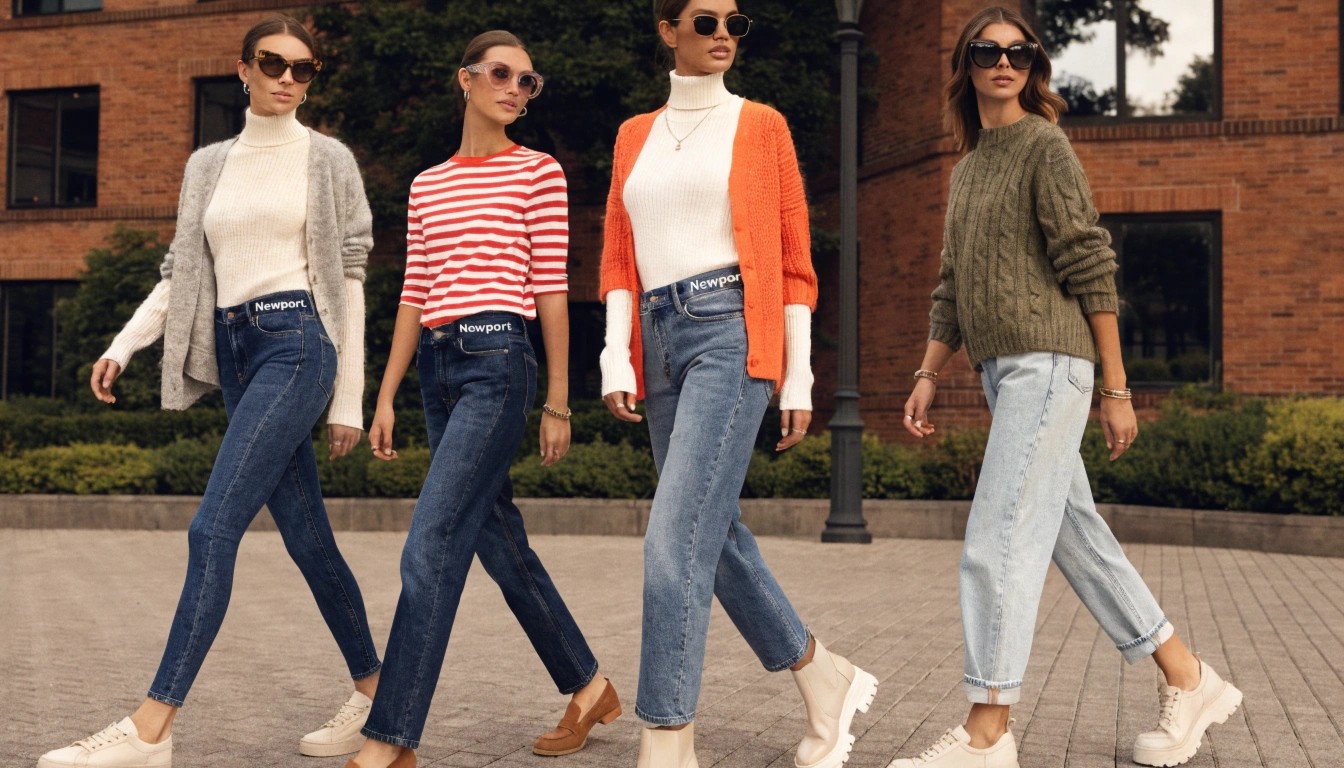
Newport jeans appear to be available in common commercial fits such as skinny, slim, straight, and casual stretch styles, depending on the marketplace and product listing. Buyers should check waist, rise, thigh, inseam, and fabric stretch before ordering. Fit may vary by style, so Newport should not be assumed to fit the same as premium or heritage denim brands.
What Fit Options Are Commonly Available in Newport Jeans?
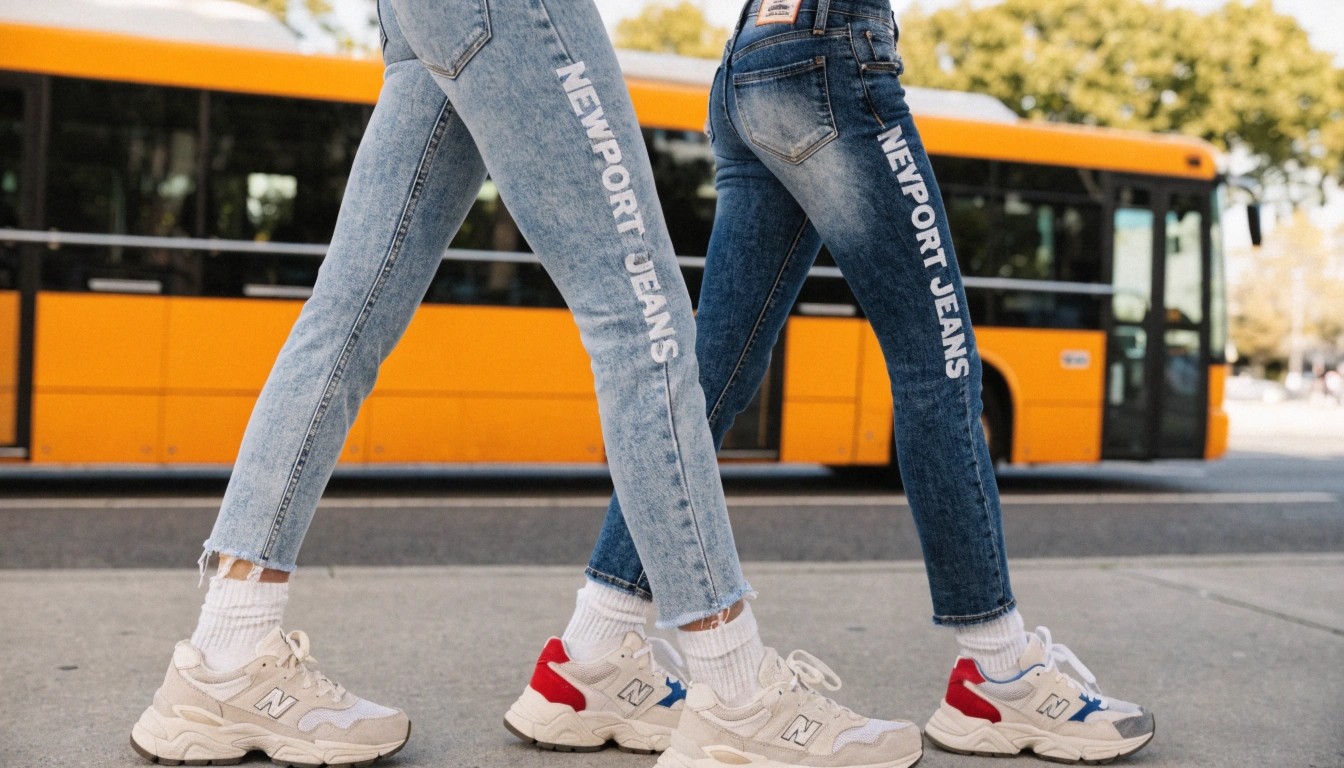
Common Newport listings include casual fashion fits such as skinny, slim, stretch, and distressed jeans. Flipkart listings, for example, show Newport women’s skinny mid-rise jeans among other affordable denim options.
These fits are popular because they are easy to understand. Skinny jeans create a tight leg line. Slim jeans are fitted but less tight. Straight jeans keep a cleaner line from thigh to hem. Relaxed or loose jeans offer more room in the hip and thigh. In current fashion, baggy jeans, stacked jeans, wide-leg jeans, carpenter jeans, and vintage washes have become especially important for streetwear and boutique markets.
The important point is that fit names are not universal. One brand’s slim fit may feel like another brand’s skinny fit. A “mid-rise” can also vary by body shape. That is why professional denim buyers rely on measurement specs, not just fit labels.
Do Newport Jeans Run True to Size?
There is not enough consistent public technical data to say Newport jeans always run true to size. Like many marketplace denim brands, sizing may vary by style, fabric stretch, and production batch. Buyers should check the size chart and compare it with actual body measurements.
Here are the most important measurements:
| Measurement | Why It Matters |
Waist | Controls whether jeans sit securely or feel too tight |
Hip | Especially important for women’s jeans and plus-size jeans |
Front Rise | Affects comfort, belly coverage, and styling |
| Back Rise | Prevents pulling, gapping, or exposure when sitting |
| Thigh | Critical for athletic, curvy, relaxed, and baggy fits |
Knee | Controls leg shape and mobility |
Leg Opening | Decides whether the jeans look skinny, straight, bootcut, or stacked |
| Inseam | Determines length, stacking, or cropping |
If you are buying one pair for yourself, check reviews and size charts. If you are developing a product for your own brand, never rely on generic size names like S, M, L, 30, 32, or 34. You need a full spec sheet.
Are Newport Jeans Comfortable Compared with Premium Denim?
Newport may be comfortable if the fabric has stretch and the cut suits the wearer. However, comfort in denim is not only about softness. Premium jeans may feel stiff at first but mold beautifully over time. A budget stretch jean may feel comfortable on day one but lose shape faster.
Comfort depends on three things: fabric, pattern, and finishing. Fabric decides softness and stretch. Pattern decides whether the jeans pull at the crotch, gap at the waist, or squeeze the thigh. Finishing decides whether the jeans feel broken-in or rough.
For customers who just want an easy pair of jeans, stretch Newport jeans may be comfortable enough. For boutique owners or designers, comfort must be engineered. You may need different fits for plus-size customers, petite customers, tall customers, streetwear customers, or Western-inspired customers.
Fit Is the Real Reason People Love or Return Jeans
In the denim business, fit is everything. A customer may love the wash, the price, and the brand photo, but if the jeans pinch the waist or flatten the hip in a bad way, they go back. This is why jeans have one of the most sensitive fit requirements in fashion.
Many people think denim design starts with color. Actually, it starts with the body. A skinny jean needs stretch recovery. A straight jean needs clean balance from hip to hem. A baggy jean needs room without looking shapeless. A stacked jean needs extra inseam, but also the right leg opening so the fabric stacks instead of swallowing the shoe. Plus-size jeans need careful waist-to-hip grading, otherwise the waistband gaps or the thigh becomes too tight.
This is where ready-made brands often struggle. A budget brand may use a standard pattern to fit the largest possible number of customers. That keeps production simple, but it does not create a perfect fit for specific customer groups.
For a boutique owner, this is a big opportunity. Instead of copying what everyone else sells, you can build a fit identity. For example:
| Target Customer | Better Custom Fit Strategy |
| Online boutique shoppers | Trend-focused baggy, stacked, flare, or cargo denim |
Plus-size customers | Better waist-to-hip ratio, higher back rise, stronger stretch recovery |
Streetwear buyers | Longer inseams, wider thighs, special pocket shapes, heavy washes |
| Premium denim fans | Selvedge fabric, straight fit, raw or rinse wash |
Influencer brands | Statement washes, embroidery, rhinestones, patchwork, custom logo trims |
Newport jeans may answer the basic fit question for casual shoppers. But if you are building a denim business, the better question is not “Does Newport fit?” It is “What fit does my customer wish existed but cannot easily find?”
That is the space where DiZNEW’s custom denim manufacturing becomes valuable. With over 20 years of denim R&D and manufacturing experience, DiZNEW can help turn a design sketch, reference photo, or fit idea into an actual sample. This is especially useful for designers, online boutique owners, and high-end private-label brands that want jeans with a more personal product identity.
Who Should Buy Newport Jeans—and Who Should Look for Something Better?
Newport jeans may suit budget-conscious shoppers who want basic, casual denim for everyday outfits. However, buyers who want premium quality, strong brand recognition, luxury positioning, unique washes, custom sizing, or private-label production should look beyond Newport. Designers, boutique owners, and online fashion brands are usually better served by custom denim development.
Who Is Newport Jeans Best For?
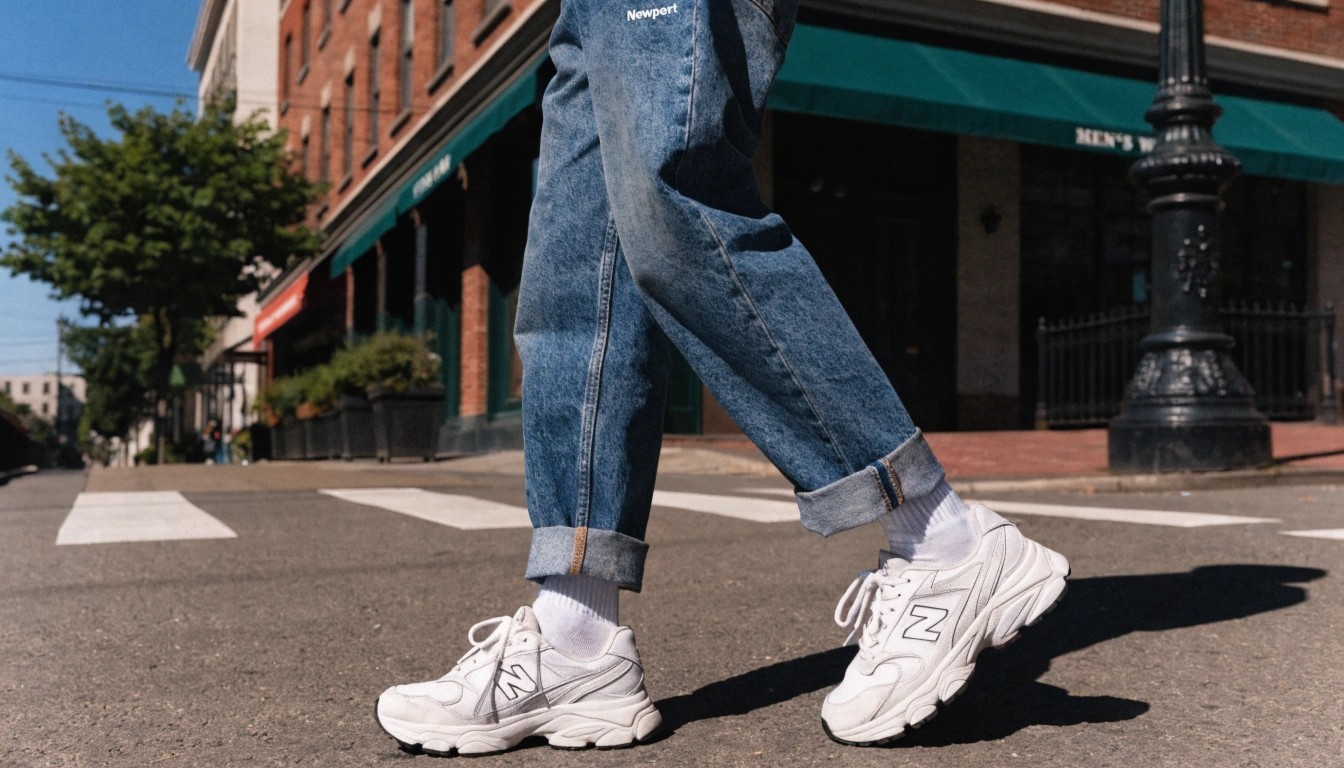
Newport is best for shoppers who care mainly about affordability, simple styling, and casual wear. If you need a pair of jeans for daily errands, school, relaxed weekends, or a low-cost wardrobe refresh, Newport may be worth checking.
It is also a possible choice for customers who do not want to spend heavily on denim trends that may change quickly. For example, someone may want to try skinny jeans, distressed jeans, or a certain wash without investing in premium denim.
However, Newport is probably not best for customers who want rare fabrics, artisan finishing, luxury branding, or strong resale value.
What Are the Big 3 Jeans Brands?
The “big 3” jeans brands are usually considered Levi’s, Wrangler, and Lee. These three American heritage brands shaped the global denim market through workwear, Western wear, and mainstream casual fashion.
Levi’s has one of the strongest historical claims in denim. Levi Strauss & Co. states that the first blue jean received its patent on May 20, 1873, through Levi Strauss and Jacob Davis. Wrangler traces its identity to 1947, when Blue Bell introduced Wrangler as a cowboy-focused jeans line built for rodeo life. Lee’s official retail presence highlights the brand as popular since 1889, while Lee’s history also connects denim to workwear and later pop culture.
These brands matter because they created trust over generations. When people buy Levi’s 501, Wrangler Cowboy Cut, or Lee Riders-inspired styles, they are buying more than pants. They are buying a piece of denim culture.
What Are the Highest Quality Jeans Brands?
The highest quality jeans brands are often found in three groups: heritage American denim, Japanese selvedge denim, and premium designer denim. Japanese denim brands receive a lot of attention because of their fabric development, shuttle-loom selvedge, indigo dyeing, and craftsmanship. Publications such as Vogue have highlighted Japanese selvedge denim and brands connected to heritage craft, including Evisu and the “Osaka 5” tradition.
Examples of quality-focused denim brands often discussed by enthusiasts include Momotaro, Iron Heart, Samurai Jeans, Pure Blue Japan, Evisu, Studio D’Artisan, Japan Blue Jeans, The Flat Head, Oni Denim, and Fullcount. In the premium Western market, brands such as Levi’s Made & Crafted, RRL, Diesel, AG Jeans, 7 For All Mankind, Nudie Jeans, and G-Star RAW may also appear in quality discussions, depending on the buyer’s taste and budget.
But the “highest quality” jeans are not always the most famous jeans. A small custom production run made with excellent fabric, correct fit, and detailed quality control can outperform a big brand product for a specific customer group.
When Should Buyers Choose a Better Alternative Than Newport?
Choose a better alternative than Newport when you need one or more of the following:
| Buyer Need | Why Newport May Not Be Enough |
Luxury positioning | Newport is not widely positioned as a luxury denim brand |
Unique design | Ready-made jeans limit wash, fit, trim, and pattern choices |
Private label | You need your own logo, patch, label, hangtag, and packaging |
Better fit control | Generic sizing may not match your target customer |
| Bulk consistency | Business buyers need stable specs across repeated orders |
| Complex denim styles | Stacked, baggy, selvedge, patchwork, cargo, coated, or distressed styles need expert development |
For ordinary shoppers, this may not matter. For business buyers, it matters a lot. Your jeans represent your brand. If the fit is poor, customers do not blame the factory; they blame you. If the wash looks cheap, they do not blame the supplier; they leave a bad review on your store.
The Best Jeans Brand Depends on the Buyer’s Goal
A common mistake is asking, “What is the best jeans brand?” without asking, “Best for whom?”
A college student may want affordable stretch jeans. A motorcycle rider may want heavy-duty jeans. A luxury buyer may want rare Japanese selvedge. A boutique owner may want a trendy stacked jean that photographs well on Instagram. A designer may want a special silhouette that does not exist in the market yet.
Newport can be a reasonable answer for one type of buyer: someone looking for budget denim. Levi’s, Wrangler, and Lee may be better for someone who wants history and mainstream reliability. Japanese denim brands may be better for collectors and quality enthusiasts. But for a brand owner, the best answer may not be a finished brand at all. It may be a manufacturer.
Why? Because brand owners need control.
They need to control the fabric weight. They need to choose whether the denim is rigid, comfort stretch, super stretch, or selvedge. They need to decide whether the jeans should be high-rise, mid-rise, low-rise, skinny, baggy, straight, flare, stacked, cargo, carpenter, or jogger. They need to decide if the wash should be light blue, vintage black, dirty wash, acid wash, snow wash, enzyme wash, stone wash, whisker wash, or heavy distressed.
Most importantly, they need to control the story. A boutique selling “another basic pair of jeans” competes on price. A boutique selling “custom stacked denim developed for tall streetwear customers with extra inseam, logo hardware, and a vintage faded wash” competes on identity.
That is the difference between buying jeans and building a denim product.
For DiZNEW’s target customers—American small and medium buyers, high-end brand clients, designers, online boutique owners, and influencer stores—this distinction is important. They are not only asking whether Newport is good. They are asking what kind of denim product can help their own brand grow.
What Is the Best Alternative to Newport Jeans for Custom or Private Label Denim?
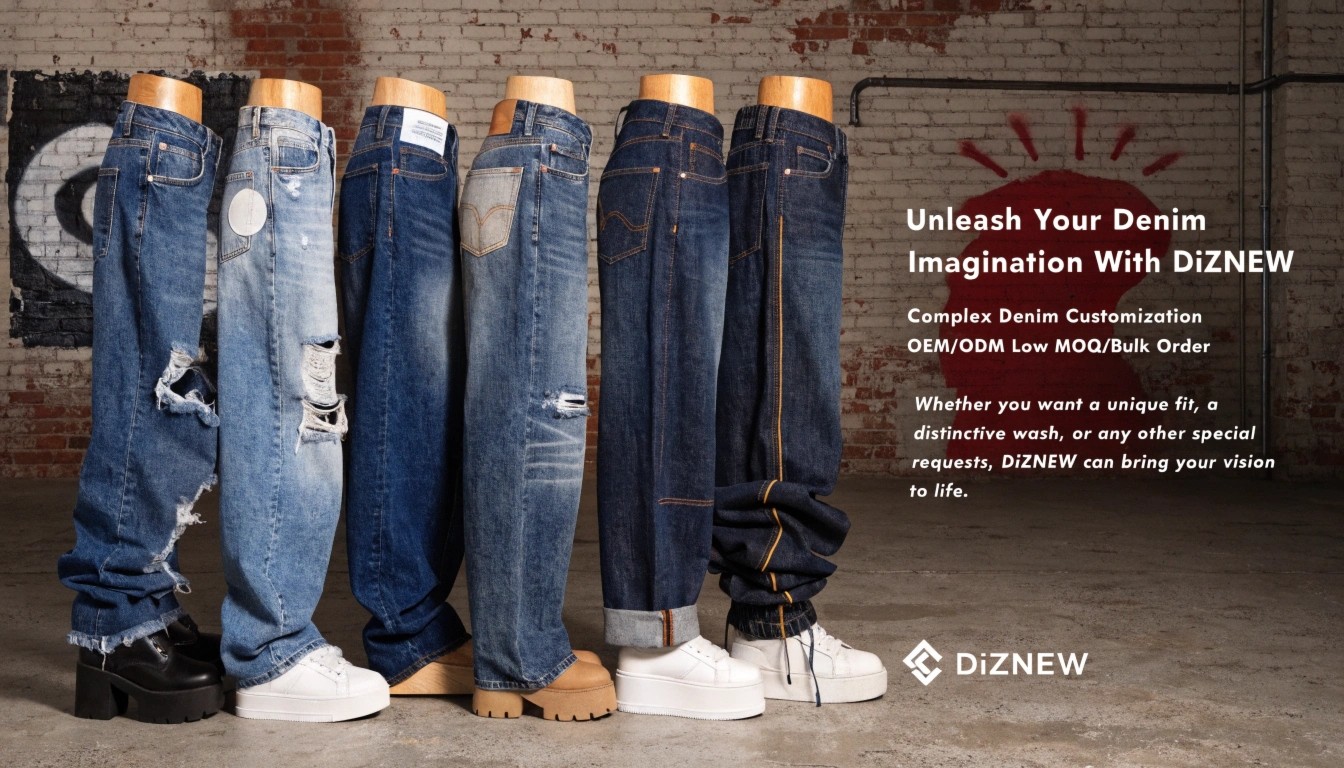
The best alternative to Newport jeans for business buyers is custom denim manufacturing. Instead of buying existing budget jeans, designers and boutique owners can create unique fits, washes, labels, trims, and packaging under their own brand. DiZNEW supports custom jeans development with low MOQ, bulk order capacity, OEM/ODM service, and complex denim customization.
Why Custom Denim Manufacturing Is Better for Designers and Boutique Brands
Custom denim manufacturing gives you control that ready-made brands cannot offer. If Newport sells a skinny jean in a certain wash, you either accept it or move on. With custom manufacturing, you can adjust the fabric, fit, wash, trims, logo, packaging, and size range.
For a designer, this is freedom. For a boutique owner, this is differentiation. For an influencer brand, this is content. A custom pair of jeans can become a product story: “We developed this stacked fit because our customers wanted longer inseams.” “We created this plus-size pattern because most jeans gap at the waist.” “We used this vintage wash because our audience loves 90s denim.” That type of story sells better than generic product descriptions.
Custom manufacturing also helps with customer loyalty. Once your audience loves your fit, they come back for new washes and colors. That is how denim brands grow.
What Custom Denim Styles Can Be Produced?
DiZNEW can support a wide range of denim categories, including:
| Product Category | Custom Options |
Plus size jeans | Better waist-hip ratio, stretch recovery, high rise, comfort pattern |
Baggy jeans | Streetwear shape, wide leg, relaxed thigh, cargo pockets |
Stacked jeans | Extra-long inseam, controlled leg opening, washed or distressed effects |
| Straight jeans | Classic daily fit, vintage wash, rigid or stretch denim |
Selvedge jeans | Premium fabric story, raw/rinse wash, heritage styling |
| Skinny jeans | Stretch denim, slim leg, clean or distressed finish |
Jogger jeans | Elastic waist/cuff, hybrid casual denim styling |
Denim jackets | Cropped, oversized, trucker, distressed, embroidered |
Denim shorts | Raw hem, Bermuda, high-rise, cargo, washed styles |
| Denim shirts | Western shirt, oversized shirt, lightweight denim |
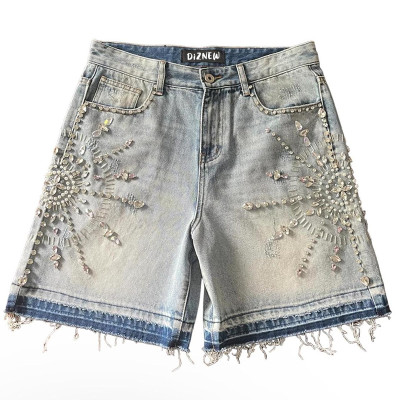
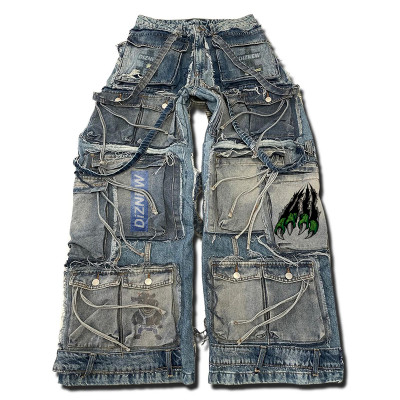
Complex denim customization is where an experienced factory becomes especially valuable. Distressing, patchwork, embroidery, rhinestones, special pocket construction, sanding, whiskers, resin creases, and multiple wash effects all require technical understanding. A small mistake can change the whole look.
How Can DiZNEW Help Build a Private Label Jeans Brand?
DiZNEW is a Chinese denim R&D, manufacturing, and sales factory with more than 20 years of experience. The company focuses on custom denim products and serves American small and medium buyers, high-end brand clients, denim designers, online boutique owners, and influencer-led online stores.
One major advantage is flexibility. DiZNEW can accept a low MOQ starting from 30 pieces, which is helpful for new brands testing the market. At the same time, the factory can also handle large-volume orders of 10,000 pieces, which supports growing brands that need stable bulk production.
DiZNEW also supports OEM and ODM services. That means customers can customize jeans with their own logo, labels, trims, and packaging, or work from design concepts and reference images to develop real physical products. For many boutique owners, this is the missing link between an idea and a sellable denim product.
Final Verdict: Is Newport Jeans a Good Brand or Should You Choose Custom Denim?
Newport jeans can be a good option if your goal is simple: affordable casual jeans for everyday use. But if your goal is to build a fashion brand, serve a specific customer group, or sell denim with better identity, custom denim is usually the smarter path.
Newport answers the question: “Can I buy a pair of jeans cheaply?”
Custom denim answers a bigger question: “Can I create jeans my customers cannot easily find anywhere else?”
That second question is where real brand value begins.
From Buying Jeans to Building a Denim Business
Let’s imagine two boutique owners.
The first boutique owner buys ready-made jeans from the market. The product is affordable, but many other sellers have similar jeans. The photos look familiar. The fit is generic. The customer compares prices and may buy from whoever is cheapest.
The second boutique owner develops a custom jean. She chooses a baggy fit with a longer inseam, a washed black color, custom logo hardware, a leather patch, and a size range built for her audience. She posts behind-the-scenes content: fabric selection, sample fitting, wash testing, packaging design. Her customers feel like they are part of the product story. When the jeans launch, the product feels exclusive.
That is the power of custom denim.
For small brands, custom production used to feel impossible because factories often required large MOQs. DiZNEW’s 30-piece MOQ makes testing easier. A boutique can start with a small batch, collect customer feedback, adjust the fit or wash, and then scale to larger orders. For established brands, DiZNEW’s ability to accept 10,000-piece orders makes it possible to grow without switching suppliers too early.
This matters because denim development is a long-term game. Your first sample may need adjustment. The thigh may need more room. The leg opening may need to be smaller for better stacking. The wash may need more contrast. The back pocket placement may need to lift the visual shape. These are normal steps in professional denim development.
A factory with deep denim experience can help you avoid common mistakes, such as:
| Common Denim Mistake | Better Custom Solution |
| Jeans look good in photos but fit badly | Build a proper measurement spec and sample correction process |
| Stretch jeans lose shape | Choose better stretch denim and test recovery |
Wash looks cheap or flat | Develop wash effect with sanding, whiskers, enzyme, stone, or other finishing |
Plus-size jeans gap at waist | Adjust rise, hip curve, waistband, and grading |
Stacked jeans look messy | Control inseam, knee, calf, and leg opening |
| Brand feels generic | Add custom logo, patch, buttons, rivets, labels, hangtags, and packaging |
This is why the best alternative to Newport is not always another retail brand. For business buyers, the best alternative is a denim development partner.
Should You Buy Newport Jeans or Create Your Own Denim Line?
Newport jeans can be a practical choice for budget-conscious shoppers who want simple casual denim. It is a real marketplace denim option, but it should not be confused with luxury denim, Japanese selvedge craftsmanship, or the historical power of the big 3 jeans brands—Levi’s, Wrangler, and Lee.
For everyday consumers, the decision is simple: check the price, read reviews, confirm the size chart, and decide whether the jeans match your expectations.
For designers, boutique owners, online stores, and high-end private-label brands, the decision is bigger. You are not just buying jeans. You are building a product your customers will judge, wear, photograph, review, and hopefully reorder. In that case, a generic jeans brand may not give you enough control.
DiZNEW can help you create custom denim products from idea to finished goods, including plus size jeans, baggy jeans, stacked jeans, straight jeans, selvedge jeans, skinny jeans, jogger jeans, denim jackets, denim shorts, and denim shirts. With more than 20 years of denim R&D and manufacturing experience, a 30-piece MOQ, capacity for 10,000-piece bulk orders, and strong experience in complex denim customization, DiZNEW is built for brands that want more than ordinary jeans.
Ready to develop your own jeans collection? Contact DiZNEW today to request a custom denim quote, share your design idea, and turn your sketch, reference photo, or brand concept into real denim products with your own logo.
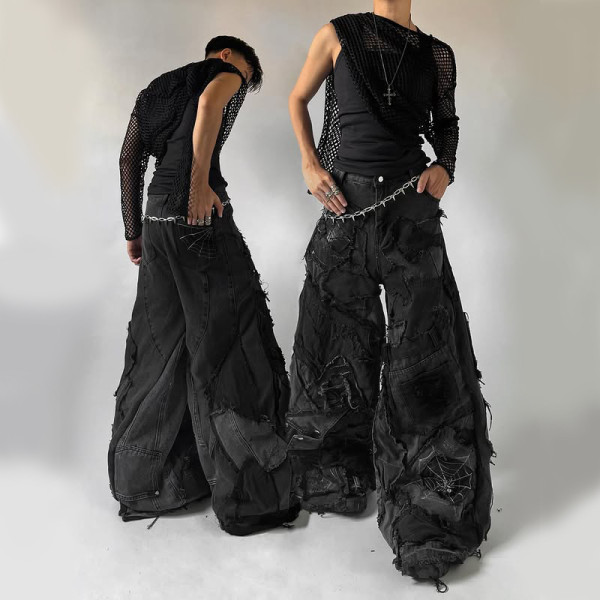
Wholesale Custom Black Wide Leg Jeans - Tailored Denim for Brands. Enjoy OEM/ODM services to elevate your design.
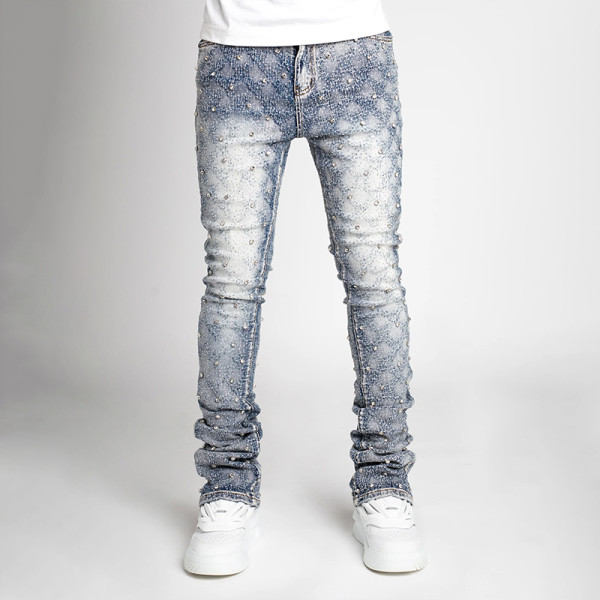
Stacked skinny jeans with all-over rhinestone detail and vintage wash. Built for high-end and boutique fashion labels.
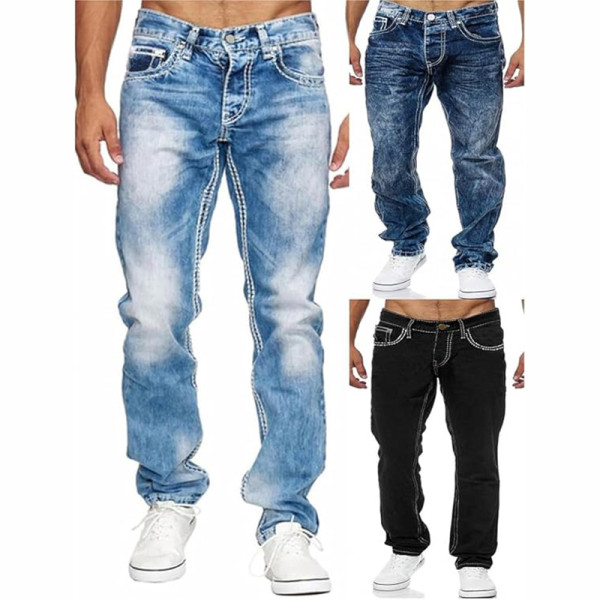
Classic straight jeans with bold contrast stitching in light blue, dark blue, and black — made for standout collections.
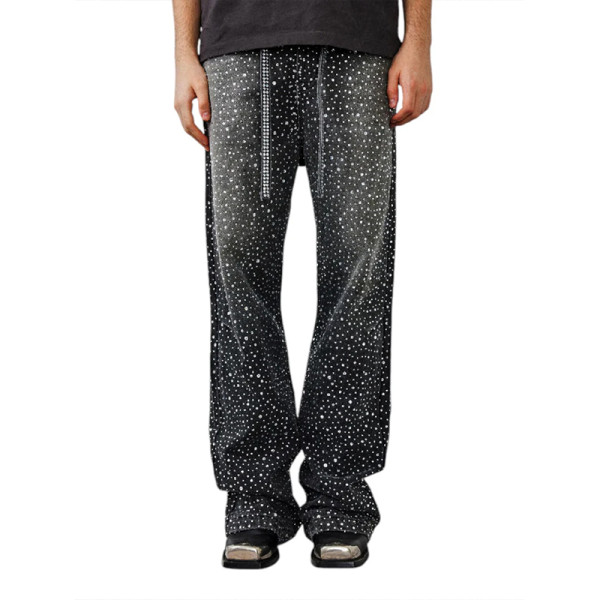
Speckled with galaxy-inspired spray dots, these loose-fit denim pants blend cosmic vibes with urban edge.