How to start a jeans denim business online?
Starting a jeans denim business online in 2026 sounds exciting on the surface—low barriers, global eCommerce access, and viral fashion trends on TikTok and Instagram. But underneath that excitement is a much harder truth: most new denim brands fail not because jeans don’t sell, but because founders underestimate how complex the system behind a “simple pair of jeans” actually is.
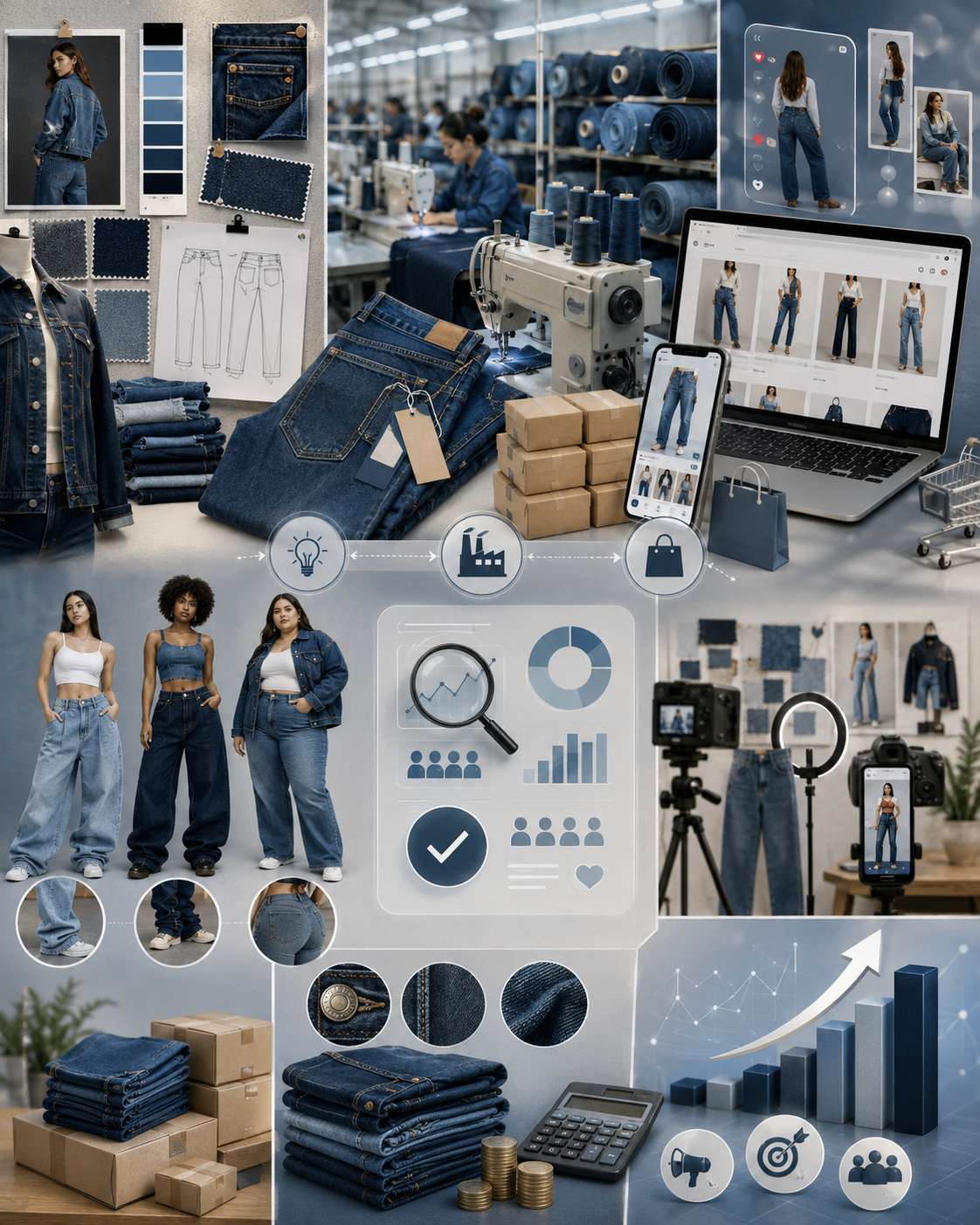
Today’s denim market is no longer just about fabric and stitching. It is about brand identity, supply chain control, fit accuracy, content marketing, and the ability to scale production without destroying cash flow. A successful online jeans business must connect three worlds at the same time: design creativity, manufacturing precision, and digital marketing performance. If one of these fails, the entire brand struggles to survive.
Starting a jeans denim business online requires three core elements: a clear brand direction, a reliable denim manufacturer, and a strong online sales channel such as Shopify or TikTok Shop. Beginners must choose a niche (e.g., baggy jeans, stacked jeans, or plus-size denim), validate demand, and start with small MOQ production. Success depends on balancing product quality, cost control, and digital marketing strategy.
Many founders enter this industry thinking, “I just need a good design and a supplier.” But in reality, the real challenge begins after the first sample is made—when you need to sell it consistently online in a highly competitive market.
Imagine a small designer in Los Angeles who launches a baggy jeans brand with just 50 pieces. The product looks great, but sales are slow. After months of trial and error, they realize the issue was not the jeans—it was unclear positioning, weak content, and no supplier strategy for scaling. This is the reality behind most denim startups.
In this guide, we break down exactly how to avoid these mistakes and build a structured, profitable jeans business step by step.
What Do You Need to Start an Online Jeans Denim Business Successfully?
To successfully start an online jeans business, you need more than just a product idea—you need a structured system covering product development, manufacturing access, branding, and an online sales platform. The real foundation is understanding your niche, controlling cost per unit, and working with a supplier who can support both small MOQ testing and long-term scaling.
To start a jeans denim business online, you need a defined niche, a supplier with flexible MOQ, a small startup budget, and a sales platform like Shopify or TikTok Shop. You do not need fashion design skills, but you do need clear product direction, basic branding, and a manufacturing partner who can turn ideas into real denim products.
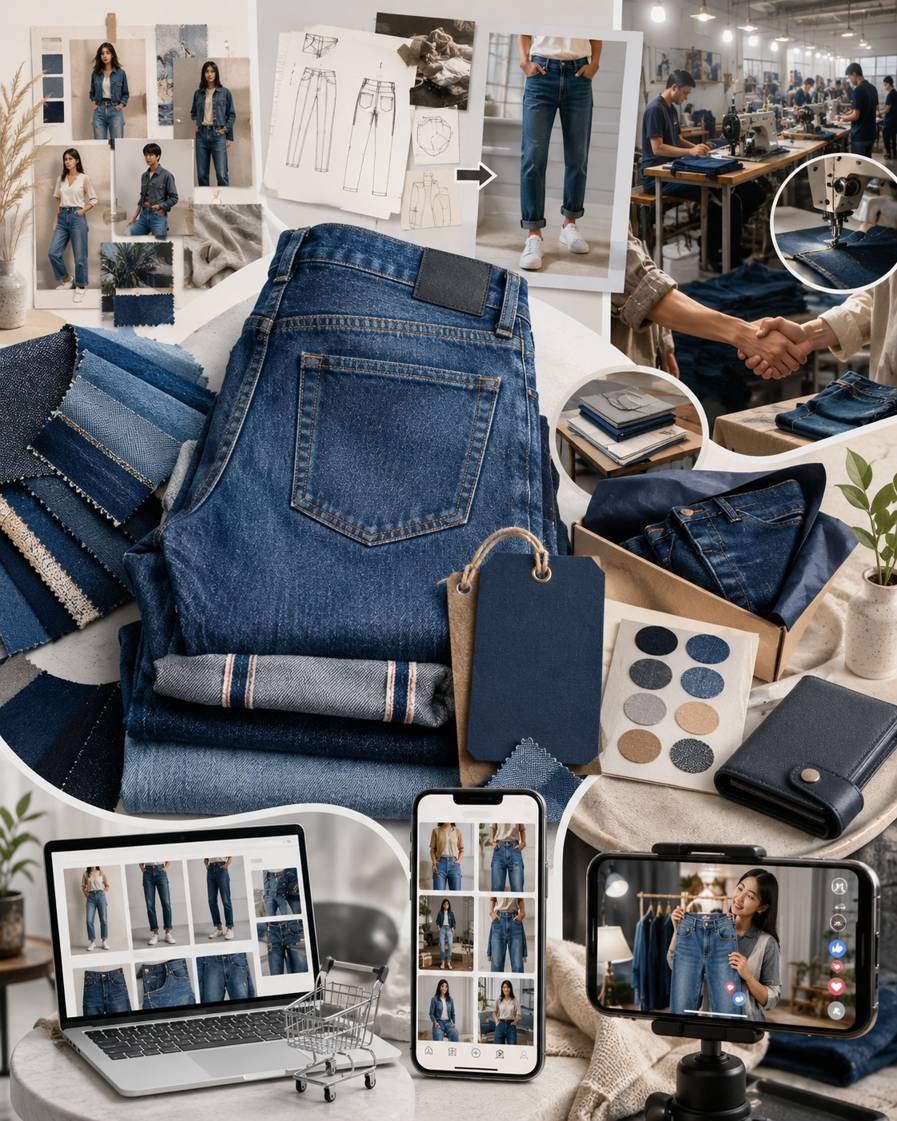
Many beginners assume the biggest barrier is money or design ability. In reality, the biggest barrier is decision clarity. Most failed denim startups suffer from unclear answers to basic questions: Who is this jeans for? Why would someone buy it instead of Levi’s or Zara? What makes this fit or style unique?
Is Jeans Business Profitable in 2026?
Yes, jeans remain one of the most profitable categories in fashion because denim is evergreen. Unlike seasonal fashion items, jeans are worn year-round. Profit margins typically range from:
| Business Model | Average Profit Margin |
| Wholesale/OEM | 20%–35% |
| Private Label Brand | 40%–65% |
| Premium Designer Denim | 60%–80% |
However, profitability depends heavily on brand positioning. A generic jeans product without identity competes only on price, which compresses margins quickly. A branded denim line with strong storytelling can charge 2–4x more.
How Much Does It Cost to Start a Jeans Business?
Startup cost varies widely depending on scale. A realistic breakdown looks like this:
| Category | Estimated Cost |
| Sample development | $100–$500 |
| MOQ production (30–100 pcs) | $800–$3,000 |
| Website (Shopify) | $30–$300/month |
Branding & design | $200–$2,000 |
Marketing launch | $300–$5,000 |
A lean startup can begin with around $2,000–$5,000, but scaling requires reinvestment.
How Do You Start Your Own Clothing Line with No Money?
Starting with zero capital is difficult but not impossible. The key is removing inventory risk:
Pre-order model (sell before production)
Sample-based marketing (show product first)
Influencer validation before bulk order
OEM supplier with low MOQ (like 30 pcs)
The most important shift is this: you are not “buying inventory,” you are testing demand before production.
How Do You Find Reliable Jeans Manufacturers or Denim Suppliers?
Finding the right denim manufacturer is one of the most important decisions in your business. A good supplier is not just a factory—it is a long-term production partner that affects quality, delivery speed, and scalability.
Reliable jeans manufacturers can be found through sourcing platforms, trade shows, or direct factory partnerships. The best suppliers offer low MOQ, sample development, fabric customization, and consistent quality control. Key evaluation factors include stitching quality, wash techniques, communication speed, and ability to scale production from small batches to bulk orders.
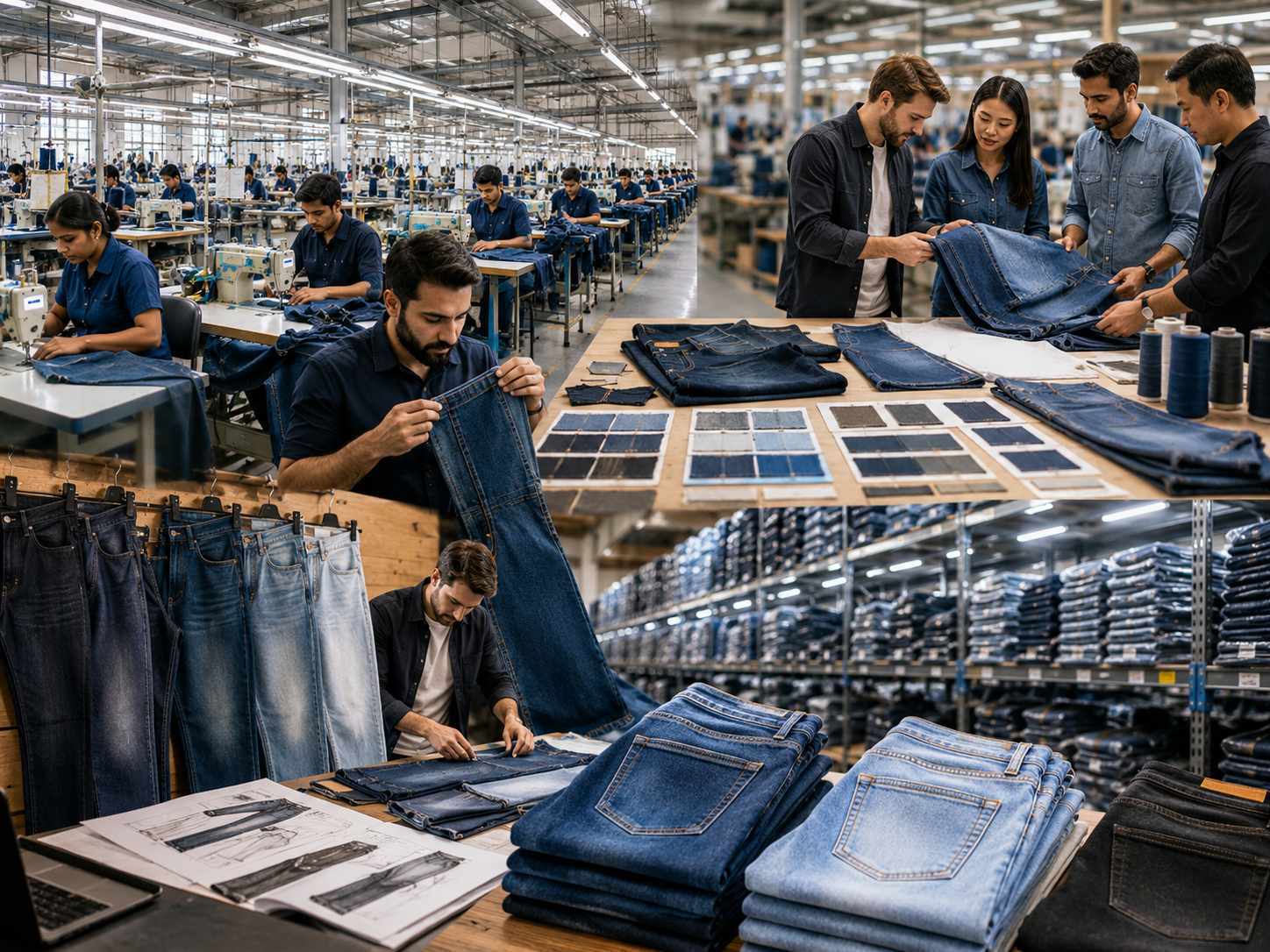
Most beginners make the mistake of choosing suppliers based only on price. This often leads to inconsistent sizing, poor fabric durability, or delayed shipments. In denim manufacturing, technical capability matters more than cost alone.
A professional jeans supplier should be able to handle:
Pattern making from tech packs or sketches
Multiple denim washes (stone wash, acid wash, raw denim)
Complex fits (stacked, baggy, tapered, skinny)
Size grading across global markets
Why MOQ (Minimum Order Quantity) Matters
MOQ determines how flexible your startup can be. High MOQ factories (500–1000 pcs) are risky for beginners. Low MOQ factories (30–100 pcs) allow:
Market testing with minimal risk
Faster product iteration
Better cash flow control
For new brands, MOQ is not just a number—it is a risk management tool.
How Do You Design and Develop Your Own Denim Jeans Collection?
Designing denim is not just about aesthetics—it is about engineering fit, comfort, durability, and brand identity. A successful jeans collection connects design creativity with manufacturing feasibility.
To design a denim jeans collection, start with a target customer, select core styles (baggy, straight, skinny, stacked), choose fabrics, and develop technical sketches. The design must be converted into samples through a manufacturer. Fit testing and revisions are critical before final production to ensure consistent sizing and comfort.
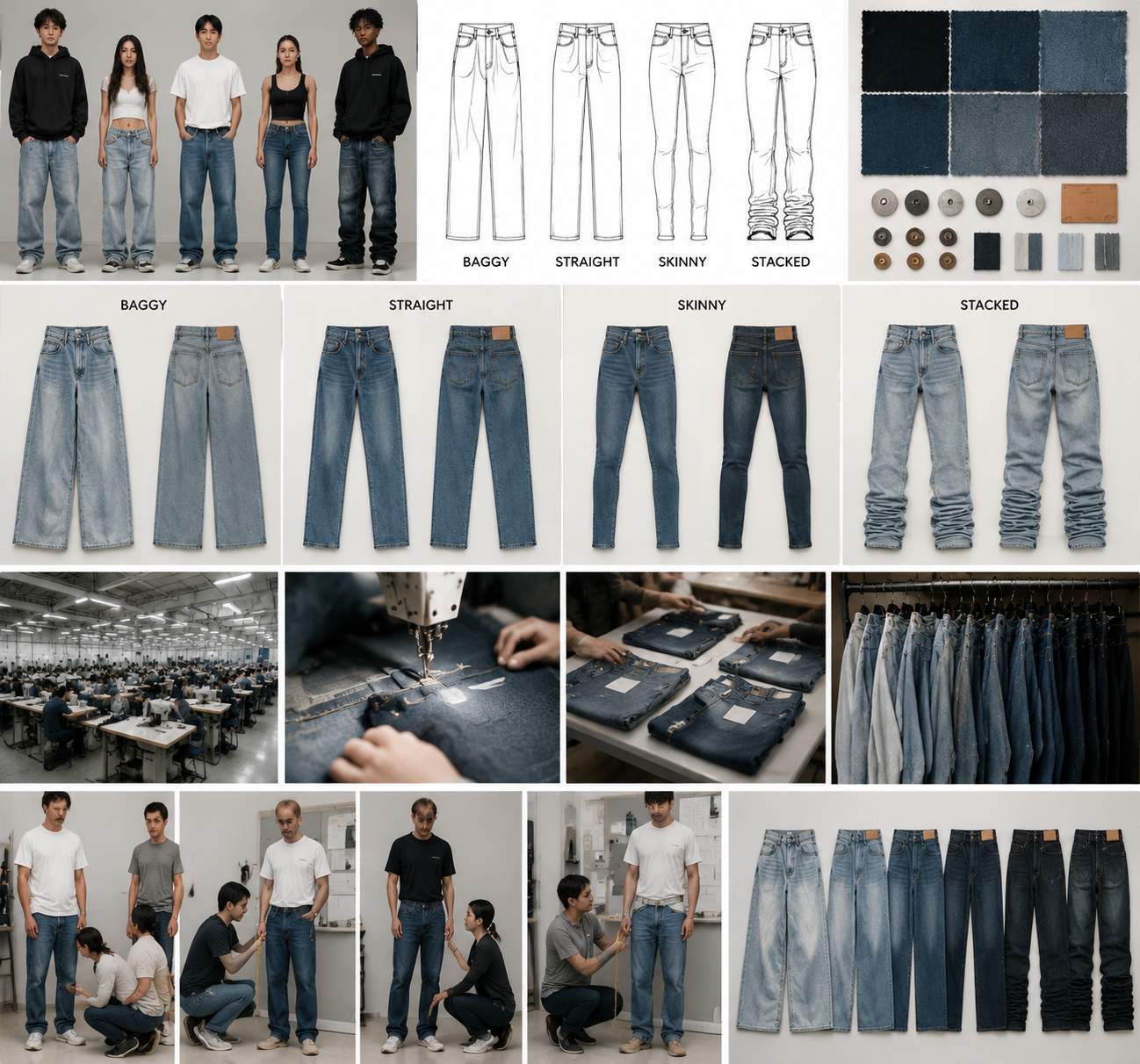
Denim design starts with market observation. Today’s strongest trends include:
Baggy jeans (streetwear influence)
Stacked jeans (Gen Z fashion trend)
Straight fit (timeless commercial style)
Plus-size inclusive denim (fast-growing segment)
What Is the “2 Finger Rule” for Jeans?
The “2 finger rule” is a simple fit guideline used in denim fitting: when jeans are buttoned, you should be able to comfortably fit two fingers inside the waistband. This ensures:
Comfort during movement
Avoiding overly tight waist sizing
Better return rate reduction in eCommerce
Factories often use this as a basic fitting reference during sampling.
Fabric and Sample Development
Fabric selection defines the final product more than design itself. Stretch denim, rigid selvedge, and blended cotton all create different brand perceptions. Sampling typically goes through:
Tech pack review
Pattern making
First sample
Fit adjustment
Final pre-production sample
Each step can take 7–20 days depending on complexity.
How Do You Build an Online Jeans Brand That Sells?
Building a jeans brand online is not just about listing products—it is about building desire. Customers do not buy jeans; they buy identity, lifestyle, and confidence.
To build an online jeans brand, choose a niche, create a strong visual identity, and sell through platforms like Shopify or TikTok Shop. Branding, storytelling, and product photography are critical. A strong denim brand focuses on consistency in style, pricing strategy, and customer experience rather than just product availability.
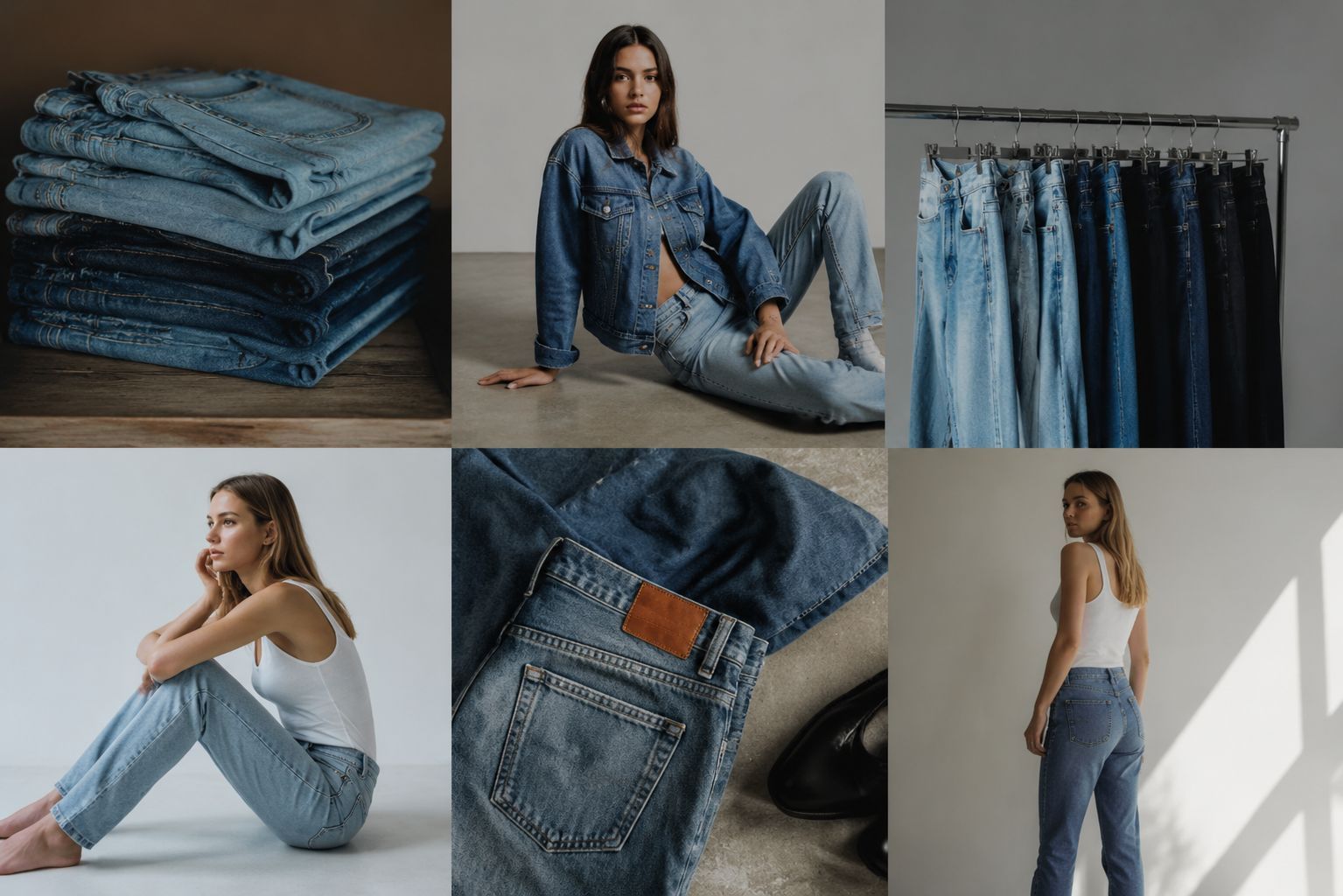
he most successful denim brands today are not product companies—they are media-driven brands. They sell a lifestyle first, jeans second.
Key brand-building pillars include:
Visual identity (fit, model style, photography tone)
Brand story (why your jeans exist)
Consistent product line (not random styles)
Packaging experience (premium perception)
Pricing Strategy
Pricing determines perception. A $29 jeans brand competes in mass market. A $120 jeans brand competes in lifestyle fashion. The same product can perform differently depending on positioning.
How Do You Market and Scale an Online Denim Business Successfully?
Marketing is where most denim businesses succeed or fail. Even the best jeans will not sell without visibility and emotional connection.
To market a denim business, use short-form video content, influencer collaborations, and social media platforms like Instagram and TikTok. Scaling requires tracking demand, increasing production gradually, and reinvesting profits. Successful brands move from small MOQ testing to bulk production once consistent sales patterns are proven.
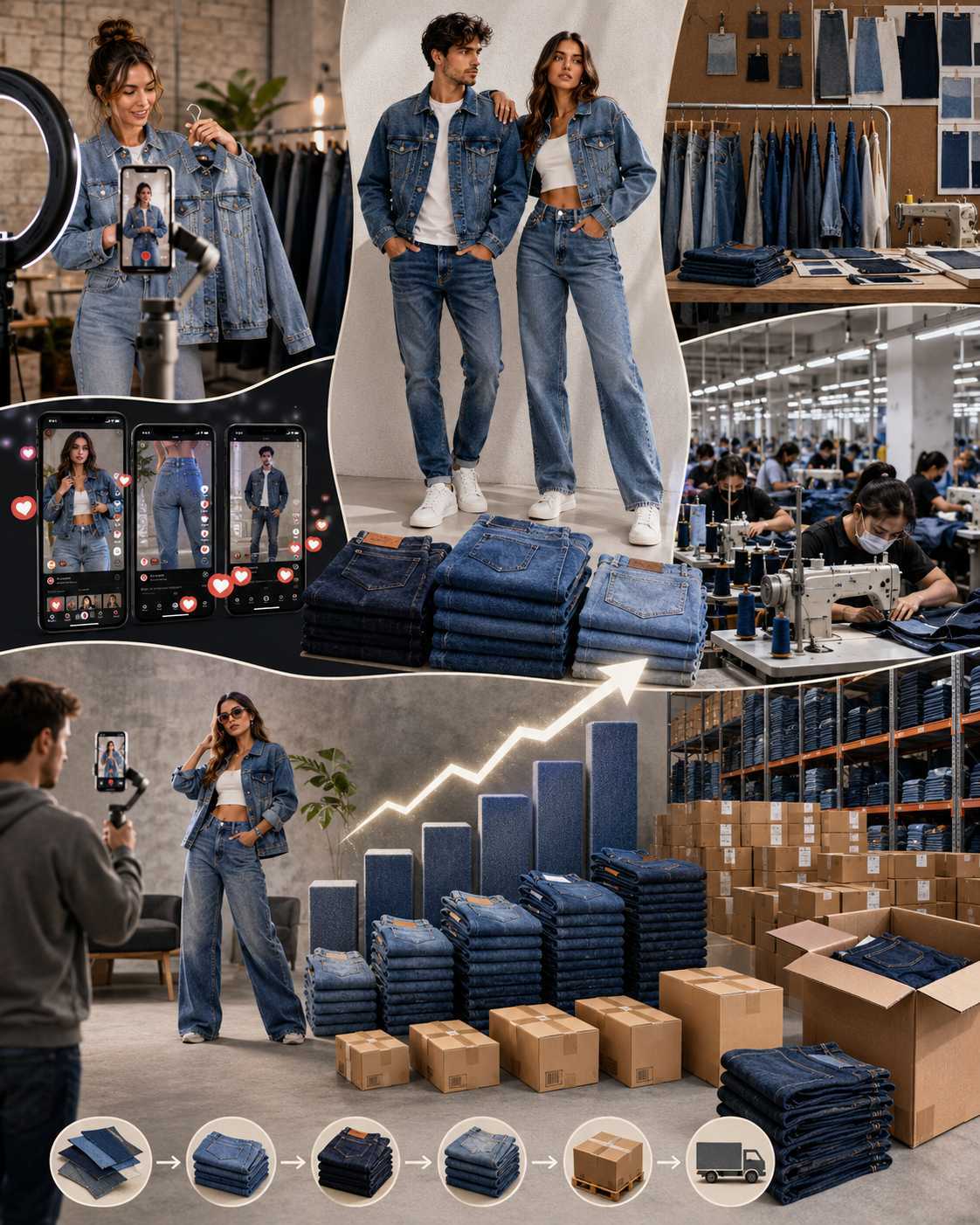
Modern denim marketing is driven by content, not ads alone. Viral TikTok videos showing fit, styling, and transformation outperform traditional product ads.
Scaling Strategy
Scaling should follow demand validation:
Start with 30–100 pcs MOQ
Validate product-market fit
Reorder based on sales velocity
Scale to 1,000–10,000 pcs production
When to Scale
You are ready to scale when:
70%+ of inventory sells within 30–45 days
Repeat customer demand appears
Influencers begin organically sharing your product
Scaling too early is one of the fastest ways to lose money.
Final Conclusion: Build Your Denim Brand with the Right Manufacturing Partner
Starting a jeans denim business online is not just a creative journey—it is a structured system of product development, manufacturing, and digital marketing execution. The difference between failure and success is not just the design, but the ability to connect ideas to production and production to market demand.
If you are planning to launch your own denim brand—whether it is baggy jeans, stacked jeans, selvedge denim, or plus-size collections—you need a factory partner that understands both low MOQ testing and large-scale production.
DiZNEW is a 20+ years denim manufacturer specializing in custom jeans, OEM/ODM production, and full collection development from design to finished product. With MOQ starting from just 30 pieces and capability up to 10,000+ pcs orders, DiZNEW supports designers, online boutique owners, and emerging fashion brands in turning ideas into real market-ready denim products.
If you are ready to develop your own jeans collection, test your first sample, or scale your denim brand globally, you can reach out to DiZNEW for professional customization support and quotation.
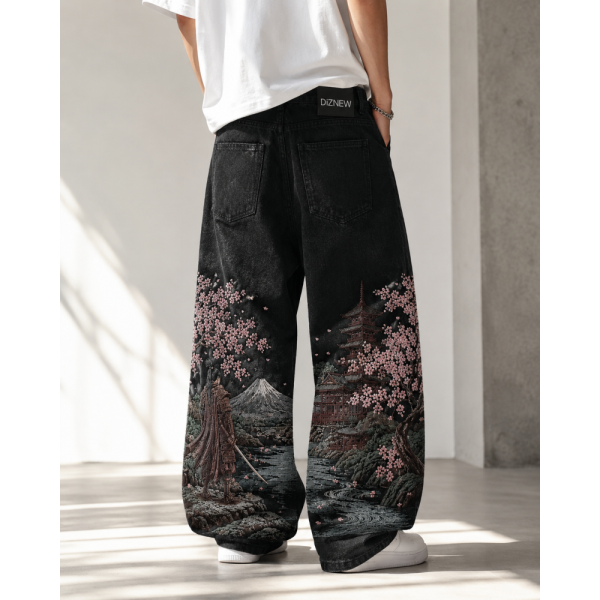
Premium wide-leg denim jeans featuring a vintage washed black finish, detailed Japanese landscape artwork, embroidery-style decoration, and custom brand label options. Designed for streetwear brands, designer labels, and private label collections looking for statement denim with strong visual storytelling.
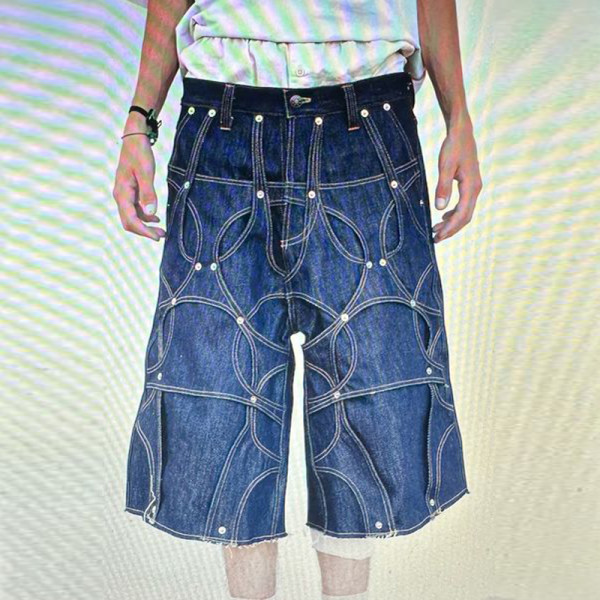
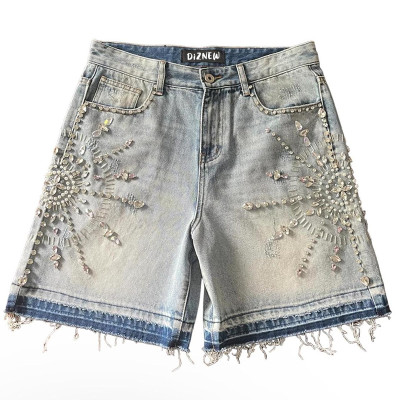
These designer denim shorts for men feature intricate decorative stitching and rivet details, perfect for streetwear fashion. The wide-leg silhouette adds a bold look, ideal for trendsetters.
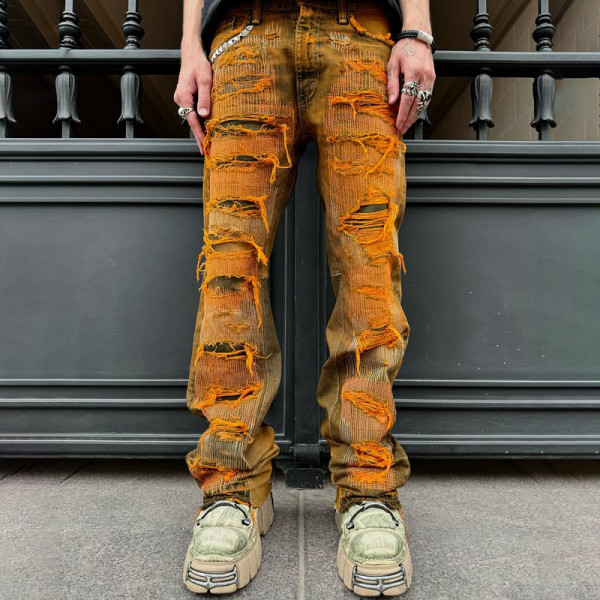
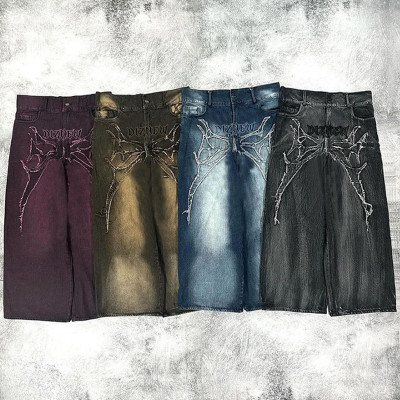
Discover Custom OEM/ODM Mud Yellow Distressed Jeans designed for brands and wholesalers, blending style with top-notch craftsmanship.
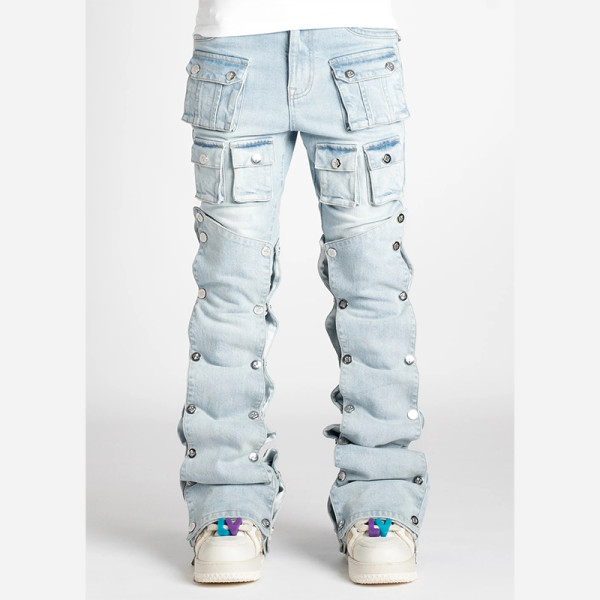
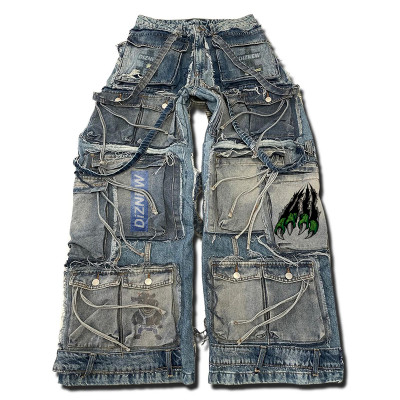
Custom high-street bubble cargo jeans with pleats, metal buttons, and multi-pocket design. Supports small-batch production.