How to soften stiff jeans?
When people buy a new pair of jeans, especially raw denim or heavyweight streetwear jeans, the first reaction is often the same: why are these so uncomfortable? They look perfect on the hanger—structured, sharp, premium—but the moment you put them on, they feel rigid, almost like cardboard. This is not a defect. In fact, in the denim industry, stiffness is often a sign of structure, fiber density, and unfinished character that will eventually shape the “personal fade” every wearer wants. But here’s the real tension: modern consumers don’t want to “suffer” for style anymore. They want jeans that feel good from day one but still keep that authentic denim look.
From a manufacturing perspective, stiffness is controlled by fabric weight, weaving density, finishing methods, and whether the denim is raw, rinsed, or enzyme-washed. From a user perspective, the goal is simple: how do I make stiff jeans soft without ruining their shape, color, or durability?
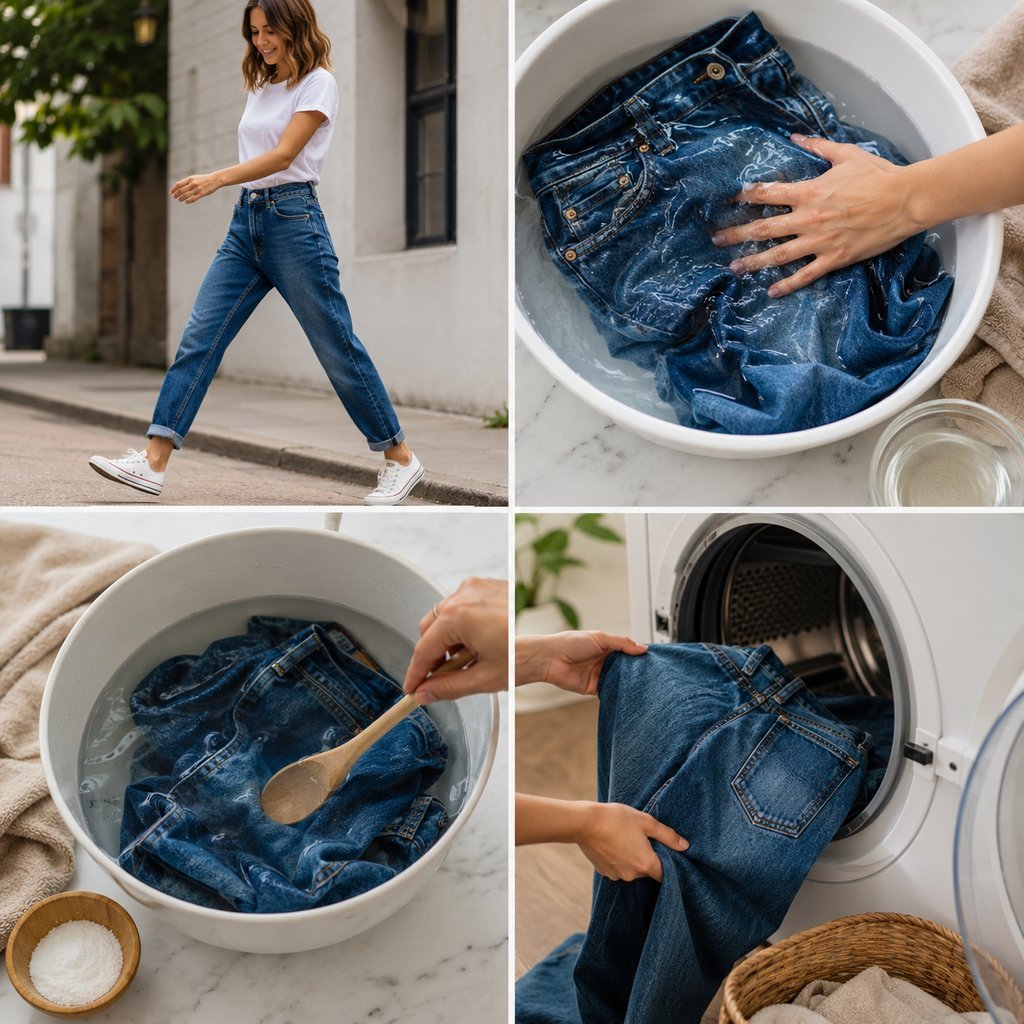
To soften stiff jeans, you need to break down surface rigidity in the cotton fibers without damaging the denim structure. The most effective methods include natural wear (body movement), controlled washing, enzyme or vinegar soaking, and tumble drying. Each method affects softness differently—wearing preserves shape, washing accelerates softening, and industrial enzyme treatments permanently reduce stiffness while maintaining durability.
But what most people don’t realize is this: stiffness is not just a comfort issue—it’s a design stage between raw fabric and finished lifestyle product. And how you treat your jeans in the first two weeks will define how they look and feel for years.
Let’s break it down.
Why Are My Jeans So Stiff in the First Place? Is It Because of Raw Denim or Fabric Weight?
Jeans feel stiff mainly because of raw denim construction, high fabric weight, and minimal finishing treatments. Unwashed cotton fibers remain tightly structured, creating rigidity. Heavier denim (12oz–16oz+) increases stiffness, while raw or selvedge denim retains natural tension. This stiffness is intentional and designed to break in over time.
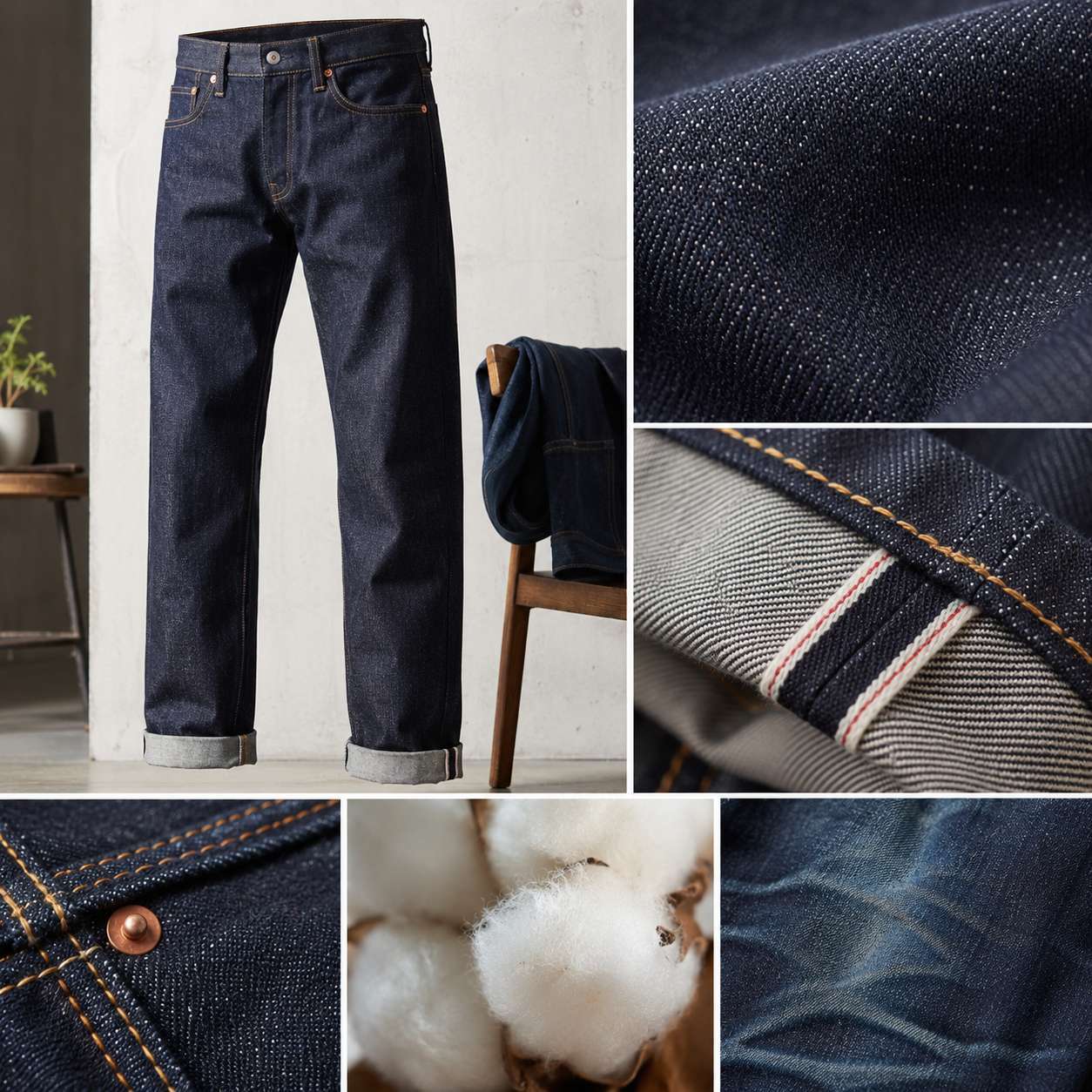
Why do my jeans feel so stiff?
The simplest answer is fiber structure. Denim is made from cotton yarns woven in a tight twill pattern. When the fabric is newly produced, especially without washing or chemical softening, the fibers remain in a “locked” state. This creates stiffness. In raw denim, this effect is even stronger because the fabric skips pre-washing entirely.
From a consumer perspective, stiffness feels like discomfort. But from a production perspective, it is unfinished potential. The jeans are waiting for the wearer’s body heat, movement, and friction to reshape them.
Is stiffness caused by raw denim or factory finishing?
Yes—but it depends on the production route. There are three main types:
| Denim Type | Stiffness Level | Reason |
| Raw Denim | Very High | No wash, no softener |
| Rinse Wash Denim | Medium | Light water wash removes starch |
| Enzyme Wash Denim | Low | Breaks down fiber surface |
Factories intentionally control stiffness based on brand positioning. Streetwear brands often prefer heavier, rigid denim for structure, while fashion retailers prefer softer hand feel.
How does fabric weight affect softness and comfort?
Fabric weight is measured in ounces per square yard. Heavier denim (14oz–16oz) is naturally more rigid because more yarn is packed into the same space. Lightweight denim (9oz–11oz) drapes better and feels softer immediately.
But here’s the interesting part: heavier denim doesn’t stay stiff forever. It molds to the body over time, creating a personalized fit that soft denim cannot replicate.
Is stiff denim actually a sign of better quality or durability?
Not always—but often correlated. High-quality denim tends to use stronger yarns and tighter weaving, which increases stiffness initially. However, stiffness alone is not quality. The real indicator is how the fabric evolves after wear: does it soften evenly, fade naturally, and maintain structure? That’s where premium denim stands out.
What Is the Fastest Way to Break in Stiff Jeans Without Damaging Them?
The fastest safe way to break in stiff jeans is consistent daily wear combined with movement-based stretching. Activities like walking, squatting, and sitting naturally loosen cotton fibers. Within 5–14 days, jeans typically become noticeably softer without compromising shape or color integrity.
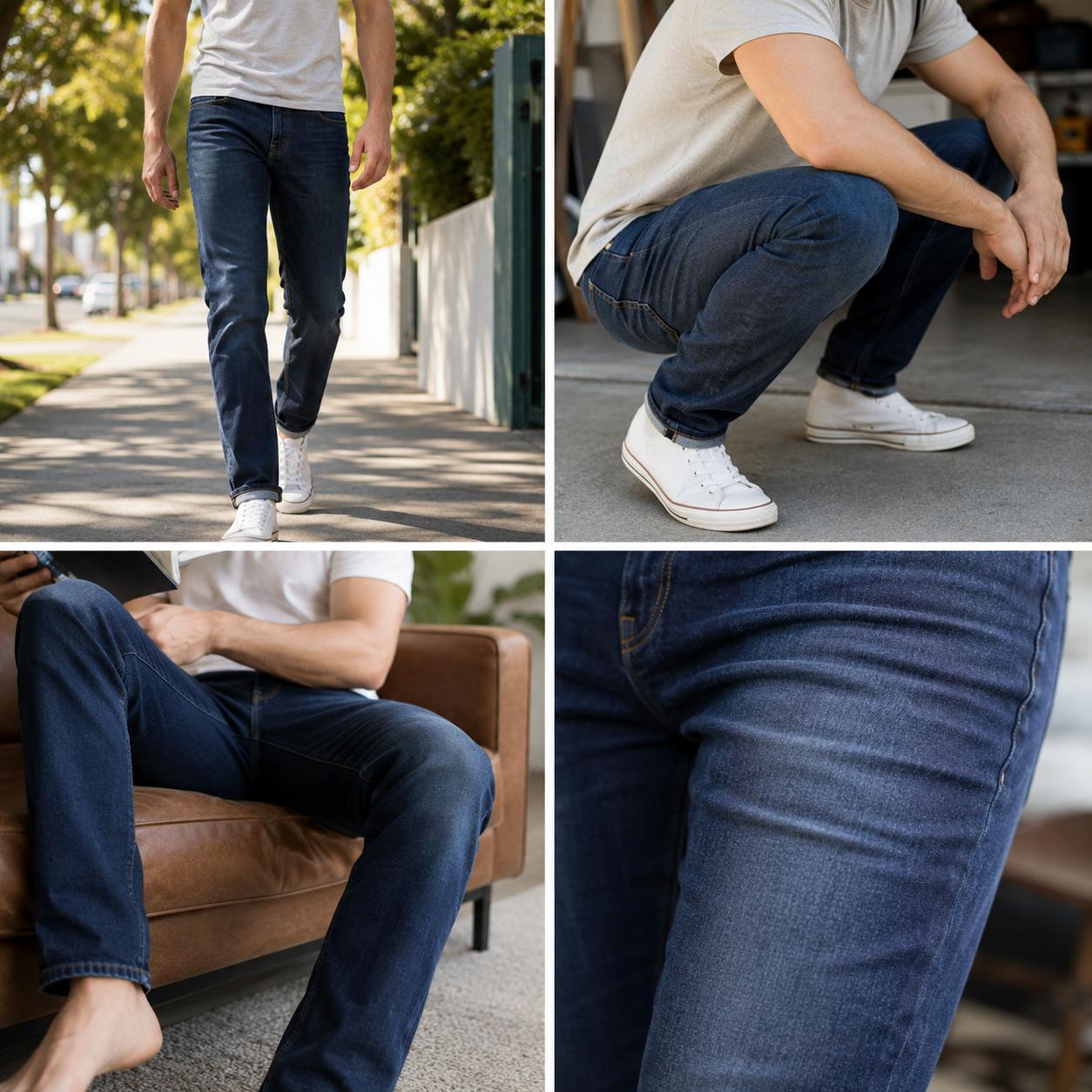
How to break in rigid denim jeans naturally?
The most authentic method is also the slowest: wear them. Denim responds to body heat, humidity, and friction. Every movement slightly loosens the cotton structure. This is why raw denim enthusiasts rarely wash their jeans in the first months.
From a technical standpoint, this process is called mechanical fiber relaxation. No chemicals, no shortcuts—just physics.
How long does it take to break in stiff jeans through daily wear?
Typically:
Light denim (10–12oz): 3–7 days noticeable softening
Mid-weight denim (12–14oz): 1–3 weeks
Heavy raw denim (14oz+): 3–6 weeks for full break-in
Can movement-based methods help soften denim faster?
Yes. Movement accelerates fiber loosening:
Squatting stretches knee panels
Sitting softens hip tension zones
Walking breaks thigh and seat stiffness
Think of jeans like leather shoes—they adapt to stress points.
Is there a safe way to speed up the breaking-in process?
Yes, but with caution. You can slightly dampen jeans and wear them until dry. This allows fibers to relax faster. However, overdoing it can distort fit. The key is balance: controlled moisture + natural movement = faster comfort without damage.
Does Washing Jeans Help Soften Them, or Will It Ruin the Fit?
Washing jeans can soften them by relaxing cotton fibers, but it may also cause shrinkage or fading depending on temperature and frequency. Cold wash preserves shape while still improving softness. Warm wash increases softness faster but risks altering fit and color intensity.
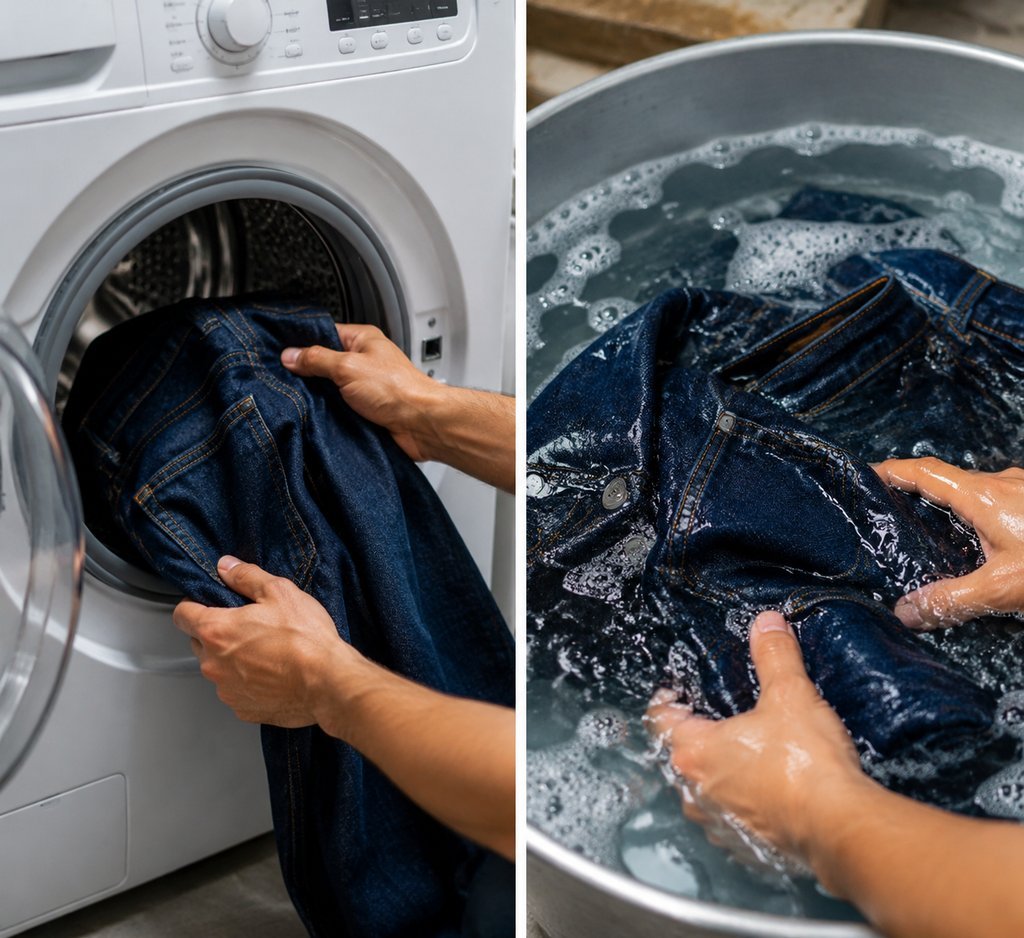
Does washing help or damage stiff jeans?
Washing is a double-edged tool. It removes starch and surface rigidity, but it also resets denim memory. For raw denim, the first wash is especially critical because it locks in fade patterns.
Cold wash vs warm wash: which is better?
| Wash Type | Softness Effect | Risk Level |
| Cold wash | Medium softening | Low risk |
| Warm wash | High softening | Medium risk |
| Hot wash | Very soft | High shrinkage risk |
Cold water is the industry standard for preserving denim integrity.
Will washing jeans change the fit permanently?
Yes. Especially in raw denim. Cotton fibers contract when exposed to heat and water. This can reduce waist size slightly and tighten leg structure. Some brands even design “shrink-to-fit” jeans intentionally.
When should you avoid washing raw denim?
Avoid washing in the first 2–3 weeks if you want strong fade contrast. Early washing can blur crease patterns and reduce personalized wear marks.
What Home Methods Can Soften Jeans Safely (Without Destroying the Fabric)?
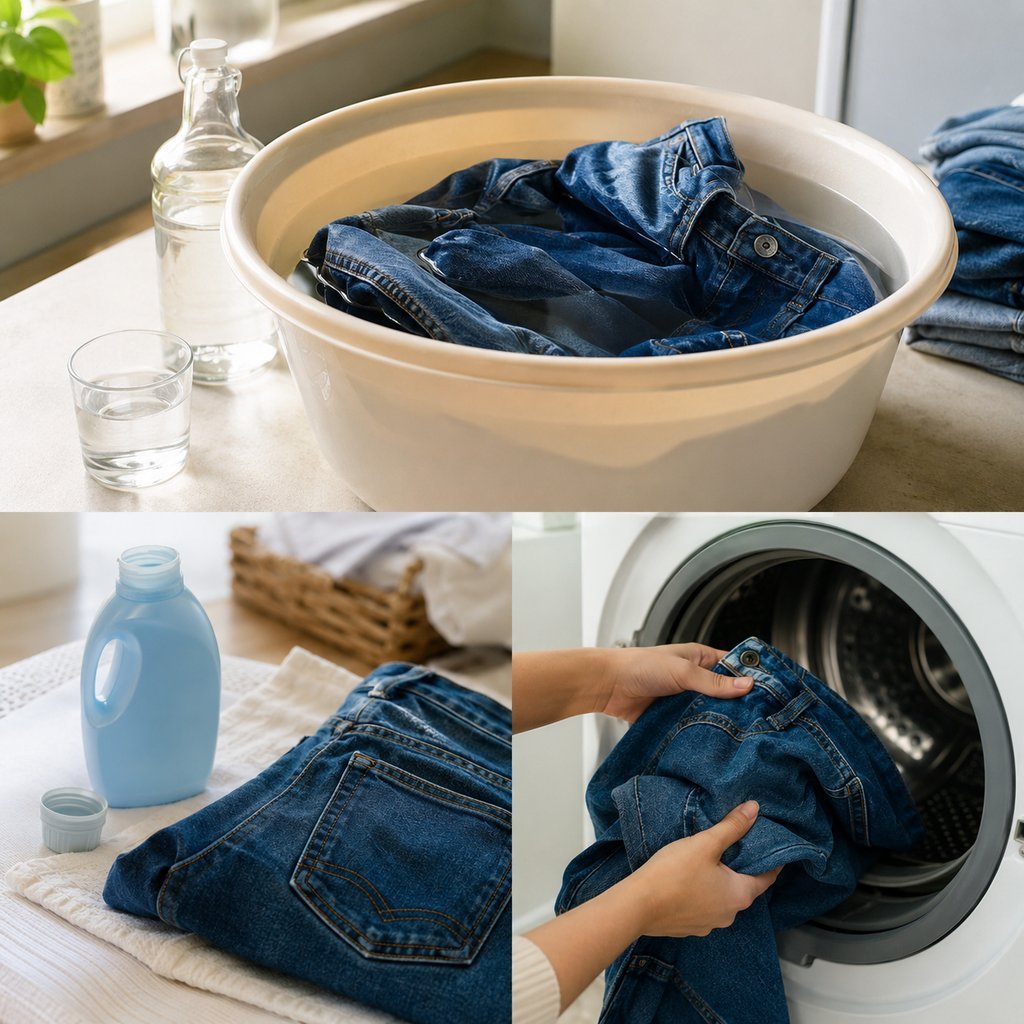
Safe home methods like vinegar soaking, mild fabric softener, and tumble drying can reduce stiffness without damaging denim. Vinegar helps break chemical residues, while mechanical drying loosens fibers. However, overuse of chemicals can weaken cotton over time.
How to fix jeans that are too stiff using home methods?
Home softening methods are about controlling fiber tension without breaking structure. The goal is to reduce surface stiffness, not destroy denim integrity.
Can vinegar or fabric softener permanently soften jeans?
Vinegar: helps neutralize alkaline residues and soften fibers slightly
Fabric softener: coats fibers, creating temporary smoothness
However, fabric softener can reduce denim breathability over time, so it should be used sparingly.
Do tumble drying or mechanical methods help?
Yes. Heat + motion is a powerful softening combination. The dryer physically agitates fibers, reducing stiffness quickly. This method is widely used in garment finishing simulations.
Does the freezer method work?
No. Freezing only kills odor-causing bacteria; it does not change fiber structure. It is a myth in denim science.
How Do Professional Denim Manufacturers Pre-Soften Jeans for Better Comfort?
Manufacturers soften jeans using enzyme wash, stone wash, and bio-wash processes that break down surface fibers at a controlled level. These methods permanently reduce stiffness while preserving structure, allowing brands to deliver ready-to-wear comfort without losing denim durability.
How to permanently soften stiff jeans during production?
Unlike home methods, factories control softness at molecular level. Enzymes digest surface cellulose, reducing stiffness permanently. This is not reversible like washing or wearing.
What is enzyme wash, stone wash, and bio-wash?
Enzyme wash: Uses biological enzymes to soften fibers
Stone wash: Physically abrades fabric using pumice stones
Bio-wash: Combination of enzymes + controlled washing
Each method produces different textures and softness levels.
How do factories balance softness and structure?
This is where expertise matters. Over-softening destroys denim identity. Under-processing makes jeans uncomfortable. Professional manufacturers adjust:
Wash time
Chemical concentration
Mechanical agitation
Can OEM/ODM manufacturers customize softness?
Yes. Brands often request:
“Rigid streetwear denim look” (low softness, high structure)
“Retail-ready soft hand feel” (pre-washed comfort)
“Vintage broken-in effect” (medium softness + faded finish)
This is where companies like DiZNEW support designers by creating denim that feels already lived-in but structurally perfect.
Conclusion: Want Jeans That Are Already Soft, Structured, and Ready to Wear?
Softening stiff jeans is possible at home, but it always comes with trade-offs between comfort, durability, and aesthetics. The real solution is not just fixing stiffness after production—but controlling it from the beginning.
At DiZNEW, we specialize in helping brands design denim that balances structure and comfort from day one. With over 20 years of OEM/ODM experience, in-house washing capabilities, and low MOQ starting from 30 pcs, we support brands in developing jeans that are already optimized for wearability—whether it’s baggy jeans, stacked denim, selvedge, or heavyweight streetwear styles.
If you are a designer, brand owner, or online denim store looking to create jeans that feel better from the first wear, we can help you build it from sketch to final production.
Feel free to reach out to DiZNEW for custom denim development, wash effect sampling, or OEM/ODM production solutions.
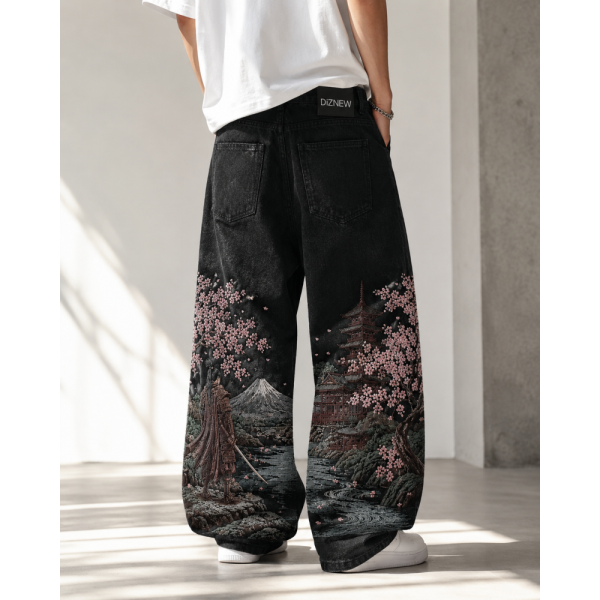
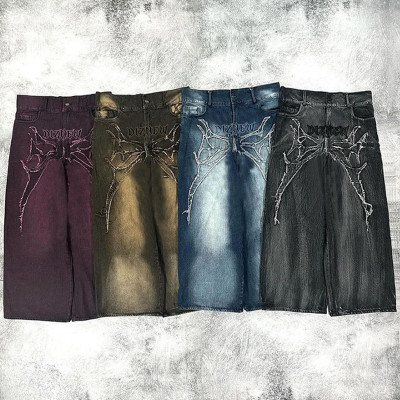
Premium wide-leg denim jeans featuring a vintage washed black finish, detailed Japanese landscape artwork, embroidery-style decoration, and custom brand label options. Designed for streetwear brands, designer labels, and private label collections looking for statement denim with strong visual storytelling.
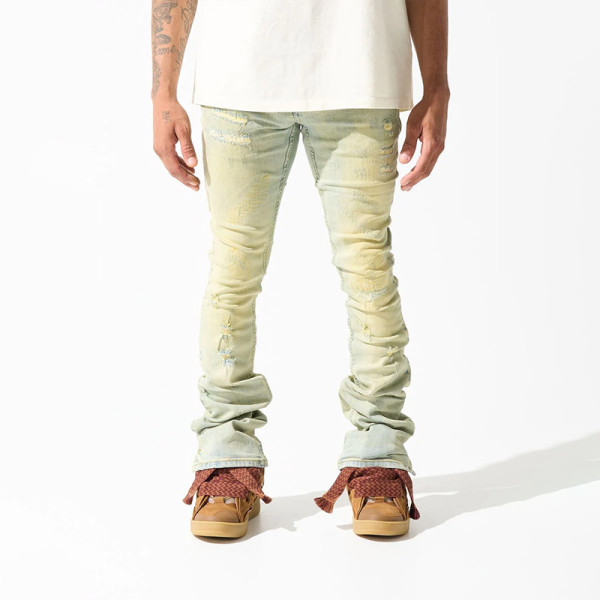
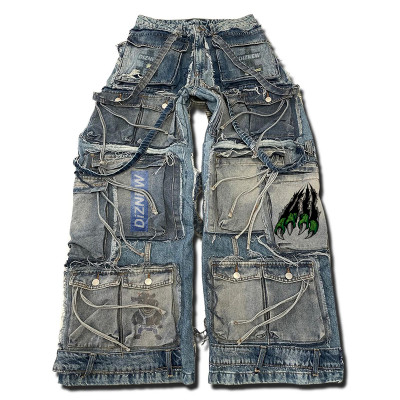
Skinny stacked jeans with distressed detailing and yellow-tinted bleach wash — bold choice for trendsetters.
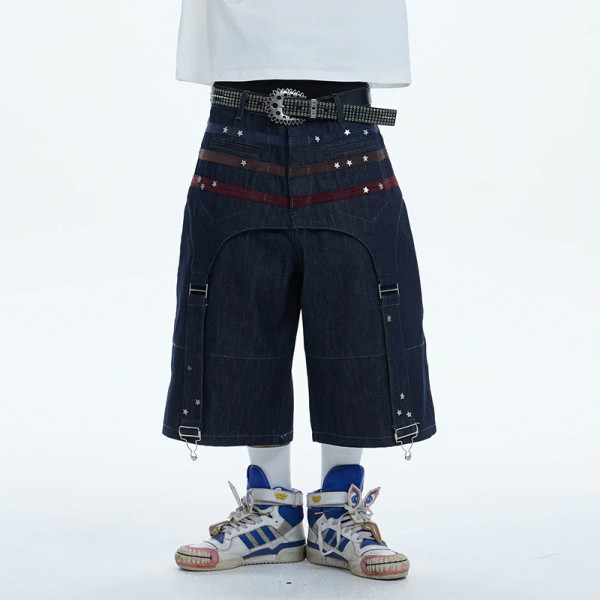
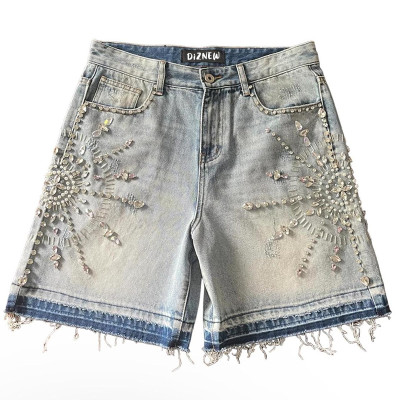
Sleek custom dark denim shorts with star studs, bold seams, and utilitarian strap details.
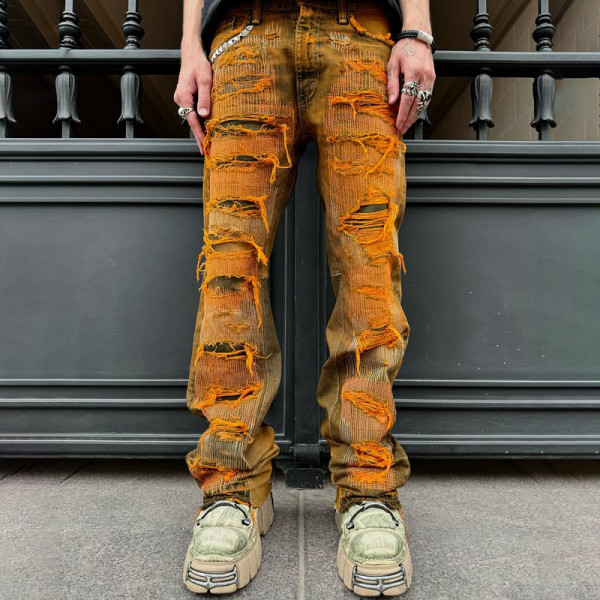
Discover Custom OEM/ODM Mud Yellow Distressed Jeans designed for brands and wholesalers, blending style with top-notch craftsmanship.