How to Pattern Jeans: An Expert Guide
Denim has become more than just a workwear staple – it’s a canvas for personal expression, a statement of sustainability, and an opportunity for innovation. Whether you’re a boutique owner launching your own label or a seasoned designer seeking new ways to delight your customers, mastering the art of drafting a jeans pattern can set you apart in a crowded market.
From eco-conscious fabric choices to cutting-edge distressing techniques, today’s consumers expect denim that not only fits flawlessly but also tells a story.
A jeans pattern unlocks the blueprint for fit, style, and function. By understanding fabric behavior, measurement placement, and construction details like fly curve and pocket angle, you can draft a custom pattern that accommodates any silhouette—skinny, baggy, or selvedge—while minimizing costly fit errors. This expert guide demystifies each step, so you can move from design sketch to production-ready pattern with confidence.
Imagine opening a trunk in your grandmother’s attic and discovering her first pair of handcrafted jeans—complete with hand-stitched seams and a story in every fray. That same tactile connection between maker and wearer is what today’s denim aficionados crave. Ready to dive in? Let’s start with the big question: what factors should you consider when choosing a jeans pattern?
What factors should you consider when choosing a jeans pattern?
When selecting a jeans pattern, evaluate fabric weight and stretch, production volume, customer demographics, and environmental impact. Lighter, high-stretchDennim works for skinny silhouettes; heavy rigid selvedge suits straight or baggy cuts. Factor in minimum order quantities—DiZNEW accepts runs from 30 to 10,000 pairs—and calculate water usage and finishing processes to meet sustainability targets. Lastly, align the style with your brand’s identity: distressed Gen Z–focused designs differ from archival selvedge collections for heritage labels.
1. Fabric Selection and Weight
a. Rigid vs. Stretch: Rigid denim (8–12 oz) holds shape for straight and baggy fits; 10–14 oz selvedge offers a premium hand feel. High-stretch blends (2–5% spandex) enable body-hugging silhouettes like skinny jeans.
b. Yarn Count and Weave: Higher yarn counts create finer, softer denim. Twill angle (3×1 vs. 2×1) influences drape and visual texture.
2. Cost and Production Volume
a. Minimums: DiZNEW’s 30-piece MOQ is ideal for custom capsule collections; 10,000+ pairs suit large retail runs.
b. Unit Cost Considerations: Heavier denim, selvedge, and intricate treatments (e.g., laser fade) raise per-unit price. Plan accordingly to maintain target retail margins.
3. Environmental Impact
a. Water Footprint: On average, a single pair of jeans consumes ~2,000 gallons of water from cotton cultivation, dyeing, and finishing. Ask suppliers about water-recycling systems; DiZNEW’s partners use closed-loop dyeing to reduce usage by up to 50%.
b. Chemical Use: Opt for Oeko-Tex or GOTS-certified indigo dyes. Enzyme washes and ozone treatments can replace harsh chemicals.
4. Customer Demographics & Brand Identit y
a. Age & Lifestyle: Gen Z gravitates toward skinny and high-waist styles with DIY distressing; Millennials often prefer straight or vintage cuts.
b. Price Point: Premium heritage brands focus on heirloom selvedge, while fast-fashion labels require cost-efficient blends and finishes.
Which tools and materials do you need to draft a perfect jeans pattern?
To draft a flawless jeans pattern, you need paper or digital pattern software, rulers (straight, curved, hip curve), French curves, a hip-edge ruler, marking pencils, and scissors. For materials, choose denim according to weight and stretch, plus notions: YKK zippers, metal rivets, branded buttons, thread that matches fabric weight, and interfacing for waistbands. To customize further, keep stencils for distressing, and fraying brushes for edge treatments.
1. Essential Pattern-Making Tools
a. Pattern Paper vs. Software: Traditional paper allows tactile adjustments; digital platforms (Optitex, Gerber AccuMark) streamline grading.
b. Measurement Tools: A clear hip curve ruler helps shape the crotch and hip seams; French curves refine fly and pocket contours.
2. Choosing the Right Denim and Notions
a. Denim Selection:
Lightweight (8–10 oz) for summer shorts and shirts
Mid-weight (11–13 oz) for everyday jeans
Heavyweight (14–16 oz+) for rugged selvedge jeans
b. Notions:
YKK metal zippers for durability
Copper rivets at pocket stress points
High-tensile polyester/cotton thread to prevent seam puckering
3. How to make designs on your jeans?
Embroidery and Patchwork: Digitize your logo for pocket tabs or thigh panels.
Laser Engraving: Precision fading or artwork without manual sanding.
Screen Printing: Bold graphics on leg panels or back pockets.
4. What’s the easiest way to fray jeans?
Tools: Use a pumice stone or sanding block along cut edges.
Method: After hemming or creating a raw edge hem, pull horizontal threads with a seam ripper.
Tips: Treat edges with a small amount of textile glue to prevent over-fraying.
How do you draft a basic jeans pattern step by step?
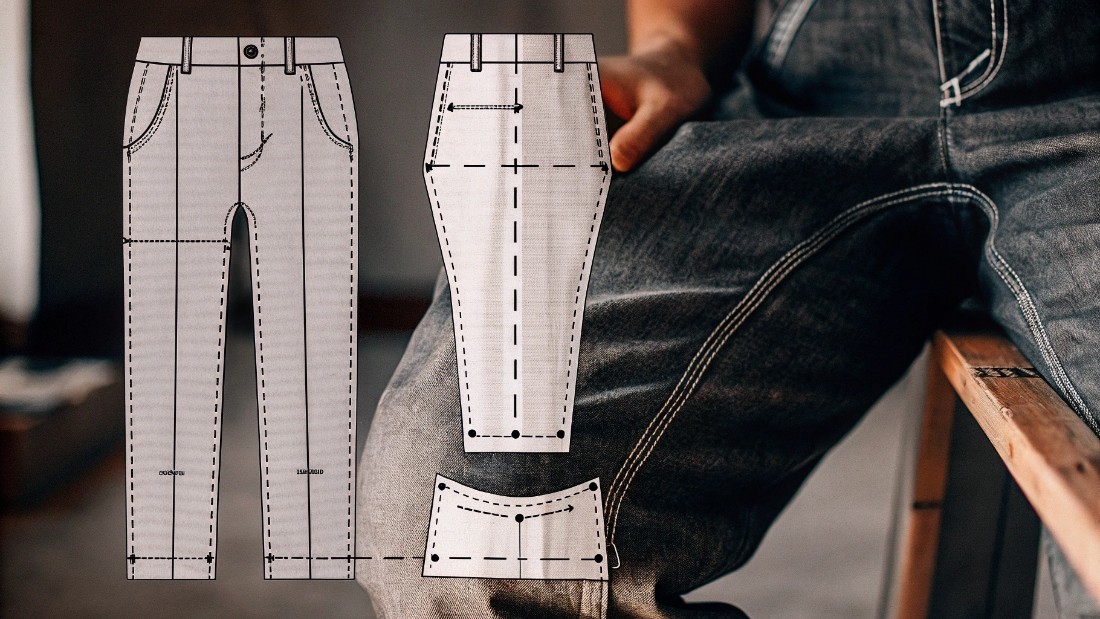
Draft a basic jeans pattern by first taking accurate waist, hip, thigh, and rise measurements. Create front and back blocks, plotting key points: high hip, low hip, crotch depth, and knee. Draw straight grain lines and true horizontal lines at waist and hem. Add seam allowances (1.5 cm side, 2 cm inseam), pocket bags, fly guard, and waistband. Finally, produce a muslin sample for fitting before grading.
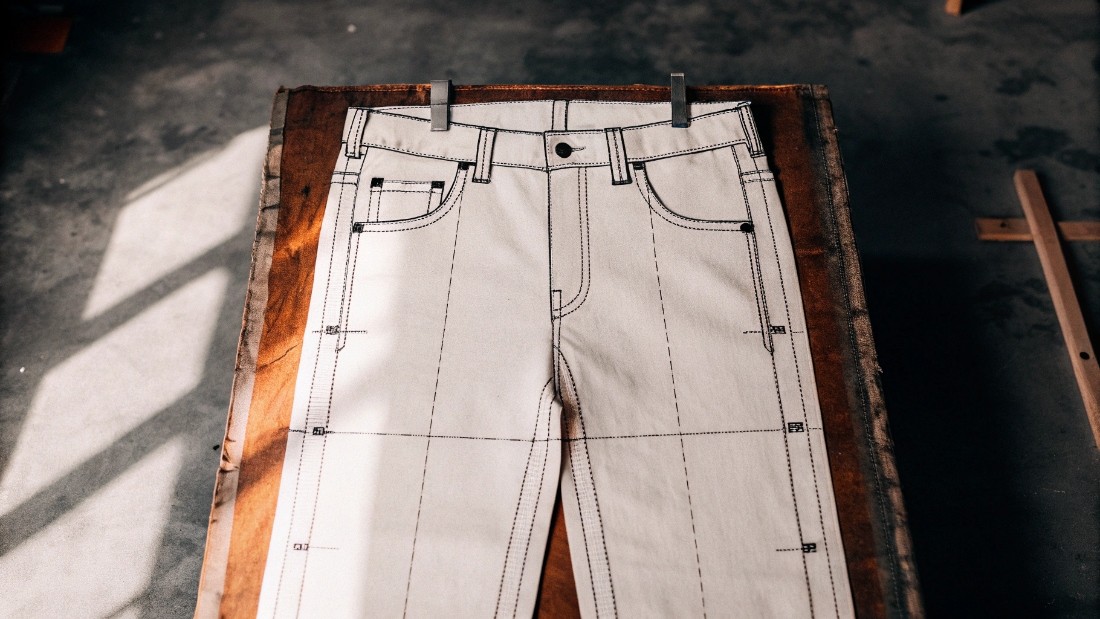
1.Taking Accurate Body Measurements
Waist: Narrowest point above navel
High Hip: 20 cm below waist, important for front rise
Full Hip: Widest point around buttocks
Thigh/Knee/Ankle circumference for tapered styles
Front and Back Rise: From waist to crotch seam
2. Drafting the Front Block
Plot Waistline and Hip Line: Use horizontal lines for reference.
Crotch Curve: A smooth French curve from center front to side seam—typically a 25–30 cm depth.
Leg Shape: Draw from high hip to knee, taper to ankle for most silhouettes.
3. Drafting the Back Block
Back Rise: Usually 1–2 cm higher than front for better coverage.
Seat Curve: Fuller curve around buttocks; add 0.5–1 cm ease.
Pocket Placement: Standard 12–14 cm below waist, angled 15° outward.
4. Adding Details
Seam Allowances: Standard 1.5 cm side, 2 cm inseam and center back.
Fly Guard & Front Fly Extension: 8–10 cm depth; overlap 4–5 cm.
Waistband: Double layer, 4–5 cm finished height.
Belt Loops: At least five loops; reinforce with bartacks.
How can you adjust your pattern for different fits and styles?
Adjusting your pattern for various fits involves changing block ease points and silhouette angles. For skinny jeans, reduce side-seam ease by 2–4 cm and add stretch fabric. To create baggy or stacked styles, add 5–10 cm ease through thigh and knee and lengthen inseam by 3–5 cm. For straight cuts, maintain consistent width from hip to ankle. Grade between sizes for plus or children’s lines.
1. From Straight to Skinny: What does Gen Z think of skinny jeans?
Trend Insight: Although comfort-focused baggies are resurging, 65% of Gen Z still own at least one pair of well-fitting skinny jeans for versatility.
Pattern Tweaks: Narrow side seams, deepen back rise by 1 cm, and add 2–3% spandex.
2. Creating Baggy, Stacked, and Tapered Silhouettes
Baggy: Add slash-pocket style, extend crotch by 1–2 cm, and increase thigh circumference by 10–15%.
Stacked: Keep knee width standard, lengthen inseam by 5–7 cm; use higher-tension sewing to maintain stacks.
Tapered/Straight: Straight from high hip to knee, taper 2–3 cm to ankle.
3. Grading Up and Down for Plus Sizes and Children’s Sizes
Plus Sizes: Add 3–5 cm ease at waist and hip, consider a higher rise and wider waistband.
Children: Shorten rise and inseam proportionally; reduce hip curve depth.
Digital Grading: Use software to maintain shape consistency across sizes.
4. Data Table: Ease Allowances by Style
| Style | Waist Ease | Hip Ease | Thigh Ease | Inseam Adjustment | Fabric Recommendation |
Skinny | +1–2 cm | +2–3 cm | +1–2 cm | –2 cm | 2–5% stretch midweight denim |
| Straight | +3 cm | +3 cm | +3 cm | 0 | 11–13 oz rigid denim |
| Baggy | +5–7 cm | +7–10 cm | +8–12 cm | +2–3 cm | 12–14 oz selvedge |
| Stacked | +3 cm | +3 cm | +3 cm | +5–7 cm | High-tension 11 oz denim |
What are the most effective techniques for troubleshooting fit issues?
To troubleshoot fit issues, identify the problem area—gaping waistband, baggy seat, or puckering knees—then adjust the pattern accordingly. For a gaping back waist, remove 1–2 cm at center back or add a crotch dart. If the seat is saggy, raise the back rise by 1 cm. Knee puckering calls for reducing thigh ease or adding a front knee dart. Always create a revised muslin and re-test.
1. Common Fit Problems and Pattern Solutions
Gaping Waistband: Remove excess at center back or introduce back darts.
Saggy Seat: Increase back rise by 0.5–1 cm; deepen the seat curve.
Tight Thigh/Knee: Add 1–2 cm ease or adjust angle of the inseam.
Puckering at Knees: Soften the front knee dart or redistribute ease.
2. Testing Prototypes and Iterative Tweaks
Muslin Fittings: Construct a sample in inexpensive drill cloth; perform squat and walk tests.
Pin and Mark: Use garment clips to mark excess fabric or tight spots directly on the wearer.
Digital Fit Simulation: Some advanced brands employ 3D scanning to predict fit before sewing.
3. Finalizing the Pattern for Production
Grading: Apply consistent grading rules across sizes to prevent distortion.
Notch and Label: Clearly mark grainlines, notches, and piece IDs.
Tech Pack: Include detailed measurement charts, construction notes, and fabric specs for the factory.
Conclusion and Call to Action
Mastering jeans patternmaking is a blend of technical precision and creative vision. From selecting eco-friendly denim to troubleshooting the perfect fit, each step influences the final garment’s appeal and performance.
DiZNEW, with over 20 years of experience in custom denim manufacturing, offers low MOQs (30 pieces) and large-scale capacity (10,000+ pairs), plus full OEM/ODM services. Whether you’re sketching a new plus-size skinny jean line or developing a limited-edition selvedge collection, our experts can turn your designs into reality. Contact DiZNEW today to request a quote and start your custom denim journey.
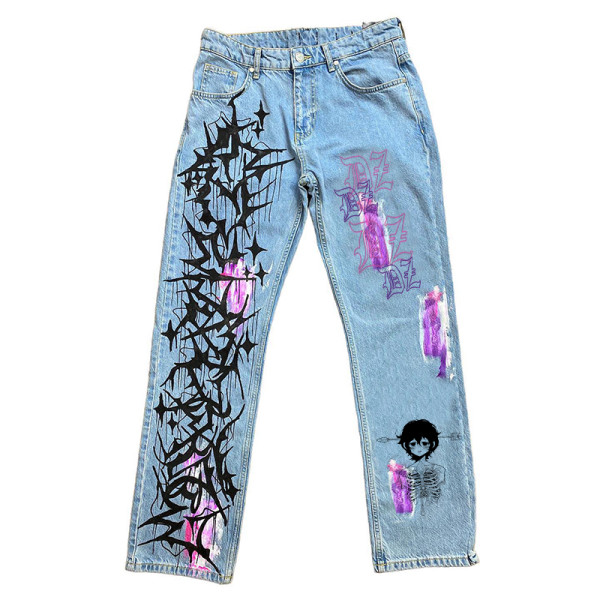
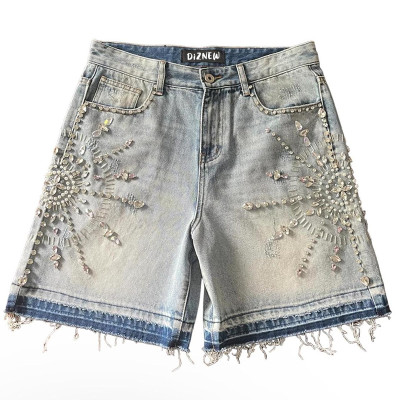
Street-style distressed denim jeans with bold graffiti prints and artistic details, crafted for boutique owners and designers.
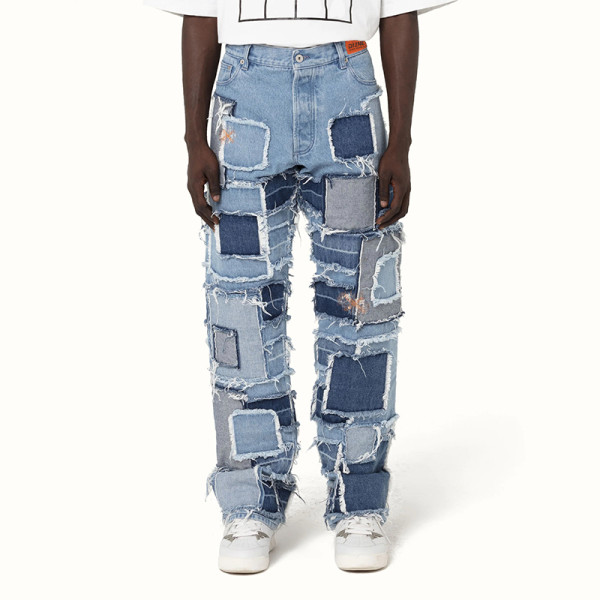
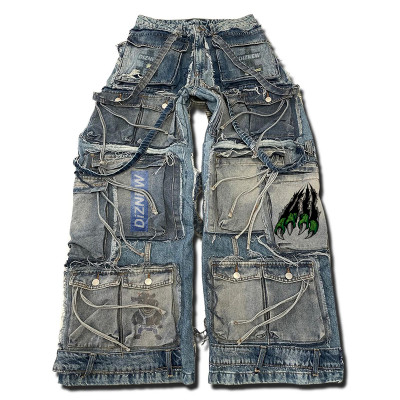
Custom baggy cotton patchwork distressed denim jeans with raw edges and vintage wash, perfect for boutiques and luxury streetwear.

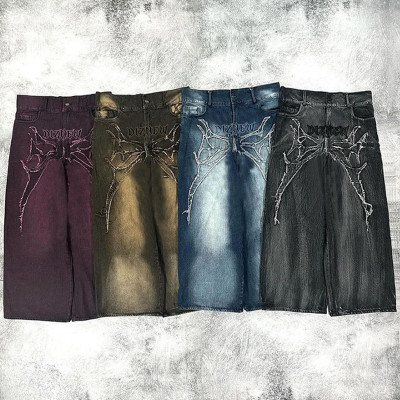
Vintage washed wide-leg jeans with frayed patchwork and distressed fashion details—crafted for boutique and luxury designers.
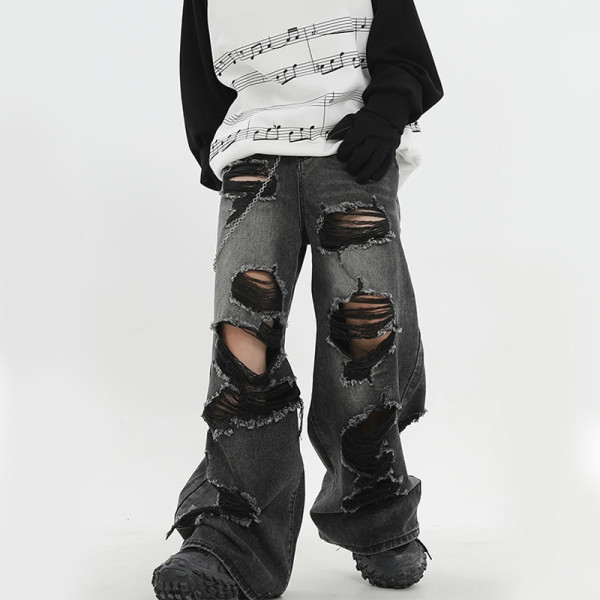
Custom ripped distressed denim jeans with embroidered stitching patches, chain details & raw edges for a bold streetwear look.