How many types of pants are there?
If you look around any major city today—New York, London, Tokyo, or Los Angeles—you’ll notice something subtle but powerful: pants are no longer just a basic wardrobe item. They have become a visual language of identity, lifestyle, and even social status. One person walking in slim tailored trousers signals professionalism. Another in stacked baggy jeans reflects streetwear culture. A third in technical cargo pants expresses utility and movement. The same category—“pants”—now carries dozens of cultural meanings depending on fit, fabric, and silhouette.
Fashion researchers estimate that over 100+ distinct pant variations exist globally when combining fit, fabric, and function. Yet most consumers only recognize a handful. This gap between “what exists” and “what people know” is exactly why searches like “how many types of pants are there” keep increasing every year on Google.
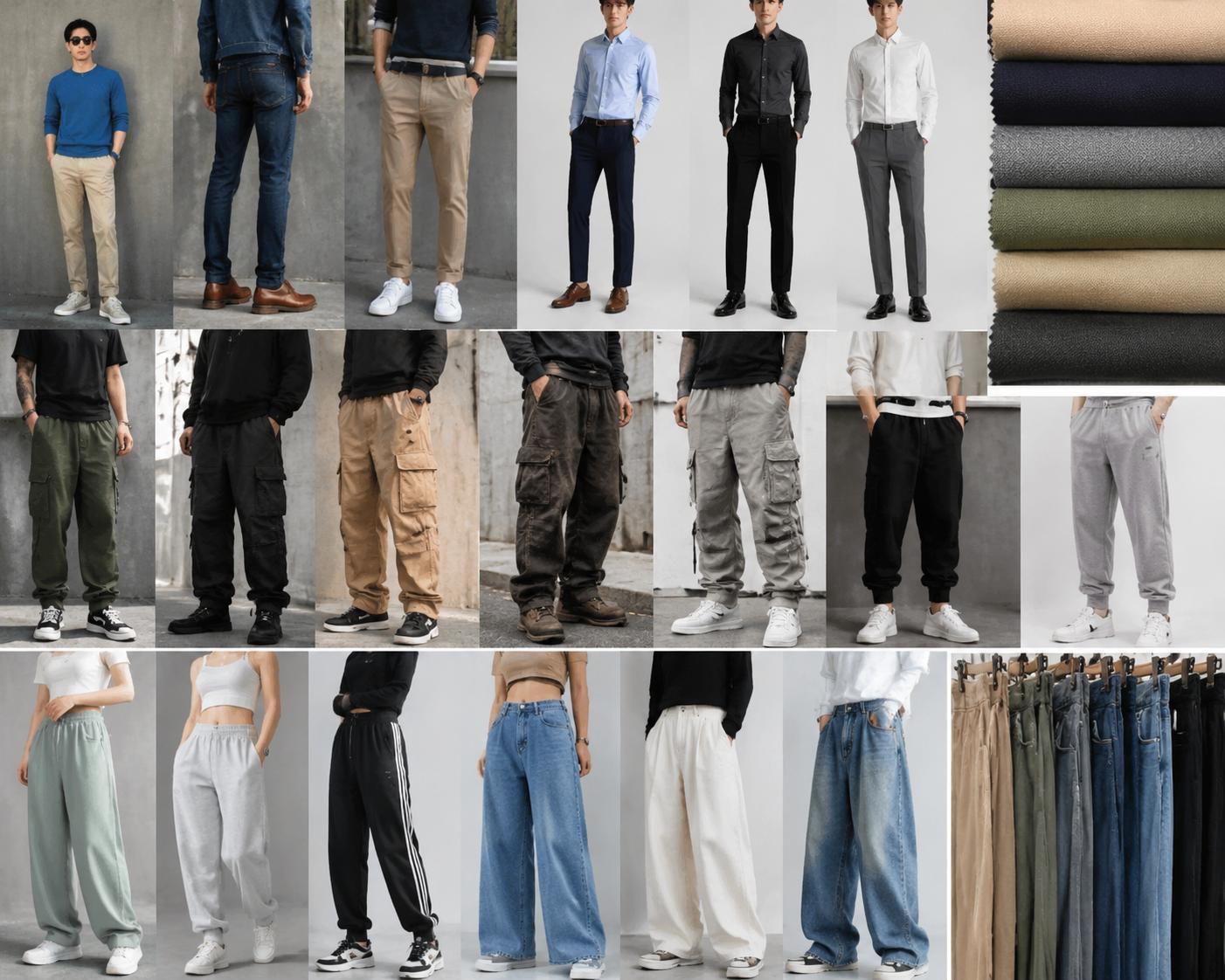
There are dozens of types of pants in fashion, typically grouped into four main categories: casual pants, formal trousers, utility/work pants, and sportswear/athleisure pants. Within these groups, styles expand into jeans, chinos, cargo pants, joggers, slim-fit trousers, wide-leg pants, and more. When factoring in fabric, fit, and design variations, the total number of pant styles globally exceeds 100 distinct types.
But here’s the interesting part—pants are not just “classified,” they are constantly evolving. Ten years ago, skinny jeans dominated everything. Today, baggy silhouettes are taking over global runways and TikTok feeds. And behind this shift is a deeper story about comfort, identity, and manufacturing innovation.
Let’s break it down step by step—and by the end, you’ll not only understand pant categories, but also how global brands design, produce, and customize them at scale.
What Are the Main Categories of Pants in Fashion Today?
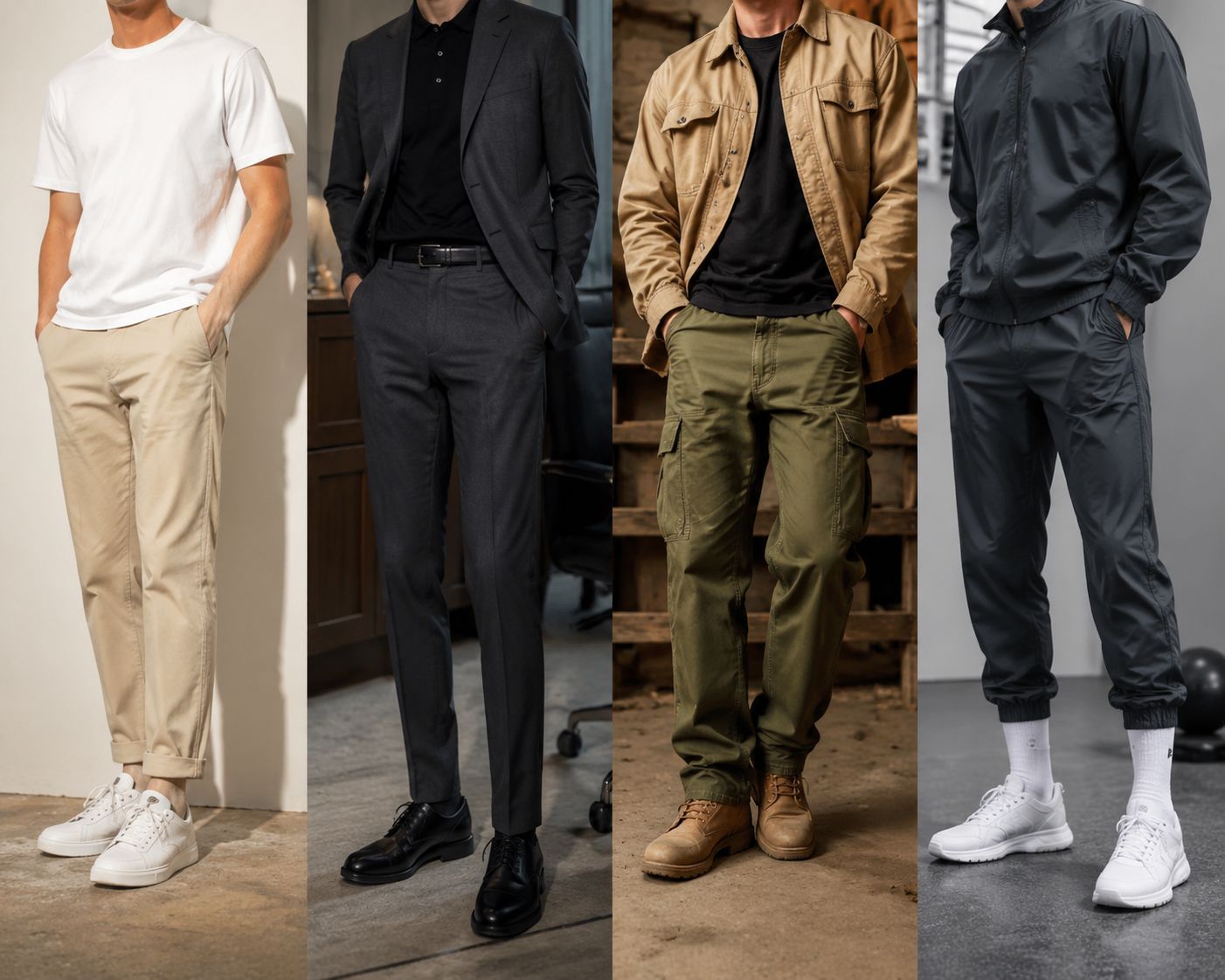
Pants in modern fashion are generally divided into four major categories: casual pants for everyday wear, formal trousers for business and dress occasions, utility or work pants designed for durability and function, and sports or athleisure pants built for comfort and movement. These four categories form the foundation of most global apparel design systems and are used by brands to structure collections efficiently.
Dive Deeper: Why These Four Categories Define the Entire Industry
The fashion industry simplifies complexity through classification. While consumers see endless styles, manufacturers and designers typically organize pants into four core systems because it helps control production, marketing, and supply chain planning.
Casual Pants: The Everyday Economy of Fashion
Casual pants include jeans, chinos, and relaxed cotton trousers. These dominate global sales because they balance comfort and versatility. Denim alone accounts for a massive share of global apparel production, with jeans being worn in almost every country regardless of climate or culture.
Formal Pants: Structure and Authority
Formal trousers are designed for office wear, weddings, and professional environments. Their importance is declining in some Western markets due to casualization trends, but they remain essential in corporate and luxury sectors.
Utility Pants: Function Over Aesthetics
Cargo pants, tactical pants, and multi-pocket designs fall into this category. Originally designed for military use, they are now heavily adopted by streetwear brands due to their functional aesthetic.
Sportswear Pants: The Comfort Revolution
Joggers, sweatpants, and performance leggings represent the fastest-growing category globally. The rise of remote work accelerated this segment significantly.
From a manufacturing perspective, these four categories are not just design choices—they determine fabric sourcing, stitching methods, and even pricing strategy.
How Many Types of Pants Are There for Everyday Wear?
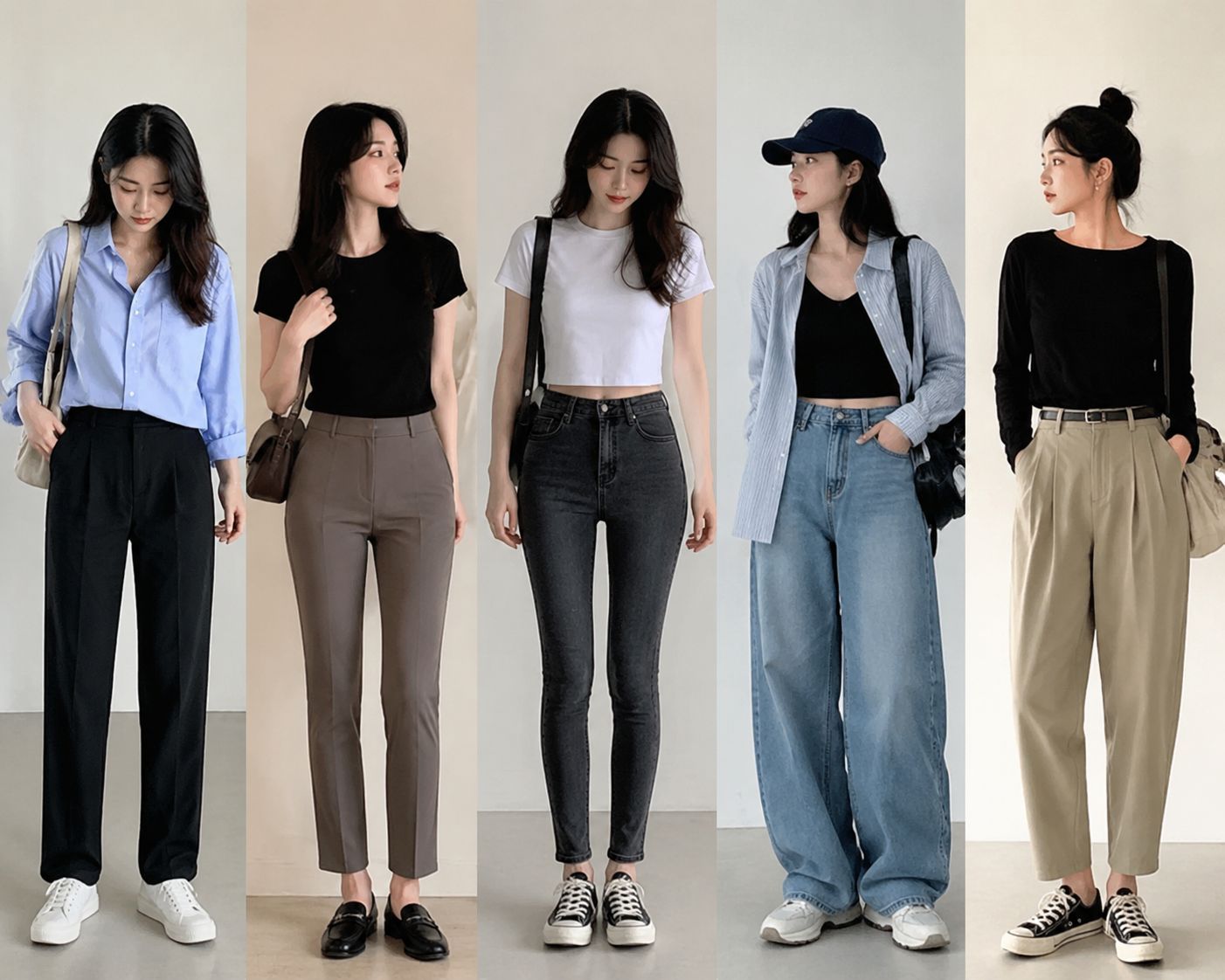
Everyday pants typically include straight-leg pants, slim-fit pants, skinny pants, wide-leg pants, and tapered pants. These styles differ mainly in silhouette and comfort level. Modern fashion trends favor relaxed and wide silhouettes over ultra-tight fits, driven by lifestyle changes, streetwear culture, and demand for comfort-focused clothing.
Dive Deeper: Everyday Pants Are Defined by Fit Psychology, Not Just Design
When people choose everyday pants, they are not just choosing fabric—they are choosing how they want to feel during the day.
Straight Fit Pants: The Neutral Standard
Straight-leg pants are the most universally accepted style. They neither hug nor flare dramatically, making them ideal for mass-market appeal.
Slim Fit Pants: The Balanced Modern Look
Slim-fit pants represent a controlled silhouette—modern but not restrictive. They are widely used in both jeans and chinos.
Skinny Pants: A Declining but Still Relevant Style
Skinny fits were dominant from 2010–2020. However, search trends show a consistent decline as consumers shift toward comfort.
Wide-Leg Pants: The New Dominant Trend
Wide-leg silhouettes are growing rapidly, especially among Gen Z consumers. They reflect a shift toward relaxed aesthetics.
Tapered Pants: The Hybrid Solutionapered Pants: The Hybrid Solution
Tapered pants combine a loose upper fit with a narrow ankle opening, balancing structure and comfort.
From a production standpoint, each silhouette requires different pattern engineering. A 2cm change in leg opening can significantly affect fit perception, which is why brands invest heavily in sampling and fitting processes.
What Are the Most Popular Types of Jeans Pants Globally?
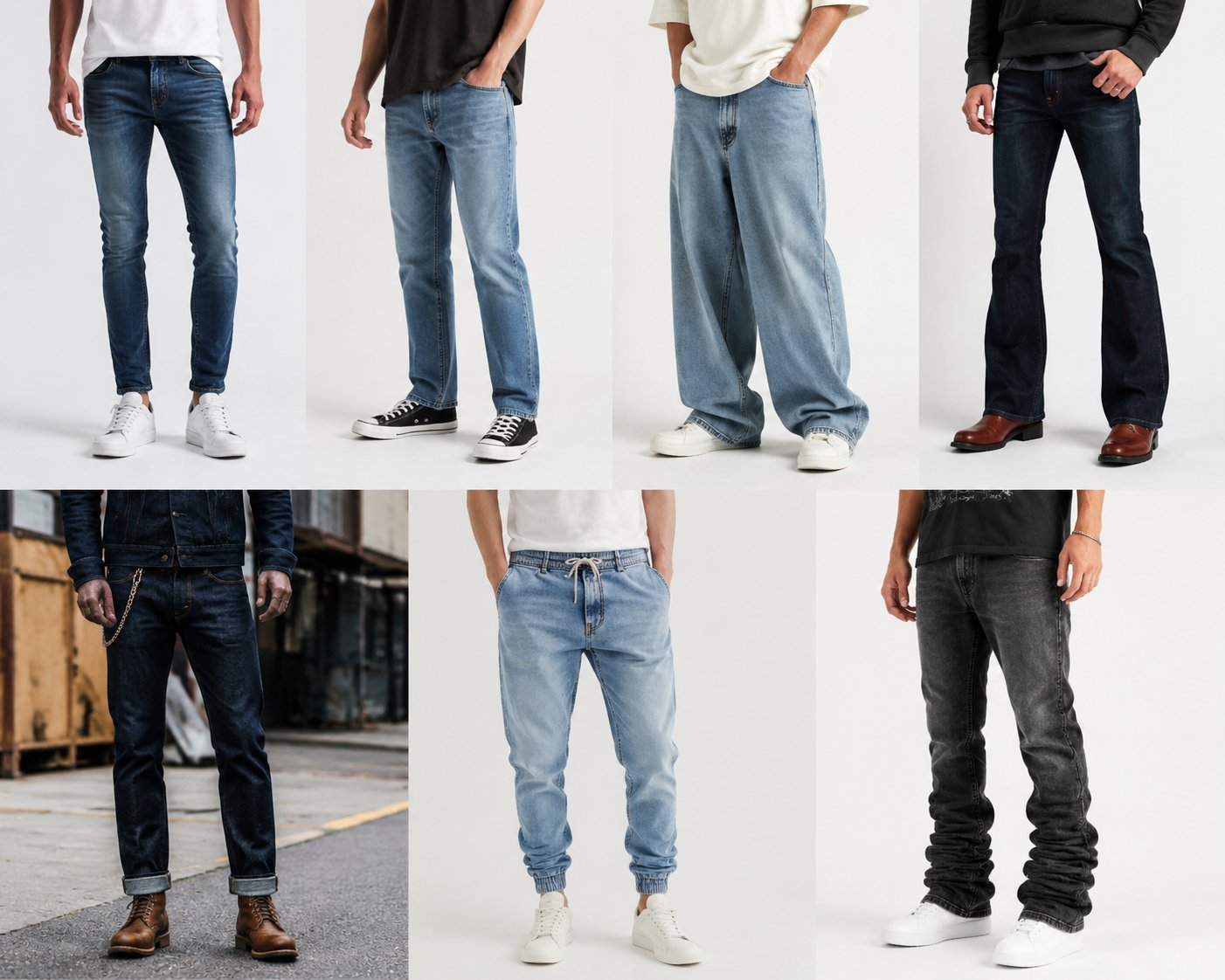
The most popular types of jeans include skinny jeans, straight jeans, baggy jeans, bootcut jeans, selvedge jeans, jogger jeans, and stacked jeans. These styles differ in fit, fabric construction, and finishing. Denim remains one of the most searched and purchased clothing categories globally due to its durability, versatility, and cultural influence.
Dive Deeper: Denim Is Not Just Fabric—It Is a Global Culture System
Jeans are unique because they evolve with culture faster than almost any other garment.
Skinny Jeans: The Former Global Standard
Once dominant, skinny jeans defined a decade of fashion but are now transitioning out of mainstream dominance.
Straight Jeans: The Timeless Core
Straight jeans are the most stable product category in denim history.
Baggy Jeans: The Streetwear Comeback
Heavily influenced by 90s fashion and hip-hop culture, baggy jeans are now one of the fastest-growing segments.
Stacked Jeans: Designed for Visual Impact
Stacked jeans are engineered with extra length to create folds at the ankle, popular in high-street fashion.
Selvedge Jeans: The Premium Craft Segment
Selvedge denim represents high-end craftsmanship and slower production methods.
Jogger Jeans: Hybrid Innovation
Jogger jeans combine denim with elastic waistbands, merging comfort with structure.
From a manufacturing perspective, denim is one of the most complex fabrics to process. Shrinkage control, dye consistency, and wash effects require advanced production expertise.
What Specialized Pants Types Are Used in Fashion, Workwear, and Luxury Markets?
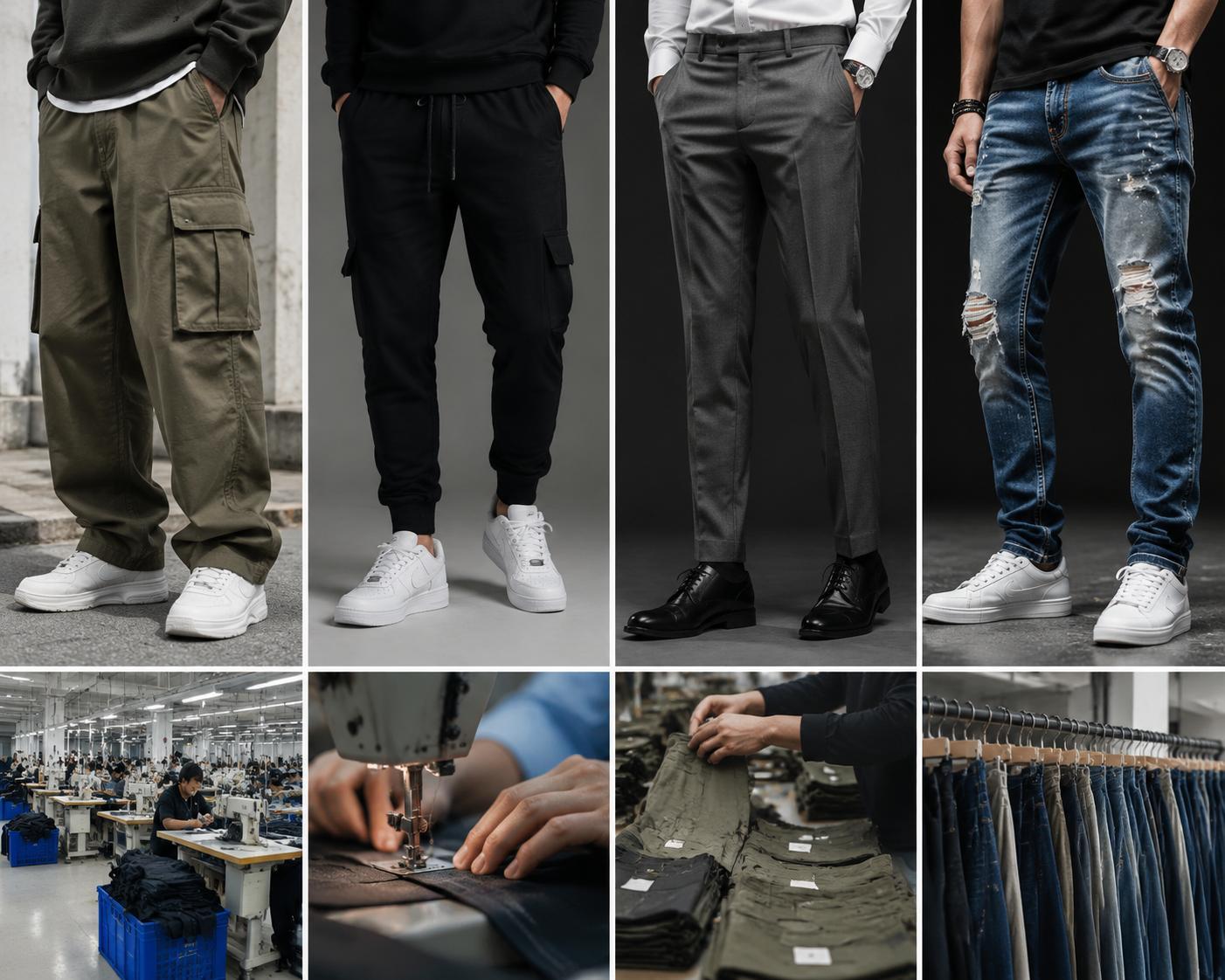
Specialized pants include cargo pants, joggers, formal trousers, and designer denim. These are used in workwear, athletic, and luxury fashion markets. Many brands also rely on OEM and ODM manufacturers to create customized pants collections, especially for private label development and small-batch production.
Dive Deeper: Specialization Is Where Profit Margins Are Created
Basic pants sell volume. Specialized pants create brand identity and margin.
Cargo Pants: Functional Streetwear Hybrid
Cargo pants combine utility and aesthetics. Multiple pockets are not just functional—they are visual design elements.
Joggers: Comfort-First Manufacturing
Joggers use elastic waistbands and soft fabrics, requiring different sewing techniques than structured trousers.
Formal Pants: Precision Engineering
Suit trousers require high accuracy in stitching and symmetry.
Luxury Denim: Where Customization Matters Most
High-end brands increasingly demand:
Custom washes
Unique silhouettes
Limited production runs
OEM/ODM Production Reality
In modern fashion supply chains, brands rarely produce in-house. Instead, they rely on manufacturers to translate sketches into physical garments with scalable quality control.
How Do Fabric, Fit, and Manufacturing Affect the Types of Pants Available?
Fabric, fit, and manufacturing methods determine how many pant styles exist. Stretch fabrics, denim types, and cotton blends influence comfort and durability. Fit engineering defines silhouette variations, while manufacturing capabilities allow brands to create custom designs, sizes, and private label products at scale.
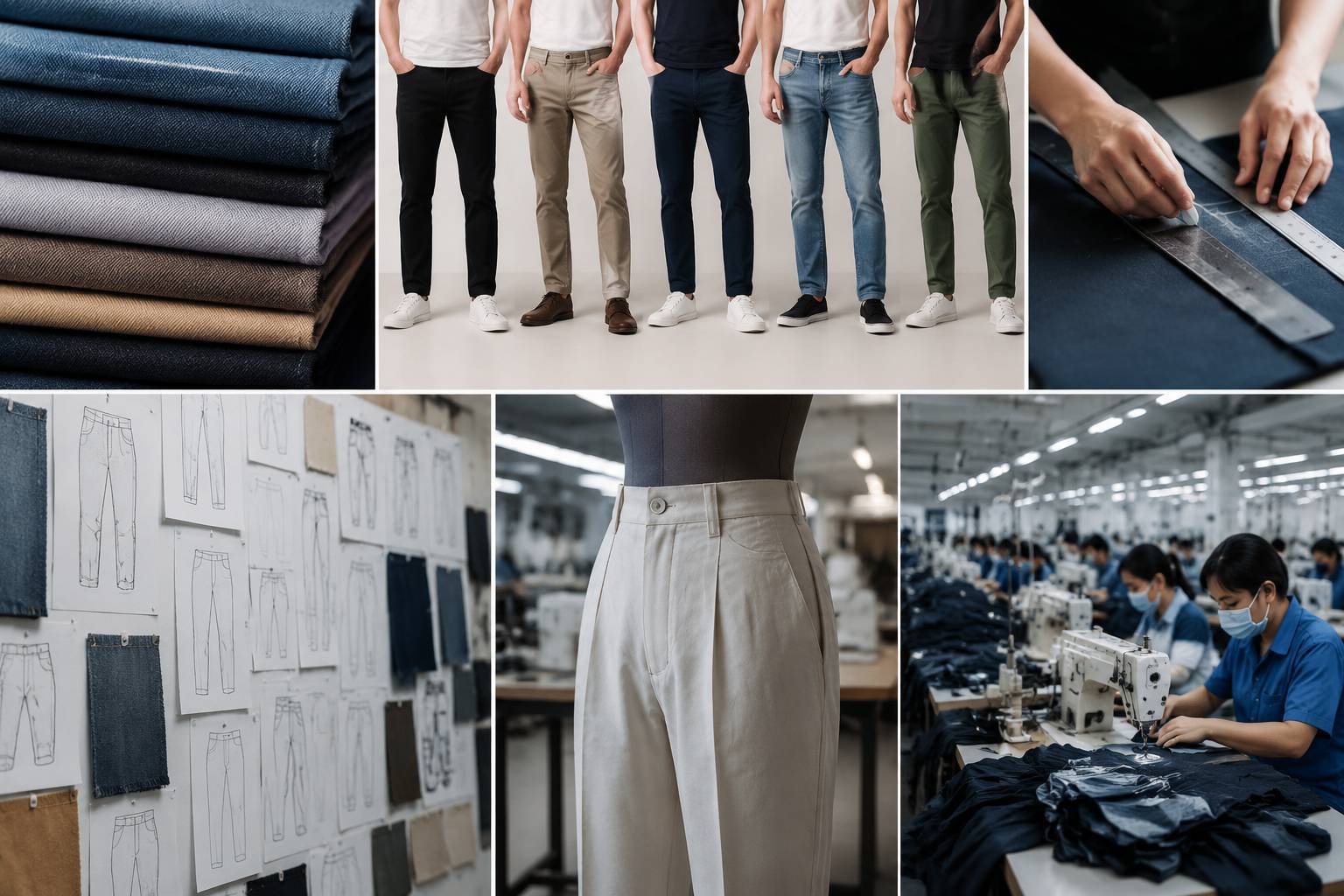
Dive Deeper: The Real Reason Pant Types Keep Expanding
Most consumers think pant types are “design choices,” but in reality they are manufacturing outcomes.
Fabric Innovation Drives New Categories
Stretch denim created skinny jeans. Heavyweight cotton created cargo pants. Recycled fibers are now creating eco-fashion categories.
Fit Engineering Is Mathematical
Pattern makers adjust waist rise, knee position, and hem opening. Small changes create entirely new product categories.
Size Inclusivity Is Expanding the Market
Plus-size jeans, extended inseams, and adaptive fits are now standard in global brands.
OEM/ODM Manufacturing Enables Unlimited Variation
Modern factories like DiZNEW can produce:
Small MOQ (as low as 30 pieces)
Large-scale orders (10,000+ units)
Full customization from sketch to sample
This flexibility is why pant categories are multiplying faster than ever.
Final Thoughts: Why Understanding Pant Types Matters More Than Ever
Pants are no longer simple garments—they are product systems shaped by culture, technology, and manufacturing capability. Whether it is straight jeans for everyday wear or stacked denim for streetwear branding, every style reflects a different consumer identity.
For fashion brands, designers, and boutique owners, the real opportunity is not just choosing a pant style—it is creating one.
Looking to Develop Custom Pants for Your Brand?
If you are a designer, online boutique owner, or fashion brand looking to build your own pant collection, DiZNEW specializes in full OEM/ODM denim manufacturing.
We provide:
Custom jeans design from sketch to final product
Wide range of styles: baggy, stacked, straight, skinny, selvedge, jogger jeans
MOQ starting from 30 pieces
Large-scale production up to 10,000+ units
Plus-size and fully customized fits
Private label manufacturing for global brands
Whether you are building a streetwear brand or a premium denim line, we help you turn ideas into real, sellable products.
👉 Contact DiZNEW to start your custom jeans development today and bring your pant designs to life with professional manufacturing support.
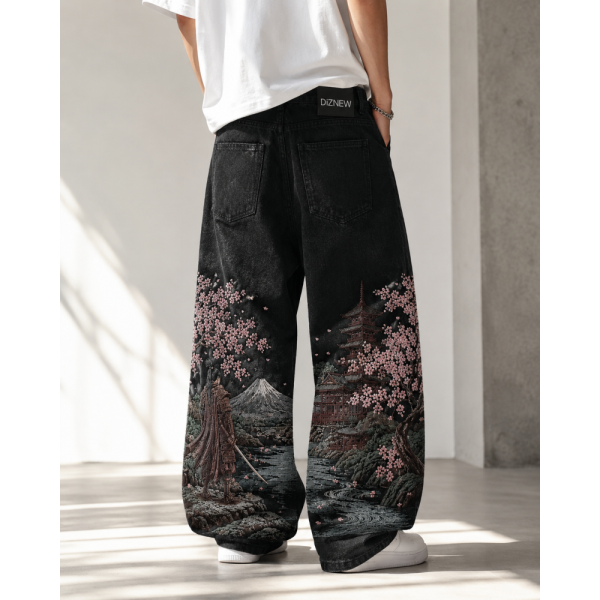
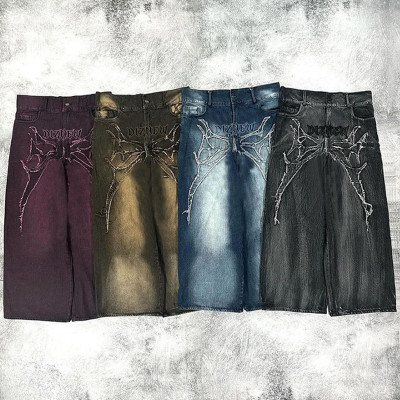
Premium wide-leg denim jeans featuring a vintage washed black finish, detailed Japanese landscape artwork, embroidery-style decoration, and custom brand label options. Designed for streetwear brands, designer labels, and private label collections looking for statement denim with strong visual storytelling.
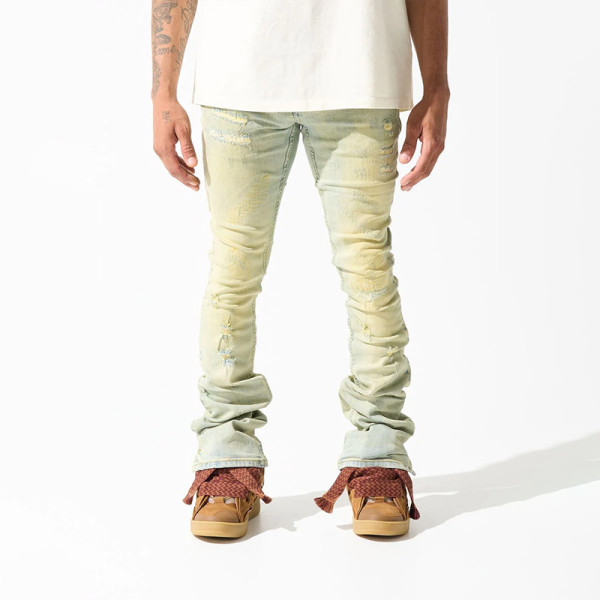
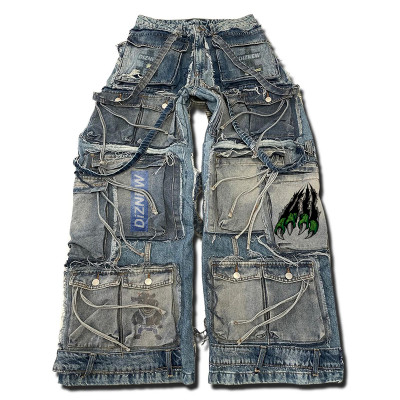
Skinny stacked jeans with distressed detailing and yellow-tinted bleach wash — bold choice for trendsetters.
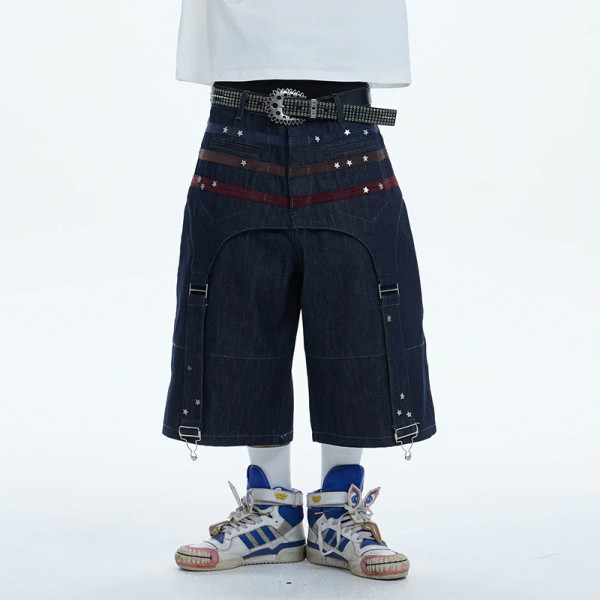
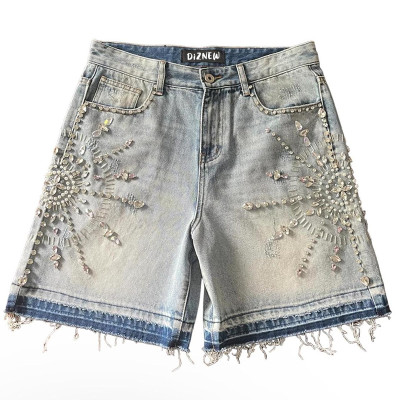
Sleek custom dark denim shorts with star studs, bold seams, and utilitarian strap details.
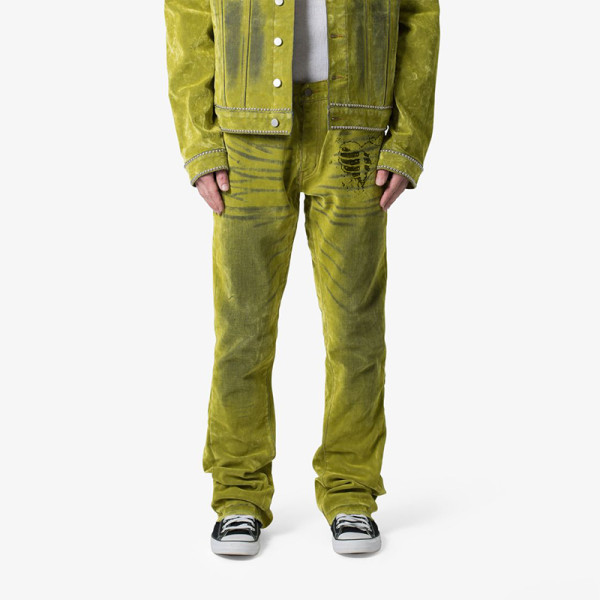
Acid green custom denim pants with washed details—made for luxury labels and boutique trendsetters.