How long have leather jeans been around?
Leather jeans sound like a modern fashion invention, but the story behind them is much older, richer, and more interesting than most shoppers realize. When people search “how long have leather jeans been around,” they are usually not asking about one single garment with one fixed birthday. They are asking about a hybrid idea: pants that look like jeans, fit like jeans, but carry the bold texture, shine, attitude, or premium feel of leather. That idea sits at the crossing point of ancient leather clothing, 19th-century workwear, motorcycle culture, rock-and-roll styling, luxury fashion, and today’s custom denim manufacturing.
Leather jeans, as we understand them today, are a modern hybrid of leather pants and denim jeans. Leather pants have existed in practical forms for centuries, while blue jeans became commercially important after the 1873 riveted work-pants patent. The term “leather jeans” became more relevant later, as brands combined jeans construction with genuine leather, faux leather, coated denim, and leather-look fabrics.
Think of it this way: a miner in the 1870s needed strong riveted pants. A biker in the 1950s needed protective leather. A rock star in the 1970s wanted stage attitude. A boutique owner in 2026 wants a sellable product that feels bold, wearable, and custom. Leather jeans are where all those stories meet. And if you are a designer, online boutique owner, influencer brand, or private-label denim buyer, understanding that story can help you build a product customers do not just wear once — they remember.
What Are Leather Jeans, and Are They the Same as Leather Pants?
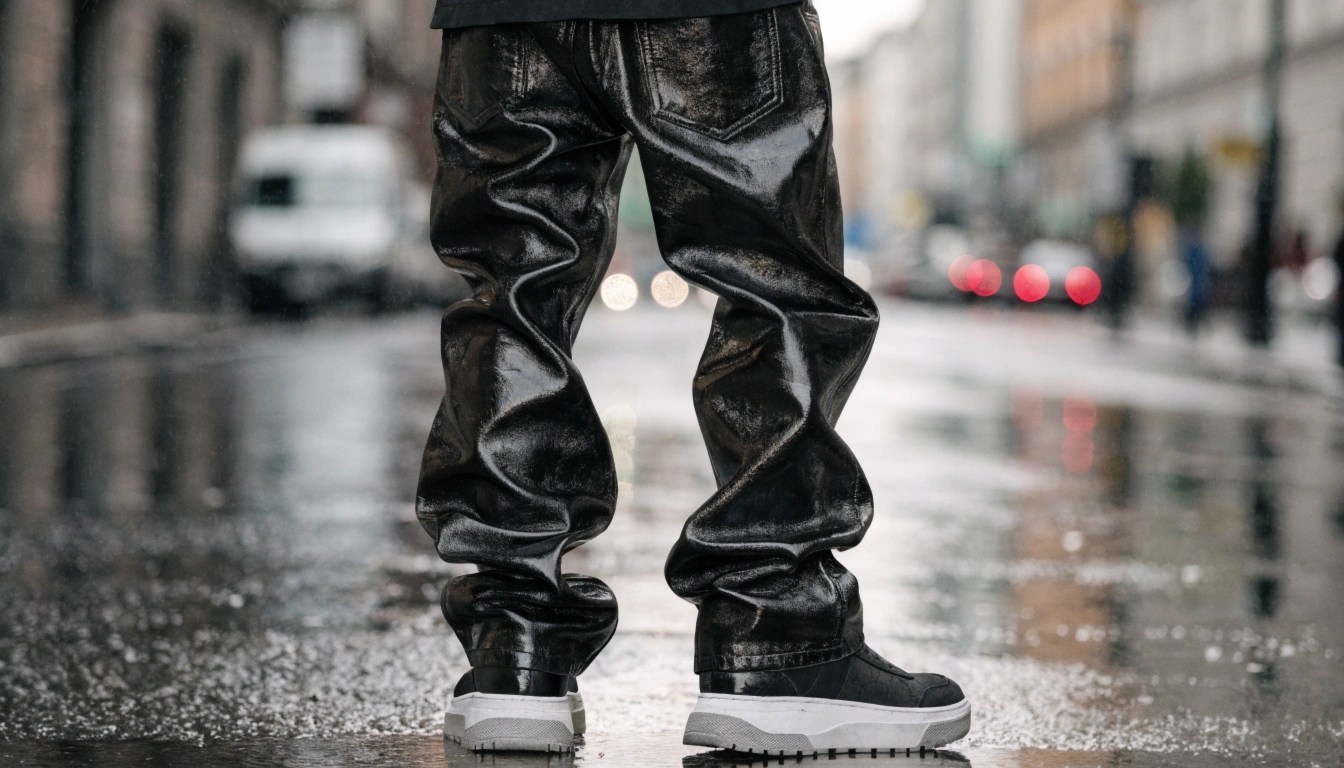
Leather jeans are jeans-style pants made from genuine leather, faux leather, PU leather, coated denim, waxed denim, or leather-look stretch fabric. They are not always the same as classic leather pants. The main difference is construction: leather jeans usually borrow denim details such as five pockets, belt loops, a back yoke, rivets, zipper fly, and jean-like fits.
What does “leather jeans” actually mean in fashion?
“Leather jeans” is not always a technical manufacturing term. It is often a shopper term. A customer may type “leather jeans” into Google because they want pants that feel more structured than leggings, more casual than formal leather trousers, and more fashion-forward than regular denim. In other words, they want the shape language of jeans with the visual impact of leather.
This is where product development becomes important. A true leather jean is usually patterned closer to a denim jean than to a loose trouser. It may include a shaped waistband, five-pocket layout, back yoke, coin pocket, belt loops, rivets, tack buttons, zipper fly, and jean-style topstitching. The material, however, can vary widely. Some brands use genuine leather. Others use PU leather, vegan leather, coated denim, waxed denim, stretch-coated cotton, or mixed fabric panels.
From a buyer’s point of view, this matters because customers may search for “leather jeans” but expect different things. One customer wants real lambskin skinny pants. Another wants black coated denim that looks like leather but feels like stretch jeans. Another wants stacked faux leather pants for a streetwear drop. Another wants plus-size leather-look jeans that are comfortable enough for daily wear. The keyword is the same, but the product expectation is different.
How are leather jeans different from leather pants, leather leggings, and coated jeans?
Leather pants are a broad category. They can be trousers, moto pants, joggers, leggings, flares, cargo pants, or high-fashion runway pieces. Leather leggings are usually tighter, simpler, and stretchier, often without jean pockets or structured waistband details. Coated jeans are usually denim or cotton-blend pants finished with a coating that gives them shine, waxiness, or a leather-like surface.
Leather jeans sit between these categories. They look familiar because they borrow from denim. That familiarity makes them easier to sell. Many customers are scared of “full leather pants” because they imagine something too tight, too hot, too expensive, or too hard to style. But when the same idea is presented as a jean — straight-leg leather jeans, baggy leather jeans, stacked leather jeans, or coated denim jeans — it feels more wearable.
For fashion brands, this is a big opportunity. The best-selling product is not always the most dramatic one. Sometimes it is the product that gives customers a small push into a bolder style without making them feel uncomfortable. Leather jeans do exactly that. They say, “You can keep your favorite jeans fit, but upgrade the texture.”
| Product Type | Main Look | Typical Construction | Best For |
| Genuine leather jeans | Premium, bold, luxury | Jean-style pattern in real leather | High-end brands, limited drops |
| Faux leather jeans | Fashionable, lower cost | PU or vegan leather with jean details | Boutique brands, trend-driven collections |
| Coated denim jeans | Denim comfort with leather-like shine | Cotton denim with coating | Everyday wear, scalable production |
Waxed denim jeans | Rugged, vintage, slightly glossy | Denim with wax finish | Menswear, biker, western, streetwear |
Leather leggings | Tight, sleek, minimal | Stretch body-hugging fit | Women’s fashion, partywear |
Leather trousers | Polished, tailored | Trouser-style pattern | Workwear-inspired or luxury styling |
Why do customers search for leather jeans instead of regular jeans?
The simple answer is emotion. Regular jeans are reliable. Leather jeans are memorable. They create a stronger first impression in photos, social media videos, boutique lookbooks, and product pages. For online sellers, this matters because customers often decide within seconds whether a product feels special enough to click.
Leather jeans also solve a common fashion problem: how to look dressed up without trying too hard. A black straight-leg leather-look jean with a white tee and boots feels more styled than basic denim. A stacked faux leather jean with sneakers and an oversized hoodie fits streetwear buyers. A coated skinny jean with a denim jacket gives a boutique customer a night-out look without needing a dress.
For custom denim brands, the key is not simply “make leather pants.” The key is matching material, fit, price point, and customer lifestyle. A high-end label may want genuine leather or recycled leather-blend fabric. A fast-moving online boutique may prefer coated stretch denim because it is more comfortable and scalable. A streetwear designer may ask for baggy PU leather jeans with exaggerated stacking. A plus-size buyer may care most about waistband comfort, thigh ease, and recovery. The winning product starts with knowing which customer you are designing for.
How Long Have Leather Pants Been Around Before Modern Jeans Existed?
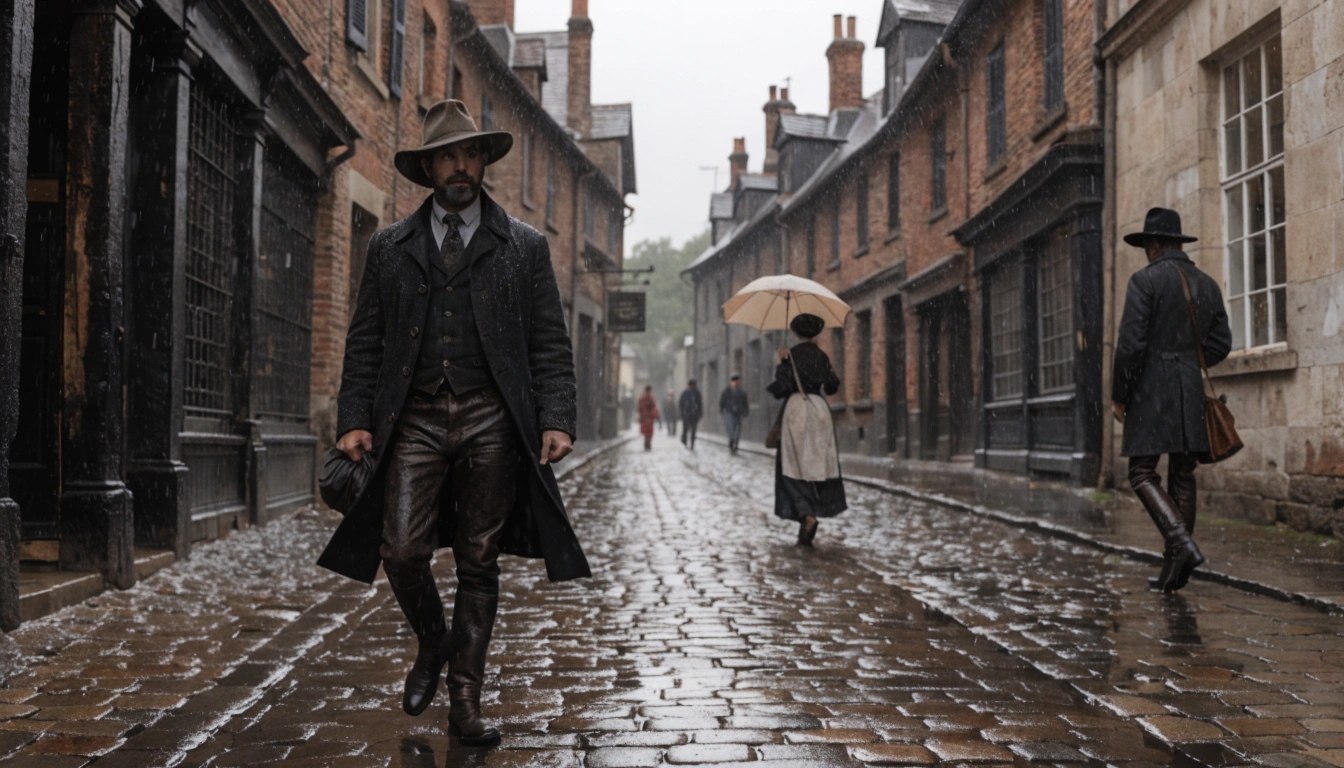
Leather pants are much older than modern jeans. Leather clothing was used for protection, warmth, riding, outdoor labor, and cultural dress long before denim became a global fashion staple. Modern blue jeans became commercially important in the late 19th century, but leather trousers and leather breeches were already part of practical clothing traditions much earlier.
How far back does the history of leather pants go?
The history of leather pants starts with function, not fashion. Before leather became a luxury texture or a runway statement, it was one of the most practical materials humans had. Animal hides could protect the body from cold, rough terrain, wind, tools, and saddle friction. That is why leather clothing appears across many cultures in different forms: boots, belts, armor pieces, jackets, aprons, gloves, and trousers.
It is important not to oversimplify this history. We cannot say that ancient people were wearing “leather jeans” in the modern sense. They were not using five-pocket denim construction or fashion merchandising language. But they were solving the same basic problem that jeans and leather jeans still solve today: how do you make pants durable enough for real movement?
Trousers themselves have deep roots in riding cultures. Pants became especially useful for people who rode horses because they protected the legs and allowed mobility. Leather, wool, felt, and other materials were used depending on region, climate, status, and availability. In Alpine Europe, leather breeches later became known through traditions such as lederhosen. These were not fashion gimmicks at first. They were durable work garments for people who needed clothes that could survive physical activity.
Who wore leather pants before they became a fashion trend?
Before leather pants became associated with celebrities, they belonged to workers, riders, hunters, soldiers, farmers, and outdoor communities. The idea was simple: leather could take abuse. It could scrape against wood, tools, rocks, saddles, and weather better than many softer fabrics. In this older context, patina was not a design effect. It was proof that the garment had lived.
This is a useful lesson for today’s designers. Many modern brands treat “distressing,” “coating,” “creasing,” and “vintage effect” as decorative options. But the emotional value of these finishes comes from real garment history. Customers like leather-look jeans with worn shine, waxed fades, crease marks, whiskers, or cracked coating because these effects suggest movement and experience. A good finish makes the pants feel like they already have a story.
At the same time, today’s customers want comfort that older leather trousers often did not provide. Traditional leather breeches were strong, but not always soft, stretchy, or easy to wash. Modern leather jeans must balance the old values of protection and durability with new expectations: body comfort, size inclusivity, flexibility, breathable lining, easy styling, and reasonable price.
Who popularized leather pants?
Leather pants became popular in modern fashion through a mix of motorcycle culture, rock music, punk style, Hollywood, and luxury fashion. Bikers gave leather pants a rebellious and protective image. Rock stars turned them into a stage uniform. Punk and glam performers made them provocative. Later, designers and celebrities brought them into mainstream wardrobes.
Names often connected with the leather-pants image include Jim Morrison, Mick Jagger, Freddie Mercury, David Bowie, Slash, and many later pop and fashion figures. The point is not that one person invented leather pants. The point is that different style tribes gave leather pants different meanings. For a biker, they meant toughness. For a rock singer, they meant sex appeal and confidence. For a runway designer, they meant texture, shape, and attitude. For a modern boutique customer, they may simply mean, “I want my outfit to look cooler.”
That cultural layering is exactly why leather jeans still work. They are not just pants. They are a shortcut to a mood. A customer who buys black stacked leather jeans is buying street presence. A customer who buys straight-leg brown leather-look jeans is buying quiet luxury. A customer who buys coated denim is buying everyday edge. Good product development translates that emotion into fit, fabric, and details.
When Did Jeans Become Popular, and How Did Leather Jeans Emerge From Denim Culture?
Modern jeans became popular after riveted work pants proved useful for labor, then moved into mainstream casualwear, youth culture, film, music, and fashion. Leather jeans emerged later as brands combined jean construction with leather-inspired materials. They borrow the trust and familiarity of denim while adding the attitude and texture of leather.
Which is the oldest jeans brand?
Levi Strauss & Co. is widely recognized as the oldest and most historically important jeans brand still associated with the birth of blue jeans. The company was founded in the 19th century, and the famous 1873 patent for riveted work pants helped define the garment we now call blue jeans. That is why Levi’s is central to almost every serious conversation about denim history.
But for a professional article, it is helpful to explain this carefully. Denim fabric existed before modern blue jeans. Work pants existed before Levi’s. Trousers existed thousands of years before both. What made Levi’s historically important was the combination of denim-like workwear, rivet reinforcement, commercial scale, and brand continuity. In other words, they did not invent the idea of pants. They helped create the blueprint for jeans as a durable, branded, mass-market product.
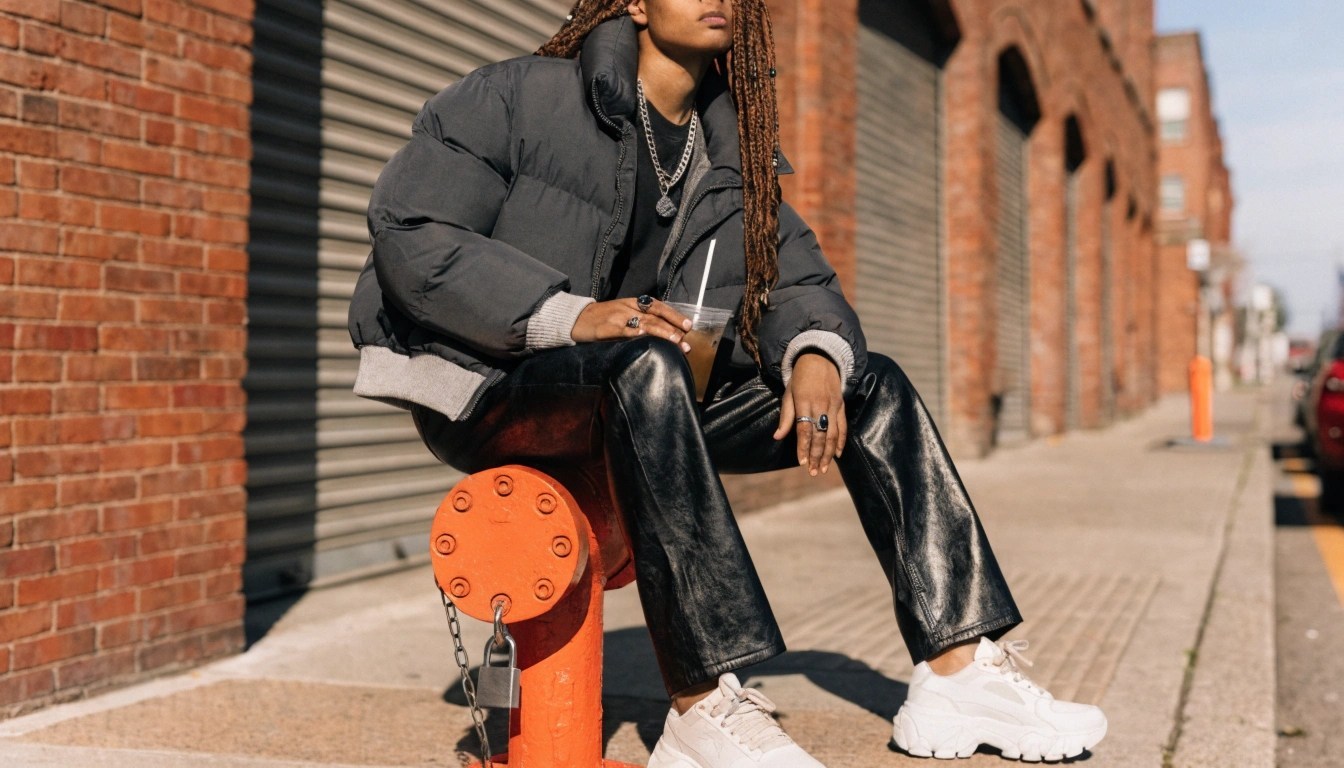
This matters for leather jeans because most leather jeans use the same visual grammar that classic jeans made famous. When a customer sees belt loops, a back yoke, rivets, patch pockets, and a five-pocket shape, they instantly understand the garment. Even if the material is PU leather or coated denim, the design language says “jeans.” That reduces risk for the buyer.
When did jeans move from workwear to everyday fashion?
Jeans became popular because they were useful first. Workers needed strong pants. Then films, music, youth culture, and casual dressing changed what jeans meant. By the mid-20th century, jeans had moved beyond mines, ranches, and factories. They became linked with rebellion, youth, freedom, and eventually everyday comfort.
That transformation created a powerful business model: take a practical garment and turn it into identity. A straight jean, skinny jean, baggy jean, selvedge jean, jogger jean, stacked jean, or distressed jean is not just a fit. It signals a lifestyle. This is why denim remains one of the most flexible categories in fashion. It can be workwear, streetwear, luxury, western, minimalist, vintage, or clubwear depending on how it is cut and finished.
Leather jeans emerged from this same flexibility. When consumers became comfortable wearing jeans everywhere, designers could start changing the surface. They could coat denim, wax denim, add moto panels, use faux leather, mix leather patches with denim, or produce full leather five-pocket pants. The jean shape remained familiar while the fabric became more expressive.
How much did a pair of jeans cost in 2000?
There was no single universal price for a pair of jeans in 2000. A practical U.S. mall reference is that mainstream jeans often sat below or around the $50 mark, while discount jeans could be lower and premium designer denim could be much higher. The bigger lesson is that apparel prices were relatively stable around that period, even while other consumer prices rose.
For brands today, the 2000 price question is useful because it reminds us that customers do not judge jeans by fabric cost alone. They judge them by perceived value. In 2000, a basic pair of mall jeans and a premium pair of designer jeans could both be “jeans,” but the customer understood why one felt more desirable: better fit, better branding, better wash, better store experience, better cultural signal.
The same applies to leather jeans now. A coated denim jean, a PU leather jean, and a genuine leather jean may all appear under similar keywords, but they should not be priced, marketed, or produced the same way. Customers are willing to pay more when the product feels intentional. They notice hand feel, stretch, lining, hardware, pocket placement, waistband comfort, logo trims, inseam length, stitching, and whether the pants look good in photos.
| Price Driver | Why It Changes Cost | Buyer-Facing Value |
| Material | Genuine leather costs more than PU or coated denim | Premium feel, durability, luxury positioning |
| Fit development | More sampling and pattern work | Better comfort, fewer returns |
| Hardware | Zippers, rivets, tack buttons, logo trims | Stronger branding and longer wear |
Finish | Coating, wax, wash, distressing, shine control | Unique look and stronger product identity |
Size range | Plus sizes and detailed grading require more work | More inclusive customer reach |
Order quantity | Larger orders usually improve unit economics | Better margin planning |
Packaging and labels | Hangtags, woven labels, patches, bags | Better retail presentation |
How did leather jeans emerge from denim culture?
Leather jeans became possible because denim culture taught customers to love pants with personality. A pair of jeans can be faded, ripped, stacked, raw, selvedge, coated, embroidered, oversized, skinny, straight, or flared — and still be understood as jeans. This flexibility opened the door to leather-look variations.
Motorcycle jeans added paneling and toughness. Rock style added shine and attitude. Luxury designers added premium materials. Streetwear added stacking, oversized fits, cargo details, and bold silhouettes. Online boutiques added fast-moving trend colors and photo-friendly styling. All of these influences pushed leather jeans from a niche idea into a category that can be customized for many different buyers.
For a designer or boutique owner, the best question is not “Are leather jeans historical?” The better question is: “Which part of the history does my customer want to wear?” If your customer loves rock fashion, you may design skinny coated black jeans. If they love luxury minimalism, you may develop straight-leg matte faux leather jeans. If they love streetwear, you may build baggy stacked PU jeans with oversized pockets. If they love western style, waxed denim or brown leather-look jeans may feel more authentic.
Why Are Leather Jeans Still Popular in Men’s and Women’s Fashion Today?
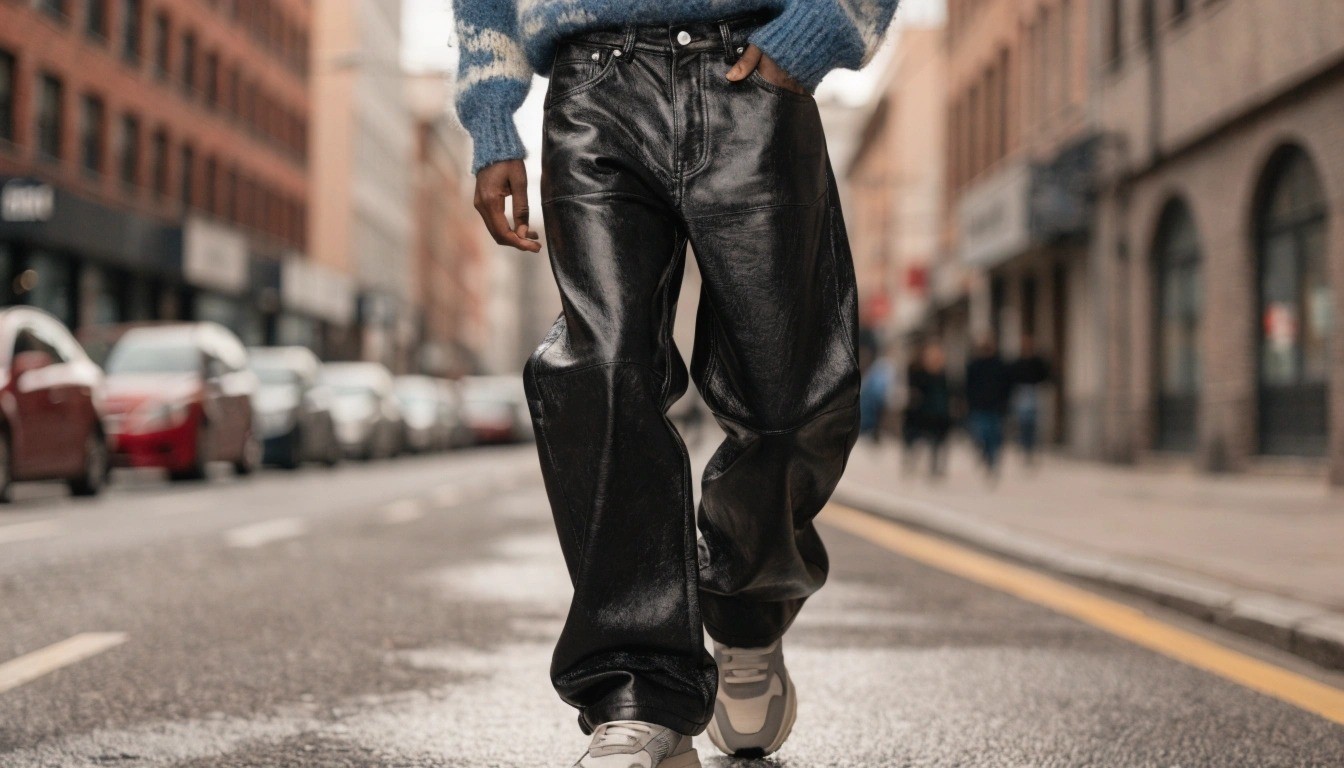
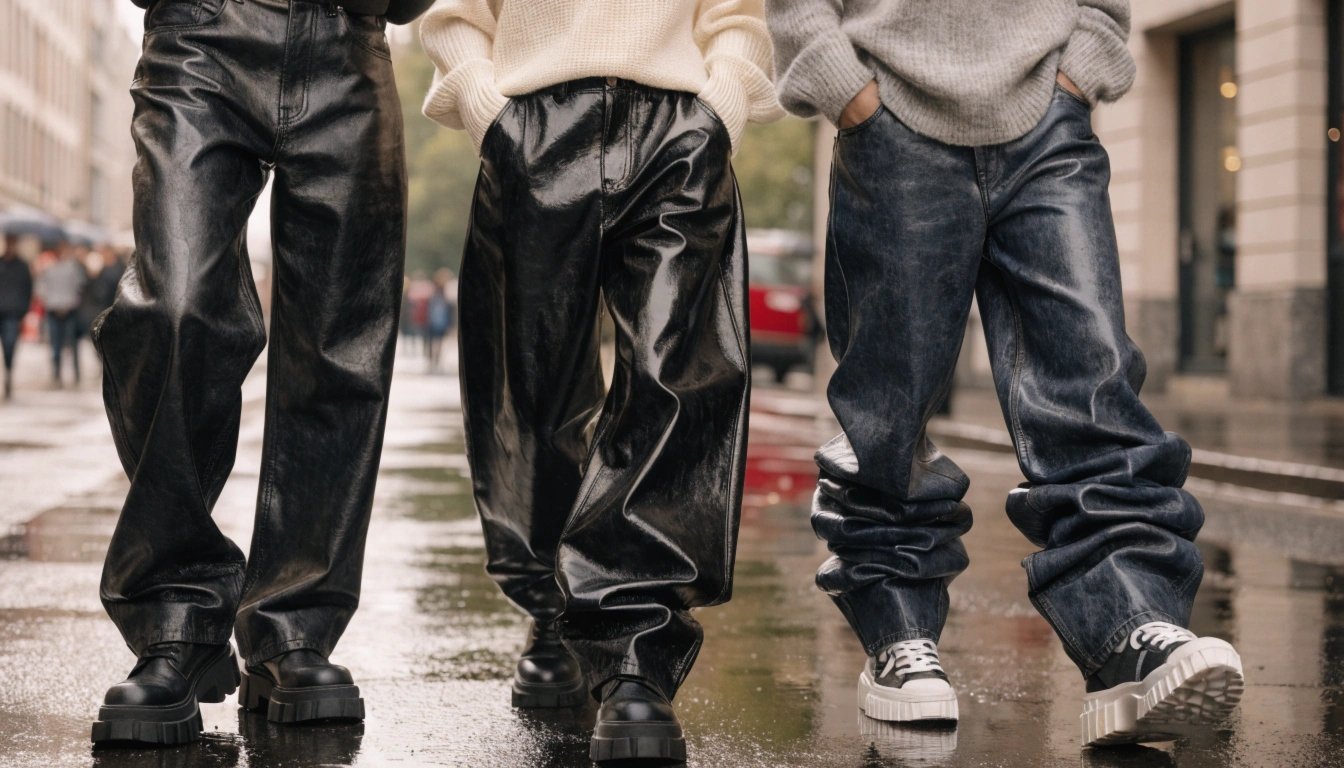
Leather jeans remain popular because they make simple outfits look stronger. They offer texture, edge, and a premium feel while still using familiar jean shapes. In 2026, leather pants are not limited to tight rock-star looks; relaxed, straight, wide-leg, baggy, stacked, faux leather, and coated denim styles all feel current.
Are leather pants still in 2026?
Yes, leather pants are still in style in 2026, but the styling has changed. The old stereotype was tight black leather pants worn only for concerts, clubs, or rebellious outfits. The modern version is wider, softer, more wearable, and more diverse. Think straight-leg leather trousers with a blazer, baggy leather jeans with sneakers, faux leather flares with a knit top, or coated denim jeans styled with an oversized denim jacket.
This shift is important for brands because trend relevance is no longer just about one silhouette. Customers want options. Some still want skinny leather jeans because they are sexy and classic. Others want straight-leg leather jeans because they look more expensive and easier to wear. Streetwear buyers may prefer stacked leather jeans or baggy leather jeans. Women’s boutique buyers may like faux leather flares or high-rise coated jeans. Plus-size customers may want comfort stretch and a waistband that does not dig in.
In 2026, leather jeans work best when they feel wearable, not costume-like. The most commercial designs usually balance attitude with comfort. Too shiny, too tight, too stiff, or too heavy can limit repeat wear. A smarter product may use a softer PU coating, a matte finish, a stretch backing, or a relaxed leg shape. That way the customer gets the leather look without feeling trapped in the pants.
Why do leather jeans keep coming back in fashion?
Leather jeans keep coming back because they do something regular denim cannot always do: they change the energy of an outfit immediately. A white T-shirt with blue jeans is classic. A white T-shirt with black leather-look straight jeans feels sharper. A hoodie with sweatpants is casual. A hoodie with stacked faux leather jeans becomes streetwear. A blazer with trousers is polished. A blazer with coated denim becomes modern and slightly rebellious.
Fashion trends also move in cycles, but texture has longer life than novelty. A strange print may feel outdated quickly. A good leather texture can return again and again because it connects to deep style references: bikers, rock stars, runway minimalism, punk, nightlife, luxury, and street culture. That is why leather jeans are useful for brands. They can be reinterpreted many times without losing their core identity.
There is also a social media reason. Leather-look pants photograph well. They catch light, define shape, and make product images look more expensive. For online boutique owners and influencer shops, that matters. A strong product photo can increase clicks. A strong try-on video can show stretch, shine, fit, and movement. A strong silhouette can make the customer imagine the outfit before reading the full product description.
How can men and women style leather jeans today?
The easiest way to style leather jeans is to balance the texture. If the pants are shiny, keep the top simple. If the pants are baggy, make the top cleaner or shorter. If the pants are skinny, add an oversized jacket or denim shirt. If the pants are straight-leg, pair them with boots, loafers, sneakers, or pointed shoes depending on the customer.
For women’s fashion, leather jeans work with cropped knits, oversized shirts, bodysuits, denim jackets, long coats, blazers, tube tops, and heeled boots. For men’s fashion, they can work with graphic tees, boxy hoodies, bomber jackets, denim jackets, leather jackets, flannel shirts, and chunky sneakers. For streetwear, stacked leather jeans with a relaxed hoodie and sneakers are a strong visual. For boutique styling, high-rise coated jeans with a tucked blouse and boots can feel polished but still cool.
Brands should also think in outfits, not just products. A customer rarely buys a pair of leather jeans in isolation. They ask, “Where will I wear this?” “What shoes go with it?” “Can I wear it casually?” “Will it look too much?” Your product page should answer those questions. Show casual, evening, and layered styling. Use videos to show movement. Include fit notes, fabric stretch, rise, inseam, and care instructions.
What leather jeans styles are most popular now?
Popular leather-jean directions include skinny leather jeans, straight-leg leather jeans, relaxed leather trousers, baggy leather jeans, stacked leather jeans, jogger-style leather jeans, faux leather flared pants, waxed denim, and coated denim jeans. Each style speaks to a different audience.
Skinny leather jeans still work for customers who want a sleek, night-out silhouette. Straight-leg leather jeans are easier for daily wear and often feel more premium. Baggy leather jeans and stacked leather jeans are strong for streetwear and influencer-led brands. Jogger leather jeans work for comfort-driven customers. Faux leather flares are strong for women’s boutiques. Waxed and coated denim are smart for brands that want a leather look with better scalability and denim-like comfort.
For DiZNEW’s typical customers — designers, online boutique owners, high-end brand buyers, and influencer shops — this category is especially interesting because it supports deep customization. You can create a small 30-piece test order to validate a style, or scale to larger production when a silhouette proves successful. The best leather-jean product is not copied from a trend board. It is engineered around the customer’s body, lifestyle, price expectation, and brand identity.
What Should Brands Know Before Customizing Leather Jeans or Leather-Look Jeans?
Brands should decide the target customer, material, fit, finish, size range, and price position before production. Genuine leather, faux leather, PU-coated denim, waxed denim, and stretch coated fabrics all behave differently. A good custom factory should help turn sketches, reference photos, or tech packs into wearable, scalable products.
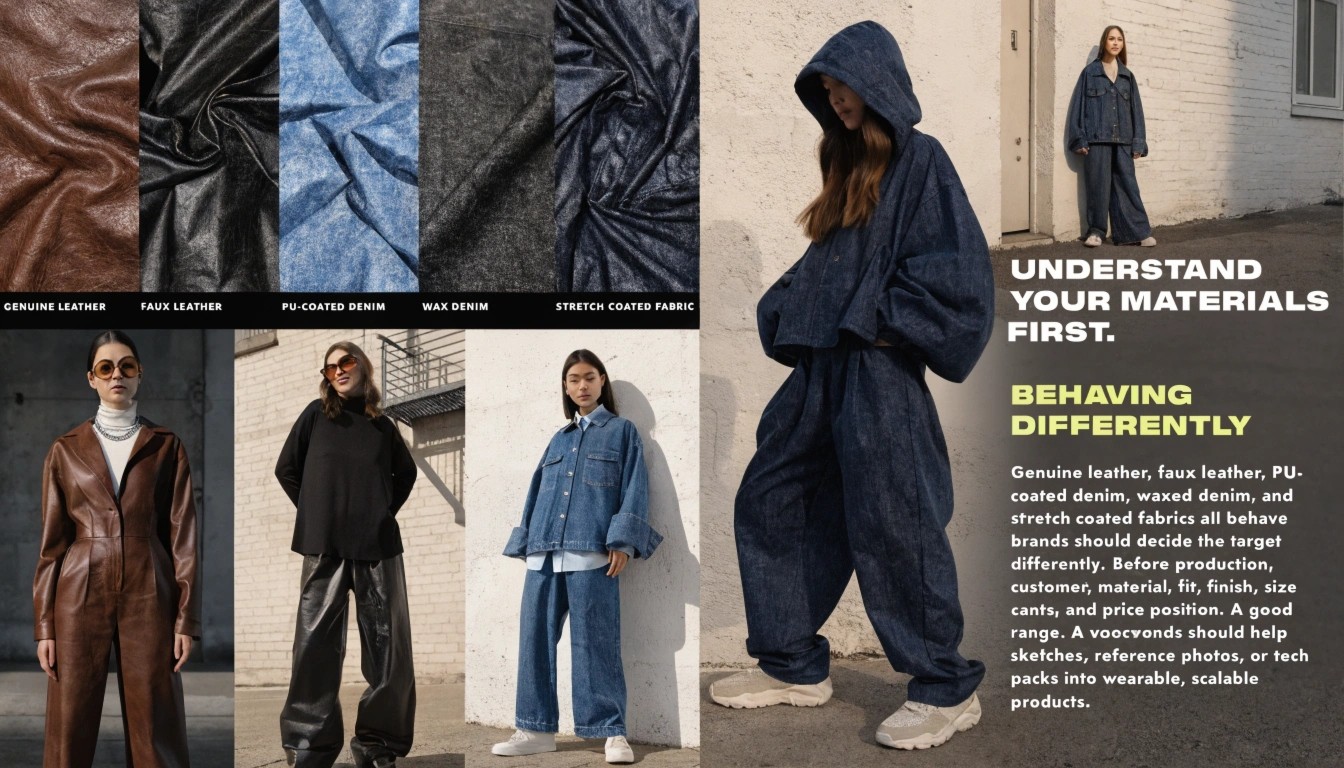
What materials can be used to make leather jeans?
Material choice is the first major decision. Genuine leather gives a premium feel, but it costs more, requires careful cutting, and may not suit every price point. Faux leather and PU leather are more accessible for trend-driven brands, but quality varies widely. Cheap PU can peel, feel plastic, or trap heat. Better PU leather can be soft, flexible, and commercially strong when paired with the right backing and construction.
Coated denim is often a smart middle path. It gives the customer a leather-like look while keeping the base comfort of denim. Waxed denim is another option, especially for menswear, biker-inspired styles, and vintage streetwear. Stretch coated fabrics are useful for skinny fits, women’s boutique styles, and plus-size jeans because they offer more movement.
The mistake many new brands make is choosing fabric only by appearance. A swatch may look good on a table but behave differently on the body. It may crack when stretched, wrinkle badly, feel too hot, or fail after washing. That is why sampling is not optional. A leather-look jean should be tested for stretch recovery, seam strength, coating durability, comfort, and fit.
| Material Option | Pros | Watch-Outs | Best Product Direction |
| Genuine leather | Premium, durable, luxury feel | Higher cost, special care, cutting loss | High-end leather jeans, limited drops |
| PU leather | Fashionable, scalaAnimal-free positioningble, lower cost | Quality varies, peeling risk if poor grade | Boutique trends, streetwear, fast drops |
| Vegan leather | Animal-free positioning | Quality varies, peeling risk if poor grade | Boutique trends, streetwear, fast drops |
Vegan leather | Animal-free positioning | Needs quality backing and testing | Conscious fashion collections |
Coated denim | Comfortable, familiar, leather-like surface | Coating must be durable | Everyday leather-look jeans |
Waxed denim | Rugged, vintage, natural patina | Finish changes over time | Menswear, biker, western, workwear |
Stretch coated fabric | Comfortable, body-friendly | Must control recovery and cracking | Skinny, plus-size, women’s fashion |
What design details matter most in custom leather jeans?
Fit is everything. Leather jeans are less forgiving than regular denim because the surface attracts attention. If the thigh is too tight, the customer sees pulling. If the knee shape is wrong, the pants may crease badly. If the waistband is stiff, the customer may return the product. If the inseam is too short for a stacked style, the whole design fails.
Pattern engineering should match the material. Genuine leather may need different seam allowances and reinforcement than coated denim. PU leather may require careful needle choice, stitch tension, and seam construction to avoid tearing. Coated fabrics may need testing to prevent cracking at high-stress points. Pocket bags, lining, zippers, rivets, waistband structure, and labels should all be selected based on the final use case.
For branding, leather jeans offer many customization points. A brand can add logo buttons, metal rivets, embossed patches, woven labels, embroidery, contrast stitching, zipper pockets, moto panels, cargo pockets, stacked hems, distressing, washing effects, special coatings, or custom packaging. But more details do not always mean a better product. A luxury customer may prefer clean matte straight-leg jeans. A streetwear customer may want exaggerated seams and stacking. A boutique customer may want a flattering high rise and soft stretch.
What should designers and boutique owners consider before production?
Before production, brands should answer five questions. Who is the customer? What price can they accept? What fit do they already buy? What problem does this product solve? What makes it different from what is already online?
A designer may start with a sketch. A boutique owner may start with a best-selling silhouette. An influencer brand may start with a viral outfit reference. A high-end buyer may start with a fabric direction and logo concept. A good OEM/ODM manufacturer can turn those starting points into real samples, but the clearer the product direction, the smoother the development process.
Size range is another major decision. Plus-size leather jeans require real grading work, not just adding inches everywhere. The waistband, rise, thigh, hip, knee, inseam, and leg opening must be balanced. For U.S. boutique customers, fit consistency can make or break repeat orders. A beautiful product that does not fit real bodies will not build loyalty.
Order quantity also matters. DiZNEW can support low MOQ custom orders starting from 30 pieces, which is useful for designers and boutique owners testing a new leather-look jeans concept. For brands ready to scale, DiZNEW can also handle large orders up to 10,000 pieces. This flexibility is valuable because leather jeans are often best launched through testing: sample first, small batch second, scale after customer feedback.
Why are leather jeans a strong custom product category for fashion brands?
Leather jeans are strong because they sit in a premium-looking category without being limited to one customer group. They can be made sexy, casual, oversized, minimalist, street, western, biker, luxury, or boutique feminine. That makes them highly adaptable for private-label collections.
For online sellers, leather jeans also create strong visual merchandising. They look good in product photos, short videos, try-on hauls, lookbooks, and social media styling posts. They can anchor a capsule collection: leather jeans plus denim jackets, denim shirts, cropped tops, oversized hoodies, or custom outerwear. A single good leather-jean fit can also become a repeatable base for multiple colors and finishes.
For designers, the category allows creativity. You can develop black stacked leather jeans with a long inseam, brown straight-leg waxed denim, high-rise coated skinny jeans, plus-size faux leather flare jeans, jogger-style leather jeans, or selvedge-inspired leather-look denim. You can add your own logo, hardware, patch, embroidery, and packaging. With the right factory partner, the idea moves from reference image to pattern, sample, fitting, correction, bulk production, and quality control.
DiZNEW is especially positioned for this type of work because the company focuses on denim R&D, manufacturing, sales, and deep customization. With over 20 years of jeans experience, DiZNEW can help brands develop plus-size jeans, baggy jeans, stacked jeans, straight jeans, selvedge jeans, skinny jeans, jogger jeans, denim jackets, denim shorts, denim shirts, and leather-look denim styles. For brands serving U.S. boutiques, high-end labels, online stores, and influencer shops, this matters: you need a factory that understands both fashion design and production reality.
So, How Long Have Leather Jeans Been Around — and Why Should Brands Care?
Leather jeans do not have one simple birthday. Leather pants are much older than modern jeans. Blue jeans became a defined commercial garment in the 19th century. Leather jeans, as shoppers understand them today, came later — when designers and manufacturers began blending denim construction with leather, faux leather, coated denim, waxed finishes, and streetwear silhouettes.
That is exactly why the category is so powerful. Leather jeans carry the history of durability, the attitude of leather culture, the familiarity of denim, and the commercial flexibility of modern custom manufacturing. They can be premium or affordable, minimal or bold, skinny or baggy, genuine leather or coated denim. For customers, they are a statement piece that still feels wearable. For brands, they are a product category with room for creativity, margin, and repeat development.
If you are a fashion designer, boutique owner, high-end brand buyer, or online influencer store looking to develop custom leather jeans or leather-look denim, DiZNEW can help you turn ideas into real products. Whether you have a sketch, tech pack, reference photo, logo concept, or just a target customer in mind, DiZNEW can support fabric selection, fit development, sample making, OEM/ODM customization, private-label branding, and bulk production.
Start with a small custom order from 30 pieces to test your market, or build toward larger production up to 10,000 pieces when your design is ready to scale. From baggy leather-look jeans to stacked coated denim, straight-leg faux leather jeans, plus-size custom fits, jogger jeans, and full denim collections, DiZNEW helps brands create products customers can see, feel, wear, and remember.
Send DiZNEW your design idea, target price, size range, and reference photos today — and start developing your next custom leather jeans collection with a factory that understands denim deeply.