Are Diesel and Other Expensive Jeans Really Worth It?
You look at the price tag of a pair of Diesel jeans and your jaw drops. You wonder if you are paying for a fancy logo or if there is actual magic in the denim.
Yes, Diesel and similar premium jeans are worth the investment because they often utilize mercerized cotton and high-end Italian fabrics. These materials are incredibly durable, resist fading, and hold their shape for 3 to 4 years, unlike cheaper alternatives that sag or tear quickly.
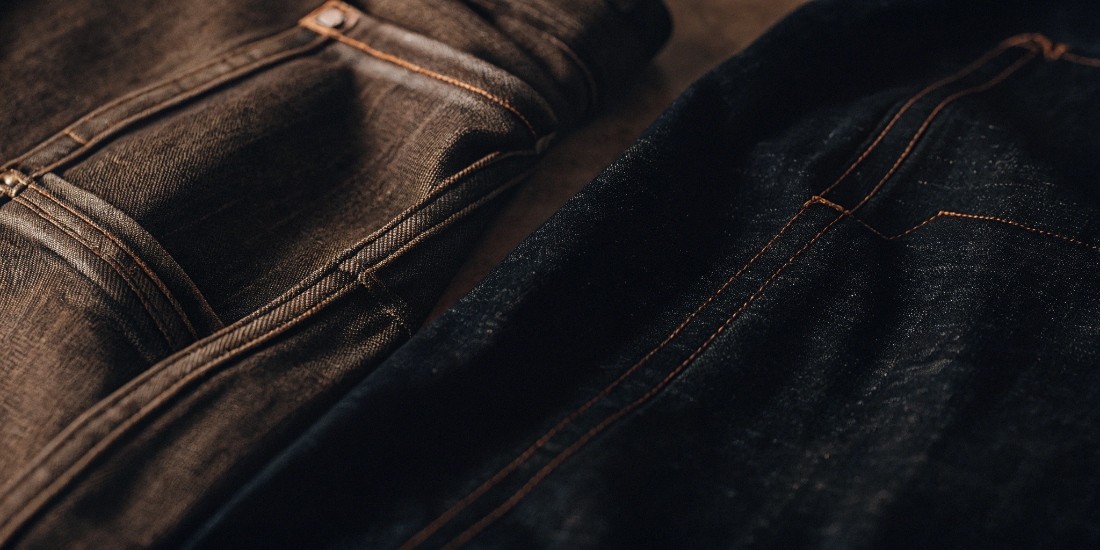
When you work in a factory like mine, you stop looking at the brand name and start looking at the fibers. There is a reason why a pair of Italian-made jeans costs $300 and a pair from a fast-fashion rack costs $30. It is not just marketing. It is the chemistry of the cotton and the engineering of the weave. However, the market is tricky. You need to know exactly what you are paying for so you do not get tricked by a high price on a low-quality product.
Are expensive jeans actually more durable?
You buy a pair of cheap jeans and within months, the inner thighs rub through. It is frustrating to constantly replace pants that fall apart.
Expensive jeans are significantly more durable because they use long-staple cotton and tighter weaving techniques. A high-end pair, like those from Diesel, can be washed and worn repeatedly for years without the fabric thinning or the seams bursting.
Let's talk about why Diesel is specifically mentioned as "worth it." In the manufacturing world, we know that Diesel often uses mercerized cotton. Mercerization is a treatment that swells the cotton fibers. It makes the fabric stronger, smoother, and more receptive to dye. This means the color stays deep and rich, and the fabric doesn't pill or fuzz up after you wash it.
I have seen customers wear the same pair of high-end Italian denim for 3 to 4 years. They throw them in the wash, wear them hard, and the jeans still look structurally sound. The "bones" of the jean—the warp and weft threads—are just superior. Cheaper jeans use short-staple cotton.
Think of it like building a house with plywood versus solid oak. The short fibers break easily, leading to holes in high-friction areas like the crotch or knees. When you pay that premium price, you are essentially pre-paying for the longevity that will save you from buying three replacement pairs later.
Durability Factors
| Feature | Cheap Denim | Premium (Diesel/Italian) |
Cotton Type | Short Staple (Breaks easily) | Long Staple / Mercerized (Strong) |
| Weave Density | Loose (Loses shape) | Tight (High tension) |
| Lifespan | 6 - 12 Months | 3 - 5+ Years |
| Color Fastness | Fades unevenly | Deep, rich retention |
Do expensive jeans fit better and hold their shape longer?
There is nothing worse than jeans that fit perfectly in the morning but look like a diaper by 2 PM. You want fit retention, not baggy knees.
Yes, expensive jeans offer superior fit retention because they use high-grade elastane (Lycra) with excellent recovery properties. This ensures the denim stretches to move with you but snaps back to its original shape immediately, preventing "knee bags" and waist gaps.
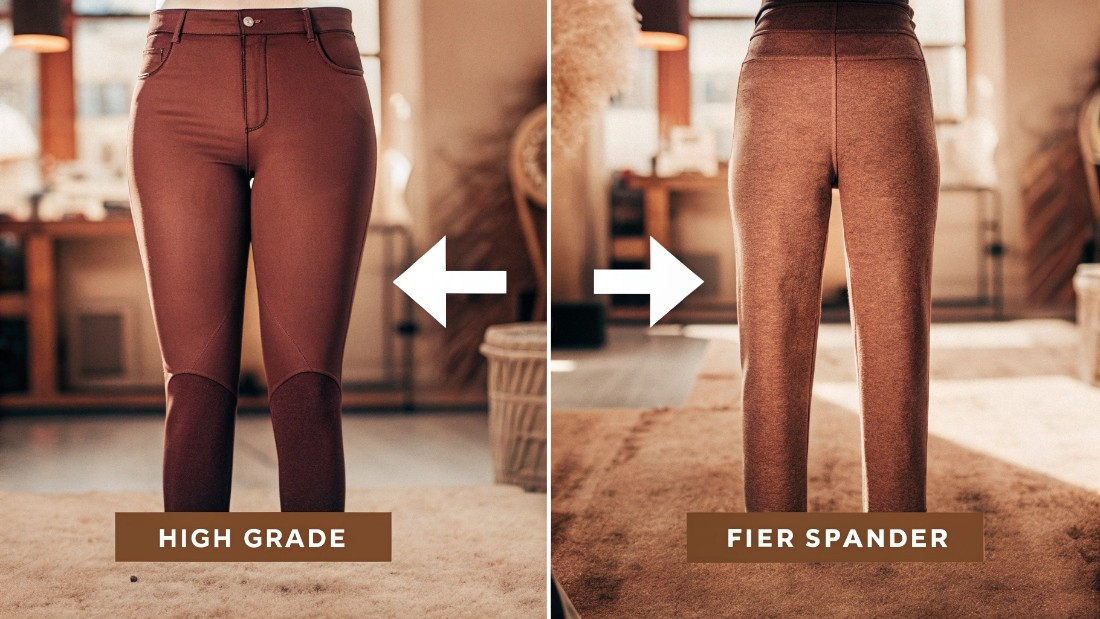
Fit is where the money really shows. In my factory, pattern making is an art form. A cheap brand will use a "cookie cutter" pattern that is meant to fit everyone okay, but no one perfectly. A luxury brand spends thousands of dollars fitting their jeans on live models of different sizes to ensure the curve of the hip is perfect.
But the real secret is "recovery." This is the technical term for how well the fabric bounces back after being stretched. Cheap jeans use basic spandex. If you stretch cheap spandex, it eventually just stays stretched out. That is why your knees get baggy. Premium brands use high-tech fibers like T400 or dual-core Lycra. These fibers act like a rubber band that never loses its snap.
Also, the mercerized cotton I mentioned earlier plays a role here too. Because the fiber is smooth and round, it doesn't get rough or stiff. It drapes over the body naturally. So, when you ask if they fit better, the answer is yes, because the material is engineered to hold you in without restricting you.
How can I tell the quality of a pair of jeans?
You stand in a store surrounded by stacks of denim, unable to tell the difference between the $50 pair and the $200 pair. You need a checklist.
To judge quality, check the weight of the fabric, the hardware, and the stitching. High-quality jeans will feel heavy and substantial, feature copper or heavy metal buttons and zippers (like YKK), and have clean, high-density stitching with no loose threads.
You don't need a degree in textiles to spot quality; you just need to use your hands and eyes. First, touch the fabric. Does it feel flimsy and paper-thin, or does it have some weight and "guts" to it? Good denim should feel substantial even if it is soft.
Next, look at the hardware. This is a dead giveaway. Cheap brands use aluminum or plastic buttons that feel light and hollow. Quality brands use copper, brass, or heavy alloy. Check the zipper. If it doesn't say YKK or a reputable brand name, or if it feels sticky when you zip it, put it back.
Finally, turn the jeans inside out. This is my favorite trick. Look at the stitching along the seams. Is it messy? Are there threads hanging everywhere? A luxury jean looks almost as good on the inside as it does on the outside. Look for "chain stitching" on the waistband—it looks like a rope loop. This is a stronger stitch that allows for stretch. If the manufacturer cut corners on the stitching, they definitely cut corners on the fabric.
How should I properly wash and care for expensive jeans to maximize their lifespan?
You just spent a fortune on great jeans, and you are terrified that one wrong move in the laundry room will ruin them. You need a safe routine.
To maximize lifespan, wash expensive jeans as infrequently as possible, always turn them inside out, use cold water, and never put them in a dryer. Heat destroys the elastic fibers that give the jeans their shape, while cold water preserves the indigo dye.
If you want your Diesel jeans to last those 3 or 4 years I promised, you have to treat them right. The washing machine is not your friend. The agitation beats up the fabric. I recommend washing them only when they actually smell or are visibly dirty.
When you do wash them, turn them inside out. This stops the indigo from rubbing against the metal drum of the machine, which causes those ugly white streaks we call "marbling." Use a mild detergent and cold water. Hot water cooks the cotton and shrinks the fibers.
The most important rule? No dryer. I cannot stress this enough. If your jeans have any stretch in them (and most do), the high heat of a dryer melts the elastane. Once that elastic melts, it breaks, and that is how you get saggy, shapeless jeans. Hang them up by the belt loops in the shade. The sun can bleach the color, so indoor drying or shade drying is best. Treat them like a dress shirt, not like gym socks.
Are there other recommended brands that offer similar quality for a lower price?
You want the quality of Italian denim, but your budget is tight. You need to know where the hidden gems are in the market.
Yes, you can find high-quality jeans for significantly less at retailers like Costco or from heritage brands like Levi's. Alternatively, for the price of a designer pair ($200+), you can opt for custom-made jeans that offer superior fit and materials tailored specifically to your body.
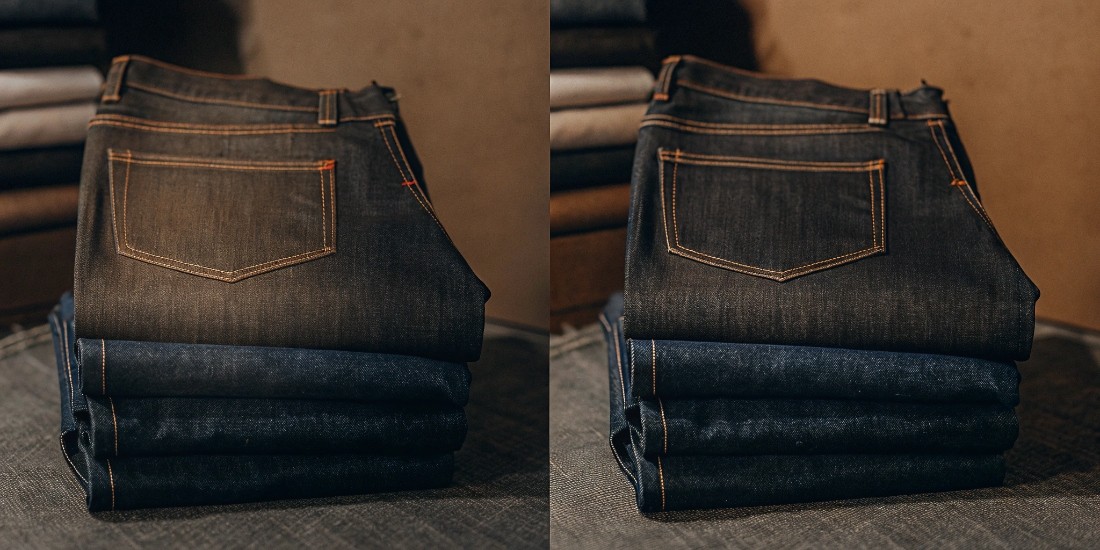
You don't have to spend $300 to get a jean that lasts. Levi's has been doing this for over 100 years. If you buy their premium lines (not the cheapest ones), you get incredible value. They know how to make a jean that survives.
Surprisingly, big retailers like Costco (Kirkland), Sam's Club, or brands like Eddie Bauer and Land's End offer shocking quality. Why? Because they buy fabric in massive quantities. They might use the same mill as a mid-tier designer brand but sell it for $20 because they don't have the marketing overhead. They use good zippers and decent cotton.
However, if you are willing to spend that $200-$300 range, consider custom jeans. Instead of paying for Diesel's marketing, you pay for personalization. As a manufacturer, I can tell you that a custom jean is the ultimate luxury. We cut the pattern to your body. You choose the fabric weight, the color, and the pocket style. It fits you perfectly from day one. It is a different kind of value—you aren't buying a logo; you are buying a garment engineered for you.
Conclusion
Diesel and similar brands are worth the money for their durability and fabric technology, but you can also find great value in heritage brands like Levi's or by investing in custom-made denim.
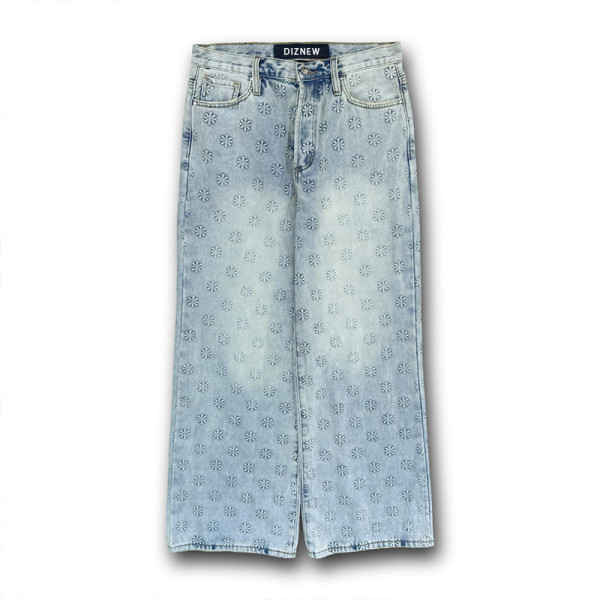
Vintage-washed wide-leg jeans with floral embossing, tailored for boutique brands and premium designers.
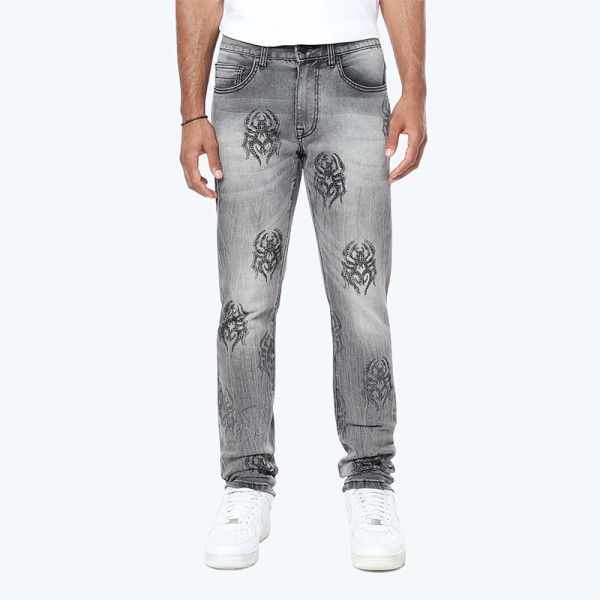
Classic gray denim meets edgy tribal flame embroidery for a bold, confident streetwear vibe.
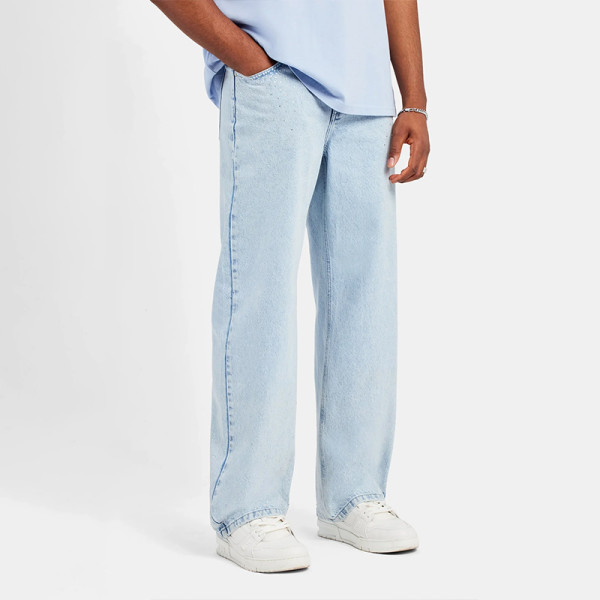
Laid-back and roomy, these Y2K-inspired light blue baggy jeans deliver all-day comfort with a retro streetwear vibe.
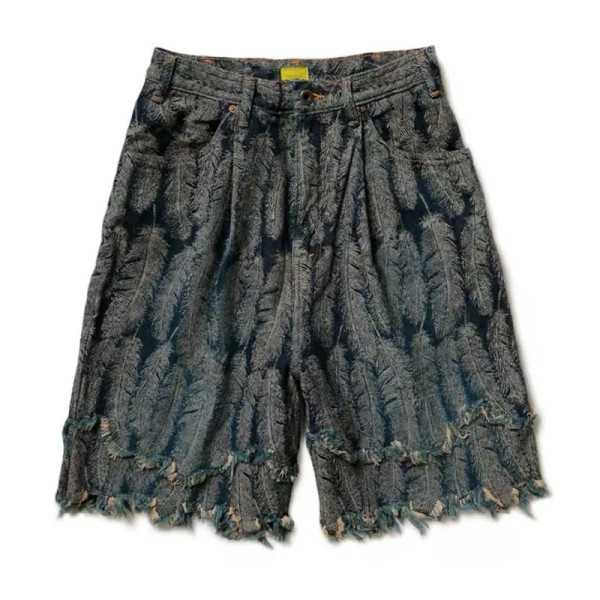
Custom denim shorts with feather-textured fabric and raw hem. Built for curated fashion retailers & designers.